SUBSCRIBE TO OUR FREE NEWSLETTER
Daily news & progressive opinion—funded by the people, not the corporations—delivered straight to your inbox.
5
#000000
#FFFFFF
To donate by check, phone, or other method, see our More Ways to Give page.


Daily news & progressive opinion—funded by the people, not the corporations—delivered straight to your inbox.
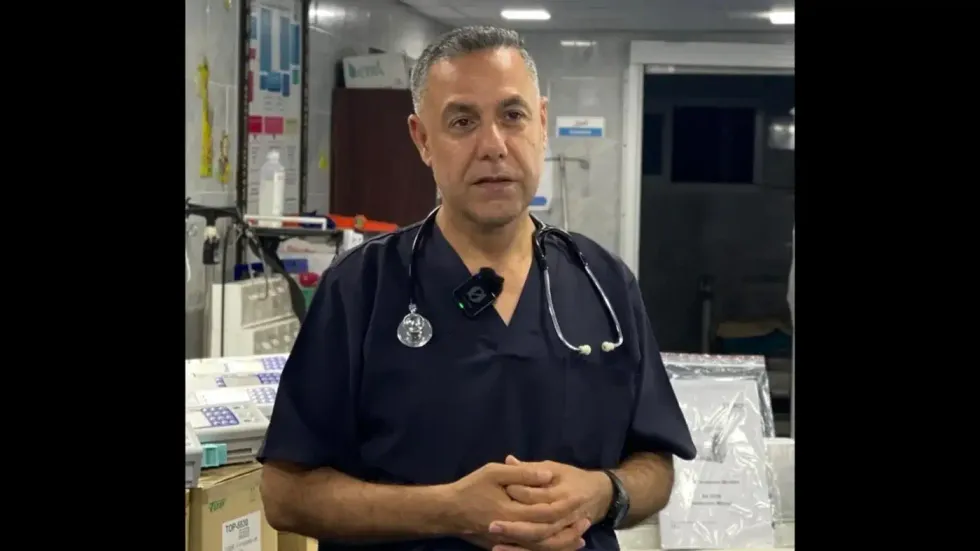
Dr. Hussam Abu Safiya has been held in brutal Israeli detention for over 500 days without charge; you would think these details would trigger some sympathy or at least curiosity in his American counterparts.
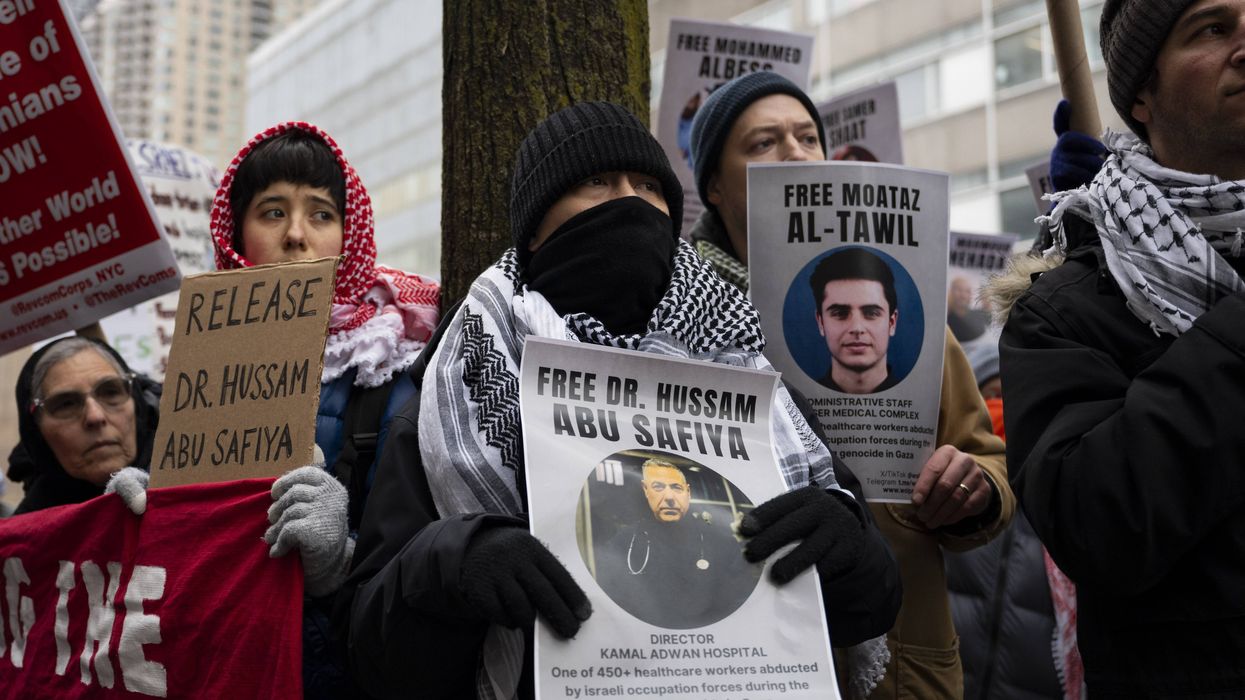
"We have nothing to do with that." An American Medical Association staff member said this to me with a look of disdain on her face. I was at the AMA's annual conference in Chicago, urging the doctors in attendance to speak up for their imprisoned Palestinian colleague, pediatrician and neonatologist Dr. Hussam Abu Safiya. My group posted up outside conference rooms and handed out informational flyers uplifting his story. Dr. Abu Safiya has been held in brutal Israeli detention for over 500 days without charge; you would think these details would trigger some sympathy or at least curiosity in his American counterparts, but the opposite happened. We were flocked by security guards, verbally harassed, and treated as if we were doing something much more nefarious than handing out harmless pieces of paper.
A male security guard was threatening to get physical with me when the AMA staffer walked past — but instead of intervening, she joined in with him, egging him on. I asked her, "Do you know why we're here, though? You guys need to speak up for your colleagues in a genocide." She shook her head snidely, showcasing an apathy that was almost laughable considering the irony of the situation: A staff member for the country's leading medical institution — one that prides itself on its ethics — couldn't even pretend to care about a Palestinian doctor being tortured by Israel.
It's quite maddening when you think of how much support the AMA gave Ukraine when the Russian invasion began. They quickly put out statements of condemnation that the healthcare sector was being impacted, and hundreds of thousands of dollars in aid were given almost instantly. It has been three years since Gaza's healthcare sector was completely reduced to rubble, and the AMA has yet to say a single word about it. A year and a half has passed since Dr. Hussam Abu Safiya was abducted from the hospital that Israel besieged.

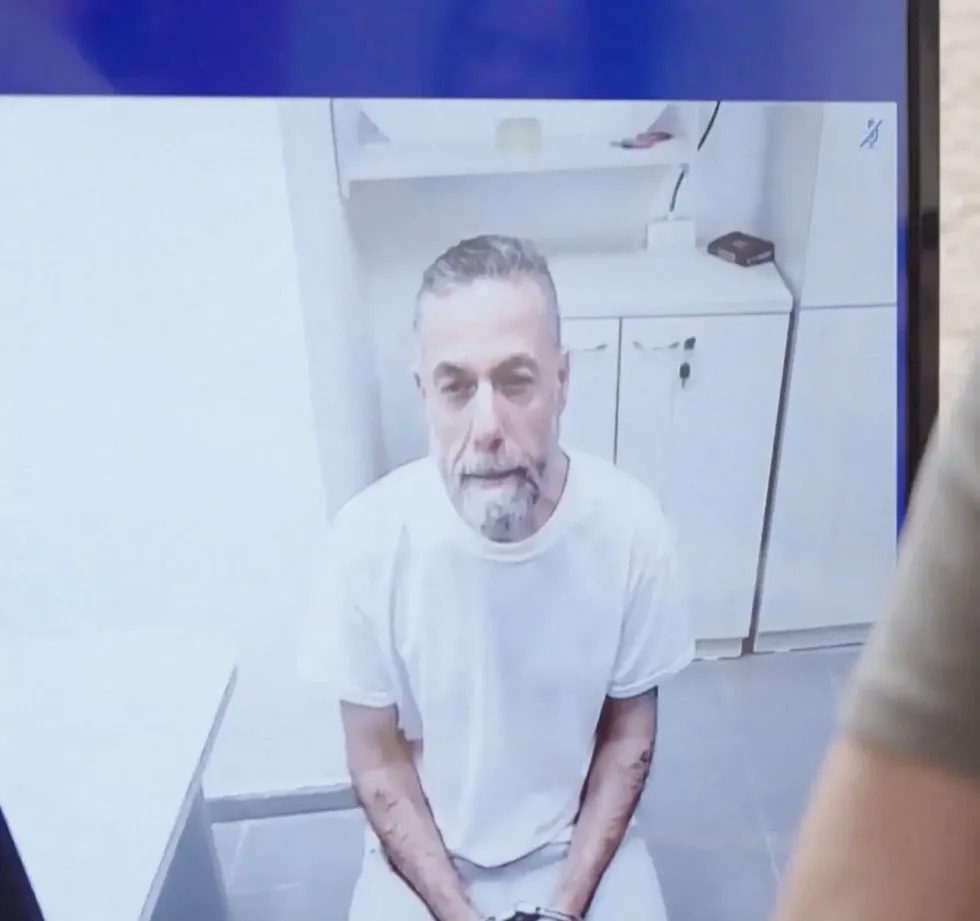
Coincidentally, the same week the AMA was meeting in Chicago, new photos of Dr. Abu Safiya emerged, the first in many months. He's shown handcuffed and alone in a sterile white room, apparently on a video call with the Israeli courts.

The new image of Dr. Abu Safiya breaks my heart. He's lost so much weight, and there's scarring and scabbing on his arms that weren't there before, obvious signs of torture. Israeli prisons are vile and dangerous; they are places where military personnel can go rogue with no fear of punishment and enact their most atrocious desires. After all, these prisons are run by the likes of Ben Gvir, a racist, sadist, and war criminal. I just don't understand how physicians in the AMA can consciously look at this photo of Dr. Abu Safiya and have nothing to say.
When Israelis are permitted to commit war crime after war crime, including holding medical professionals hostage, it sets a precedent. They're not only killing and kidnapping healthcare workers in Gaza, but in Lebanon and Iran, too. Is it just because these are brown Muslim people that the AMA refuses to speak out? For an organization that claims a commitment to human rights and dignity, its racism is loud, and its participation in the white supremacist attitudes of Western imperialism is staggering.
This conference was a place for the AMA to discuss policy, especially around advocacy. CODEPINK staff, volunteers, and coalition partners were outside and inside the conference every single day. Our presence sparked awareness and conversation among the members, and we learned that there were debates inside on an issue the organization could no longer ignore: Palestinian healthcare workers.
Although they didn't mention Dr. Abu Safiya by name, it's clear that the AMA heard our collective message and that the friends of the movement inside the AMA were emboldened by our consistent energy. During the conference's scheduled time to amend, remove, and propose new policies, a handful of resolutions were introduced about Palestine and the blatant attacks on its healthcare workers and infrastructure. There was one resolution in particular that was proof that our work was changing hearts and minds. It reads as follows:
RESOLVED, that our AMA supports efforts to protect, release, and provide restitution to detained noncombatant healthcare workers in all areas of conflict, including Gaza.
Ultimately, this specific resolution was not passed. But the mere inclusion and debate of the topic means that our persistence illuminated the issue of Palestine to every single person at the conference. And, because of that, the AMA delegates managed to pass 2 resolutions about the general "protection of healthcare workers and facilities in conflict areas."
The AMA staff member and security guards knew what we were talking about; they knew the story of Dr. Hussam Abu Safiya. Whether they feel a moral obligation to do anything about it is beyond me, but we got confirmation that they knew exactly what we are organizing for. And even if the people in positions of power at the AMA don't feel inclined to do anything about genocide, it is very clear that the general body does care.
The AMA was founded, in part, to lay out a strict code of ethics for medical professionals in the United States. These principles explicitly highlight the responsibility of physicians to advocate for human dignity, human rights, public health, and medical access for all. What has happened in Gaza over the past three years has been nothing short of an abomination of human dignity and rights. Israel and the U.S. have bombed Gaza's public health system to the ground, and now the one million Palestinians in Gaza have been left without access to proper medical care for three years. If the AMA were run by individuals who actually practiced their own code, they would have been the first to advocate against medicide in Gaza. Unfortunately, the organization seems to favor quiet comfort over the actual embodiment of its values.
I am reminded of the photo that came out of Gaza just a few weeks after the genocide began. At a press conference outside an exhausted hospital, dead bodies of children in bags surrounded the podium, traumatized men stared at the camera, and some of the most courageous healthcare workers I have ever seen spoke out, pleading for the world to do something.

I see the photo above, and the photo of Dr. Abu Safiya — these are just a handful of Palestinian healthcare workers making tremendous sacrifices to protect human life and dignity. They physically put themselves in the line of fire; meanwhile, the AMA doctors can't even put out a statement. It is well past time that they break their silence. If the AMA chooses to advocate for the release of Dr. Hussam Abu Safiya, they very well might save his life.
If they speak out to save just one Palestinian doctor's life, they could pave the way to save hundreds of other prisoners.
Israel tortured a 1-year-old baby. They burned him with cigarettes and drove nails through his feet as a form of torture during his father's interrogation. This isn't some twisted, made-up movie scene; this is real life. And it's the one case we know of right now, but who knows how many other babies, in all their innocence, have been tortured by the Israeli military? It also begs the question: Since they're willing to do this to an infant, what are they doing to older prisoners?
It's always been clear that the Zionist settler colony will go to any length to achieve its goal of being an ethnostate. To achieve this goal, it subjects Palestinians to mass-imprisonment campaigns. No title—child, teenager, mother, father, health professional, aid worker—is spared from the Israeli prison system. Because if Israel can't just outright exterminate all Palestinians at once, the next best option is to round them up and slowly kill them behind bars.
Well, that was the case before March 30, 2026, when the Israeli Knesset passed a bill that calls for the hanging of Palestinian prisoners within 90 days of being convicted of killing Israeli settlers. The bill was introduced by Itamar Ben-Gvir, who has been wearing noose pins and carrying around a physical noose to publicly show his excitement for potentially becoming Israel's official executioner. When the vote was called out and the bill was passed, Ben-Gvir popped champagne bottles with his cronies, celebrating the essence of killing more Palestinians.
These are illegal settlers under international law, who have been terrorizing Palestinian villagers for years, their attacks becoming increasingly frequent and heinous. Palestinians have had their houses set on fire while inside them at the hands of these settlers, backed by the state. It is important to remember that the Israeli military courts operate outside of constitutional processes and have been widely condemned for their human rights abuses. In these courts, Palestinians have a conviction rate of over 96%, most often for crimes they never even committed.
Our government is killing people in cold blood, and the institutions meant to advocate for us remain silent even when it is their peers being forced into tanks, handcuffed, and locked away and tortured.
Israel promotes its interests by incentivizing settlers to brutalize Palestinians and destroy their land. And now, after systematically denying Palestinians' right to defend themselves, they are branding them as cattle to be killed by hanging. Israel is carrying out its genocide in the form of codified law. This is the true face of the settler colonial state of Israel: dehumanization to the lowest level.
Right now, Israel is holding the highest number of Palestinian prisoners ever recorded. One such prisoner is Dr. Hussam Abu Safiya. He was the sole lead of the only functioning hospital in northern Gaza, Kamal Adwan Hospital. For the "crime" of providing medical aid to Palestinians, he was surrounded by Israeli tanks and soldiers and forced into imprisonment in December 2024.
Israeli society is getting more and more draconian: no prosecution, no unanimity, nothing. Simply put, if the Israeli military sees fit to kill a Palestinian prisoner, they will do so. Dr. Abu Safiya has been in an Israeli prison for 16 months, and there is speculation that he is being tortured. But again, if they can torture an infant, what's a middle-aged man to them? The new Israeli bill gives the IOF a pathway to execute prisoners like Dr. Hussam Abu Safiya: torturing them to force a confession, convicting them, and then hanging them. Clearly, he's been deemed a threat to the very existence of Israel because he helped save the lives of Palestinians.
This is the situation of medical professionals outside of the West, heroes who put everything on the line to provide care for their people. In comparison to the most "esteemed" doctors in the US—like those within the American Medical Association, with all their prestige and shiny titles—the healthcare workers subjected to deadly imperialist brutality deserve our recognition, and they urgently need our help.
You might be thinking, "What does the American Medical Association have to do with a detained Palestinian doctor?" Firstly, we need to contend with the fact that it is our US tax dollars that fund these genocidal soldiers, prisons, and policies that got Dr. Abu Safiya arrested in the first place. The American government and its institutions are just as guilty of the oppression of the Palestinian as the Israelis are. We need to stop operating on willful ignorance because it has cost thousands of lives in the region, a tally that is increasing by the second with the recent attacks on Iran and Lebanon.
Secondly, the American Medical Association (AMA) prides itself on its strong relationship with the World Medical Association, which has already called for the release of Dr. Abu Safiya, demonstrating alignment with its policies that "support the rights of physicians worldwide." The advocacy of foreign doctors is integral to the AMA as a whole. Why is a Palestinian doctor being ignored by them, then? Maybe the topic of genocide is too taboo for them. That would be ironic if so, when a genocide is the culmination of healthcare sectors being destroyed, lineages lost, and eugenics shaping a land and people forever. These are topics any medical association should be speaking about, especially one that represents the literal country that enabled this violence. Imagine the leverage the AMA could have in the halls of Congress when advocating for change.
The recent codification of the execution of Palestinian prisoners poses a grave threat to Dr. Hussam Abu Safiya's life. Will the AMA finally act now, in the face of such injustice and wickedness? If they speak out to save just one doctor's life, they could pave the way to save hundreds of other prisoners.
The genocide in Gaza has shown me that so much of what I thought about society was false. I once believed I lived in a world where good prevails, but I have come to realize that selective empathy is the rule. The leaders of this world don't hold empathy for anything or anyone that stands in their way of global domination. I frequently think of how many lives have been lost at the hands of US-Israeli imperial violence. The sheer number of casualties in Gaza, despite being predicted to be in the hundreds of thousands, has never been enough reason to stop. I think of how one of the first targets in the US war on Iran was a girl's elementary school, which they targeted with not just one strike, but three in a row.
Our government is killing people in cold blood, and the institutions meant to advocate for us remain silent even when it is their peers being forced into tanks, handcuffed, and locked away and tortured. At this point, advocating for the release of our prisoners who were wrongfully detained is the least we can do.
Promoting good genes and limiting access to birth control and abortion are inextricably tied by two threads: white supremacy and the patriarchy. And they have been for more than 150 years.
From American Eagle’s campaign with Sydney Sweeney to the Trump administration’s efforts to limit access to birth control to the US birth rate hitting an all-time low, there has been a lot of noise online this summer, and every time something takes center stage, people come out of the woodwork telling us to not get distracted. To stay focused.
And I get it. I do. It’s a lot.
But we can’t just overlook one headline in favor of another, because in America, promoting good genes and limiting access to birth control and abortion are inextricably tied by two threads: white supremacy and the patriarchy. And they have been for more than 150 years—ever since the first time abortion was criminalized in America in the late 1800s.
In the words of Leslie Reagan (author of When Abortion Was a Crime): “White male patriotism demanded that maternity be enforced among Protestant women.”
When he wrote of American westward expansion, he asked: “Shall [these regions] be filled by our own children or by those of aliens? This is a question our women must answer; upon their loins depends the future destiny of the nation.”
Back in 2022, when Dobbs v. Jackson’s Women’s Health rolled back the protections granted by Roe v. Wade, the justices claimed to have reached the majority ruling, in part, because abortion rights weren’t “deeply rooted in the country’s history and traditions.” But here’s the thing: America had a long-standing tradition of abortion before it became widely outlawed in the late 1800s. In fact, for much of American history, terminating a pregnancy during the first four months wasn’t even considered abortion. It was simply an attempt to “restore menses.”
Before the end of the 19th century, a regular menstrual flow was considered essential to a woman’s health. Herbalists, midwives, and physicians recommended childbearing people sip herbal emmenagogic teas (teas that stimulate menstrual flow) in the days leading up to and throughout the course of their periods to maintain regularity and to restore menstruation if it arrived late.
It was this tradition that politicians and some doctors of the era (specifically those who were a part of the newly-created American Medical Association) wanted to eliminate.
The AMA was founded in 1847, creating a professional group for college-educated doctors (all men at the time). They were faced with a problem: The medical profession was still establishing itself, and so AMA doctors weren’t well-respected in America, but midwives, one of their primary competitors in the field, were. One of the many reasons for this was that midwives were willing to provide abortion services, something AMA-recognized physicians were unwilling to do because they claimed it violated the Hippocratic Oath.
One particular physician, Horatio Robinson Storer, saw abortion as an opportunity to help accredited physicians gain respect: If they could turn abortion into a moral issue, they could destroy public respect for midwives—allowing AMA physicians to take over the field of gynecological health and establish themselves as both the moral and scientific authority on medicine.
With the AMA at his back, in 1857 Storer started a campaign to change the way America thought about abortion—sending letters to physicians and newspapers, publishing books, and eventually working with legislatures to criminalize the practice.
What else was happening in 1857? The lead up to the American Civil War, which we all know was fueled by white supremacy. Not only was much of America fighting for the right to enslave people, they also feared being outnumbered by the very people they were trying to enslave. And with the declining birth rates among white, Protestant women, it was a well-founded fear (and one that wasn’t only limited to the South, especially with the influx of immigrants in northern cities).
Storer used this fear to his advantage.
When he wrote of American westward expansion, he asked: “Shall [these regions] be filled by our own children or by those of aliens? This is a question our women must answer; upon their loins depends the future destiny of the nation.”
The argument was a powerful one—one that changed the way America viewed abortion for 100 years. How did they do it? By destroying the concept of quickening, thereby reclassifying the restoration of menses as abortion and criminalizing those who practiced it. They stated quickening was little more than a feeling, and a feeling wasn’t medicine. This in turn discredited childbearing people as the ones who knew their own bodies best.
The AMA’s efforts culminated in the Comstock Law in 1873, which made the public discussion of birth control and abortion illegal by banning it as obscenity, and by 1880, every state had laws restricting abortion. Early-term abortion, which had once been considered an essential part of women’s healthcare, was labeled evil (and criminal) and midwives were rebranded as abortionists. These views of abortion continued for 100 years until Roe v. Wade gave people with uteruses the right to an abortion, and it’s clear they’ve persisted in the decades since.
Now, to be clear, most doctors today recognize abortion as healthcare. This isn’t meant to demonize modern-day physicians. But as we look to today’s headlines when it comes to the health of childbearing people, it’s almost impossible not to draw parallels, and keep this reality in mind as we fight to regain the rights the Supreme Court has stripped us of.
"It is unconscionable that the agency charged with protecting Americans from environmental threats would consider rescinding policies based on years of evidence-based practice," said the head of one nursing group.
Over 120 top health and medical organizations on Monday joined the growing chorus of opposition to the Environmental Protection Agency's attempt to roll back the landmark legal opinion that greenhouse gases endanger public health and the welfare of the American people.
"The Trump administration's effort to rescind the EPA's endangerment finding is not only dangerous—it's an attack on science and on the health of the American people. Undoing the endangerment finding would remove the federal government's main tool to combat climate change," explained Katie Huffling, executive director of the Alliance of Nurses for Healthy Environments.
The alliance joined the American Thoracic Society (ATS) and Medical Society Consortium on Climate and Health (MSCCH) in writing a letter to EPA Administrator Lee Zeldin. Other signatories include national organizations such as the American College of Physicians, American Medical Association, and Physicians for Social Responsibility, along with scores of state groups.
"The science is clear: Climate change is real, driven primarily by human-caused emissions, and harming both our health and the
economy today," the letter states. "The health harms of climate change caused by greenhouse gas (GHG) emissions are well understood and acknowledged by the American medical and scientific communities."
Today @docsforclimate.bsky.social released a letter signed by over 120 national/state orgs across medicine, nursing, pharmacy, & veterinary medicine, across 36 states recognizing #climatechange as a profound danger to our health. We’re asking EPA to protect the #endangermentfinding lnkd.in/grgEZ2qF
[image or embed]
— Lisa Patel, MD (@lisapatel.bsky.social) September 22, 2025 at 11:38 AM
The letter highlights various health impacts tied to the fossil fuel-driven climate emergency, which include an increased range for mosquitoes that spread diseases, worsening mental health, rising cardiovascular deaths, higher risks for respiratory conditions, and conditions that exacerbate chronic diseases. It emphasizes risks for pregnant people, children, and the elderly.
"No matter where they live, children are uniquely vulnerable to hazardous air pollution. Children are not little adults, and their lungs are still developing, putting them at greater risk for harmful impacts to their lifelong health and development," noted American Academy of Pediatrics president Dr. Susan J. Kressly.
"The Environmental Protection Agency's proposal to repeal the endangerment finding would jeopardize the progress we’ve made to protect child health and leave children susceptible to chronic illnesses, like asthma," she warned.
Challenging the Trump administration's argument for rolling back the 2009 finding, MSCCH executive director Dr. Lisa Patel stressed that "the administration's claim that climate change is not a significant threat is contrary to what nurses, doctors, and pharmacists witness every day in our clinical practice."
"Beyond the devastating toll of wildfires, unprecedented extreme heat, and superstorms and floods that decimate entire communities, we are seeing clinics and hospitals themselves damaged or destroyed, and critical supply chains disrupted," Patel pointed out. "That means in times of crisis we cannot provide even the most basic care patients desperately need."
National Association of Pediatric Nurse Practitioners president Felesia Bowen declared that "it is unconscionable that the agency charged with protecting Americans from environmental threats would consider rescinding policies based on years of evidence-based practice."
The signatories are calling on the administration to not only withdraw its proposed rescission of the endangerment finding but also reaffirm the EPA's obligation to regulate GHG pollution under the Clean Air Act and strengthen protections against climate-related health threats through ambitious emissions standards.
"The science is compelling—climate change is a clear and present danger for the health of our patients and communities," said Dr. Alison Lee, Chair of the ATS Environmental Health Policy Committee. "Last week's National Academy of Sciences, Engineering, and Medicine report confirms what the medical community already knows: Climate change is harming our patients and, absent urgent action, the harms will escalate."
"Let us be clear—the medical community is standing together in its opposition to rolling back the EPA GHG endangerment finding," she added.
Also citing the report released last week, David Arkush, who directs the climate program at the watchdog group Public Citizen, said in a Monday statement that "the EPA is proposing to move exactly opposite to the way that the law and its mission require—flouting overwhelming scientific evidence and ignoring required procedures to reach a predetermined political outcome on behalf of mass polluters."
"The agency should reverse course and drop this misguided and unlawful action," he argued. "Failing that, the courts should roundly reject it."
His statement and the medical coalition's letter come on the last day of the public comment period for the proposal, and after more than 1,000 scientists, public health experts, and economists sent another letter to Zeldin last week detailing why they "strenuously object" to his effort to repeal the legal opinion that underpins federal climate regulations.
The effort to repeal the endangerment finding is just one prong of Big Oil-backed President Donald Trump's war on climate policies, which also includes ending the collection of pollution data, clawing back $7 billion in federal grants for low- and middle-income households to install rooftop solar panels, declaring a national energy emergency, and ditching the Paris Agreement.
All these groups have diminished themselves and their real potential to generate strong direct democratic pressures and arouse the citizenry.
This column is a plea to our readers to help get responses from groups whose duties and rhetoric should cause them to become much more active in countering the fascistic, dictatorial actions of Tyrant Trump.
All these groups have diminished themselves and their real potential to generate strong direct democratic pressures and arouse the citizenry.
We can guess the answer as to why these groups are so meek, but what is needed is for these groups to answer for themselves. (I recognize that there are a few luminous exceptions among them.)
1. Why aren’t the Democrats in Congress, just a few votes from a majority, much more aggressive vis-à-vis the controlling Republicans and President Donald Trump? Voters are vociferously demanding this at town meetings.
Lawmakers in the minority can hold many informal or “shadow” hearings in congressional committee rooms on the rising disasters of the Trump regime. They can invite knowledgeable witnesses and the media. They have done fewer than half a dozen of these events, which have received media coverage.
Moreover, they could do what the GOP does regarding Democratic presidents: Start laying the groundwork for impeaching Trump and several of his lawless, dangerous, out-of-control cabinet members.
2. Why has the media, for years, excluded coverage of what newsworthy, progressive, proven national citizen groups are doing to give the people the kind of effective voice on Capitol Hill and around the country that led in the 60s and the 70s to health, safety, and economic protections by congressional legislation?
3. Why do the most progressive members of Congress—e.g., Sen. Bernie Sanders (I-Vt.), Sen. Elizabeth Warren (D-Mass.), Rep. Pramila Jayapal (D-Wash.), Rep. Ro Khanna (D-Calif.), and lately even Rep. Jamie Raskin (D-Md.)—refuse to return calls or answer letters urging them to adopt policies and conduct hearings back in their states, to build support for congressional action? Their disrespect is astonishing and unheard of between the GOP and, for example, the Heritage Foundation.
Are we too busy with our daily work and routines to carve out time to join this historic struggle to save our country?
They will not go on our radio or podcast to discuss their new books or causes. Most of the time, they don’t even bother to acknowledge these invitations with a polite refusal. It’s like calling into a congressional dark hole.
This posture is cutting deeply into their own influence in Congress and severing contacts with progressive groups’ millions of members around the country.
4. The medical societies and bar associations are not costing the Trumpsters any lost sleep as the latter deepen their illegal destruction of federal public health and safety programs. Their brazen violations of federal laws and provisions of the Constitution reflect their Big Bad Outlaw in the White House.
These doctors and lawyers may be sullen but are largely silent when they have considerable muscle to flex. After all, the American Medical Association single-handedly blocked in Congress during the 1940s and early 1950s President Harry Truman’s universal health insurance plan.
We have written twice to 50 state bar associations saying that they should be the first responders against the destruction of the rule of law by raw power. No reply from any of these influential groups. (See: Letter to Bar Associations)
5. Trump is destroying labor unions’ collective bargaining agreements inside the federal civil service. He is the most anti-labor president in modern times, reflecting his past, exploitive business record.
Yes, the major labor unions have filed numerous lawsuits and on Labor Day managed some vociferous demonstrations around the country, without announcing a Compact for American Workers (see my last week’s column: LONG OVERDUE DOMESTIC COMPACT FOR AMERICA).
They could do so much more to deploy organizers for action all over the country, reaching deep into Trump’s blue-collar supporters to ask them about anti-worker Trumpism: “Is this what you voted for? How about some big demos in DC around the White House and Congress? How about old-fashioned mass worker rallies, demanding the presence of lawmakers?
6. I and others have written about the silence of former presidents, except for a few mild public remarks. George W. Bush despises Trump, especially for Trump wiping out his administration’s anti-AIDS program in less developed countries. He is silent as he continues his painting. Bill Clinton, Barack Obama and Joe Biden, where are they? With their large constituency of voters, they could activate thousands to push Democrats in Congress. With their fundraising skills and lists, they could raise quick money to start “Trump, You’re Fired” groups all over the country, tying the Trump brand to the awful, cruel, and vicious cuts, closings, and firings of federal servants, protectors, and scientists. They know he is destroying America and our constitutional Republic. So why are they AWOL, basking in their comfort zones, instead of being patriotically on the impeachment ramparts?
7. What about the enlightened billionaires? They know the score and can see an ominous recession coming. Easily, they could fund new “civic strike organizations” working on Congress and the executive branch to give a sharp, continuing voice to the people increasingly harmed and deprived in both red and blue states (e.g., fast approaching loss of Medicaid and food programs and much more). (See the Economic Policy Institute report, “100 days, 100 ways Trump has hurt workers.” April 25, 2025)
8. Given how Israeli Prime Minister Benjamin Netanyahu’s genocidal Palestinian Holocaust is affecting our country’s violated laws, priorities, freedoms, safety, and tax dollars, why does the media adamantly refuse to more credibly report the vast death and serious injury undercount in tiny Gaza (the geographical size of Philadelphia)? Instead of showing probative evidence of over 500,000 deaths (leaving an improbable 3 of 4 Gazans still alive), they report the Hamas narrowly defined fatality figure of over 63,000.
Hamas does not count tens of thousands under the rubble or the far greater number killed due to “no food, water, medicine, healthcare, fuel, and electricity.” It only counts the immediately identified deaths of Israel’s daily bombardments. ( See, The Lancet piece “Counting the dead in Gaza: difficult but essential” July 5, 2024). Editors and reporters know this, but they still are misleading their readers, viewers, and listeners using the Hamas de minimis figures as if they were the total fatalities from this Israeli regime’s mass slaughter of Palestinian babies, children, mothers, and fathers.
9. Then there are the Trump voters who, with few exceptions, have yet to admit that they have been conned big time by the cruel and vicious, egomaniacal, vengeful Trump. With Elon Musk, his smashing of the social safety net includes Trump voters big time around the country. Millions will soon lose their Medicaid, some veteran services, serious labor protections, and care for their children, to mention a few of his betrayals.
Trump voters need to keep reminding themselves, every time Trump shafts them, “We didn’t vote for this.” They knew he was a chronic liar, an abuser of women, a cheater and serial law violator, a promiser breaker from his first term, and a world-class BS-er. But they forgave this unstable personality because his speeches persuaded them that the Democrats had abandoned them. Well, now they have to face the grim realities and speak out collectively about what he is doing to them, his faithful supporters.
10. Then there is “US,” the citizenry. Are we too busy with our daily work and routines to carve out time to join this historic struggle to save our country? We have not seen the worst of what Trump is going to do, by any means. Take him at his word when he says repeatedly, “This is only the beginning.”
A dangerously unstable personality, Trump has expressed global fatalistic attitudes in past conversations. “Watch out and Step Up.” (Read my new book Civic Self-Respect to encourage you to join the 1% already active in the resistance.)
A new AI-driven Medicare prior-authorization pilot could dramatically weaken Medicare, just another frightening step toward privatization and profiteering.
The odds are that if you have private health insurance or someone in your family has private health insurance, you have heard the dreaded phrase “we need preauthorization” from your insurance company. What this means is that your insurance company needs to approve in advance that your treatment or prescription is covered. In theory, this should be no big deal. However, reality is something else. But as the New York Times points out:
Private insurers often require a cumbersome review process that frequently results in the denial or delay of essential treatments that are readily covered by traditional Medicare. This practice, known as prior authorization, has drawn public scrutiny, which intensified after the murder of a UnitedHealthcare executive last December.
So, reading this you might think that you are glad that you or someone in your family choose traditional Medicare (in other words not a Medicare Advantage plan), so you would be able to avoid the “prior authorization needed” drama. Well, unfortunately you would be wrong as the prior authorization is slowly coming to Medicare. In late June, the Centers for Medicare and Medicaid Services (CMS) issued a press release:
The Centers for Medicare & Medicaid Services (CMS) is announcing a new Innovation Center model aimed at helping ensure people with Original Medicare receive safe, effective, and necessary care. Through the Wasteful and Inappropriate Service Reduction (WISeR) Model, CMS will partner with companies specializing in enhanced technologies to test ways to provide an improved and expedited prior authorization process relative to Original Medicare’s existing processes, helping patients and providers avoid unnecessary or inappropriate care and safeguarding federal taxpayer dollars. This model builds on other changes being made to prior authorization as announced by the US Department of Health and Human Services and CMS on Monday.
In theory, this move by CMS does not sound bad. Who could be against reducing wasteful spending in Medicare and making sure that people receive appropriate treatment? A spokesman for CMS has been quoted that the government would not review emergency services or hospital stays.
The CMS prior Medicare authorization model is being rolled out in January 2026 as a six-year trial program in six states: Arizona, New Jersey, Ohio, Oklahoma, Texas, and Washington State. In theory, the preauthorization program will look at those medical treatments that are not of benefit to Medicare beneficiaries.
What CMS is not drawing attention to is that this preauthorization will be done by artificial intelligence (AI)—or as CMS puts it “enhanced technologies.” It is not until much later in the press release that CMS gets to the fact that AI will do the screening authorization:
The WISeR Model will test a new process on whether enhanced technologies, including artificial intelligence (AI), can expedite the prior authorization processes for select items and services that have been identified as particularly vulnerable to fraud, waste, and abuse, or inappropriate use.
CMS, at the moment, says that the AI preauthorization screening will be used on only an extremely limited number of procedures. But what guarantees do Medicare beneficiaries have? The bottom line is that you have to ask yourself: Would you be comfortable having your access to your earned Medicare benefits be determined by AI? My answer is a firm, “No, thank you.”
We also need to ask what are the financial incentives that Medicare is injecting into the system though preauthorization? It is hard not to conclude that this is a step toward privatization of traditional Medicare.
Healthcare professionals are concerned by CMS’ preauthorization program. In mid-July, the American Medical Association (AMA) wrote to CMS:
While the stated goal of the model is to curb wasteful spending and protect the Medicare Trust Fund, the mechanisms employed raise several significant issues that must be addressed prior to implementation. The AMA strongly urges CMS to pause the January 1, 2026 implementation of the WISeR Model to allow additional stakeholder input, full analysis of the model’s operational impacts, and development of clear guidance for physicians. Physicians should not be forced to adapt to such substantial administrative requirements without sufficient time to understand the implications and prepare. Absent this opportunity for meaningful physician and stakeholder engagement, the model risks creating confusion, administrative burden, and unintended consequences that could ultimately undermine CMS’ own goals to reduce waste, fraud, and abuse.
On Capitol Hill, a number of House Democrats led by Rep. Alexandria Ocasio-Cortez of New York have pushed back on the AI preauthorization pilot project. In late July, they wrote to CMS:
We understand that CMMI has intentionally selected healthcare services that are reported to have limited clinical value and may be vulnerable to abuse in the Medicare program, and we support efforts to ensure Medicare remains a good steward of taxpayer dollars. However, the expansion of AI-fuelled prior authorization will not improve program integrity in Traditional Medicare. Giving private for-profit actors a veto over care provided to seniors and people with disabilities in Traditional Medicare, even as a pilot program, opens the door to further erosion of our Medicare system. We therefore strongly urge you to immediately halt the proposed WISeR model and instead consider steps to address the well-documented waste, fraud, and abuse in the Medicare Advantage program.
The House Democrats raise a very intriguing question about why CMS is not focused more on fighting waste, fraud, and abuse in Medicare Advantage plans? As the Center for Budget and Policy Priorities reported in January of this year, there is considerable evidence to show that Medicare Advantage plans are overpaid by the government. It would make sense for CMS in pursing fraud and waste to follow the money which means looking at Medicare Advantage plans.
Give the political dynamics in Washington, it seems likely that the CMS preauthorization demonstration project will go into effect in January 2026. Then in the summer of 2026, with the midterm elections looming, as members of Congress will begin hearing from constituents who have had their earned Medicare benefits denied by AI, Congress will revisit this issue. It is tragic that in the meantime people will be hurt.
The AMA has a responsibility to uphold the well-being of healthcare workers and minimize human suffering, and it is clear that these values are not being upheld," said Healthcare Workers for Palestine.
"Shame on the American Medical Association."
That was one American nurse's response to the news on Sunday that the powerful medical lobbying organization had shut down members' call for a public statement that would declare the AMA's support for "a cease-fire in Israel and Palestine in order to protect civilian lives and healthcare personnel."
As the news about the state of Gaza's hospitals grew increasingly dire over the weekend—with premature babies relying on incubators beginning to die due to Israel's blockade of the enclave's electricity and fuel supplies, and hospitals in northern Gaza forced to shut down completely—Dr. Hussein Antar spoke at the AMA's House of Delegates interim meeting on behalf of other medical residents and fellows who support a cease-fire.
Antar said he and other supporters of the resolution strongly backed the statement the AMA made last week calling on "all parties" in the conflict to "minimize the health costs of war on civilian populations" and condemning "the military targeting of healthcare facilities."
"But we believe the largest physician group in the United States can and should do more than that. This issue is too vital for us to evade discussion," said Antar.
Since the finalization of the statement and the meeting, MedPage Today reported, at least 60 medical workers had been killed by Israel's bombardment, which targeted at least six hospitals in that period.
In recent weeks, doctors and nurses who have refused to leave their posts despite the repeated airstrikes and Israel's ground attacks have resorted to performing Caesarean sections on pregnant women and other major surgeries without anesthesia, have been unable to properly sterilize medical instruments, and have been buying laundry detergent and vinegar to clean wounds due to the lack of supplies and electricity.
Despite the fact that Israel's onslaught has seriously endangered doctors and nurses and left them unable to perform their duties, the AMA's Resolution Committee recommended the statement not be reconsidered and said it did not meet the organization's criteria for speaking out about an issue affecting the healthcare community.
Those criteria, noted a U.S.-based nurse who uses the handle @travelingnurse on TikTok, include "advocacy, ethical considerations, and urgency."
"I reject any notion that calling for a cease-fire in Gaza—the most densely population piece of land on the planet, where half the population is under 15 years old, where the death toll has now reached 12,000 people, where there are tanks firing on hospitals—I reject that that is not advocacy, I reject that that is not urgent, and I reject that that is not an ethical consideration," said the healthcare worker.
Dr. Lisa Bohman Egbert, speaker of the AMA's House of Delegates, reportedly called on Dr. Luis Seija to stop giving his statement in support of the cease-fire resolution, as he reminded those at the meeting that "there are people in the room who have had friends and family killed both on the Israeli and Palestinian sides of this violence."
Former AMA president Dr. Andrew Gurman also opposed the resolution, claiming that since it dealt "with a geopolitical issue," making a formal statement was "in no way the purview of this house"—despite the fact that the AMA spoke out last week to condemn the targeting of hospitals in Gaza.
"There was a coordinated effort at the national meeting to shut the resolution down, with the speaker not allowing delegates their allotted 90 seconds to speak about the resolution," said Healthcare Workers for Palestine. "The largest medical group in the country actively silenced voices of healthcare workers supporting a cease-fire, saying 'it's not relevant to advocacy.' The AMA has a responsibility to uphold the well-being of healthcare workers and minimize human suffering, and it is clear that these values are not being upheld by some of the most influential physicians in the country, nor is the democratic process being respected."
Public health writer Abdullah Shihipar said the lobbying group silenced the discussion on the resolution, which failed to pass in a vote of 136-458, because leaders "know [the AMA's position] is wrong."
Shihipar shared an interview featuring Dr. Hammam Alloh, who worked at al-Shifa Hospital and was killed Saturday in an airstrike. Before he was killed, Alloh had explained to Democracy Now! that he would not abandon his patients to flee to southern Gaza with his family.
"This," said Shihipar, "is who the American medical and public health community refuses to stand with."
As the rightly acclaimed television series Downton Abbey unspools its final episode, some fans have criticized the producer's decision to devote so much time to a debate about the future of Downton's Cottage Hospital. The show makes the issue mostly personal with delightfully snippy exchanges between Violet, Dowager Countess of Grantham, who speaks for a way of life that is passing, and her cousin Isobel, widow and daughter of physicians and trained as a nurse during WWI, who is the voice of modernity. But underneath the repartee lies a serious and persistent issue: what should be the relationship of the community to the emerging age of high-tech, highly capitalized, and highly specialized medical system?
As Mary Kay Clunies-Ross, Senior Vice President of the Washington State Hospital Association, who has taken a keen interest in the show, told me, "They're asking the right questions. Who will be in charge? Will someone tell me what to do? Will we be able to continue to provide free care?"
The US and British health systems, while dramatically different, have had to grapple with these same questions. And in their exploration they've discovered that case can be made for big and for small but the weight of evidence suggests that the optimum medical configuration is when high tech and specialization is in service to responsible and accountable community hospitals.
In 1859, in real life, Albert Napper opened the first cottage hospital in Cranley. As Doctor Irvine Loudon at Oxford University observed, it was "built explicitly as a warm, clean idealized version of the farm laborer's cottage in order to reassure patients." A familiar doctor would treat people in a familiar atmosphere. Communities rallied around the concept. Hundreds of cottage hospitals sprang up and over the decades evolved into relatively sophisticated operations, often with state-of-the-art medicine and surgery.
In a very early episode in the series a farmer John Drake was admitted to the hospital with a terminal case of Dropsy. Isobel suggested to a Dr. Clarkson they use a very new technique. He reluctantly agreed and Drake promptly revived. By 1925, the year in which the final season of the tv series is set, voluntary hospitals constituted about 40 percent of all hospitals. They were largely supported by contributions and staffed with volunteers. There were also government hospitals: The infirmaries that grew out of the much-despised workhouses of the 19th century. But to many people these remained unwelcome venue.
In 1913 the liberal/labour coalition passed a law that gave a cash benefit to workers ages 16-70 who earned below the poverty level and the right to receive medical treatment at no cost. (These benefits did not extend to their spouses or children.)
Early in the series Isobel asks Robert, Earl of Grantham, how the Downton Cottage Hospital was financed. He notes that his father had given the land and building and established an endowment and then he adds, "Mr. Lloyd George's new insurance measures will help." Violet is aghast. "Please don't speak that man's name, we are about to eat," she archly announces.
In 1925, despite the federal money cottage hospitals were still suffering losses. Demand was up while charitable contributions were stagnating, in part the result of the decline of the landed aristocracy. Meanwhile, the price of medical equipment was climbing.
Most hospitals filled the financial hole by introducing subscription medicine, a form of local and self-insurance. Many of these were based in the workplace. Some doubled down on their efforts to gain contributions. The Granthams have responded by opening their castle to paying visitors as a benefit for the hospital.
Some cottage hospitals merged with bigger regional hospitals. That is the focus of the ongoing debate in Downton Abbey. Will their cottage hospital merge with the larger Royal Yorkshire Hospital?
Some communities converted their voluntary hospital into a municipal hospital. That is what happened in real life when the city council of Bradford, located about 30 miles south of Downton's village of Ripon took over the running of hospital services in 1920.
Socialized Medicine and Community Hospitals
A Gallup poll in July 1944 found that 85 percent of former patients were satisfied with their hospital treatment. Two-thirds of these had been patients in voluntary hospitals. But the question of sustainable financing remained. Over 71 percent of Britishers said they would prefer a state-financed hospital system to one supported by contributions. At the stroke of midnight on July 4, 1948 they got their wish. The National Health Service came into operation. Hospitals became government hospitals. Doctors became employees or contractors. It was Violet's worst nightmare. In the series she declared another reason why she wants to maintain local control of Downton's Cottage Hospital, "For years, I've watched government take control of our lives. And their argument is always the same--fewer costs, greater efficiency. But the result is the same too--less control by the people, more control by the state. Until the individual's own wishes count for nothing. That is what I consider my duty to resist...Your great-grandchildren won't thank you when the state is all-powerful because we didn't fight."
That the NHS began operation on the American day of Independence would probably have struck Violet as a cruel joke. For to her it was a declaration of slavery, a sentiment that would make her at home with current Tea Party philosophy. Indeed, in 1961 Ronald Reagan opposed Medicare with a rant that would have made Violet proud, "One of the traditional methods of imposing statism or socialism has been by way of medicine....If you don't do this (oppose Medicare), one of these days you and I are going to spend our sunset years telling our children and our children's children what it was like in American when men were free."
The NHS made it possible for cottage hospitals to survive. But it didn't make that survival inevitable. Health policymakers were unsure about community hospitals. At almost every turn they undervalued their benefits and overvalued the benefits of centralization. In the 1990s the NHS announced a wave of closures. Communities fought back with equal resolve, writing petitions, packing public meetings, marches. Some were successful. Others were not. In Odiham a four-year battle against the closure of its community hospital resulted in its becoming financially independent. The town of Rye, East Sussex, after discovering that its pleadings fell on deaf ears in Whitehall, took matters into its own hands, bought the local hospital and land, improved it and managed it. That protest had the benefit of being led by a local resident named Sir Paul McCartney, who gave a million pounds to the community's initiative. "My mother was a nurse," McCartney told the Independent. "I've got a lot of time for nurses and doctors because of what I saw her go through. The NHS is something our tax money buys. It's like education. That was the deal, I always thought. We're finding now that it isn't quite the deal...."
British support for community hospitals has waxed and waned and waxed. In 2006 an Independent headline reported "Cottage hospitals to make a comeback." Eight years later a headline in the Guardian announced, "NHS must end mass centralization, says new boss"
But even while criticizing large, impersonal institutions for robbing people of "dignity and compassion" the Conservative government cut another 20 percent from the NHS budget. Dr. Mark Porter, the Chair of the British Medical Association's hospital consultants committee worries that the happy talk about reviving community hospitals is simply a justification for turning the clock back and not in a good way. "Very deliberately the government wishes to turn back the clock to the 1930s and 1940s, when there were private, charitable and co-operative providers. But that system failed to provide comprehensive and universal service for the citizens of this country. That's why health was nationalised."
Community Hospitals in the United States
The United States hospital system began much as it had in the United Kingdom--as a charitable, often church-related institution governed locally and staffed by volunteers.
A bill for national health insurance made significant headway in Congress about the same time the British Parliament enacted their first worker-based health insurance benefit, but ultimately failed when WWI made all things German, Kaiser, distasteful and after WWI the Red Scare undermined any further efforts. In 1946 Republicans took control of Congress in 1946, in part by charging that Truman's proposal for a single egalitarian medical system that included all classes (and races) was socialism. After Truman's surprise victory in 1948, he doubled down on national health insurance. The American Medical Association assessed its members an extra $25 each and launched the most expensive lobbying effort in American history. One of its pamphlets echoed Violet's warning, "Would socialized medicine lead to socialization of other phases of life? Lenin thought so. He declared socialized medicine is the keystone to the arch of the socialist state." If you think that sounds an awful lot like Ronald Reagan's rhetoric 13 years later it should. The AMA wrote his speech too.
At the same time the British were rolling out the world's first free universal health system that was based on citizenship, not premiums or payroll taxes, Truman's plan died in Committee. No political party in America ever again embraced a universal, national health insurance system.
After World War II Congress appropriated billions of dollars to build hundreds of mostly rural community hospitals. Many of these are now threatened. Since 2010 more than 50 rural hospitals have closed and over 280 across 39 states are vulnerable to closure.
In big cities, Community hospitals built a century before are closing. Detroit boasted dozens of hospitals in the 1960s. It now has four. Since 1988, Milwaukee County has lost its public hospital and five city hospitals. Since 1990 New York has lost more than 20 hospitals even as its population has grown.
From 1999 to 2008, according to the American Hospital Association the number of independent hospitals fell by 290 by mergers and bankruptcies.
Adding insult to concentration, most closures are occurring in poorer communities and in communities of color even while new fully equipped hospitals continue to open in the wealthier suburbs.
Federal rules are complicit in undermining the financial stability of community hospitals. The original health care law required states to expand Medicaid and the law reduced federal payments to hospitals that had been used to cover their costs of providing care to the indigent because the federal government believed many of those poor patients would now be under Medicaid. Tragically, the Supreme Court declared that provision unconstitutional and almost half the states have refused to expand Medicaid. The result is that in 2016 their hospitals will begin to lose federal revenues, putting a significant strain especially on many fragile rural hospitals. In states that had expanded Medicaid 8.5 percent of rural hospitals are vulnerable to closure, nearly doubled in non-expansion states, where 16.5 percent of rural hospitals are vulnerable to closure, according to iVantage Health Analytics.
Hospital administrators complain about too low reimbursement rates from federal health care programs. As one administrator told USA Today, "Commercial insurers reimburse the hospital $1.33 for every $1 spent on a patient, on average, while Medicare pays about 83 cents for every dollar spent, and Medicaid pays 80 cents for every dollar spent."
Many independent hospitals lack the clout to get higher payments from insurers and steeper discounts from suppliers because they aren't part of larger hospital systems, another peculiar aspect of the U.S. medical system.
The Benefits of Local
Some argue that the closure of community hospitals has not negatively affected health outcomes but those working in these hospitals vehemently disagree. One community hospital physician responded that the study "does not resemble my real world." The medical profession talks about the "golden hour" after heart attacks, trauma and stroke in which treatment is needed to prevent loss of heart muscle and brain tissue. Closing community hospitals often eliminates the ability to provide critical medical care within that hour.
The anecdotal information about the health impacts of closing community hospitals is not insignificant. Stewart-Webster Hospital had served the small town of Richland Georgia and surrounding farms for more than six decades. With only a week's notice it shut its doors in 2013.
A month after it closed Farmer Buren "Bill" Jones, 52, died of a heart attack. His family had to wait about 15 minutes for an ambulance to take him to a hospital 22 miles away, where doctors couldn't revive him. The closed hospital was 9 miles from his house, a distance his wife or daughter -- who performed CPR on him at home -- might have driven.
"I have heard our little hospital called a Band-Aid station, but that little Band-Aid station saved my father's life two times after heart attacks," says Mike Pryor, judge-executive of Nicholas County Ky., which lost its small, rural hospital a few months before.
Six days after a nearby hospital closed in Bellhaven, North Carolina Portia Gibbs died while waiting to be airlifted to a big-city hospital 80 miles away. A rural hospital that recently closed in Nevada moves the nearest hospital 100 miles away.
Empirical evidence suggests that smaller and more localized institutions increase operating efficiencies while not reducing quality. In 1976 one British doctor commonsensically addressed the economics of centralization, "If the small hospitals are closed it means that the district hospital will have to cope with all the patients suffering from ordinary uncomplicated complaints and needing comparatively simple operations. The district hospital is geared to deal with the most complicated type of case. It has sophisticated diagnostic and therapeutic equipment which may be totally unnecessary and wasted upon such patients. The cost per bed in the district hospital is vastly greater than that in the cottage hospital. There will be no economy."
To which one might add that new clinical and technological developments mean that services such as kidney dialysis, ultrasound and MRI scanning can be offered in small hospitals.
Studies that have looked at the comparative efficiency of big and small hospitals ignore the direct and indirect economic impact of a community hospital. Directly it tends to be one of the largest employers in town, especially in rural areas. Indirectly, economic development is hurt because of the negative image to businesses of communities lacking a hospital.
Studies also ignore the substantial community-wide out-of-pocket savings of more localized medical attention. (e.g. extra driving time and expense) And they ignore the also substantial collateral damage of community hospital closures. In 2005 University of California researchers looked at hospital closures in L.A. County between 1997 and 2002. Joe R. Hicks, Vice President of Los Angeles based Community Advocates Inc. writes, "They found that the closures overwhelmed staff and facilities at the county's four general hospitals. The closures triggered a stampede of patients to doctor's offices, clinics and emergency rooms. They increased the time and distance that patients had to travel to get to a healthcare provider. That meant that fewer patients saw doctors, fewer children had checkups, patients were less likely to seek and get preventive care, and there was a jump in the number of deaths from injuries and heart attacks. This virtually guaranteed that the number of people who suffered from acute illnesses would climb. These ailments are more costly to treat."
And then there is the unquantifiable satisfaction from the peace of mind of having a medical facility nearby where you know the personnel.
Doctors too have lost their independence and autonomy. Hospitals have been on a buying spree of physician practices for a decade. Why? Federal rules allow an office visit with a physician in a hospital outpatient department to be reimbursed at a rate 80 percent higher than the same procedure performed in a physician's office. In May 2013, the Denver Post reported on a patient who received the same cardiac stress test twice from the same cardiologist. The first time the physician was independent. The test cost about $2,100. The second test, performed a year later after the practice was purchased by a local hospital, cost more than $8,000, mostly because of an added facility fee by the hospital.
"Hospital acquisition of physician practices leads to higher prices," the Robert Wood Johnson Foundation concluded in 2012, and had not improved quality. It also concluded that physician-hospital consolidation has not led to either improved quality or reduced costs. Consolidations are undertaken "primarily for the purpose of enhanced bargaining power with payers."
"Doctors really don't want to sell their practices," says H. Christopher Zaenger, CHBC, chief executive officer of Z Management Group in Barrington, Illinois. "They do it kicking and screaming." Nevertheless, so many did that as of 2012, the majority of physicians were employees instead of owners.
In 2014 Medical Economics magazine intriguingly asserted, "Put simply, fighting to preserve physician autonomy may be one key to help rein in America's enormous medical bills,"
Obamacare and Community Hospitals
All of this brings back the key question: what is the optimum configuration of a medical system? Most might embrace the vision of a network of well-equipped and locally owned or controlled hospitals that are part of regional networks of larger more capital-intensive hospitals that focus on specialized treatments.
The new buzzword in the medical community is "affiliation." The key, as both Violet and Isobel might agree, is how to affiliate in a way that maintains local control and patient intimacy while adding the access to specialized treatments and expensive technologies. Cooperative agreements come in hundreds of varieties. Mary Kay Clunies-Ross of the Washington Hospital Association notes a common joke among health policymakers, "If you've seen one affiliation you've seen one affiliation."
One of the key strategies the Affordable Care Act has embraced to reduce healthcare costs is by encouraging Accountable Care Organizations (ACO), networks of doctors and hospitals that share financial and medical responsibility for providing coordinated care to patients in hopes of limiting unnecessary spending. The focus is on Medicare because it is a single-payer insurance program where the government can establish the rules directly. Each ACO has to manage the healthcare needs of a minimum of 5,000 Medicare beneficiaries for at least three years. At the heart of each patient's care is a primary care physician.
While ACOs are touted as a way to help fix an inefficient payment system that rewards more, not better, care, some economists warn they could lead to greater consolidation in the healthcare industry, which could allow some providers to charge more if they're the only game in town.
Kaiser Health News observes, "ACOs have become one of the most talked about new ideas in Obamacare." Some applaud it as a way to help fix an inefficient payment system that rewards more, not better care. But as Kaiser notes, "some economists warn they could lead to greater consolidation in the health care industry, which could allow some providers to charge more if they're the only game in town."
It is clear that Downton Abbey's cottage hospital will merge with Royal Yorkshire Hospital. Viewers will never discover what happens then. When a hospital is taken over by a system, the parent company typically replaces local board members. Physicians may end up with less say. "If you have a strong parent, they make all the decisions," says Donald Thieme, executive director of the Massachusetts Council of Community Hospitals. When the depression hits Britain, where will the Royal Yorkshire Hospital cut expenses first? Will the Downton Cottage Hospital survive?