SUBSCRIBE TO OUR FREE NEWSLETTER
Daily news & progressive opinion—funded by the people, not the corporations—delivered straight to your inbox.
5
#000000
#FFFFFF
To donate by check, phone, or other method, see our More Ways to Give page.
Daily news & progressive opinion—funded by the people, not the corporations—delivered straight to your inbox.
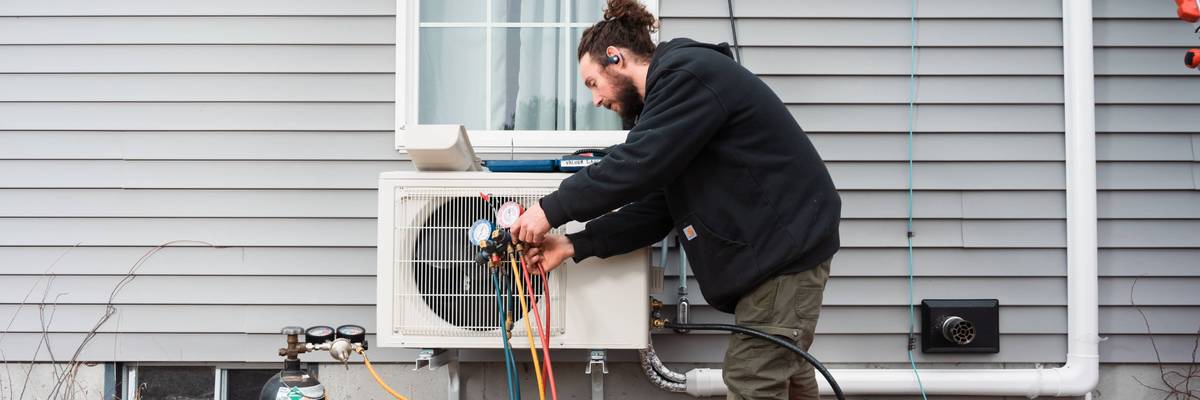
Matt Johnson, 38, an HVAC technician with ReVision Energy, a New England company specializing in solar energy and electric heat pump installations, works on removing all moisture from the line set of an newly installed electric heat pump on a home in Windham, Maine on Thursday, January 19, 2023.
Labor in Maine and elsewhere is proud to be advocating for and building clean power that provides affordable energy and good jobs for our communities.
The first year of this Trump administration has dealt significant blows to the advancement of clean energy and efforts to lower energy prices. The federal government has cut clean energy funding, repeatedly disrupted construction on in-progress wind energy projects, and shut down energy affordability programs. For workers on solar and wind energy projects, there’s been no shortage of bad news.
And yet, there’s also been undeniable progress. In the absence of federal leadership, state and local governments have picked up the slack, and labor unions have taken action.
To see what I mean, just take a closer look at my home state of Maine. In 2025, we had one of the most successful legislative sessions for climate and workers in our history. We passed landmark bills that expanded the state’s ability to build new clean energy projects and committed the state to achieve 100% clean electricity by 2040. Strong labor standards throughout this legislation help ensure every clean energy project we build in Maine creates high-quality, family-sustaining jobs while protecting ratepayers from rising costs. Policies like this are how we can insulate ourselves from harmful federal actions and continue to deliver real benefits. Other states could take note.
Across the country, energy demand is rising for the first time in decades, and we’re not building enough new energy to keep up. This supply and demand imbalance is pushing energy bills to unaffordable prices for working families, who are already struggling to stay afloat. At the same time, we’re experiencing the impacts of climate change with more and more frequency—extreme cold and devastating storms in the winter; scorching heatwaves, wildfires, and smog in the summer.
If we want climate policy to be popular and durable, it needs to do more than reduce emissions. It needs to materially deliver for working people.
This moment of high costs, worsening climate impacts, and a lack of good-wage jobs requires us to build more clean energy, urgently. We simply cannot bring down energy prices without more energy. Labor unions understand this, and we understand that clean energy will and is already creating thousands of job opportunities.
That’s why we so ardently fight for strong climate legislation in our state. It’s why our members were some of the first to speak up against federal cuts to clean energy tax credits. And throughout it all, we’re still building solar panels, installing heat pumps, erecting wind turbines, and upgrading building efficiency—work that makes our communities cleaner and safer.
Labor’s work for climate action will continue on, both in Maine and across the country. If we want climate policy to be popular and durable, it needs to do more than reduce emissions. It needs to materially deliver for working people—with good jobs, higher wages, and lower bills. It’s both possible and necessary to do all of this at once.
This year in Maine, we’re working to push the envelope even further to win bold, worker-led climate policy while driving down costs for ratepayers.
For example, we are advancing legislation that would streamline permitting of utility-scale clean energy projects built in Maine with high-road labor standards, accelerating the pace by which Maine brings clean energy online that is cheaper and lowering our exposure to global energy price volatility through greater energy independence.
The onus has certainly shifted to states to lead on climate and affordability; it’s not coming from the federal level. But that hasn’t deterred us in Maine, and it shouldn’t deter the rest of the country either. Even in red states like Texas, our brothers and sisters in labor have pushed for and won local climate progress.
Labor is proud to be advocating for and building clean power that provides affordable energy and good jobs for our communities. With working people at the table, we can drive meaningful climate action and pocketbook benefits for working people—all at once.
Let us not be afraid or resigned in this moment. Maine is proof that we can still create union jobs, lower costs, and build domestic clean energy, but only if we keep fighting for it.
Dear Common Dreams reader, It’s been nearly 30 years since I co-founded Common Dreams with my late wife, Lina Newhouser. We had the radical notion that journalism should serve the public good, not corporate profits. It was clear to us from the outset what it would take to build such a project. No paid advertisements. No corporate sponsors. No millionaire publisher telling us what to think or do. Many people said we wouldn't last a year, but we proved those doubters wrong. Together with a tremendous team of journalists and dedicated staff, we built an independent media outlet free from the constraints of profits and corporate control. Our mission has always been simple: To inform. To inspire. To ignite change for the common good. Building Common Dreams was not easy. Our survival was never guaranteed. When you take on the most powerful forces—Wall Street greed, fossil fuel industry destruction, Big Tech lobbyists, and uber-rich oligarchs who have spent billions upon billions rigging the economy and democracy in their favor—the only bulwark you have is supporters who believe in your work. But here’s the urgent message from me today. It's never been this bad out there. And it's never been this hard to keep us going. At the very moment Common Dreams is most needed, the threats we face are intensifying. We need your support now more than ever. We don't accept corporate advertising and never will. We don't have a paywall because we don't think people should be blocked from critical news based on their ability to pay. Everything we do is funded by the donations of readers like you. When everyone does the little they can afford, we are strong. But if that support retreats or dries up, so do we. Will you donate now to make sure Common Dreams not only survives but thrives? —Craig Brown, Co-founder |
The first year of this Trump administration has dealt significant blows to the advancement of clean energy and efforts to lower energy prices. The federal government has cut clean energy funding, repeatedly disrupted construction on in-progress wind energy projects, and shut down energy affordability programs. For workers on solar and wind energy projects, there’s been no shortage of bad news.
And yet, there’s also been undeniable progress. In the absence of federal leadership, state and local governments have picked up the slack, and labor unions have taken action.
To see what I mean, just take a closer look at my home state of Maine. In 2025, we had one of the most successful legislative sessions for climate and workers in our history. We passed landmark bills that expanded the state’s ability to build new clean energy projects and committed the state to achieve 100% clean electricity by 2040. Strong labor standards throughout this legislation help ensure every clean energy project we build in Maine creates high-quality, family-sustaining jobs while protecting ratepayers from rising costs. Policies like this are how we can insulate ourselves from harmful federal actions and continue to deliver real benefits. Other states could take note.
Across the country, energy demand is rising for the first time in decades, and we’re not building enough new energy to keep up. This supply and demand imbalance is pushing energy bills to unaffordable prices for working families, who are already struggling to stay afloat. At the same time, we’re experiencing the impacts of climate change with more and more frequency—extreme cold and devastating storms in the winter; scorching heatwaves, wildfires, and smog in the summer.
If we want climate policy to be popular and durable, it needs to do more than reduce emissions. It needs to materially deliver for working people.
This moment of high costs, worsening climate impacts, and a lack of good-wage jobs requires us to build more clean energy, urgently. We simply cannot bring down energy prices without more energy. Labor unions understand this, and we understand that clean energy will and is already creating thousands of job opportunities.
That’s why we so ardently fight for strong climate legislation in our state. It’s why our members were some of the first to speak up against federal cuts to clean energy tax credits. And throughout it all, we’re still building solar panels, installing heat pumps, erecting wind turbines, and upgrading building efficiency—work that makes our communities cleaner and safer.
Labor’s work for climate action will continue on, both in Maine and across the country. If we want climate policy to be popular and durable, it needs to do more than reduce emissions. It needs to materially deliver for working people—with good jobs, higher wages, and lower bills. It’s both possible and necessary to do all of this at once.
This year in Maine, we’re working to push the envelope even further to win bold, worker-led climate policy while driving down costs for ratepayers.
For example, we are advancing legislation that would streamline permitting of utility-scale clean energy projects built in Maine with high-road labor standards, accelerating the pace by which Maine brings clean energy online that is cheaper and lowering our exposure to global energy price volatility through greater energy independence.
The onus has certainly shifted to states to lead on climate and affordability; it’s not coming from the federal level. But that hasn’t deterred us in Maine, and it shouldn’t deter the rest of the country either. Even in red states like Texas, our brothers and sisters in labor have pushed for and won local climate progress.
Labor is proud to be advocating for and building clean power that provides affordable energy and good jobs for our communities. With working people at the table, we can drive meaningful climate action and pocketbook benefits for working people—all at once.
Let us not be afraid or resigned in this moment. Maine is proof that we can still create union jobs, lower costs, and build domestic clean energy, but only if we keep fighting for it.
The first year of this Trump administration has dealt significant blows to the advancement of clean energy and efforts to lower energy prices. The federal government has cut clean energy funding, repeatedly disrupted construction on in-progress wind energy projects, and shut down energy affordability programs. For workers on solar and wind energy projects, there’s been no shortage of bad news.
And yet, there’s also been undeniable progress. In the absence of federal leadership, state and local governments have picked up the slack, and labor unions have taken action.
To see what I mean, just take a closer look at my home state of Maine. In 2025, we had one of the most successful legislative sessions for climate and workers in our history. We passed landmark bills that expanded the state’s ability to build new clean energy projects and committed the state to achieve 100% clean electricity by 2040. Strong labor standards throughout this legislation help ensure every clean energy project we build in Maine creates high-quality, family-sustaining jobs while protecting ratepayers from rising costs. Policies like this are how we can insulate ourselves from harmful federal actions and continue to deliver real benefits. Other states could take note.
Across the country, energy demand is rising for the first time in decades, and we’re not building enough new energy to keep up. This supply and demand imbalance is pushing energy bills to unaffordable prices for working families, who are already struggling to stay afloat. At the same time, we’re experiencing the impacts of climate change with more and more frequency—extreme cold and devastating storms in the winter; scorching heatwaves, wildfires, and smog in the summer.
If we want climate policy to be popular and durable, it needs to do more than reduce emissions. It needs to materially deliver for working people.
This moment of high costs, worsening climate impacts, and a lack of good-wage jobs requires us to build more clean energy, urgently. We simply cannot bring down energy prices without more energy. Labor unions understand this, and we understand that clean energy will and is already creating thousands of job opportunities.
That’s why we so ardently fight for strong climate legislation in our state. It’s why our members were some of the first to speak up against federal cuts to clean energy tax credits. And throughout it all, we’re still building solar panels, installing heat pumps, erecting wind turbines, and upgrading building efficiency—work that makes our communities cleaner and safer.
Labor’s work for climate action will continue on, both in Maine and across the country. If we want climate policy to be popular and durable, it needs to do more than reduce emissions. It needs to materially deliver for working people—with good jobs, higher wages, and lower bills. It’s both possible and necessary to do all of this at once.
This year in Maine, we’re working to push the envelope even further to win bold, worker-led climate policy while driving down costs for ratepayers.
For example, we are advancing legislation that would streamline permitting of utility-scale clean energy projects built in Maine with high-road labor standards, accelerating the pace by which Maine brings clean energy online that is cheaper and lowering our exposure to global energy price volatility through greater energy independence.
The onus has certainly shifted to states to lead on climate and affordability; it’s not coming from the federal level. But that hasn’t deterred us in Maine, and it shouldn’t deter the rest of the country either. Even in red states like Texas, our brothers and sisters in labor have pushed for and won local climate progress.
Labor is proud to be advocating for and building clean power that provides affordable energy and good jobs for our communities. With working people at the table, we can drive meaningful climate action and pocketbook benefits for working people—all at once.
Let us not be afraid or resigned in this moment. Maine is proof that we can still create union jobs, lower costs, and build domestic clean energy, but only if we keep fighting for it.