This November, Vote Like Your Well-Being Depends on It
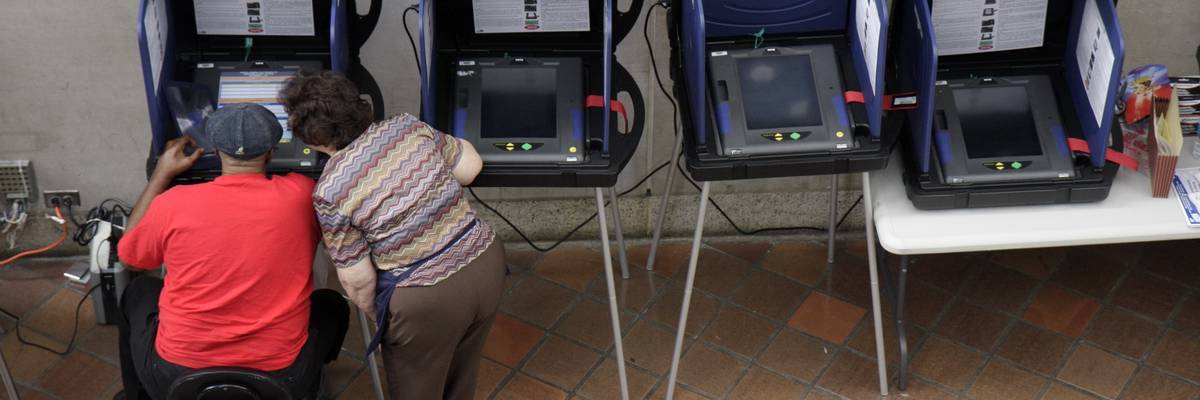
We are all hurting, but together we can start to fix this. Voting lets us hold elected officials to account—and choose representatives who will fight for our housing, healthcare, and food assistance.
It’s really cold living in a home with no heat or running water in December. That was a hard lesson I had to learn as a kid when my family was struggling.
Now, as a healthcare case manager, I’ve seen firsthand even more unnecessary human suffering caused by bad policy choices. We need change, and voting is part of how we make it.
I grew up in a large family. My dad was a convoy driver during the Iraq War and was gone from us for nearly a decade. During that time, we struggled to afford the medication to manage my sister’s Type 1 diabetes. My mother stayed home so often to care for her that she lost her job.
Even as prices rise, they’ve also chosen to take help away from those who need it the most—and give it to those who need it least.
My family filed for bankruptcy, hoping for a clean slate. Instead, with no credit, we couldn’t find a stable place to live. We lost our home and spent time bouncing around trying to find housing.
Those hard years inspired me to serve people struggling in circumstances like ours, which are all too common. And as prices rise and safety net programs get cut, they’re becoming more common every day.
When my family experienced homelessness in the early 2000s, the Urban Institute estimated that between 500,000 and 600,000 Americans experienced homelessness on any given night. Now the Department of Housing and Urban Development reports that number is over 745,000.
Today, between 50-60% of Americans live paycheck to paycheck or report being financially strained. This has worsened in recent years as pandemic-era financial help has expired.
Part of the pain comes from the Trump administration’s sweeping tariffs and war of choice in Iran, which have increased inflation and spiked the cost of gas and groceries. But even as prices rise, they’ve also chosen to take help away from those who need it the most—and give it to those who need it least.
The so-called “One Big Beautiful Bill,” which this Congress passed last year, slashed Medicaid and the Supplemental Nutrition Assistance Program (SNAP) and shifted those investments to tax cuts for the ultra rich. So far, over 5 million people nationwide have lost SNAP, and at least 10 million people nationwide are expected to lose Medicaid coverage by 2034.
These changes will affect you even if you aren’t on Medicaid. Rural hospitals rely heavily on Medicaid patients. As these patients lose coverage, rural hospitals are at risk of closing, which could deprive entire communities of access to care. Nationwide, estimates suggest 400 to 700 rural hospitals are now vulnerable to closure, with nearly 300 at immediate risk.
These Medicaid cuts have also significantly compromised care coordination in rural areas. Care coordination lets case managers like me help families find wraparound care for intersecting hardships, from housing to food to healthcare. Since the Medicaid cuts, several providers have withdrawn services that help my clients with daily needs, like laundry or transportation.
My wife and I experienced firsthand how critical care coordination can be when our beautiful baby boy was born with terminal brain damage. Our care coordinator was invaluable in helping us determine his care and its costs. She was compassionate with our anguish.
Even though I’m a case manager and my wife works in human services, we struggled to navigate the system while grieving. How can a family less familiar with the system possibly cope?
Meanwhile, vulnerable people are losing help left and right. I’ve had clients like a woman with a sight disability get denied Medicaid renewal because she could “still walk and talk.” I’ve had clients with missing limbs denied disability benefits outright and then have to go through a lengthy appeals process.
We are all hurting, but together we can start to fix this. Voting lets us hold elected officials to account—and choose representatives who will fight for our housing, healthcare, and food assistance. Our lives depend on it.
We are at a crossroads
This country and this world are at a monumental crossroads. In a few short weeks, US voters will have an opportunity to beat back the forces of fascism and confront the billionaires who are rigging the economy, our media system, and our democracy, making it increasingly impossible for ordinary people to get by. We’re not just talking about the election. We’re talking about what must be done once these fascist elements are vanquished from power. We need a bolder set of solutions than what either major party has so far been willing to offer and a working-class movement ready to fight like hell for it. Trump didn't emerge from nowhere. The conditions that fueled MAGA authoritarianism were created by decades of radical neoliberal economic policies and a corrupt political system dominated by corporate interests. They slashed taxes on the super-rich, promising that the benefits would trickle down. They said giveaways to the corporate titans would make life more affordable for the rest of us. It was all bullshit. And when a bitter, betrayed populace searches for someone to blame, right-wing demagogues have little trouble finding scapegoats. People know when they're being lied to, but you won't hear any of this from the corporate media. Only independent journalism—powered and funded by people who believe in building a better world—can deliver truly trustworthy daily news. Our Fall Campaign is underway, and we need your help. To power our newsroom through the rest of the year, we need to raise $125,000 by midnight on October 31. So if you share our vision, please contribute whatever you can to sustain our work. |
It’s really cold living in a home with no heat or running water in December. That was a hard lesson I had to learn as a kid when my family was struggling.
Now, as a healthcare case manager, I’ve seen firsthand even more unnecessary human suffering caused by bad policy choices. We need change, and voting is part of how we make it.
I grew up in a large family. My dad was a convoy driver during the Iraq War and was gone from us for nearly a decade. During that time, we struggled to afford the medication to manage my sister’s Type 1 diabetes. My mother stayed home so often to care for her that she lost her job.
Even as prices rise, they’ve also chosen to take help away from those who need it the most—and give it to those who need it least.
My family filed for bankruptcy, hoping for a clean slate. Instead, with no credit, we couldn’t find a stable place to live. We lost our home and spent time bouncing around trying to find housing.
Those hard years inspired me to serve people struggling in circumstances like ours, which are all too common. And as prices rise and safety net programs get cut, they’re becoming more common every day.
When my family experienced homelessness in the early 2000s, the Urban Institute estimated that between 500,000 and 600,000 Americans experienced homelessness on any given night. Now the Department of Housing and Urban Development reports that number is over 745,000.
Today, between 50-60% of Americans live paycheck to paycheck or report being financially strained. This has worsened in recent years as pandemic-era financial help has expired.
Part of the pain comes from the Trump administration’s sweeping tariffs and war of choice in Iran, which have increased inflation and spiked the cost of gas and groceries. But even as prices rise, they’ve also chosen to take help away from those who need it the most—and give it to those who need it least.
The so-called “One Big Beautiful Bill,” which this Congress passed last year, slashed Medicaid and the Supplemental Nutrition Assistance Program (SNAP) and shifted those investments to tax cuts for the ultra rich. So far, over 5 million people nationwide have lost SNAP, and at least 10 million people nationwide are expected to lose Medicaid coverage by 2034.
These changes will affect you even if you aren’t on Medicaid. Rural hospitals rely heavily on Medicaid patients. As these patients lose coverage, rural hospitals are at risk of closing, which could deprive entire communities of access to care. Nationwide, estimates suggest 400 to 700 rural hospitals are now vulnerable to closure, with nearly 300 at immediate risk.
These Medicaid cuts have also significantly compromised care coordination in rural areas. Care coordination lets case managers like me help families find wraparound care for intersecting hardships, from housing to food to healthcare. Since the Medicaid cuts, several providers have withdrawn services that help my clients with daily needs, like laundry or transportation.
My wife and I experienced firsthand how critical care coordination can be when our beautiful baby boy was born with terminal brain damage. Our care coordinator was invaluable in helping us determine his care and its costs. She was compassionate with our anguish.
Even though I’m a case manager and my wife works in human services, we struggled to navigate the system while grieving. How can a family less familiar with the system possibly cope?
Meanwhile, vulnerable people are losing help left and right. I’ve had clients like a woman with a sight disability get denied Medicaid renewal because she could “still walk and talk.” I’ve had clients with missing limbs denied disability benefits outright and then have to go through a lengthy appeals process.
We are all hurting, but together we can start to fix this. Voting lets us hold elected officials to account—and choose representatives who will fight for our housing, healthcare, and food assistance. Our lives depend on it.
- 7 Questions a 2026 Candidate Must Get Right to Earn Your Vote on Election Day ›
- Vote as If Your Life Depends on It. Because It Does. ›
- These Proposals Would Make Life Better for Millions of People—And Most Americans Support Them ›
- US Working Class Mobilizes Ahead of Nationwide 'May Day Strong' Rallies ›
- This Election Season, Turn Out for Working Women ›