SUBSCRIBE TO OUR FREE NEWSLETTER
Daily news & progressive opinion—funded by the people, not the corporations—delivered straight to your inbox.
5
#000000
#FFFFFF
To donate by check, phone, or other method, see our More Ways to Give page.
Daily news & progressive opinion—funded by the people, not the corporations—delivered straight to your inbox.
While Congress advances the US-Israeli military integration plan, Israel and the US attempt to expand their “soft power” through agritechnology development across the region.
Congress’ proposed National Defense Authorization Act’s Section 219 ‘US-Israel Defense Technology Cooperation Initiative’ would require the countries to expand intelligence sharing and grow joint weapons research and production, including artificial intelligence surveillance, lethal drones, arms, tanks, and munitions. This comes as Israel’s military decimation of Gaza, apartheid rule over the West Bank, and occupation of southern Lebanon have triggered opposition across the world. Meanwhile, a more subtle, parallel violence grows in the form of US-funded Israeli agricultural occupation of Palestinian lands. This partnership expands Israel’s regional control spatially and financially, with US backing, but with little public knowledge.
Three years into the deliberate starvation of Gaza, the US and Israel have expanded and entrenched their longstanding agricultural cooperation through the US-Israeli Binational Agricultural Research and Development Fund (BARD-ISUS). Despite global allegations of genocide against Palestine, weaponizing hunger and even of food aid itself, BARD-ISUS just approved $13.2M US for research and development of Israeli agritech on Palestinian lands.
Established in 1978 by the US and Israeli governments, BARD-ISUS has granted a total of nearly $430 million USD (as of 2024) to over 1,700 projects. In the US, the USDA Agricultural Research Service is on 19% of projects and top universities include University of California Davis (11% of projects); Cornell University (7%); and University of Florida (5%). Universities or public agencies in 48 US states (all except Alaska and North Dakota) have hosted hundreds of BARD-ISUS grants over decades. Nearly $84 million USD has gone to research grants partnering with California land grant institutions alone. The US Farm Bill has allocated additional funds to BARD-ISUS to go directly to agritech research, but also to fund Israeli postdoctoral fellows to be placed at US universities and Israeli graduate students to conduct research with US teams.
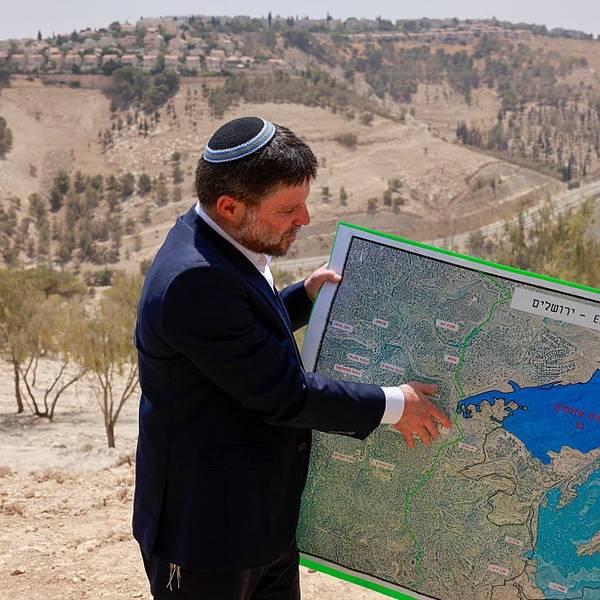
Meanwhile, the House of Representatives version of the Farm Bill (HR 7567—Farm, Food, and National Security Act of 2026), tucks in a proposed expansion of BARD to signatories of the Abraham Accords—a 2020 mechanism by which the Trump regime pressures regional countries to normalize relations with Israel, in this case with additional promises for hundreds of millions of dollars of agritech transfer. The House passed another bipartisan amendment (H.R.7587 United States-Israel Agriculture Cooperation Improvement and Expansion Act) reiterating the expansion of BARD to Abraham Accord signatories, which also fast tracks commercialization of ag tech research in and with Israeli institutions and companies, while expanding the overall budget of BARD to $12M each year until 2030. The US Senate Committee on Agriculture has approved the extension of BARD-ISUS funding until 2031, with an allocation of $20 million per year ($80 million overall), atop the lucrative annual proceedings BARD receives from its $110 million endowment. Tellingly, as of 2020, BARD funding can now go to Israeli agricultural research projects in the West Bank’s Area C and the occupied Golan Heights.
The funding increase to BARD-ISUS and expansion of eligibility to Abraham Accords nations indicate a coercion of regional powers to normalize relations with Israel at a time of mass popular support for Palestinian sovereignty.
While BARD research appears at first glance to be apolitical “basic science” efforts to “improve crop productivity and resilience,” their website contains no mention of Palestine, or even euphemistic mentions of conflicts over land in the region. The well-funded BARD-ISUS has “generated a multitude of agricultural innovations, practices, and patents, impacting economies, industries, academia, and human health in both countries and beyond, with a high return on investment”—a claim that erases Palestinian land and agriculture, and distracts from the violence of settler occupation and genocide.
This year’s BARD grants were the “the highest funding amount awarded in the last 20 years,” indicating an entrenchment of US and Israeli academia and agrobiotech industries. The domestic relevance for this BARD expansion becomes acute amid the Farm Bill’s deference to the 2025 HR 1’s $187 Billion cuts to the Supplemental Nutrition Assistance Program (SNAP). Even atop the ongoing deprivations in Gaza, BARD expansion comes as millions of people in the US in need are being kicked off SNAP, USDA employees are facing mass layoffs, and US farmers are reeling from the impacts that US and Israel’s attacks on Iran have had on fertilizers and fuel prices. Increasing funding for Israeli ag tech redirects resources away from urgent domestic agrifood needs.
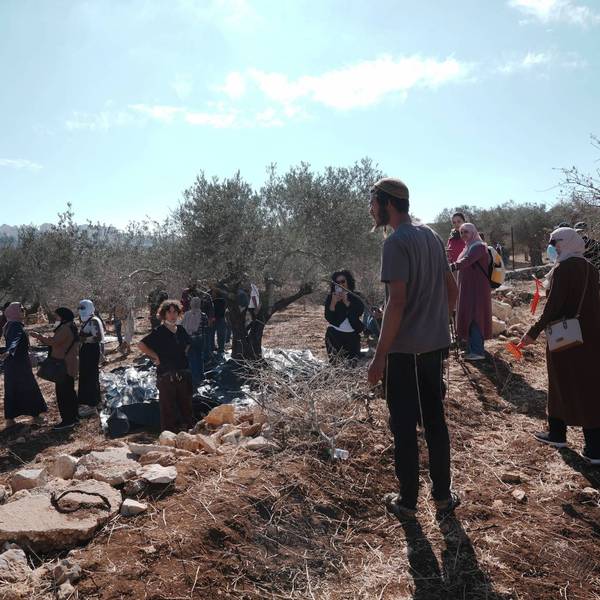
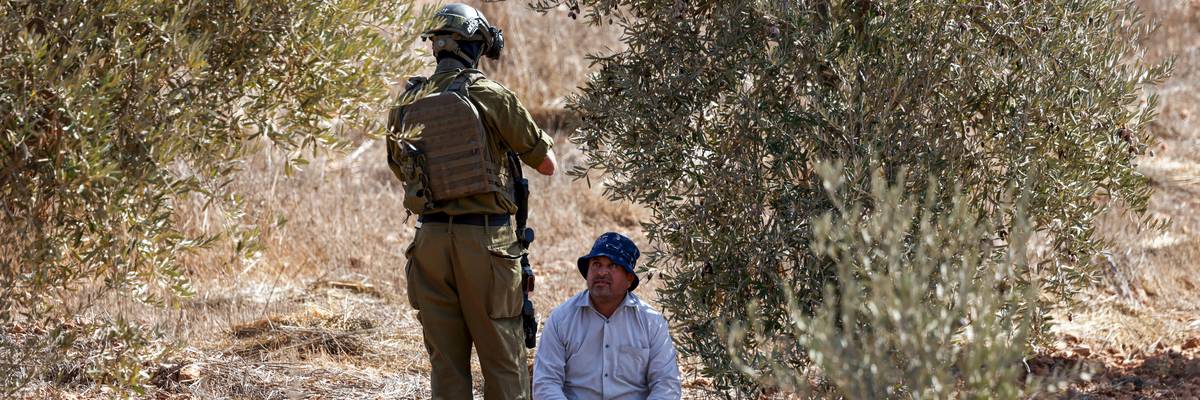
The BARD-ISUS expansion also comes at a time when Israel and the US rapidly expand their targeting and destruction of not just Palestinian food systems and agricultural production, but rural and agrarian communities across Southwest Asia, in what Paul Kohlbry has termed “agrarian annihilation.” Israel continues to target Palestinian and Lebanese farmers and food systems, from the deliberate starvation of Gaza documented by international law and global civil society to the destruction of farms and waterways in the Occupied West Bank and now southern Lebanon. Israeli forces, funded by the US, continue to attack Palestinian villages, destroy agricultural lands, capture waterways, and kill farmers and pastoralists throughout the West Bank—with settler attacks hitting an “all-time high” in July 2026 according to the United Nations. The West Bank’s Jordan Valley and South Hebron Hills have long endured Israeli settlements and violence—all of which have proliferated in recent years and especially in recent months. In the Jordan Valley, where an estimated 65,000 Palestinians farm some of the most fertile land in the West Bank, B’Tselem has recorded repeated demolitions of Palestinian water cisterns—structures that families build to collect rainwater because they are legally barred from connecting to piped water networks.
The expansion of USDA-funded agritechnologies—and BARD pressure for corporate commercialization—undermines the viability of Palestinian and Lebanese food security and food sovereignty; unchecked, it jeopardizes the long-term stability and viability of rural communities in the region who are increasingly displaced with these US-subsidized high-tech ag research projects. Rather than establish accountability for Israeli forces’ years of deliberate famine in Gaza, such funding subsidizes more land dispossession and obscures the well-documented starvation of Palestine with claims of agribiotechnology research for Global Food Security. BARD-ISUS just launched a new Food Security Technology Accelerator to “support collaborative R&D projects between Israeli and American agritech researchers and corporations, so as to “foster innovation in food security.” How can the countries responsible for massive food insecurity and famine across the region claim to be able to “foster food security”?
While Congress advances the US-Israeli military integration plan, Israel and the US attempt to expand their “soft power” through agritechnology development across the region. The funding increase to BARD-ISUS and expansion of eligibility to Abraham Accords nations indicate a coercion of regional powers to normalize relations with Israel at a time of mass popular support for Palestinian sovereignty. This would deploy more USDA funds to agritech development in countries willing to support an Israeli regime perpetrating genocide in Palestine, invading Lebanon, and initiating a war with Iran. In short, this USDA multimillion dollar agribusiness integration with Israel subsidizes expansionism and impunity—further undermining any authentic peace in the region.
Dear Common Dreams reader, It’s been nearly 30 years since I co-founded Common Dreams with my late wife, Lina Newhouser. We had the radical notion that journalism should serve the public good, not corporate profits. It was clear to us from the outset what it would take to build such a project. No paid advertisements. No corporate sponsors. No millionaire publisher telling us what to think or do. Many people said we wouldn't last a year, but we proved those doubters wrong. Together with a tremendous team of journalists and dedicated staff, we built an independent media outlet free from the constraints of profits and corporate control. Our mission has always been simple: To inform. To inspire. To ignite change for the common good. Building Common Dreams was not easy. Our survival was never guaranteed. When you take on the most powerful forces—Wall Street greed, fossil fuel industry destruction, Big Tech lobbyists, and uber-rich oligarchs who have spent billions upon billions rigging the economy and democracy in their favor—the only bulwark you have is supporters who believe in your work. But here’s the urgent message from me today. It's never been this bad out there. And it's never been this hard to keep us going. At the very moment Common Dreams is most needed, the threats we face are intensifying. We need your support now more than ever. We don't accept corporate advertising and never will. We don't have a paywall because we don't think people should be blocked from critical news based on their ability to pay. Everything we do is funded by the donations of readers like you. When everyone does the little they can afford, we are strong. But if that support retreats or dries up, so do we. Will you donate now to make sure Common Dreams not only survives but thrives? —Craig Brown, Co-founder |
Congress’ proposed National Defense Authorization Act’s Section 219 ‘US-Israel Defense Technology Cooperation Initiative’ would require the countries to expand intelligence sharing and grow joint weapons research and production, including artificial intelligence surveillance, lethal drones, arms, tanks, and munitions. This comes as Israel’s military decimation of Gaza, apartheid rule over the West Bank, and occupation of southern Lebanon have triggered opposition across the world. Meanwhile, a more subtle, parallel violence grows in the form of US-funded Israeli agricultural occupation of Palestinian lands. This partnership expands Israel’s regional control spatially and financially, with US backing, but with little public knowledge.
Three years into the deliberate starvation of Gaza, the US and Israel have expanded and entrenched their longstanding agricultural cooperation through the US-Israeli Binational Agricultural Research and Development Fund (BARD-ISUS). Despite global allegations of genocide against Palestine, weaponizing hunger and even of food aid itself, BARD-ISUS just approved $13.2M US for research and development of Israeli agritech on Palestinian lands.
Established in 1978 by the US and Israeli governments, BARD-ISUS has granted a total of nearly $430 million USD (as of 2024) to over 1,700 projects. In the US, the USDA Agricultural Research Service is on 19% of projects and top universities include University of California Davis (11% of projects); Cornell University (7%); and University of Florida (5%). Universities or public agencies in 48 US states (all except Alaska and North Dakota) have hosted hundreds of BARD-ISUS grants over decades. Nearly $84 million USD has gone to research grants partnering with California land grant institutions alone. The US Farm Bill has allocated additional funds to BARD-ISUS to go directly to agritech research, but also to fund Israeli postdoctoral fellows to be placed at US universities and Israeli graduate students to conduct research with US teams.
Meanwhile, the House of Representatives version of the Farm Bill (HR 7567—Farm, Food, and National Security Act of 2026), tucks in a proposed expansion of BARD to signatories of the Abraham Accords—a 2020 mechanism by which the Trump regime pressures regional countries to normalize relations with Israel, in this case with additional promises for hundreds of millions of dollars of agritech transfer. The House passed another bipartisan amendment (H.R.7587 United States-Israel Agriculture Cooperation Improvement and Expansion Act) reiterating the expansion of BARD to Abraham Accord signatories, which also fast tracks commercialization of ag tech research in and with Israeli institutions and companies, while expanding the overall budget of BARD to $12M each year until 2030. The US Senate Committee on Agriculture has approved the extension of BARD-ISUS funding until 2031, with an allocation of $20 million per year ($80 million overall), atop the lucrative annual proceedings BARD receives from its $110 million endowment. Tellingly, as of 2020, BARD funding can now go to Israeli agricultural research projects in the West Bank’s Area C and the occupied Golan Heights.
The funding increase to BARD-ISUS and expansion of eligibility to Abraham Accords nations indicate a coercion of regional powers to normalize relations with Israel at a time of mass popular support for Palestinian sovereignty.
While BARD research appears at first glance to be apolitical “basic science” efforts to “improve crop productivity and resilience,” their website contains no mention of Palestine, or even euphemistic mentions of conflicts over land in the region. The well-funded BARD-ISUS has “generated a multitude of agricultural innovations, practices, and patents, impacting economies, industries, academia, and human health in both countries and beyond, with a high return on investment”—a claim that erases Palestinian land and agriculture, and distracts from the violence of settler occupation and genocide.
This year’s BARD grants were the “the highest funding amount awarded in the last 20 years,” indicating an entrenchment of US and Israeli academia and agrobiotech industries. The domestic relevance for this BARD expansion becomes acute amid the Farm Bill’s deference to the 2025 HR 1’s $187 Billion cuts to the Supplemental Nutrition Assistance Program (SNAP). Even atop the ongoing deprivations in Gaza, BARD expansion comes as millions of people in the US in need are being kicked off SNAP, USDA employees are facing mass layoffs, and US farmers are reeling from the impacts that US and Israel’s attacks on Iran have had on fertilizers and fuel prices. Increasing funding for Israeli ag tech redirects resources away from urgent domestic agrifood needs.
The BARD-ISUS expansion also comes at a time when Israel and the US rapidly expand their targeting and destruction of not just Palestinian food systems and agricultural production, but rural and agrarian communities across Southwest Asia, in what Paul Kohlbry has termed “agrarian annihilation.” Israel continues to target Palestinian and Lebanese farmers and food systems, from the deliberate starvation of Gaza documented by international law and global civil society to the destruction of farms and waterways in the Occupied West Bank and now southern Lebanon. Israeli forces, funded by the US, continue to attack Palestinian villages, destroy agricultural lands, capture waterways, and kill farmers and pastoralists throughout the West Bank—with settler attacks hitting an “all-time high” in July 2026 according to the United Nations. The West Bank’s Jordan Valley and South Hebron Hills have long endured Israeli settlements and violence—all of which have proliferated in recent years and especially in recent months. In the Jordan Valley, where an estimated 65,000 Palestinians farm some of the most fertile land in the West Bank, B’Tselem has recorded repeated demolitions of Palestinian water cisterns—structures that families build to collect rainwater because they are legally barred from connecting to piped water networks.
The expansion of USDA-funded agritechnologies—and BARD pressure for corporate commercialization—undermines the viability of Palestinian and Lebanese food security and food sovereignty; unchecked, it jeopardizes the long-term stability and viability of rural communities in the region who are increasingly displaced with these US-subsidized high-tech ag research projects. Rather than establish accountability for Israeli forces’ years of deliberate famine in Gaza, such funding subsidizes more land dispossession and obscures the well-documented starvation of Palestine with claims of agribiotechnology research for Global Food Security. BARD-ISUS just launched a new Food Security Technology Accelerator to “support collaborative R&D projects between Israeli and American agritech researchers and corporations, so as to “foster innovation in food security.” How can the countries responsible for massive food insecurity and famine across the region claim to be able to “foster food security”?
While Congress advances the US-Israeli military integration plan, Israel and the US attempt to expand their “soft power” through agritechnology development across the region. The funding increase to BARD-ISUS and expansion of eligibility to Abraham Accords nations indicate a coercion of regional powers to normalize relations with Israel at a time of mass popular support for Palestinian sovereignty. This would deploy more USDA funds to agritech development in countries willing to support an Israeli regime perpetrating genocide in Palestine, invading Lebanon, and initiating a war with Iran. In short, this USDA multimillion dollar agribusiness integration with Israel subsidizes expansionism and impunity—further undermining any authentic peace in the region.
Congress’ proposed National Defense Authorization Act’s Section 219 ‘US-Israel Defense Technology Cooperation Initiative’ would require the countries to expand intelligence sharing and grow joint weapons research and production, including artificial intelligence surveillance, lethal drones, arms, tanks, and munitions. This comes as Israel’s military decimation of Gaza, apartheid rule over the West Bank, and occupation of southern Lebanon have triggered opposition across the world. Meanwhile, a more subtle, parallel violence grows in the form of US-funded Israeli agricultural occupation of Palestinian lands. This partnership expands Israel’s regional control spatially and financially, with US backing, but with little public knowledge.
Three years into the deliberate starvation of Gaza, the US and Israel have expanded and entrenched their longstanding agricultural cooperation through the US-Israeli Binational Agricultural Research and Development Fund (BARD-ISUS). Despite global allegations of genocide against Palestine, weaponizing hunger and even of food aid itself, BARD-ISUS just approved $13.2M US for research and development of Israeli agritech on Palestinian lands.
Established in 1978 by the US and Israeli governments, BARD-ISUS has granted a total of nearly $430 million USD (as of 2024) to over 1,700 projects. In the US, the USDA Agricultural Research Service is on 19% of projects and top universities include University of California Davis (11% of projects); Cornell University (7%); and University of Florida (5%). Universities or public agencies in 48 US states (all except Alaska and North Dakota) have hosted hundreds of BARD-ISUS grants over decades. Nearly $84 million USD has gone to research grants partnering with California land grant institutions alone. The US Farm Bill has allocated additional funds to BARD-ISUS to go directly to agritech research, but also to fund Israeli postdoctoral fellows to be placed at US universities and Israeli graduate students to conduct research with US teams.
Meanwhile, the House of Representatives version of the Farm Bill (HR 7567—Farm, Food, and National Security Act of 2026), tucks in a proposed expansion of BARD to signatories of the Abraham Accords—a 2020 mechanism by which the Trump regime pressures regional countries to normalize relations with Israel, in this case with additional promises for hundreds of millions of dollars of agritech transfer. The House passed another bipartisan amendment (H.R.7587 United States-Israel Agriculture Cooperation Improvement and Expansion Act) reiterating the expansion of BARD to Abraham Accord signatories, which also fast tracks commercialization of ag tech research in and with Israeli institutions and companies, while expanding the overall budget of BARD to $12M each year until 2030. The US Senate Committee on Agriculture has approved the extension of BARD-ISUS funding until 2031, with an allocation of $20 million per year ($80 million overall), atop the lucrative annual proceedings BARD receives from its $110 million endowment. Tellingly, as of 2020, BARD funding can now go to Israeli agricultural research projects in the West Bank’s Area C and the occupied Golan Heights.
The funding increase to BARD-ISUS and expansion of eligibility to Abraham Accords nations indicate a coercion of regional powers to normalize relations with Israel at a time of mass popular support for Palestinian sovereignty.
While BARD research appears at first glance to be apolitical “basic science” efforts to “improve crop productivity and resilience,” their website contains no mention of Palestine, or even euphemistic mentions of conflicts over land in the region. The well-funded BARD-ISUS has “generated a multitude of agricultural innovations, practices, and patents, impacting economies, industries, academia, and human health in both countries and beyond, with a high return on investment”—a claim that erases Palestinian land and agriculture, and distracts from the violence of settler occupation and genocide.
This year’s BARD grants were the “the highest funding amount awarded in the last 20 years,” indicating an entrenchment of US and Israeli academia and agrobiotech industries. The domestic relevance for this BARD expansion becomes acute amid the Farm Bill’s deference to the 2025 HR 1’s $187 Billion cuts to the Supplemental Nutrition Assistance Program (SNAP). Even atop the ongoing deprivations in Gaza, BARD expansion comes as millions of people in the US in need are being kicked off SNAP, USDA employees are facing mass layoffs, and US farmers are reeling from the impacts that US and Israel’s attacks on Iran have had on fertilizers and fuel prices. Increasing funding for Israeli ag tech redirects resources away from urgent domestic agrifood needs.
The BARD-ISUS expansion also comes at a time when Israel and the US rapidly expand their targeting and destruction of not just Palestinian food systems and agricultural production, but rural and agrarian communities across Southwest Asia, in what Paul Kohlbry has termed “agrarian annihilation.” Israel continues to target Palestinian and Lebanese farmers and food systems, from the deliberate starvation of Gaza documented by international law and global civil society to the destruction of farms and waterways in the Occupied West Bank and now southern Lebanon. Israeli forces, funded by the US, continue to attack Palestinian villages, destroy agricultural lands, capture waterways, and kill farmers and pastoralists throughout the West Bank—with settler attacks hitting an “all-time high” in July 2026 according to the United Nations. The West Bank’s Jordan Valley and South Hebron Hills have long endured Israeli settlements and violence—all of which have proliferated in recent years and especially in recent months. In the Jordan Valley, where an estimated 65,000 Palestinians farm some of the most fertile land in the West Bank, B’Tselem has recorded repeated demolitions of Palestinian water cisterns—structures that families build to collect rainwater because they are legally barred from connecting to piped water networks.
The expansion of USDA-funded agritechnologies—and BARD pressure for corporate commercialization—undermines the viability of Palestinian and Lebanese food security and food sovereignty; unchecked, it jeopardizes the long-term stability and viability of rural communities in the region who are increasingly displaced with these US-subsidized high-tech ag research projects. Rather than establish accountability for Israeli forces’ years of deliberate famine in Gaza, such funding subsidizes more land dispossession and obscures the well-documented starvation of Palestine with claims of agribiotechnology research for Global Food Security. BARD-ISUS just launched a new Food Security Technology Accelerator to “support collaborative R&D projects between Israeli and American agritech researchers and corporations, so as to “foster innovation in food security.” How can the countries responsible for massive food insecurity and famine across the region claim to be able to “foster food security”?
While Congress advances the US-Israeli military integration plan, Israel and the US attempt to expand their “soft power” through agritechnology development across the region. The funding increase to BARD-ISUS and expansion of eligibility to Abraham Accords nations indicate a coercion of regional powers to normalize relations with Israel at a time of mass popular support for Palestinian sovereignty. This would deploy more USDA funds to agritech development in countries willing to support an Israeli regime perpetrating genocide in Palestine, invading Lebanon, and initiating a war with Iran. In short, this USDA multimillion dollar agribusiness integration with Israel subsidizes expansionism and impunity—further undermining any authentic peace in the region.