SUBSCRIBE TO OUR FREE NEWSLETTER
Daily news & progressive opinion—funded by the people, not the corporations—delivered straight to your inbox.
5
#000000
#FFFFFF
To donate by check, phone, or other method, see our More Ways to Give page.
Daily news & progressive opinion—funded by the people, not the corporations—delivered straight to your inbox.
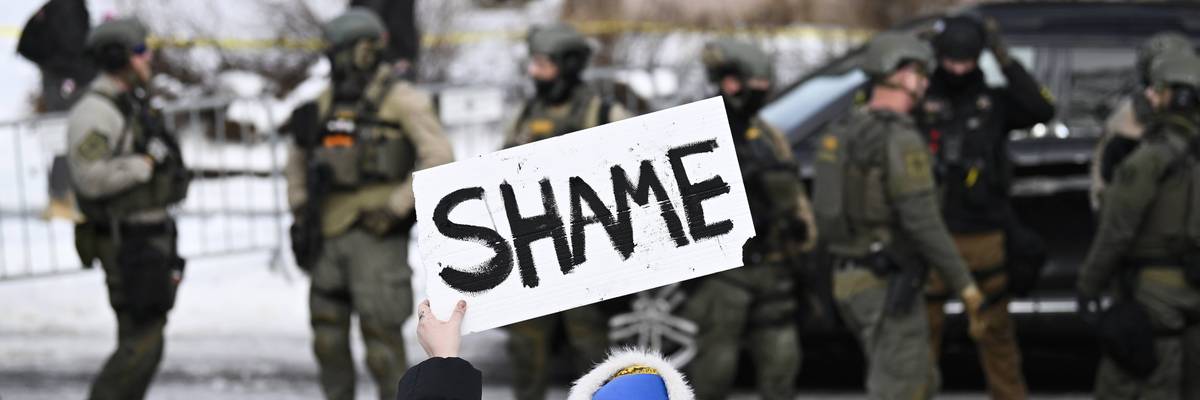
An onlooker holds a sign that reads "Shame" as members of law enforcement work the scene following a suspected shooting by an ICE agent during federal law enforcement operations on January 7, 2026 in Minneapolis, Minnesota.
How do we prepare and fight back? If sufficiently connected with each other and backed up by labor unions; state governments; and major public, faith, business, and community institutions, municipalities offer our best hope for avoiding authoritarian takeover.
As scholars of democracy, we are watching America’s warning signs flash red. We expect America’s long-building constitutional crisis to soon escalate.
Earlier this year, we hosted a national workshop to assess the threats facing our society in the months leading up to and following the November midterm elections. We also studied the preparations of American social movements, communities, and institutions to meet those threats.
Our basic goals were straightforward. Every qualified voter should be able to vote and have that vote counted. We must head off and block political violence. Duly certified winners should be able to take office without obstruction.
To our fellow Americans: This is not the time to look away. More than ever we need the kind of courage that history books heroize.
One product of that workshop, published this fall and signed by dozens of scholars, is The American Crisis report. The American Crisis analyzes the likelihood of the administration thwarting electoral due process; escalating military and paramilitary occupations of US cities; and other emerging threats that would worsen any electoral, constitutional, or military crisis.
It’s not hard to see the shape of what may come. In the weeks preceding Election Day, we anticipate that election administration responsibilities could be seized from states and cities, and attempts made to disrupt, sabotage, or otherwise capture their administrative powers.
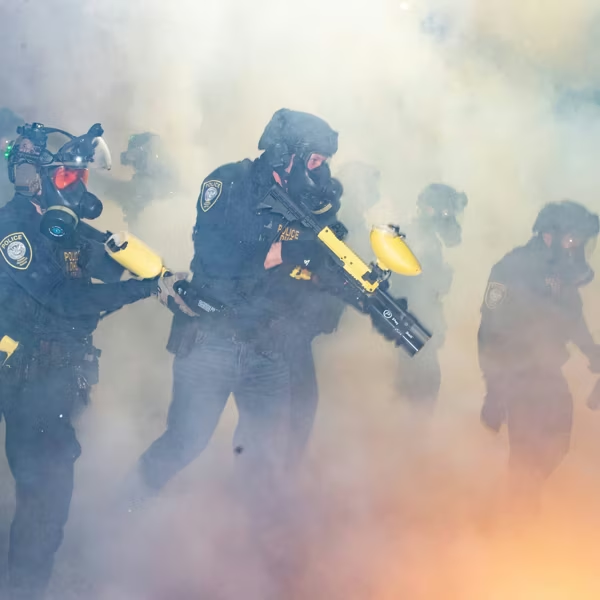
Alongside this, we see a high risk of dangerous physical escalation in our streets. Federal military forces are being deployed domestically without the consent of American cities and states. These federal deployments are often coupled with a rhetoric that treats communities as territories to be occupied and controlled rather than as constituencies to be protected.
We also expect efforts to obstruct or delay the swearing-in of newly elected officials. These efforts might include the removal of the clerk in the House of Representatives or the refusal of the US vice president and outgoing House speaker to swear in newly elected Members of Congress to the US Senate and House of Representatives, respectively.
In our report, we address in detail these military, electoral, and constitutional crisis points—as well as how American communities, movements, and institutions are preparing to respond.
Neighborhoods, communities, and their governments have been thrust forward to protect themselves against federal repression and dysfunction. In the process, they have demonstrated remarkable resilience.
If sufficiently connected with each other and backed up by labor unions; state governments; and major public, faith, business, and community institutions, municipalities offer our best hope for avoiding authoritarian takeover.
However, they are often fragmented. Neighborhood networks, labor organizations, community businesses, faith communities, public institutions, and local governments frequently operate without shared language or protocol, trusted coordination, or practiced ways of acting together.
The central preparedness challenge is not only to build more capacity, but to connect, test, and mobilize what already exists. Intermunicipal communications and coordination systems will serve as critical crisis infrastructure in the months ahead.
The report draws one other major conclusion. Following the November elections, the US Congress must fully assert itself as the primary branch of the federal government. The generation of 1776 gave Congress supremacy over the rest of the federal government. This is the reason the legislative branch is described first in the US Constitution, as Article I.
Over many years, much of congressional supremacy, representing the sovereignty of the American people and their States, has been abdicated or stolen. At this moment, without Congress, there is no republic, only dictatorship. If the US is to remain a republic in 2027, members of Congress must honor their oaths to uphold the Constitution by ensuring a successful democratic transition of power.
To our fellow Americans: This is not the time to look away. More than ever we need the kind of courage that history books heroize. We implore you to step forward and face the crisis. The full report is available: americancrisis.report.
Dear Common Dreams reader, It’s been nearly 30 years since I co-founded Common Dreams with my late wife, Lina Newhouser. We had the radical notion that journalism should serve the public good, not corporate profits. It was clear to us from the outset what it would take to build such a project. No paid advertisements. No corporate sponsors. No millionaire publisher telling us what to think or do. Many people said we wouldn't last a year, but we proved those doubters wrong. Together with a tremendous team of journalists and dedicated staff, we built an independent media outlet free from the constraints of profits and corporate control. Our mission has always been simple: To inform. To inspire. To ignite change for the common good. Building Common Dreams was not easy. Our survival was never guaranteed. When you take on the most powerful forces—Wall Street greed, fossil fuel industry destruction, Big Tech lobbyists, and uber-rich oligarchs who have spent billions upon billions rigging the economy and democracy in their favor—the only bulwark you have is supporters who believe in your work. But here’s the urgent message from me today. It's never been this bad out there. And it's never been this hard to keep us going. At the very moment Common Dreams is most needed, the threats we face are intensifying. We need your support now more than ever. We don't accept corporate advertising and never will. We don't have a paywall because we don't think people should be blocked from critical news based on their ability to pay. Everything we do is funded by the donations of readers like you. When everyone does the little they can afford, we are strong. But if that support retreats or dries up, so do we. Will you donate now to make sure Common Dreams not only survives but thrives? —Craig Brown, Co-founder |
As scholars of democracy, we are watching America’s warning signs flash red. We expect America’s long-building constitutional crisis to soon escalate.
Earlier this year, we hosted a national workshop to assess the threats facing our society in the months leading up to and following the November midterm elections. We also studied the preparations of American social movements, communities, and institutions to meet those threats.
Our basic goals were straightforward. Every qualified voter should be able to vote and have that vote counted. We must head off and block political violence. Duly certified winners should be able to take office without obstruction.
To our fellow Americans: This is not the time to look away. More than ever we need the kind of courage that history books heroize.
One product of that workshop, published this fall and signed by dozens of scholars, is The American Crisis report. The American Crisis analyzes the likelihood of the administration thwarting electoral due process; escalating military and paramilitary occupations of US cities; and other emerging threats that would worsen any electoral, constitutional, or military crisis.
It’s not hard to see the shape of what may come. In the weeks preceding Election Day, we anticipate that election administration responsibilities could be seized from states and cities, and attempts made to disrupt, sabotage, or otherwise capture their administrative powers.
Alongside this, we see a high risk of dangerous physical escalation in our streets. Federal military forces are being deployed domestically without the consent of American cities and states. These federal deployments are often coupled with a rhetoric that treats communities as territories to be occupied and controlled rather than as constituencies to be protected.
We also expect efforts to obstruct or delay the swearing-in of newly elected officials. These efforts might include the removal of the clerk in the House of Representatives or the refusal of the US vice president and outgoing House speaker to swear in newly elected Members of Congress to the US Senate and House of Representatives, respectively.
In our report, we address in detail these military, electoral, and constitutional crisis points—as well as how American communities, movements, and institutions are preparing to respond.
Neighborhoods, communities, and their governments have been thrust forward to protect themselves against federal repression and dysfunction. In the process, they have demonstrated remarkable resilience.
If sufficiently connected with each other and backed up by labor unions; state governments; and major public, faith, business, and community institutions, municipalities offer our best hope for avoiding authoritarian takeover.
However, they are often fragmented. Neighborhood networks, labor organizations, community businesses, faith communities, public institutions, and local governments frequently operate without shared language or protocol, trusted coordination, or practiced ways of acting together.
The central preparedness challenge is not only to build more capacity, but to connect, test, and mobilize what already exists. Intermunicipal communications and coordination systems will serve as critical crisis infrastructure in the months ahead.
The report draws one other major conclusion. Following the November elections, the US Congress must fully assert itself as the primary branch of the federal government. The generation of 1776 gave Congress supremacy over the rest of the federal government. This is the reason the legislative branch is described first in the US Constitution, as Article I.
Over many years, much of congressional supremacy, representing the sovereignty of the American people and their States, has been abdicated or stolen. At this moment, without Congress, there is no republic, only dictatorship. If the US is to remain a republic in 2027, members of Congress must honor their oaths to uphold the Constitution by ensuring a successful democratic transition of power.
To our fellow Americans: This is not the time to look away. More than ever we need the kind of courage that history books heroize. We implore you to step forward and face the crisis. The full report is available: americancrisis.report.
As scholars of democracy, we are watching America’s warning signs flash red. We expect America’s long-building constitutional crisis to soon escalate.
Earlier this year, we hosted a national workshop to assess the threats facing our society in the months leading up to and following the November midterm elections. We also studied the preparations of American social movements, communities, and institutions to meet those threats.
Our basic goals were straightforward. Every qualified voter should be able to vote and have that vote counted. We must head off and block political violence. Duly certified winners should be able to take office without obstruction.
To our fellow Americans: This is not the time to look away. More than ever we need the kind of courage that history books heroize.
One product of that workshop, published this fall and signed by dozens of scholars, is The American Crisis report. The American Crisis analyzes the likelihood of the administration thwarting electoral due process; escalating military and paramilitary occupations of US cities; and other emerging threats that would worsen any electoral, constitutional, or military crisis.
It’s not hard to see the shape of what may come. In the weeks preceding Election Day, we anticipate that election administration responsibilities could be seized from states and cities, and attempts made to disrupt, sabotage, or otherwise capture their administrative powers.
Alongside this, we see a high risk of dangerous physical escalation in our streets. Federal military forces are being deployed domestically without the consent of American cities and states. These federal deployments are often coupled with a rhetoric that treats communities as territories to be occupied and controlled rather than as constituencies to be protected.
We also expect efforts to obstruct or delay the swearing-in of newly elected officials. These efforts might include the removal of the clerk in the House of Representatives or the refusal of the US vice president and outgoing House speaker to swear in newly elected Members of Congress to the US Senate and House of Representatives, respectively.
In our report, we address in detail these military, electoral, and constitutional crisis points—as well as how American communities, movements, and institutions are preparing to respond.
Neighborhoods, communities, and their governments have been thrust forward to protect themselves against federal repression and dysfunction. In the process, they have demonstrated remarkable resilience.
If sufficiently connected with each other and backed up by labor unions; state governments; and major public, faith, business, and community institutions, municipalities offer our best hope for avoiding authoritarian takeover.
However, they are often fragmented. Neighborhood networks, labor organizations, community businesses, faith communities, public institutions, and local governments frequently operate without shared language or protocol, trusted coordination, or practiced ways of acting together.
The central preparedness challenge is not only to build more capacity, but to connect, test, and mobilize what already exists. Intermunicipal communications and coordination systems will serve as critical crisis infrastructure in the months ahead.
The report draws one other major conclusion. Following the November elections, the US Congress must fully assert itself as the primary branch of the federal government. The generation of 1776 gave Congress supremacy over the rest of the federal government. This is the reason the legislative branch is described first in the US Constitution, as Article I.
Over many years, much of congressional supremacy, representing the sovereignty of the American people and their States, has been abdicated or stolen. At this moment, without Congress, there is no republic, only dictatorship. If the US is to remain a republic in 2027, members of Congress must honor their oaths to uphold the Constitution by ensuring a successful democratic transition of power.
To our fellow Americans: This is not the time to look away. More than ever we need the kind of courage that history books heroize. We implore you to step forward and face the crisis. The full report is available: americancrisis.report.