

SUBSCRIBE TO OUR FREE NEWSLETTER
Daily news & progressive opinion—funded by the people, not the corporations—delivered straight to your inbox.
5
#000000
#FFFFFF
To donate by check, phone, or other method, see our More Ways to Give page.
Daily news & progressive opinion—funded by the people, not the corporations—delivered straight to your inbox.
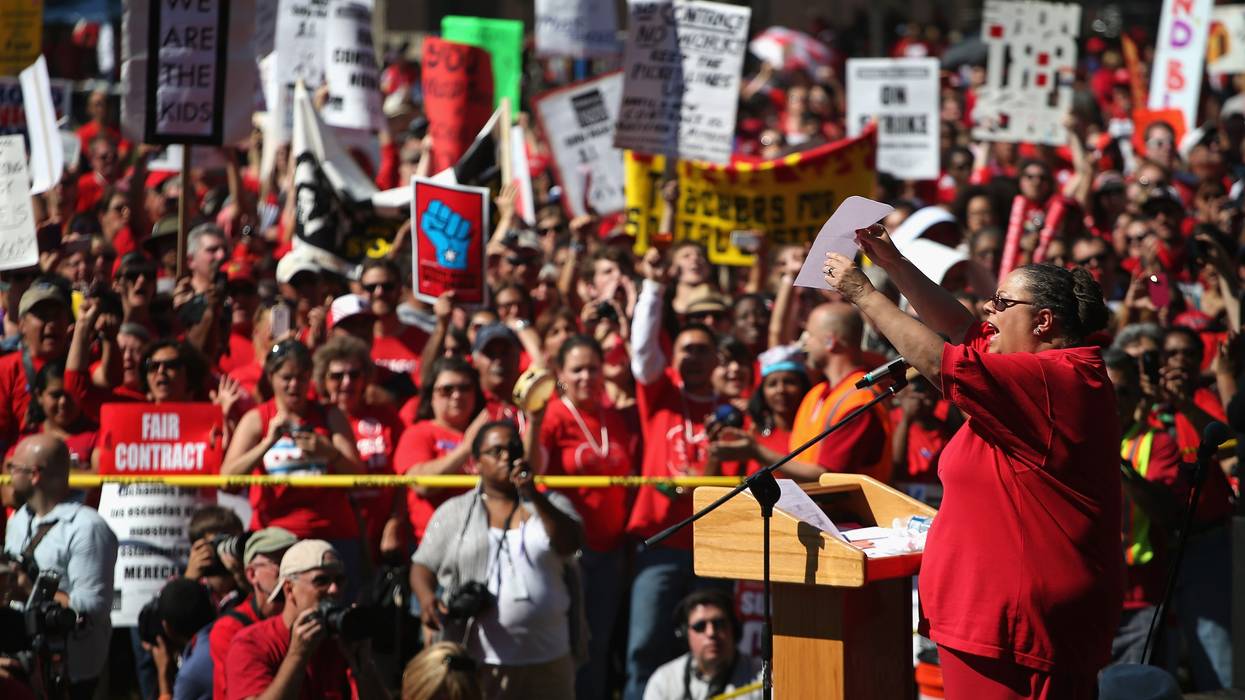
In his book Unions, Race, and Popular Democracy, Kim Scipes describes an example of social justice unionism that should change the way that we think about organizing not only in the workplace, but in any response to important issues around the world.
"The book isn't just a celebration of the past, but an encouragement to see what we can learn to help us today" (Scipes, p. ix, 2026).
Dr. Kim Scipes’ Unions, Race, and Popular Democracy: Building A Progressive Labor Movement is a commemoration of one union’s distinctive approach to social justice unionism that should change the way that we think about organizing not only in the workplace, but in any response to important issues around the world.
Though centered in labor activism from a sociological lens, the findings and framing of Scipes’ work produce an analysis critical for Northwest Indiana and Chicago historians, labor unions, activists, and all individuals pondering the steps to achieving a better world. These findings reach far beyond one workplace, one academic discipline, or one social cause.
To reinforce the diverse application of this work, I approach this review from a communication studies background.
What happens if we all looked outside of ourselves to care, regardless of political party, race, age, gender, or occupation, about intentionally seeking positive change that benefits the well-being of all?
In the book, Scipes reveals two opposing conceptualizations of trade unionism by comparing the organization of two Chicago unions in the steel and meatpacking industries during critical decades of the 20th century.
From the beginning of the book, it is clear that this study was built on a solid foundation. The selection of 1933-55 for this study was important, as this period frames a time of "insurgent trade unionism that emerged from below," with 1933 marking the "beginning of modern American trade unionism" (Scipes, p. 4, 2026).
Further, considering the 1886 struggle for the eight-hour day, the establishment of International Workers Day, the headquarters of the Eugene Debs' led American Railway Union, the site of the Industrial Workers of the World, and more, Chicago was an extremely relevant site for this study (Scipes, p.5, 2026).
From this foundation, three significant claims emerge.
The first is a claim that marks the heart of this book. Upon expansive archival research; the design of a measurement scale; and the synthesis of labor organization records, theory, union case studies, and more, Scipes uncovers that despite being two worker’s unions in the same period of time, comprised of individuals with comparable educational and cultural backgrounds in the same city, faced with comparable issues, both the steelworkers’ (Steel Workers Organizing Committee: SWOC and United Steelworkers of American: USWA) and packinghouse workers’ (Packinghouse Workers Organizing Committee: PWOC and United Packinghouse Workers of America: UPWA) unions had two different approaches to addressing racism, white supremacy, and in turn, unionization. Understanding the unions’ navigation of racism is crucial when it is considered how much worker control prevented union organization, as workplace leadership often divided workers by racial group and sparked competition that kept them from realizing efforts that could benefit their collective well-being (Scipes, p. 14-15, 2026).
The steelworkers enacted a form of “business unionism,” while the packinghouse workers took a “social justice unionism” approach.
In the context of this study, the steelworkers' business unionism characteristically refused to address divisions of race among workforces and “took a limited approach to trade unionism, keeping the union divided and weak” (Scipes, p. 190, 2026).
This form of unionism separated members' working lives from their lives outside the plant, leading “to terrible consequence when the regional steel industry collapsed in the 70s and 80s and thousands lost jobs and pensions” (Scipes, p.190, 2026).
Conversely, the meatpackers’ use of social justice unionism brought forth a form of economic trade unionism that “understands the necessity of addressing the needs and concerns of all of its members, in the union, workplace, and the community with mutual efforts to improve the well-being of all” (Scipes, p.197, 2026).
Scipes’ second key claim builds on the first in important ways. Scipes demonstrates the increased power of social justice unionism over business unionism for the well-being of the workers and world positive social change.
To illustrate this, he shared powerful accounts of the way that both unions responded to racial housing discrimination in the community.
The USWA approached racism and discrimination in completely different ways compared with the packinghouse workers. Local steelworker organizations "were not generally interested in becoming involved in community affairs to any great extent" (Scipes, p.179, 2026).
They did not involve themselves in efforts to address racial oppression in the community or housing discrimination. In fact, there is even evidence to suggest the steelworkers ignored the housing riots that took place from 1953-54 at the Trumbull Park Homes in Chicago.
But, the packinghouse workers' fight to "abolish racial terror and discrimination" in the wake of a housing crisis for Black workers was monumental.
Related to their efforts, Scipes cited a powerful quote from United Packinghouse Workers of America President Ralph Helstein: "it is not enough to eliminate discriminatory practices in the plant, but we also have to do it in the community, because you can't work with a man all day long... and then pick up where you left off the next day... it's essential to carry on this kind of activity in the communities in which you lived" (Scipes, p.177, 2026).
The PWOC made it possible for Black workers to walk freely and safely in the community: “Any public space which refused them service would be quickly put out of business by a boycott of the white union members” (Scipes p. 178, 2026). The UPWA efforts continued to accelerate through this period, even leading to the sponsorship of a 1949 conference on housing to address the public housing crisis. Though not a perfect union free of the marginalization of women (p.158), power emanated from the bottom up in the packinghouse workers’ union, enabling popular democracy (p. 192). At every turn, they directly confronted issues of racism and discrimination as conscious union and policy projects.
And importantly, these external efforts did not harm the internal professional well-being of these workers. When measured, Scipes found that “wages for meatpacking workers grew either at the same rate or at a faster rate than it did for steelworkers during the 1939-1958 period… the packinghouse workers did not suffer financially from the social justice unionism of the UPWA…" (Scipes, p. 200, 2026).
Expanding on the relevance of these findings for today’s society, Scipes’ third major claim of this work asserts that we have not had a labor movement since 1949 (p. x). Despite recent efforts to revive the trade union movement through the Chicago Teacher's Union, Starbucks, Amazon, and more (p. ix), Scipes argues that we have only had a trade union movement since 1949, as a trade union movement only looks out for the well-being of union members and a labor movement champions the well-being of all working people (p.x).
Scipes believes that we can revive the labor movement and unify workers. I believe that this book provides us with a road map to unifying all people.
Beyond from the systematic approach by which this study was conducted, my hope is inspired by two additional factors. The first is Scipes’ foundational credibility that informed the body of this work.
Scipes has been active for over 40 years in the labor movement and published more than 300 writings while traveling around the world throughout his life, working in fields in blue-, white-, and pink-collar jobs, working in the print trades, earning his PhD at 51, and teaching for more than 18 years with Purdue University Northwest.
He is still active in Northwest Indiana, Chicago, and the Calumet region today, reinforcing the relevance of the perspective of his research.
“He has seen a range of socioeconomic backgrounds and living conditions across the globe while studying labor practices and movements, from the streets of The Hague to villages in the Philippines,” (Purdue University Northwest, 2021), and cares about finding true understanding through his research process. Of this process, he has been quoted: [When I’m researching,] “I’m out with workers, at union offices, traveling by bus, boat, van. I’m out there integrating with the ordinary people” (Purdue University Northwest, 2021).
He furthered this sentiment with a nod to Alice Walker: “Activism is my rent for living on the planet” (Vasilko, 2022).
So, when Scipes affirms in his book that "with strong, resolute leadership... [workers] can be won to opposing white supremacy and racism... this is not theory, this is not ideology. It is shown to the practices of these labor organizations" (p. 181) I believe that the strength of his credibility is such that we can apply these findings beyond labor organizations.
Which leads me to the second factor of my hope: the currently unrealized positive persuasive power of these findings when applied to society as a whole. It is this part of my review where I can most strongly apply my own scholarly background.
From a communication lens, when I read this book, I was especially interested in the application of Lloyd Bitzer's rhetorical situation (1968), social movement theory (Melucci 1989 and 1995), and the concept of the enthymeme (Brock, 2014).
To preface my application, the enthymeme is a persuasive rhetorical process employed to lead an audience to a desired meaning with intentional word choice by convincing an audience they are co-creators in the process. The phenomenon is imperative for successful collaboration for social change.
And the enthymeme is critical for the creation of meaning, as a proposed meaning has no power without mass consent (Brock, 2014). The enthymeme guides an audience toward the desired mass consent for new meaning, or change. It is important to note that guiding an audience toward mass consent is not inherently evil, it just depends on the speaker's intention. The enthymeme can be used for positive social change by guiding an audience to accept that climate change needs to be addressed, civil rights matter, violence is bad, etc. Most crucial to this study, the enthymeme is most powerful when the audience has common understandings of identity and meaning.
In 1974, French feminist theory argued that the stakes of feminist struggle against patriarchal-driven oppression and discrimination required an overthrow not to the patriarchal system, but to the system of power and the division itself (Vasilko, p. 16, 2023). Meaning that activists must look beyond individual differences and division and fight for the common good of all, leading to a positive, life-enhancing society to benefit all, much as the meatpackers realized in this study.
Lastly, Bitzer (1968) and Melucci (1989 and 1995) have shown us that a shared identity is imperative to keep the momentum of social change protected from co-optation if any exigence is to truly be addressed, which means that social change, overall, requires a shared identity (Vasilko, 2023).
When all of this is synthesized, this leads us back to Scipes for one of the most important theories of his career: polyconflictualism.
Scipes’ polyconflictualism explains the basis for why groups of people who share many comparable characteristics, exist in the same period, and face similar conditions respond to a situation in entirely different ways, just as the steelworkers and packinghouse workers responded completely different to white supremacy and racism. With this theory, he argues that belonging to comparable groups does not automatically guarantee that group members will respond the same way. Instead, group members must be aware of their individual agency and intentionally seek common ground to form collective identities strong enough to address social issues to enhance the well-being of all (Scipes 2025; Scipes 2026).
Recognizing a collective exigence and collective identity is key to positive social change.
Laying out his hopes for the future after his book, Scipes challenged: "What I'm talking about here is building a union pathway to support all who are willing to work to advance the standard of living and improve the social well-being of all... building grassroots power from the ground up in social justice unions controlled by their members... for the purpose of working together and improve conditions for all involved" (Scipes, p. 210-211, 2026).
To readers of this review, I ask an important question as AI impact, environmental destruction, and war accelerate: What happens if we all apply these findings more broadly, beyond labor organization? What happens if we all looked outside of ourselves to care, regardless of political party, race, age, gender, or occupation, about intentionally seeking positive change that benefits the well-being of all?
With strong organization and shared experiences, common threads could be recognized, allowing collective identity and impact to be maximized and a better world to be possible, even as our differences co-exist.
We all have more in common than we realize. It is time to celebrate this book and find ways to apply it to labor unions, organization for positive change, and our world today.
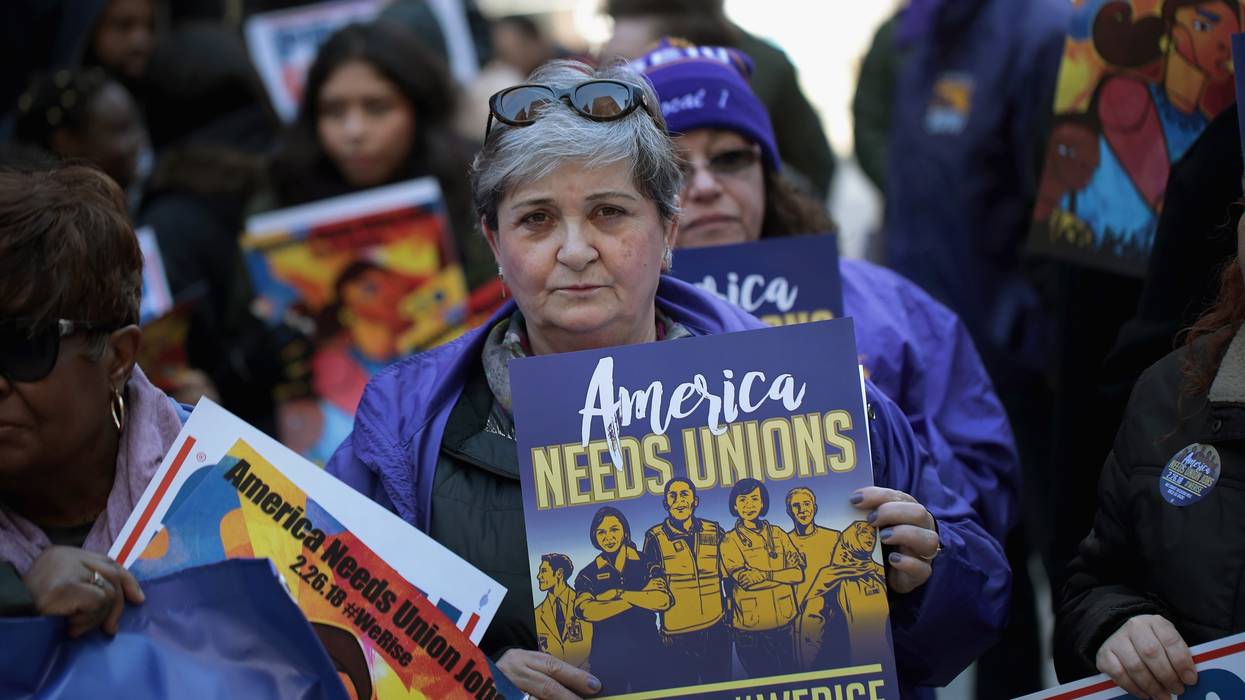
Tripling union membership would raise the pay of the median worker by more than $7,700 a year, or nearly $270,000 over a 35-year career. That’s enough to more than cover the cost of sending two children to a four-year public university.
This Labor Day, workers across the country are sending a clear message: They want a greater voice on the job. A near-record 71% of Americans approve of unions, and surveys show over 50 million nonunion workers would join a union if they could.
At a time when many are struggling to afford basic necessities, it’s easy to understand why. Through unions and collective bargaining, workers have more power to win higher wages, better benefits, safer working conditions, and a fairer share of the wealth they create. Unions help build a strong middle class, reduce inequality, narrow racial economic disparities, and boost participation in our democracy.
Yet only 1 in 10 US workers are in a union today—a sharp decline from the more than 1 in 3 workers who belonged to a union in the 1950s. That drop did not happen because workers stopped wanting or needing unions. It happened due to relentless attacks on unions and collective bargaining, and lawmakers’ failure to fix the broken labor laws that have allowed those attacks to succeed.
The consequences have been enormous. As union power has declined, workers have seen less of the gains from the economic growth they have helped create. Since 1979, productivity (how much average value workers produce in an hour of work) has grown 2.8 times as much as pay for typical workers.
This Labor Day, let’s recommit to putting more power in the hands of working people.
New Economic Policy Institute research makes clear just how much working people stand to gain by rebuilding union power to 1950s’ levels.
Tripling union membership would raise the pay of the median worker by more than $7,700 a year, or nearly $270,000 over a 35-year career. That’s enough to more than cover the cost of sending two children to a four-year public university, for example. Crucially, both union and nonunion workers would see these gains because stronger unions raise standards across the labor market.
Scaled across the workforce, tripling union membership would shift an estimated $1.2 trillion to the pockets of working people every year. This is enough to reverse roughly one-third of the increase in inequality since 1979.
Stronger unions are also good for businesses and the broader economy. When workers earn more, they have more money to spend in their communities, strengthening consumer demand. Businesses would benefit from lower worker turnover, higher productivity, and workers who have a greater stake in the success of their workplaces.
Tripling union membership won’t be easy, but it’s far from a nostalgic pipe dream. It will take continued nationwide organizing and decisive policy action that makes it easier for workers to unionize. Federal lawmakers can start by passing legislation that expands collective bargaining rights, closes loopholes in existing law that allows employers to suppress worker organizing, and holds employers accountable when they violate workers’ labor rights. Further, state lawmakers should provide all public-sector workers with collective bargaining rights and repeal so-called right-to-work laws that weaken workers’ ability to organize and bargain collectively.
This Labor Day, let’s recommit to putting more power in the hands of working people. That means giving more workers the freedom to organize. And it means setting an ambitious goal worthy of the moment: tripling union membership and building an economy that works for working people.
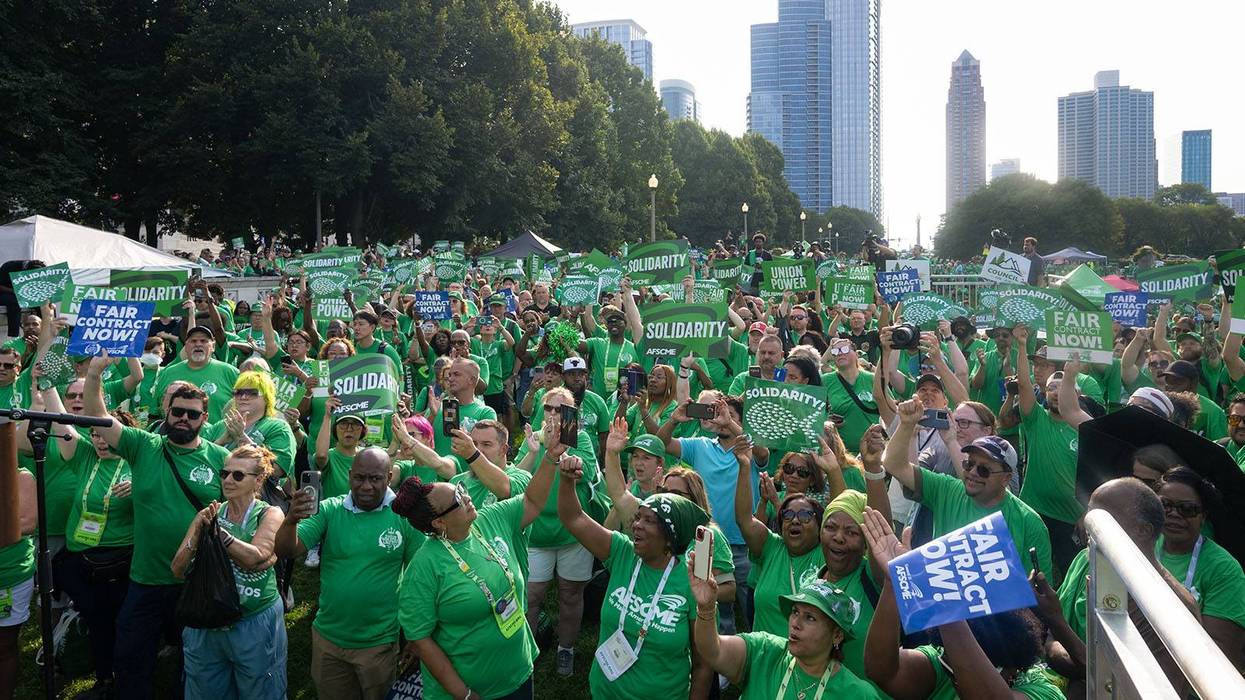
Standing together is how we take on billionaires and anti-worker politicians. It is how we protect our jobs, our freedoms, and the spirit of Labor Day itself.
Working people are fed up. Job uncertainty is the new normal. Chaos and corruption are constantly spilling out of Washington. But for the people grinding out a living every day, the crisis hits much closer to home. Burnout is rampant among essential workers, especially among caregivers, first responders, and social workers. And even as working people put in longer hours, their paychecks cover less and less as prices on seemingly everything continue to rise month after month. This Labor Day, that anger needs somewhere to go.
In 2026, even a simple backyard barbecue with friends and family can feel out of reach. These days, you are paying more for the burgers and crossing your fingers, hoping the lettuce will not make you sick.
The essential workers clocking in this Labor Day to keep our communities safe, healthy, and running should be able to count on one job paying enough to live on. Instead, too many worry about how they will make ends meet—or are picking up a second or even a third job. On a day meant to celebrate working people, that is a damn shame.
And it is not just groceries stretching family budgets. It’s healthcare and prescription drugs. Gas and electric bills. Rent and childcare. Nearly every necessity costs more, and every paycheck has to stretch further.
This November, working people must vote like our jobs, our freedoms, and our families’ futures depend on it, because they do.
This affordability crisis is not an accident. It is the result of choices. It is what happens when politicians pick a side. Whenever the Trump administration had a chance to lighten the burden on working families, it chose to make that burden heavier. Its so-called “Big Beautiful Bill” gutted the Supplemental Nutrition Assistance Program, putting groceries further out of reach for millions of families. It slashed Medicaid, threatening coverage and shifting more healthcare costs onto working people.
The administration has made its choice clear: It is on the side of billionaires. Their wealth has surged by trillions since last Labor Day. The president’s own wealth has grown by $2.2 billion—all while working people and retirees struggle to afford the basics.
AFSCME has made its choice clear, too. Our union stands with working people—with the 1.4 million public service workers and retirees who make our communities stronger every day.
We side with Chearice Vaughn, a US Department of Agriculture worker and president of AFSCME Local 3870, whose team connects rural schools, hospitals, and families to high-speed internet. Despite her 32 years of dedicated public service, the administration tried to fire her.
We stand with Sabrina Bishop, a San Diego homecare provider and a member of UDW/AFSCME Local 3930, who cares for veterans, people with disabilities, and older Americans. The administration has gone after overtime protections that ensure caregivers like Sabrina are paid for every hour they work.
And we stand with Everett Johnson, a preventive maintenance technician for Baltimore City Public Schools and a member of AFSCME Council 3. Everett keeps school buildings safe, but a lack of resources forced him to buy his own tools to do the job.
These workers are not powerless. They have a union.
AFSCME went to court and stopped the administration from forcing Chearice out. Sabrina and her union siblings mobilized at the California State Capitol and won protections for overtime pay. Everett has a seat at the table to negotiate for better pay, better equipment, and the resources to do his job.
That is what union power looks like. When working people come under attack, we organize. We fight back. And we win.
More working people are recognizing that power every day. That is why public support for unions is at an historic high and why AFSCME continues to grow despite the constant attacks.
Standing together is how we take on billionaires and anti-worker politicians. It is how we protect our jobs, our freedoms, and the spirit of Labor Day itself.
But our power does not stop at the workplace. It extends to the ballot box.
This November, working people must vote like our jobs, our freedoms, and our families’ futures depend on it, because they do. We must elect candidates who will lower costs, protect public services, and stand up for working people, not billionaires.
This Labor Day, ask yourself: Whose side are you on?
And this November, vote for the people who are on your side.

A movement that spent years avoiding a labor identity can't afford that caution anymore.
Last month Immigration and Customs Enforcement killed Lorenzo Salgado Araujo, a father and Houston construction worker, on the way to a job site. Just six days later another ICE agent fatally shot Johan Sebastián Guerrero on his way to work, who left behind a partner and 3-year-old daughter.
When I helped organize the fight for Deferred Action for Childhood Arrivals (DACA), we put young people in caps and gowns and asked the country to see them as exceptional, college bound, English speaking, worthy of protection in a way that set them apart from the majority of undocumented people, who were not students but workers. It was a strategy built for a specific moment, and it won us what respectability politics ever can: temporary inclusion that separated us from the rest of our community. Many of us also shied away from the economic argument on principle, even though mainstream organizations were already making it, because it had become associated with more middle-of-the-road groups. We narrowed our own lane instead of widening it.
That caution has run its course. Two men were killed on their way to work within a week of each other. No amount of careful language changes it.
What's needed now is to say plainly that this happened to people doing exactly what all workers do every day, and that everyone who depends on immigrant labor, starting with employers and extending through the broader labor movement, has to decide what they owe them.
Employers, unions, and labor organizations cannot afford to look away while businesses that have relied on workers like Lorenzo and Johan for years stay quiet as their own workforce is targeted by the government.
None of this is about making immigrants prove they deserve safety by pointing to what they contribute. Nobody should have to justify their right to exist with a paycheck.
But there's a difference between demanding immigrants justify their worth and simply describing how this economy runs. Construction, hospitality, agriculture, food delivery, garment production, whole industries in this country would not function without an estimated 10 million undocumented workers, most without any union protection at all. That labor isn't a contribution to the American economy. It is the American economy.
My mother came to this country to work, and to build something for her family, and so did the workers I've spent my career organizing alongside. That desire, to work hard and provide rather than be given something, isn't unique to immigrants.
Every night, at kitchen tables across this country, whether the family is undocumented or not, people are asking each other, "How was work?"
Wanting to work and provide for the people you love is one of the most ordinary parts of being human, and there is real pride in the work itself. That labor is an identity, not just the exploitative relationship it's so often reduced to, one that wouldn't change even if our immigration status did.
I organized car wash workers in Los Angeles, in shops where owners stole wages and denied bathroom breaks because workers had no path to citizenship and no union behind them. A boss who can threaten to call ICE on one worker has leverage over the whole shop floor, and in plenty of workplaces that threat is the boss' whole labor strategy, cheaper and more effective at stopping organizing than firing people or hiring anti-union law firms ever was.
Employers have a different kind of leverage too, not the threat they can hold over a worker, but the influence of being a major employer, the kind that gets a phone call to the White House answered, or makes silence too costly to just sit on.
Last year, farmers raised alarms about the raids loudly enough that President Donald Trump's own agriculture secretary carried the message to the White House, and enforcement paused, for four days, before Stephen Miller pushed to reverse it and the raids resumed.
In Minneapolis this year, more than 60 CEOs signed a joint letter calling for "de-escalation" after federal agents killed two residents. The letter didn’t name ICE, and it didn’t ask for anything specific. The letter added to the scrutiny that was already mounting against ICE and Border Patrol after the killings of Renee Good and Alex Pretti. Within a day, the Border Patrol commander was pulled from the city. Within two days, Trump himself was using the language of de-escalation. A vague joint statement helped move that. Imagine what an actual one could do.
The choice to speak up for workers, clearly and specifically, should be harder to dodge in the days since the killings of Lorenzo and Johan.
Rather than address why agents opened fire on unarmed men on their way to work, the administration's border czar, Tom Homan, went on Fox News and warned that there would be more "bloodshed" unless Democrats who criticize ICE stop talking. Homan is trying to make silence about these ICE killings the price of safety, and to put the blame for these two deaths anywhere but on the agents who pulled the trigger.
Every employer, every union, every business owner who has ever depended on an immigrant showing up to work now has to pick a side. Either stand with the workers whose labor built their businesses and industries, or fall in line behind a White House that is driving a white nationalist agenda. There is no third option where staying silent counts as staying out of it.
The administration isn't waiting to see whether employers choose workers or fall in line. The same crackdown that's killing and deporting workers who are already here is also causing real labor shortages in construction, agriculture, and dairy, and the administration has an answer for that shortage that has nothing to do with accountability.
This year alone, it has added 65,000 new H-2B guest worker visas and, for the first time, opened dairy farms to guest workers under a program where a worker's legal status, housing, and wages all depend on the same employer. Advocates have documented what that leads to for years: wage theft, confiscated passports, and workers threatened into silence because there is nowhere else for them to go.
Formerly enslaved people fought for this same principle a century and a half ago, insisting that only full citizenship, not tolerated presence, guaranteed they wouldn't be treated as less than fully human. This summer, the Supreme Court reaffirmed that exact principle when it struck down Trump's attempt to strip citizenship from children born to undocumented parents.
If the labor and immigrant rights movements don’t make the case ourselves, loudly and now, that immigrant workers deserve full rights and not just a job, that’s the model we’ll be handed. The alternative gets built for us either way, one where people are welcome only as controllable labor and for exactly as long as an employer finds them useful.
Employers, unions, and labor organizations cannot afford to look away while businesses that have relied on workers like Lorenzo and Johan for years stay quiet as their own workforce is targeted by the government. Unions and labor advocates also have a responsibility to clearly say that worker safety does not end at the shop door. Workers have the right to get to a job and get home without risking their lives.
Two men are dead because they went to work, and the mistake the immigrant rights movement cannot afford right now is forgetting that it is also a labor movement.
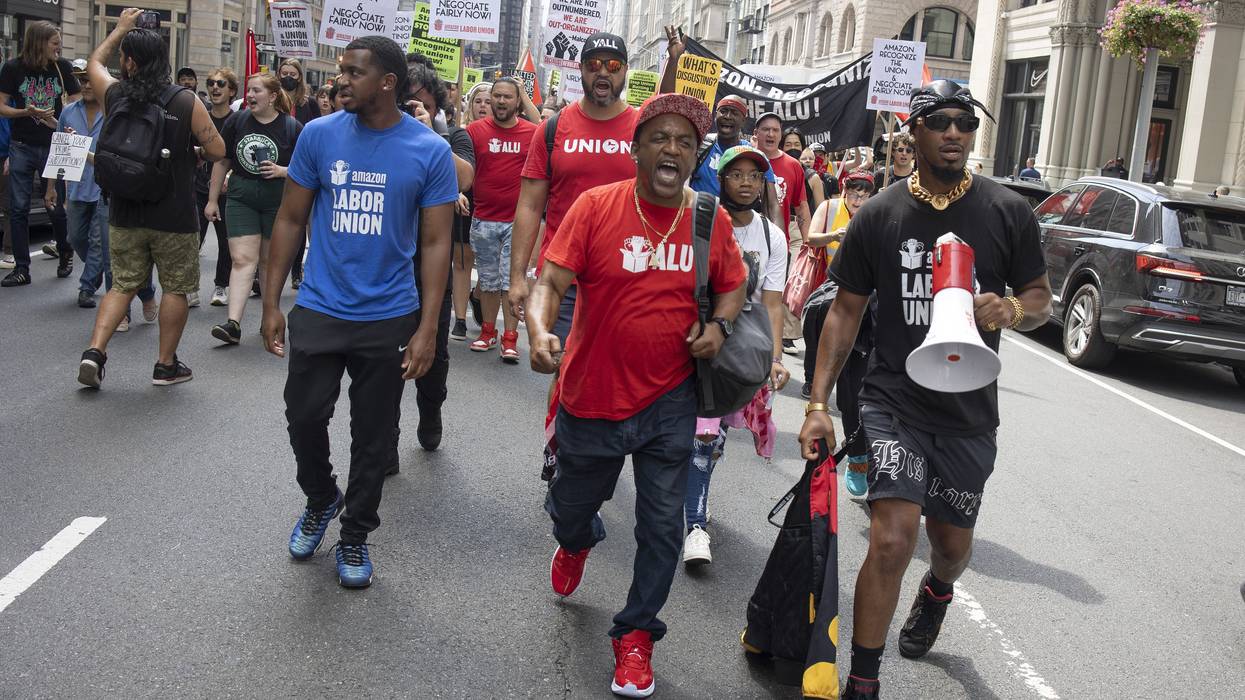
Labor Day can be converted from just a symbolic holiday into a day of mass action, democratic deliberation, and binding commitments.
Unfortunately, Labor Day has become a long weekend for mattress sales and political platitudes when it should be the annual day when working people present the case for taking control of our country back from the corporatists who shape our political economy. The first Monday in September is a massive, unused civic asset, a legally recognized national holiday that could function as a recurring general assembly of America’s workers—if we choose to reclaim it.
Instead of being about the power of labor over capital, Labor Day has been domesticated into barbecues and ballgames while giant corporations tighten their grip on our economy, our governments, and the daily lives of all Americans, regardless of political labels.
Tens of millions of workers are still paid wages that cannot support a decent life, forced into permanent economic insecurity by part‑time jobs, gig “contracts,” and union‑busting consultants. Workplace democracy doesn’t exist: You are more likely to be punished for organizing a union than to be protected for exercising your basic rights. Corporate crime—tax evasions, wage theft, unsafe conditions, and violations of environmental and consumer protections—goes largely unprosecuted. At most, corporations are punished with wrist‑slap fines that CEOs quietly treat as a cost of doing business. In the richest country on Earth, we still lack universal healthcare, universal childcare, paid family leave, and a fair progressive tax system to provide needed revenues. Worker productivity rises, and the wealth of the top 1% reaches obscene levels. It is time for unions to take on the corporate predators who are wrecking our economy and democracy.
Meanwhile, politicians of both major parties take to Labor Day podiums, praise “the hardworking men and women of this country,” and then return to Washington and state capitols to do the bidding of campaign donors. They vote for trade deals that outsource jobs, deregulation that strips away workplace protections, and budgets that starve labor law enforcement. Public‑sector workers are vilified as “special interests” for wanting a decent pension.
Reclaiming Labor Day requires workers, unions, and allied organizations to decide that enough is enough and that this one annual holiday is theirs, with the media taking notice.
It does not have to be this way. Labor Day can be converted from just a symbolic holiday into a day of mass action, democratic deliberation, and binding commitments. Imagine Labor Day not as a backdrop for store sales, but as a day when a pro-worker agenda is presented. In cities and towns across the country, Labor Day could be an occasion for workers to convene meetings—at union halls, school auditoriums, public parks, and town squares—to deliver their demands to elected officials and the public.
At the center of this reclaimed Labor Day should be a Worker Compact for America—a concise, concrete program of rights, protections, and public investments that elected officials pledge, in writing, to support (see my column: "Long-Overdue Domestic Compact for America"). The Compact could include a living wage pegged to the real cost of housing, food, and healthcare; card‑check recognition and real penalties for employers who retaliate against organizing; universal healthcare as a right; paid family and medical leave; universal, publicly supported childcare; and serious criminal and civil sanctions for corporate abuses such as wage and pension theft and workplace safety violations.
Labor Day should also be the moment when workers formally summon their representatives to account. Every senator, every representative, every governor, every mayor, and every state legislator whose constituents work for a living should receive a written summons well in advance of Labor Day: “You are Summoned and morally obligated to engage with a workers’ assembly in your district on this date, at this time, to answer questions and respond to demands of the Worker Compact.” Those who appear would be questioned, on the record, about their votes and their pledges to support the Worker Compact.
Those who refuse to appear would be named from the podium and in the local media as having chosen their corporate patrons over the workers who elect them.
Unions must be at the forefront of this transformation, but they cannot do it alone. The AFL‑CIO and national unions should provide muscle, resources, and experienced organizers. Local unions, especially those that have led recent organizing drives, should be the anchors in their communities. But civic groups, faith communities, student organizations, tenant unions, consumer advocates, and environmental justice campaigns—all of them have a direct stake in a stronger labor movement and should be invited to help expose the carnage caused by unchecked Corporate Power (see the AFL-CIO’s Worker Foundation of Trump’s Second-Term Agenda).
Much of the infrastructure already exists; it is the public reshaping of Labor Day that needs to change. Parades, where they still occur, should shift from generic celebration to worker agenda‑driven demonstrations. Floats should not just carry politicians waving; they should carry workers demanding specific changes: warehouse workers calling for safe staffing, nurses calling for safe patient ratios, and transit workers calling for investment in public transportation. Marching bands can be joined by marching delegations of workers—each with their banners and demands. Voter registration tables, ballot measure petitions, and sign‑up sheets for organizing committees should line the parade routes.
Because of the election calendar, Labor Day signals the final stretch of every general election. Candidate forums convened by workers on Labor Day should not end at sundown; they should kick off sustained, workplace-based, and neighborhood‑based organizing that runs through Election Day and beyond. Every candidate who signs the Worker Compact on Labor Day should be evaluated: Did they co‑sponsor the bills they promised to support, vote the way they pledged, and stand with workers in strikes and organizing drives? The next Labor Day, those records should again be publicized.
Reclaiming Labor Day requires workers, unions, and allied organizations to decide that enough is enough and that this one annual holiday is theirs, with the media taking notice.
The question posed every first Monday in September is the old union question: Which side are you on? If we are on the side of workers, then we must act like it—organizing, summoning, demanding, and voting for candidates who stand with the workers, not the vastly under-taxed corporate predators and plutocrats.
If you are interested in organizing events in your community, contact us at LaborDay@nader.org
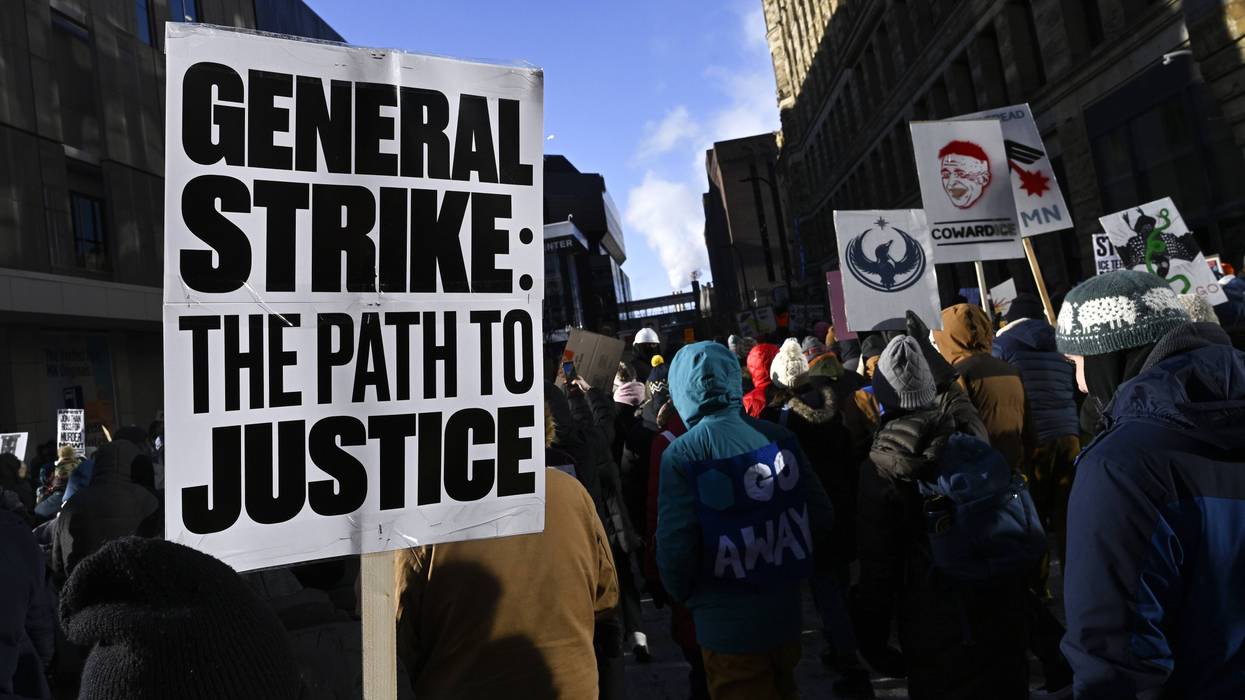
History teaches us that, when unions fight to defend democracy and win, they position themselves for periods of explosive growth and increased worker power.
The US labor movement, like the nation at large, stands at a crossroads. The next few years might well determine whether the United States fully descends into an era of electoral autocracy, where democracy has withered and authoritarianism becomes the political norm. This period is also likely to set the future trajectory of the union movement’s power and influence, as the state of democracy and organized labor have long been deeply intertwined.
For decades, the right-wing forces set on steadily eroding our democracy have worked in tandem with a pro-corporate movement that has increasingly marginalized organized labor, creating a ballooning crisis for the working class. Yet this politically hazardous moment also represents an opportunity to overcome deep-seated institutional inertia, drawing elements of a cautious labor movement out of their defensive crouch, and helping unions devise forms of struggle that might both revive the labor movement and renew American democracy.
President Donald Trump’s second term has, in a way, broken a spell. For years, the pre-Trump status quo kept labor locked in a pattern of slow decline even as democracy was increasingly stifled and abridged by voter suppression, gerrymandering, filibusters, and the overweening power of organized money. But the decades-old dysfunctional status quo that gave rise to Trumpism is now crumbling under the weight of the most lawless, antidemocratic, rights-trampling administration this country has seen since the 19th century.
History suggests that fighting to defend and revive democracy in its moment of maximum peril can create a window of opportunity for labor. Past experience—in the United States and other nations—teaches us that, when unions fight to defend democracy and win, they position themselves for periods of explosive growth and increased worker power. It is imperative that the US labor movement grasp this lesson and seize the window of opportunity before it’s too late.
It’s clear that the crisis facing US democracy is deepening. Over the past year, immigrants and the neighbors and coworkers who stood in solidarity with them endured murderous paramilitary occupations in Minneapolis, Chicago, and other cities across the country. The nation has been plunged into war in Iran without prior input from Congress. The president has even suggested the federal government should seize control of the upcoming midterm elections from the states.
This all comes on top of the Supreme Court’s relentless assault on workers’ rights and a worsening affordability crisis that has undermined the stability of working-class families, leading them to wonder whether the system is irretrievably broken.
As important as the coming elections are, unions should firmly reject the comforting delusion that they can recover through the ballot box what power they’ve lost in the workplace.
While our democracy’s crisis deepens, the national labor movement has yet to play a leading role in the resistance against ascendant authoritarianism. By seizing the opportunity to play such a role in the year ahead, labor has the opportunity to reverse its decades-long slide toward irrelevancy by taking up an indispensable role in preserving, expanding, and deepening rights-based democracy.
By fighting to reconstruct our democracy in the face of the mortal threat it now faces, labor could transform itself from a fading force—whose structure and outlook still bear the imprint of the 19th- and 20th-century struggles that birthed it—into a rejuvenated movement ambitious enough to give workers the powerful voice they deserve in the 21st century.
That transformation is only possible, though, if the labor movement moves beyond the magical thinking that if unions can just survive the Trump era then they can help restore a kind of pre-Trump normalcy afterward. The prevailing sentiment among labor’s leaders seems to be that, if they can just help their allies regain control of Congress later this year, they will be able to contain the damage Trump has wrought and coalesce behind an alternative in 2028 that can roll back Trumpism.
As important as the coming elections are, unions should firmly reject the comforting delusion that they can recover through the ballot box what power they’ve lost in the workplace. For if such electoral victories are unaccompanied by a revived, reorganized labor movement, they will leave workers and unions in a situation no different from the one they faced prior to Trump’s rise.
If the labor movement is to have a viable future, unions must not merely survive but capitalize on Trump’s disruption of longstanding norms, assumptions, and institutions, many of which no longer operate to labor’s benefit—if they ever did. That is the path to advance a bold 21st-century vision of inclusive solidarity, equality, rights, and democracy.
How labor might take advantage of Trumpism’s authoritarian excesses to advance such a vision was put on display in Minnesota this winter, where local labor organizations drew on years of experience to play a central role in the resistance to Trump’s Immigration and Customs Enforcement (ICE) invasion. Unions of janitors, teachers, healthcare workers, and others helped coalesce a resistance that included workers centers, faith communities and clergy, community organizations, immigrants’ rights groups, small businesses, and caring neighbors.
Protesters turned out by the tens of thousands in subzero temperatures, religious leaders endured arrest in acts of civil disobedience, and witnesses turned their cell phones into tools to document ICE malfeasance and protect their neighbors. That resistance was built on a shared common good analysis of power and a recognition of the increasingly baneful influence of billionaires over our political system and economy. Protesters targeted not only ICE but corporations such as Target and Hilton that have either remained silent or openly abetted and profited from Trump’s authoritarian power grab.
Make no mistake: The formal end of Operation Metro Surge in Minneapolis scarcely indicates a waning of this administration’s authoritarian ambitions. Unresolved issues regarding the limits of ICE’s legal authority will likely continue to elicit protest and resistance in the streets. In the meantime, new fronts are already opening as the president disregards all restraints on his power to deploy military force abroad and pushes an effort to nationalize the midterm elections at home. As labor movement leaders contemplate the conflicts that might emerge, they should consider lessons from what happened in Minnesota as well as other cities like Chicago and Los Angeles, where local unions played important roles in mobilizing resistance. They should also learn from the experiences of unions in other nations that successfully resisted authoritarian regimes.
Defeating Trump and his allies at the polls will be a Pyrrhic victory if the corporations fueling the right-wing’s anti-worker agenda maintain their influence over our government.
The stories of Brazil, South Korea, and South Africa are cases in point. In these countries, labor movements joined and helped lead the struggles against dictatorship, authoritarianism, and apartheid. In each case, when democracy won out, unions saw massive increases in membership. During Brazil’s transition to democracy in the mid-1980s, work stoppages jumped tenfold, and Brazil’s labor federation, Central Única dos Trabalhadores (CUT), founded during this period, grew to represent more than 15 million people by 1990.
When South Korea’s dictatorship fell in 1987, a period of militant worker struggle ensued as the number of strikes jumped and union membership surged. In South Africa, the labor movement played a key role in the fight against apartheid, and trade union membership grew dramatically, up from 1.4 million workers and 18% density in 1985 to 3.8 million and 51% by 1998. What’s more, these growth spurts boosted worker power and helped erect union bulwarks to help prevent backsliding into authoritarianism in subsequent years.
In Brazil, labor rallied to defeat President Jair Bolsonaro at the polls in 2022, then opposed his post-defeat coup attempt and supported his successful prosecution. Similarly, South Korean unions played a vital role in defeating an attempted coup in 2024 by threatening a general strike.
As these examples suggest, and as scholars have long noted, labor movements—no matter their national context—tend to expand not in linear fashion but by quantum leaps. The British labor historian Eric J. Hobsbawm described these episodes as “discontinuous” and “explosive” bursts that occur when circumstances force “qualitative innovations in the movement.”
Resisting authoritarians has required such innovations in countries across the globe, which have in turn helped unions to grow. When worker-led movements aligned with pro-democracy forces and succeeded in undermining authoritarian regimes, their victories allowed workers to witness and feel their collective power. Confrontations with authoritarianism in the streets translated into militancy, collective action, and increased organization in the workplace.
The US labor movement’s history also bears out that pattern. While people in the United States have never witnessed a battle with authoritarianism quite like the ones that erupted in South Africa, Brazil, and South Korea, an analogous incubation of explosive growth took place during periods when the US labor movement aligned itself with struggles to defend democracy against what were perceived as existential threats.
The Civil War, waged to defeat the Confederacy and preserve the Union in the 1860s, triggered what W.E.B. Du Bois called a vast “general strike” in which the enslaved transferred their labor “from the Confederate planter to the Northern invader” even as that war fueled the expansion of the national trade unions that would later form the American Federation of Labor (AFL).
The effort to make the world “safe for democracy,” as President Woodrow Wilson pledged during World War I, likewise provided the setting for experimentation with industrial unionism that paved the way for the later formation of the Congress of Industrial Organizations (CIO). And the forging of a US “arsenal of democracy” against fascism during World War II helped lead to the high-water mark of US unionism in the 1950s.
The kind of quantum leaps in union growth that have occurred when the US labor movement has linked its fortunes to the future of democracy can happen again. In the growing resistance to Trumpism, we are already seeing glimmers of how this could happen in our time. Unions and allied labor and community organizations provided the backbone of the resistance in Minnesota; employees in the largest and most influential technology labs are confronting bosses who are selling their technology to the government for domestic surveillance and global war; higher education unions are challenging attacks on free speech on university campuses.
Flashes of resistance like these are multiplying. Yet such sparks will not fuel a major breakthrough unless unions at every level—from locals to internationals—embrace the fight against Trump’s authoritarian, billionaire-serving regime and defend democracy by challenging the corporations and Silicon Valley technofascists that are shaping and profiting from Trump’s policies.
Such opposition must go beyond an electoral strategy for 2026 and 2028. Defeating Trump and his allies at the polls will be a Pyrrhic victory if the corporations fueling the right-wing’s anti-worker agenda maintain their influence over our government. Should Democrats regain control of Congress and the White House, the same corporations that have aligned with Trump will be working to sabotage pro-labor policies while doubling down on their AI-obsessed, job-threatening, antidemocratic campaign of economic destruction.
There is no doubt that democracy and workers’ rights are facing down an existential threat. Yet that very threat and the sense of urgency it has spawned have created an opportunity we could not have engineered on our own.
As the experience of other nations and the failure of our own post-Civil War Reconstruction remind us, elites and economic structures that benefit from authoritarian power don’t vanish when antidemocratic regimes crumble; they regroup. We cannot allow such a regrouping to occur post-Trump, for as we have seen over the past 50 years of labor decline under Democratic and Republican administrations alike, a return to the pre-Trump status quo offers no hope for workers or labor.
Naming and challenging the economic actors aligned with Trump is therefore critical if we are to weaken their post-Trump grip on power.
Although their critics have often suggested that US unions have tied their fortunes too closely to politics, in truth, US labor has been reluctant to take up the kind of big political issues that have historically helped push workers into the streets and built workers’ movements in other democracies. We should not be surprised if many national unions hesitate to act decisively. Nor should we expect their leaders to be at the forefront, for despite critics’ endless talk of labor bosses, the movement has never functioned effectively as a top-down, command-and-control institution.
Rather, the national union movement has tended to respond opportunistically to openings that it lacked the institutional will or unity of purpose to create. In the present crisis, local unions in cities around the country—through the common good alliances they’re building to fight ICE, support beleaguered federal workers, and demand billionaires begin paying their fair share—are beginning to create the kind of openings that could conceivably pull the larger movement into the fight.
Evidence on the ground in places like Minnesota already suggests that well-conceived actions by forward-leaning coalitions of the willing can open windows of opportunity and create permission structures capable of drawing more cautious mainstream organizations into the fight. The Minnesota AFL-CIO did not initiate the remarkable “Day of Truth & Freedom,” which triggered a virtual economic shutdown of Minneapolis on January 23, as tens of thousands of residents stayed away from work, school,and shopping. Yet the organizing and alignment-building that preceded that event won the state federation’s support in the days before the action, generating a much larger impact than its initial organizers had expected.
Forward-thinking unions and their allies can replicate this effect in other settings by constructing campaigns that unmask the corporations colluding with the Trump administration’s authoritarian push. Focusing on key sectors and geographies, and engaging in calculated acts of disruption and nonviolent resistance, can not only erect defenses against the administration’s aggression but set the stage for a post-Trump organizing surge.
As longtime veterans of the labor movement, we see three elements as crucial to this strategy. The first is defining our targets expansively and attacking the financial roots of their power. We need a shared analysis of who has power in our communities and nationally, including the key Big Tech titans who openly advocate rolling back democracy and expanding an all-seeing surveillance state.
Having identified these present-day “malefactors of great wealth,” as they were called in the Progressive Era, we need to demand that worker pension funds (state and local government workers’ pension assets alone top $6 trillion) cease investing in these corporations and their anti-worker, antidemocratic agenda. We also need to articulate a platform and visionary policy agenda that focuses on breaking up and limiting their economic and political power. We must find ways to tax their hoarded wealth, reinvesting the revenues in our struggling austerity-starved communities.
A second element involves moving the labor movement into a fighting posture. The past half-century has taken a debilitating toll on the movement’s willingness and capacity to engage in collective action. In 1955, the year the AFL-CIO was formed, the equivalent of 12.1% of union members engaged in a major work stoppage. That level of union militancy vanished long ago in the United States. During the past 25 years, the annual average of participants in major work stoppages has been equal to only 1% of US union members. (The high point of militancy in that period came during the 2018 #RedForEd teacher walkout upheaval, when the equivalent of 3.3% of union members went on strike, a mere fraction of 1950s-level militancy.)
If it’s difficult to imagine a revival of organized labor without a revival of worker militancy, it’s even harder to envision an effective opposition to authoritarianism without it. Political scientist Erica Chenoweth, of Harvard’s John F. Kennedy School of Government, has theorized that, to succeed, a civil resistance movement requires 3.5% of a population to actively join it. If we are to reach that threshold, then labor will need to massively overperform. Labor can play this role only if it begins to rebuild its badly atrophied capacity for collective action. Unions can begin to recover that capacity by aligning contract dates and strikes; crafting common good bargaining demands that enlist public support for those struggles; and planning national “no work, no school, no shopping” efforts like the one Minnesotans pulled off January 23, and as the May Day Strong campaign recently promoted.
Finally, we need community-labor organizing committees, like those that emerged in Minnesota, to lead large-scale drives in crucial sectors while linking these efforts to the goal of breaking up the big companies that are increasingly dominating our economy and politics alike. As we confront the most aggressive consolidation of capital and economic power this nation has ever seen, our goal cannot be only to unionize the behemoths that are reorganizing our society; we must demand their vast monopoly power be diminished and made accountable to the public good.
There is no doubt that democracy and workers’ rights are facing down an existential threat. Yet that very threat and the sense of urgency it has spawned have created an opportunity we could not have engineered on our own. It has roused growing numbers to the defense of democracy, glaringly exposed the dangers of unchecked corporate power, and catalyzed actions within pockets of the labor movement that have a potential to spread and become transformative.
In the years ahead, if more unions begin to follow the example set by organizers in Minnesota to seize this moment by embracing social movement unionism, they will not only play an indispensable role in defeating Trumpist authoritarianism.
They could also help trigger a 21st-century revival of the US labor movement.
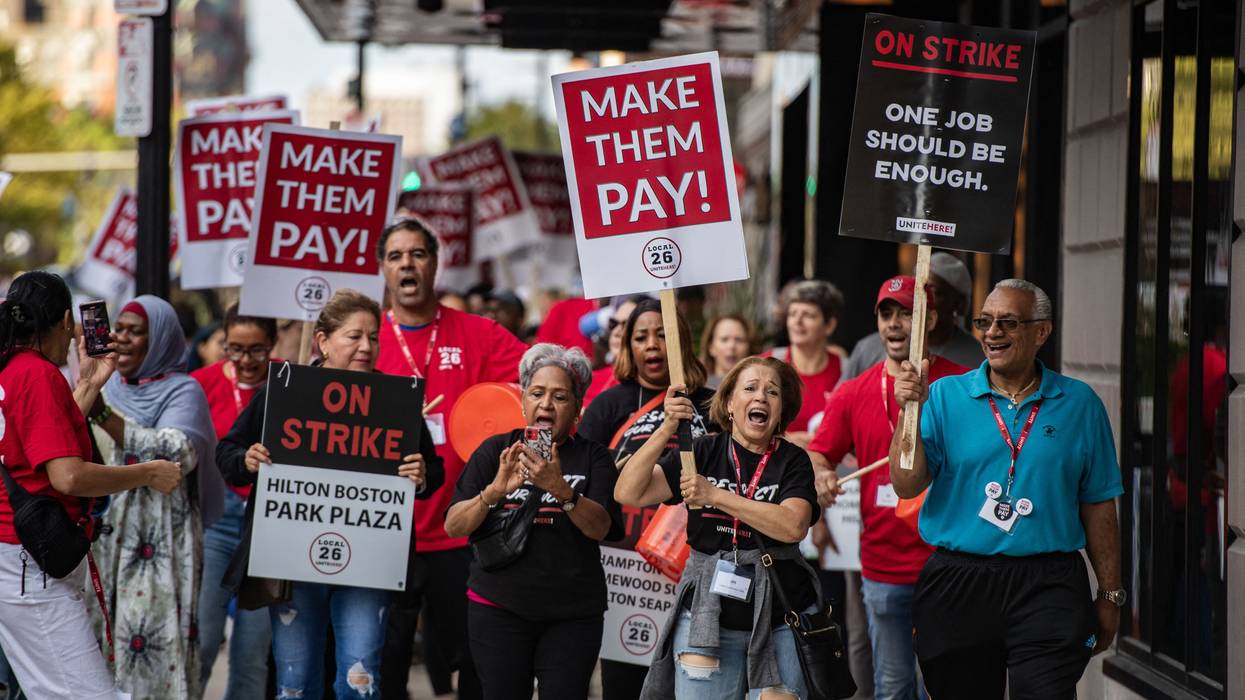
If we want the Democrats, or the Republicans, or any political party to enact a political agenda that effectively addresses the real concerns of working Americans, we must build a movement that enhances and applies the power of working Americans.
Democrats are eager to recapture the House, and perhaps even the Senate, in this November’s elections. They are banking in part on the customary midterm pendulum swing and in part on backlash against President Donald Trump’s unhinged, cult-like governing style (despite the ineffectiveness of this strategy throughout several election cycles). They also hope to reclaim their reputation as the party of the working class.
As a lifelong labor activist, I am gratified whenever people in electoral politics say they want to uplift the American worker. But I admit some skepticism—particularly since both major parties spent a generation or more embracing the neoliberal consensus that the government should surrender to giant multinational corporations and their wealthy executives and investors. Working people are not stupid; they know most prominent Democrats and all pre-MAGA Republicans advanced an agenda that eviscerated worker interests at home and sent tens of millions of jobs abroad. (Many unions, especially those in manufacturing, opposed the North American Free Trade Agreement when George H.W. Bush negotiated it and when William J. Clinton signed it.) Public frustration and outrage have shaken politicians’ commitment to neoliberalism (rhetorically, at least), but will it be replaced by a program that advances the real interests of the people who rely on their own labor to make ends meet?
Now that he is back in office, Trump has abandoned any pretense of being pro-worker. He has stripped a million federal employees of the right to bargain collectively, gutted overtime rules and other workplace protections, crippled the National Labor Relations Board (NLRB), and deprived millions of working people of health and food benefits. He is proud and loud about protecting artificial intelligence from effective regulation just as employers start using it to mow down thousands—and ultimately millions—of jobs. Will the Democrats offer a real alternative for working people?
Some Democrats seem to be focused on the performative—searching for candidates who project non-elite “authenticity.” You know, candidates who know how to operate power tools and who drink beer from plastic cups. Don’t get me wrong, I think it’s great to run candidates who actually work for a living, but that’s not a comprehensive strategy. Working people want—and demand—actual change in how our leaders govern, not just how they look on TV (or TikTok). If the Democrats fail to articulate and deliver a legitimately pro-worker agenda, working people will continue to look elsewhere—perhaps voting for “none of the above.” (Note that, although the 2024 presidential election was proclaimed to be about the survival of our nation and its sacred values, more eligible voters stayed home than voted for either Trump or former Vice President Kamala Harris.)
Congress has failed to adopt legislation to enable workers to build their own power because workers do not have enough power to force Congress to do so.
Just as slick candidate packaging is not enough, the same is true of hollow “messaging.” Working people—like most voters—are tired of promises that bloom just before Election Day and wither right after. To represent workers effectively, elected officials will have to take political risks and challenge the power of the corporate elite, fighting for measures that tackle unaffordable healthcare, the housing crisis, and the vast (and growing) inequalities of wealth and income.
This seems so obvious it raises the question of why elected officials have ignored working voters’ real interests for so long. Here’s the key: Politicians will only stand up to corporate interests and press for meaningful pro-worker change if working people have enough leverage to force them to do so. For the past several decades our elected leaders chose a neoliberal path because the giant multinational companies and the ultra wealthy had the power to demand it—and working people did not have the countervailing power to resist it and to advance their own interests. It is no coincidence that the pro-corporate political consensus arose at precisely the same time that union membership plummeted in the United States. Although public approval of unions is as high as it has been in decades, the percentage of working people who are actually represented by unions is near an all-time low: about 10% of all workers and less than 6% in the private sector.
As the great United Auto Workers union leader Walter Reuther said, no one gives you anything you’re not strong enough to take for yourself. Working people need to build, or rebuild, the power to insist that politicians act in their interests, not just those of the corporate elite. Here’s a concrete example at the heart of building worker power: One of the reasons unions are so small now is that federal labor law has failed to protect workers’ right to organize and to engage in collective bargaining. There are plenty of great ideas for reforming US labor law. The Employee Free Choice Act, first introduced in 2006, would have streamlined the way the NLRB governs union organizing efforts. Opposition from pro-business senators (including some Democrats), together with the threat of a GOP filibuster, doomed it—even when Barack Obama was in the White House and the Democrats controlled both chambers. The Protect the Right to Organize Act, or “PRO Act,” would have addressed a whole range of structural and substantive problems with US labor law. It did not make it to full floor votes even when the Democrats controlled both the House and the Senate in 2021.
Why did Congress fail to adopt either of these essential bills, even when Democrats were in power? Because elected leaders—including Democrats—did not feel political pressure or fear political fallout. It’s like a Zen koan: Congress has failed to adopt legislation to enable workers to build their own power because workers do not have enough power to force Congress to do so.
Bottom line: If we want the Democrats, or the Republicans, or any political party to enact a political agenda that effectively addresses the real concerns of working Americans, we must build a movement that enhances and applies the power of working Americans. Unless and until we create a larger, stronger labor movement, politicians will not feel enough pressure to do the right thing for working people. Leverage is how politics work, and we should act accordingly. We should roll up our sleeves and get busy organizing in the workplace so we can assert real influence in the halls of government.
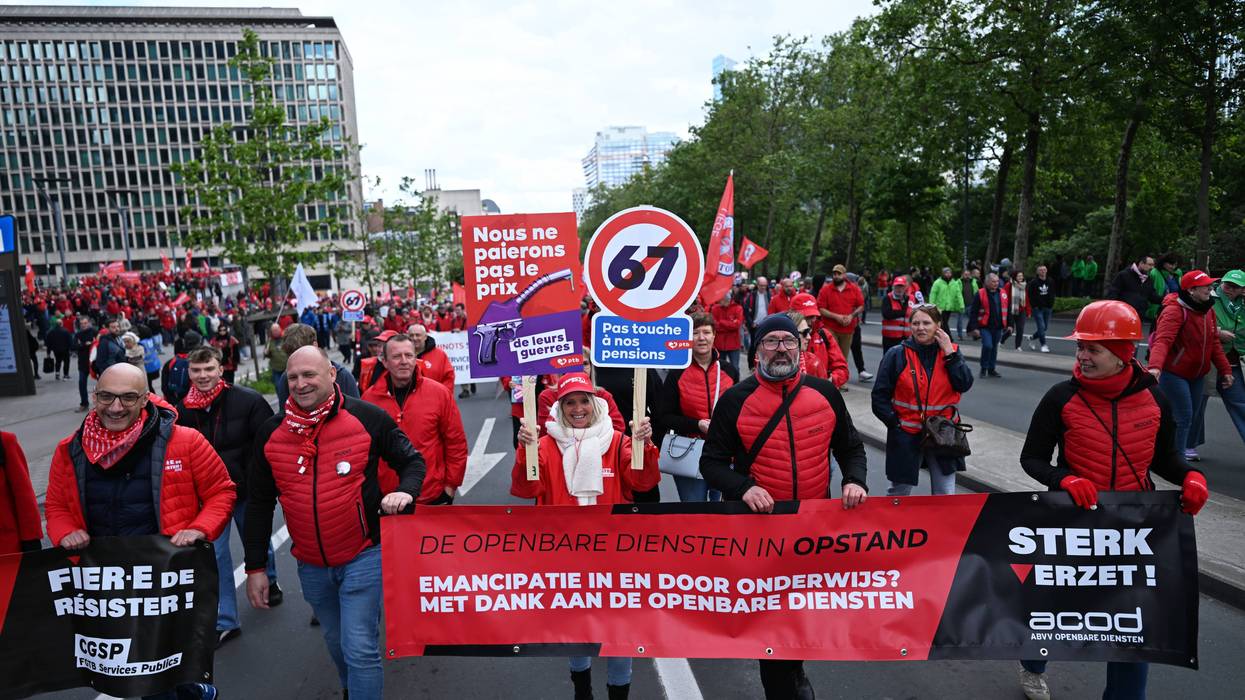
It's the latest of several national strikes over the past year and a half against policies that one union leader said will heighten "inequality" and "poverty."
Much of Belgium ground to a halt on Tuesday as tens of thousands of workers flooded the streets of Brussels as part of a general strike against government austerity measures.
Schools closed, public transit operated with reduced service, and flights out of major airports were grounded as workers walked off the job. Instead, they marched through the capital clad in red and green, the colors of Belgium's major labor unions, with some carrying signs that read, "Hands off our pensions" and "We will not pay the price of their wars."
According to Morning Star, as many as 100,000 people took part in the strike, which was called by the nation's three biggest trade unions in protest of measures by Prime Minister Bart De Wever's government that the unions say slash pensions, reduce wages, and attack collective bargaining.
The marchers called on the government to roll back plans to raise Belgium's retirement age to 67 and have called for an end to what the unions have dubbed a “pension penalty” that would cut benefits for those who retire early.
Amid rising costs caused by the US-Israeli war against Iran, the unions are also outraged by a proposed temporary cap on wage indexation, which requires wages to rise in tandem with inflation.
It's part of a broader trend of the government loosening labor rules for employers, which unions say has led to longer, more irregular hours and diminished employees' work-life balance.
"People will have less money left over and will still have to work more flexibly and longer," said Ann Vermorgen, the chair of the Confederation of Christian Trade Unions. "Even the Planning Bureau says that the reform will promote inequality and that poverty will emerge.”
Tuesday's general strike was just the latest over the past year and a half, as the unions have refused to let up on their push to reverse De Wever's agenda.
Gert Truyens, the chair of the General Confederation of Liberal Trade Unions of Belgium (ACLVB), said that with the pension penalty and the other labor proposals, the government was displaying “total disregard” for social dialogue by “unilaterally imposing things without discussing them with the trade unions and employers.”
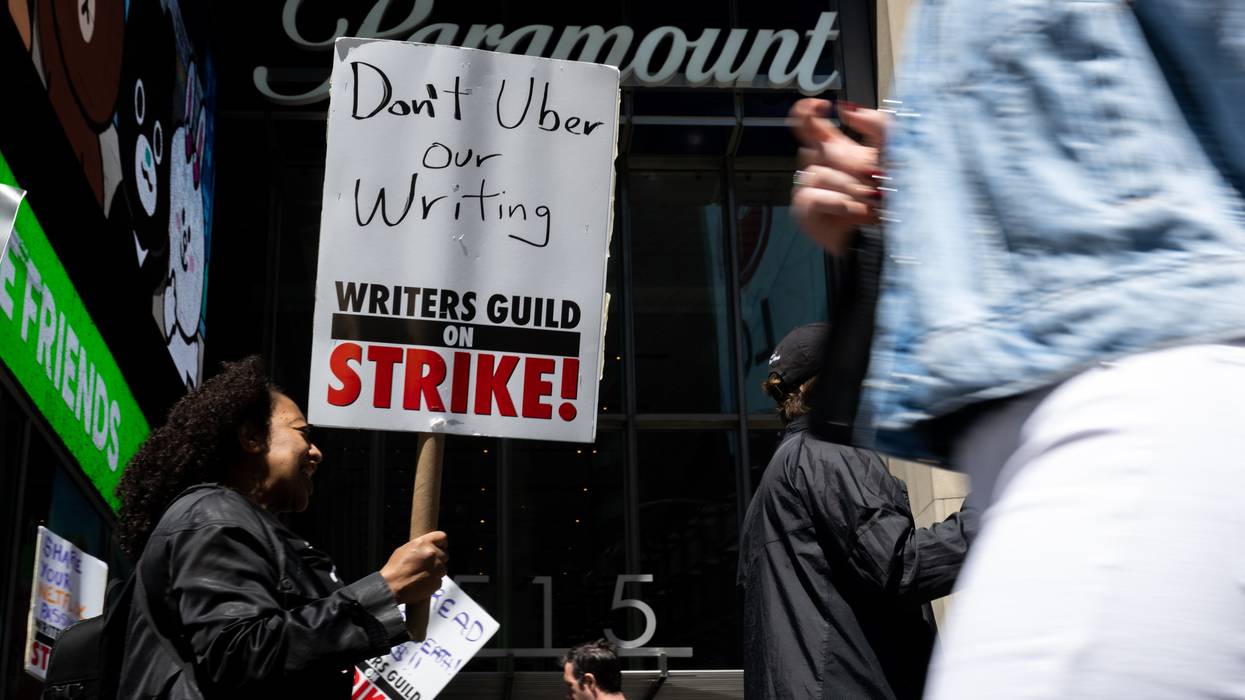
There is broad and deep recognition that AI technology will reshape the future of work, and unions have decided to roll up their sleeves (and dust off their picket signs) to bargain how AI will be implemented, to do what, and to what effect.
For many pundits and policymakers, there is little doubt that Artificial Intelligence will devour the jobs of millions of people, including professionals formerly presumed immune to technological replacement. The only question is how many jobs will be lost, how quickly. In fact, there is nothing inevitable about AI—not its development, its deployment, or its impact. Massive job losses are not inherent in the algorithm, preordained by the laws of nature and physics. Rather than remaining struck by awe, we can reassert human agency over this technology. We can not only save jobs, but perhaps even make them better.
AI is not an abstract force that operates solely at the macroeconomic level. AI systems and agents are developed and implemented in ways specific to each sector, each workplace, each type of job. Although employers might focus myopically on cutting their wage bill, their employees know firsthand how the work actually gets done. They know what disclosures to request about how the technology would be used. They know how AI might affect the content and flow of their work, what training would be most helpful, and which implementations would be most likely to devalue their labor versus those most likely to enhance it. Thus, the most effective way to ensure that AI makes work life better and not worse is to empower workers to bargain about it.
By “workers” I mean people who rely on their own labor to earn a living—which is to say, most of us, whether we write reports, treat patients, teach kids, manufacture products, or stock warehouses. AI is not something that’s going to happen only to other people; it will affect all of us.
Workers need the authority and the power to bargain about the implementation of AI in the workplace, not just the effects. “Effects bargaining” is the traditional approach: After a technology has wiped out jobs, people negotiate a little severance pay to tide them over, and maybe some training for completely different jobs, if any such jobs exist. By contrast, our goal should be to make sure workers can negotiate for technology that makes their jobs better, more productive, more valuable. To avoid the car crash in the first place, if you will, and not just to apportion damages afterward.
AI will not destroy or devalue our jobs by itself, unless we let it.
One can imagine some objections to this approach. Some people might insist that AI is in irresistible force, that large-scale job destruction is inevitable, and that our task is to figure out other things for people to do to earn a living—or, if that’s not possible, to pay them a small stipend so they don’t starve. This defeatism is a short step away from the more nihilistic vision of the pure doomers, who think it might already be too late to save humanity from machine-led destruction. I love science fiction myself—but it is fiction, not history.
Another objection might be that placing restraints of any kind on AI companies in the United States will keep the industry from winning the global race for dominance. This is the Trump administration’s view. This logic is inverted. Nations should be governed for the benefit of their people, not just their Big Tech companies. Both the Republican and Democratic parties proclaim themselves to be the champions of the American worker. If so, the real triumph for the nation would be to ensure that technology enhances work and makes working people’s lives better, not to create havoc and economic devastation across the labor market.
Some might object that it is unrealistic to think that working people have the interest or ability to intervene effectively, to exercise their right to bargain about AI technology. But that is exactly what has been happening in the entertainment industry. One of the central issues in the 2023 strike by the Writers Guild of America against the Hollywood studios and producers was the use of AI in writers’ workplaces. The Guild represents the professionals who create scripts for TV and streaming series and for feature films. In late 2022 Open AI revealed that ChatGPT could write—coherently and at some length. Although the union did not conclude that robots had suddenly become capable of crafting award-winning scripts, Guild members recognized that their employers could use AI to do just enough to degrade and devalue their work.
During contract talks in 2023 the Guild proposed—and won, after a five-month strike—language that puts meaningful guardrails on the use of AI. These guardrails reflect the process writers and studios actually use to create characters and stories and full-length projects. They ensure that AI cannot be used to deprive writers of the opportunity to do the full range of writing work, and they deprive employers of the economic incentive to replace professional writers with algorithms. Guild members knew how to defend their careers, and they fought for meaningful protections.
The Guild members’ willingness to take on the AI issue, rather than passively accept that the technology would hollow out their careers, resonated with working people everywhere. The actors’ union (SAG AFTRA) also struck and won contract protections on AI, and the following year the other entertainment industry unions did the same. The entire labor movement has made workplace AI a top priority. There is broad and deep recognition that AI technology will reshape the future of work, and unions have decided to roll up their sleeves (and dust off their picket signs) to bargain how AI will be implemented, to do what, to what effect.
AI systems do not develop themselves; AI companies do. AI does not implement itself in the workplace; employers do. AI will not destroy or devalue our jobs by itself, unless we let it. Working people can and must protect their livelihoods by bargaining over AI implementation. Nothing less than the future of work is at stake.
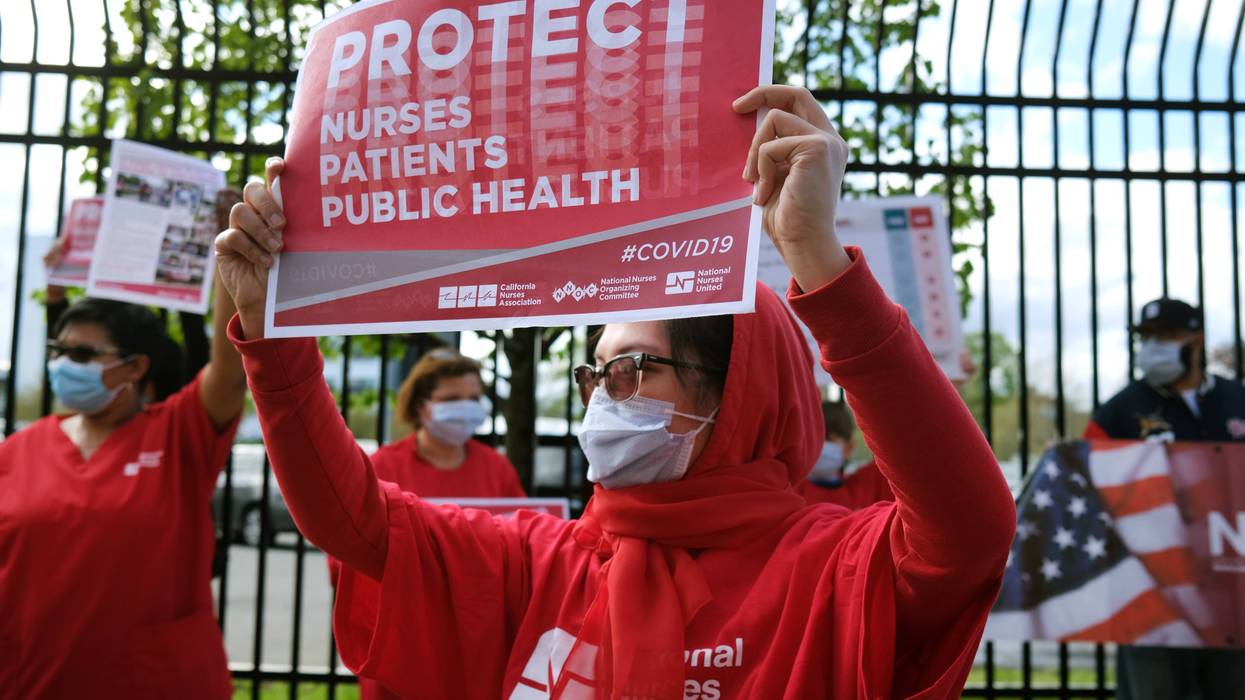
The workers of Uptown and The Bronx have been making the demand for a better life for over a century but Washington has ignored their demands for too long. I'm running to make sure it finally has an answer.
Uptown wakes up before the rest of New York even opens its eyes. Walk Broadway from 125th to 168th, up through Dyckman, as I have, and you'll see it: The bodega coffee grabbed on the run, the crosstown bus packed before dawn, people clocking into work while downtown is still asleep. These are the people who built our city. Not the CEOs, real estate developers, or the politicians who show up every two to four years with fliers and false promises. The movement fighting for their dignity has always lived here—on these buses and these street corners.
Every May 1, we honor them. May Day, or International Workers' Day, was created from needless state violence. In 1884, American workers went on strike to win an eight-hour workday. As the deadline approached, a protest in Chicago turned deadly, with police firing into the crowd and arresting seven workers who, after a sham trial, were executed. The bosses thought that would be the end of it. They were wrong. Workers fought for and won the right to an eight-hour workday.
Here in Harlem, Washington Heights, and Kingsbridge, May Day isn’t an abstract history lesson, it’s a mirror. This is a day to honor the transit workers, nurses, teachers, laborers, and caregivers who have always refused to accept less than they deserve and risked everything to fight for a better future for the next generation. They show us what's possible when working people come together, across generations, race, gender, and culture, and demand a dignified life.
May Day reminds us of something simple and profound: Uptown is a union town. It always has been.
I want to build power for the people on that crosstown bus before dawn who never get thanked for keeping our city running and are told to be grateful for what little they have.
New York, and Uptown especially, has become a stronghold of union power. It was in Harlem, during the Harlem Renaissance, that A. Philip Randolph founded the Brotherhood of Sleeping Car Porters—the first Black-led labor union in American history. It was in Washington Heights and Spanish Harlem where Dominican and Puerto Rican immigrant women transformed the garment industry, becoming so essential to the International Ladies' Garment Workers' Union that by the 1950s, the union published its paper, Justicia, entirely in Spanish. And it was in the Bronx that Ella Baker and Marvel Cooke exposed the Bronx Slave Market, where domestic workers, most of them Black women, were paid as little as 15 cents an hour and subjected to workplace harassment and abuse. Their conditions were so appalling that it sparked city-wide organizing to protect domestic workers. This is my community’s inheritance.
That tradition is still alive in our streets today. In January 2026, 70 years after 1199 Service Employees International Union's historic 46-day strike at Uptown hospitals, hundreds of unionized NY State Nurses Association (NYSNA) nurses walked off the job at NewYork-Presbyterian on 168th Street and at hospitals across our community. They stood on their picket lines from dawn to dusk, through a brutally cold January, fighting starvation wages and conditions so unsafe that patients were being put at risk. After 41 days of striking and organizing, they won. That's the Uptown way.
From the factory floor to the hospital room to the living room, Uptown is still at the center of the labor movement. I think about this legacy when people ask me why I'm running for Congress. The honest answer is: I'm not sure I had a choice.
When you grow up as the daughter of Dominican immigrants and watch your parents work multiple jobs and come home exhausted, see your neighbors get pushed out, watch politicians blame the vulnerable instead of the corporations robbing them blind, all while sending their tax dollars to drop bombs on babies, you organize and fight back. And eventually, the question stops being why run and starts being how could I not?
Congress was not built for us. It was built to manage us. It was built to keep our labor, our rent checks, and our votes flowing to people who have never had to choose between rent and groceries, all while allowing the people who are the foundation of our city to fall through the cracks. But here's what the establishment never understood about Uptown and The Bronx: We don't wait for permission.
That's the legacy I am fighting to protect in Congress. I am a proud card-carrying United Auto Workers member. I've picketed alongside NYSNA nurses on 168th Street and Mount Sinai Morningside. I've fought with Student Workers of Columbia to protect their peers from harassment by the university and Immigration and Customs Enforcement.
In Congress, I will fight to pass the PRO Act so every worker can organize without fear. I will push to fund public housing, cancel medical debt, and end the forever wars that drain our communities to pad the pockets of defense contractors. I want to build power for the people on that crosstown bus before dawn who never get thanked for keeping our city running and are told to be grateful for what little they have. They built New York and deserve everything it has to offer.
May Day is a call to action. The workers of Uptown and The Bronx have been making the demand for a better life for over a century but Washington has ignored their demands for too long. I'm running to make sure it finally has an answer.