
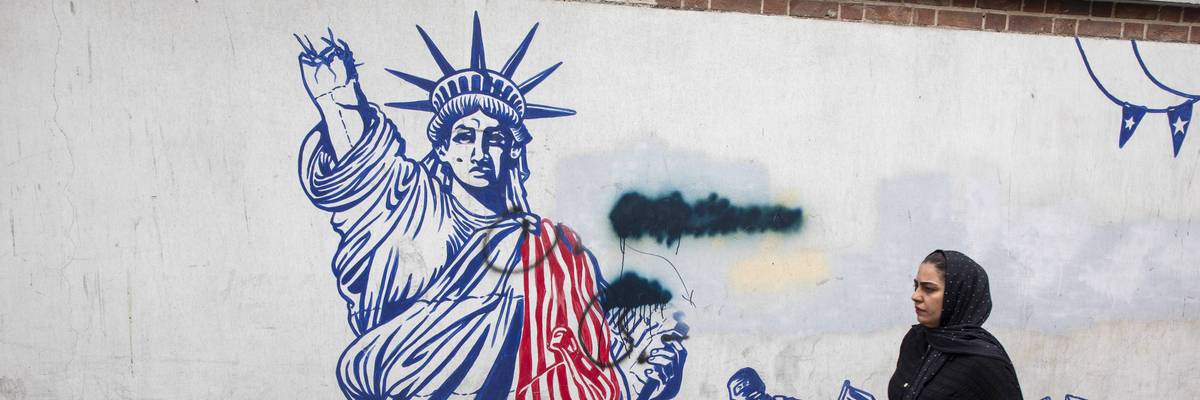
A woman passes in front of an anti-American mural on April 12, 2026 in Tehran, Iran. On April 8 President Donald Trump announced a two-week ceasefire between the US and Iran, conditional on shipping being allowed to resume through the Strait of Hormuz. Peace talks held in Pakistan have since stalled, reportedly over Iran's nuclear stockpile and continued blockade of the Strait of Hormuz.
Trump Can't End His Disastrous War Against Iran Until He Gets Israel Under Control
The rapid return to war over recent days is a stark reminder that, while the US chose how to start this conflict, it has only one vote on how to end it.
Amid a rapid escalation between Israel and Iran, Yemen’s Houthis have rejoined the Iran war, launching a volley of missiles at Israel and pledging to implement a “complete and total ban” of Israeli shipping in the Red Sea. It’s safe to say that the tenuous ceasefire in the Middle East is now unraveling.
President Donald Trump demanded that all parties deescalate, writing on Truth Social Monday morning that “Final negotiations on ‘Peace’ are proceeding” so long as “ignorance or stupidity” don’t get in their way. But the latest developments suggest that the United States has limited control over the path of the conflict, which is now entering its fourth month.
After Iran struck Israel on Sunday in what Tehran described as retaliation for Israeli ceasefire violations in Lebanon, Trump publicly urged Israeli Prime Minister Benjamin Netanyahu to stand by and wait for negotiations to bear fruit. “I call the shots,” Trump told the Financial Times. “Netanyahu doesn’t call the shots.”
Just a few hours later, Israel launched strikes across Iran, hitting what it called “strategic defense systems.” Iranian officials said Israel also hit a petrochemical plant in southwestern Iran.
The rapid return to war is a stark reminder that, while the US chose how to start this conflict, it has only one vote on how to end it. Israel has shown little interest in bringing the war to a close, and many influential pro-Israel voices in the US argue that Trump must “finish the job” and overthrow the Iranian government. And, while Iran has made clear that Lebanon must be part of any ceasefire, Israeli officials remain determined to keep up the fight against Hezbollah, including through large-scale attacks on Beirut.
Trump’s public demands that Israel deescalate suggest that the US is trying to create at least some public separation between its actions and Israel’s. But Iran is weary from years of staccato conflict with Israel and determined to make the most of the leverage it has gained by blockading the Strait of Hormuz.
In practice, this means Tehran is no longer willing to distinguish between US and Israeli attacks. “No one believes the Zionist regime acts without coordination with the United States,” a spokesperson for Iran’s foreign ministry said Monday.
Still, Iran has so far avoided launching new attacks on US assets in the Middle East. This relative restraint may be due to Tehran’s desire to maintain options for future escalation. Another possible explanation is that Iran believes recent reports indicating that Trump has privately said he won’t return to war unless Tehran kills more US soldiers.
The reentry of the Houthis into the war throws an uncertain variable into these calculations. The group earned sympathy throughout the Middle East for its attacks on Israel in retaliation for alleged Israeli war crimes in Gaza. With Israeli forces bogged down on multiple fronts, the Houthis now seemingly see another opportunity to increase their legitimacy and pursue their long-standing goal of confronting Israel.
If the Houthis follow through on their threats to block Israeli shipping, then the Trump administration will face significant pressure to help Israel reopen the key strategic waterway, which is now a crucial pathway for exporting Persian Gulf oil from Arab states because of the Hormuz closure. But even the US military has shown a limited ability to force the Houthis to stand down, despite the best efforts of both the Biden and Trump administrations in recent years.
It will take time to determine the exact impact of the Houthi threats to Israeli shipping. Previous Houthi attempts to partially blockade the Red Sea have already forced many shipping companies to reroute around Africa rather than traveling through the Suez Canal. While the Houthis have generally claimed to target only Israeli ships, the group has used a broad definition to define what counts as Israeli, making it difficult for companies to determine whether they are free to pass.
Meanwhile, Iran is signaling that it wants to stop the latest round of escalation with Israel, saying in a statement Monday that it will stop its attacks so long as Israeli forces halt strikes in Lebanon. The message is clear: if Trump wants a deal with Iran, then he’ll have to restrain Israel first.
We are at a crossroads
This country and this world are at a monumental crossroads. In a few short weeks, US voters will have an opportunity to beat back the forces of fascism and confront the billionaires who are rigging the economy, our media system, and our democracy, making it increasingly impossible for ordinary people to get by. We’re not just talking about the election. We’re talking about what must be done once these fascist elements are vanquished from power. We need a bolder set of solutions than what either major party has so far been willing to offer and a working-class movement ready to fight like hell for it. Trump didn't emerge from nowhere. The conditions that fueled MAGA authoritarianism were created by decades of radical neoliberal economic policies and a corrupt political system dominated by corporate interests. They slashed taxes on the super-rich, promising that the benefits would trickle down. They said giveaways to the corporate titans would make life more affordable for the rest of us. It was all bullshit. And when a bitter, betrayed populace searches for someone to blame, right-wing demagogues have little trouble finding scapegoats. People know when they're being lied to, but you won't hear any of this from the corporate media. Only independent journalism—powered and funded by people who believe in building a better world—can deliver truly trustworthy daily news. Our Fall Campaign is underway, and we need your help. To power our newsroom through the rest of the year, we need to raise $125,000 by midnight on October 31. So if you share our vision, please contribute whatever you can to sustain our work. |
Amid a rapid escalation between Israel and Iran, Yemen’s Houthis have rejoined the Iran war, launching a volley of missiles at Israel and pledging to implement a “complete and total ban” of Israeli shipping in the Red Sea. It’s safe to say that the tenuous ceasefire in the Middle East is now unraveling.
President Donald Trump demanded that all parties deescalate, writing on Truth Social Monday morning that “Final negotiations on ‘Peace’ are proceeding” so long as “ignorance or stupidity” don’t get in their way. But the latest developments suggest that the United States has limited control over the path of the conflict, which is now entering its fourth month.
After Iran struck Israel on Sunday in what Tehran described as retaliation for Israeli ceasefire violations in Lebanon, Trump publicly urged Israeli Prime Minister Benjamin Netanyahu to stand by and wait for negotiations to bear fruit. “I call the shots,” Trump told the Financial Times. “Netanyahu doesn’t call the shots.”
Just a few hours later, Israel launched strikes across Iran, hitting what it called “strategic defense systems.” Iranian officials said Israel also hit a petrochemical plant in southwestern Iran.
The rapid return to war is a stark reminder that, while the US chose how to start this conflict, it has only one vote on how to end it. Israel has shown little interest in bringing the war to a close, and many influential pro-Israel voices in the US argue that Trump must “finish the job” and overthrow the Iranian government. And, while Iran has made clear that Lebanon must be part of any ceasefire, Israeli officials remain determined to keep up the fight against Hezbollah, including through large-scale attacks on Beirut.
Trump’s public demands that Israel deescalate suggest that the US is trying to create at least some public separation between its actions and Israel’s. But Iran is weary from years of staccato conflict with Israel and determined to make the most of the leverage it has gained by blockading the Strait of Hormuz.
In practice, this means Tehran is no longer willing to distinguish between US and Israeli attacks. “No one believes the Zionist regime acts without coordination with the United States,” a spokesperson for Iran’s foreign ministry said Monday.
Still, Iran has so far avoided launching new attacks on US assets in the Middle East. This relative restraint may be due to Tehran’s desire to maintain options for future escalation. Another possible explanation is that Iran believes recent reports indicating that Trump has privately said he won’t return to war unless Tehran kills more US soldiers.
The reentry of the Houthis into the war throws an uncertain variable into these calculations. The group earned sympathy throughout the Middle East for its attacks on Israel in retaliation for alleged Israeli war crimes in Gaza. With Israeli forces bogged down on multiple fronts, the Houthis now seemingly see another opportunity to increase their legitimacy and pursue their long-standing goal of confronting Israel.
If the Houthis follow through on their threats to block Israeli shipping, then the Trump administration will face significant pressure to help Israel reopen the key strategic waterway, which is now a crucial pathway for exporting Persian Gulf oil from Arab states because of the Hormuz closure. But even the US military has shown a limited ability to force the Houthis to stand down, despite the best efforts of both the Biden and Trump administrations in recent years.
It will take time to determine the exact impact of the Houthi threats to Israeli shipping. Previous Houthi attempts to partially blockade the Red Sea have already forced many shipping companies to reroute around Africa rather than traveling through the Suez Canal. While the Houthis have generally claimed to target only Israeli ships, the group has used a broad definition to define what counts as Israeli, making it difficult for companies to determine whether they are free to pass.
Meanwhile, Iran is signaling that it wants to stop the latest round of escalation with Israel, saying in a statement Monday that it will stop its attacks so long as Israeli forces halt strikes in Lebanon. The message is clear: if Trump wants a deal with Iran, then he’ll have to restrain Israel first.
- A Delusional Trump, Backed by Israel, Drives the Iran War - News & Opinion - The Commons ›
- 'Bombs Will Be Dropping Everywhere': Trump Launches Illegal Regime Change War Against Iran ›
- Majority of Americans Believe Waging War on Iran Benefits Israel More Than US ›
- Trump 'Openly Flaunting His War Crimes' as US Bombs Iran's Civilian Infrastructure ›
- Amid Israeli Sabotage of Iran Talks, Trump Says Troops Turned Back From Beirut After Netanyahu Call ›
- US, Israel, and Iran Agree to 2-Week Ceasefire Hours After Trump's Genocidal Threat ›
Amid a rapid escalation between Israel and Iran, Yemen’s Houthis have rejoined the Iran war, launching a volley of missiles at Israel and pledging to implement a “complete and total ban” of Israeli shipping in the Red Sea. It’s safe to say that the tenuous ceasefire in the Middle East is now unraveling.
President Donald Trump demanded that all parties deescalate, writing on Truth Social Monday morning that “Final negotiations on ‘Peace’ are proceeding” so long as “ignorance or stupidity” don’t get in their way. But the latest developments suggest that the United States has limited control over the path of the conflict, which is now entering its fourth month.
After Iran struck Israel on Sunday in what Tehran described as retaliation for Israeli ceasefire violations in Lebanon, Trump publicly urged Israeli Prime Minister Benjamin Netanyahu to stand by and wait for negotiations to bear fruit. “I call the shots,” Trump told the Financial Times. “Netanyahu doesn’t call the shots.”
Just a few hours later, Israel launched strikes across Iran, hitting what it called “strategic defense systems.” Iranian officials said Israel also hit a petrochemical plant in southwestern Iran.
The rapid return to war is a stark reminder that, while the US chose how to start this conflict, it has only one vote on how to end it. Israel has shown little interest in bringing the war to a close, and many influential pro-Israel voices in the US argue that Trump must “finish the job” and overthrow the Iranian government. And, while Iran has made clear that Lebanon must be part of any ceasefire, Israeli officials remain determined to keep up the fight against Hezbollah, including through large-scale attacks on Beirut.
Trump’s public demands that Israel deescalate suggest that the US is trying to create at least some public separation between its actions and Israel’s. But Iran is weary from years of staccato conflict with Israel and determined to make the most of the leverage it has gained by blockading the Strait of Hormuz.
In practice, this means Tehran is no longer willing to distinguish between US and Israeli attacks. “No one believes the Zionist regime acts without coordination with the United States,” a spokesperson for Iran’s foreign ministry said Monday.
Still, Iran has so far avoided launching new attacks on US assets in the Middle East. This relative restraint may be due to Tehran’s desire to maintain options for future escalation. Another possible explanation is that Iran believes recent reports indicating that Trump has privately said he won’t return to war unless Tehran kills more US soldiers.
The reentry of the Houthis into the war throws an uncertain variable into these calculations. The group earned sympathy throughout the Middle East for its attacks on Israel in retaliation for alleged Israeli war crimes in Gaza. With Israeli forces bogged down on multiple fronts, the Houthis now seemingly see another opportunity to increase their legitimacy and pursue their long-standing goal of confronting Israel.
If the Houthis follow through on their threats to block Israeli shipping, then the Trump administration will face significant pressure to help Israel reopen the key strategic waterway, which is now a crucial pathway for exporting Persian Gulf oil from Arab states because of the Hormuz closure. But even the US military has shown a limited ability to force the Houthis to stand down, despite the best efforts of both the Biden and Trump administrations in recent years.
It will take time to determine the exact impact of the Houthi threats to Israeli shipping. Previous Houthi attempts to partially blockade the Red Sea have already forced many shipping companies to reroute around Africa rather than traveling through the Suez Canal. While the Houthis have generally claimed to target only Israeli ships, the group has used a broad definition to define what counts as Israeli, making it difficult for companies to determine whether they are free to pass.
Meanwhile, Iran is signaling that it wants to stop the latest round of escalation with Israel, saying in a statement Monday that it will stop its attacks so long as Israeli forces halt strikes in Lebanon. The message is clear: if Trump wants a deal with Iran, then he’ll have to restrain Israel first.
- A Delusional Trump, Backed by Israel, Drives the Iran War - News & Opinion - The Commons ›
- 'Bombs Will Be Dropping Everywhere': Trump Launches Illegal Regime Change War Against Iran ›
- Majority of Americans Believe Waging War on Iran Benefits Israel More Than US ›
- Trump 'Openly Flaunting His War Crimes' as US Bombs Iran's Civilian Infrastructure ›
- Amid Israeli Sabotage of Iran Talks, Trump Says Troops Turned Back From Beirut After Netanyahu Call ›
- US, Israel, and Iran Agree to 2-Week Ceasefire Hours After Trump's Genocidal Threat ›