SUBSCRIBE TO OUR FREE NEWSLETTER
Daily news & progressive opinion—funded by the people, not the corporations—delivered straight to your inbox.
5
#000000
#FFFFFF
To donate by check, phone, or other method, see our More Ways to Give page.
Daily news & progressive opinion—funded by the people, not the corporations—delivered straight to your inbox.
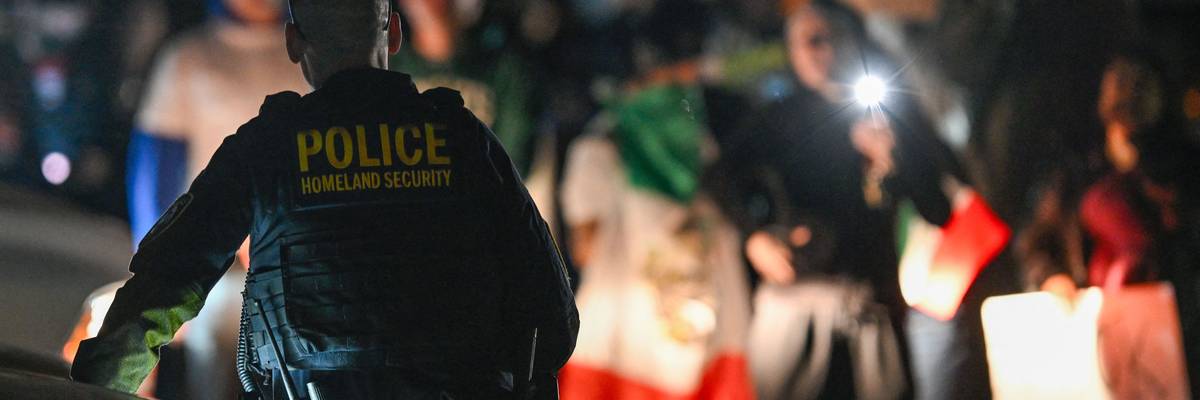
A Department of Homeland Security agent stands guard as protesters demonstrate against raids conducted by the US Immigration and Customs Enforcement (ICE) outside the Department of Homeland Security office in Charlotte, North Carolina, on November 16, 2025.
Immigration enforcement, political rhetoric, and the experiences of others can generate fear even among people with secure legal status, with consequences for health.
During a recent visit to Niagara Falls, I discovered something about myself I had never fully recognized. Before leaving home, and again upon arriving, I repeatedly checked that I had my passport, US green card, and Canadian visitor visa. As a US permanent resident, I did not even need the Canadian visa, but I had obtained one anyway, a form of what I jokingly call “double fortification.” Then, while exploring the American side of the falls, my friend and I became uncertain about our direction. I was suddenly terrified that we might accidentally cross the border. My documents were in order. I had never experienced serious immigration difficulties. None of that seemed to matter in that moment.
More recently, I experienced a similar reaction while applying for a Tanzanian visa. I asked a friend question after question about the visa category, travel dates, duration of stay, and required documents. I understood the instructions, but I was afraid of making a small mistake. When an error message appeared after I submitted the application and paid, my anxiety intensified. It eased only when my friend, a US citizen, explained that the same error had appeared during their successful application. Why did an ordinary administrative process feel so threatening?
I began to recognize that some of my fear came not from what had happened to me, but from what I had seen happen to others. Stories of visa denials, detention, deportation, and border encounters circulate through news coverage, social media, and immigrant communities. They are heard against a backdrop of enforcement announcements and political rhetoric that can make routine immigration processes feel high stakes. I think of the anticipatory fear that follows as vicarious immigration anxiety. This is my descriptive term, not an established clinical diagnosis. Still, it raises a question worth asking: What happens to people's health when the experiences of others teach them to anticipate danger, even when their own documents are valid?
The risks immigrants face are not all the same, but the surrounding climate can shape how safe they feel.
I recently discussed the 1951 Refugee Convention and its 1967 Protocol while teaching students about humanitarian crises in global health. That conversation sharpened an important distinction. My experience cannot be equated with that of a refugee fleeing persecution, or with someone facing an immediate threat of deportation. The risks are profoundly different. But legal security and psychological security are also different. Having permission to remain in a country does not necessarily mean feeling safe within it.
This is not a marginal concern. According to the OECD's International Migration Outlook 2026, about 52 million foreign-born people lived in the United States in 2025, roughly 15% of the population. Their legal circumstances vary, and so do their vulnerabilities. Yet the reach of immigration-related fear extends well beyond those without legal status.
A 2025 KFF/New York Times survey of immigrants found that 50% of lawfully present immigrants worried that they or a family member could be detained or deported, up from 33% in 2023. Among lawfully present immigrants, 62% said they had begun carrying proof of immigration status since January 2025. These findings do not tell us exactly why each person feels afraid. But they suggest that the uncertainty surrounding intensified immigration enforcement reaches people who have valid legal status, too. The psychological effects of an immigration climate are not limited to those directly targeted by enforcement.
The consequences become more troubling when fear keeps families from essential services. An April 2026 Urban Institute study reported that 23% of adults in immigrant families with children said their family had avoided at least one essential activity because of immigration concerns. Ten percent reported avoiding a doctor's office, clinic, or hospital, and 15% said their children had experienced increased stress, anxiety, or sadness related to immigration worries. These findings do not specifically measure the phenomenon I describe as vicarious anxiety, but they establish that immigration-related fear has consequences for health and participation in daily life.
More recently, Urban Institute interviews with mothers in mixed-status families described continued vigilance months after heightened enforcement operations had subsided in their communities. Some mothers missed medical appointments, reduced work, and struggled with their own mental health. Their risks were more immediate than mine, but the findings underscore how fear can outlast the event that first produced it.
From a public health standpoint, fear matters even before it produces a diagnosis. Constant vigilance can affect how people travel, whether they seek medical care, and how families navigate ordinary routines. The Urban Institute findings document some of these changes in behavior, although they do not establish that every response results from indirect exposure to other people's experiences. What they do show is that immigration-related fear can spill into health and daily life. We should not require someone to experience detention personally before taking the health consequences of a climate of fear seriously.
The response cannot be limited to telling immigrants to manage their stress. Federal policymakers should restore clear limits on immigration enforcement in places where people seek essential services, including healthcare facilities and schools, and protect the confidentiality of health information. Immigration agencies should make application requirements, decisions, and case-tracking systems clearer and more predictable. Universities, employers, healthcare providers, and immigrant-serving organizations should provide reliable guidance and culturally responsive mental health support. These institutional steps matter, but they cannot substitute for policies that reduce unnecessary fear in the first place.
My experience at Niagara Falls was not a crisis. Precisely because my immigration circumstances are relatively secure, it made me question how far insecurity can travel through the stories we hear and the policies we watch unfold. The risks immigrants face are not all the same, but the surrounding climate can shape how safe they feel. A green card establishes a legal right to live in the United States. It does not automatically restore a sense of security. Immigration policies should be evaluated not only by their direct enforcement outcomes, but also by what persistent fear means for people's health and everyday lives.
This country and this world are at a monumental crossroads. US voters have an opportunity to beat back the forces of fascism and confront the billionaires who are rigging the economy, our media system, and our democracy, making it increasingly impossible for ordinary people to get by. We’re not just talking about the election. We’re talking about what must be done once these fascist elements are vanquished from power. We need a bolder set of solutions than what either major party has so far been willing to offer and a working-class movement ready to fight like hell for it. Trump didn't emerge from nowhere. The conditions that fueled MAGA authoritarianism were created by decades of radical neoliberal economic policies and a corrupt political system dominated by corporate interests. They slashed taxes on the super-rich, promising that the benefits would trickle down. They said giveaways to the corporate titans would make life more affordable for the rest of us. It was all bullshit. And when a bitter, betrayed populace searches for someone to blame, right-wing demagogues have little trouble finding scapegoats. People know when they're being lied to, but you won't hear any of this from the corporate media. Only independent journalism—powered and funded by people who believe in building a better world—can deliver truly trustworthy daily news. If you share our vision, please contribute whatever you can to sustain our work. |
During a recent visit to Niagara Falls, I discovered something about myself I had never fully recognized. Before leaving home, and again upon arriving, I repeatedly checked that I had my passport, US green card, and Canadian visitor visa. As a US permanent resident, I did not even need the Canadian visa, but I had obtained one anyway, a form of what I jokingly call “double fortification.” Then, while exploring the American side of the falls, my friend and I became uncertain about our direction. I was suddenly terrified that we might accidentally cross the border. My documents were in order. I had never experienced serious immigration difficulties. None of that seemed to matter in that moment.
More recently, I experienced a similar reaction while applying for a Tanzanian visa. I asked a friend question after question about the visa category, travel dates, duration of stay, and required documents. I understood the instructions, but I was afraid of making a small mistake. When an error message appeared after I submitted the application and paid, my anxiety intensified. It eased only when my friend, a US citizen, explained that the same error had appeared during their successful application. Why did an ordinary administrative process feel so threatening?
I began to recognize that some of my fear came not from what had happened to me, but from what I had seen happen to others. Stories of visa denials, detention, deportation, and border encounters circulate through news coverage, social media, and immigrant communities. They are heard against a backdrop of enforcement announcements and political rhetoric that can make routine immigration processes feel high stakes. I think of the anticipatory fear that follows as vicarious immigration anxiety. This is my descriptive term, not an established clinical diagnosis. Still, it raises a question worth asking: What happens to people's health when the experiences of others teach them to anticipate danger, even when their own documents are valid?
The risks immigrants face are not all the same, but the surrounding climate can shape how safe they feel.
I recently discussed the 1951 Refugee Convention and its 1967 Protocol while teaching students about humanitarian crises in global health. That conversation sharpened an important distinction. My experience cannot be equated with that of a refugee fleeing persecution, or with someone facing an immediate threat of deportation. The risks are profoundly different. But legal security and psychological security are also different. Having permission to remain in a country does not necessarily mean feeling safe within it.
This is not a marginal concern. According to the OECD's International Migration Outlook 2026, about 52 million foreign-born people lived in the United States in 2025, roughly 15% of the population. Their legal circumstances vary, and so do their vulnerabilities. Yet the reach of immigration-related fear extends well beyond those without legal status.
A 2025 KFF/New York Times survey of immigrants found that 50% of lawfully present immigrants worried that they or a family member could be detained or deported, up from 33% in 2023. Among lawfully present immigrants, 62% said they had begun carrying proof of immigration status since January 2025. These findings do not tell us exactly why each person feels afraid. But they suggest that the uncertainty surrounding intensified immigration enforcement reaches people who have valid legal status, too. The psychological effects of an immigration climate are not limited to those directly targeted by enforcement.
The consequences become more troubling when fear keeps families from essential services. An April 2026 Urban Institute study reported that 23% of adults in immigrant families with children said their family had avoided at least one essential activity because of immigration concerns. Ten percent reported avoiding a doctor's office, clinic, or hospital, and 15% said their children had experienced increased stress, anxiety, or sadness related to immigration worries. These findings do not specifically measure the phenomenon I describe as vicarious anxiety, but they establish that immigration-related fear has consequences for health and participation in daily life.
More recently, Urban Institute interviews with mothers in mixed-status families described continued vigilance months after heightened enforcement operations had subsided in their communities. Some mothers missed medical appointments, reduced work, and struggled with their own mental health. Their risks were more immediate than mine, but the findings underscore how fear can outlast the event that first produced it.
From a public health standpoint, fear matters even before it produces a diagnosis. Constant vigilance can affect how people travel, whether they seek medical care, and how families navigate ordinary routines. The Urban Institute findings document some of these changes in behavior, although they do not establish that every response results from indirect exposure to other people's experiences. What they do show is that immigration-related fear can spill into health and daily life. We should not require someone to experience detention personally before taking the health consequences of a climate of fear seriously.
The response cannot be limited to telling immigrants to manage their stress. Federal policymakers should restore clear limits on immigration enforcement in places where people seek essential services, including healthcare facilities and schools, and protect the confidentiality of health information. Immigration agencies should make application requirements, decisions, and case-tracking systems clearer and more predictable. Universities, employers, healthcare providers, and immigrant-serving organizations should provide reliable guidance and culturally responsive mental health support. These institutional steps matter, but they cannot substitute for policies that reduce unnecessary fear in the first place.
My experience at Niagara Falls was not a crisis. Precisely because my immigration circumstances are relatively secure, it made me question how far insecurity can travel through the stories we hear and the policies we watch unfold. The risks immigrants face are not all the same, but the surrounding climate can shape how safe they feel. A green card establishes a legal right to live in the United States. It does not automatically restore a sense of security. Immigration policies should be evaluated not only by their direct enforcement outcomes, but also by what persistent fear means for people's health and everyday lives.