5
#000000
#FFFFFF
To donate by check, phone, or other method, see our More Ways to Give page.
Daily news & progressive opinion—funded by the people, not the corporations—delivered straight to your inbox.

A man holds a social security card.
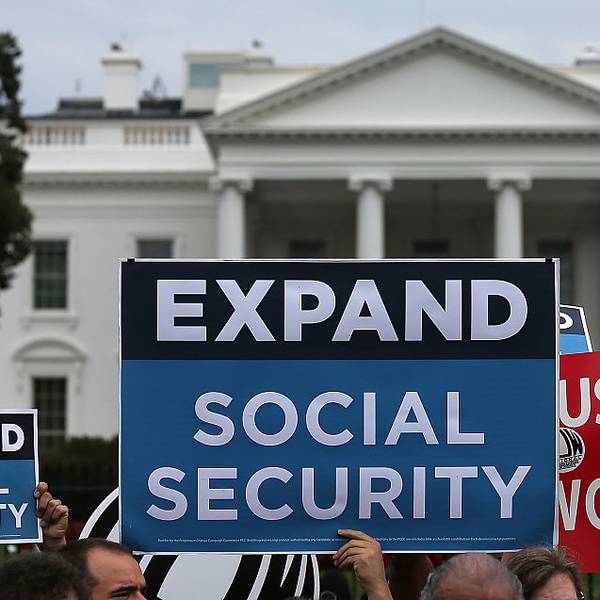
While there are a number of steps Congress must take to help increase revenue, they should start by asking the wealthiest Americans to pay their fair share.
Last week, Americans went to the polls demanding change, and they got it. Democrats flipped both the House and the Senate, winning not only in blue states and battlegrounds, but in states that hadn’t sent a Democrat to the Senate in decades. Older voters played a crucial role in that outcome, accounting for roughly 34% of the electorate despite being just 24% of eligible voters. According to analysis by The New York Times and Siena College, voters 65 and older moved six points toward Democrats, voting 52-47 Democratic in the midterms.
These voters came with a clear priority. According to a post-election survey by the NORC Civic Health & Elections Project, 90% of voters over 50, including 87% of Republicans and Independents, said protecting Social Security from cuts was very or extremely important to their vote.
Candidates across the political spectrum knew that Social Security would be an animating issue in this election. Democrats campaigned on making the wealthiest Americans pay their fair share. Republicans touted the president’s message about ending taxes on Social Security benefits. While the messages differed, both parties recognized that older voters care deeply about the future of the program that helps tens of millions of Americans retire with dignity after a lifetime of hard work.
Social Security’s own estimates show that eliminating the income cap entirely could close roughly half of the program’s long-term shortfall. While it’s not the end-all solution, and Congress will need to come up with a lasting solution, it’s the right place to start.
Now that the dust has settled on the election, voters are demanding action. This week, newly elected members are in Washington for orientation, and Democratic leaders are deciding how to put their new majorities to work. But voters handed these members something more important than control of Congress. They handed them a mandate to protect Social Security, and a deadline.
This deadline is not abstract. Earlier this year, the Social Security Trustees Report projected that unless Congress acts, beginning in 2032, Social Security will no longer be able to pay full scheduled benefits. That would trigger an automatic benefit cut of 22%, or roughly $500 a month for a typical retiree. For many, their benefits have to cover utilities, food, transportation, and healthcare. A $500 monthly cut would be devastating.
The Senators elected last week will serve until January 2033. If that cut comes, it comes on their watch.
Every year that Congress delays action, the fix gets bigger and more complex. But the good news is that few Congresses in history have been better positioned to act. New members won by promising to protect Social Security, and the voters who elected them are watching.
While there are a number of steps Congress must take to help increase revenue, they should start by asking the wealthiest Americans to pay their fair share. When Congress last strengthened Social Security in 1983, lawmakers intended payroll taxes to apply to about 90% of wages. But as income at the very top has grown disproportionately, only about 83% of today’s wages are subject to the payroll tax. Once someone earns over $184,500 a year, they stop paying Social Security taxes on additional wages. That means teachers, custodians, mechanics, construction workers, and nurses pay on every dollar they earn. Meanwhile, someone making over $5 million a year is done paying into the trust fund before mid-January.
Social Security’s own estimates show that eliminating the income cap entirely could close roughly half of the program’s long-term shortfall. While it’s not the end-all solution, and Congress will need to come up with a lasting solution, it’s the right place to start.
This idea is widely popular. A September poll found that 72% of respondents would support Congress instituting even a 1% tax on income above $184,500. Other surveys have found broad support for applying the payroll tax to income above $400,000. That’s why candidates around the country ran on it. In North Carolina, Roy Cooper warned voters about looming cuts and told them “the wealthy have to pay their fair share.” In Ohio, Sherrod Brown won back a Senate seat by calling to raise the cap so billionaires pay their fair share. In Texas, James Talarico flipped a seat held by Republicans for more than three decades by pledging to apply the tax to earnings over $400,000. In Michigan, Abdul El-Sayed campaigned on scrapping the cap altogether.
The idea doesn’t belong to one party, either. Republican Sen. Bernie Moreno (Ohio) has joined Democratic Senator Elizabeth Warren (Mass.) in calling for eliminating the cap. But just as the idea doesn’t belong to one party alone, the responsibility to act doesn’t either.
The American people have demanded urgent action, and this new Congress is primed to deliver it. For the sake of today’s retirees and future generations, they must not squander this opportunity.
This country and this world are at a monumental crossroads. US voters have an opportunity to beat back the forces of fascism and confront the billionaires who are rigging the economy, our media system, and our democracy, making it increasingly impossible for ordinary people to get by. We’re not just talking about the election. We’re talking about what must be done once these fascist elements are vanquished from power. We need a bolder set of solutions than what either major party has so far been willing to offer and a working-class movement ready to fight like hell for it. Trump didn't emerge from nowhere. The conditions that fueled MAGA authoritarianism were created by decades of radical neoliberal economic policies and a corrupt political system dominated by corporate interests. They slashed taxes on the super-rich, promising that the benefits would trickle down. They said giveaways to the corporate titans would make life more affordable for the rest of us. It was all bullshit. And when a bitter, betrayed populace searches for someone to blame, right-wing demagogues have little trouble finding scapegoats. People know when they're being lied to, but you won't hear any of this from the corporate media. Only independent journalism—powered and funded by people who believe in building a better world—can deliver truly trustworthy daily news. If you share our vision, please contribute whatever you can to sustain our work. |
Last week, Americans went to the polls demanding change, and they got it. Democrats flipped both the House and the Senate, winning not only in blue states and battlegrounds, but in states that hadn’t sent a Democrat to the Senate in decades. Older voters played a crucial role in that outcome, accounting for roughly 34% of the electorate despite being just 24% of eligible voters. According to analysis by The New York Times and Siena College, voters 65 and older moved six points toward Democrats, voting 52-47 Democratic in the midterms.
These voters came with a clear priority. According to a post-election survey by the NORC Civic Health & Elections Project, 90% of voters over 50, including 87% of Republicans and Independents, said protecting Social Security from cuts was very or extremely important to their vote.
Candidates across the political spectrum knew that Social Security would be an animating issue in this election. Democrats campaigned on making the wealthiest Americans pay their fair share. Republicans touted the president’s message about ending taxes on Social Security benefits. While the messages differed, both parties recognized that older voters care deeply about the future of the program that helps tens of millions of Americans retire with dignity after a lifetime of hard work.
Social Security’s own estimates show that eliminating the income cap entirely could close roughly half of the program’s long-term shortfall. While it’s not the end-all solution, and Congress will need to come up with a lasting solution, it’s the right place to start.
Now that the dust has settled on the election, voters are demanding action. This week, newly elected members are in Washington for orientation, and Democratic leaders are deciding how to put their new majorities to work. But voters handed these members something more important than control of Congress. They handed them a mandate to protect Social Security, and a deadline.
This deadline is not abstract. Earlier this year, the Social Security Trustees Report projected that unless Congress acts, beginning in 2032, Social Security will no longer be able to pay full scheduled benefits. That would trigger an automatic benefit cut of 22%, or roughly $500 a month for a typical retiree. For many, their benefits have to cover utilities, food, transportation, and healthcare. A $500 monthly cut would be devastating.
The Senators elected last week will serve until January 2033. If that cut comes, it comes on their watch.
Every year that Congress delays action, the fix gets bigger and more complex. But the good news is that few Congresses in history have been better positioned to act. New members won by promising to protect Social Security, and the voters who elected them are watching.
While there are a number of steps Congress must take to help increase revenue, they should start by asking the wealthiest Americans to pay their fair share. When Congress last strengthened Social Security in 1983, lawmakers intended payroll taxes to apply to about 90% of wages. But as income at the very top has grown disproportionately, only about 83% of today’s wages are subject to the payroll tax. Once someone earns over $184,500 a year, they stop paying Social Security taxes on additional wages. That means teachers, custodians, mechanics, construction workers, and nurses pay on every dollar they earn. Meanwhile, someone making over $5 million a year is done paying into the trust fund before mid-January.
Social Security’s own estimates show that eliminating the income cap entirely could close roughly half of the program’s long-term shortfall. While it’s not the end-all solution, and Congress will need to come up with a lasting solution, it’s the right place to start.
This idea is widely popular. A September poll found that 72% of respondents would support Congress instituting even a 1% tax on income above $184,500. Other surveys have found broad support for applying the payroll tax to income above $400,000. That’s why candidates around the country ran on it. In North Carolina, Roy Cooper warned voters about looming cuts and told them “the wealthy have to pay their fair share.” In Ohio, Sherrod Brown won back a Senate seat by calling to raise the cap so billionaires pay their fair share. In Texas, James Talarico flipped a seat held by Republicans for more than three decades by pledging to apply the tax to earnings over $400,000. In Michigan, Abdul El-Sayed campaigned on scrapping the cap altogether.
The idea doesn’t belong to one party, either. Republican Sen. Bernie Moreno (Ohio) has joined Democratic Senator Elizabeth Warren (Mass.) in calling for eliminating the cap. But just as the idea doesn’t belong to one party alone, the responsibility to act doesn’t either.
The American people have demanded urgent action, and this new Congress is primed to deliver it. For the sake of today’s retirees and future generations, they must not squander this opportunity.