5
#000000
#FFFFFF
To donate by check, phone, or other method, see our More Ways to Give page.
Daily news & progressive opinion—funded by the people, not the corporations—delivered straight to your inbox.
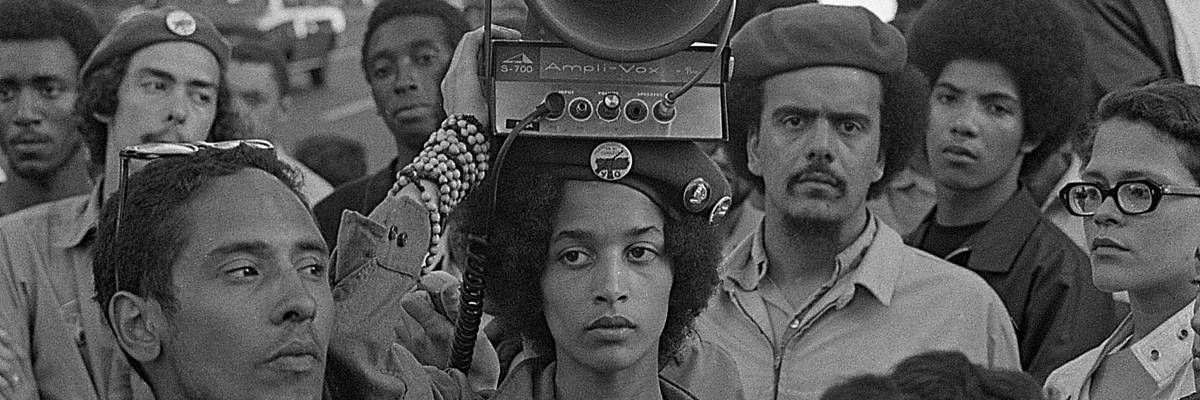
American activist and community organizer (and future academic) Denise Oliver-Velez (center), a member of the New York chapter of the Young Lords Organization Central Committee, holds a portable sound system over her head and stands, surrounded by unidentified others, during street rally in Newark, New Jersey on June 20, 1970.
As the Trump administration’s crusade against democracy and our nation’s public health and healthcare systems continue, we can learn from the lives of Denise Oliver-Velez and Walt Odets.
Two recent deaths highlighted the importance of earlier activist leaders to struggles for health and social justice. Denise Oliver-Velez, who died on July 15, was a founder of the Young Lords Party in New York, a group that mobilized Puerto Rican and other communities to fight for their health and dignity. She also helped set the stage for alignments between movements for the rights of people of color and those focused on the rights of women.
Walt Odets, a psychologist, died on July 5th in Berkeley where he had provided therapy for gay men for decades. His activism had focused on how best to prevent AIDS and ending the stigma that this country imposes on LGBTQI people.
Their stories remind us of the important role activists play in combating injustice and reversing cruel and harmful policies. As the Trump administration’s crusade against democracy and our nation’s public health and healthcare systems continue, we can learn from these two lives lessons for today’s activists who can bring the values and passions of Oliver-Velez and Odets into the present period.
Through the campaigns she helped to organize, Oliver-Velez brought to life an alternative vision of a healthcare system that put serving people first. In 1970, the Young Lords occupied Lincoln Hospital, an underfunded, understaffed public hospital with decaying facilities and low quality of care, known in the community as the Butcher Shop. The Young Lords sent members into the hospital lobby to collect complaints from patients, which they then presented to hospital administrators. When conditions did not improve, the group occupied the hospital, winning an agreement to hire more Puerto Rican doctors committed to serving their community and to support the Lords to set up new community health and substance use programs. At a time when the city was closing public hospitals to save money, Lincoln was rebuilt and a new modern hospital was opened, in part due to persistent pressure from the Young Lords and their healthcare worker allies.
Between them, these two very different activist leaders demonstrated some of the qualities today’s activists most need to fight current threats to health and social justice.
Oliver-Velez was attracted to the Lords because they were “a puente,” a “bridge between groups, the cultural/nationalists, the Marxists, the whites, the Black and the Asians.” She also wanted to overcome the machismo that divided so many radical groups. She wrote that she and other women in the Lords “made it very clear that we were not going to be just secretaries, that we were warriors too.” Oliver, Iris Morales, and other women leaders in the Young Lords organized a Women’s Caucus which moved the Young Lords Party to adopt feminist principles as central to their political agenda.
These women led campaigns on reproductive justice; against sterilization abuse; for safe, legal abortion; and raised awareness about the institutional oppression of women. Much of their work focused on health—breakfast programs for school children, a campaign to force the city to combat lead poisoning more aggressively, and the fights to improve Lincoln Hospital. Decades before “health for all” became an international rallying call, the Young Lords showed how ordinary people can force government to translate this aspiration into action.
Odets’ practice and tactics were different. He criticized the gay movement’s approach to AIDS prevention, arguing that its guidance on safe sex was ambiguous and failed to prevent infection. He insisted movements had to tell the truth about evidence. He also championed the needs of HIV-negative men, arguing that a movement seeking health for the gay community as a whole at had to consider the needs of these men, even if their lives were not in as imminent peril as those who were HIV+.
“For gay lives,” Odets wrote “the granting of legal rights and authentic acceptance are two different issues in a society steeped in phobic aversion to real diversity.” Odets distinguished between the legal fight for societal recognition, i.e., gay marriage, and the psychological fight for self-acceptance and the rejection of social stigma. He hoped to engage the gay community in addressing both the political and emotional requirement for building solidarity and to prepare gay men to both fight for their rights and insist on their self-worth. Rather than separating these two domains, he strove to integrate them.
Between them, these two very different activist leaders demonstrated some of the qualities today’s activists most need to fight current threats to health and social justice. Both found ways to connect their personal experience to their political beliefs, a prerequisite for authenticity in organizing others.
Oliver-Velez showed the power of bringing people together across the racial-ethnic and gender divides that characterize our society and enable those in power to divide us. Odets emphasized the importance of paying attention to both the political and the psychological dimensions of activism. Activists who appeal to the mind and the heart are more likely to build the long-term support needed to change policies and systems.
Both were willing to acknowledge differences among activists, then look for ways to bridge these divides . Neither Oliver-Velez nor Odets feared conflict, but they did not demonize fellow travelers who disagreed with them, leaving the door open to build bridges.
I have been studying, teaching, writing about, and participating in health activism for more than 50 years. Never have the threats to human and planetary health seemed starker. Never has the responsibility of government to protect health been under such concerted attack. Fortunately, thousands of young and old activists are organizing to combat today’s threats, showing the possibility of an alternative to the dark and cruel view of well-being coming from leaders in Washington. By applying the lessons learned from Oliver-Velez and Odets to today’s battles, we pay tribute to them by strengthening the fights for a healthier, more just world.
Dear Common Dreams reader, It’s been nearly 30 years since I co-founded Common Dreams with my late wife, Lina Newhouser. We had the radical notion that journalism should serve the public good, not corporate profits. It was clear to us from the outset what it would take to build such a project. No paid advertisements. No corporate sponsors. No millionaire publisher telling us what to think or do. Many people said we wouldn't last a year, but we proved those doubters wrong. Together with a tremendous team of journalists and dedicated staff, we built an independent media outlet free from the constraints of profits and corporate control. Our mission has always been simple: To inform. To inspire. To ignite change for the common good. Building Common Dreams was not easy. Our survival was never guaranteed. When you take on the most powerful forces—Wall Street greed, fossil fuel industry destruction, Big Tech lobbyists, and uber-rich oligarchs who have spent billions upon billions rigging the economy and democracy in their favor—the only bulwark you have is supporters who believe in your work. But here’s the urgent message from me today. It's never been this bad out there. And it's never been this hard to keep us going. At the very moment Common Dreams is most needed, the threats we face are intensifying. We need your support now more than ever. We don't accept corporate advertising and never will. We don't have a paywall because we don't think people should be blocked from critical news based on their ability to pay. Everything we do is funded by the donations of readers like you. When everyone does the little they can afford, we are strong. But if that support retreats or dries up, so do we. Will you donate now to make sure Common Dreams not only survives but thrives? —Craig Brown, Co-founder |
Two recent deaths highlighted the importance of earlier activist leaders to struggles for health and social justice. Denise Oliver-Velez, who died on July 15, was a founder of the Young Lords Party in New York, a group that mobilized Puerto Rican and other communities to fight for their health and dignity. She also helped set the stage for alignments between movements for the rights of people of color and those focused on the rights of women.
Walt Odets, a psychologist, died on July 5th in Berkeley where he had provided therapy for gay men for decades. His activism had focused on how best to prevent AIDS and ending the stigma that this country imposes on LGBTQI people.
Their stories remind us of the important role activists play in combating injustice and reversing cruel and harmful policies. As the Trump administration’s crusade against democracy and our nation’s public health and healthcare systems continue, we can learn from these two lives lessons for today’s activists who can bring the values and passions of Oliver-Velez and Odets into the present period.
Through the campaigns she helped to organize, Oliver-Velez brought to life an alternative vision of a healthcare system that put serving people first. In 1970, the Young Lords occupied Lincoln Hospital, an underfunded, understaffed public hospital with decaying facilities and low quality of care, known in the community as the Butcher Shop. The Young Lords sent members into the hospital lobby to collect complaints from patients, which they then presented to hospital administrators. When conditions did not improve, the group occupied the hospital, winning an agreement to hire more Puerto Rican doctors committed to serving their community and to support the Lords to set up new community health and substance use programs. At a time when the city was closing public hospitals to save money, Lincoln was rebuilt and a new modern hospital was opened, in part due to persistent pressure from the Young Lords and their healthcare worker allies.
Between them, these two very different activist leaders demonstrated some of the qualities today’s activists most need to fight current threats to health and social justice.
Oliver-Velez was attracted to the Lords because they were “a puente,” a “bridge between groups, the cultural/nationalists, the Marxists, the whites, the Black and the Asians.” She also wanted to overcome the machismo that divided so many radical groups. She wrote that she and other women in the Lords “made it very clear that we were not going to be just secretaries, that we were warriors too.” Oliver, Iris Morales, and other women leaders in the Young Lords organized a Women’s Caucus which moved the Young Lords Party to adopt feminist principles as central to their political agenda.
These women led campaigns on reproductive justice; against sterilization abuse; for safe, legal abortion; and raised awareness about the institutional oppression of women. Much of their work focused on health—breakfast programs for school children, a campaign to force the city to combat lead poisoning more aggressively, and the fights to improve Lincoln Hospital. Decades before “health for all” became an international rallying call, the Young Lords showed how ordinary people can force government to translate this aspiration into action.
Odets’ practice and tactics were different. He criticized the gay movement’s approach to AIDS prevention, arguing that its guidance on safe sex was ambiguous and failed to prevent infection. He insisted movements had to tell the truth about evidence. He also championed the needs of HIV-negative men, arguing that a movement seeking health for the gay community as a whole at had to consider the needs of these men, even if their lives were not in as imminent peril as those who were HIV+.
“For gay lives,” Odets wrote “the granting of legal rights and authentic acceptance are two different issues in a society steeped in phobic aversion to real diversity.” Odets distinguished between the legal fight for societal recognition, i.e., gay marriage, and the psychological fight for self-acceptance and the rejection of social stigma. He hoped to engage the gay community in addressing both the political and emotional requirement for building solidarity and to prepare gay men to both fight for their rights and insist on their self-worth. Rather than separating these two domains, he strove to integrate them.
Between them, these two very different activist leaders demonstrated some of the qualities today’s activists most need to fight current threats to health and social justice. Both found ways to connect their personal experience to their political beliefs, a prerequisite for authenticity in organizing others.
Oliver-Velez showed the power of bringing people together across the racial-ethnic and gender divides that characterize our society and enable those in power to divide us. Odets emphasized the importance of paying attention to both the political and the psychological dimensions of activism. Activists who appeal to the mind and the heart are more likely to build the long-term support needed to change policies and systems.
Both were willing to acknowledge differences among activists, then look for ways to bridge these divides . Neither Oliver-Velez nor Odets feared conflict, but they did not demonize fellow travelers who disagreed with them, leaving the door open to build bridges.
I have been studying, teaching, writing about, and participating in health activism for more than 50 years. Never have the threats to human and planetary health seemed starker. Never has the responsibility of government to protect health been under such concerted attack. Fortunately, thousands of young and old activists are organizing to combat today’s threats, showing the possibility of an alternative to the dark and cruel view of well-being coming from leaders in Washington. By applying the lessons learned from Oliver-Velez and Odets to today’s battles, we pay tribute to them by strengthening the fights for a healthier, more just world.
Two recent deaths highlighted the importance of earlier activist leaders to struggles for health and social justice. Denise Oliver-Velez, who died on July 15, was a founder of the Young Lords Party in New York, a group that mobilized Puerto Rican and other communities to fight for their health and dignity. She also helped set the stage for alignments between movements for the rights of people of color and those focused on the rights of women.
Walt Odets, a psychologist, died on July 5th in Berkeley where he had provided therapy for gay men for decades. His activism had focused on how best to prevent AIDS and ending the stigma that this country imposes on LGBTQI people.
Their stories remind us of the important role activists play in combating injustice and reversing cruel and harmful policies. As the Trump administration’s crusade against democracy and our nation’s public health and healthcare systems continue, we can learn from these two lives lessons for today’s activists who can bring the values and passions of Oliver-Velez and Odets into the present period.
Through the campaigns she helped to organize, Oliver-Velez brought to life an alternative vision of a healthcare system that put serving people first. In 1970, the Young Lords occupied Lincoln Hospital, an underfunded, understaffed public hospital with decaying facilities and low quality of care, known in the community as the Butcher Shop. The Young Lords sent members into the hospital lobby to collect complaints from patients, which they then presented to hospital administrators. When conditions did not improve, the group occupied the hospital, winning an agreement to hire more Puerto Rican doctors committed to serving their community and to support the Lords to set up new community health and substance use programs. At a time when the city was closing public hospitals to save money, Lincoln was rebuilt and a new modern hospital was opened, in part due to persistent pressure from the Young Lords and their healthcare worker allies.
Between them, these two very different activist leaders demonstrated some of the qualities today’s activists most need to fight current threats to health and social justice.
Oliver-Velez was attracted to the Lords because they were “a puente,” a “bridge between groups, the cultural/nationalists, the Marxists, the whites, the Black and the Asians.” She also wanted to overcome the machismo that divided so many radical groups. She wrote that she and other women in the Lords “made it very clear that we were not going to be just secretaries, that we were warriors too.” Oliver, Iris Morales, and other women leaders in the Young Lords organized a Women’s Caucus which moved the Young Lords Party to adopt feminist principles as central to their political agenda.
These women led campaigns on reproductive justice; against sterilization abuse; for safe, legal abortion; and raised awareness about the institutional oppression of women. Much of their work focused on health—breakfast programs for school children, a campaign to force the city to combat lead poisoning more aggressively, and the fights to improve Lincoln Hospital. Decades before “health for all” became an international rallying call, the Young Lords showed how ordinary people can force government to translate this aspiration into action.
Odets’ practice and tactics were different. He criticized the gay movement’s approach to AIDS prevention, arguing that its guidance on safe sex was ambiguous and failed to prevent infection. He insisted movements had to tell the truth about evidence. He also championed the needs of HIV-negative men, arguing that a movement seeking health for the gay community as a whole at had to consider the needs of these men, even if their lives were not in as imminent peril as those who were HIV+.
“For gay lives,” Odets wrote “the granting of legal rights and authentic acceptance are two different issues in a society steeped in phobic aversion to real diversity.” Odets distinguished between the legal fight for societal recognition, i.e., gay marriage, and the psychological fight for self-acceptance and the rejection of social stigma. He hoped to engage the gay community in addressing both the political and emotional requirement for building solidarity and to prepare gay men to both fight for their rights and insist on their self-worth. Rather than separating these two domains, he strove to integrate them.
Between them, these two very different activist leaders demonstrated some of the qualities today’s activists most need to fight current threats to health and social justice. Both found ways to connect their personal experience to their political beliefs, a prerequisite for authenticity in organizing others.
Oliver-Velez showed the power of bringing people together across the racial-ethnic and gender divides that characterize our society and enable those in power to divide us. Odets emphasized the importance of paying attention to both the political and the psychological dimensions of activism. Activists who appeal to the mind and the heart are more likely to build the long-term support needed to change policies and systems.
Both were willing to acknowledge differences among activists, then look for ways to bridge these divides . Neither Oliver-Velez nor Odets feared conflict, but they did not demonize fellow travelers who disagreed with them, leaving the door open to build bridges.
I have been studying, teaching, writing about, and participating in health activism for more than 50 years. Never have the threats to human and planetary health seemed starker. Never has the responsibility of government to protect health been under such concerted attack. Fortunately, thousands of young and old activists are organizing to combat today’s threats, showing the possibility of an alternative to the dark and cruel view of well-being coming from leaders in Washington. By applying the lessons learned from Oliver-Velez and Odets to today’s battles, we pay tribute to them by strengthening the fights for a healthier, more just world.