SUBSCRIBE TO OUR FREE NEWSLETTER
Daily news & progressive opinion—funded by the people, not the corporations—delivered straight to your inbox.
5
#000000
#FFFFFF
To donate by check, phone, or other method, see our More Ways to Give page.
Daily news & progressive opinion—funded by the people, not the corporations—delivered straight to your inbox.
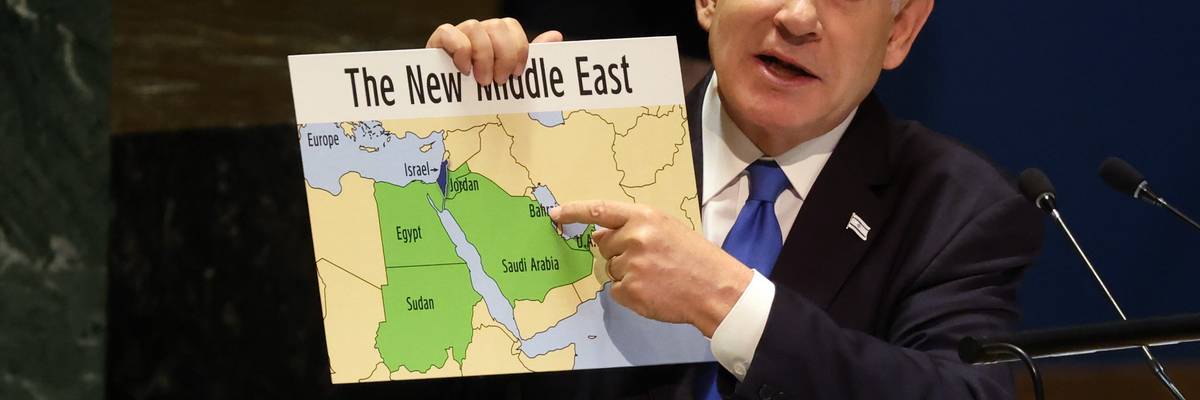
Israeli Prime Minister Benjamin Netanyahu holds a map of "The New Middle East" without Palestine during his September 22, 2023 address to the United Nations General Assembly in New York.
While such annexation will not change the legal status of the West Bank, it will have dire consequences for the millions of Palestinians living there, as it is likely to be followed by a violent campaign of ethnic cleansing.
Israel is getting ready to annex the occupied Palestinian West Bank. The annexation will be a major step backward on the road to Palestinian freedom and will likely serve as a catalyst for a new Palestinian uprising.
Though annexation has been on the Israeli agenda for years, this time around a "great opportunity"—in the words of extremist Israeli Finance Minister Bezalel Smotrich—has presented itself and, from an Israeli point of view, cannot be missed.
"I hope we'll have a great opportunity with the new U.S. administration to create full normalization (of the Israeli occupation)," the minister was quoted as saying by Israeli media.
Israel feels that its ability to sustain a genocidal war on Gaza without any international intervention to bring the extermination to an end, would make the annexation of the West Bank a far less consequential matter on the international agenda.
This is not the first time that Smotrich, among other Israeli extremists, has made the connection between President-elect Donald Trump's advent to the White House and the illegal expansion of Israel's borders.
Two reasons make Israel's far-right optimistic about Trump's arrival: One, the Israeli experience during Trump's first term in office, when the U.S. president allowed Israel to claim sovereignty over illegal settlements, the Syrian Golan Heights, and occupied East Jerusalem; and, two, Trump's more recent statement in the run-up to the elections.
Israel is "so tiny" on the map, Trump said while addressing the pro-Israeli group Stop Antisemitism at an event last August, wondering: "Is there any way of getting more?" The statement, absurd by any definition, caused joy among Israeli politicians, who understood it to be a green light for further annexations.
Israel's aims for colonial expansion also received a boost in recent days. Following the fall of Bashar al-Assad's rule in Syria, Israel immediately began invading large swathes of the country, reaching as far as the Quneitra governorate.
What is taking place in Syria serves as a model of what to expect in the West Bank in coming months.
Israel had occupied nearly 70% of the Syrian Golan Heights in 1967. It cemented its illegal occupation of the Arab region by formally annexing it in 1981 through the so-called Golan Heights Law.
That illegal move came shortly after another illegal annexation, that of occupied Palestinian East Jerusalem the previous year.
Although the West Bank was not formally annexed, the boundaries of East Jerusalem expanded well beyond its historic borders, thus swallowing large parts of the West Bank.
The West Bank, like East Jerusalem and the Golan Heights, are all recognized as illegally occupied territories under international law. Israel has no legal basis to maintain its occupation, let alone annexation of any Palestinian or Arab region. It is allowed to do so, however, due to U.S.-Western support and international silence.
But why is Israel keen on annexing the West Bank now?
Aside from the "great opportunity" linked to Trump's return to power, Israel feels that its ability to sustain a genocidal war on Gaza without any international intervention to bring the extermination to an end, would make the annexation of the West Bank a far less consequential matter on the international agenda.
Even though the International Court of Justice (ICJ) had issued a decisive ruling on the illegality of the Israeli occupation on July 19, followed by the issuing of arrest warrants of top Israeli leaders by the International Criminal Court (ICC) on November 21, no action was taken to hold Israel accountable. The annexation of the West Bank is unlikely to change that, especially as Israel conducts its wars and illegal actions through direct U.S. support.
Indeed, the Democratic administration of U.S. President Joe Biden has financed and supported all Israeli wars, including the current genocide. Trump is expected to be equally generous, or at least, not at all critical.
All of this in mind, the annexation of the West Bank in the coming weeks or months is a real possibility.
In fact, Smotrich had already informed "workers of the Defense Ministry body in charge of Israeli and Palestinian civil affairs in the West Bank" about his plans to "shut down the department as part of an envisioned Israeli annexation of the area," The Times of Israel reported on December 6.
While such annexation will not change the legal status of the West Bank, it will have dire consequences for the millions of Palestinians living there, as annexation is likely to be followed by a violent campaign of ethnic cleansing, if not from the whole of the West Bank, certainly from large parts of it.
Annexation will also render the Palestinian Authority legally irrelevant—as it was created following the Oslo Accords to administer parts of the West Bank in anticipation of a future sovereignty, which never actualized. Will the PA agree to remain functional as part of the Israeli military administration of a newly annexed West Bank?
Palestinians will certainly resist, as they always do. The nature of the resistance will prove critical in the success or failure of the Israeli scheme. A popular Intifada, for example, will overstretch the Israeli military, which will likely use an unprecedented degree of violence to suppress Palestinians but will be unlikely to succeed.
Annexing the West Bank at a time that Palestine—in fact, the whole region—is in turmoil is a recipe for perpetual war, which, from the viewpoint of Smotrich and his ilk, is the actual "great opportunity," as it will secure their political survival for years to come.
Dear Common Dreams reader, It’s been nearly 30 years since I co-founded Common Dreams with my late wife, Lina Newhouser. We had the radical notion that journalism should serve the public good, not corporate profits. It was clear to us from the outset what it would take to build such a project. No paid advertisements. No corporate sponsors. No millionaire publisher telling us what to think or do. Many people said we wouldn't last a year, but we proved those doubters wrong. Together with a tremendous team of journalists and dedicated staff, we built an independent media outlet free from the constraints of profits and corporate control. Our mission has always been simple: To inform. To inspire. To ignite change for the common good. Building Common Dreams was not easy. Our survival was never guaranteed. When you take on the most powerful forces—Wall Street greed, fossil fuel industry destruction, Big Tech lobbyists, and uber-rich oligarchs who have spent billions upon billions rigging the economy and democracy in their favor—the only bulwark you have is supporters who believe in your work. But here’s the urgent message from me today. It's never been this bad out there. And it's never been this hard to keep us going. At the very moment Common Dreams is most needed, the threats we face are intensifying. We need your support now more than ever. We don't accept corporate advertising and never will. We don't have a paywall because we don't think people should be blocked from critical news based on their ability to pay. Everything we do is funded by the donations of readers like you. When everyone does the little they can afford, we are strong. But if that support retreats or dries up, so do we. Will you donate now to make sure Common Dreams not only survives but thrives? —Craig Brown, Co-founder |
Israel is getting ready to annex the occupied Palestinian West Bank. The annexation will be a major step backward on the road to Palestinian freedom and will likely serve as a catalyst for a new Palestinian uprising.
Though annexation has been on the Israeli agenda for years, this time around a "great opportunity"—in the words of extremist Israeli Finance Minister Bezalel Smotrich—has presented itself and, from an Israeli point of view, cannot be missed.
"I hope we'll have a great opportunity with the new U.S. administration to create full normalization (of the Israeli occupation)," the minister was quoted as saying by Israeli media.
Israel feels that its ability to sustain a genocidal war on Gaza without any international intervention to bring the extermination to an end, would make the annexation of the West Bank a far less consequential matter on the international agenda.
This is not the first time that Smotrich, among other Israeli extremists, has made the connection between President-elect Donald Trump's advent to the White House and the illegal expansion of Israel's borders.
Two reasons make Israel's far-right optimistic about Trump's arrival: One, the Israeli experience during Trump's first term in office, when the U.S. president allowed Israel to claim sovereignty over illegal settlements, the Syrian Golan Heights, and occupied East Jerusalem; and, two, Trump's more recent statement in the run-up to the elections.
Israel is "so tiny" on the map, Trump said while addressing the pro-Israeli group Stop Antisemitism at an event last August, wondering: "Is there any way of getting more?" The statement, absurd by any definition, caused joy among Israeli politicians, who understood it to be a green light for further annexations.
Israel's aims for colonial expansion also received a boost in recent days. Following the fall of Bashar al-Assad's rule in Syria, Israel immediately began invading large swathes of the country, reaching as far as the Quneitra governorate.
What is taking place in Syria serves as a model of what to expect in the West Bank in coming months.
Israel had occupied nearly 70% of the Syrian Golan Heights in 1967. It cemented its illegal occupation of the Arab region by formally annexing it in 1981 through the so-called Golan Heights Law.
That illegal move came shortly after another illegal annexation, that of occupied Palestinian East Jerusalem the previous year.
Although the West Bank was not formally annexed, the boundaries of East Jerusalem expanded well beyond its historic borders, thus swallowing large parts of the West Bank.
The West Bank, like East Jerusalem and the Golan Heights, are all recognized as illegally occupied territories under international law. Israel has no legal basis to maintain its occupation, let alone annexation of any Palestinian or Arab region. It is allowed to do so, however, due to U.S.-Western support and international silence.
But why is Israel keen on annexing the West Bank now?
Aside from the "great opportunity" linked to Trump's return to power, Israel feels that its ability to sustain a genocidal war on Gaza without any international intervention to bring the extermination to an end, would make the annexation of the West Bank a far less consequential matter on the international agenda.
Even though the International Court of Justice (ICJ) had issued a decisive ruling on the illegality of the Israeli occupation on July 19, followed by the issuing of arrest warrants of top Israeli leaders by the International Criminal Court (ICC) on November 21, no action was taken to hold Israel accountable. The annexation of the West Bank is unlikely to change that, especially as Israel conducts its wars and illegal actions through direct U.S. support.
Indeed, the Democratic administration of U.S. President Joe Biden has financed and supported all Israeli wars, including the current genocide. Trump is expected to be equally generous, or at least, not at all critical.
All of this in mind, the annexation of the West Bank in the coming weeks or months is a real possibility.
In fact, Smotrich had already informed "workers of the Defense Ministry body in charge of Israeli and Palestinian civil affairs in the West Bank" about his plans to "shut down the department as part of an envisioned Israeli annexation of the area," The Times of Israel reported on December 6.
While such annexation will not change the legal status of the West Bank, it will have dire consequences for the millions of Palestinians living there, as annexation is likely to be followed by a violent campaign of ethnic cleansing, if not from the whole of the West Bank, certainly from large parts of it.
Annexation will also render the Palestinian Authority legally irrelevant—as it was created following the Oslo Accords to administer parts of the West Bank in anticipation of a future sovereignty, which never actualized. Will the PA agree to remain functional as part of the Israeli military administration of a newly annexed West Bank?
Palestinians will certainly resist, as they always do. The nature of the resistance will prove critical in the success or failure of the Israeli scheme. A popular Intifada, for example, will overstretch the Israeli military, which will likely use an unprecedented degree of violence to suppress Palestinians but will be unlikely to succeed.
Annexing the West Bank at a time that Palestine—in fact, the whole region—is in turmoil is a recipe for perpetual war, which, from the viewpoint of Smotrich and his ilk, is the actual "great opportunity," as it will secure their political survival for years to come.
Israel is getting ready to annex the occupied Palestinian West Bank. The annexation will be a major step backward on the road to Palestinian freedom and will likely serve as a catalyst for a new Palestinian uprising.
Though annexation has been on the Israeli agenda for years, this time around a "great opportunity"—in the words of extremist Israeli Finance Minister Bezalel Smotrich—has presented itself and, from an Israeli point of view, cannot be missed.
"I hope we'll have a great opportunity with the new U.S. administration to create full normalization (of the Israeli occupation)," the minister was quoted as saying by Israeli media.
Israel feels that its ability to sustain a genocidal war on Gaza without any international intervention to bring the extermination to an end, would make the annexation of the West Bank a far less consequential matter on the international agenda.
This is not the first time that Smotrich, among other Israeli extremists, has made the connection between President-elect Donald Trump's advent to the White House and the illegal expansion of Israel's borders.
Two reasons make Israel's far-right optimistic about Trump's arrival: One, the Israeli experience during Trump's first term in office, when the U.S. president allowed Israel to claim sovereignty over illegal settlements, the Syrian Golan Heights, and occupied East Jerusalem; and, two, Trump's more recent statement in the run-up to the elections.
Israel is "so tiny" on the map, Trump said while addressing the pro-Israeli group Stop Antisemitism at an event last August, wondering: "Is there any way of getting more?" The statement, absurd by any definition, caused joy among Israeli politicians, who understood it to be a green light for further annexations.
Israel's aims for colonial expansion also received a boost in recent days. Following the fall of Bashar al-Assad's rule in Syria, Israel immediately began invading large swathes of the country, reaching as far as the Quneitra governorate.
What is taking place in Syria serves as a model of what to expect in the West Bank in coming months.
Israel had occupied nearly 70% of the Syrian Golan Heights in 1967. It cemented its illegal occupation of the Arab region by formally annexing it in 1981 through the so-called Golan Heights Law.
That illegal move came shortly after another illegal annexation, that of occupied Palestinian East Jerusalem the previous year.
Although the West Bank was not formally annexed, the boundaries of East Jerusalem expanded well beyond its historic borders, thus swallowing large parts of the West Bank.
The West Bank, like East Jerusalem and the Golan Heights, are all recognized as illegally occupied territories under international law. Israel has no legal basis to maintain its occupation, let alone annexation of any Palestinian or Arab region. It is allowed to do so, however, due to U.S.-Western support and international silence.
But why is Israel keen on annexing the West Bank now?
Aside from the "great opportunity" linked to Trump's return to power, Israel feels that its ability to sustain a genocidal war on Gaza without any international intervention to bring the extermination to an end, would make the annexation of the West Bank a far less consequential matter on the international agenda.
Even though the International Court of Justice (ICJ) had issued a decisive ruling on the illegality of the Israeli occupation on July 19, followed by the issuing of arrest warrants of top Israeli leaders by the International Criminal Court (ICC) on November 21, no action was taken to hold Israel accountable. The annexation of the West Bank is unlikely to change that, especially as Israel conducts its wars and illegal actions through direct U.S. support.
Indeed, the Democratic administration of U.S. President Joe Biden has financed and supported all Israeli wars, including the current genocide. Trump is expected to be equally generous, or at least, not at all critical.
All of this in mind, the annexation of the West Bank in the coming weeks or months is a real possibility.
In fact, Smotrich had already informed "workers of the Defense Ministry body in charge of Israeli and Palestinian civil affairs in the West Bank" about his plans to "shut down the department as part of an envisioned Israeli annexation of the area," The Times of Israel reported on December 6.
While such annexation will not change the legal status of the West Bank, it will have dire consequences for the millions of Palestinians living there, as annexation is likely to be followed by a violent campaign of ethnic cleansing, if not from the whole of the West Bank, certainly from large parts of it.
Annexation will also render the Palestinian Authority legally irrelevant—as it was created following the Oslo Accords to administer parts of the West Bank in anticipation of a future sovereignty, which never actualized. Will the PA agree to remain functional as part of the Israeli military administration of a newly annexed West Bank?
Palestinians will certainly resist, as they always do. The nature of the resistance will prove critical in the success or failure of the Israeli scheme. A popular Intifada, for example, will overstretch the Israeli military, which will likely use an unprecedented degree of violence to suppress Palestinians but will be unlikely to succeed.
Annexing the West Bank at a time that Palestine—in fact, the whole region—is in turmoil is a recipe for perpetual war, which, from the viewpoint of Smotrich and his ilk, is the actual "great opportunity," as it will secure their political survival for years to come.