

SUBSCRIBE TO OUR FREE NEWSLETTER
Daily news & progressive opinion—funded by the people, not the corporations—delivered straight to your inbox.
5
#000000
#FFFFFF
To donate by check, phone, or other method, see our More Ways to Give page.
Daily news & progressive opinion—funded by the people, not the corporations—delivered straight to your inbox.
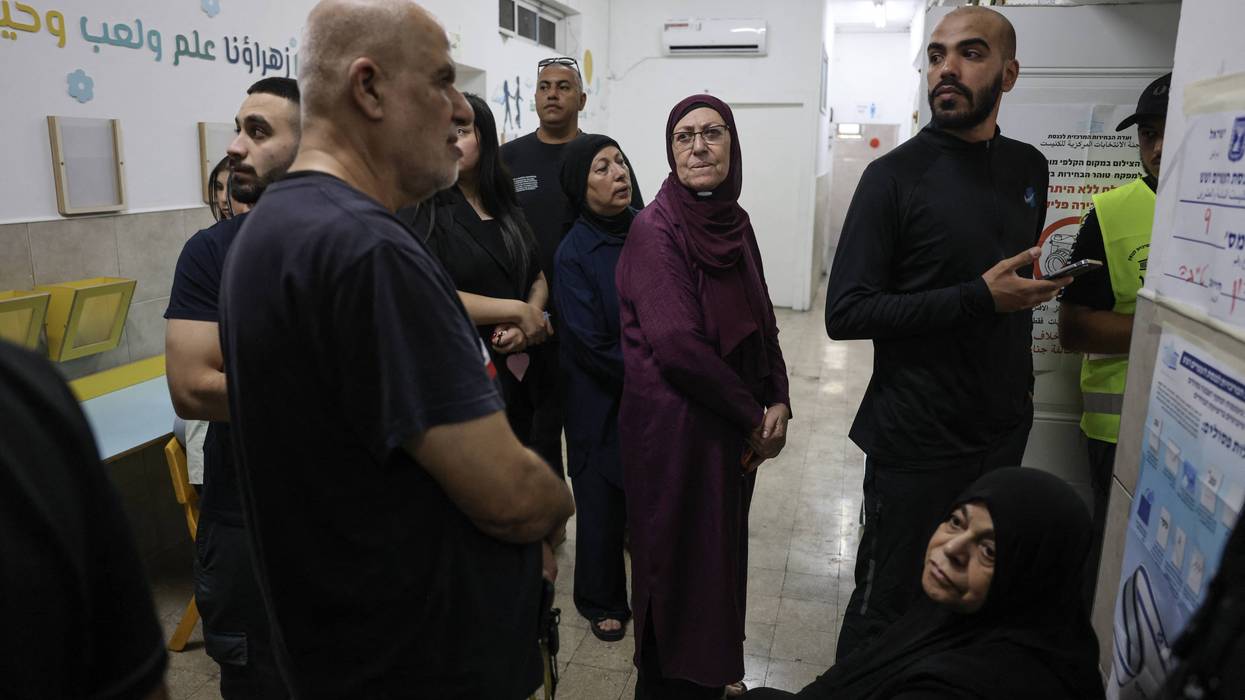
After a painful political and intellectual struggle, I have also reached a conclusion I never expected. At this stage, Palestinians living in Israel are too weak to carry on our boycott of elections—and our very survival is on the line.
In almost every interview I have conducted in recent weeks, and in nearly every conversation with Palestinian citizens of Israel on the streets of our towns, I have heard the same fear.
People are no longer talking primarily about civil rights, equality or better living conditions. They are talking about survival, and about whether they will be able to remain on their land.
At the entrances to our towns, Israeli election billboards are everywhere. Among them are those of the Religious Zionism party, whose leaders advocate extending the land seizures and settlement building pursued in the occupied West Bank to the Galilee and the Naqab, or Negev.
These messages confront us on the roads we travel, at the entrances to the places we call home.
How are people supposed to carry on calmly amid such threats?
For many people I have spoken to, voting is not about faith in parliamentary politics or expecting an Israeli government to deliver justice. It is an attempt to protect themselves, or at least to delay what they fear is coming.
As Palestinian political activity inside Israel has faced severe restrictions since 7 October 2023, voting remains one of the few political acts that does not carry the risks associated with protest.
My father is 70 years old. He has never voted in an election to Israel's parliament, the Knesset. This time, he will.
He is the son of a displaced Palestinian family and spent his childhood under Israeli military rule. Now he fears for our future on this land, for his grandchildren, and for the possibility that his family's history could repeat itself. He does not underestimate the danger. Neither do I.
Since 2018, I have held a clear ideological position against participating in Israel's Knesset elections.
I believed, and still believe, that our presence in this framework has harmed our political discourse. Too much of our struggle has been reduced to parliamentary work, while building independent political tools and organising ourselves as a community have been pushed aside.
In fundamental ways, this framework contradicts our vision of liberation and an end to the occupation. That is why I chose to boycott.
But today I find myself questioning that decision. After a painful political and intellectual struggle, I reached a conclusion I never expected. At this stage, we are too weak to boycott.
I turned down invitations to join initiatives encouraging Palestinians to vote. How could I ask others to vote when I was unsure myself? As a journalist, I covered the election campaign without calling on anyone to vote or boycott, and I stepped away from the noise to wrestle with my thoughts. It was exhausting.
At this stage, we are too weak to boycott
I have watched Israeli society's shift further towards the far right since 7 October, alongside the weakness and paralysis of Palestinian politics. Even amid a genocide in Gaza that has killed more than 74,000 Palestinians, the Palestinian political leadership has failed to agree on a decision that could bring us together. Well, except for postponing Palestinian elections.
We are at rock bottom. We cannot even secure the simple right to harvest our olives safely. We lack effective political tools, a unifying national project and a clear way out of this devastation. There is nothing wrong with admitting it.
For me, boycott is not a moral position that can simply hang in the air. It is a political tool. It must have meaning, impact and a place within a larger political project, or at least offer an alternative.
An individual's refusal to participate can express a principle. A collective boycott that can challenge a system requires organisation, shared objectives and a way to turn refusal into political power.
I am not questioning the legitimacy of boycott. I am questioning what it can achieve now, when that collective project is missing. If participation cannot liberate us, and boycott offers no practical alternative, what do we do with the few possibilities that remain?
I have listened to people who want to vote even if all they hope for is to delay the demolition of a single home. Yet the fear now reaches beyond demolitions to displacement from the Naqab and the Galilee. "We're next," I hear everywhere.
When people fear losing their homes and land, how can I dismiss their concerns from the comfort of political theory?
We are a frightened community, and I do not think we fully understand the political and moral meaning of simply remaining: holding on to our place, surviving and enduring in the face of war and killing. That, too, is resistance.
How many around us have considered leaving? How many already have? How many of us have quietly wondered whether we can go on living here? The right to remain is no longer something we can take for granted.
We need reasons and resources to remain. I do not believe the Knesset itself can provide them. What matters is whether people coming together around Arab electoral lists might also rebuild collective political action beyond parliament.
Our crisis will not be solved by a few more Knesset seats. We need to rebuild ourselves politically and socially, far beyond any election.
I will vote.
I know that any alternative government would be no dove of peace. Changing governments will not end the occupation, dismantle colonial structures or transform a system built on Jewish supremacy. I have no illusions about that.
But I cannot bear the thought of Benjamin Netanyahu, Bezalel Smotrich and Itamar Ben Gvir remaining in power for another year. I want to see these blood-soaked men defeated, even if only for a moment. Anger is not a political strategy, but neither can I pretend it plays no part in my decision.
I understand the argument that Palestinian participation can help Israel present itself as a democracy while concealing structures of domination and inequality. Yet after all this bloodshed, I struggle to see how my ballot could restore the state's moral legitimacy. Participating does not mean endorsing the system; it means making a choice within the narrow space still available.
Perhaps political change will not prevent catastrophe. Perhaps it will only delay it, giving people a moment to breathe. When possibilities are so scarce, I do not want to let even one slip away.
I will vote for the slightest possibility that conditions might improve for Palestinian prisoners, even though their cause does not receive the place it deserves on Arab parties' electoral platforms.
And I cannot turn away from the pleas of Palestinians on the other side of the wall: "For God's sake, get this government off our backs. We just need to breathe, even if only for a little while."
I am not presenting voting as salvation. My reservations remain. I still believe liberation will not come through the Israeli parliament, but through our ability to build institutions, organize collectively and act as a people. Yet political convictions must remain accountable to the lives of those in whose name we hold them.
I think of my father, who lived seven decades without voting in an Israeli election and now plans to do so because he fears for his grandchildren. I cannot dismiss what that means, or the concerns of the many others who see a ballot as one remaining attempt to protect their place on this land.
I will go to the ballot box carrying all my old doubts with me. And at this rock bottom, I do not want to leave a single stone unturned.
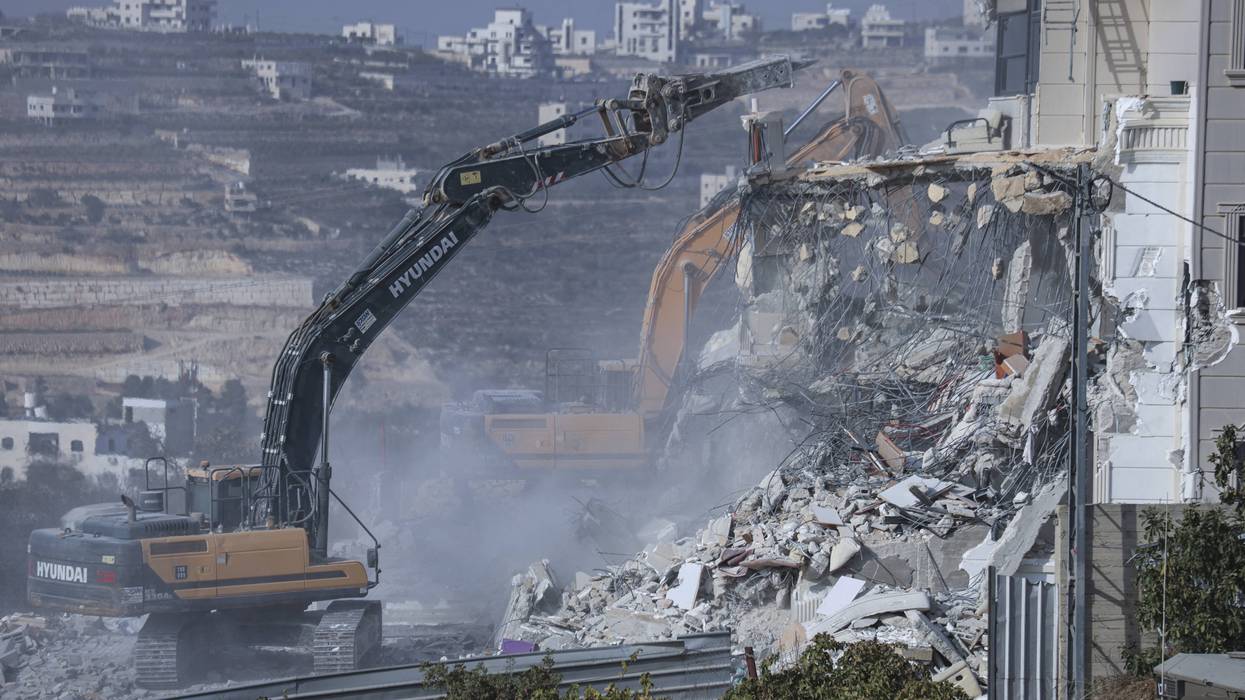
"What we saw today was an attempt to copy the illegal practices used in Gaza, in the heart of the West Bank,” said one Israeli lawyer. “They want to wipe out entire areas exactly as they did in Gaza."
Israeli forces on Friday began demolishing homes and businesses and forcibly evacuating residents near Hebron in the illegally occupied West Bank following a Palestinian resistance attack that killed two Israeli soldiers.
"First, we will destroy this place and completely transform it, but we will do something that has never been done before," Israeli Prime Minister Benjamin Netanyahu said at the scene of the shooting attack that took place earlier Friday near Hebron Junction. "We will evacuate the residents, go from house to house, remove weapons from there as well, and deal with and destroy all terrorist infrastructure."
"We will consider expanding this model to other cities as well," Netanyahu added.
The prime minister also ordered the Israel Defense Forces (IDF) to “immediately impose a lockdown on Hebron and prepare for a full lockdown" of the entire West Bank, while vowing to launch the largest military operation in the occupied territory since it was conquered during the 1967 Six-Day War and subsequently ethnically cleansed of more than 100,000 Palestinians.
Israeli Defense Minister Israel Katz also vowed that neighborhoods associated with the attackers would be "evacuated"—a word that critics call a euphemism for ethnic cleansing—"just like in Gaza; just like in Lebanon."
Far-right Israeli Finance Minister Bezalel Smotrich echoed those calls.
"There is no other option but a comprehensive military campaign in Judea and Samaria to dismantle the Palestinian Authority, collect weapons, and eliminate terrorists," he said, referring to Israel's name for the West Bank.
"Exactly like in Gaza and Lebanon," Smotrich added.
Israeli forces have killed or wounded more than 250,000 people in Gaza since the Hamas-led attack of October 2023, while forcibly displacing around 1.9 million residents and destroying or damaging more than 80% of the strip's structures. In Lebanon, nearly 40,000 people have been killed or injured by Israeli attacks over the same period, during which there were two waves of mass displacement in which more than a million people were forced from their homes each time. Dozens of Lebanese villages have been flattened.
Demolition and displacement were the order of the day in the West Bank Friday as Israeli bulldozers began demolishing homes after Netanyahu's announcement, even as local residents said their properties had no connection to the attack on the slain IDF troops.
The Times of Israel reported that soldiers ordered Palestinians in the Farsh al-Hawa area to evacuate ahead of demolitions, with footage showing residents being pushed out as their belongings were loaded onto trucks.
“We are already here with the equipment on the ground, sending an unequivocal message to our enemies: If you mess with us, we will exact a very, very painful price from you,” Smotrich said in Farsh al-Hawa.
Israel’s High Court intervened and issued a temporary order to halt demolitions after Arab-Israeli human rights lawyer Mohammed Dahleh filed an urgent petition on behalf of two factory owners who claimed the destruction violated Israeli law as well as international prohibitions on collective punishment.
“What we saw today was an attempt to copy the illegal practices used in Gaza, in the heart of the West Bank,” Dahleh told The Guardian. “They want to wipe out entire areas exactly as they did in Gaza and the refugee camps in the West Bank.”
Another Israeli human rights attorney, Michael Sfard, called Smotrich's video announcement a "direct admission" of collective punishment.
The demolitions and forced evacuations are unfolding amid a wider Israeli campaign of home destruction, settler pogroms and other deadly violence, and displacement that Palestinian rights advocates and United Nations officials have called ethnic cleansing.
Palestinian olive harvesters, as well as international solidarity activists accompanying them, journalists covering settler attacks, and even international diplomats have come under attack by IDF-backed settler terrorists. The United Nations Office for the Coordination of Humanitarian Affairs (OCHA) said earlier this week that between September 1 and October 12, Israeli settlers carried out 199 attacks connected to the harvest, killing one Palestinian, injuring 124, and damaging more than 2,500 trees and saplings.
According to OCHA, over 1,130 Palestinians—at least 250 of them children—have been killed by Israeli soldiers and settlers in the West Bank since October 2023.
Friday's developments came four days ahead of Israel's elections, in which the ruling far-right coalition is trying to boost support among voters, including settler colonists pushing the government to annex the West Bank.
Netanyahu has vowed to annex all settler colonies. Smotrich has presented a plan to annex approximately 82% of the West Bank, excluding six major Palestinian cities. Ben-Gvir wants to annex the entire West Bank.
Israel's actions on Friday drew widespread condemnation.
“Israeli leaders are publicly announcing plans for collective punishment and acts that could constitute war crimes,” the Israeli human rights group B'Tselem said, while imploring “governments and international institutions to act now, using all means available under international law, to prevent the forcible displacement of Palestinian civilians, collective punishment, and extensive unlawful destruction in Hebron.”

"The yellow line cannot be treated simply as a line on a map. It has become a mechanism of encirclement and ethnic cleansing."
A year after a so-called "ceasefire" deal established the Israel Defense Forces' "yellow line" in Gaza, separating the IDF-controlled eastern part of Gaza from about 47% of the strip that was originally set aside for Palestinians, the Israeli military has crept westward, block by block—effectively "asphyxiating" Gaza's population of 2.1 million people, as one aid group said Monday.
Médecins Sans Frontières (MSF), also known by its English name, Doctors Without Borders, said that the US-backed IDF now occupies about 65% of the Gaza Strip, "squeezing people into a smaller and smaller area" and leaving Palestinians uncertain about where the yellow line begins and ends as they are forced to repeatedly move.
"People risk being shot by Israeli forces when they approach it, and MSF teams continue to treat people with gunshot wounds sustained nearby," said the organization.
MSF released its statement on the shifting yellow line and the organization's struggles to provide medical aid for Palestinians days after the Danish Refugee Council reported on refugee camps near the boundary, where 80% of Palestinians interviewed by the DRC said they've faced water shortage and people reported rat and rodent infestations, continued food scarcity despite a ceasefire deal that required a ramp-up of humanitarian aid, and rapid spread of illnesses.
DRC accused Israel of "a policy of protracted displacement," which was supported by MSF's reporting Monday.
"The October 2025 ceasefire in Gaza was supposed to end civilians' suffering," said DRC. "Nearly a year on, it exists largely in name only. Displacement in Gaza has not ended; it has changed shape."
The United Nations Office for the Coordination of Humanitarian Affairs (OCHA) also warned last month about the IDF's gradual push westward through demolitions and the movement of military forces, noting that residents have continued living in neighborhoods adjacent to the yellow line, such as Al-Tuffah and Al Zaytoun in Gaza City, "because they have nowhere else to go."
"Where do we go? This is a question we’ve been asking ourselves for three years,” Safaa Mushtaha of Al-Tuffah told OCHA. “We accepted living near the yellow line, but it’s become unbearable.”
Ibtisam Malika, who also lives near the line, added that "every two to three months, we are forced to move and leave our belongings behind."
MSF described how families are being "pushed into overcrowded and unlivable conditions" and how the group's ability to deliver clean water has been impeded when there are attacks near the yellow line.
"The yellow line cannot be treated simply as a line on a map,” says Amande Bazerolle, head of emergency response for MSF in Gaza. “It has become a mechanism of encirclement and ethnic cleansing, while cutting communities off from the infrastructure, healthcare, water, and other essentials they need to survive.”
The medical aid group treated more than 1,500 cases of chickenpox in June and July, and has treated more that 11,000 cases of skin disorders including scabies this year.
One official said a majority of Palestinians in Gaza have less than six liters of water per day for drinking, bathing, and other domestic uses, and Israeli restrictions on the delivery of many items—ones that authorities claim are "dual-use" and could be used by Hamas for military purposes—have left families and medical providers without essentials.
“We are treating gastroenteritis, acute respiratory infections, a lot of skin conditions, hepatitis, bacterial skin infections, scabies, and lice," said Dr. Murad Asaliyya, medical activities manager for MSF in Gaza. “At the same time, we are facing severe shortages in terms of medical supplies. Even the cream we need to treat scabies has been restricted by the Israeli authorities.”
Other crucial items that have been restricted by Israel include engine oil and spare parts, "crippling the infrastructure needed to keep hospitals, ambulances and water systems running," said MSF.
MSF emphasized that the area near the yellow line is hardly the only part of Gaza where Palestinians face continued Israeli attacks. In June and July, the group's medical teams treated more than 1,200 cases of "violent trauma" across the strip, "including blast injuries, burns, gunshot wounds, and injuries resulting from physical assault."
Since Israel began relentlessly attacking Gaza in October 2023 in retaliation for a Hamas-led attack, the military offensive has killed more than 74,000 Palestinians, including more than 20,000 children, with experts warning that the true death toll is likely far higher. About 80% of all structures across Gaza have been damaged, said MSF.
The group released its findings as Israeli Finance Minister Bezalel Smotrich boasted in an interview about the IDF's encroachment on the territory that had been ostensibly set aside for Palestinians last year, saying the moving of the yellow line and the destruction of Gaza and its infrastructure "encourages migration" and that "a world will not be built there."
Israeli Finance Minister Bezalel Smotrich:The Gaza Strip should never be rebuilt — a memorial to sin. That is also what will encourage migration from there the most. https://t.co/EnZCIPrs9x
— Clash Report (@clashreport) October 5, 2026
“Destruction, displacement, and deprivation have become normalized—practices Israel is carrying out with impunity,” said Bazerolle. “Governments must act now to ensure Israel stops the destruction and killing, prevents ethnic cleansing, and stops denying Palestinians the means of survival.”
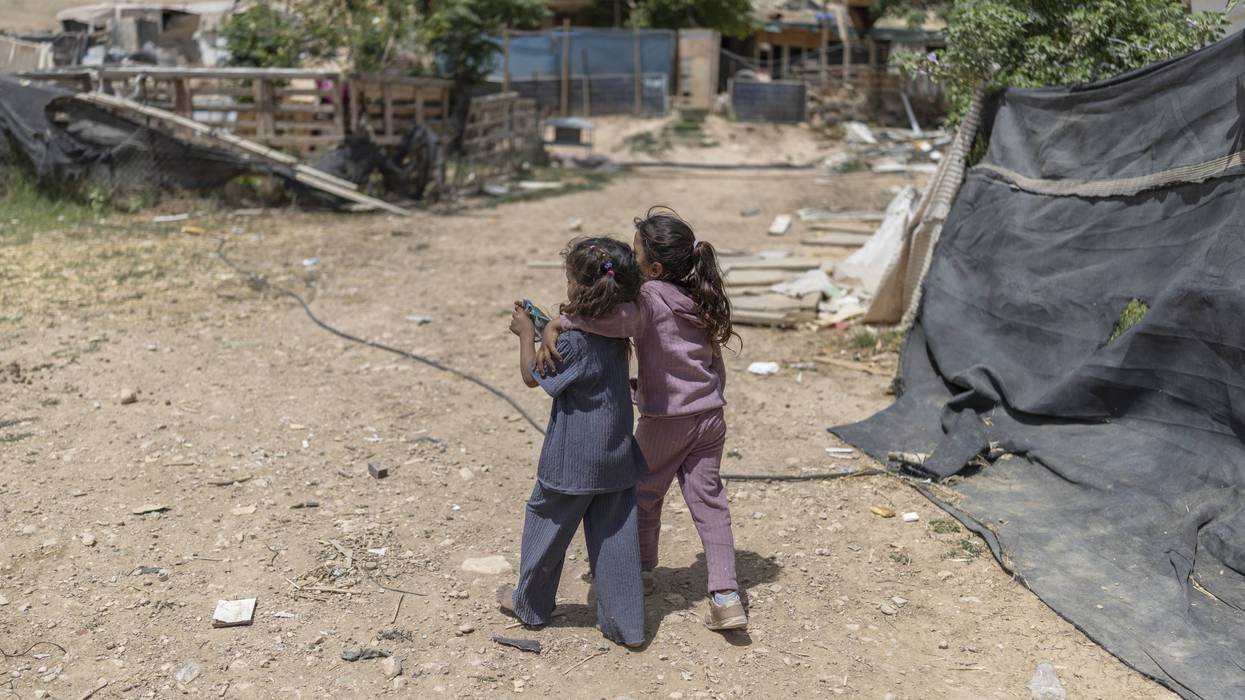
Critics around the world continue to call the proposed settlement "a plan to progress the forced displacement and ethnic cleansing of Palestinians."
Israel's far-right finance minister and other settlers living in the illegally occupied West Bank fumed on Sunday after their country's attorney general pushed a key deadline for the widely condemned E1 project until after the Israeli Knesset election.
Although the International Court of Justice, plus governments and human rights groups around the world, have concluded that all Israeli settlements in the occupied Palestinian territory violate international law, Prime Minister Benjamin Netanyahu's government has charged ahead with expansion plans, granting final approval for the building of 3,401 housing units in the E1 area last year.
Israeli Finance Minister Bezalel Smotrich had celebrated that decision, declaring that the project "buries the idea of a Palestinian state," as it would split the West Bank in two by connecting Jerusalem and the settlement Ma'ale Adumim. While signing a related agreement a year ago, Netanyahu similarly said that "there will be no Palestinian state."
Despite an ongoing legal challenge to the E1 plan from Bedouin Palestinians who live in the area and Israeli peace groups, Israel's Ministry of Construction and Housing last month issued a tender to build seven residential compounds with 1,234 units, giving contractors until October 19—a week before the October 27 election—to submit bids.
"This is a last-minute maneuver that is part of the scorched-earth policy the government is pursuing at the end of its term to secure long years of conflict and bloodshed for Israel," the Israeli watchdog Peace Now said at the time. "The government is trying to sign contracts with contractors before the elections so that it will be much harder for the next government to cancel the construction."
The office of Israeli Attorney General Gali Baharav-Miara this week ordered a monthlong postponement of the deadline for bids, "so that it will fall after Election Day, thereby reducing the concern that the tender could be used for prohibited election propaganda."
Smotrich on Sunday accused her of "trying to stop the construction in E1" and "interfering in the election campaign" to help Gadi Eisenkot, the Yashar party leader who could lead a coalition government that ousts Likud's Netanyahu, depending on the results.
The finance minister called on Supreme Court Justice Noam Sohlberg, who chairs the Central Elections Committee (CEC), to intervene to "ensure that the attorney general and her people do not turn into active players in the election campaign in an attempt to back up the left, prevent the right from forming a government, and to enable the establishment of a Palestinian state that would endanger the existence of the state of Israel."
Ma'ale Adumim also challenged the attorney general's move on Sunday, with a petition to the High Court of Justice. Mayor Guy Yifrach said that "if the claim is that continuing the tender is political, I say exactly the opposite: Stopping it now is an intervention with political implications."
"The E1 plan is already facing heavy international pressure, and developers and contractors need certainty," Yifrach added. "Is it not enough that outside Israel they are trying to deter them from the project, now we are adding uncertainty from within our home as well?"
Earlier this month, the United Kingdom, France, and Canada jointly announced bans on imports from illegal Israeli settlements, and partnered with nine other nations—Denmark, Finland, Iceland, Ireland, Norway, Poland, Portugal, Spain, and Sweden—for a statement that describes the situation in the West Bank as "rapidly deteriorating amid unprecedented levels of settler violence and settlement expansion, including the unacceptable decision to publish tenders for the E1 settlement project."
Then, 19 US Senate Democrats on Wednesday introduced a bill to sanction people or companies that facilitate the construction for Israeli settlers in the E1 area, with Sen. Elizabeth Warren (D-Mass.), one of the lead co-sponsors, condemning the project as "a move towards de facto annexation of the West Bank."
Sen. Chris Coons (D-Del.), another lead sponsor and longtime supporter of Israel, said on social media Friday that "the Netanyahu campaign to extinguish the possibility of a future Palestinian state by building Israeli settlements in the E1 area of the West Bank must end. I'm leading a new effort to sanction those involved in its development and preserve a future pathway for peace."
In addition to pushing for the expansion of settlements in the West Bank, since the Hamas-led October 7, 2023 attack on Israel, Netanyahu has overseen a genocidal war against Palestinians in the Gaza Strip. Despite a ceasefire agreement reached nearly a year ago, Israeli attacks continue, and the official death toll keeps rising, topping 74,000 on Sunday.
The bleak milestone came two days after The New York Times corroborated Haaretz’s recent reporting that in September 2023, United Arab Emirates President Mohammed bin Zayed Al Nahyan warned Netanyahu about now-deceased Hamas leader Yahya Sinwar's plans "for a major event" targeting Israel. The Israeli leader has denied those reports, and even threatened to sue Haaretz.
However, in a signal that Netanyahu and his allies are worried about the upcoming election, the CEC this week voted to disqualify all Arab-majority political parties from the election, while declining to take similar action against Smotrich's Religious Zionism, far-right National Security Minister Itamar Ben Gvir's Otzma Yehudit, and Zehut, founded by Moshe Feiglin, a former Likud member. The Supreme Court is set to review the disqualifications this week.
Meanwhile, Eisenkot suggested this weekend that the barred parties would not be part of any government he leads. As Haaretz summarized, he said that "all coalition partners would have to recognize Israel as a Jewish and democratic state, uphold the values of the Declaration of Independence, support mandatory military service, and recognize Hamas as a terrorist organization that must be destroyed."
Yoav Segalovich from the United Arab List's Knesset slate responded that anyone seeking to lead the country must "show leadership and not fold in the face of the Likud's scare campaign," adding: "Israel needs deep change and genuine partnership, through courageous leadership. Eisenkot will not have a government without the United Arab List."

"Meanwhile, ministers and MKs threaten to nuke Gaza, starve the population, annex the West Bank, call to arrest journalists and enshrine Jewish law. This is who gets the all-clear," noted one Israeli writer.
On the heels of voting to disqualify all Arab-majority political parties and multiple candidates from Israel's October 27 Knesset election, the Israeli Central Elections Committee on Thursday declined to bar various far-right parties—a series of events that critics condemned as anti-democratic and racist.
The CEC—which is chaired by a Supreme Court justice but dominated by members of the Knesset's governing coalition—rejected petitions to ban National Security Minister Itamar Ben Gvir's Otzma Yehudit, Finance Minister Bezalel Smotrich's Religious Zionism, and Zehut, founded by Moshe Feiglin, a former member of Prime Minister Benjamin Netanyahu's Likud party.
"Under Israel's Basic Law on the Knesset, candidates and party slates can be barred from elections for rejecting Israel's existence as a Jewish and democratic state, inciting racism, or supporting armed struggle by an enemy state or terrorist organization against Israel," explained Haaretz.
In an unsuccessful bid to bar the Otzma Yehudit slate, Gilad Kariv, a member of the Knesset for the Democrats, declared that "Ben-Gvir is not a right-wing Zionist; he is a racist Kahanist who has been convicted of incitement to racism and supporting a terrorist organization."
While the panel ultimately refused to pass petitions on the right-wing parties, the previous day, it voted to disqualify the United Arab List—also known as Ra'am and led by Member of the Knesset Mansour Abbas—and the Joint List, an alliance made up of the parties Balad, Hadash, and Ta'al.
The committee disqualified the Joint List on grounds including its alleged rejection of Israel's existence as a Jewish and democratic state and support for armed struggle against it, and the United Arab List on those grounds, plus incitement to racism.
Sharply condemning the "political, racist, and anti-democratic decision," the Joint List said that "Netanyahu and Ben-Gvir know that the only way they can remain in power is by disqualifying Arab political representation and suppressing voter turnout in Arab society. This is how they seek to pave their way to another term."
"It is deeply regrettable to see that those who claim to seek to replace Netanyahu are once again falling into the racist trap set by Netanyahu and Ben-Gvir and lending their support to this political campaign," the coalition continued. "In doing so, they are contributing to the continued racist persecution of the entire Arab public, deepening racism, and perpetuating the rule of Netanyahu and his political partners."
"The Joint List is the only party that has placed at the forefront of its platform the struggle for democracy for all, genuine equality, justice and comprehensive peace. It is the only alternative to the racist policies of Netanyahu and Ben-Gvir," it added.
Dov Waxman, a professor of Israeli studies at the University of California, Los Angeles, similarly suggested on social media Wednesday that the CEC disqualified the Arab-majority parties "to delegitimize" them "in the minds of Israeli Jewish voters, and they want to do that in order to make it harder for the opposition to form a coalition government."
An opposition coalition including Ra'am "is the most likely way that an alternative, Eisenkot-led government could take power if the anti-Netanyahu bloc wins the election," Waxman added, referring to Yashar's Gadi Eisenkot.
The CEC on Wednesday also disqualified MK Ofer Cassif of the left-wing Arab-Jewish Hadash party and Balad's leader, Sami Abu Shehadeh. The Times of Israel noted that a representative for Attorney General Gali Baharav-Miara reaffirmed her "position that none of the petitions before the CEC had sufficient grounds except the one against Abu Shehadeh."
"All opposition parties—Gadi Eisenkot's Yashar, Naftali Bennett's B'Yachad, Yair Golan's Democrats, Avigdor Liberman's Yisrael Beytenu, and Benny Gantz's Blue and White—backed the petition" against the Balad leader, as did Supreme Court Justice Noam Sohlberg, the panel's chair, according to The Times of Israel.
"The backing of Sohlberg and Baharav-Miara raises the prospect that the Supreme Court may uphold the decision, despite its historically high threshold for disqualifying candidates and its repeated overturning of such decisions by the committee," the newspaper added, pointing to plans for the justices to consider the decisions next week.
Otzma Yehudit sought to disqualify Abu Shehadeh over an article in which he called the Hamas-led October 2023 attack on Israel—which led to the ongoing Israeli assault on the Gaza Strip widely denounced as genocide—as "an important historic event militarily, politically, and strategically."
As Haaretz detailed:
Abu Shehadeh said he regretted writing the article at the center of the request to disqualify him. "I wrote it on October 7, and I didn't know the scale of the atrocities. If I had known, I would not have written it this way," he said. "I agree with the justified criticism of the article. I should not have written it, and I should have clearly condemned [the attack]."
"My intention was for the military campaign to be halted and for the parties to move to a diplomatic track led by the Palestinian Authority and Arab states," he explained.
As for Cassif, whose ban was spearheaded by Likud, he said that "the disqualification requests are intended to achieve the complete delegitimization of Arab society and Israeli-Arab partnership, and to perpetuate totalitarian rule and majority tyranny," according to the newspaper.
"There is no contradiction between the absolute condemnation I have expressed of the Gaza massacre and the war crimes being committed by the Israeli government, and the absolute condemnation I have expressed of the October 7 massacre and Hamas' horrific crimes," he added.
After the Wednesday decisions, the Haifa-based rights group Adalah said in a statement that "the hearings, like the motions themselves, showed once again that this is an arbitrary, inciting, and racist process, devoid of any legal process. The CEC conducted an illegitimate political process aimed at persecuting ideas the majority does not accept, and it ended with the disqualification of all Palestinian representation in the Israeli Knesset."
"The CEC approved every disqualification motion except a separate motion against Balad/Tajammu' alone, which it rejected on procedural grounds," noted Adalah—which "represented all the political party lists and individual candidates before the CEC, and will represent them against these decisions before the Supreme Court."
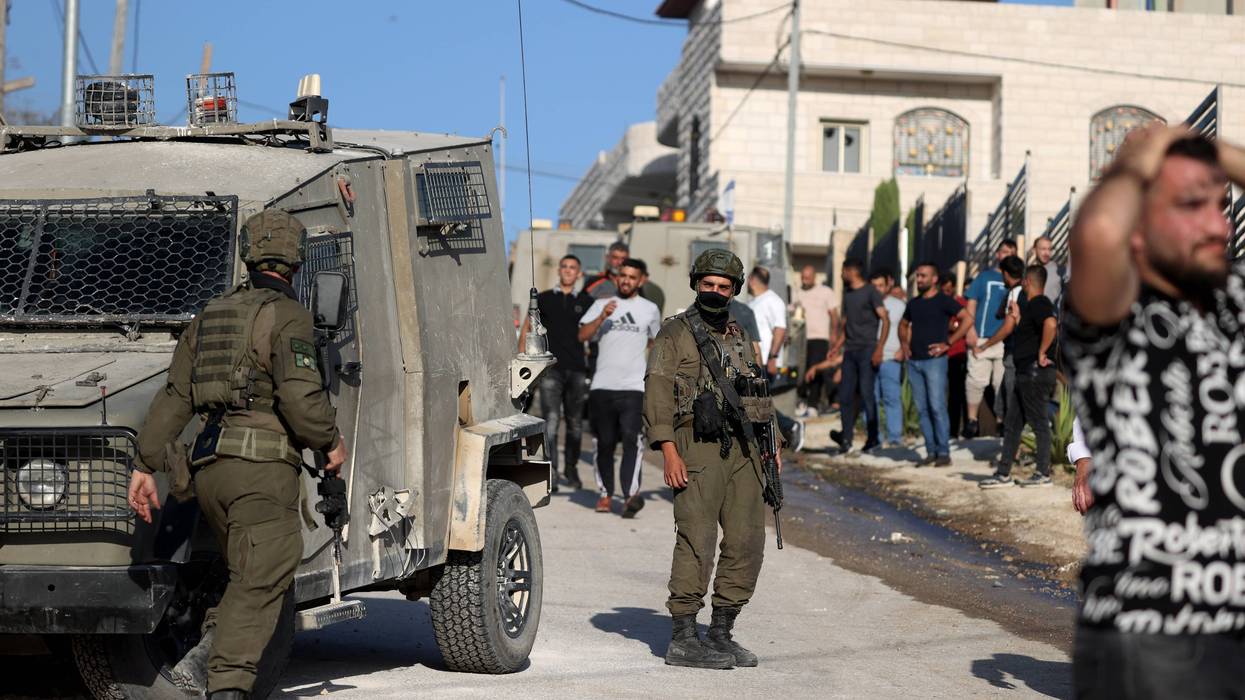
Six people were killed as a Palestinian man disarmed and shot Israeli settlers raiding his village in the illegally occupied West Bank.
Israeli Prime Minister Benjamin Netanyahu on Friday announced actions to tighten and accelerate the illegal occupation and colonization of the West Bank after a Palestinian defending his village from rampaging settlers fatally shot two Israelis—whose companions killed four Palestinians in response—while other members of Netanyahu's government called for more ethnic cleansing in Palestine.
Residents of Tell—located 3 miles southwest of Nablus and less than 2 miles from the illegal Israeli settlement of Havat Gilad—said settlers attacked homes on the outskirts of the town at around 8:30 on Friday morning.
According to The Times of Israel, a group of several dozen settlers invaded the village under the pretense of going on a hike. However, as the newspaper noted, Tell is located in an area of the occupied West Bank that is off limits to Israelis unless they obtain permission from the Israel Defense Forces (IDF), which the military said they did not do.
Local Palestinian leader Essam Saifi told Reuters that settlers attacked the eastern part of Tell and tried to break into homes there. When residents emerged to confront the settlers, the intruders opened fire on them before leaving.
Backed by IDF troops, the settlers returned around half an hour later. Video recorded by one of the settlers shows an Israeli firing his gun in the air while his companions, who included minors, shout threats while other settlers stormed local residents' land. A Palestinian man snatched a long gun from a member of the Havat Gilad local security squad and shot him and an IDF major, mortally wounding both men.
Israelis returned fire, killing four Palestinians, including the shooter, and wounding four others. IDF commandos later raided a hospital in Nablus and seized two of the wounded Palestinians.
The Palestinian Foreign Ministry said in a statement that "this massacre represents a renewed image of the ongoing Nakba to which our Palestinian people are subjected," a reference to the ethnic cleansing of more than 750,000 Arabs from Palestine by Zionist forces during the establishment of the modern state of Israel in 1948.
The ministry also condemned "the misleading narratives promoted by the Israeli occupation authorities... in a systematic attempt to turn the executioner into the victim, and to cover up the crimes of murder, field executions, massacres, and grave violations committed by the occupation forces and settler militias against the Palestinian people."
IDF troops subsequently locked down Tell and Nablus while deploying five additional companies to the area and canceling soldiers' weekend furloughs in preparation for imminent "extensive counterterrorism operational activity in the sector.”
Responding to the incident as well as two separate stabbings of Israelis in the West Bank on Thursday, Netanyahu convened a security consultation, which resulted in a joint statement with Israeli Defense Minister Israel Katz announcing a tightening of the occupation and acceleration of the colonization of Palestine—both already illegal under international law.
The statement said Israel will demolish the family home of the Palestinian who shot the two Israelis, confiscate arms and revoke work permits of Palestinians in "villages acting as terrorist hubs," reinforce IDF units throughout the occupied territories, expedite the "legalization of farm outposts" and establish new ones, and increase apartheid checkpoints and road separations.
Israeli Finance Minister Bezalel Smotrich responded to the incident by calling for the destruction and "evacuation"—a term widely viewed as a euphemism for ethnic cleansing—of local Palestinians "for their own protection."
"This is our appropriate Zionist answer to terrorists and terrorism," Smotrich said.
"We will not normalize the erosion of deterrence and the brazenness of our enemies in recent weeks against the pioneers of settlement and the farms," Smotrich, who chairs the far-right Religious Zionism party, said on social media, "I demand that the IDF act with an iron fist against the village of the murderers and its surroundings and restore governance and deterrence."
Israeli National Security Minister Itamar Ben-Gvir, who leads the far-right Jewish Power party, demanded the Palestinian shooter's town be obliterated like Beit Hanoun in Gaza, where Israeli forces have been waging a war that United Nations officials, legal and academic experts, and around 20 national governments have called a genocide.
"For every Jew murdered, the enemy must suffer the loss of land and homes," Ben-Gvir said. "This is the language spoken in the Middle East, and just as we spoke it in Gaza, it is time to speak it in [the West Bank] as well."
Yair Golan, who heads the opposition Democrats, accused Netanyahu and Katz of "a clear intent to set the area ablaze."
"Every escalation in the field endangers human lives—Israelis and Palestinians alike," he added.
David Zini, the head of Shin Bet, Israel's internal security and counterintelligence agency, urged the Israeli public “not to take the law into their own hands and to place their trust in the IDF and the Shin Bet, whose mission and duty this is.”
Many settlers rejected Zini's call and instead carried out revenge attacks on West Bank towns and villages, reportedly including Madama, Urif, Burin, Far'ata, Jit, Qabalan, Sarra, and others, resulting in multiple injuries.
Meanwhile, settlers mourned the killing of the two slain Israelis, 32-year-old Havat Gilad civil defense squad member Benayahu Mellet and 27-year-old IDF Maj. Yuval Ezra.
Extremist settler Meir Ettinger eulogized Mellet on social media, saying that "he was never satisfied with recognized roads and fences, and strived continuously to conquer the region."
“Benayahu always insisted on not making a distinction between areas C and B," Ettinger added.
Under the moribund Oslo Accords, the West Bank is divided into Areas A, B, and C. Area A is under full Palestinian Authority control, while Area B is under mixed control and Area C is under full Israeli control.
Israeli efforts to expand West Bank settlement activity have accelerated dramatically since the Hamas-led attack of October 7, 2023. Attacks on West Bank Palestinians, including pogroms carried out by mobs of settlers protected and sometimes joined by Israeli troops, have killed at least 1,111 Palestinians—at least 243 of them children—since October 2023, according to the latest report published by the UN Office for the Coordination of Humanitarian Affairs.
Israeli officials say 47 Israelis—including IDF troops, security personnel, and civilians—have been killed by Palestinian attacks over the same period.
According to the Israeli human rights group B’Tselem, more than 620,000 Jews currently reside in over 130 settlements in the West Bank and East Jerusalem. While Israel grants every Jew in the world the right to settle there, it has—against UN resolutions and international law—refused to allow the approximately 5 million Palestinian refugees alive today to return to their homeland.
B'Tselem is one of 20 Israeli human rights groups that on Friday issued an "urgent call to the international community to take immediate action to stop Israel's violence and prevent pogroms by settler militias and the Israeli army across the West Bank."

Palestinian resistance groups called it a "dangerous criminal escalation" and a "fully-fledged war crime."
Israel's far-right finance minister, Bezalel Smotrich, called on Prime Minister Benjamin Netanyahu to "complete the conquest" of Gaza on Monday and send Israeli settlers to colonize the territory.
"We are prepared to establish three settlements in the northern perimeter immediately, the moment we receive the green light from the prime minister and the minister of defense," Smotrich said in a video filmed from the city of Sderot, which sits less than a mile from the wall separating the Gaza Strip from Israel.
Smotrich claimed that the Israel Defense Forces (IDF) currently "[hold] nearly 70% of the Gaza Strip."
“We must complete the conquest of the remaining 30%,” he said, adding that they need to “defeat Hamas and above all we need to establish a belt of Jewish settlements within the territory of the Strip as a protective border for Sderot and all the communities of the Gaza envelope.”
Smotrich, who has overseen the rapid, violent acceleration of Israeli settlements in the occupied West Bank—considered illegal under international law—has been quite blatant about his desire to expand settlements into Gaza as well, reversing Israel’s withdrawal of settlers from the territory in 2005.
At a settlements conference last year, he said that “Gaza will be totally destroyed" and that its residents would be "concentrated" in a narrow southern strip while the rest of the territory "will be empty." He celebrated that Gazans would become “totally despairing” and seek “relocation” elsewhere, allowing Jewish Israelis to move in.
As the movement of settlers into the West Bank has ramped up, along with the destruction of Palestinian homes, Smotrich has said that the use of settlements to carve up the West Bank was "killing the idea of the Palestinian state."
Netanyahu has never said explicitly that he wants to resettle Gaza, but he did say last month, during a speech at an illegal West Bank settlement, that he'd ordered the military to seize 70% of Gaza in violation of the boundaries drawn up under last year's ceasefire agreement, which put Israel in temporary control of about 53% of the territory.
The peace plan laid out by US President Donald Trump, backed by a United Nations Security Council resolution, which underpins the ceasefire signed in October, states explicitly that "Israel will not occupy or annex Gaza."
The Resistance Committees in Palestine, a collection of armed groups in Gaza working closely with Hamas, described Smotrich's call to build settlements in the strip a "dangerous criminal escalation" and a "fully-fledged war crime" in a statement on Tuesday.
They described it as "a scheme to settle the conflict and impose a fait accompli in the context of the genocidal war" and a "dangerous development aimed at sabotaging the efforts of mediators and guarantors to solidify the ceasefire agreement and liquidate the Palestinian cause and presence in Gaza."
Assal Rad, a fellow at the Arab Center in Washington DC, emphasized that Smotrich was hardly a fringe figure.
"This isn’t a random person," she said. "He’s a high-ranking Israeli official declaring the intent to illegally seize Gaza."

Israeli Finance Minister Bezalel Smotrich has called for the "annihilation" of Gaza and has led forced displacement efforts in the West Bank.
Numerous headlines over the weekend focused on New York City Mayor Zohran Mamdani's decision not to attend the city's Israel Day Parade on Sunday, with Israeli officials condemning his absence and outlets emphasizing that he was breaking "with a decades-long political custom because of his support of Palestinian rights."
But with the Israeli government's approval rating plummeting among the US public, including Jewish Americans, since Israel began its US-backed assault on Gaza more than two-and-a-half years ago, progressives were asking not why Mamdani skipped the parade—but why top Democratic officials such as Senate Minority Leader Chuck Schumer (NY) chose to take part in it, especially considering the involvement of Israeli Finance Minister Bezalel Smotrich.
The International Criminal Court requested a warrant for Smotrich's arrest last month over his efforts to forcibly expel thousands of Palestinians from their homes in the West Bank, a violation of international law. He has played a key role in efforts to expand Israeli settlements in the West Bank, which have ramped up since October 2023, when Israel began attacking Gaza's entire population of over 2 million Palestinians in retaliation for a Hamas-led attack. He also publicly called for the "annihilation" of Gaza in 2024.
The New York Times reported that Smotrich was not part of Israel's official delegation that was sent to take part in the annual parade, whose theme this year was "Proud Americans, Proud Zionists," but he marched nonetheless.
The Israeli government sent about 10 members of the Israeli Knesset to take part in the event, including two members of National Security Minister Itamar Ben-Gvir's ultranationalist Otzma Yehudit Party. Heritage Minister Amichai Eliyahu, who said last year that Israel was “rushing toward Gaza being wiped out," was also part of the delegation.
As Smotrich was joining establishment Democratic figures from New York state in the parade—including New York Gov. Kathy Hochul, US Rep. Dan Goldman, Attorney General Letitia James, and New York City Council Speaker Julie Menin—Ben-Gvir on Sunday was publicly calling for the Israel Defense Forces to "flatten" Beirut's suburbs in the IDF's incursion into Lebanon—"a direct incitement to mass civilian destruction," according to Middle East Eye.
"Why is it controversial for Zohran to skip a parade because of his principles but not for Democratic politicians to march with a fascist bigot like Smotrich?" asked Ben Rhodes, a former national security official under the Obama administration.
At the parade, Schumer spoke about his view that Jewish Americans' "security and our safety is never safe as long as we lack a place of refuge, a homeland," but Ali Abunimah, director of Electronic Intifada, wondered how the Senate leader's involvement in a parade with officials who have openly called for ethnic cleansing would make hundreds of thousands of Muslim New Yorkers, including thousands of Palestinian Americans, feel about their own safety.
"How can all New Yorkers feel safe, especially Muslims and Palestinians, when the New York City police commissioner marches with genocidal criminals like Smotrich for the same supremacist cause?" said Abunimah, suggesting Commissioner Jessica Tisch should be removed for her involvement in the parade. "Would Mayor Zohran Mamdani keep a police chief who marched with [the Ku Klux Klan]?"
The city's Democratic Socialists of America chapter called for Smotrich to "be arrested to face justice for his horrific crimes against Palestinians and humanity," and said that "every politician who marched with him aligned themselves with Israel’s crimes."
Along with the participation of Smotrich and Eliyahu, Palestinian journalist Abubaker Abed noted that at the parade, the flag of the IDF's Golani Battalion, which was behind the killing of 15 Palestinian paramedics in Rafah last year, was displayed at the event.
Beth Miller, the political director for Jewish Voice for Peace, took issue with a statement by the Anti-Defamation League (ADL) that condemned Mamdani for not taking part in the parade, calling it "the city's largest and most visible Jewish celebration."
"It's antisemitic to conflate Jews and Israel. Which is exactly what the ADL is doing by calling the 'Israel Day Parade' a 'Jewish celebration,'" said Miller. "As a Jewish person who lives here, I'm pretty fucking glad we finally have a mayor who isn't at a parade celebrating atrocity crimes."
Ryan Grim of Drop Site News pointed out that while New York City was welcoming the Israeli delegation, including officials from the country's extreme right, commentators Hasan Piker and Cenk Uygur were barred from entering the United Kingdom. Both have vehemently criticized Israel and were flagged as potentially not being "conducive to the public good.”
Journalist Krystal Ball of the online show "Breaking Points" said sardonically that the two concurrent events displayed "Western values."

The far-right finance minister announced that he'd respond to an arrest warrant request for his forced expulsion of Palestinians by ordering the evacuation of another West Bank village.
Israel's far-right finance minister, Bezalel Smotrich, said on Tuesday that the International Criminal Court prosecutor had requested an arrest warrant against him, reportedly in response to his illegal forced expulsion of thousands of Palestinians in the West Bank.
He said he planned to "fight back" by issuing an order to forcibly evict hundreds more Palestinians from their homes in the West Bank.
During a news conference, Smotrich said he'd been informed Monday evening that the ICC prosecutor had secretly requested a warrant for his arrest in April. A formal warrant has not been announced by the court, and the official charges have not yet been publicized.
The Wall Street Journal reported last year that the prosecutor had been considering seeking an arrest warrant against Smotrich for his role in expanding Israeli settlements in the West Bank, which the International Court of Justice (ICJ) ruled in July 2024 was a violation of the Geneva Conventions because it entailed the forced removal of residents in the occupied Palestinian territories.
The ICC prosecutor was also preparing to issue an arrest warrant against fellow far-right settler politician, Security Minister Itamar Ben-Gvir, though there is not yet any reporting to suggest that this warrant has been issued.
Already, the ICC has issued arrest warrants for Prime Minister Benjamin Netanyahu and former Defense Minister Yoav Gallant for war crimes and crimes against humanity in Gaza.
In response to the reported warrant request for what the ICC considers a war crime, Smotrich celebrated the ongoing ethnic cleansing of Palestinians from the West Bank. He boasted of creating “over 100 new settlements” in the occupied territory and “160 farming outposts,” which he said helped Israel to control 247,000 acres of land in the territory.
The United Nations reported in March that over the previous year, more than 36,000 Palestinians in the West Bank had been forcibly displaced by settlement expansion and by violence committed by Israeli settlers.
Smotrich said the court's issuing of arrest warrants against him and other Israeli leaders was a "declaration of war" and said that "we will respond with war."
"From today, every economic or other target within my authority to strike—whether as Finance Minister or as a minister in the Defense Ministry—will be attacked. Not with words or gimmicks, but with actions," he said.
"I announce here and now the first target that will be attacked: immediately after my remarks, we will sign an order for the evacuation of Khan al-Ahmar," he added.
He was referring to a Palestinian Bedouin village of about 200 people on the eastern outskirts of Jerusalem, which has fought a yearslong legal battle against the Israeli government following orders by Ben-Gvir for it to be demolished to make room for a settlement.
The territory is especially significant because it would link two major settlements in East Jerusalem with the Jordan Valley as part of Israel's ongoing E1 settlement project, which is aimed at constructing settlements so that they cut the Palestinian-controlled areas of the West Bank in two.
Smotrich, who has led the E1 project, declared last year that the proposal “buries the idea of a Palestinian state because there is nothing to recognize and no one to recognize."
On Tuesday, Smotrich said his order for Palestinians to leave Khan al-Ahmar would be "only the beginning" of his response to the reported warrant request.
Jasper Nathaniel, an American journalist who reports from the West Bank, explained that "Smotrich just announced the official ethnic cleansing of a Palestinian village in response to the ICC warrant for his arrest."
Observers pointed out the brazenness of Smotrich's declaration in the face of an international tribunal.
Adil Haque, a professor of law at Rutgers University and the executive editor of Just Security, noted the remarkable irony: "The ICC office of the prosecutor reportedly requested an arrest warrant for his war crimes, so he announces a new one."
Along with Ben-Gvir, Smotrich was sanctioned last year by five countries—Australia, Canada, New Zealand, Norway, and the United Kingdom—which subjected them to travel bans and asset freezes.
Ori Goldberg, an Israeli expert on Middle Eastern studies, said international punishments against Smotrich needed to be even stronger after he announced "as stark a violation of international law as possible."
"Make the warrants public. Sanction this man and everybody else who foots the bill. EU Leadership—stop making fools of yourselves as the world is torn asunder," he said. "Show Israelis... the jig is up."
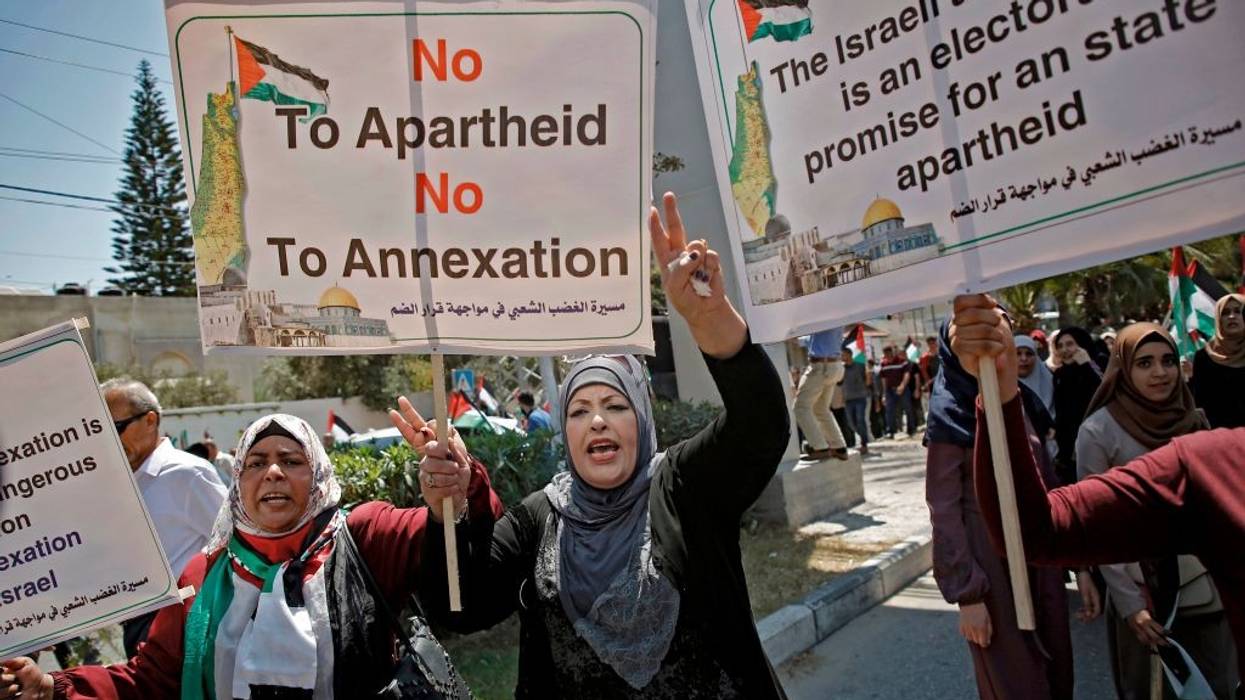
"Trump said he's against it but does nothing as Netanyahu destroys the prospect of a two-state solution."
Progressive US lawmakers on Thursday joined more than 80 countries in condemning Israel's de facto annexation of the West Bank, while urging President Donald Trump to exert pressure on the key Mideast ally to stop stealing Palestinian land and recommit to the moribund so-called two-state solution.
"The Israeli government is moving toward illegally annexing the West Bank," the Congressional Progressive Caucus (CPC) said on X. "Trump said he's against it but does nothing as Netanyahu destroys the prospect of a two-state solution. We need real US pressure to deliver a just and peaceful outcome for both Palestinians and Israelis."
CPC was responding to a Wednesday Washington Post article examining how "Israel has moved aggressively in recent days to deepen its control over the occupied West Bank, unilaterally adopting policies that analysts say represent a major shift toward annexation."
Earlier this week, the Cabinet of right-wing Israeli Prime Minister Benjamin Netanyahu approved measures making it easier for Jewish settlers to purchase land stolen from Palestinians in the West Bank, including East Jerusalem, by resuming land registration procedures in Area C, the approximately 60% of the West Bank under full Israeli military and civil control.
Responding to the move, United Nations Relief and Works Agency for Palestine Refugees in the Near East (UNRWA) Commissioner-General Philippe Lazzarini said Tuesday that "accelerating the dispossession of Palestinians and expanding Israeli settlements will do nothing to bring long-needed stability and peace to the region."
More than 80 UN member states have condemned Israel's plan to steal more Palestinian land.
“Such decisions are contrary to Israel’s obligations under international law and must be immediately reversed," Palestinian Ambassador to the UN Riyad Mansour said on behalf of the countries. "We underline in this regard our strong opposition to any form of annexation."
“We reiterate our rejection of all measures aimed at altering the demographic composition, character, and status of the Palestinian territory occupied since 1967, including East Jerusalem,” he added.
Netanyahu—who once displayed a map of the "New Middle East" in which there is no Palestine—last year promised that "there will be no Palestinian state."
Israeli Finance Minister Bezalel Smotrich, National Security Minister Itamar Ben-Gvir, and other officials have also vowed to annex either some or all of the West Bank.
Netanyahu is wanted by the International Criminal Court in The Hague for alleged crimes against humanity committed during the ongoing Gaza genocide. The ICC has also reportedly weighed arrest warrants for Ben-Gvir and Smotrich over the far-right officials' plans to expand illegal settler colonies in the West Bank and annex the occupied territory.
Smotrich—who denies the existence of Palestinian people—said Sunday that "we are continuing the revolution of settlement and strengthening our hold across all parts of our land."
While Trump has publicly stated that he "will not allow Israel to annex the West Bank," he has done nothing to stop Netanyahu's government from proceeding with de facto annexation. To the contrary, Trump reportedly assented to recent Israeli land grabs.
Smotrich called Trump's reelection a "great opportunity" to normalize Israel's occupation and eventual annexation of Palestine.
Some prominent US officials, including House Speaker Mike Johnson (R-La.), have erroneously claimed that the West Bank is part of Israel.
Israel conquered and occupied the West Bank including East Jerusalem along with Gaza during the Six-Day War in 1967, subsequently ethnically cleansing around 300,000 Palestinians. Many of these forcibly displaced people were survivors of the Nakba, the terror and ethnic cleansing campaign that saw more than 750,000 Palestinians flee or be forcibly expelled from Palestine during the foundation of the modern state of Israel in 1948.
Since 1967, Israel has steadily seized more and more Palestinian land in the West Bank while building and expanding colonies there. Settlement population has increased exponentially from around 1,500 colonists in 1970 to roughly 140,000 at the time of the Oslo Accords in 1993—under which Israel agreed to halt new settlement activity—to around 770,000 today.
Both Israel's occupation of Palestine and the colonization of Palestinian lands by Jewish apartheid settlers are illegal under international law. Article 49 of the Fourth Geneva Convention states that an “occupying power shall not deport or transfer parts of its own civilian population into the territory it occupies.”
In July 2024, the International Court of Justice—where Israel is currently facing a genocide case related to the Gaza war—found the occupation of Palestine to be an illegal form of apartheid that must be ended as soon as possible. The ICJ also ruled that Israeli settler colonization of the West Bank amounts to annexation, also a crime under international law.
As the world’s attention focused on Gaza following the Hamas-led attack of October 7, 2023, Israeli soldiers and settlers have killed at least 1,053 Palestinians—at least 230 of them children—in the West Bank, according to UNRWA. Some settler pogroms have compared to the ethnic cleansing during the Nakba.
The Office of the UN High Commissioner for Human Rights published a report Wednesday warning that "intensified attacks, the methodical destruction of entire neighborhoods, and the denial of humanitarian assistance appeared to aim at a permanent demographic shift."
"This, together with forcible transfers, which appear to aim at a permanent displacement, raise concerns over ethnic cleansing in Gaza and the West Bank," the report states.
Although not a CPC member, Congresswoman Betty McCollum (D-Minn.) last week reintroduced HR 7545, which would prohibit Israel from using US taxpayer funds for the seizure or destruction of Palestinian property or any support for annexing Palestinian land.
Earlier this month, a group of Democratic US senators urged Trump ahead of his February 11 meeting with Netanyahu to "clearly reinforce the opposition of the US government to Israeli government actions that set the conditions for irreversible annexation.”