SUBSCRIBE TO OUR FREE NEWSLETTER
Daily news & progressive opinion—funded by the people, not the corporations—delivered straight to your inbox.
5
#000000
#FFFFFF
To donate by check, phone, or other method, see our More Ways to Give page.
Daily news & progressive opinion—funded by the people, not the corporations—delivered straight to your inbox.
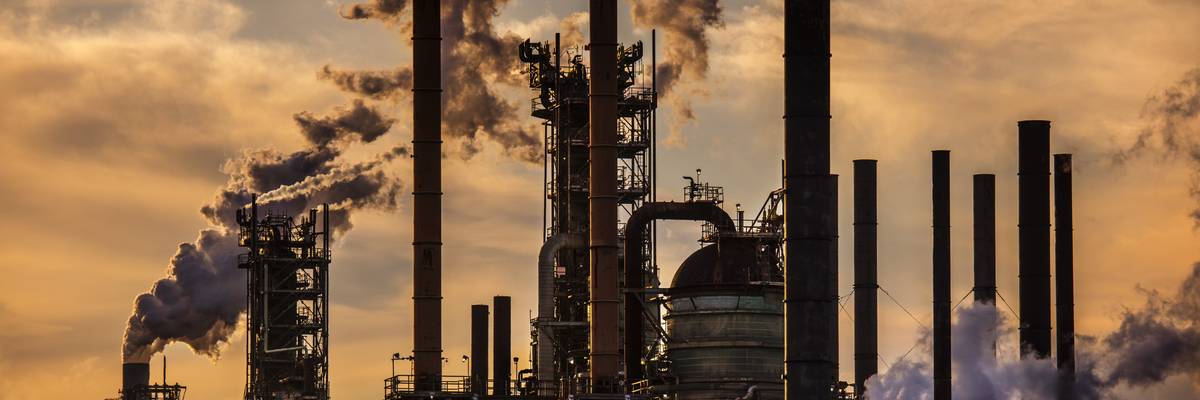
An oil refinery, owned by Exxon Mobil, is the second largest in the country on 28th February 2020 in Baton Rouge, Louisiana, United States.
Nearly half of kids in the US are breathing unhealthy air; it's time for the EPA to return to its lifesaving mission of protecting their lungs.
Parents have a lot on their minds. I am a mom of a 3-year-old and a 7-year old and a pediatric pulmonologist. Like many other parents, I am constantly juggling the logistics of family life, school, and work. Keeping my children healthy and safe is a priority.
Food is one example. I try to ensure my children eat healthy, nutritious food that won’t make them sick or contribute to the formation of chronic disease, like some ultra-processed foods can. As the parent of a picky eater, finding healthy foods my children will actually eat can be challenging.
I know that parents do not need another thing to be concerned about. They certainly shouldn’t have to worry about the air their children breathe. But the American Lung Association’s recent “State of the Air” report found that nearly half of kids in the US are breathing unhealthy air. More specifically, the report found that 33.5 million children, or 46% of people under 18 years old in the US, live in an area that received a failing grade for at least one measure of air pollution. More than 7 million children in the United States (10% of all kids) live in a community with failing grades for all three measures studied in the report.
This is unacceptable, especially because studies show that infants, children, and teens as a group are more susceptible to the health impacts of air pollution, and that some of these harms can be lifelong. Compared with adults, infants and children breathe more air relative to their body size and they are frequently playing outside where they are exposed to outdoor air. The fact that the lungs continue to develop throughout childhood plays a role.
Children should not have to pay the price with their health so that polluting industries can maximize their profits.
In the past year, there has been an increasing amount of attention paid to preventing chronic disease in children—for good reason. We all want to set our children up for the healthiest lives possible. But the conversation about chronic disease prevention must include cleaning up air pollution. Air pollution exposure in childhood can cause long-term harm by impeding lung growth, contributing to new asthma cases, causing flareups in people with asthma and other lung conditions, increasing risk of respiratory infections and more.
Air pollution can even harm children before they are born. Air pollution is linked to preterm birth, low birth weight, lower lung capacity, and other adverse birth outcomes. That means that exposure to air pollution during pregnancy and childhood could even set a child up for a lifetime of poor lung health. As children grow into adulthood, breathing air pollution can cause respiratory and cardiovascular harm, asthma attacks, lung cancer, heart attacks, stroke, even early death.
So what is driving the ground-level ozone pollution and particle pollution reported on in “State of the Air?” There are many sources, but the main ones include diesel- and gasoline-powered vehicles, power plants and other industrial sources, emissions from the oil and gas industry, and wildfires. Higher temperatures can exacerbate this, as heat accelerates the production of ozone. While the US has made incredible progress in cleaning up air pollution over the past 50 years, the changing climate is making air pollution more likely to form and more difficult to clean up.
Here is more bad news: While half of the children in the US are breathing unhealthy air, the US Environmental Protection Agency (EPA) is working to roll back and repeal safeguards designed to reduce air pollution. In recent months, EPA announced a rule to weaken limits to protect children from mercury and other toxic pollutants from power plants, eliminated the standards to regulate emissions from vehicles, and delayed implementation of a rule to reduce pollution from oil and gas wells. On top of that, EPA recently decided to eliminate health-related data from its analyses of clean air measures, meaning that the costs of pollution to our kids, families, and communities will not be counted as policies are rolled back.
This is particularly upsetting, as I see what an impact air pollution can have on children and families in my day-to-day work as a pediatric pulmonologist. For decades, EPA has calculated the costs of air pollution to the health and livelihood of people, including asthma attacks and premature deaths. EPA is still including the cost to industry in their economic analyses, which means it will be easier to achieve further rollbacks of regulations while omitting the devastating costs to children and communities. Children should not have to pay the price with their health so that polluting industries can maximize their profits.
The good news is that federal clean air protections work when they are enforced. The Clean Air Act is regarded as one of the most successful public health laws in US history. For 55 years, it has protected children, families, and communities from harmful pollution and driven innovation toward a cleaner, healthier future. The Clean Air Act gives EPA the authority and responsibility to assess and clean up air pollution from vehicles, power plants, and industries across the nation. We rely on EPA to protect our lungs. I urge EPA to return to its lifesaving mission of protecting human health by reducing deadly air pollution instead of allowing more of it, and value people’s lives and the health costs of pollution in their rulemaking processes.
As I read the labels on foods, buckle my sons into their car seats, and put their helmets on before they jump onto scooters and bikes, I also check the air quality on my phone. I teach my patients and their parents to do the same. But there is only so much I—or any parent—can do to protect my kids from air pollution.
EPA must protect our air and value our kids’ health. All lungs, especially little lungs, are counting on it.
Dear Common Dreams reader, It’s been nearly 30 years since I co-founded Common Dreams with my late wife, Lina Newhouser. We had the radical notion that journalism should serve the public good, not corporate profits. It was clear to us from the outset what it would take to build such a project. No paid advertisements. No corporate sponsors. No millionaire publisher telling us what to think or do. Many people said we wouldn't last a year, but we proved those doubters wrong. Together with a tremendous team of journalists and dedicated staff, we built an independent media outlet free from the constraints of profits and corporate control. Our mission has always been simple: To inform. To inspire. To ignite change for the common good. Building Common Dreams was not easy. Our survival was never guaranteed. When you take on the most powerful forces—Wall Street greed, fossil fuel industry destruction, Big Tech lobbyists, and uber-rich oligarchs who have spent billions upon billions rigging the economy and democracy in their favor—the only bulwark you have is supporters who believe in your work. But here’s the urgent message from me today. It's never been this bad out there. And it's never been this hard to keep us going. At the very moment Common Dreams is most needed, the threats we face are intensifying. We need your support now more than ever. We don't accept corporate advertising and never will. We don't have a paywall because we don't think people should be blocked from critical news based on their ability to pay. Everything we do is funded by the donations of readers like you. When everyone does the little they can afford, we are strong. But if that support retreats or dries up, so do we. Will you donate now to make sure Common Dreams not only survives but thrives? —Craig Brown, Co-founder |
Parents have a lot on their minds. I am a mom of a 3-year-old and a 7-year old and a pediatric pulmonologist. Like many other parents, I am constantly juggling the logistics of family life, school, and work. Keeping my children healthy and safe is a priority.
Food is one example. I try to ensure my children eat healthy, nutritious food that won’t make them sick or contribute to the formation of chronic disease, like some ultra-processed foods can. As the parent of a picky eater, finding healthy foods my children will actually eat can be challenging.
I know that parents do not need another thing to be concerned about. They certainly shouldn’t have to worry about the air their children breathe. But the American Lung Association’s recent “State of the Air” report found that nearly half of kids in the US are breathing unhealthy air. More specifically, the report found that 33.5 million children, or 46% of people under 18 years old in the US, live in an area that received a failing grade for at least one measure of air pollution. More than 7 million children in the United States (10% of all kids) live in a community with failing grades for all three measures studied in the report.
This is unacceptable, especially because studies show that infants, children, and teens as a group are more susceptible to the health impacts of air pollution, and that some of these harms can be lifelong. Compared with adults, infants and children breathe more air relative to their body size and they are frequently playing outside where they are exposed to outdoor air. The fact that the lungs continue to develop throughout childhood plays a role.
Children should not have to pay the price with their health so that polluting industries can maximize their profits.
In the past year, there has been an increasing amount of attention paid to preventing chronic disease in children—for good reason. We all want to set our children up for the healthiest lives possible. But the conversation about chronic disease prevention must include cleaning up air pollution. Air pollution exposure in childhood can cause long-term harm by impeding lung growth, contributing to new asthma cases, causing flareups in people with asthma and other lung conditions, increasing risk of respiratory infections and more.
Air pollution can even harm children before they are born. Air pollution is linked to preterm birth, low birth weight, lower lung capacity, and other adverse birth outcomes. That means that exposure to air pollution during pregnancy and childhood could even set a child up for a lifetime of poor lung health. As children grow into adulthood, breathing air pollution can cause respiratory and cardiovascular harm, asthma attacks, lung cancer, heart attacks, stroke, even early death.
So what is driving the ground-level ozone pollution and particle pollution reported on in “State of the Air?” There are many sources, but the main ones include diesel- and gasoline-powered vehicles, power plants and other industrial sources, emissions from the oil and gas industry, and wildfires. Higher temperatures can exacerbate this, as heat accelerates the production of ozone. While the US has made incredible progress in cleaning up air pollution over the past 50 years, the changing climate is making air pollution more likely to form and more difficult to clean up.
Here is more bad news: While half of the children in the US are breathing unhealthy air, the US Environmental Protection Agency (EPA) is working to roll back and repeal safeguards designed to reduce air pollution. In recent months, EPA announced a rule to weaken limits to protect children from mercury and other toxic pollutants from power plants, eliminated the standards to regulate emissions from vehicles, and delayed implementation of a rule to reduce pollution from oil and gas wells. On top of that, EPA recently decided to eliminate health-related data from its analyses of clean air measures, meaning that the costs of pollution to our kids, families, and communities will not be counted as policies are rolled back.
This is particularly upsetting, as I see what an impact air pollution can have on children and families in my day-to-day work as a pediatric pulmonologist. For decades, EPA has calculated the costs of air pollution to the health and livelihood of people, including asthma attacks and premature deaths. EPA is still including the cost to industry in their economic analyses, which means it will be easier to achieve further rollbacks of regulations while omitting the devastating costs to children and communities. Children should not have to pay the price with their health so that polluting industries can maximize their profits.
The good news is that federal clean air protections work when they are enforced. The Clean Air Act is regarded as one of the most successful public health laws in US history. For 55 years, it has protected children, families, and communities from harmful pollution and driven innovation toward a cleaner, healthier future. The Clean Air Act gives EPA the authority and responsibility to assess and clean up air pollution from vehicles, power plants, and industries across the nation. We rely on EPA to protect our lungs. I urge EPA to return to its lifesaving mission of protecting human health by reducing deadly air pollution instead of allowing more of it, and value people’s lives and the health costs of pollution in their rulemaking processes.
As I read the labels on foods, buckle my sons into their car seats, and put their helmets on before they jump onto scooters and bikes, I also check the air quality on my phone. I teach my patients and their parents to do the same. But there is only so much I—or any parent—can do to protect my kids from air pollution.
EPA must protect our air and value our kids’ health. All lungs, especially little lungs, are counting on it.
Parents have a lot on their minds. I am a mom of a 3-year-old and a 7-year old and a pediatric pulmonologist. Like many other parents, I am constantly juggling the logistics of family life, school, and work. Keeping my children healthy and safe is a priority.
Food is one example. I try to ensure my children eat healthy, nutritious food that won’t make them sick or contribute to the formation of chronic disease, like some ultra-processed foods can. As the parent of a picky eater, finding healthy foods my children will actually eat can be challenging.
I know that parents do not need another thing to be concerned about. They certainly shouldn’t have to worry about the air their children breathe. But the American Lung Association’s recent “State of the Air” report found that nearly half of kids in the US are breathing unhealthy air. More specifically, the report found that 33.5 million children, or 46% of people under 18 years old in the US, live in an area that received a failing grade for at least one measure of air pollution. More than 7 million children in the United States (10% of all kids) live in a community with failing grades for all three measures studied in the report.
This is unacceptable, especially because studies show that infants, children, and teens as a group are more susceptible to the health impacts of air pollution, and that some of these harms can be lifelong. Compared with adults, infants and children breathe more air relative to their body size and they are frequently playing outside where they are exposed to outdoor air. The fact that the lungs continue to develop throughout childhood plays a role.
Children should not have to pay the price with their health so that polluting industries can maximize their profits.
In the past year, there has been an increasing amount of attention paid to preventing chronic disease in children—for good reason. We all want to set our children up for the healthiest lives possible. But the conversation about chronic disease prevention must include cleaning up air pollution. Air pollution exposure in childhood can cause long-term harm by impeding lung growth, contributing to new asthma cases, causing flareups in people with asthma and other lung conditions, increasing risk of respiratory infections and more.
Air pollution can even harm children before they are born. Air pollution is linked to preterm birth, low birth weight, lower lung capacity, and other adverse birth outcomes. That means that exposure to air pollution during pregnancy and childhood could even set a child up for a lifetime of poor lung health. As children grow into adulthood, breathing air pollution can cause respiratory and cardiovascular harm, asthma attacks, lung cancer, heart attacks, stroke, even early death.
So what is driving the ground-level ozone pollution and particle pollution reported on in “State of the Air?” There are many sources, but the main ones include diesel- and gasoline-powered vehicles, power plants and other industrial sources, emissions from the oil and gas industry, and wildfires. Higher temperatures can exacerbate this, as heat accelerates the production of ozone. While the US has made incredible progress in cleaning up air pollution over the past 50 years, the changing climate is making air pollution more likely to form and more difficult to clean up.
Here is more bad news: While half of the children in the US are breathing unhealthy air, the US Environmental Protection Agency (EPA) is working to roll back and repeal safeguards designed to reduce air pollution. In recent months, EPA announced a rule to weaken limits to protect children from mercury and other toxic pollutants from power plants, eliminated the standards to regulate emissions from vehicles, and delayed implementation of a rule to reduce pollution from oil and gas wells. On top of that, EPA recently decided to eliminate health-related data from its analyses of clean air measures, meaning that the costs of pollution to our kids, families, and communities will not be counted as policies are rolled back.
This is particularly upsetting, as I see what an impact air pollution can have on children and families in my day-to-day work as a pediatric pulmonologist. For decades, EPA has calculated the costs of air pollution to the health and livelihood of people, including asthma attacks and premature deaths. EPA is still including the cost to industry in their economic analyses, which means it will be easier to achieve further rollbacks of regulations while omitting the devastating costs to children and communities. Children should not have to pay the price with their health so that polluting industries can maximize their profits.
The good news is that federal clean air protections work when they are enforced. The Clean Air Act is regarded as one of the most successful public health laws in US history. For 55 years, it has protected children, families, and communities from harmful pollution and driven innovation toward a cleaner, healthier future. The Clean Air Act gives EPA the authority and responsibility to assess and clean up air pollution from vehicles, power plants, and industries across the nation. We rely on EPA to protect our lungs. I urge EPA to return to its lifesaving mission of protecting human health by reducing deadly air pollution instead of allowing more of it, and value people’s lives and the health costs of pollution in their rulemaking processes.
As I read the labels on foods, buckle my sons into their car seats, and put their helmets on before they jump onto scooters and bikes, I also check the air quality on my phone. I teach my patients and their parents to do the same. But there is only so much I—or any parent—can do to protect my kids from air pollution.
EPA must protect our air and value our kids’ health. All lungs, especially little lungs, are counting on it.