SUBSCRIBE TO OUR FREE NEWSLETTER
Daily news & progressive opinion—funded by the people, not the corporations—delivered straight to your inbox.
5
#000000
#FFFFFF
To donate by check, phone, or other method, see our More Ways to Give page.
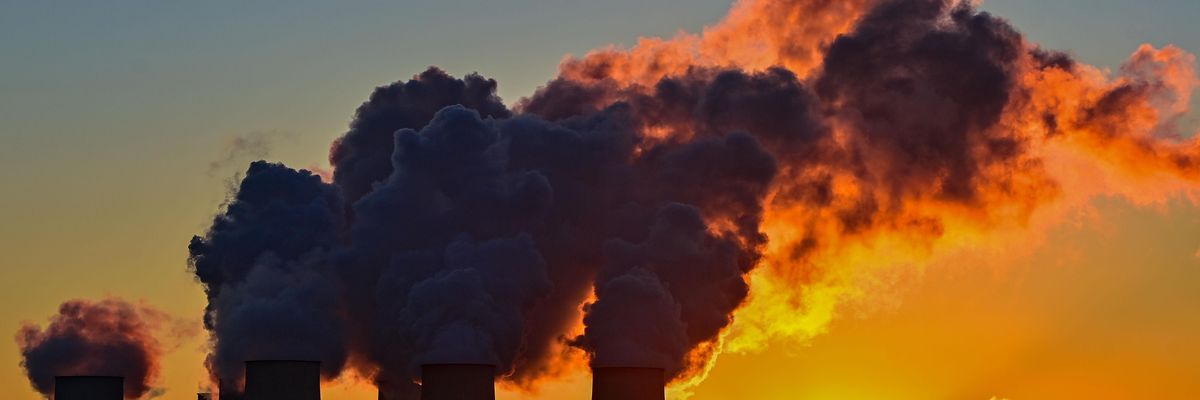
Experts emphasized the importance of more ambitiously addressing air pollution from fossil fuels after the presentation of a new breakthrough on lung cancer in Paris on Saturday.
"The same particles in the air that derive from the combustion of fossil fuels, exacerbating climate change, are directly impacting human health."
Scientists at the Francis Crick Institute and University College London (UCL) shared their findings--part of the TRACERx lung study funded by Cancer Research U.K.--at the annual conference of the European Society for Medical Oncology (ESMO).
"Our study has fundamentally changed how we view lung cancer in people who have never smoked," said Cancer Research U.K. chief clinician Charles Swanton, who led and presented the research.
The way air pollution causes cancer differs from cigarettes and sunlight. Tobacco smoke and ultraviolet light damage the structure of DNA, creating mutations that cause cancer. Air pollution causes inflammation in the lungs, affecting cells that carry mutations.
"Cells with cancer-causing mutations accumulate naturally as we age, but they are normally inactive," Swanton explained. "We've demonstrated that air pollution wakes these cells up in the lungs, encouraging them to grow and potentially form tumors."
The team analyzed 463,679 individuals from England, South Korea, and Taiwan, and examined lung tissue samples from humans and mice following exposure to particulate matter, or PM2.5--air particles that are no larger than 2.5 micrometers in diameter.
They found higher rates of epidermal growth factor receptor (EGFR) mutant lung cancer--and other types of cancers--in people who lived in areas with higher levels of PM2.5 pollution. They also found that, at least in mice, blocking a molecule which causes inflammation and is released in response to PM2.5 exposure prevents cancers from forming.
"According to our analysis, increasing air pollution levels increases the risk of lung cancer, mesothelioma, and cancers of the mouth and throat," noted Emilia Lim, co-first author and postdoctoral researcher at the Francis Crick Institute and UCL. "This finding suggests a broader role for cancers caused by inflammation triggered by a carcinogen like air pollution."
"Even small changes in air pollution levels can affect human health," she said, adding that 99% of the global population lives in areas that exceed annual World Health Organization (WHO) limits for PM2.5, "underlining the public health challenges posed by air pollution across the globe."
The WHO--when updating guidelines on air quality last September for the first time in over 15 years--warned that "the burden of disease attributable to air pollution is now estimated to be on a par with other major global health risks such as unhealthy diet and tobacco smoking, and air pollution is now recognized as the single biggest environmental threat to human health."
Related Content

While most of the human population is exposed to unhealthy levels of air pollution--which is tied to other health issues including asthma, chronic obstructive pulmonary disease (COPD), dementia, and heart disease--research has repeatedly shown it's often worse in the poorest communities.
One 2021 study found that air pollution reduces the average global citizen's life by over two years. Citing an estimate that it is tied to more than eight million deaths worldwide per year, Swanton called air pollution a "hidden killer," according to Agence France-Presse.
Swanton stressed in a statement that "the same particles in the air that derive from the combustion of fossil fuels, exacerbating climate change, are directly impacting human health via an important and previously overlooked cancer-causing mechanism in lung cells."
"As consumption of fossil fuels goes hand in hand with pollution and carbon emissions, we have a strong mandate for tackling these issues."
"The risk of lung cancer from air pollution is lower than from smoking, but we have no control over what we all breathe," the scientist said. "Globally, more people are exposed to unsafe levels of air pollution than to toxic chemicals in cigarette smoke, and these new data link the importance of addressing climate health to improving human health."
"It's a wake-up call on the impact of pollution on human health," he told The Guardian. "You cannot ignore climate health. If you want to address human health, you have to address climate health first."
Tony Mok of the Chinese University of Hong Kong, who was not involved in the study, similarly said in a statement that "as consumption of fossil fuels goes hand in hand with pollution and carbon emissions, we have a strong mandate for tackling these issues--for both environmental and health reasons."
Like the scientists who conducted the study, Mok also pointed out how it could help with the prevention of lung cancer among nonsmokers.
"This research is intriguing and exciting as it means that we can ask whether, in the future, it will be possible to use lung scans to look for pre-cancerous lesions in the lungs and try to reverse them with medicines," Mok said.
"We don't yet know whether it will be possible to use highly sensitive EGFR profiling on blood or other samples to find nonsmokers who are predisposed to lung cancer and may benefit from lung scanning," he added, "so discussions are still very speculative."
Suzette Delaloge, head of the cancer prevention program at France's Gustave Roussy institute, was also not involved in the research but discussed it with AFP in Paris this weekend.
"The study is quite an important step for science--and for society too, I hope," she said, noting that it was "quite revolutionary, because we had practically no prior demonstration of this alternative way of cancer forming."
"This opens a huge door, both for knowledge but also for new ways to prevent" cancer, added Delaloge. "This level of demonstration must force authorities to act on an international scale."
Experts emphasized the importance of more ambitiously addressing air pollution from fossil fuels after the presentation of a new breakthrough on lung cancer in Paris on Saturday.
"The same particles in the air that derive from the combustion of fossil fuels, exacerbating climate change, are directly impacting human health."
Scientists at the Francis Crick Institute and University College London (UCL) shared their findings--part of the TRACERx lung study funded by Cancer Research U.K.--at the annual conference of the European Society for Medical Oncology (ESMO).
"Our study has fundamentally changed how we view lung cancer in people who have never smoked," said Cancer Research U.K. chief clinician Charles Swanton, who led and presented the research.
The way air pollution causes cancer differs from cigarettes and sunlight. Tobacco smoke and ultraviolet light damage the structure of DNA, creating mutations that cause cancer. Air pollution causes inflammation in the lungs, affecting cells that carry mutations.
"Cells with cancer-causing mutations accumulate naturally as we age, but they are normally inactive," Swanton explained. "We've demonstrated that air pollution wakes these cells up in the lungs, encouraging them to grow and potentially form tumors."
The team analyzed 463,679 individuals from England, South Korea, and Taiwan, and examined lung tissue samples from humans and mice following exposure to particulate matter, or PM2.5--air particles that are no larger than 2.5 micrometers in diameter.
They found higher rates of epidermal growth factor receptor (EGFR) mutant lung cancer--and other types of cancers--in people who lived in areas with higher levels of PM2.5 pollution. They also found that, at least in mice, blocking a molecule which causes inflammation and is released in response to PM2.5 exposure prevents cancers from forming.
"According to our analysis, increasing air pollution levels increases the risk of lung cancer, mesothelioma, and cancers of the mouth and throat," noted Emilia Lim, co-first author and postdoctoral researcher at the Francis Crick Institute and UCL. "This finding suggests a broader role for cancers caused by inflammation triggered by a carcinogen like air pollution."
"Even small changes in air pollution levels can affect human health," she said, adding that 99% of the global population lives in areas that exceed annual World Health Organization (WHO) limits for PM2.5, "underlining the public health challenges posed by air pollution across the globe."
The WHO--when updating guidelines on air quality last September for the first time in over 15 years--warned that "the burden of disease attributable to air pollution is now estimated to be on a par with other major global health risks such as unhealthy diet and tobacco smoking, and air pollution is now recognized as the single biggest environmental threat to human health."
Related Content
While most of the human population is exposed to unhealthy levels of air pollution--which is tied to other health issues including asthma, chronic obstructive pulmonary disease (COPD), dementia, and heart disease--research has repeatedly shown it's often worse in the poorest communities.
One 2021 study found that air pollution reduces the average global citizen's life by over two years. Citing an estimate that it is tied to more than eight million deaths worldwide per year, Swanton called air pollution a "hidden killer," according to Agence France-Presse.
Swanton stressed in a statement that "the same particles in the air that derive from the combustion of fossil fuels, exacerbating climate change, are directly impacting human health via an important and previously overlooked cancer-causing mechanism in lung cells."
"As consumption of fossil fuels goes hand in hand with pollution and carbon emissions, we have a strong mandate for tackling these issues."
"The risk of lung cancer from air pollution is lower than from smoking, but we have no control over what we all breathe," the scientist said. "Globally, more people are exposed to unsafe levels of air pollution than to toxic chemicals in cigarette smoke, and these new data link the importance of addressing climate health to improving human health."
"It's a wake-up call on the impact of pollution on human health," he told The Guardian. "You cannot ignore climate health. If you want to address human health, you have to address climate health first."
Tony Mok of the Chinese University of Hong Kong, who was not involved in the study, similarly said in a statement that "as consumption of fossil fuels goes hand in hand with pollution and carbon emissions, we have a strong mandate for tackling these issues--for both environmental and health reasons."
Like the scientists who conducted the study, Mok also pointed out how it could help with the prevention of lung cancer among nonsmokers.
"This research is intriguing and exciting as it means that we can ask whether, in the future, it will be possible to use lung scans to look for pre-cancerous lesions in the lungs and try to reverse them with medicines," Mok said.
"We don't yet know whether it will be possible to use highly sensitive EGFR profiling on blood or other samples to find nonsmokers who are predisposed to lung cancer and may benefit from lung scanning," he added, "so discussions are still very speculative."
Suzette Delaloge, head of the cancer prevention program at France's Gustave Roussy institute, was also not involved in the research but discussed it with AFP in Paris this weekend.
"The study is quite an important step for science--and for society too, I hope," she said, noting that it was "quite revolutionary, because we had practically no prior demonstration of this alternative way of cancer forming."
"This opens a huge door, both for knowledge but also for new ways to prevent" cancer, added Delaloge. "This level of demonstration must force authorities to act on an international scale."
Experts emphasized the importance of more ambitiously addressing air pollution from fossil fuels after the presentation of a new breakthrough on lung cancer in Paris on Saturday.
"The same particles in the air that derive from the combustion of fossil fuels, exacerbating climate change, are directly impacting human health."
Scientists at the Francis Crick Institute and University College London (UCL) shared their findings--part of the TRACERx lung study funded by Cancer Research U.K.--at the annual conference of the European Society for Medical Oncology (ESMO).
"Our study has fundamentally changed how we view lung cancer in people who have never smoked," said Cancer Research U.K. chief clinician Charles Swanton, who led and presented the research.
The way air pollution causes cancer differs from cigarettes and sunlight. Tobacco smoke and ultraviolet light damage the structure of DNA, creating mutations that cause cancer. Air pollution causes inflammation in the lungs, affecting cells that carry mutations.
"Cells with cancer-causing mutations accumulate naturally as we age, but they are normally inactive," Swanton explained. "We've demonstrated that air pollution wakes these cells up in the lungs, encouraging them to grow and potentially form tumors."
The team analyzed 463,679 individuals from England, South Korea, and Taiwan, and examined lung tissue samples from humans and mice following exposure to particulate matter, or PM2.5--air particles that are no larger than 2.5 micrometers in diameter.
They found higher rates of epidermal growth factor receptor (EGFR) mutant lung cancer--and other types of cancers--in people who lived in areas with higher levels of PM2.5 pollution. They also found that, at least in mice, blocking a molecule which causes inflammation and is released in response to PM2.5 exposure prevents cancers from forming.
"According to our analysis, increasing air pollution levels increases the risk of lung cancer, mesothelioma, and cancers of the mouth and throat," noted Emilia Lim, co-first author and postdoctoral researcher at the Francis Crick Institute and UCL. "This finding suggests a broader role for cancers caused by inflammation triggered by a carcinogen like air pollution."
"Even small changes in air pollution levels can affect human health," she said, adding that 99% of the global population lives in areas that exceed annual World Health Organization (WHO) limits for PM2.5, "underlining the public health challenges posed by air pollution across the globe."
The WHO--when updating guidelines on air quality last September for the first time in over 15 years--warned that "the burden of disease attributable to air pollution is now estimated to be on a par with other major global health risks such as unhealthy diet and tobacco smoking, and air pollution is now recognized as the single biggest environmental threat to human health."
Related Content
While most of the human population is exposed to unhealthy levels of air pollution--which is tied to other health issues including asthma, chronic obstructive pulmonary disease (COPD), dementia, and heart disease--research has repeatedly shown it's often worse in the poorest communities.
One 2021 study found that air pollution reduces the average global citizen's life by over two years. Citing an estimate that it is tied to more than eight million deaths worldwide per year, Swanton called air pollution a "hidden killer," according to Agence France-Presse.
Swanton stressed in a statement that "the same particles in the air that derive from the combustion of fossil fuels, exacerbating climate change, are directly impacting human health via an important and previously overlooked cancer-causing mechanism in lung cells."
"As consumption of fossil fuels goes hand in hand with pollution and carbon emissions, we have a strong mandate for tackling these issues."
"The risk of lung cancer from air pollution is lower than from smoking, but we have no control over what we all breathe," the scientist said. "Globally, more people are exposed to unsafe levels of air pollution than to toxic chemicals in cigarette smoke, and these new data link the importance of addressing climate health to improving human health."
"It's a wake-up call on the impact of pollution on human health," he told The Guardian. "You cannot ignore climate health. If you want to address human health, you have to address climate health first."
Tony Mok of the Chinese University of Hong Kong, who was not involved in the study, similarly said in a statement that "as consumption of fossil fuels goes hand in hand with pollution and carbon emissions, we have a strong mandate for tackling these issues--for both environmental and health reasons."
Like the scientists who conducted the study, Mok also pointed out how it could help with the prevention of lung cancer among nonsmokers.
"This research is intriguing and exciting as it means that we can ask whether, in the future, it will be possible to use lung scans to look for pre-cancerous lesions in the lungs and try to reverse them with medicines," Mok said.
"We don't yet know whether it will be possible to use highly sensitive EGFR profiling on blood or other samples to find nonsmokers who are predisposed to lung cancer and may benefit from lung scanning," he added, "so discussions are still very speculative."
Suzette Delaloge, head of the cancer prevention program at France's Gustave Roussy institute, was also not involved in the research but discussed it with AFP in Paris this weekend.
"The study is quite an important step for science--and for society too, I hope," she said, noting that it was "quite revolutionary, because we had practically no prior demonstration of this alternative way of cancer forming."
"This opens a huge door, both for knowledge but also for new ways to prevent" cancer, added Delaloge. "This level of demonstration must force authorities to act on an international scale."