5
#000000
#FFFFFF
To donate by check, phone, or other method, see our More Ways to Give page.
Daily news & progressive opinion—funded by the people, not the corporations—delivered straight to your inbox.

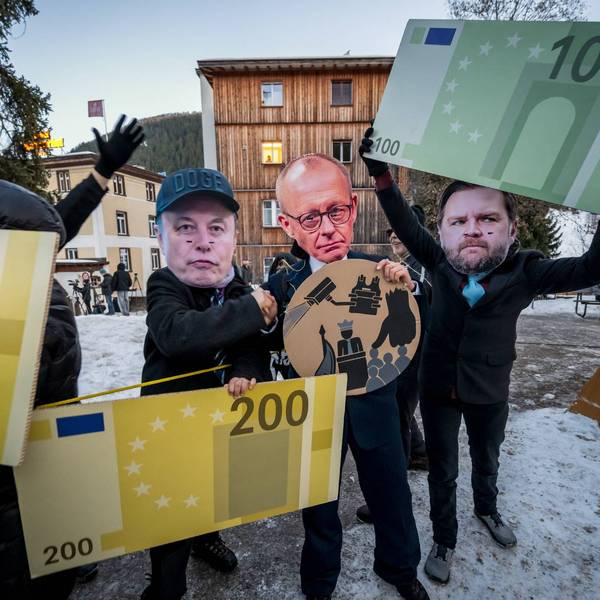
Advocates pose as Monopoly men and wealthy DOGE supporters while protesting tax breaks for billionaires and the Republican tax plan, inside and outside the Ways & Means Full Committee Markup to advance the legislation in the Longworth House Office Building on May 13, 2025 in Washington, DC.
If billionaires continue to shape political systems while states become hostage to corporate and neoliberal agendas, we should expect more authoritarianism.
The latest Oxfam report delivers a stark warning about the direction of the global political economy. In 2025 alone, billionaire wealth surged by $2.5 trillion, pushing total billionaire wealth to $18.3 trillion, the highest level ever recorded. Wealth at the top is now growing three times faster than in previous years, even as poverty reduction stalls and hunger rises. Oxfam calls this not just economic inequality but dangerous political inequality, a world in which the ultra rich increasingly shape laws, media systems, and public policy to serve themselves.
This builds on Oxfam’s earlier finding that the richest 1% own more wealth than the bottom 95% of humanity. The organization describes the moment as one where the shadow of global oligarchy hangs over multilateral institutions, tax cooperation, debt relief efforts, and global public goods. Billionaires are not only accumulating wealth, they are accumulating influence, with an outsize presence in politics, corporate ownership, and media control.
At the same time, another long-term trend has unfolded. Over the last four decades, beginning with Reaganomics in the United States and Thatcherism in the United Kingdom, neoliberal reforms normalized austerity, privatization, and shrinking public welfare. The welfare state was reframed as a burden rather than a foundation of stability and dignity.
This shift was not only economic but moral: Market efficiency displaced social solidarity, and welfare came to be viewed as dependency rather than dignity.
The irony is that once in power, many populist leaders deepen the very insecurity that propelled them to office.
Today the richest 1% have more wealth than the bottom 95% of the world’s population put together, while the welfare state has steadily eroded. What has followed has worsened inequality; fueled resentment; broken trust in state institutions; weakened the social contract; and led to feelings of exclusion, helplessness, and marginalization. The result has been a rise in populist anger and right-wing governments characterized by anti-immigrant sentiment and hostility to multilateralism.
This trajectory has not only reshaped economies, but politics itself. So who is to blame? Is it the right-wing populists who are now eroding democratic norms, or the neoliberal austerity that hollowed out welfare systems long before them. In reality, the link between the two is the helplessness and anger felt by ordinary citizens who feel invisible in a world marked by inequality and social injustice. As Oxfam International executive director Amitabh Behar notes, being economically poor creates hunger, being politically poor creates anger. It is this economic and political poverty that fuels today’s rage, and much of it traces back to economic disenfranchisement and austerity.
A recent report to the United Nations by Special Rapporteur on Extreme Poverty and Human Rights Olivier De Schutter reinforces this picture. He warns that welfare retrenchment, harsher conditions for benefits, digital surveillance of claimants, and stigmatizing systems have increased insecurity and humiliation rather than reducing poverty. These punitive approaches erode trust in public institutions and create fertile ground for far-right movements that claim to speak for those left behind.
The irony is that once in power, many populist leaders deepen the very insecurity that propelled them to office.
The United States offers a clear illustration of this paradox. Donald Trump returned to power on a message of defending forgotten citizens and challenging elites. Yet recent policy directions have narrowed the social safety net. Cuts to Medicaid and the Supplemental Nutrition Assistance Program, stricter work requirements for food assistance, and the expiration of enhanced healthcare subsidies have increased costs and reduced access for low-income households. Earlier efforts to weaken the Affordable Care Act and promote short-term insurance plans with thinner coverage followed a similar logic. While framed as efficiency or fiscal responsibility, these measures shift burdens downward even as tax and regulatory environments remain favorable to corporations and wealthy interests.
What the world needs now is a serious reset where the common citizen feels seen and their rights and needs are valued. The state must play its role as an active dispenser of social protection, justice, and welfare. As the UN Special Rapporteur De Schutter notes, social protection and welfare should not be seen as a cost to be reduced, but as part of a strategy that has been proven to deliver security and well-being for all
If billionaires continue to shape political systems while states become hostage to corporate and neoliberal agendas, we should expect more authoritarianism. The outcome will be deeper division, fragmentation, and conflict. The world cannot afford that trajectory.
What is missing in today’s political economy is empathy, a basic regard for human welfare that has been crowded out by indifference and market logic. Without restoring that moral foundation, neither democracy nor social stability can endure. Reclaiming democracy therefore requires not only restoring welfare states, but curbing the political power of extreme wealth through taxation, regulation, and democratic accountability.
Dear Common Dreams reader, The U.S. is on a fast track to authoritarianism like nothing I've ever seen. Meanwhile, corporate news outlets are utterly capitulating to Trump, twisting their coverage to avoid drawing his ire while lining up to stuff cash in his pockets. That's why I believe that Common Dreams is doing the best and most consequential reporting that we've ever done. Our small but mighty team is a progressive reporting powerhouse, covering the news every day that the corporate media never will. Our mission has always been simple: To inform. To inspire. And to ignite change for the common good. Now here's the key piece that I want all our readers to understand: None of this would be possible without your financial support. That's not just some fundraising cliche. It's the absolute and literal truth. We don't accept corporate advertising and never will. We don't have a paywall because we don't think people should be blocked from critical news based on their ability to pay. Everything we do is funded by the donations of readers like you. Will you donate now to help power the nonprofit, independent reporting of Common Dreams? Thank you for being a vital member of our community. Together, we can keep independent journalism alive when it’s needed most. - Craig Brown, Co-founder |
The latest Oxfam report delivers a stark warning about the direction of the global political economy. In 2025 alone, billionaire wealth surged by $2.5 trillion, pushing total billionaire wealth to $18.3 trillion, the highest level ever recorded. Wealth at the top is now growing three times faster than in previous years, even as poverty reduction stalls and hunger rises. Oxfam calls this not just economic inequality but dangerous political inequality, a world in which the ultra rich increasingly shape laws, media systems, and public policy to serve themselves.
This builds on Oxfam’s earlier finding that the richest 1% own more wealth than the bottom 95% of humanity. The organization describes the moment as one where the shadow of global oligarchy hangs over multilateral institutions, tax cooperation, debt relief efforts, and global public goods. Billionaires are not only accumulating wealth, they are accumulating influence, with an outsize presence in politics, corporate ownership, and media control.
At the same time, another long-term trend has unfolded. Over the last four decades, beginning with Reaganomics in the United States and Thatcherism in the United Kingdom, neoliberal reforms normalized austerity, privatization, and shrinking public welfare. The welfare state was reframed as a burden rather than a foundation of stability and dignity.
This shift was not only economic but moral: Market efficiency displaced social solidarity, and welfare came to be viewed as dependency rather than dignity.
The irony is that once in power, many populist leaders deepen the very insecurity that propelled them to office.
Today the richest 1% have more wealth than the bottom 95% of the world’s population put together, while the welfare state has steadily eroded. What has followed has worsened inequality; fueled resentment; broken trust in state institutions; weakened the social contract; and led to feelings of exclusion, helplessness, and marginalization. The result has been a rise in populist anger and right-wing governments characterized by anti-immigrant sentiment and hostility to multilateralism.
This trajectory has not only reshaped economies, but politics itself. So who is to blame? Is it the right-wing populists who are now eroding democratic norms, or the neoliberal austerity that hollowed out welfare systems long before them. In reality, the link between the two is the helplessness and anger felt by ordinary citizens who feel invisible in a world marked by inequality and social injustice. As Oxfam International executive director Amitabh Behar notes, being economically poor creates hunger, being politically poor creates anger. It is this economic and political poverty that fuels today’s rage, and much of it traces back to economic disenfranchisement and austerity.
A recent report to the United Nations by Special Rapporteur on Extreme Poverty and Human Rights Olivier De Schutter reinforces this picture. He warns that welfare retrenchment, harsher conditions for benefits, digital surveillance of claimants, and stigmatizing systems have increased insecurity and humiliation rather than reducing poverty. These punitive approaches erode trust in public institutions and create fertile ground for far-right movements that claim to speak for those left behind.
The irony is that once in power, many populist leaders deepen the very insecurity that propelled them to office.
The United States offers a clear illustration of this paradox. Donald Trump returned to power on a message of defending forgotten citizens and challenging elites. Yet recent policy directions have narrowed the social safety net. Cuts to Medicaid and the Supplemental Nutrition Assistance Program, stricter work requirements for food assistance, and the expiration of enhanced healthcare subsidies have increased costs and reduced access for low-income households. Earlier efforts to weaken the Affordable Care Act and promote short-term insurance plans with thinner coverage followed a similar logic. While framed as efficiency or fiscal responsibility, these measures shift burdens downward even as tax and regulatory environments remain favorable to corporations and wealthy interests.
What the world needs now is a serious reset where the common citizen feels seen and their rights and needs are valued. The state must play its role as an active dispenser of social protection, justice, and welfare. As the UN Special Rapporteur De Schutter notes, social protection and welfare should not be seen as a cost to be reduced, but as part of a strategy that has been proven to deliver security and well-being for all
If billionaires continue to shape political systems while states become hostage to corporate and neoliberal agendas, we should expect more authoritarianism. The outcome will be deeper division, fragmentation, and conflict. The world cannot afford that trajectory.
What is missing in today’s political economy is empathy, a basic regard for human welfare that has been crowded out by indifference and market logic. Without restoring that moral foundation, neither democracy nor social stability can endure. Reclaiming democracy therefore requires not only restoring welfare states, but curbing the political power of extreme wealth through taxation, regulation, and democratic accountability.
The latest Oxfam report delivers a stark warning about the direction of the global political economy. In 2025 alone, billionaire wealth surged by $2.5 trillion, pushing total billionaire wealth to $18.3 trillion, the highest level ever recorded. Wealth at the top is now growing three times faster than in previous years, even as poverty reduction stalls and hunger rises. Oxfam calls this not just economic inequality but dangerous political inequality, a world in which the ultra rich increasingly shape laws, media systems, and public policy to serve themselves.
This builds on Oxfam’s earlier finding that the richest 1% own more wealth than the bottom 95% of humanity. The organization describes the moment as one where the shadow of global oligarchy hangs over multilateral institutions, tax cooperation, debt relief efforts, and global public goods. Billionaires are not only accumulating wealth, they are accumulating influence, with an outsize presence in politics, corporate ownership, and media control.
At the same time, another long-term trend has unfolded. Over the last four decades, beginning with Reaganomics in the United States and Thatcherism in the United Kingdom, neoliberal reforms normalized austerity, privatization, and shrinking public welfare. The welfare state was reframed as a burden rather than a foundation of stability and dignity.
This shift was not only economic but moral: Market efficiency displaced social solidarity, and welfare came to be viewed as dependency rather than dignity.
The irony is that once in power, many populist leaders deepen the very insecurity that propelled them to office.
Today the richest 1% have more wealth than the bottom 95% of the world’s population put together, while the welfare state has steadily eroded. What has followed has worsened inequality; fueled resentment; broken trust in state institutions; weakened the social contract; and led to feelings of exclusion, helplessness, and marginalization. The result has been a rise in populist anger and right-wing governments characterized by anti-immigrant sentiment and hostility to multilateralism.
This trajectory has not only reshaped economies, but politics itself. So who is to blame? Is it the right-wing populists who are now eroding democratic norms, or the neoliberal austerity that hollowed out welfare systems long before them. In reality, the link between the two is the helplessness and anger felt by ordinary citizens who feel invisible in a world marked by inequality and social injustice. As Oxfam International executive director Amitabh Behar notes, being economically poor creates hunger, being politically poor creates anger. It is this economic and political poverty that fuels today’s rage, and much of it traces back to economic disenfranchisement and austerity.
A recent report to the United Nations by Special Rapporteur on Extreme Poverty and Human Rights Olivier De Schutter reinforces this picture. He warns that welfare retrenchment, harsher conditions for benefits, digital surveillance of claimants, and stigmatizing systems have increased insecurity and humiliation rather than reducing poverty. These punitive approaches erode trust in public institutions and create fertile ground for far-right movements that claim to speak for those left behind.
The irony is that once in power, many populist leaders deepen the very insecurity that propelled them to office.
The United States offers a clear illustration of this paradox. Donald Trump returned to power on a message of defending forgotten citizens and challenging elites. Yet recent policy directions have narrowed the social safety net. Cuts to Medicaid and the Supplemental Nutrition Assistance Program, stricter work requirements for food assistance, and the expiration of enhanced healthcare subsidies have increased costs and reduced access for low-income households. Earlier efforts to weaken the Affordable Care Act and promote short-term insurance plans with thinner coverage followed a similar logic. While framed as efficiency or fiscal responsibility, these measures shift burdens downward even as tax and regulatory environments remain favorable to corporations and wealthy interests.
What the world needs now is a serious reset where the common citizen feels seen and their rights and needs are valued. The state must play its role as an active dispenser of social protection, justice, and welfare. As the UN Special Rapporteur De Schutter notes, social protection and welfare should not be seen as a cost to be reduced, but as part of a strategy that has been proven to deliver security and well-being for all
If billionaires continue to shape political systems while states become hostage to corporate and neoliberal agendas, we should expect more authoritarianism. The outcome will be deeper division, fragmentation, and conflict. The world cannot afford that trajectory.
What is missing in today’s political economy is empathy, a basic regard for human welfare that has been crowded out by indifference and market logic. Without restoring that moral foundation, neither democracy nor social stability can endure. Reclaiming democracy therefore requires not only restoring welfare states, but curbing the political power of extreme wealth through taxation, regulation, and democratic accountability.