SUBSCRIBE TO OUR FREE NEWSLETTER
Daily news & progressive opinion—funded by the people, not the corporations—delivered straight to your inbox.
5
#000000
#FFFFFF
To donate by check, phone, or other method, see our More Ways to Give page.
Daily news & progressive opinion—funded by the people, not the corporations—delivered straight to your inbox.
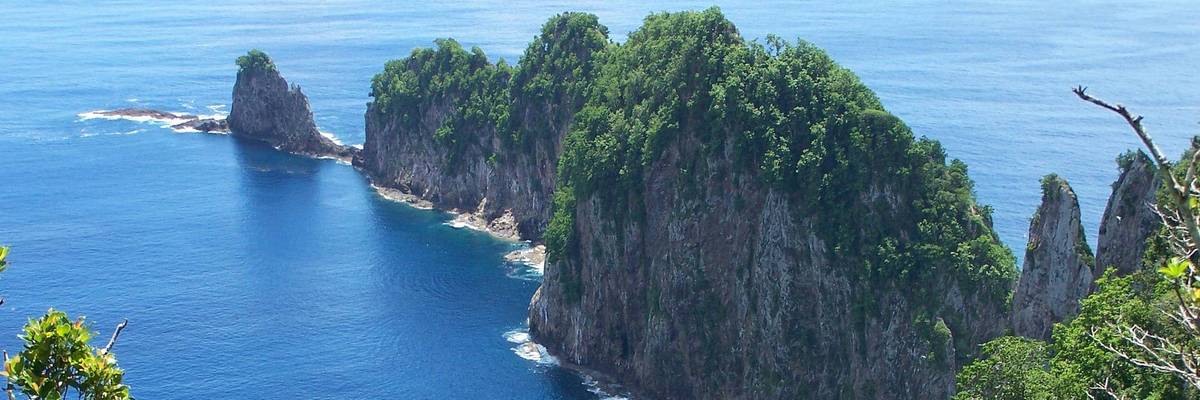
Pola Island off American Samoa is pictured
If we don’t protect our ocean, we’ll face the consequences, and no amount of money will ever make defensible the way we’ll destroy the ocean for generations to come.
For American Samoans, the ocean isn’t just about summer fun. Like many from my community, I come from a family rooted in the ocean through fishing, canoe-making, and seafaring traditions that have been passed down across generations. It’s impossible to separate us from the ocean—a place of memory, oral history, and inheritance. But this summer, the federal government seems to have forgotten the value our ocean holds as officials move quickly and recklessly to open up our sacred oceans to one of the most harmful industries: deep-sea mining.
Last April, the Trump administration issued an executive order to speed up approval for mining in US waters. One company immediately put in an application to extract metals and minerals from waters off of American Samoa. Now, the federal government has scheduled the first-ever US deep-sea mining lease auction for November 19, offering leases on 31 million acres of seabed off American Samoa. Overnight, the ocean—a place that raised us—became a target of commercial greed and harmful activities. If we don’t protect our ocean, we’ll face the consequences and no amount of money will ever make defensible the way we’ll destroy the ocean for generations to come.
That’s why what’s happening now is so alarming. Companies and officials who have never set foot on our islands are the ones deciding whether our waters should become a testing ground for an industry that is underdeveloped and under-researched. These companies are still determining which approach they will use for mining efforts, further leaving our ocean to become a live test site for their technology experiment with unknown results.
Our children are supposed to inherit the land and ocean that we give them. But if we approve deep-sea mining, we’re leaving our future generations with waters clouded with sediment, fish contaminated with metals, and coral reefs turned to wasteland.
Deep-ocean habitats are largely unexplored. The ecosystems have evolved over millennia and are home to fragile, slow-growing organisms that often become targets of deep-sea mining. When we have sent expeditions into these unknown underwater zones, we discover species no one has ever seen before. Mining here would permanently damage these undiscovered worlds, ensuring that everything we have to learn from them is lost forever.
And the harm wouldn’t stop here—mining equipment causes disturbances that can travel hundreds of miles, smother coral reefs, and introduce toxic metals into the marine food chain, including fish that serve as the foundation of our economy and food security. When our food chain suffers, so do our plates and our wallets. The consequences of deep-sea mining aren’t abstract or miles away. They will be felt in our homes, on our kitchen tables.
I’ll say it again, clearly: There are no benefits that outweigh the harm. Deep-sea mining leaves communities like mine with unanswerable and urgent questions about our homes, and we’re left wondering: What will happen to our fish? Our coral? Our families? Will this help our economy?
The efforts made by companies to address these questions are insufficient. Impossible Metals, based in San Jose and one of the two prospecting companies, has promised a 1% donation from the profits. But our home can’t be bought. No dollar amount restores a destroyed ocean.
Our history and our culture are tied to this ocean. Yet, none of this was valued by the companies and we, the people of American Samoa, were not meaningfully included in the decision-making process. Our community and allies submitted more than 75,000 comments to the federal government so that our perspective wouldn’t get lost and so our voice was clear: Almost all of us oppose deep-sea mining. But recently, we learned that the newly formed Minerals Management Administration (MMA) is going forward with mining anyway.
We’re the ones who live here, fish here, and bury our loved ones here. We know what science can’t ever fully quantify: the value of these waters and the way they sustain families and communities. Our children are supposed to inherit the land and ocean that we give them. But if we approve deep-sea mining, we’re leaving our future generations with waters clouded with sediment, fish contaminated with metals, and coral reefs turned to wasteland. That’s not the future we want—and that’s not the future anybody should want.
This country and this world are at a monumental crossroads. US voters have an opportunity to beat back the forces of fascism and confront the billionaires who are rigging the economy, our media system, and our democracy, making it increasingly impossible for ordinary people to get by. We’re not just talking about the election. We’re talking about what must be done once these fascist elements are vanquished from power. We need a bolder set of solutions than what either major party has so far been willing to offer and a working-class movement ready to fight like hell for it. Trump didn't emerge from nowhere. The conditions that fueled MAGA authoritarianism were created by decades of radical neoliberal economic policies and a corrupt political system dominated by corporate interests. They slashed taxes on the super-rich, promising that the benefits would trickle down. They said giveaways to the corporate titans would make life more affordable for the rest of us. It was all bullshit. And when a bitter, betrayed populace searches for someone to blame, right-wing demagogues have little trouble finding scapegoats. People know when they're being lied to, but you won't hear any of this from the corporate media. Only independent journalism—powered and funded by people who believe in building a better world—can deliver truly trustworthy daily news. If you share our vision, please contribute whatever you can to sustain our work. |
For American Samoans, the ocean isn’t just about summer fun. Like many from my community, I come from a family rooted in the ocean through fishing, canoe-making, and seafaring traditions that have been passed down across generations. It’s impossible to separate us from the ocean—a place of memory, oral history, and inheritance. But this summer, the federal government seems to have forgotten the value our ocean holds as officials move quickly and recklessly to open up our sacred oceans to one of the most harmful industries: deep-sea mining.
Last April, the Trump administration issued an executive order to speed up approval for mining in US waters. One company immediately put in an application to extract metals and minerals from waters off of American Samoa. Now, the federal government has scheduled the first-ever US deep-sea mining lease auction for November 19, offering leases on 31 million acres of seabed off American Samoa. Overnight, the ocean—a place that raised us—became a target of commercial greed and harmful activities. If we don’t protect our ocean, we’ll face the consequences and no amount of money will ever make defensible the way we’ll destroy the ocean for generations to come.
That’s why what’s happening now is so alarming. Companies and officials who have never set foot on our islands are the ones deciding whether our waters should become a testing ground for an industry that is underdeveloped and under-researched. These companies are still determining which approach they will use for mining efforts, further leaving our ocean to become a live test site for their technology experiment with unknown results.
Our children are supposed to inherit the land and ocean that we give them. But if we approve deep-sea mining, we’re leaving our future generations with waters clouded with sediment, fish contaminated with metals, and coral reefs turned to wasteland.
Deep-ocean habitats are largely unexplored. The ecosystems have evolved over millennia and are home to fragile, slow-growing organisms that often become targets of deep-sea mining. When we have sent expeditions into these unknown underwater zones, we discover species no one has ever seen before. Mining here would permanently damage these undiscovered worlds, ensuring that everything we have to learn from them is lost forever.
And the harm wouldn’t stop here—mining equipment causes disturbances that can travel hundreds of miles, smother coral reefs, and introduce toxic metals into the marine food chain, including fish that serve as the foundation of our economy and food security. When our food chain suffers, so do our plates and our wallets. The consequences of deep-sea mining aren’t abstract or miles away. They will be felt in our homes, on our kitchen tables.
I’ll say it again, clearly: There are no benefits that outweigh the harm. Deep-sea mining leaves communities like mine with unanswerable and urgent questions about our homes, and we’re left wondering: What will happen to our fish? Our coral? Our families? Will this help our economy?
The efforts made by companies to address these questions are insufficient. Impossible Metals, based in San Jose and one of the two prospecting companies, has promised a 1% donation from the profits. But our home can’t be bought. No dollar amount restores a destroyed ocean.
Our history and our culture are tied to this ocean. Yet, none of this was valued by the companies and we, the people of American Samoa, were not meaningfully included in the decision-making process. Our community and allies submitted more than 75,000 comments to the federal government so that our perspective wouldn’t get lost and so our voice was clear: Almost all of us oppose deep-sea mining. But recently, we learned that the newly formed Minerals Management Administration (MMA) is going forward with mining anyway.
We’re the ones who live here, fish here, and bury our loved ones here. We know what science can’t ever fully quantify: the value of these waters and the way they sustain families and communities. Our children are supposed to inherit the land and ocean that we give them. But if we approve deep-sea mining, we’re leaving our future generations with waters clouded with sediment, fish contaminated with metals, and coral reefs turned to wasteland. That’s not the future we want—and that’s not the future anybody should want.