December, 05 2025, 09:45am EDT

Poll: Voters Want Jeffries & Schumer to Fight AI Deregulation
As Democratic Leader Jeffries Keeps Quiet, a New Poll Finds that Dem & Indy Voters Want Leaders to Fight Big Tech’s Push to Ban State AI Laws
On Friday, Demand Progress released a poll showing that large majorities of Democratic and Independent voters want Democratic leadership to fight an attempt by President Donald Trump, Sen. Ted Cruz and Rep. Steve Scalise to ban states from passing or enforcing AI laws.
On Monday, House Democratic Leader Hakeem Jeffries avoided taking a stance on the issue, saying that it “hasn't been brought to the leadership level yet.” The poll shows that 70 percent of Democratic voters and 79 percent of Independent voters want congressional Democratic leadership to oppose a state AI preemption bill, with only 15 percent of Democrats and four percent of Independents saying Democratic leaders should support one. Demand Progress recently led a coalition of 250+ groups urging Congress to oppose adding a ban on state AI laws to a must-pass defense spending bill and led a campaign that drove more than 61,000 petition actions to Congress.
Demand Progress’s online poll of 2,257 likely voters was conducted by Tavern Research from Nov. 24, 2025 to Nov. 25, 2025. Other key findings include:
- 61 percent of Democratic voters and 68 percent of Independent voters said they’d be less likely to support a Democratic member of Congress who supported a bill to prevent states from regulating AI
- Only 15 percent of Democratic voters and 14 percent of Independent voters said a Democratic member of Congress’s support for a state preemption bill would make them more likely to support that member
- 57 percent of Democratic voters and 67 percent of Independent voters would have a less favorable view of Jeffries and Senate Minority Leader Chuck Schumer if they supported a preemption bill
- 56 percent of Democratic voters and 62 percent of Independent voters want Jeffries and Schumer to “work hard to block Republicans’ policy to prevent states from regulating AI”
- 81 percent of both Democratic and Independent voters, and 74 percent of Republican voters, believe that “large technology companies have too much influence over AI policy”
- 71 percent of both Democratic and Independent voters, and 62 percent of Republican voters, are worried that “the U.S. government will not regulate artificial intelligence enough”
“Democratic and Independent voters overwhelmingly want to see Hakeem Jeffries and Chuck Schumer fighting Donald Trump and Big Tech’s attempt to ban states from enacting AI safeguards, not back down and compromise,” said Demand Progress Policy Director Emily Peterson-Cassin. “It’s not enough for Leader Jeffries to say that the issue hasn’t been brought to him yet. Voters are angry about Big Tech’s rogue AI telling teens to commit suicide and they want to see their congressional leaders fighting back.”
Demand Progress amplifies the voice of the people -- and wields it to make government accountable and contest concentrated corporate power. Our mission is to protect the democratic character of the internet -- and wield it to contest concentrated corporate power and hold government accountable.
LATEST NEWS
Majority of Swing State Voters Say Stop Sending US Bombs to Israel
"Politicians who prioritize winning over catering to the fringe demands from AIPAC should take note."
Oct 21, 2026
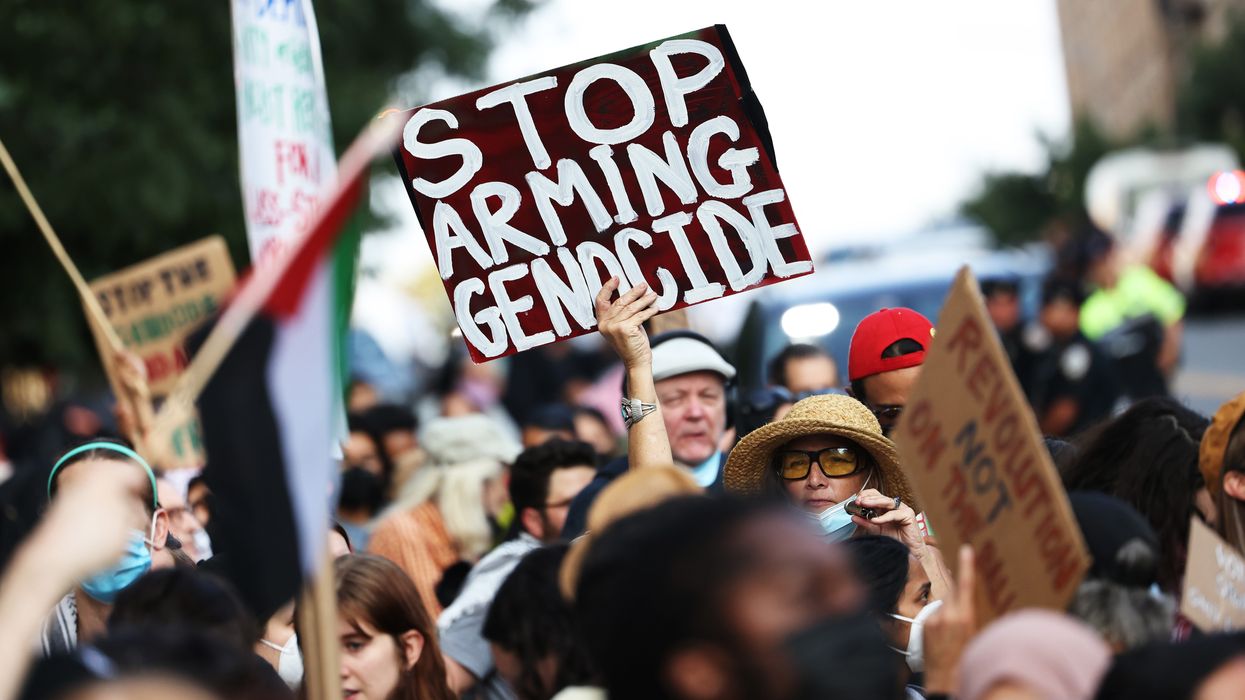
Polling published Wednesday revealed that a majority of voters in six key swing states that are expected to decide who controls the Senate after next month's midterm elections want their senators to block the transfer of US bombs to Israel as it wages a genocidal war on Gaza.
YouGov queried more than 3,200 voters in Georgia, Iowa, Maine, North Carolina, Ohio, and Texas for the Institute of Middle East Understanding (IMEU) Policy Project poll. A majority of respondents in all six states said they approve of "Senate measures to block the transfer of bombs to Israel." Approval ranged from 51% in North Carolina to 65% in Maine. In no state did the percentage of people who disagreed with blocking bomb transfers to Israel exceed 31%.
Respondents were also asked if they "approve or disapprove of cutting $3.3 billion in taxpayer-funded weapons to Israel." In all six states, approval of cutting armed aid far exceeded disapproval. Two states—Georgia and Ohio—had a margin of 22%, while the gap between those who support and oppose cutting off weapons transfers to Israel was widest in Maine, at 40 percentage points.
NEW POLLS: A majority of likely voters in six states expected to decide control of the US Senate - Georgia, Iowa, Maine, North Carolina, Ohio, and Texas - support Senate measures to block the transfer of bombs to Israel.
[image or embed]
— IMEU Policy Project (@imeupolicy.bsky.social) October 21, 2026 at 8:11 AM
Furthermore, survey respondents in all six states said that President Donald Trump's illegal Iran War benefits Israel more than the United States.
Among Democratic respondents, support for blocking bomb transfers to Israel ranged between 75% in North Carolina to 86% in Maine, while independent backing of the policy was lowest in Iowa and Maine (54%) and highest in Ohio (75%). Republican approval of cutting off bomb transfers to Israel ranged from 26% in North Carolina to 45% in Maine.
“Not only has ending weapons to Israel become the near-consensus view of Democratic voters, but we’re now seeing that voters across the spectrum, including most independents and a substantial number of Republicans, are tired of seeing their government use our tax dollars to supply Israel with bombs when millions struggle to afford the basics here at home,” IMEU Policy Project executive director Margaret DeReus said in a statement.
“These results are strong evidence that the endless giveaways to Israel will be a liability this November—and in 2028," she said, looking forward to the next presidential election.
"Politicians who prioritize winning over catering to the fringe demands from AIPAC should take note," DeReus added, referring to the American Israel Public Affairs Committee, the nation's largest Israel lobby.
According to the political intelligence platform PoliStack, the Senate candidate in the six surveyed states who has received the most campaign contributions from AIPAC's United Democracy Project (UDP) during the 2026 election cycle is Sen. Susan Collins (R-Maine), who took in over $410,000. Sen. Joni Ernst (R-Iowa) received more than $130,000.
While AIPAC's largesse has proved decisive in some races, it has also been increasingly ineffective in others. For example, UDP spent roughly $30 million this year in Michigan's US Senate Democratic primary, including about $10.5 million supporting Congresswoman Haley Stevens and more than $20 million opposing Abdul El-Sayed, who won.
The IMEU Policy Project survey adds to the growing body of polling showing a significant shift in US attitudes toward Israel amid the Gaza genocide, which has left more than 250,000 Palestinians dead or wounded, as well as increasing violence by Israeli troops and Jewish settler colonists in the West Bank, where Israel is ethnically cleansing Palestinians in pursuit of what critics—and even some Israeli leaders—say is the annexation of the illegally occupied territory.
Keep ReadingShow Less
‘This Is Dangerous’: Alarm as Trump FCC Chair Threatens Broadcasters Over Poll Coverage
"We are sliding into a dictatorship," said one critic.
Oct 21, 2026
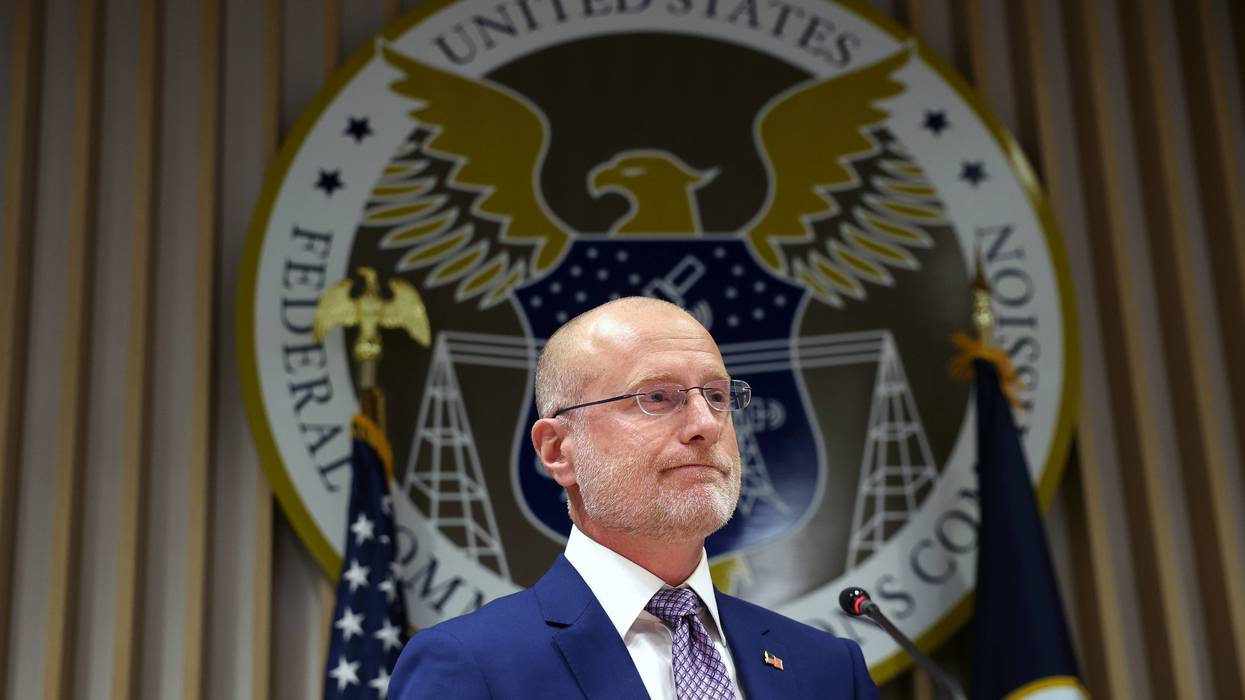
Federal Communications Commission Chairman Brendan Carr on Wednesday threatened broadcasters that cover what he described as "fake polls," which he said hurt "voter turnout and enthusiasm."
In a social media post, Carr attacked news outlets for "amplifying or airing these polls without regard to basic journalistic ethics and without informing the public that those polls lack a scientific, accurate, or even real basis."
Carr did not provide a single specific example of a "fake" opinion poll, nor did he name a broadcaster who has promoted one. President Donald Trump, who nominated Carr to head the FCC, has repeatedly decried polls as "fake" as they've shown his approval ratings at record lows.
Later in the post, Carr hinted that the FCC would take direct action against broadcasters for informing their viewers about opinion polls.
"The FCC takes these issues seriously," said Carr. "Broadcasters are prohibited by the terms of their federal licenses from engaging in news distortion or promoting broadcast hoaxes. It is important that broadcasters comply with their public interest obligations."
Carr's post drew a swift rebuke from Democratic FCC commissioner Anna Gomez.
"Pollsters who intentionally mislead the public should answer for it," wrote Gomez, "but broadcasters who report publicly available polling data should never be punished when a poll is wrong. FCC rules on news distortion or hoaxes do not apply to a station that reports this data in good faith."
Steve Herman, former White House bureau chief at Voice of America, wrote in a social media post that Carr's assertions about "news distortion" are "stretching specific regulations far beyond their legal definitions," as "the FCC can't mandate how a broadcaster contextualizes a poll."
"The FCC threatening broadcasters for airing specific political data is a chilling content-based restriction on speech," Herman added, "which federal courts subject to extreme judicial review and the commission would almost certainly lose such cases, according to First Amendment scholars."
Former TV meteorologist Chris Gloninger predicted that Carr's post would have a chilling effect on local news stations.
"Holy shit, this is dangerous," Gloninger wrote. "Two weeks before an election, the FCC chair is threatening broadcaster licenses over polls he calls 'fake.' No GM will risk that, so polls vanish."
Mark Jacob, former metro editor at the Chicago Tribune, called Carr "anti-free-speech" for "threatening to punish news outlets that publish polls showing Trump's deep unpopularity."
"We are sliding into a dictatorship," Jacob said, "and it would be helpful if major media would do their duty and warn the public."
Adam Klasfeld, editor-in-chief at All Rise News, described Carr as the president's "censorship czar" who is warning news outlets against "the dissemination of data disfavored by the state."
Princeton historian Kevin Kruse argued Carr's threats warranted his impeachment and removal from office.
"The president shouting 'fake news' is bad enough," wrote Kruse, "but the FCC commissioner threatening to punish broadcasters for promoting 'fake news' like 'the president is historically unpopular' is so much worse."
Carr's post drew ridicule from Democratic strategist Adam Parkhomenko, who informed the FCC chair that "it’s not illegal to tell the American people that Trump is a failed president."
Max Steele, senior director of communications at gun safety advocacy organization Everytown, similarly ridiculed Carr.
"It is ILLEGAL to say the brave and smart President Trump is at historic polling lows!!!" he wrote sarcastically.
Keep ReadingShow Less
'Bald-Faced Lies': GOP Called Out for Running on Saving the Rural Health System They're Destroying
"Republicans across the country are desperately trying to pull the wool over voters’ eyes."
Oct 21, 2026
With the US midterm elections less than two weeks away, Republicans across the country are posturing as defenders of the country's ailing rural healthcare system even as hospitals and providers nationwide buckle under the financial strain imposed by President Donald Trump and the GOP's unprecedented cuts to Medicaid.
The advocacy group Protect Our Care said Wednesday that Republicans in key congressional races "are touting bald-faced lies" by highlighting their support for a $50 billion rural health fund that pales in comparison to the roughly $900 billion in Medicaid cuts that Trump signed into law last summer. The health policy organization KFF estimates that the Republican law will cut $137 billion in Medicaid spending for rural areas over the next decade.
Protect Our Care calls out multiple Republicans by name for misleadingly promoting their support for rural health funds, including Sens. Roger Marshall of Kansas, Jon Husted of Ohio, Susan Collins of Maine, and Ted Cruz of Texas, as well as Reps. Juan Ciscomani of Arizona, Jeff Crank of Colorado, Mariannette Miller-Meeks of Iowa, Jason Smith of Missouri, and Derrick Van Orden of Wisconsin.
"Republicans across the country are desperately trying to pull the wool over voters’ eyes, touting their so-called 'rural health investments' as if they make up for the $1 trillion they ripped away from Medicaid and the Affordable Care Act. It doesn’t come close," said Protect Our Care. "Rural Americans are rapidly losing the care they need, and over 1,250 hospitals, clinics, and essential service providers are closing, cutting services, or are at risk of doing so."
"These investments," the group said of the $50 billion rural health fund, "will do nothing to stop the gushing wound Republicans hacked in the American healthcare system."
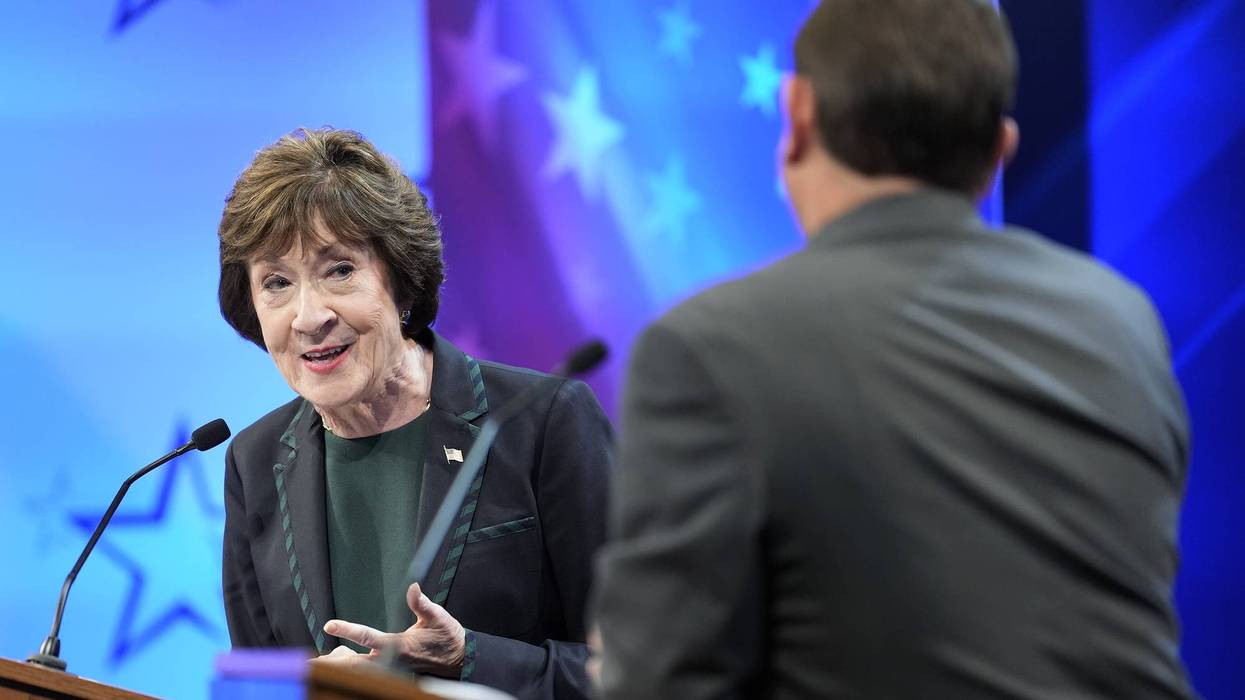
As Common Dreams reported over the summer, Collins—who is running for a sixth term against former Maine Senate President Troy Jackson—has played up her role in securing the Rural Health Transformation Program as part of the sprawling One Big Beautiful Bill Act. Collins voted against final passage of the bill, citing its cuts to Medicaid, but she provided her party with critical support to advance the measure through the Senate.
"Senator Collins is like an arsonist who helped set the fire, and then she wants credit for bringing a cup of water to put it out," Jackson said during a debate earlier this month.
Maine has so far received $190 million from the rural health fund—a fraction of the roughly $3 billion in Medicaid cuts facing the state over the next decade.
Several of Maine’s rural hospitals are at risk of closure thanks to Trump's disastrous One Big Beautiful Bill.Our healthcare system cannot survive another Susan Collins term.https://t.co/cE1Z3ujjfp
— Troy Jackson (@TroyJackson207) August 25, 2026
Sen. Jon Ossoff (D-Ga.), who is running for reelection against Rep. Mike Collins (R-Ga.), similarly homed in on his GOP opponent's support for Medicaid cuts that are wreaking havoc across the country and forcing healthcare facilities to cut back on services—or close entirely.
"Mike Collins and Donald Trump passed the biggest Medicaid cut in history," said Ossoff during an October 8 debate. "A hospital in Mike Collins' own district had to shut down its labor-and-delivery unit, citing those Medicaid cuts. How can a sitting congressman vote to shut down a labor-and-delivery unit in his own district?"
While Republicans have characterized the $50 billion in funding as a key lifeline for rural hospitals, KFF noted in a recent analysis that the money "could mitigate but will not fully offset estimated cuts to federal Medicaid spending in rural areas." The policy group observed that, "unlike most of the federal Medicaid spending cuts, the fund is also time limited." States must spend the funds they receive by the end of fiscal year 2032.
"While the fund was established in part to address concerns about the impact of the reconciliation law on rural hospitals, the funding is being used for a much broader set of purposes, and there are restrictions on how hospitals can benefit," the group said, pointing out that the money cannot be put toward "propping up struggling hospitals with temporary relief."
In a fact sheet released on Wednesday, Protect Our Care pointed to comments made earlier this year by Jed Hansen, the executive director of the Nebraska Rural Health Association, who said in March that the GOP's rural health funding wouldn't go to "rural hospitals, rural clinics, and rural providers in a meaningful way.”
“Rural Health Transformation will not save a single hospital in our state,” said Hansen. “I don’t think it will save a hospital nationally.”
Keep ReadingShow Less
'We Must Pull Out All the Stops': UN Emissions Report Confirms 1.5°C Target Is Dead
"The emissions gap is now a leadership gap, and the world is running out of time and excuses to close it," said the UN secretary-general.
Oct 21, 2026
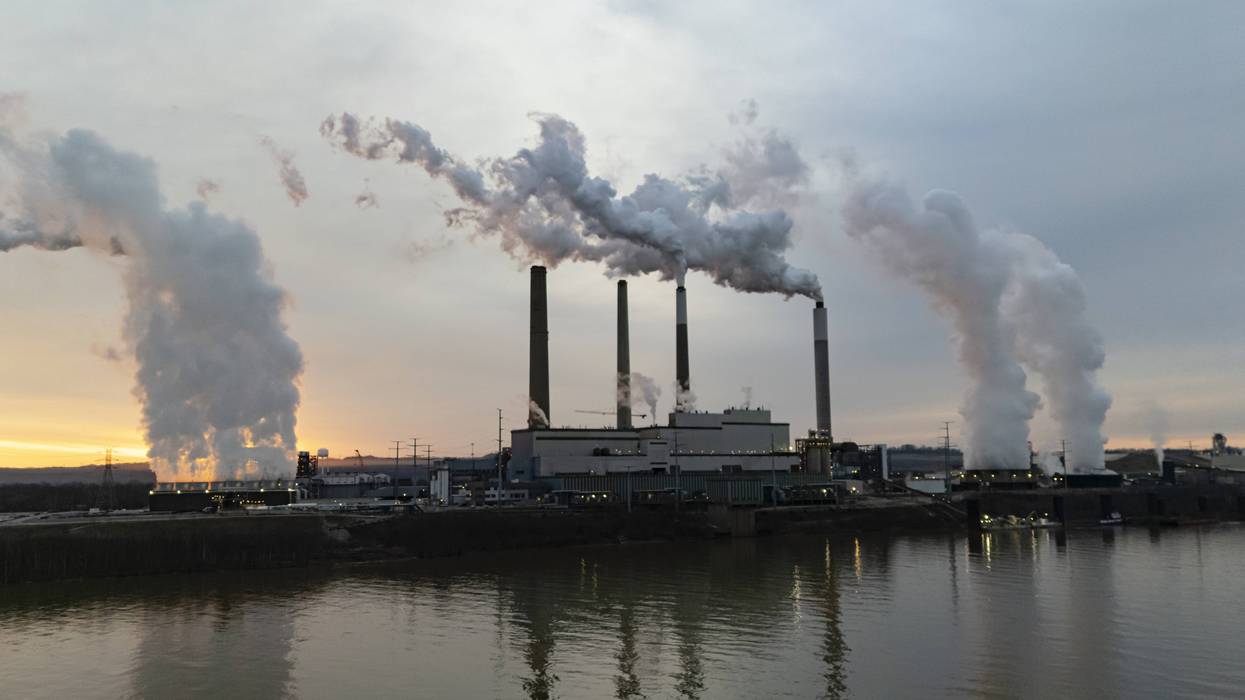
Over a decade after world leaders adopted the Paris Agreement, United Nations experts warned Wednesday that the climate treaty's goal of limiting global temperature rise this century to 1.5°C above preindustrial levels is no longer achievable without an overshoot—though returning to that threshold remains possible with sweeping action to end the era of fossil fuels.
"The opportunity to bridge the 1.5°C emissions gap with 'no or limited' overshoot has been lost. Decades of insufficient mitigation action means that larger exceedance of 1.5°C above preindustrial levels based on multidecadal averages is now imminent and unavoidable," says "The Emissions Gap Report 2026: The Point of Return."
The United Nations Environment Program (UNEP) released its report with that "sobering" message in the wake of its "Limiting Overshoot" publication from last month, during a global biodiversity summit in Armenia, and in the lead-up to next month's climate conference in Türkiye.
Scientists have long stressed that surpassing the Paris target could cause "irreversible impacts" to the planet and its inhabitants. The new report points out that "every additional fraction of a degree and additional year of warming above 1.5°C raises the risk of irreversible changes including in ice sheets, permafrost carbon, ocean circulation, and coral systems, along with devastating human impacts."
"The task now, therefore, is not only to ensure that global warming stays well below 2°C," the document says, referring to another Paris target, "but to minimize the duration and magnitude of overshoot and establish a credible return path to 1.5°C by the end of the century."
As Inger Andersen, executive director of UNEP, put it: "We must pull out all the stops to minimize peak warming and return to 1.5°C by the end of the century. This is possible."
"We have a wealth of success stories showing that emissions can be cut quickly," she noted. "It is now up to nations to urgently put in place policies that spark fast, deep, and sustained emissions reductions, and put the world on track for a more stable climate and more stable economies and societies."
The 2026 UNEP Emissions Gap Report is out: The Point of Return. 🌍🌡️🔥It's sobering but actionable. Decades of inadequate climate action have closed off opportunities to limit warming, but ambitious action today can still prevent much greater harm.A thread of some of the highlights 🧵
[image or embed]
— Joeri Rogelj (@joerirogelj.bsky.social) October 21, 2026 at 4:51 AM
According to the UNEP analysis, the "lowest possible" 1.5°C overshoot scenario would involve peak warming of 1.7-1.8°C around mid-century, with global mean temperatures returning to 1.5°C or lower. It says that "to get on such a pathway, global greenhouse gas (GHG) emissions must be reduced by 18% by 2030, 45% by 2035, and 69% by 2040, all relative to 2025 levels."
"By contrast, the full implementation of the new nationally determined contributions (NDCs) submitted by around two-thirds of all countries would reduce emissions by 5-8% by 2030 and 11-15% by 2035 relative to 2025 levels," the report warns, citing the climate plans produced by governments that are parties to the Paris Agreement.
Germany's Potsdam Institute for Climate Impact Research, whose scientists were lead authors of two chapters of the new report, explained that "transitioning away from fossil fuels would require reducing the shares of coal, oil, and gas in global energy supply by at least 55%, 15%, and 5%, respectively, by 2035 relative to 2025. Electricity generation from coal would need to be effectively phased out globally by 2040, while methane emissions would need to fall by at least 25% by 2035 relative to 2025 levels."
In addition to highlighting the "devastating" consequences of failing to implement policies aligned with the 1.5°C limit—"Deadly floods. Brutal heatwaves. Raging wildfires. Lost lives. Crippled economies. Deepening inequalities."—outgoing UN Secretary-General António Guterres emphasized that "the emissions gap is now a leadership gap, and the world is running out of time and excuses to close it."
"Governments must go much further and faster," he declared. "Accelerate clean energy and electrification across every sector. Adopt credible roadmaps to transition away from fossil fuels—with clear timelines and protection for affected workers and communities. Invest in grids and storage. Improve energy efficiency. Cut methane emissions. Halt and reverse deforestation. And deliver on their climate commitments—then over-deliver."
While the UN chief also said that Group of 20 nations "must lead," one of the G20's key members—and the world's biggest historical climate polluter—the United States, has ditched the Paris Agreement, again, under Big Oil-backed President Donald Trump's second administration, as part of broader agendas supporting fossil fuels and attacking international cooperation.
The report itself highlights that "emissions growth slowed down in the G20," with the Trump-led US "being the major exception," and "currently, the six largest emitters in terms of total GHG emissions are China, the United States of America, India, the European Union, the Russian Federation, and Indonesia—noting that in per capita terms, India and Indonesia are much lower emitters."
Within the United States and beyond, climate scientists and campaigners used the report to renew pressure on governments to push strong policies to reduce planet-heating emissions. Among them was Fenton Lutunatabua, Pacific and Caribbean lead at the advocacy group 350.org, who said that "this report is clear: Fossil fuels are driving us beyond the 1.5°C limit."
"The fastest and fairest way back is not to bet on unproven technologies, but to cut emissions now, end the expansion of fossil fuels, and protect the forests, oceans, and ecosystems that already keep carbon out of the atmosphere," he said. "We know this works: Since the Paris Agreement, global renewable electricity capacity has grown three times faster than expected, and the report shows that bold climate policies cut emissions at scale."
"But what's on the table now is far from enough, putting us on track for around 2.6°C of warming. We need more, and we can do more," he added. "Every five years of CO2 emissions at current levels pushes peak warming up by around 0.1°C, and every tenth of a degree is measured in lives. The time for action is now."
Keep ReadingShow Less
'Absolutely Maddening': UK Approves Jackdaw Gas Drilling in North Sea
The drilling will "make no real difference to our energy bills or security," said one advocate, but "it will signal to other fossil fuel producers that they too should carry on with business as usual."
Oct 21, 2026
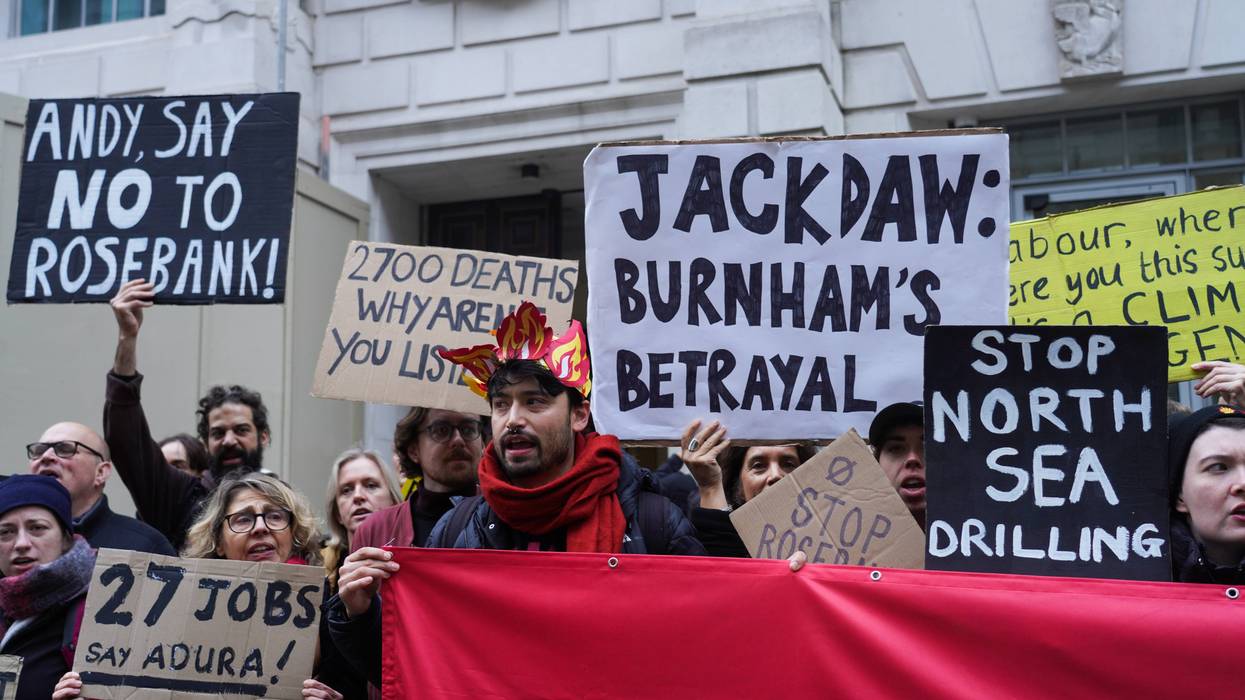
With drilling in the Jackdaw gas field in the North Sea set to go forward following the United Kingdom's approval, announced on Wednesday, climate groups and progressive lawmakers demanded to know how Prime Minister Andy Burnham could declare the decision a "pragmatic" one, considering the meager job growth and energy savings and massive climate damage expected from the project.
“Is the prime minister living in a parallel universe?" asked Danny Gross, climate campaigner for Friends of the Earth (FOE). "One where we haven’t just endured our hottest summer on record, with droughts, wildfires and, in all likelihood, the most heat-related deaths on record?"
The approval of the oil and gas extraction from Jackdaw by Adura, a joint venture between Shell and Equinor, was announced as the United Nations warned that continued fossil fuel drilling has put the possibility of avoiding a global temperature rise that breaches the 1.5°C threshold out of reach, and emphasized that countries must take action to mitigate the damage and ensure the breach is temporary.
The UN said greenhouse gas emissions must be slashed by nearly one-fifth in the next four years to avoid the worst impacts of the climate crisis.
"Against this backdrop, there’s nothing that justifies giving the go-ahead to a colossal new fossil fuel project in North Sea. The disconnect is absolutely maddening," said Gross.
The Jackdaw approval was announced as the government said inflation had jumped to its highest level in almost a year, with US President Donald Trump's war on Iran and Russia's invasion of Ukraine driving up energy prices worldwide.
But an analysis by the UK climate action group Uplift, which compiled data from the public record, found that the Jackdaw project would provide enough gas to displace just 2% of the UK's current imports.
"This will not lower international gas prices paid by UK consumers," said Greenpeace, which also emphasized that Adura has admitted in an environmental statement that the project is projected to create just 27 full-time jobs—making little difference to the area surrounding Aberdeen, Scotland, the center of the UK oil industry where local officials have reported losses of 1,000 oil and gas jobs per month.
Zack Polanski, the leader of Britain's Green Party, said the projected impact of the Jackdaw project couldn't compare "to all the benefits of investing in renewables and insulating our homes."
CBI Economics found earlier this year that the UK's green economy employs more than 1 million people and is worth £100 billion ($133 billion) per year, with workers in the sector paid more than the national average.
“Jackdaw won’t make a jot of difference to our energy bills, but it will fuel the climate chaos already unfurling in front of us. The route to lower bills and true energy security lies in the UK’s vast capacity for cheap, homegrown renewable power and street-by-street home insulation programs," said Gross. “This decision makes Shell and its shareholders richer at the expense of ordinary people’s lives—a move that sees the prime minister turning his back on the very people he claims to be on the side of."
Richard Burgon, a member of Parliament who represents Burnham's Labour Party, called the approval "absolutely terrible" and urged the government not to "repeat the same mistake" with Rosebank oil field in the North Sea, which the prime minister said he would make a decision about at a later date.
Fossil fuel development in both the Jackdaw and Rosebank fields was blocked by a moratorium in 2024, imposed by the Labour government of former Prime Minister Keir Starmer. Drilling has previously been approved in 2022 and 2023 by the Conservative government. Supporters of oil and gas extraction in the North Sea have argued that since the fields were approved for exploration under the Conservatives, allowing drilling now does not violate the moratorium.
The climate impacts of the two projects are projected to cost each UK household £3,000 ($4,017) annually, according to Greenpeace, and gas production from Jackdaw is estimated to be equivalent to about 40 million barrels of oil, Adura has said.
"Using government calculations for climate harm, burning Jackdaw’s gas will cause an estimated £16.1 billion [$21.5 billion] in global damage and over 8,000 heat-related deaths," said Greenpeace.
This past summer, extreme heat across Europe helped ignite wildfires and was blamed for tens of thousands of excess deaths on the continent. The breakdown of a glacier in Nepal and Tibet also caused a flooding disaster that killed more than 1,000 people.
“It is a shame that one of the first big decisions for the new energy secretary, Miatta Fahnbulleh, has been to approve more fossil fuel drilling," said Rosemary Harris, North Sea senior campaigner for Oil Change International. "At a time where the impacts of climate breakdown are so clearly felt, from the loss of livelihoods, homes, and lives in the UK over the summer, to the devastating floods in Nepal, our government should look to the future, not cling to the past."
The approval also came weeks before Burnham is set to represent the UK at the UN Climate Change Conference (COP31) in Antalya, Türkiye.
While drilling in the Jackdaw field will "make no real difference to our energy bills or security," said Bob Ward, policy and communications director at the Grantham Research Institute on Climate Change and the Environment at the London School of Economics and Political Science, "it will signal to other fossil fuel producers that they too should carry on with business as usual, less than a month before the COP31 United Nations climate change summit.”
Harris said that following the approval, "all eyes are now on Rosebank, and the hope that Andy Burnham and his energy secretary have the courage and vision to push back against the industry and plot a path to an energy transition that provides more security, lower bills, and a safe climate."
Keep ReadingShow Less
'Batshit Insane': As Extreme Weather Worsens, Trump's FEMA Head Tells States to Prepare to Handle Disasters on Their Own
"Donald Trump's FEMA has a message to Americans during hurricane season and ahead of a historic El Niño: DROP DEAD."
Oct 21, 2026
As the climate crisis intensifies extreme weather events, President Donald Trump's head of federal disaster relief sent a stark message to states on Tuesday: You're on your own.
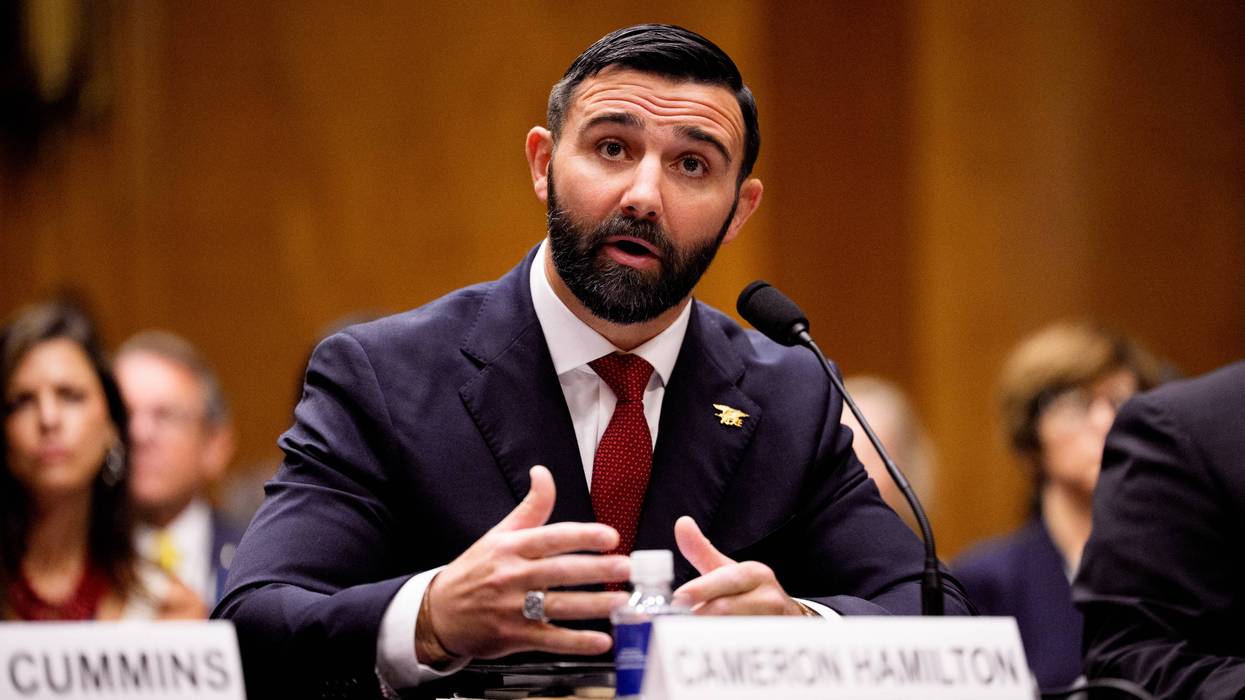
Politico reported that Cameron Hamilton, the administrator of the US Federal Emergency Management Agency (FEMA), told state officials at the National Emergency Management Association’s annual meeting in Little Rock, Arkansas, that they would need to allocate resources to respond to most disasters without help from the federal government.
“Every state must have the appropriate financial reserves” and other abilities “to ensure that recovery efforts can start immediately and not necessarily be held up simply because of the federal [disaster] declaration process,” Hamilton said, according to a recording of his remarks obtained by the outlet.
“A future that I hope we would shoot for is one where we wouldn’t require as many disasters because the capability of states is so high and so substantial,” Hamilton added, referring to presidential authorizations of federal disaster aid.
Trump has instituted dramatic cuts to FEMA that have hampered its response to disasters. When Texas faced floods last year that killed at least 138 people, for example, the administration’s spending restrictions delayed FEMA’s deployment of search-and-rescue teams for more than 72 hours, while lapsed call-center contracts left thousands of survivors’ calls for assistance unanswered.
While cutting its workforce, Trump has suggested FEMA is "very bureaucratic" and "very slow" and has floated shutting the agency down entirely, shifting its responsibilities to the states. Yet a FEMA report released Friday found that state disaster agencies are "typically understaffed and underfunded, and many depend heavily on federal assistance."
Hamilton's speech comes days after the publication of an internal memo stating that FEMA would “strengthen state and local emergency management capacity." The memo, also obtained by Politico, said that "reducing federal dependency requires partners to build, maintain, and exercise the capabilities needed to manage incidents effectively."
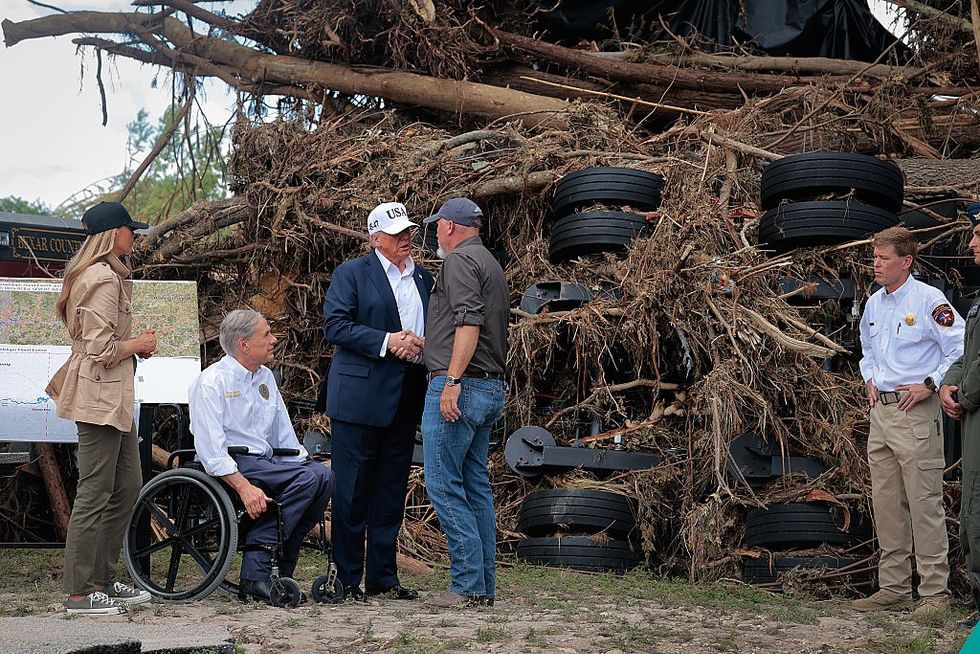 President Donald Trump, first lady Melania Trump, and Texas Gov. Greg Abbott meet with local emergency services personnel as they survey flood damage along the Guadalupe River on July 11, 2025, in Kerrville, Texas. (Photo by Chip Somodevilla/Getty Images)
"This is just the latest step in Trump’s agenda to push the cost of disasters onto states who are already stretched thin," said Mia Logan, a senior adviser to Climate Power. "States rely on federal disaster aid to rebuild roads, bridges, and the communities where people live and work. From his first days in office to now, Trump’s message to Americans has been consistent: If extreme weather hits, you’re on your own, because help is probably not coming.”
Dana Fisher, an American University professor who studies climate politics, has stressed that Trump is pulling back disaster aid "even though the United States is experiencing more disasters as the climate changes."
"The hottest US summer on record left millions of Americans facing life-threatening heatwaves," she wrote for The Conversation. "Extreme heat and drought set the stage for wildfires. Flooding from powerful storms and days of heavy rainfall inundated communities in several states. And now a ‘Super El Niño,’ on top of already rising temperatures and sea levels, is expected to make extreme events worse, at least into spring 2027."
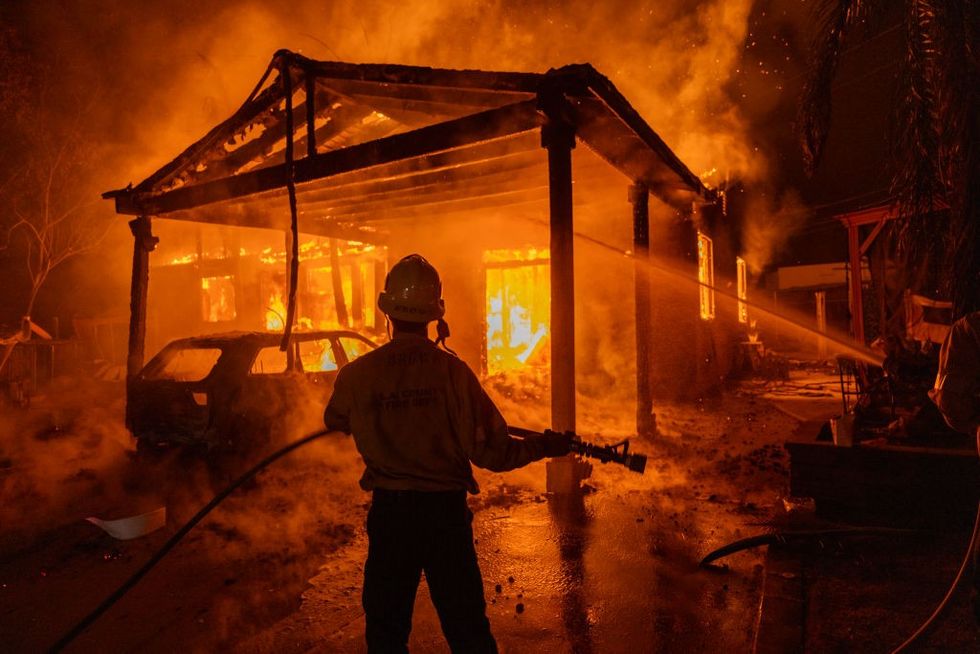 Firefighters battle the Eaton Fire on January 8, 2025, in Altadena, California. (Photo by David McNew/Getty Images)
Dan Koh, a former Biden White House official who helped coordinate federal disaster responses, called placing the recovery burden on states "batshit insane."
"I worked with FEMA in the White House," he wrote on social media. "States don’t have the budget for this."
He pointed to Hurricane Katrina as an example: The storm caused about $108 billion in damage, nearly six times Louisiana's entire 2005 operating budget of about $18.7 billion.
"There are many states with minuscule emergency management offices and budgets," wrote Eric Holdeman, the former emergency management director for King County, Washington, in a blog post. "There are states with slim rainy-day funds and no capacity to make up for a lack of federal disaster recovery funds—without RAISING TAXES."
He suggested that the scarce federal funds that remain could be wielded by presidents as a political tool—something Trump has already done many times during his second term. An Associated Press investigation in July found that Trump had approved three-quarters of disaster aid requests from states he won in 2024, compared with less than half from states he lost.
On the campaign trail last month, Trump told North Carolina voters the state would not receive disaster recovery funds for Hurricane Helene unless Republican Michael Whatley won his competitive Senate race, though he later said he was "only kidding."
Trump has also used disaster recovery to coerce states into adopting specific policies. In California, he threatened to withhold assistance for recovery from last year's devastating wildfires unless the state adopted voter identification requirements and changed its water policies.
Hamilton told state officials on Tuesday that changes to federal disaster assistance could begin “in the next six months”—just as the developing El Niño is expected to intensify extreme weather through next spring.
In response, Democratic California Gov. Gavin Newsom—who is expected to run for president in 2028—wrote that "Donald Trump's FEMA has a message to Americans during hurricane season and ahead of a historic El Niño: DROP DEAD."
Keep ReadingShow Less

'Palestinians Face Far Worse Consequences Every Day,' Says Brad Lander After Release From IDF Custody
"These detentions by the IDF are one more attempt to undermine Palestinians’ right to harvest their olive groves, travel on their roads, and live in their homes," said the US congressional candidate.
Oct 21, 2026
Democratic US congressional candidate Brad Lander said Wednesday that he was released by Israeli forces with a "warning" after he and dozens of others were detained while helping Palestinians harvest olives in the illegally occupied West Bank.
"Several dozen rabbis and participants harvesting olives with me are still in detention," Lander, who is Jewish, wrote on social media. "They should all be released immediately. To be clear: Palestinians face far worse consequences every day. These detentions by the IDF are one more attempt to undermine Palestinians’ right to harvest their olive groves, travel on their roads, and live in their homes."
Prior to his release, Lander posted a video from a bus that he said was "taking us away for processing" after settler security called the Israel Defense Forces (IDF) on the group harvesting olives.
"Let's be clear: Occupation is a crime under international law," said Lander, who is running to represent New York's 10th Congressional District in the US House of Representatives. "Harvesting olives is not a crime under any law."
I’ve been released from IDF custody with a “warning,” apparently because of my public profile (I told them I wasn’t even a congressmember yet, just a nominee).But several dozen rabbis & participants harvesting olives with me are still in detention.
[image or embed]
— Brad Lander (@bradlander.bsky.social) 9:34 AM · Oct 21, 2026
Lander was part of a group of around 80 American and Israeli rabbis and activists who were detained by the IDF on Wednesday as they helped Palestinians harvest olives from a grove near an Israeli settlement in the West Bank. Israeli lawyers told NPR that the incident marked "the largest mass detention of activists in the occupied West Bank in at least a decade."
Jeremy Ben-Ami, president of the US-based advocacy group J Street, said in response to the detentions that "when the government of Israel and its military and law enforcement are arresting rabbis and volunteers who have journeyed 6000 miles to protect Palestinian farmers harvesting olives and not the violent terrorists harassing and attacking the farmers—it tells you all you need to know about this government's moral compass."
"This illegal and immoral occupation must end," he added.
The mass detention came after several recent instances of horrific Israeli settler violence against Palestinian olive harvesters, European diplomats, and an American journalist.
Heba Morayef, Amnesty International’s regional director for the Middle East and North Africa, said in a statement earlier this week that "Israel’s apartheid system is turning the olive harvest into a season of horror for Palestinian families across the occupied West Bank."
“States must recognize that settler attacks are not isolated acts, but a central policy of the Israeli state," said Morayef, calling on nations to "take concrete measures to respect their obligations under international law and to avoid complicity in Israeli violations and crimes against Palestinians by halting all trade, investment, and cooperation that contribute to maintaining the unlawful occupation, apartheid, and the ongoing campaign of ethnic cleansing."
"Hiding behind empty rhetoric is not only cowardly, it is enabling further abuses," she added. "For Palestinians, it continues to be deadly.”
Keep ReadingShow Less
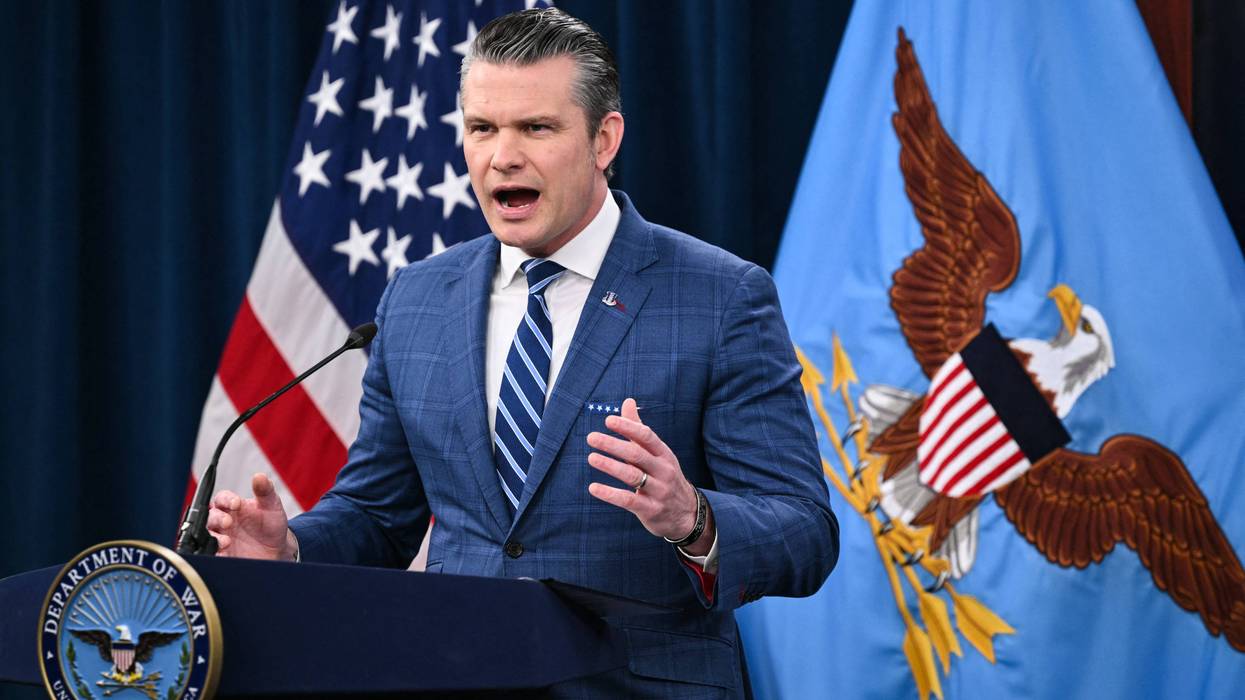
Pentagon Officials Reportedly Ready to 'Spill Their Guts' to Help Get Hegseth Impeached
"Through his arrogance, he’s made many former allies willing to work with Democrats to hold his feet to the fire for all the damage he’s done to our military."
Oct 21, 2026
With polls showing Democrats in good position to retake at least one chamber of the US Congress, several Pentagon insiders are reportedly lining up to offer up damaging information about Defense Secretary Pete Hegseth in hopes that a new Democratic majority will impeach him.
According to a report published Wednesday by The Telegraph, current and former officials at the US Department of Defense are prepared to "spill their guts" about Hegseth to Democratic congressional investigators, who have "already made contact with potential whistleblowers."
Unnamed sources told The Telegraph that Hegseth has committed a number of "costly blunders" during his tenure, while at the same making several enemies of career Pentagon officials.
“There’s going to be a lot of people that are going to very quietly go to the chair of the [US House Armed Services Committee]," one source said, "and are going to spill their guts, provide them with everything they can, and leak everything they can."
"It’ll be horrendous," the sources added. "It’ll be consistent embarrassment."
A second source described as a former senior Trump administration official outlined "huge problems" Hegseth faces from Pentagon officials eager to see him ousted.
"Through his arrogance," the source said, "he’s made many former allies willing to work with Democrats to hold his feet to the fire for all the damage he’s done to our military."
A third source described a wide range of motives for the Pentagon insiders who are willing to come forward, ranging from officials who simply dislike Hegseth to others who believe he's a "threat to national security."
Investigators have already identified several lines of inquiry into Hegseth's tenure, including his mishandling of classified information, his conduct during President Donald Trump's illegal war with Iran, and his bombing spree of purported drug trafficking vessels that many legal experts consider acts of murder.
The Telegraph's sources acknowledged it would be difficult to convict Hegseth in the US Senate in the event that he's impeached by the House of Representatives, but there is hope that a relentless stream of damaging revelations could push Trump to fire him.
Keep ReadingShow Less
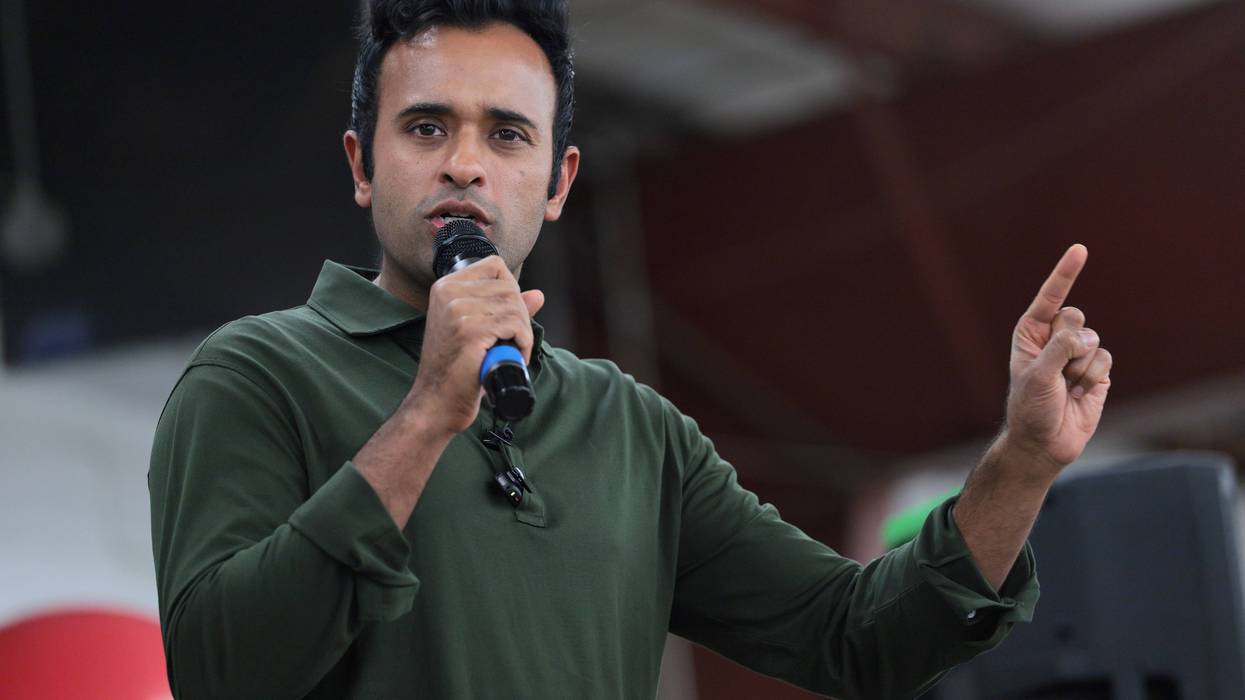
Ramaswamy Takes Full Credit for Most 'Disgusting, Pathetic Ad Ever Created in the History of Political Ads'
The Republican Ohio gubernatorial candidate's campaign is spending $4 million to promote the ad featuring his Democratic opponent's estranged mother, less than two weeks before Election Day.
Oct 21, 2026
Vivek Ramaswamy, the Republican Party's gubernatorial nominee in Ohio, confirmed on Wednesday that his campaign was behind a widely condemned attack ad featuring Democratic opponent Amy Acton's estranged biological mother, sparking fresh outrage less than two weeks before Election Day in the critical battleground state.
Ramaswamy went further than simply taking credit for the ad, whose origins were unclear when it first began circulating on social media earlier this week without mandatory disclosures—an apparent violation of federal law. Axios reported early Wednesday that his campaign is "doubling down on the message" with $4 million in spending to stream the minute-long spot statewide less than two weeks before Election Day.
Acton, a physician who is ahead of Ramaswamy in recent polling, accused Ramaswamy of exploiting her "deeply sick and unwell" mother "for his own political gain." In the 60-second spot—which one observer called "the most disgusting, pathetic ad ever created in the history of political ads"—Acton's mother accuses her daughter of lying about her past—a narrative that Acton forcefully rejected in a statement posted to Facebook on Tuesday.
"Between the ages of 10 and 12, I was sexually abused by her husband, while my birth mother did nothing to protect me," said Acton. "Eventually, I confided in my father and stepmother, and we were removed from that situation. My birth mother’s husband was arrested, charged with rape, and indicted by a grand jury. At 12 years old, I testified in court. I haven't seen my birth mother since that day in 1978. She and her husband fled the state and he was declared a fugitive."
At a town hall in Westerville, Vivek Ramaswamy addressed a controversial ad featuring Amy Acton's estranged mother. https://t.co/Eup71qC4BU https://t.co/isW2M7FzvZ
— NBC4 Columbus (@nbc4i) October 21, 2026
Acton's brother, Philip Stearns, called Ramaswamy's ad "a despicable low" that "reveals exactly who Vivek Ramaswamy is at his core—a pathetic excuse for a man who is willing to hurt anyone as long as it gets him what he wants."
Even as Ramaswamy received backlash from across the political spectrum, his campaign manager boasted to Axios that the ad marked "a campaign-ending moment for Amy Acton."
Logan Phillips, an election forecaster and political reporter, offered a much different assessment.
"I think Ramaswamy just lost the race," Phillips wrote. "Amy Acton's mother stood by while her husband raped her at 12. They haven't talked since she lost custody in 1978. Millions of Ohioans are going to hear this story, and they will be offended that Vivek went this low."
Meghan Meehan-Draper, executive director of the Democratic Governors Association, said in a statement Tuesday that "Ramaswamy should be ashamed of himself for giving airtime to yet another person who was complicit in acts of horrific sexual abuse—this time against Dr. Acton herself."
"This is part of a disturbing pattern from Ramaswamy," said Meehan-Draper, "who has mocked Dr. Acton for being an abuse survivor and just last week released an ad featuring a convicted child sex offender.”
Keep ReadingShow Less
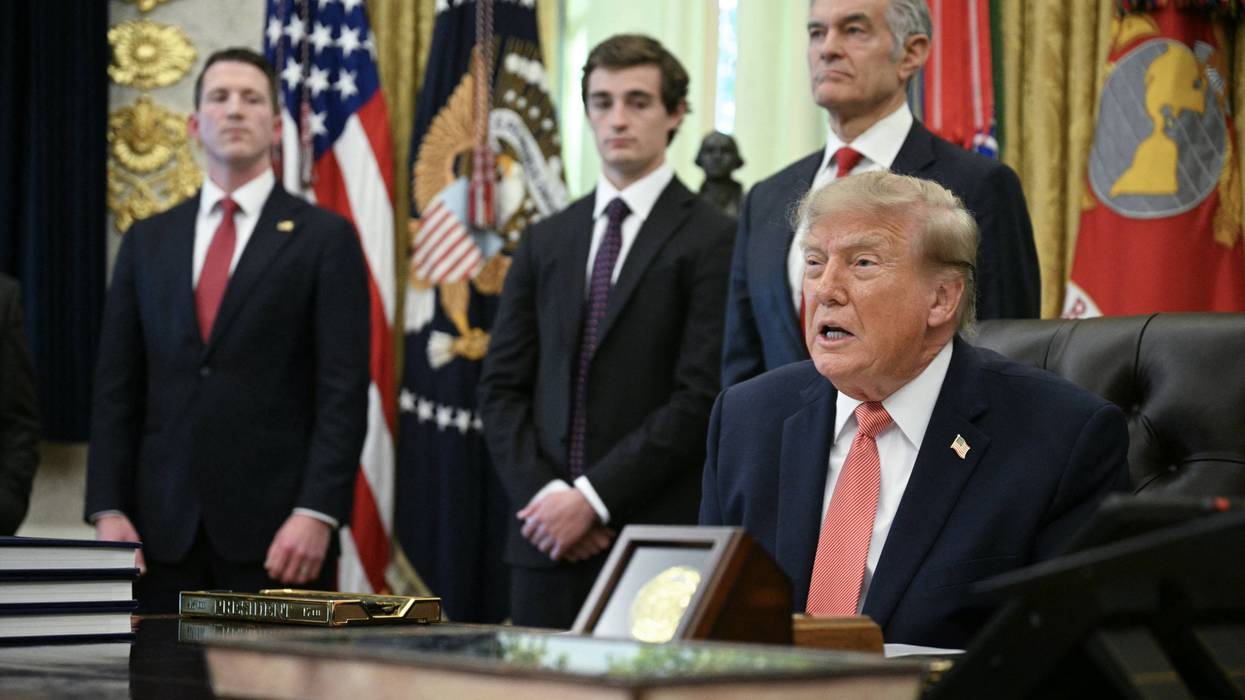
'I'd Like to Report a Theft': Sanders Mocks Corrupt Trump's Anti-Fraud Tipline
"A man inside our government illegally spent nearly $22 million in taxpayer dollars on bogus campaign ads praising himself," Sen. Bernie Sanders wrote. "He now resides on 1600 Pennsylvania Avenue."
Oct 21, 2026
US President Donald Trump, widely considered the most corrupt president in American history, announced a $25 million initiative on Tuesday designed to reward tipsters who report people defrauding the federal government.
Sen. Bernie Sanders (I-Vt.) responded sardonically to the announcement, writing on social media, "I'd like to report a theft." Referencing the administration's illegal use of federal funds for pro-Trump propaganda, Sanders added: "A man inside our government illegally spent nearly $22 million in taxpayer dollars on bogus campaign ads praising himself. He now resides on 1600 Pennsylvania Avenue."
"Taxpayers want to know when they’ll get their money back," the senator wrote.
Trump's new Fraud Whistleblower Incentive Program will be administered by the Justice Department and will offer up to $30,000 in taxpayer-funded rewards for tips that result in criminal charges. People can submit reports through a dedicated government website.
The president, who has profited massively from his second White House term and freely handed out pardons to convicted fraudsters, told reporters on Tuesday that he would "be the arbitrator" of who gets rewards under the new program. The first cash gift went to far-right YouTuber Nick Shirley, creator of a viral video on Minnesota childcare facilities that the Trump administration seized upon as a pretext to cut off funding to states.
"There's never been an incentive for anyone to ever expose fraud," Shirley said, falsely, at the White House on Tuesday.
Naomi Seligman, president of the advocacy group Whistleblower Aid, said in a statement that her organization "would of course applaud any legitimate program that supports lawful whistleblowing."
"However, President Trump has been overtly hostile to public interest whistleblowers who have bravely exposed fraud and corruption within his administrations," said Seligman. "If the president is truly interested in rooting out wrongdoing, Whistleblower Aid invites him to start by examining the violations perpetrated by his own administration, including senior officials. We would happily work with him on this vital accountability effort to help save our democracy."
Trump announced the new initiative on the same day that The New York Times published a story examining the case of Julio Herrera Velutini, a billionaire Venezuelan banker who "faced felony bribery charges in the United States and struck an unusually lenient plea deal in August 2025 for a misdemeanor campaign finance violation."
"But he felt that reduced charge was still a stain on his record," the Times noted, so he instructed his lawyer—a former member of Trump's personal legal team—to push the White House for a clemency agreement. Additionally, Herrera's daughter, an American citizen, made a $3.5 million donation to a pro-Trump super PAC.
"Then the Herrera family hired Alina Habba, who had been one of Mr. Trump’s personal lawyers and at the time was an adviser at the Justice Department. They offered her $10 million a year for four years along with a range of bonuses," the Times reported. "Under the agreement, Ms. Habba would become general counsel at Concord Partners, a company that Ms. Herrera set up in late October 2025 in Florida... She formally began her work for Concord Partners on January 1. Weeks later, Mr. Trump granted Mr. Herrera a full and unconditional pardon."
"Someone should send this to the new Trump fraud tipline," quipped Bulwark reporter Sam Stein.
Keep ReadingShow Less
See More
Most Popular