

SUBSCRIBE TO OUR FREE NEWSLETTER
Daily news & progressive opinion—funded by the people, not the corporations—delivered straight to your inbox.
5
#000000
#FFFFFF
To donate by check, phone, or other method, see our More Ways to Give page.
Daily news & progressive opinion—funded by the people, not the corporations—delivered straight to your inbox.

Stefanie Spear, sspear@asyousow.org, 216-387-1609
As You Sow today released its sixth annual The 100 Most Overpaid CEOs: Are Fund Managers Asleep at the Wheel? report, focusing on the nexus between overpaid CEOs of the S&P 500, and the failure of many pension and financial fund managers to hold companies accountable for excessive compensation.
Key Findings:
Quotes from Our Experts:
Rosanna Landis Weaver, program manager of executive compensation at As You Sow:
"There's an increasing awareness that these CEO pay votes really do matter. Very smart people at a variety of funds are really digging deeply into this issue and revamping their proxy voting guidelines. After six years of our report, we see this trend has continued. Private conversations, known as engagements, are insufficient to deal with the systemic problems."
Robert Reich, professor, author, and former U.S. Secretary of Labor:
"CEO pay at public companies is a significant contributor to income inequality, and it is one shareholders get to -- and need to -- vote on. New data show that at multiple companies, 100 employees working for a decade would not bring home what the CEO is paid in one year. Frontline employees should be entitled to larger packages. This explosion in CEO pay relative to the pay of average workers isn't because CEOs have become so much more valuable than before. It's not due to the so-called "free market." It's due to CEOs gaming the stock market and playing politics."
Nell Minow, co-founder of Institutional Shareholder Services and vice chair of ValueEdge Advisors:
"Black Rock has responded to complaints from clients about the discrepancy between their rhetoric on climate change that their proxy votes. The revelations in this report show an even greater discrepancy between their promise that proxy voting is 'strategically positioned as an investment function' and their failure to look at big company pay packages with the same scrutiny they appear to bring to the smaller ones."
BlackRock voted against more pay packages of CEOs who were paid less than $5 million than they did for CEOs paid more than $20 million.
R. Paul Herman, CEO and founder of HIP (Human Impact + Profit) Investor Inc., rating more than 128,000 investments for investors on people, planet, and trust:
"The 10 most overpaid CEOs as a group destroy shareholder value with negative returns for the worst decile of CEO pay -- and the 100 Most Overpaid CEOs of the S&P500 under-perform financially for investors, relative to the benchmark index, on total shareholder return. This lack of accountability by boards to control CEO Pay, especially when financial performance lags, contributes to the investor revolts in action or brewing, and the overall investor and citizen frustration with growing inequality."
Top 10 Most Overpaid CEOs*:
Mark V. Hurd & Safra A. Catz: Oracle Corporation
Joseph M. Hogan: Align Technology Inc
Robert Iger: Walt Disney Company
David M. Zaslav: Discovery
Jeffrey K. Storey: CenturyLink Inc.
Daniel H. Schulman: PayPal Holdings Inc
Arthur Peck: Gap Inc.
Stephen MacMillan: Hologic Inc
Brian R. Niccol: Chipotle Mexican Grill Inc
Giovanni G. Visentin: Xerox Corporation
*The pay packages evaluated were those where votes were cast prior to June 30, 2019. In some cases, CEOs presented here no longer hold that position. Oracle's Mark V. Hurd is recently deceased.
To learn more about As You Sow's work on CEO pay, click here.
As You Sow is the nation's non-profit leader in shareholder advocacy. Founded in 1992, we harness shareholder power to create lasting change that benefits people, planet, and profit. Our mission is to promote environmental and social corporate responsibility through shareholder advocacy, coalition building, and innovative legal strategies.
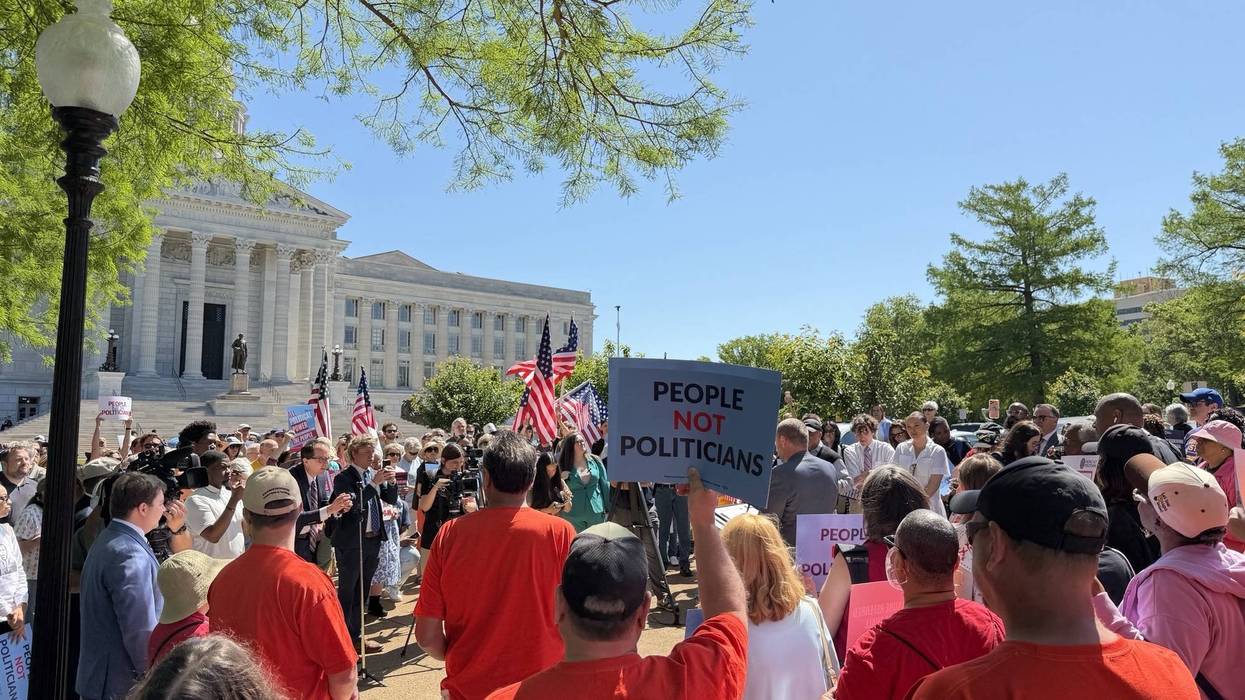
"MAGA loyalists are using every lever they control, from legislatures to courts, to rig the system and lock voters out of fair representation," said the National Democratic Redistricting Committee.
While five Republican South Carolina senators joined Democrats in blocking a GOP effort to advance President Donald Trump's national gerrymandering push in the state on Tuesday, the Missouri Supreme Court handed him a key win, approving a rigged congressional map forced through last year.
"MAGA loyalists are using every lever they control, from legislatures to courts, to rig the system and lock voters out of fair representation," said the National Democratic Redistricting Committee after Missouri's top court rejected multiple challenges to the map that targets the 5th Congressional District, currently represented by Democratic Rep. Emanuel Cleaver.
In one consolidated case, the court found that opponents of the map failed to show that it "clearly and undoubtedly violates the requirements of Article III, Section 45 of the Missouri Constitution."
Marina Jenkins, executive director of the National Redistricting Foundation, said in a statement that "the arguments in this case, which were presented before the Missouri Supreme Court just this morning, took less than an hour and elicited zero questions from the court for the lawyers for either the plaintiffs or defendants."
"While one might be inclined to hope that these justices managed to grapple with a highly complex, nuanced, and consequential issue in just six hours, it seems clear the justices were not interested in the day's proceedings and simply had their opinion already finalized even before this morning's argument," Jenkins continued. "With this decision, the Missouri Supreme Court has shown Missourians the lack of seriousness with which it takes cases that pertain to protecting their right to vote—a complete and dangerous abdication of the judiciary's role."
Another case stems from a political group that has collected signatures to force a referendum vote on the state's redistricting. The court found that the filing did not automatically suspend the map under the state constitution.
As KOMU reported Tuesday, People Not Politicians Missouri has submitted over 300,000 signatures to Secretary of State Denny Hoskins, but the Republican has not yet said whether his office will approve or reject its inclusion on the ballot.
"The secretary of state's own data confirms what more than 305,000 Missourians already made clear: This referendum is sufficient, and the people have a right to vote," Richard von Glahn, executive director of People Not Politicians Missouri, said in the statement after the state court's decisions on Tuesday.
"Today's ruling from the Supreme Court confirms this fact. A sufficient petition suspends the law the day it is turned in," he continued. "Unnecessary delays by politicians do not change this fact. If he continues to delay, then he is moving forward under a map that has been suspended by the people."
Missouri Republicans won’t stop trying to illegally rig our maps. We collected 305,968 signatures to put their rigged map to a vote of the people, and they still refuse to do their job.So my name is Laura, and I’m here to bully my government. #FairMaps #Missouri #moleg
[image or embed]
— Laura Burkhardt (@lauraannstl.bsky.social) May 12, 2026 at 12:04 PM
Meanwhile, in South Carolina—a state already known for Republican map-rigging—the state Senate voted 29-17, two votes short of the two-thirds majority needed to move forward on redistricting to help the GOP, despite Trump's public call to "GET IT DONE!"
Welcoming the result, the state's Senate Democrats said that it "sent a clear message that South Carolina should not be dragged into another unnecessary and divisive redistricting battle driven by Washington insiders."
"South Carolina rejected a politically motivated power grab orchestrated by a White House shaped by perpetually online New York City activists with little understanding of South Carolina," the Senate Democrats continued. "The people of this state expect us to focus on the real issues affecting their daily lives, not carry out an outside political agenda."
They pledged that "Senate Democrats will continue fighting for fair representation, transparency, and a government focused on the needs of South Carolina families rather than national political gamesmanship."
While the Republican-led Indiana state Senate similarly rejected a Trump-backed gerrymander last December, GOP legislators in Florida, North Carolina, Missouri, Tennessee, and Texas have caved to pressure from the president and enacted new maps ahead of November's midterm elections, in which Democrats hope to claim majorities in both chambers of Congress.
Tennessee's redistricting came after the right-wing US Supreme Court last month found that Louisiana's map was an "unconstitutional racial gerrymander" and gutted what remained of Section 2 of the Voting Rights Act. The nation's top court on Monday also paved a path for Alabama lawmakers to break up their state’s majority-Black district.
In response to GOP attacks on voting rights across the South, "All Roads Lead to the South," the No Kings coalition, community members, faith leaders, and other organizations are planning demonstrations at the Alabama State Capitol in Montgomery as well as Selma's Edmund Pettus Bridge on Saturday, May 16, with solidarity actions across the country.
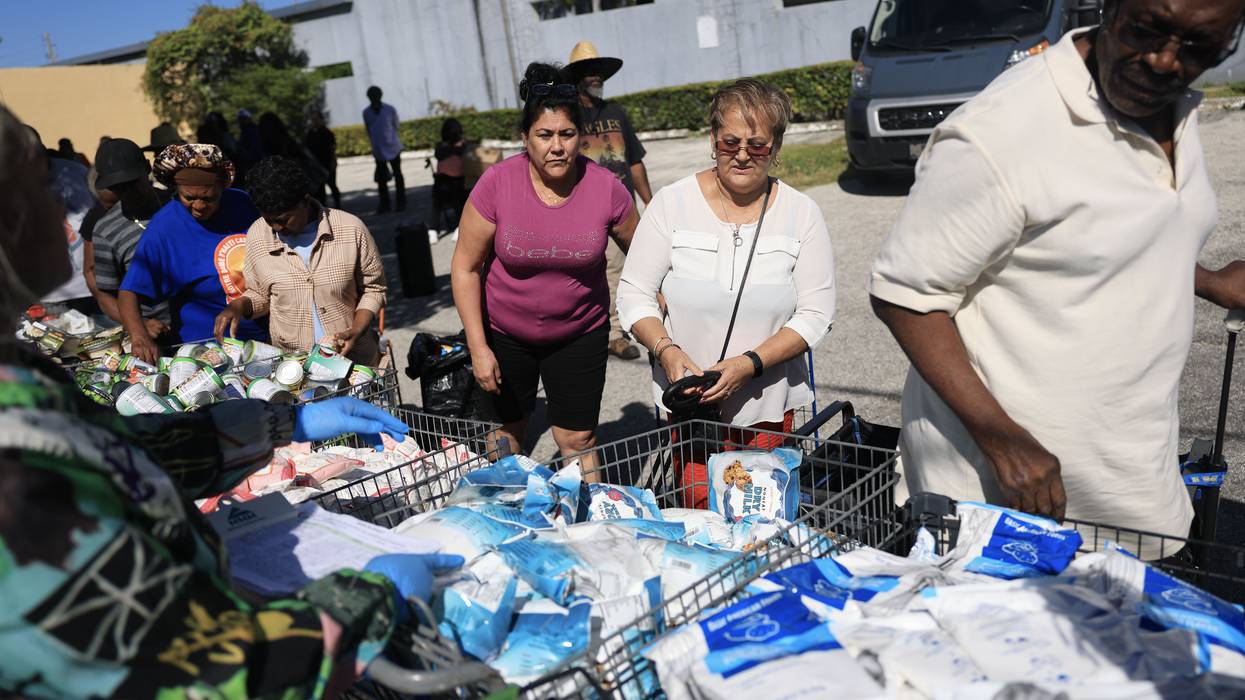
"It cannot be said enough that people aren't being 'lifted' or 'moved off' SNAP—struggling families are losing the help they need to afford groceries because of HR 1's cuts," said one expert.
Food banks across the United States are experiencing increased demand not seen since the Covid-19 pandemic as higher consumer prices and food aid cuts enacted by congressional Republicans and President Donald Trump cause pain for millions of vulnerable families.
The so-called One Big Beautiful Bill (OBBBA, or HR 1) passed by the Republican-controlled Congress and signed into law by Trump last July 4 contains the biggest cuts to Supplemental Nutrition Assistance Program (SNAP), or food stamps, in the nation's history.
According to US Department of Agriculture data, participation in SNAP dropped by 8% nationwide in the six months following the law's signing. A recent analysis by the Center for Budget and Policy Priorities found that around 2.5 million people have lost food aid since the legislation took effect.
The OBBBA contains new qualification requirements for people experiencing homelessness, veterans, former foster youth, and older adults. The Trump administration says the new rules are meant to ensure that only the truly needy receive benefits. However, the more stringent requirements are harming some of the most vulnerable people.
“To see seniors and young women with children lose their benefits, it’s heartbreaking,” Dan Saltzman, president of Dave’s Markets, a Cleveland-area grocery store chain, told Signal Cleveland. Saltzman said his business' revenue from SNAP has declined by about 10% over the past year.
Compliance procedures are proving an exclusionary barrier to qualified aid applicants.
“Tens of thousands of SNAP participants are facing new hurdles just to maintain assistance,” New Jersey Human Services Commissioner Stephen Cha said last week. “Many residents who remain eligible for assistance could still lose coverage or food support because complex paperwork or missed deadlines prevent them from completing required steps."
Kristin Warzocha, CEO of Greater Cleveland Food Bank—which served more than 400,000 people last year—said that she has "talked to quite a number of people lately who are seniors who are struggling to get by with rising prices."
“They’re worried about the cost of groceries. They’re worried because their rent has gone up. And they just can’t make ends meet anymore," she added. "They just can’t do it. So they’re coming here for food.”
Jennie Jean Davidson, executive director at Neighborhood House, a Louisville food bank, told Spectrum News 1 that "honestly, demand for what we do is up in every area."
"We have waiting lists in our child development center and in our youth programming," she explained. "Demand in our food pantry has been going up month-over-month for about three years now and it’s just continuing to climb. We’re seeing a lot of need in the community.”
Trump's tariffs, war of choice on Iran, and attacks on the social safety net are driving up inflation, and household debt, exacerbating the struggles of millions of Americans. While he campaigned on promises to lower prices on "day one," Trump admitted Tuesday that Americans' financial struggles aren't on his mind, "not even a little bit," as he tries to negotiate an end to the war he started with Israel against Iran.
"We're seeing a lot of uneasiness amongst people in general," Community Food Bank of Southern Arizona president and CEO Natalie Jayroe told KGUN on Tuesday. "So many things are changing. Nobody knows when this inflation is going to stop. They don't know when the price of gas is going to start to go down again. We've had cuts in some of the funding that families normally depend on."
“Right now, we're reaching about 6,200 children and we do that primarily through our summer feeding programs that take place in schools and other camps," she added. “So many of our children depend on school breakfast and lunch during the year. In our case here in Southern Arizona and the five counties that we serve, that's 88,000 children."

Content creator María Teresa Felipe Sosa hailed Cubans as "a people who refuse to submit to the true regime of horror, which the United States represents, as it goes around starting wars throughout the world."
As the team at Tehran-based Explosive Media keeps churning out viral artificial intelligence-generated Lego-style animated videos condemning the US-Israeli war on Iran, a Cuban version of the clips reacting to President Donald Trump's threats to attack the island appeared Monday on social media.
First posted by Havana art historian and digital content creator María Teresa Felipe Sosa, the video was shared by users including US investigative journalist Ryan Grim and Explosive Media, which added, "Welcome to the #LRF Cuba," or Lego Resistance Front.
"The threat that Cuba represents to the United States is the dignity and principles of a people who refuse to submit to the true regime of horror, which the United States represents, as it goes around starting wars throughout the world," Felipe said Tuesday on social media.
According to the video's lyrics:
They seek to stifle the lifeblood of this land with the talons of empire and the drums of war, from the north they unleash their poisonous breath seeking to seize what belongs to others. But this soil has roots of steel and a people who cannot be bought with money.
They raise walls of hatred and lies while the island, relying on its own strength, breathes amid 60 years of constant hostile siege—yet we continue to march forward with a firm step. There is no threat that can break our faith; the Cuban knows well how to stand tall.
Here dignity has neither price nor master; we are the guardians of our own dream. My people, stand tall, with fists held high against the invader and their dark assault.
There's no surrender beneath this burning sun, for it's known that the homeland must be defended. Resist my brother with your head held high for every victory in the battle-hardened struggle, your love is the compass of our people, for you know that the homeland must be defended.
The video comes amid more than 65 years of US-based terrorism, assassination attempts, and a tightened economic embargo targeting Cuba, as well as Trump's threats to attack or "take" the island. Despite extreme hardship caused or exacerbated by these internationally condemned policies, the Cuban people have been resolute in their resistance to US aggression.
With no victory in sight in the US-Israeli war on Iran and the American people increasingly wary of yet another war of choice waged by the self-described "president of peace" who's now attacked 10 countries over the course of his two terms in office, even some Republican lawmakers are warning Trump against attacking Cuba.
Asked if he would support such an attack, Sen. James Lankford (R-Okla.) told The Hill on Tuesday, "No, I would not."
"There’s a lot of economic pressure you can put on Cuba that makes a big difference by itself,” the hawkish senator added.
Numerous Democratic lawmakers have consistently opposed any attack on Cuba; however Democratic Sen. John Fetterman (D-Pa.) recently helped sink a Senate war powers resolution aimed at blocking Trump from attacking the country.
More than 6 in 10 Americans surveyed by multiple pollsters in recent months said they oppose a US war on Cuba.
Responding to the renewed US menace under Trump, Felipe recently wrote that "the current threats aren't anything new, they only confirm a dangerous insistence—that of replacing international law with the law of the strongest."
"In the face of that, Cuba responds with an uncomfortable and persistent idea—its people does not give up," she continued. "Cuba is not seeking confrontation. It demands respect. And history, although some prefer to ignore it, has been clear—independence is not negotiated under threat."
"Once again," Felipe added, "and against all imperial odds, Cuba will win."