

SUBSCRIBE TO OUR FREE NEWSLETTER
Daily news & progressive opinion—funded by the people, not the corporations—delivered straight to your inbox.
5
#000000
#FFFFFF
To donate by check, phone, or other method, see our More Ways to Give page.
Daily news & progressive opinion—funded by the people, not the corporations—delivered straight to your inbox.

AIUSA media relations, 202-509-8194
The Colombian authorities have failed to tackle the lack of justice for female survivors during the country's long-running armed conflict, Amnesty International said in a new report today.
"Women and girls in Colombia are often treated as trophies of war. They are raped and sexually abused by all the warring parties as a way to silence and punish them," said Susan Lee, Americas director at Amnesty International. "Since President Santos took office in 2010, the government has made clear commitments to tackle the human rights crisis but we have yet to see real improvements in bringing to justice those responsible for human rights abuses, such as sexual violence against women."
Amnesty International's report, 'This is what we demand. Justice!' Impunity for sexual violence against women in Colombia's armed conflict, documents how the authorities continue to deny the rights of survivors of sexual violence to truth, justice and reparation.
The lack of reliable official statistics and the fear around reporting such crimes make it very difficult to evaluate the true scale of the problem. The statistics available do not clearly indicate cases of sexual violence against women and girls that may be conflict-related.
In 2010, the National Institute of Legal Medicine and Forensic Science carried out 20,142 examinations into suspected cases of sexual violence, compared to 12,732 in 2000. But only 109 of these were classified as being related to the conflict, underlining the invisibility of such crimes.
Even when women muster the courage to report a case of rape or sexual violence, the allegations are rarely investigated effectively.
Colombia's security forces, paramilitaries and guerrilla groups have all targeted women and girls to exploit them as sexual slaves and to effect revenge on adversaries. Sexual violence sows terror within communities and forces whole families to flee their homes, allowing land to be appropriated.
Women and girls from Indigenous, Afro-descendent and peasant farmer communities, those forcibly displaced by fighting and those living in poverty, are particular targets of sexual violence. Women human rights defenders and their families are particular targets of threats and intimidation.
Amnesty International spoke to many rape survivors in Colombia, some of whom sought to report the crimes to the authorities.
Carolina (not her real name) was a community leader in a town in Caldas Department, in north west Colombia. When in 2007 Carolina's son was raped by a boy linked to the paramilitaries, she reported the crime to the authorities.
Members of the paramilitary group tried to get her to withdraw her complaint. When she refused, they threatened her and forced her to watch them mutilate some of their victims. In May 2007, Carolina was kidnapped and raped by eight paramilitaries. She subsequently discovered she was pregnant as a result of the rape. When the paramilitary commander found out, he ordered his men to beat her; she lost the baby.
In June 2007, the protection program of the Office of the Attorney General re-housed her in another town. But the threats continued and she was eventually relocated elsewhere. She was in the protection program for a year, but is no longer receiving protection.
The case continued to be investigated in Caldas Department and the prosecutor called on Carolina to testify in the town where the crime took place and where the perpetrators still lived.
In September 2008, and after pressure from women's NGOs, the case was transferred to the Human Rights Unit of the Office of the Attorney General in Bogota. However, the Unit has never called Carolina to testify.
In August 2010, the prosecutor was removed from the case. The new prosecutor has apparently only recently begun to review Carolina's case.
Barriers to justice include a historical lack of political will to combat impunity, ineffective protection measures for witnesses and survivors, poor gender training for judicial officials, and a lack of definitions in the national legislation on rape as a crime under international law.
Indigenous women survivors of sexual violence suffer additional hurdles, including a lack of translators, difficulties in travelling between remote areas and places where they can get official assistance, and the significant presence of combatants in the areas where they live.
A High-Level Partnership Dialogue (HLPD) between the United States and Colombia has convened twice to date, with one of the five working groups of the dialogue focusing on human rights. The HLPD has created a forum for the two countries to discuss a broad-range of issues ranging from clean energy to ending impunity for abuses.
"We have yet to see any concrete advances to improve human rights in Colombia due to the HLPD. It's long past time for both countries to move beyond the rhetoric," said Kathryn Striffolino, advocacy associate director for the Americas at Amnesty International USA. "A good start would be a discussion during the next session focusing on the development and immediate implementation of an action plan to combat sexual violence. Such a plan should include measures to combat discrimination against women and girls, as well as halt the impunity perpetrators of sexual violence in Colombia are currently able to enjoy."
Additionally, Amnesty International called on the Colombian authorities to develop a comprehensive strategy - in consultation with local organizations - to ensure effective prevention, investigation and prosecution of conflict-related violence against women, and to provide remedies to the victims.
"The Colombian authorities must take decisive action to ensure those responsible for crimes of sexual violence, many of which are either war crimes or crimes against humanity, are brought to justice," said Lee. "If the authorities continue to fail in doing so, the International Criminal Court should step in."
Amnesty International is a global movement of millions of people demanding human rights for all people - no matter who they are or where they are. We are the world's largest grassroots human rights organization.
(212) 807-8400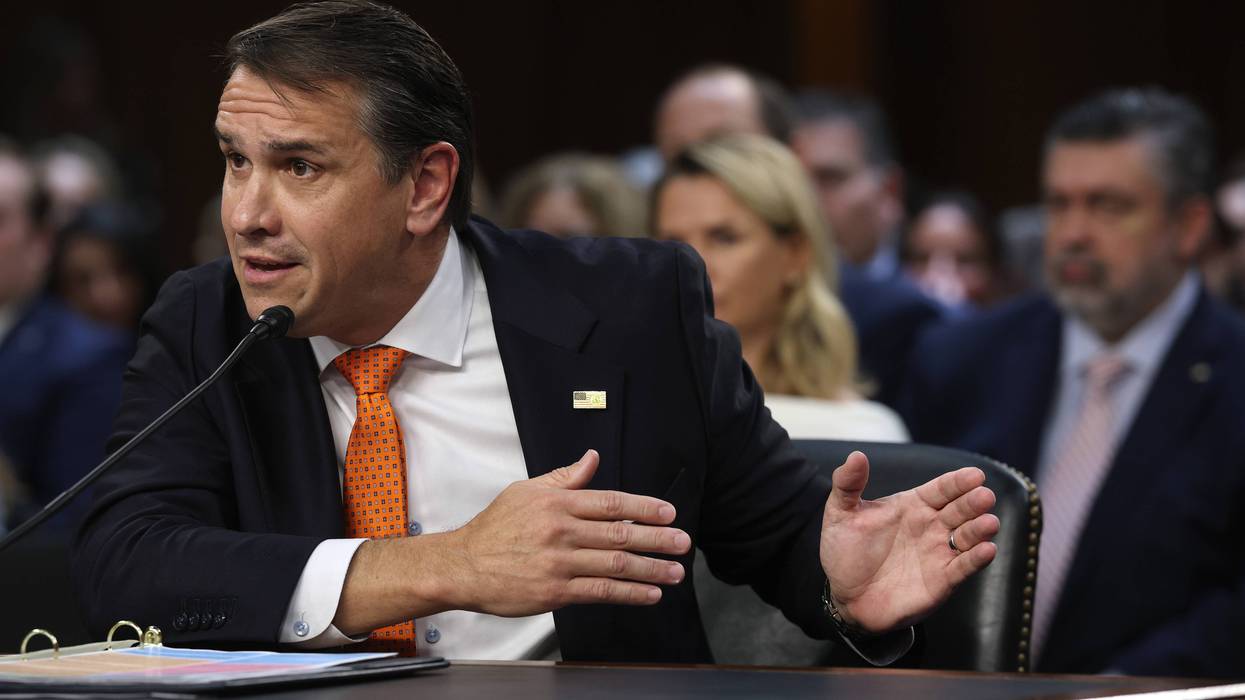
"The only reason Blanche is AG is because he will cross any ethical/legal line to defend Trump," said one Democratic senator.
US Attorney General Todd Blanche refused on Sunday to pledge that his Justice Department would "act independently of the White House," underscoring critics' warnings that Blanche is running the nation's top law enforcement agency as if it were President Donald Trump's personal legal office.
"No, I’m not going to pledge that. And no attorney general should ever pledge that," Blanche, who previously worked as Trump's personal lawyer, said during an appearance on NBC's "Meet the Press."
Blanche went on to suggest, absurdly, that prioritizing independence at the DOJ would mean declining to do anything that aligns with the president's stated goals.
"If I were to pledge I will be independent of the White House, what that means is that if President Trump says, 'I want the Department of Justice to go after every violent criminal in this country,' which is what he has said, what you’re saying to me is I should say, 'No, sir, I’m not going to do it,'" said Blanche, who was confirmed as attorney general earlier this month.
WELKER: Can you pledge the DOJ will always act independently of the White House?
BLANCHE: No, I'm not going to pledge that, and no attorney general ever should
WELKER: So if the president asked you do to something that you feel crosses an ethical or legal line, would you do it?… pic.twitter.com/vPrJdnAQ9l
— Aaron Rupar (@atrupar) August 16, 2026
Blanche insisted that Trump "never has" and "never will" ask him to do "something unethical" or unlawful, rejecting what he described as "this narrative... that the president’s going to pull me aside and ask me to do something illegal."
"There is this extraordinarily false narrative that the president wakes up in the morning and calls me and says, 'Todd, go prosecute X or Y.' He does not do that. He has never done that," Blanche said.
When Blanche was deputy attorney general under former AG Pam Bondi, Trump publicly pressured Bondi to pursue cases against former FBI Director James Comey, New York Attorney General Letitia James, and Democratic Sen. Adam Schiff of California. (Trump reportedly believed the Truth Social post he made castigating Bondi was a private message.)
Watchdog organizations and former Justice Department employees opposed Blanche's confirmation as attorney general on the grounds that he would put loyalty to Trump over all else.
“Since his confirmation as deputy attorney general, Todd Blanche has shown time and again that his guiding star is fealty to the president, not the Constitution,” said Stacey Young, the founder of Justice Connection who worked at the DOJ for 18 years.
Sen. Andy Kim (D-NJ) said Sunday that "the only reason Blanche is AG is because he will cross any ethical/legal line to defend Trump."
"He proved it as Trump's personal attorney. He proved it as deputy and acting AG," said Kim. "Now we are going to see even more unprecedented levels of corruption at the American people's expense."
Days after his confirmation—which was delayed as the Justice Department dragged its feet on abandoning a proposed slush fund for Trump allies—Blanche appeared at a political rally with the president and spoke favorably of Bruce Blakeman, the Republican challenging incumbent New York Gov. Kathy Hochul.
Democracy Docket noted that the rally "marked the second time Blanche has participated in a norm-shattering political event. Speaking at the Conservative Political Action Conference last year, Blanche downplayed fears over deploying federal agents to the polls this November."
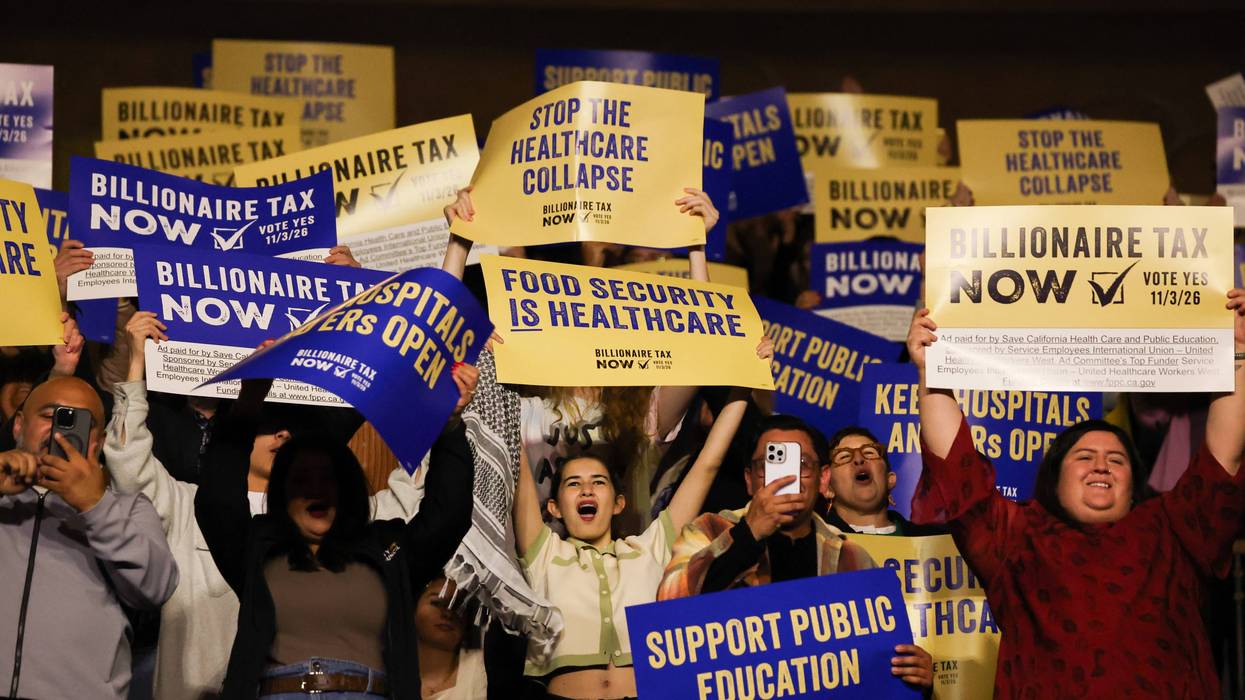
Google co-founder Sergey Brin, one of the richest men in the world, has spent more than $100 million backing a group seeking to stop a popular California ballot initiative that would impose a one-time tax on the wealth of the state's billionaires.
New filings reported by The Los Angeles Times detail Brin's role in funding Building a Better California, which is pushing two ballot measures that would undercut and potentially nullify the proposed billionaire wealth tax. Building a Better California is also spending directly against the proposed tax, pumping at least $5 million into "no" efforts.
If passed, revenue from the 5% billionaire wealth tax would be used to offset federal Medicaid cuts and bolster the state's education system. The proposal will be on California's November ballot as Proposition 40, and the two billionaire-backed initiatives are Propositions 41 and 42.
Debru Carthan, the vice president of Service Employees International Union-United Healthcare Workers West, said in a statement that "California billionaire Sergey Brin would rather spend $100 million to fund a shady opposition campaign than simply pay his fair share in taxes so millions of Californians don’t lose their healthcare."
"That’s shameful," Carthan added. "Billionaires already pay much lower tax rates than what working families pay out of every paycheck."
The Sergey Brin group Building a Better California is officially opposing the California billionaires tax — donating $5 million to the “No” push to defeat it. pic.twitter.com/GsP2h9ZhXR
— Teddy Schleifer (@teddyschleifer) August 16, 2026
Proposition 40 has been endorsed by the California Federation of Labor Unions, the California Nurses Association, and the California Democratic Party, as well as prominent progressive lawmakers such as Sen. Bernie Sanders (I-Vt.) and Rep. Ro Khanna (D-Calif.).
But the measure has drawn opposition from powerful forces in California, including Gov. Gavin Newsom, the California Chamber of Commerce, and the California Teachers Association.
Brin is not the only billionaire financing efforts to defeat the proposed wealth tax in California, which is home to more billionaires than any other US state. Ripple Labs co-founder Chris Larsen, PayPal co-founder Peter Thiel, and venture capitalist Ron Conway have also spent against the ballot initiative.
Economists Emmanuel Saez and Gabriel Zucman have estimated that, between 2019 and 2025, California's billionaires paid on average just 0.26% of their wealth each year in state income taxes.
"For the very richest individuals, the effective burden was even lower. The four wealthiest Californians—Mr. Brin, Mr. Huang, Mr. Page and Mr. Zuckerberg—paid an average of just 0.07% of their wealth annually in California income tax over that period," Saez and Zucman wrote. "This trailblazing wealth tax would be a small (for the ultrawealthy) but important (for everyone else) step toward raising needed tax revenue and curbing the state’s runaway inequality."
"Israel has committed a genocide in Gaza, and we should have the courage to say so," said the California Democrat.
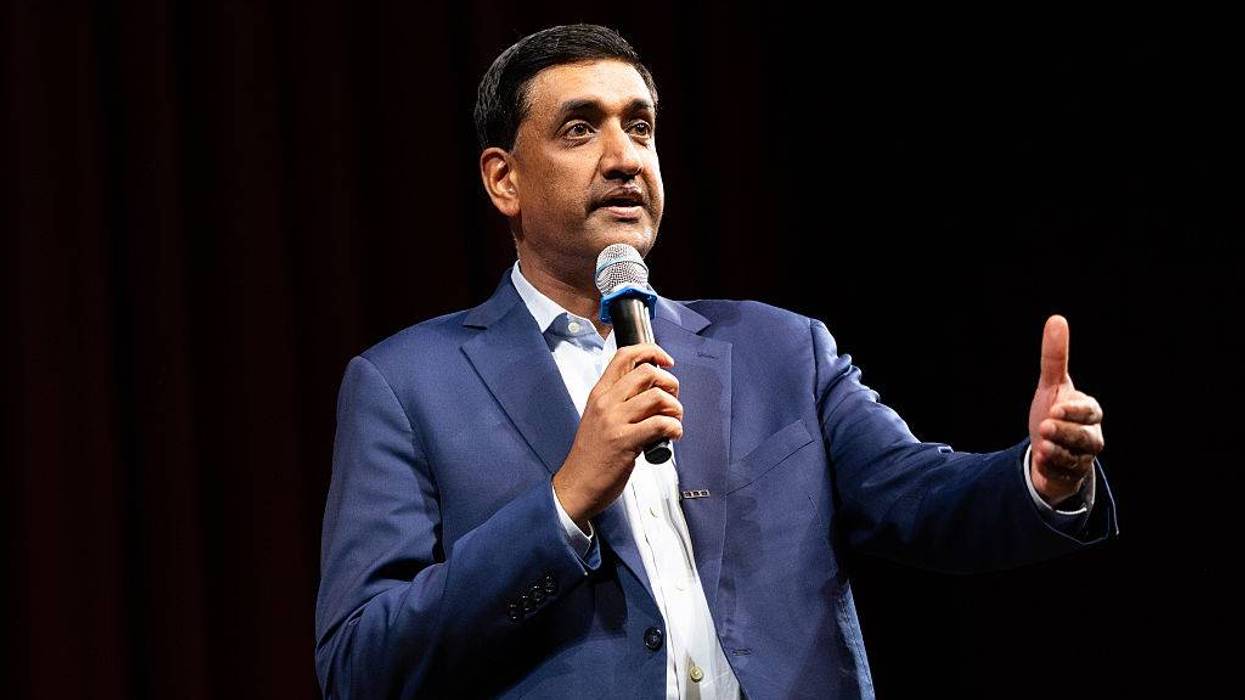
Congressman Ro Khanna said in a speech at the Democratic National Committee's summer meeting on Saturday that the party must support cutting off military assistance to Israel, pointing to the country's ongoing genocidal assault on the Gaza Strip and imposition of an "apartheid system" in the West Bank.
Khanna (D-Calif.), who is considering a presidential run in 2028, told DNC members gathered in Austin, Texas that "Israel has committed a genocide in Gaza, and we should have the courage to say so." The congressman's remark was met with enthusiastic applause.
Khanna, who also said the Hamas-led October 7, 2023 attack on Israel "must be condemned unequivocally," cited his recent trip to the illegally occupied West Bank, where the lawmaker was detained by armed settlers and the Israeli military.
"Zero aid to Israel," Khanna declared Saturday. "No military sales of weapons used to kill civilians. And let me be clear: If our party cannot stand for these principles, it will never convince a generation that watched the horrors of Gaza on their iPhones that we mean what we say about justice."
Khanna's remarks came after the DNC approved by voice vote a package of resolutions that included one calling for full enforcement of the so-called Leahy Laws, which prohibit the transfer of US weaponry to governments credibly accused of human rights violations.
A United Nations commission said last month that "even after the October 2025 ceasefire, children continue to be killed and seriously injured, with continued disregard by Israel for the ceasefire and for the protection owed to Palestinian children under international law."
Recent polling has found that an overwhelming majority of Democratic voters oppose US military aid to Israel, but their representatives in Congress remain divided on the matter. In late July, more than half of the House Democratic caucus—including Minority Leader Hakeem Jeffries (D-NY)—voted against an amendment backed by Khanna that would have cut off $3.3 billion in US assistance to Israel, which has repeatedly used American weapons to commit atrocities against Palestinians.

Lebanese Prime Minister Nawaf Salam issued a statement Saturday condemning Israel's latest deadly bombings in southern Lebanon, attacks that killed nearly a dozen people, including several children.
Salam rejected the Israeli government's insistence that it was targeting a Hezbollah "military compound," saying, "The seven martyrs of the Israeli airstrike on the town of Ansar are not 'military infrastructure,' nor are the children and women killed in it military targets."
"The responsibility for dealing with any military structures, if they exist on Lebanese territory, lies exclusively with the Lebanese state, through the Lebanese army and its legitimate institutions, and their existence does not grant Israel the right to violate Lebanese territory or endanger civilians," said Salam, who warned that the new strikes threaten to derail tenuous steps toward a diplomatic resolution.
"Israel must halt this escalation," Salam said. "For the security of our people and their right to life on their land are not subject to negotiation or bargaining."
Israeli Prime Minister Benjamin Netanyahu and Defense Minister Israel Katz have said their country's military won't end its illegal occupation of and attacks on southern Lebanon until Hezbollah disarms.
"We will cleanse this area and ensure the security of the northern residents [of Israel]," Katz said earlier this week, referring to southern Lebanon.
On Friday, Michel Issa, the US ambassador to Lebanon, echoed the Israeli government's message.
"Tell Hezbollah that as soon as it hands over its weapons, everything will stop," said Issa.
The Associated Press reported on Saturday that Israel struck "a home on the edge of the village of Ansar" and bombed the village of Deir al-Zahrani, killing 11 people total. Three children were killed by the Israeli airstrikes and two were wounded.
Hezbollah called the Israeli strikes "a fully fledged crime" and said that "the responsibility for this persistent aggression and violation of Lebanon's sovereignty lies with the enemy government and the United States, which provides it with support and cover."
"The Americans are partners with the Israeli enemy in its crimes and massacres against Lebanon," the group added.
In late June, the Republican-controlled US House of Representatives voted down a war powers resolution that would have halted American military participation in Israel's assault on Lebanon. More than 20 Democrats joined Republicans in voting against the measure.
"We have never seen financial conflicts or corruption of this magnitude."
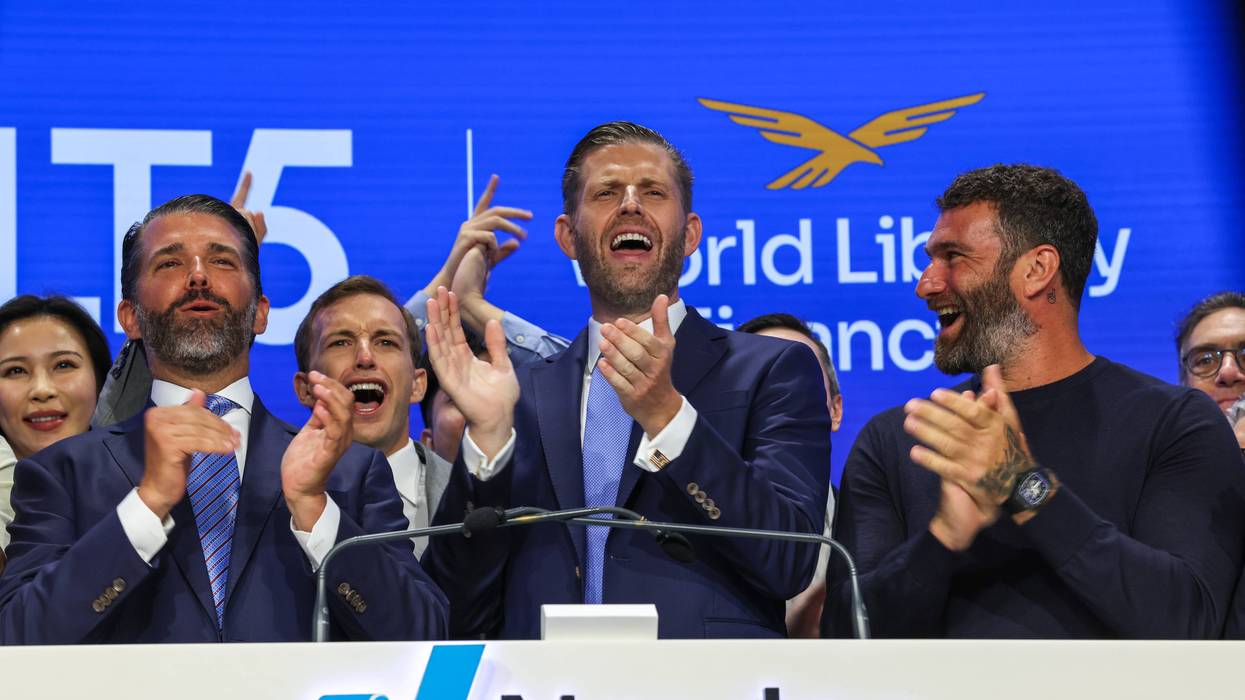
The Office of the Comptroller of the Currency, a regulatory agency whose leader was chosen by President Donald Trump, granted preliminary approval on Friday to World Liberty Financial's application for a federal bank charter.
World Liberty Financial is a crypto venture launched in 2024 by the president's two eldest sons, Donald Trump Jr. and Eric Trump, and several partners. The firm's website states that WLF is 38% owned by "an entity affiliated with Donald J. Trump and certain of his family members."
WLF applied for a US bank charter in January, drawing alarm from lawmakers and watchdogs who said the review process would be rife with conflicts of interest. "We have never seen financial conflicts or corruption of this magnitude," Sen. Elizabeth Warren (D-Mass.), the top Democrat on the Senate Banking Committee, said at the time.
The OCC, headed by Jonathan Gould, announced the approval decision in a letter published Friday. WLF's application was assessed by career OCC staff, the agency said.
"The Office of the Comptroller of the Currency (OCC) has reviewed your application to establish a new national trust bank, which will engage in operations of a trust company and activities related thereto, including fiduciary activities, with the title of World Liberty Trust Company, National Association," the letter states. "The OCC hereby grants preliminary conditional approval of your charter application upon determining that your proposal meets certain regulatory and policy requirements."
In response to the news, Warren wrote on social media that "this is the most brazen act of self-dealing our financial system has ever seen."
Reuters reported that the charter, if finalized, would allow World Liberty's "to directly issue its USD1 stablecoin, as well as custody the US dollar assets backing it, both of which are now handled by a business partner, BitGo."
"Hoping to capitalize on the Trump administration’s crypto-friendly stance, the industry has been knocking on the OCC’s door for such charters," Reuters noted. "They allow crypto companies to hold assets on behalf of clients nationwide under a single federal charter, as well as to provide other settlement and asset servicing functions—making it easier to court major institutional clients. Other crypto firms, including Ripple and Circle, have received preliminary approval for such charters under Comptroller Jonathan Gould."
World Liberty Financial welcomed the OCC's preliminary approval as "a milestone in a multi-step chartering process." The firm said in a press release that the newly formed bank's board would be chaired by Zach Witkoff, the son of Trump's special envoy to the Middle East.
Last year, Trump reaped around $527 million in proceeds from token sales by WLF, according to financial disclosures released in late June.
"They are making sure they are rich beyond their wildest dreams long after Trump departs the White House (if he departs the White House)," journalist Mehdi Hasan wrote in response to the OCC decision. "It's so openly and nakedly and obviously corrupt, I'm not sure it can be overstated."
"Trump's right. His economy is a win for Wall Street. Meanwhile, while the rich get richer, millions of Americans cannot afford the basic necessities of life."
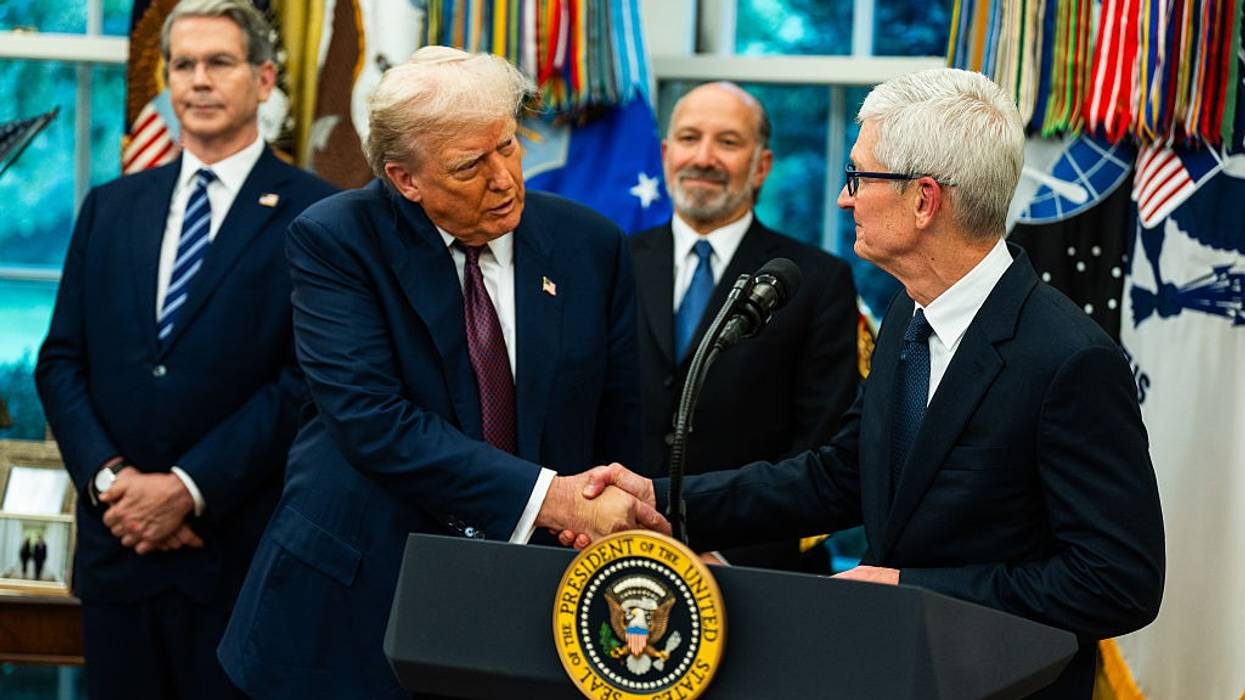
President Donald Trump on Friday said that the US economy is "doing unbelievably from the standpoint of Wall Street," bragging about record equity prices as job and wage growth remain stagnant and millions of Americans struggle to afford groceries.
In remarks to reporters, Trump hailed what he described as "the best market in history" as the S&P 500 index notched its third consecutive week of gains and hovered near its all-time high. The president, a prolific trader who has personally profited from the stock market's performance, said surging equities are "good for 401(k)s"—retirement accounts that a growing share of Americans are tapping to cover emergency expenses amid a worsening cost-of-living crisis.
"Trump's right. His economy is a win for Wall Street," Sen. Bernie Sanders (I-Vt.) said in response to the president. "Meanwhile, while the rich get richer, millions of Americans cannot afford the basic necessities of life—food, housing, healthcare, and a decent retirement."
The Alliance for Retired Americans, an advocacy group with more than 4 million members across the US, expressed astonishment at Trump's rosy and narrow assessment of the economy, which the White House posted on its official YouTube page.
"Can't make it up," the group wrote on social media. "We don't live on Wall Street. How is the economy working for you?"
Trump's comments came the same day that new data showed US consumer sentiment has fallen in August after two consecutive months of improvement, with Americans' outlook on the nation's economic conditions worsening across the political spectrum.
Last week, the Labor Department published figures showing that the US economy shed 23,000 jobs in July, wage growth decelerated, and the unemployment rate fell slightly as more people left the workforce.
Despite Trump's promise to bring them down, prices remain elevated across the economy, driven in part by the president's illegal war against Iran. Research published last month by the Urban Institute found that American families are increasingly relying on savings and credit—including buy now, pay later programs—to meet their grocery needs.
Americans are also facing what The Century Foundation and Protect Borrowers describe as "a worsening utility debt crisis."
"Energy bills have increased three times faster than the rate of inflation while Trump has been president," the groups wrote in an analysis published last month. "The national average monthly utility bill reached $280 in early 2026, a 12% increase since the end of 2024, just before the second Trump administration took office."
Meanwhile, corporate profits are booming under Trump, with the pharmaceutical industry, Big Oil, and other sectors posting banner earnings.
"Second quarter earnings for S&P 500 companies are on pace to rise 50% year over year, the highest growth rate since the second quarter of 2021," Yahoo Finance reported.
“The rush to build more and more data centers is causing harm far beyond the data centers themselves."
A trio of green groups on Friday sued the US Environmental Protection Agency over its approval of two new chemicals for semiconductor manufacturing, arguing that the EPA allowed potentially dangerous substances to be sold despite acknowledging significant gaps in its understanding of their health risks.
CHIPS Communities United and the Sierra Club, represented by Earthjustice, filed suit in the US Court of Appeals for the 9th Circuit in San Francisco challenging the approvals. The groups contend that the EPA violated the Toxic Substances Control Act (TSCA) by permitting the chemicals’ use without adequately assessing their risks to employees in semiconductor plants and the communities in which they are located.
According to Earthjustice, the EPA identified potential hazards including cancer, neurological damage, and even sudden death, but also acknowledged that it lacked sufficient information to determine the full extent of those risks. The names of the chemicals are redacted in the complaint—in which they are identified by their EPA premanufacture notice numbers, P-26-0029 and P-26-0045—because the agency has designated their identities as confidential business information.
“The Trump administration is rushing dangerous chemicals to market without the review or the protection that the law requires,” Earthjustice senior attorney Jonathan Kalmuss-Katz said in a statement announcing the lawsuit. “Here, EPA admits that it has not evaluated the full extent of these chemicals’ health risks, yet it is still sending them into communities across the country and leaving the public to discover their effects one doctor’s visit at a time.”
CHIPS Communities United coalition director Judith Barish said: “Neighbors and workers are exposed to toxic chemicals in semiconductor factories. Over decades, workers in chip [factories] have been harmed by workplace exposure and residents of nearby communities have been impacted by hazardous air or water that is contaminated by these chemicals."
"We call on the EPA to stop approving chemicals that can harm public health without understanding the risks," Barish added.
As Earthjustice noted:
Semiconductor manufacturing is a major ongoing source of [per- and polyfluoroalkyl substances], a large class of toxic “forever chemicals,” along with other industrial manufacturing sources. PFAS don’t easily break down and can persist in our bodies and the environment for decades or more. Semiconductors are also foundational hardware for artificial intelligence (AI) data centers, affecting many communities in addition to those surrounding the massive polluting chip factories.
The groups' lawsuit comes over a month after the EPA under President Donald Trump—who campaigned on what critics say was a largely empty promise to "make America healthy again"—and agency Administrator Lee Zeldin approved a fifth “forever chemical” pesticide pushed by industry lobbyists.
"EPA’s approval of these unstudied chemicals is just the latest example of the Trump EPA refusing to follow the legal risk assessment processes under TSCA and prioritizing industry profits over public health," Earthjustice said on Friday. "Last year, the agency proposed shifts to how it conducts risk evaluations for chemicals already in use and on the market that would let it ignore the real-world risks posed by toxic chemicals."
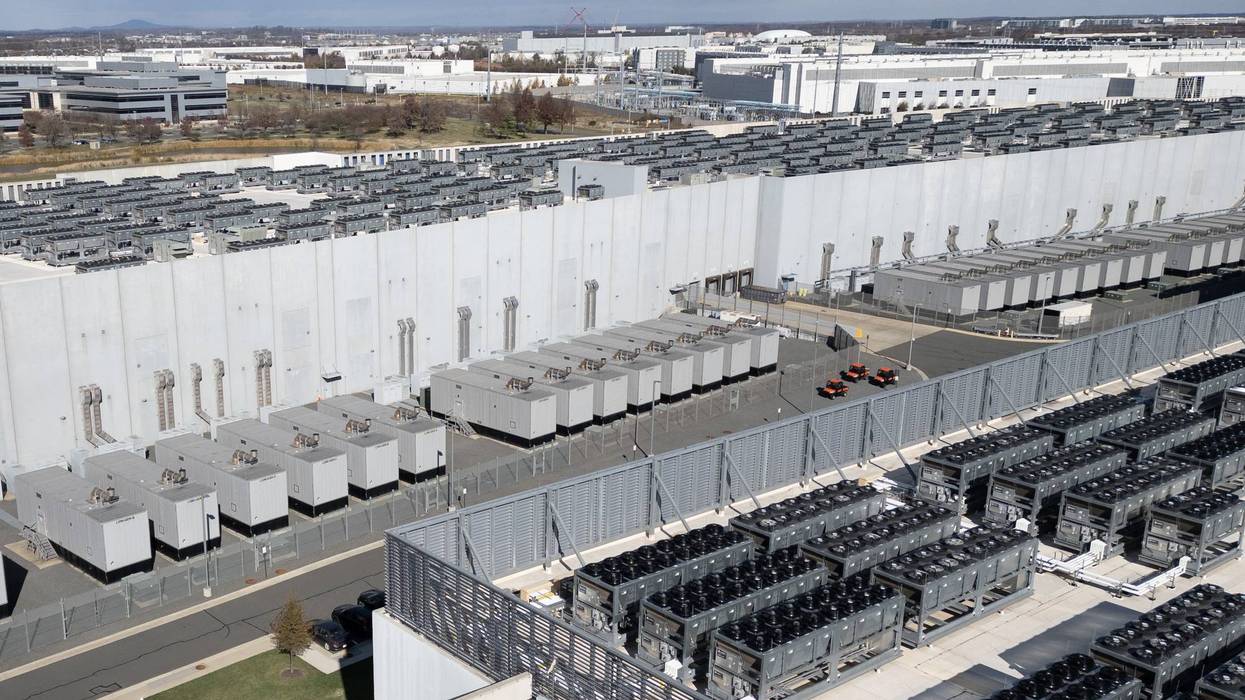
Harmful chemicals associated with data center cooling, fire suppression, and production of semiconductors and other electronic components include refrigerants such as Freon and Opteon, Teflon coatings for cable insulation, Krytox for pumps and robotics, and Viton for sealing.
Additionally, as the Natural Resources Defense Council explained, data center cooling systems "can consume vast quantities of water and pollute large quantities of water, depending on the type of cooling system used. For example, evaporative cooling consumes large quantities of water while some immersion cooling techniques rely on harmful chemicals such as PFAS."
While much critical attention on the lack of guardrails on unchecked AI development has focused on the risks of the technology itself and its economic implications—which experts say includes the shorter-term danger of mass unemployment and the long-term threat that superintelligent machines could one day subjugate or even wipe out humanity—the green groups are highlighting environmental and health hazards amid the worsening climate emergency.
"The rush to build more and more data centers is causing harm far beyond the data centers themselves," Jane Williams, chair of the Grassroots Network National Clean Air Team at Sierra Club, said Friday.
“From the plants where toxic chemicals are used to make semiconductors, to the roads these chemicals are transported on, and finally to the incinerators where they are disposed, EPA’s approval of these dangerously unstudied chemicals places the public at risk," Williams added. "These chemicals are suspected to be persistent bioaccumulative toxins, a category of chemicals that contaminate breast milk, cord blood, and the next generation. This action is an assault on the future.”
"He absolutely needs to be impeached, removed, and locked up," said one progressive critic, calling the president "a completely unhinged lunatic."
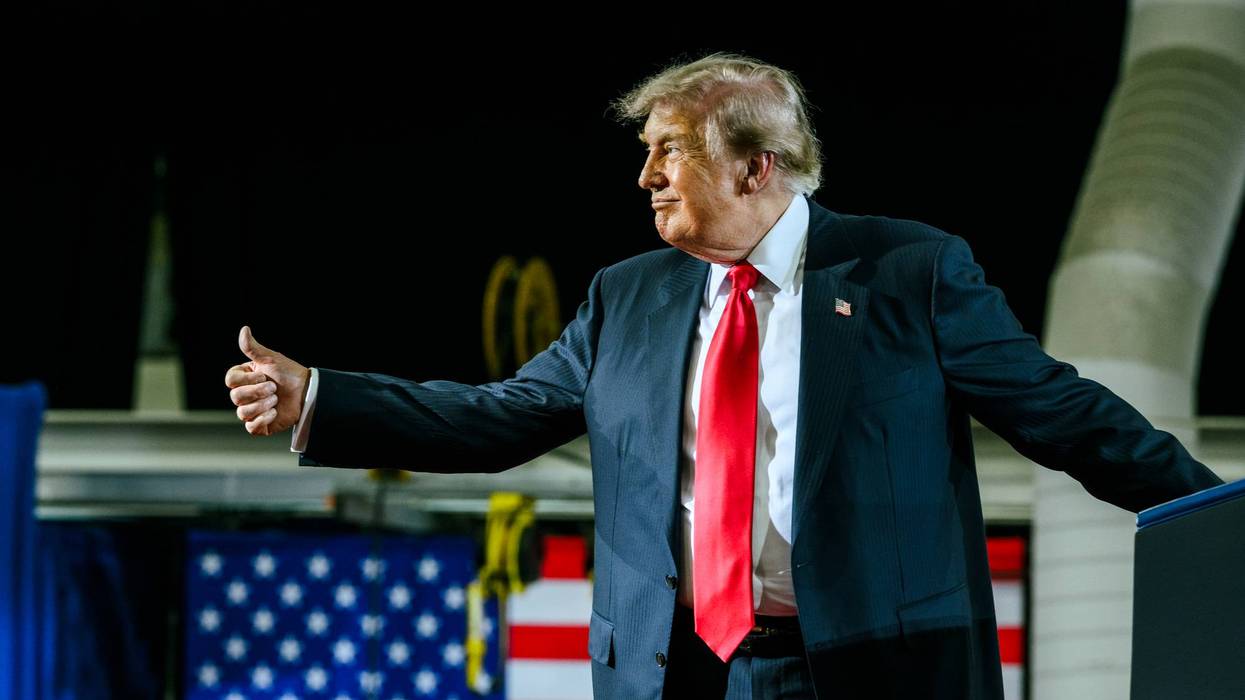
In yet another remark that triggered alarm around the world, President Donald Trump said Friday that he planned to declare the Strait of Hormuz—which Iran has blockaded for much of the past five months over his and Israel's illegal war—a US territory.
Just two days after the latest inflation figures demonstrated, in the words of one expert, "Trump's catastrophic mismanagement of our economy," the president ignored the economic fallout from his war, which led Iran to restrict ship traffic through the strait, driving up fuel prices worldwide.
"We're bringing the prices way down," he told a Long Island crowd. Trump also said that "after we finish defeating Iran, which is being very badly defeated, pretty soon, I'll be declaring the Hormuz Strait a territory of the United States."
Some critics responded to clips of the comments on X by mocking Trump—an infamous liar. Congressman Ted Lieu (D-Calif.) quipped, "Awesome! And the Easter Bunny is real."
Ryan Costello, policy director at the National Iranian American Council, said that "this jingoism rings a bit hollow when most of the US bases near the strait have been essentially abandoned due to danger from Iranian missiles and drones."
Progressive political commentator Kyle Kulinski declared that "he absolutely needs to be impeached, removed, and locked up. He's a completely unhinged lunatic, and he's a sadistic violent menace to the world."
After high initial claims about lower prices, Trump admitted that gasoline has soared due to his war, but said: "For you to pay a tiny little bit more for your gasoline, just remember, you're doing it so that a very evil country cannot have a—a country, really it's the No. 1 state sponsor of terror in the world—we don't want to have them have a nuclear weapon. So, remember that when you have to pay a little bit more, you're at $4, it's OK. I'll never apologize. I did the right thing."
Trump's threat over the strait between the Persian Gulf and the Gulf of Oman came just before a monthlong ceasefire between the US and Iran is set to expire on Monday. A senior White House official told Politico that the situation is "static."
"It doesn't matter how close or how far we are," said the official, who has heard no mention of a potential extension of the ceasefire. "What matters is if Iran wants to come to the table and agree to a deal. Right now, they haven't done that."
The Associated Press reported Friday that "the Trump administration appears to be reaching out to a broader swath of countries that might be able to help pressure Tehran," and Ali Vaez, Iran project director at the International Crisis Group, told the outlet that "everyone is just urging both sides to stop this reckless game of chicken."
In addition to launching an illegal war on Iran in February, and invading Venezuela in January to abduct its president, Trump has made threats against various other nations during his second term, including Canada, Cuba, Colombia, Greenland, and Mexico. He's also threatened to seize the Panama Canal and killed hundreds of people by blowing up boats allegedly smuggling drugs.
This article has been updated with additional comment from President Donald Trump and Public Citizen.

“Countdown until this is used in an attack ad.”
President Donald Trump said on Friday that he wasn't concerned about reports of wretched conditions and possible suicide attempts by sailors aboard the USS Lincoln. He said their record-breaking deployment as part of his Iran War is "not nearly long enough."
Earlier this week, military publications detailed deteriorating mental health aboard the ship, where about 5,000 sailors and Marines have been deployed for more than 260 days and have gone roughly 200 days without returning to port.
Following earlier reports of food shortages, faulty plumbing, and grueling 12-16 hour workdays, the Military Times reported that multiple sailors have attempted to jump overboard.
The Navy has declined to say whether the incidents were suicide attempts and has said it has “not observed an increase in suicidal ideations or attempts aboard the ship."
Last week, more than 200 spouses and other family members met with senior Navy leaders in San Diego to raise concerns about conditions aboard the carrier, including sailors' mental health and risks of suicide and self-harm, according to Stars and Stripes.
The Navy did not fully detail how it was responding to family members’ concerns, though it said the ship had counselors, chaplains, medical professionals, and other support services. Family members also said officials told them additional mental health personnel were being sent.
As Democrats pressed the Pentagon for answers and oversight into conditions on the Lincoln, Trump was asked about the complaints as he prepared to board Air Force One on Friday.
"The family members of US service members are concerned about the conditions on the USS Lincoln," a reporter said.
"No, they're not," Trump interjected.
He noted that the ship was in the process of leaving its current Middle East deployment to be replaced with "a very similar ship," referring to the USS George Washington.
"Has the deployment gone on too long?" the reporter asked.
"No, no, no," Trump responded. "Not nearly long enough."
Democrats on the House Oversight Committee immediately seized on the remark, portraying it as another instance of Trump displaying callous disregard for soldiers "abandoned in a pointless war."
Trump has previously faced criticism for downplaying the harms Americans face as a result of his war in Iran. For those at home, he's emphasized that he was not worried "even a little bit" about the war's economic costs and has said it's "not possible" to take care of funding for daycare, Medicare, and Medicaid because "we’re fighting wars."
He's also been accused of disrespecting those who suffered and died in combat by using a photo of himself attending a fallen soldier’s dignified transfer in a political fundraising email and by claiming that four slain soldiers had endorsed his rationale to attack Iran and that their loved ones had begged him to "finish the job."
The administration has also been accused of underreporting the casualty numbers from the war, leading to calls for investigation from Democrats.
With midterm elections now less than three months away, Iran continues to be the least popular major war in modern history, with polls consistently showing that only around a third of Americans support it.
Responding to Trump's remarks about soldiers suffering aboard the Lincoln, Brian Finucane, senior adviser for the International Crisis Group's US program, said, "Countdown until this is used in an attack ad."
"Vote for James Talarico. He won't steal your pen."
A pilfered $1,000 Montblanc pen, courthouse security camera footage, and a man with a long memory have become unlikely stars of a new ad released on Friday in Texas' hotly contested US Senate race.
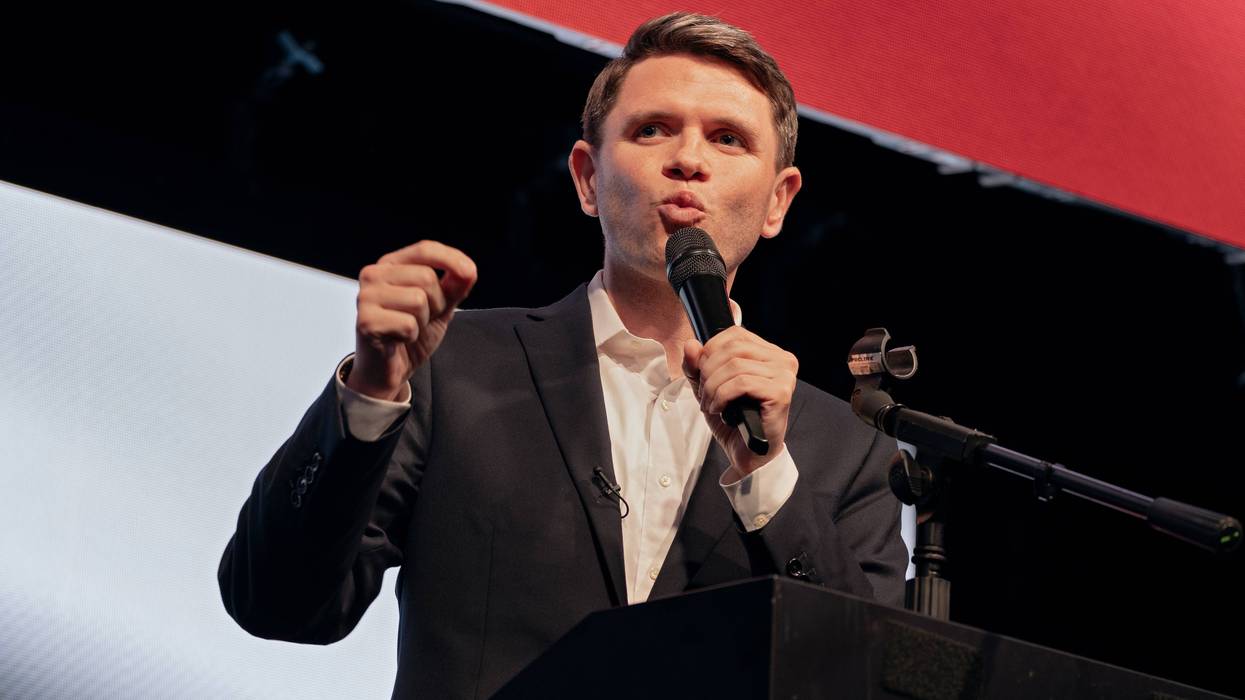
Democratic nominee James Talarico's campaign released the ad, which spotlights a 2012 incident in which his Republican opponent, Texas Attorney General Ken Paxton purloined the posh pen accidentally left behind by attorney Joe Joplin in the Collin County Courthouse, which the ad notes is "the same courthouse where Paxton would later be indicted for investment fraud" for allegedly scamming his own friends by convincing them to invest in a failing tech company while he made a commission.
"Paxton walked up to the trays next to the metal detectors, rummaged through them, and came across someone else's expensive Montblanc pen. He decided to take it for himself," the ad states, showing courthouse security video of the incident.
The pen, the ad's narrator continued, "was a special gift" from Joplin's wife.
"When Joe realized it was missing, he contacted courthouse security," the ad says. "This is the footage they pulled. Ken Paxton, on camera, stealing this man's pen. After the police got involved, Joe got his pen back. He could have pressed charges, but he decided against it."
"Because Joe's a nice guy, and he'd never take someone else's pen," the clip continues. "But he also hasn't forgotten who took his."
The ad then cuts to a shot of Joplin saying, "Hi, I'm Joe Joplin, and I endorse James Talarico for the United States Senate."
Then, this tagline: "Vote for James Talarico. He won't steal your pen."
While viewers undoubtedly got a good laugh out of the ad—and some may have ponied up $6 for a pen labeled "Not Ken Paxton's" for sale on Talarico's campaign website—the candidate's team is using it to illustrate the character of a man the Democrat has repeatedly called "the most corrupt politician in America."
🚨MERCH DROP🚨Get your very own "Not Ken Paxton's Pen" today:store.jamestalarico.com
[image or embed]
— Team Talarico (@teamtalaricohq.bsky.social) August 14, 2026 at 10:22 AM
In addition to Paxton's 2015 securities fraud indictment—a case that ultimately ended in a 2025 deal in which he pleaded no contest, received deferred adjudication, completed community service, and paid restitution—the Republican attorney general was impeached by the GOP-controlled Texas House in 2023 over allegations including bribery, abuse of office, and misuse of public resources. The state Senate subsequently acquitted him.
Dan Cogdell, the Houston attorney who represented Paxton during his impeachment, has endorsed Talarico.
Talarico has also argued that Paxton used the power of his office to enrich himself and wealthy political supporters, portraying him as a politician who puts personal and donor interests ahead of ordinary Texans. Talarico's campaign claims Paxton's net worth has increased by 7,000% since he entered office, and that he now owns 11 homes.
“He has taken bribes from wealthy donors and then turned around and blocked overtime pay for Texas workers and gutted our healthcare,” Talarico said during a campaign rally in late May. “This is why he was impeached by his fellow Republicans. That’s why he was indicted for fraud and defrauding investors.”
“The movement that we’re building is a lot bigger than any one politician or any one political party,” Talarico added. “We are running against this corrupt system. Ken Paxton embodies that system."