

SUBSCRIBE TO OUR FREE NEWSLETTER
Daily news & progressive opinion—funded by the people, not the corporations—delivered straight to your inbox.
5
#000000
#FFFFFF
To donate by check, phone, or other method, see our More Ways to Give page.
Daily news & progressive opinion—funded by the people, not the corporations—delivered straight to your inbox.

Josh Bell, ACLU, (212) 549-2508 or 2666; media@aclu.org
The American Civil Liberties Union, along with more than 50 other groups, at a meeting of the U.N. Human Rights Council today called on the U.S. to stop deportations to Haiti. The joint statement condemning the deportations came as the U.N. Independent Expert on the situation of human rights in Haiti, Michel Forst, repeated his serious concerns about deporting individuals to Haiti because of the unsafe environment there.
Since January 2011, the U.S. has sent four deportation flights carrying dozens of people to Haiti. The most recent flight was Tuesday, and more are expected soon. At least one of the deportees, Wildrick Guerrier, died of cholera after being deported to Haiti. In a policy statement issued April 1, the government said that it was deporting only individuals with criminal records who pose a danger to the public, and that it would take into account additional factors such as family ties and medical conditions that place individuals at particular risk. However, the government has established no procedure for making these determinations, and recent deportees include people with only nonviolent and minor crimes as well as people with extensive family ties to the United States and serious medical conditions.
The following can be attributed to Jamil Dakwar, director of the ACLU Human Rights Program:
"Continuing deportations to Haiti while conditions remain so dangerous is an affront to human rights. With Haiti battling a cholera epidemic and an unprecedented humanitarian crisis, it is irresponsible to force anyone to return before conditions have improved enough to allow a safe and humane return. The United States should strive to be a leader on human rights, but this policy ignores the recommendations of the international human rights community."
The following can be attributed to Judy Rabinovitz, deputy director of the ACLU Immigrants' Rights Project.
"The government is violating its own stated policy. At a minimum the government must ensure that no one is deported to Haiti without the case-by-case assessments they are entitled to."
The joint statement from the ACLU and other organizations is available here:
www.aclu.org/human-rights/joint-statement-un-human-rights-council-condemning-deportations-haiti
The report of the U.N. Independent Expert on the situation of human rights in Haiti is available here: www2.ohchr.org/english/bodies/hrcouncil/docs/17session/A.HRC.17.42_en.pdf
The American Civil Liberties Union was founded in 1920 and is our nation's guardian of liberty. The ACLU works in the courts, legislatures and communities to defend and preserve the individual rights and liberties guaranteed to all people in this country by the Constitution and laws of the United States.
(212) 549-2666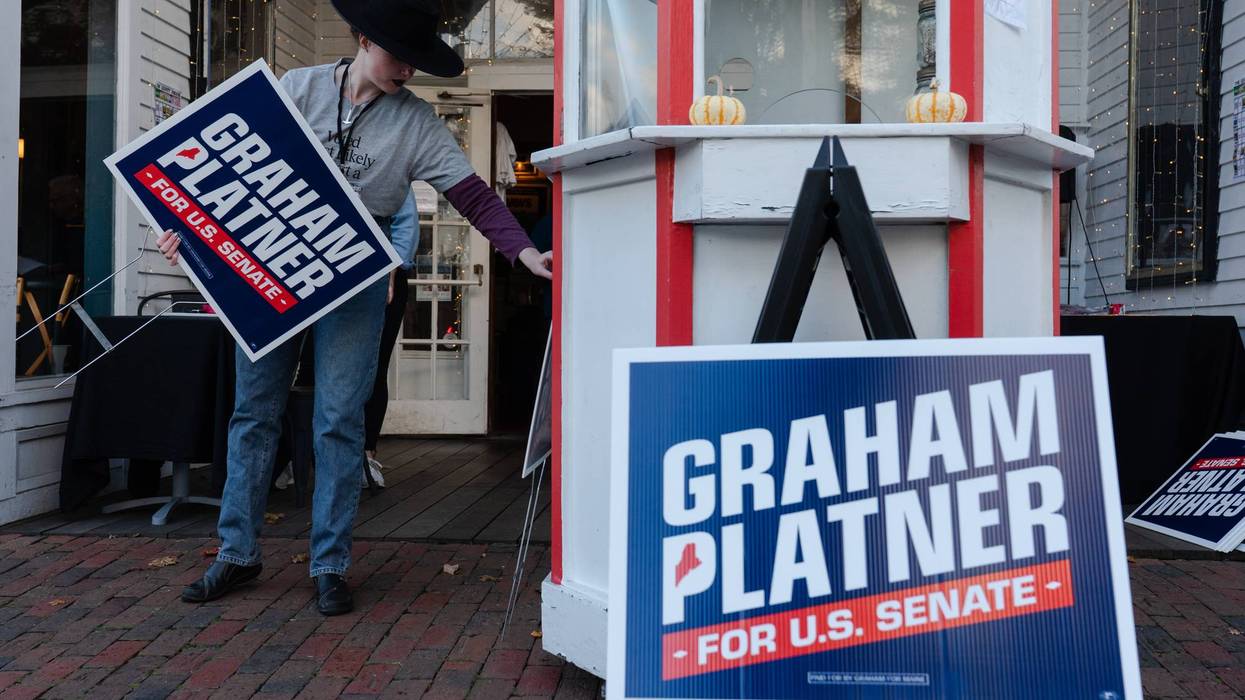
“If the party’s selected nominee does not publicly adopt this platform... this statewide volunteer network will not organize, fundraise, or mobilize on that candidate’s behalf."
As Graham Platner officially ended his US Senate campaign in Maine Friday after being accused of sexual assault and other misconduct, the volunteer network powering his campaign warned that it will not support any new Democratic nominee who does not align with the disgraced democratic socialist's progressive platform.
Platner notified the Maine Secretary of State's office that he is formally withdrawing his candidacy, just a month and a day after winning the Democratic Senate Primary.
The Secretary of State's office subsequently said that Platner's name will no longer appear on the ballot, and that his party has until July 27 to replace him with a qualified candidate.
Also on Friday, Drop Site News obtained a draft letter from the 15,000-strong volunteer network that was instrumental to Platner's erstwhile success, presenting the Maine Democratic Party and prospective candidates with policy platform demands including “healthcare as a right, housing affordability, an economy that works for regular people and not billionaires, strengthening workers and unions, end forever wars, oppose complicity in atrocities, an end to mass deportation enforcement, energy and climate accountability, and human rights for all.”
“The volunteer infrastructure that this movement built—the organizers, door-knockers, the small-dollar donors, the hosts, the people who make phone calls and staff tables between now and November—does not transfer automatically to whoever the party selects," the letter warns. "That infrastructure exists because people believe in a specific platform. It will only continue to exist and only continue to be deployed for a nominee who publicly and explicitly adopts these core commitments as their own." (emphasis original)
“If the party’s selected nominee does not publicly adopt this platform, we want to be transparent now, before the convention, rather than silent until after it: This statewide volunteer network will not organize, fundraise, or mobilize on that candidate’s behalf," the letter continues, adding, “that is not a threat, but rather a statement of fact about what motivates the people who make up this movement.”
As Drop Site noted:
The Maine Democratic Party’s 100-person state committee voted to approve a process by which 600 delegates, 500 county committee elected delegates, and the 100 state committee members themselves will select the new nominee from a slate of candidates vying to replace Platner. Troy Jackson, Shenna Bellows, Nirav Shah, Dan Kleban, Jordan Wood, and Vallie Geiger are running for the spot. All the candidates lost their respective Democratic gubernatorial and congressional primaries in June, aside from Geiger, who serves as a state representative for the Rockland area.
Drop Site obtained private Maine Democratic Party information showing that the 500 delegates will be proportionally appointed based on 2024 election Democratic vote totals in their respective counties. How those 500 delegates will be elected is still under debate.
Ben Chin, who managed Platner's campaign, on Wednesday accused the Maine Democratic Party of working "behind closed doors" with national party leaders to choose a replacement candidate.
"Both the state and national parties cut our team, our volunteers, and our vast networks of supporters out of the conversation completely," Chin alleged in a text to supporters. “We firmly believe that the supporters and volunteers who built this movement deserve to have a real role in any nomination process."

"If you can sign up with one click, you can cancel with one click," said New York City's democratic socialist mayor.
In a move proponents say will save constituents up to $162.5 million annually, Mayor Zohran Mamdani and other New York City officials on Friday unveiled a "click-to-cancel" rule aimed at ensuring people can end online subscriptions as easily as they start them.
Days after entering office in January, Mamdani signed a pair of executive orders, "Combating Hidden Junk Fees" and "Fighting Subscription Tricks and Traps"—his 9th and 10th mayoral edicts—to protect consumers and make it easier "for New Yorkers to know the real price of what they are buying and to stop paying for the services they no longer want."
Following up on the orders, Mamdani and New York City Department of Consumer and Worker Protection (DCWP) Commissioner Samuel A.A. Levine proposed a rule "requiring transparent, all-in pricing that bans hidden junk fees, alongside a final 'click to cancel' rule that guarantees consumers can cancel subscriptions as easily as they sign up for them."
The landmark proposal is part of Mamdani's affordability agenda, which includes the rent freeze and universal childcare programs he's partially enacted, as well as the free city buses, municipal grocery stores, affordable housing expansion, and redistributive taxation his administration is pursuing.
“For years, companies have built their business model around making it harder for working people to hold onto their money,” Mamdani said during a Friday press conference at Asser Levy Recreational Center in Manhattan's Kips Bay neighborhood. “Whether it’s hidden fees that suddenly appear at checkout or subscriptions that take one click to sign up for and a dozen steps to cancel, the result is the same: Working people pay more while corporations profit. That ends now. If you can sign up with one click, you can cancel with one click.”
Levine said that “these two rules will ensure that the price you see is the price you pay—no hidden charges, no endless subscription services, and no advantages for businesses that cheat. Requiring companies to compete on price will lower costs for all New Yorkers and level the playing field for honest businesses.”
Deputy Mayor for Economic Justice Julie Su spoke at the press conference, saying, “Every dollar a family loses to a hidden fee or a subscription they couldn’t cancel is a dollar stolen from them, a dollar that could have gone toward rent, groceries, childcare, or anything else."
"And just as important, the hours spent trying to cancel a subscription or membership you no longer want is stolen time," the former acting US labor secretary added. “That’s what affordability means in practice—closing the small holes that drain people’s paychecks and their time month after month. These rules put New Yorkers back in control.”
Former Federal Trade Commission Chair Lina Khan—who implemented a similar rule while serving in the role during the Biden administration before it was killed after President Donald Trump returned to office—also spoke Friday, arguing that “nobody should be trapped in subscriptions they can’t escape or stuck paying junk fees they can’t avoid."
“These predatory tactics cheat people out of billions of dollars each year," she added. "With today’s rules, Commissioner Levine and DCWP are cracking down on corporate ripoffs, protecting families and honest businesses alike. The Mamdani administration’s work to tackle the affordability crisis and promote economic fairness continues to set a new standard nationwide, modeling effective governance and a relentless focus on using all of the city’s levers to improve life for New Yorkers.”

"I've never seen a more dangerous and purposeful attempt to make people sick and hungry," said one Pennsylvania state lawmaker.
Last week marked the first anniversary of President Donald Trump signing H.R. 1, known as the One Big Beautiful Bill Act.
But a new report from the progressive advocacy group Defend America Action, obtained exclusively by Common Dreams, demonstrates that while the bill has indeed been beautiful for the richest households, it has been anything but for working-class Americans.
"Republicans sacrificed the American people's financial future, healthcare, and food security to pay for massive tax breaks for big corporations and the ultrawealthy," the report said. "The richest people on the planet got a handout, and working families got the bill."
According to an analysis by the Institute on Taxation and Economic Policy (ITEP), the richest 1% of Americans will see $117 billion in net tax cuts in 2026, an average windfall of roughly $66,000 each and more than the entire bottom 60% will receive combined.
At the same time, the law contained the largest cuts to federal healthcare funding in US history, slashing over $1 trillion from Medicaid and the Affordable Care Act (ACA) over the next decade.
The report found that as of March 2026, less than a year after the bill passed, enrollment in Medicaid and the Children's Health Insurance Program (CHIP) had already fallen by 3.8 million.
And after Republicans allowed ACA marketplace subsidies to expire, insurance premiums are projected to increase 114% on average, leading one in five enrollees—over 4.2 million people—to drop their coverage entirely.
Additionally, 11 million low-income Americans no longer receive zero-dollar premiums through the marketplace, while deductibles rose an average of 37% for those buying insurance on their own.
In total, more than 8 million people are estimated to have lost insurance coverage due to cuts to these programs, according to Protect Our Care. The nonpartisan Congressional Budget Office has projected that as many as 15 million could lose insurance by 2034 as a result of the law and other policy changes over the next decade.
US Rep. Dina Titus (D) said that the cuts have hit her state of Nevada especially hard, as many people work in the service industry and don't receive employer-sponsored insurance.
"An estimated 100,000 Nevadans are impacted by this, [could be] kicked off Medicaid, including 22,000 just in my one congressional district, and it's children, it's seniors, and it's people with disabilities who are going to be impacted so directly."
"The failure to continue the [ACA] tax credits... has knocked more people off," she said. "Then people who do have it pay higher rates to cover that. So it doesn't just impact the people who are on Obamacare. It impacts everybody."
According to an analysis by Protect Our Care, more than 1,000 hospitals, nursing homes, maternity wards, and other critical care facilities around the country have either shut down, are at risk of closing, or have cut essential services since the law went into place.
"In my more than 25 years as a practicing physician and now a legislator for the last four years, I've never seen a more dangerous and purposeful attempt to make people sick and hungry," said Pennsylvania state Rep. Arvind Venkat (D-30), an emergency physician who represents the suburbs outside Pittsburgh.
"There are a number of hospitals in Pennsylvania that have closed or are under threat to close as a result of the devastation that's being caused by this legislation," he said.
After $187 billion was cut from the Supplemental Nutrition Assistance Program (SNAP), more than 4 million low-income people—10 % of enrollees—no longer receive food assistance, according to the Center on Budget and Policy Priorities.
Millions more are expected to also lose benefits as stringent new work requirements go into effect. This includes 3 million people aged 18-24, according to a report from the Urban Institute, which noted that young adults often have greater difficulty finding stable jobs that allow them to meet the work requirements.
An analysis from ProPublica last month found that across just 12 states that break down data based on age, at least 776,000 children are no longer appearing on SNAP rolls.
"I think when we're talking about SNAP, we should start from the fact that the average benefit per person is [less than] $3 per meal," said Jared Bernstein, who served as the chair of the United States Council of Economic Advisers under former President Joe Biden.
"Nobody's getting rich off of SNAP," he said. "What's happening is people, including a lot of children, are getting fed."
"There's a long line of careful research showing long-term benefits for not just the beneficiaries themselves, but for the broader society," he said, noting that receiving benefits early in life is associated with "better academic performance, long-run health, educational attainment, and economic self-sufficiency."
The report from Defend America Action also said the Trump budget law squashed "an unprecedented American clean energy and manufacturing boom" that began during the Biden years, which created hundreds of thousands of jobs.
The law eliminated clean energy tax credits and led hundreds of projects to be canceled. Citing an analysis by Climate Power, the report said that over 140,000 clean energy jobs have been lost, are at risk, or have been delayed due to H.R. 1, stemming from 382 canceled or delayed projects that represented $69 billion in investment.
This has also contributed to the $92 billion spike in energy bills since Trump took office, the report said. Those canceled projects could have powered more than 17 million homes.
The law also killed the $7,500 electric vehicle (EV) tax credit, which has locked consumers into driving gas-powered cars that cost more to power, especially as Trump's war with Iran has sent gas prices soaring.
Bernstein noted that EV sales "fell off a cliff" after the tax credits were canceled.
"I can't begin to describe how shortsighted this is," he said. "Not just in terms of the environment, but also in terms of the US ever having a chance to capture market share in what I believe already is a do-or-die product development for the auto sector."
He noted that the US abandonment of clean energy, even as its use grows worldwide, has led China to dominate the market.
"This isn't China just eating our lunch," Bernstein said. "This is us serving our lunch to them."
Defend America Action's report notes that at the time of its passage, H.R. 1 was the most unpopular piece of legislation to pass through Congress since at least 1990, with just 31% approving and 55% disapproving, according to an average of four major polls.
Just months before the midterm elections, the bill remains equally unpopular, with only 33% of Americans saying they favor it and 48% opposing it, according to a recent survey by Navigator Research.
Titus told Common Dreams that one year ago, her colleagues in the GOP were very excited to pass H.R. 1.
Now, she said, "They don't really talk about it."
"They always are up for cutting programs," Titus said. "They call it fraud, waste, and abuse, but it's not. It's benefits that people needed."
"I think as you get closer to the election, there will be more concern about it," Titus said. "You know they cleverly made some of these cuts not go into effect until after the election, so they had to have been aware that they weren't very popular."
"I think we need to get the message out as much and as often as we can," she said, "and that's been kind of focused on affordability because all these different programs that we mentioned tie together."
"It's not just one little hit," Titus said. "It's across-the-board hits."