

SUBSCRIBE TO OUR FREE NEWSLETTER
Daily news & progressive opinion—funded by the people, not the corporations—delivered straight to your inbox.
5
#000000
#FFFFFF
To donate by check, phone, or other method, see our More Ways to Give page.
Daily news & progressive opinion—funded by the people, not the corporations—delivered straight to your inbox.
Crossroads Grassroots Political Strategies, an organization created by Republican strategists Karl Rove and Ed Gillespie to influence the midterm elections with huge expenditures of money, appears to be violating federal campaign law, Public Citizen and Protect Our Elections told the Federal Election Commission (FEC) in a complaint filed today.
The complaint explains that there is ample reason to believe that Crossroads GPS, which is registered as a nonprofit 501c(4) organization, is in fact a political committee and should be subject to the restrictions and disclosure rules for political committees, the groups say.
Crossroads GPS was formed in July 2010 by Rove and Gillespie, a former Republican National Committee chairman. It shares offices with American Crossroads, a registered political committee created this year that also is the brainchild of Rove and Gillespie, according to published reports.
Rove has boasted on Fox News that American Crossroads and Crossroads GPS were avenues for donors who have "maxed out" contributions to federal Republican political committees to funnel money into the 2010 elections. So far, both groups have spent about $18 million to influence key Senate races. American Crossroads' board chairman told one newspaper that both groups planned to spend nearly $50 million on the U.S. Senate races. Crossroads GPS, by its own admission, has made several million dollars in expenditures for express campaign advocacy. The threshold for registration as a political committee is only $1,000. A group that meets that threshold must register if its major purpose is to influence elections, which by all accounts seems to be Crossroads GPS' raison d'etre.
Crossroads GPS appears to be violating numerous provisions of the Federal Election Campaign Act by failing to register as a political committee, failing to file political committee financial disclosure reports and failing to comply with the political committee organizational requirements, the complaint says.
"American Crossroads and Crossroads GPS are this year's poster children for everything wrong with our campaign finance system in the wake of the Supreme Court's decision in Citizens United v. Federal Election Commission," said Robert Weissman, president of Public Citizen. "The decision paved the way for unlimited corporate spending on elections, and more generally signaled that Wild West rules now prevail for elections. Yet Crossroads GPS manages to transgress the modest rules still in place, failing to register with the Federal Election Commission as a political committee. We need the FEC to act to redress this apparently wrongful activity. More than that, we need Congress to pass the DISCLOSE Act, so we know which corporations and billionaires are behind the attack ads now polluting our airwaves. We need Congress to pass the Fair Elections Now Act, to replace the private election financing system now poisoning our democracy. And we need a constitutional amendment to overturn the Citizens United decision and get corporate money out of elections."
Added Kevin Zeese, attorney and spokesperson for Protect Our Elections, "This is the first election since Citizens United allowed unlimited spending by corporations on elections. They have abused this already too broad power by misusing the tax laws and avoiding campaign finance laws. It is a violation of federal election laws to launder anonymous donations for electioneering activity through nonprofit groups that are allowed to receive anonymous contributions only if their primary purpose is non-electoral activity."
A copy of the complaint is available at https://www.citizen.org/documents/FEC-Complaint-AmericanxroadsGPS101310.pdf or https://www.velvetrevolution.us/images/FEC_Complaint_AmericanxroadsGPS101310.pdf.
Public Citizen is a nonprofit consumer advocacy organization that champions the public interest in the halls of power. We defend democracy, resist corporate power and work to ensure that government works for the people - not for big corporations. Founded in 1971, we now have 500,000 members and supporters throughout the country.
(202) 588-1000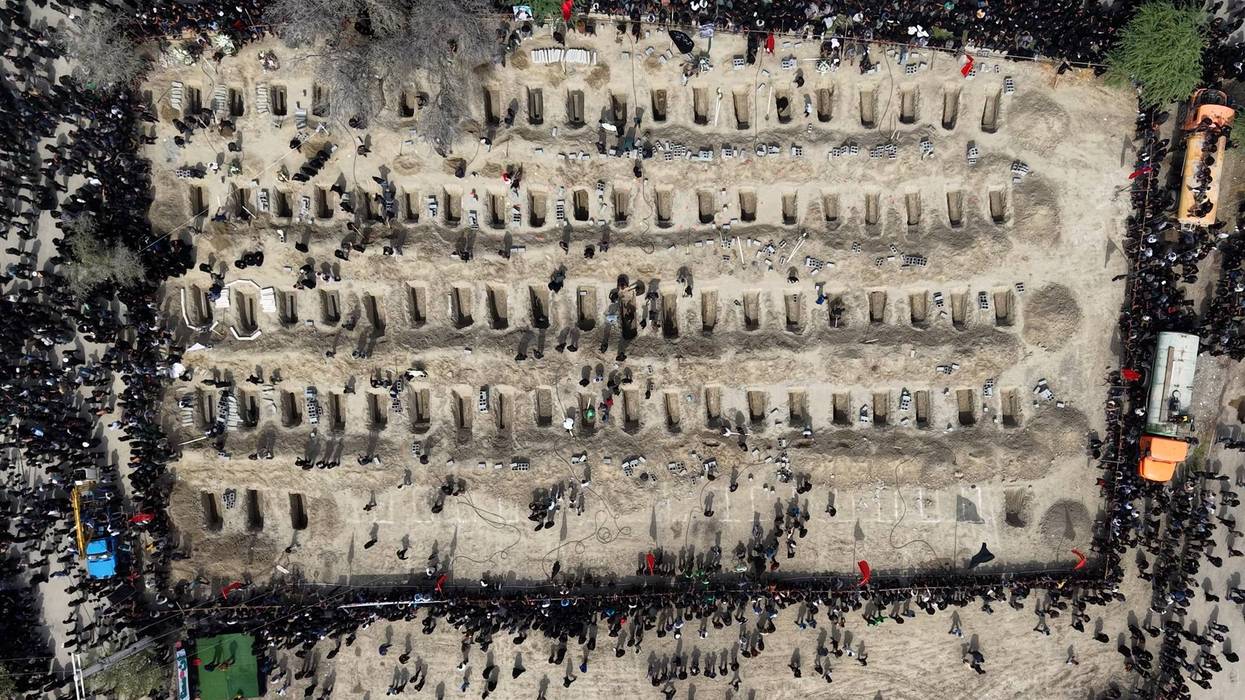
"Children were murdered in the first days of Trump’s illegal, pointless war that has wreaked havoc across the world," said Rep. Yassamin Ansari.
The House Democrat who introduced articles of impeachment against Pentagon Secretary Pete Hegseth earlier this year revived her call for his removal on Wednesday following news that top US military commanders bypassed warnings about the reliability of their targeting information before authorizing the bombing of an Iranian school, killing more than 150 people—mostly young children.
"This is unconscionable," Rep. Yassamin Ansari (D-Ariz.), one of two Iranian Americans in Congress, wrote on social media in response to CNN's reporting on the US commanders' catastrophic decision. "Children were murdered in the first days of [President Donald] Trump’s illegal, pointless war that has wreaked havoc across the world. It is an abomination. It is a war crime. And it is why I’ve introduced articles of impeachment against Pete Hegseth."
Ansari urged her colleagues to support the Hegseth impeachment articles, which state that the Pentagon chief "has authorized, condoned, or failed to prevent the use of military force in a manner inconsistent with the law of armed conflict" and "demonstrated a willful disregard for the Constitution," among other alleged violations.
Currently, just 16 House Democrats are listed as co-sponsors of Ansari's impeachment articles against Hegseth, who dismantled the Pentagon's civilian harm mitigation programs before the Trump administration attacked Iran in late February. According to ProPublica, "Hegseth made deep cuts to the Civilian Harm Mitigation and Response programs and slashed CHMR staff at military commands by more than 90%."
"That included removing civilian harm specialists from target development strike teams and reducing the team of 10 at Central Command to only one full-time staffer," the outlet added.
CNN reported on Tuesday that senior US military commanders ignored warnings that intelligence pertaining to possible targets in Iran "was severely out of date and approved some strikes"—including the bombing of Shajareh Tayyebeh Elementary School in Minab, an attack that human rights groups say should be investigated as a war crime.
Months later, the Pentagon has not publicly released the findings of its investigation into the strike, and Trump recently said he doesn't believe the US was responsible for the Minab school attack, despite now-abundant evidence to the contrary. The attack is seen as one of the worst massacres of civilians in recent US military history.
Last week, The Associated Press reported that when news of the school bombing emerged on the first day of the US-Israeli assault on Iran, "the US military knew they had conducted strikes in the vicinity—though it took the military time to verify the Iranian claims that a school was struck and begin a formal investigation."
"One former Pentagon official, similarly speaking on condition of anonymity, said the bombing came as a natural result of changes made by the Trump administration to reduce staff to mitigate civilian harm and Hegseth’s emphasis on lethality," the outlet noted. "When Hegseth took charge, he slashed the size of an office called the Civilian Protection Center of Excellence, created at the direction of Congress in late 2022. That stopped the office’s work on updating 'no-strike lists,' which are lists of protected sites such as hospitals, schools, churches, and mosques, that the Pentagon keeps."

"These deals produce harm reliably enough that researchers can now count it."
Investigative journalist Ronan Farrow on Tuesday published a video on social media where he examines how private equity firms have been buying up hospitals throughout the US and saddling them with enormous debt burdens.
At the start of the video, Farrow notes that private equity firms such as The Carlyle Group, Cerberus, and Pinta have acquired hundreds of hospitals and nursing homes over the last 20 years.
"The pitch is generally: Infuse capital, cut inefficiency, and exit in five to seven years," Farrow explains. "And the deals work like this: A private equity firm puts some of its own money and borrows the rest. Typically, it'll borrow more than 70% of the purchase price."
"The twist is that debt doesn't sit on the firm's books," Farrow continues. "It gets placed on the facility itself, so the hospital or nursing home now carries the debt and the interest on it."
Studies now present a striking picture of what happens when private equity firms acquire hospitals and nursing homes: predictable increases in harm and deaths. One landmark study shows: patient deaths up about 11% after such acquisitions. pic.twitter.com/N6yfXJQIwW
— Ronan Farrow (@RonanFarrow) July 7, 2026
Farrow then cites research published by The Review of Financial Studies in 2023, which found healthcare facilities saw their interest payments more than triple after being acquired by private equity firms.
"In many cases," Farrow says, "private equity firms sold the nursing home's building shortly after acquiring it, returning the proceeds to investors, and then charging the facility rent on the building it used to own."
In addition to added debt burdens placed on hospitals and nursing homes, Farrow adds, the 2023 study found that private equity firms also cut staff hours after acquiring facilities, which has hurt patient care.
"The authors... found that private equity ownership can increase patient mortality by up to 11%," he says. "Over the study period, that translated to more than 20,000 lives lost."
Farrow then points to a 2025 study that found salaries of emergency room workers fall by an average of 18% in hospitals acquired by private equity firms, while hospital-acquired infections and complications rose by 25%.
Farrow concedes that not all private-equity deals turn out poorly and that some of the facilities are already in distress before being acquired.
However, he warns that "these deals produce harm reliably enough that researchers can now count it," adding that "so far, the industry has moved faster than the rules."
Research published Monday by the Private Equity Stakeholder Project (PESP) warned that private equity firms have been increasingly relying on nonprofit joint ventures to expand their reach throughout the US healthcare industry and "siphon profits from health systems and critical healthcare infrastructure."
"Private equity's healthcare playbook is evolving,” said Jim Baker, executive director of PESP. “Our research documents how private equity has increasingly relied on joint ventures with nonprofits to expand its presence in healthcare. These arrangements have received far less attention than traditional private equity buyouts, even as they become more common across hospitals and other healthcare sectors."

The US president, who launched the illegal and costly war earlier this year, attacked Iranian leaders as "scum" and "sick people."
US President Donald Trump on Wednesday said the interim ceasefire agreement designed to provide space for a lasting peace agreement with Iran was "over," remarks that came just hours after the American military launched a new wave of airstrikes against Iran.
Speaking alongside NATO Secretary General Mark Rutte in Ankara, Türkiye, Trump attacked Iranian leaders as "scum" and "sick people" and dismissed the idea of returning to negotiations as "a waste of time."
"To me, I think it's over," said the US president, referring to the temporary ceasefire established under the memorandum of understanding (MOU) signed last month. "I don't want to deal with them."
Trump's comments, which sent oil prices surging and intensified fears of a resumption of deadly all-out war in the Middle East, came after the US Central Command launched what it characterized as "powerful strikes against Iran to impose heavy costs for targeting and attacking commercial shipping" in the Strait of Hormuz.
Earlier on Tuesday, the Trump administration revoked a waiver allowing Iran to export its oil—a key component of the faltering MOU, which Iran and the US signed less than a month ago. Iran's Foreign Ministry decried the Trump administration's move as a violation of the MOU and "yet another indication of the US administration’s bad faith, inconsistency, and unreliability," according to a statement published by Iran's Fars News Agency.
Iran's Islamic Revolutionary Guard Corps said Wednesday that it hit more than 80 US military targets in the Middle East in response to the Trump administration's latest strikes.
Jamal Abdi, president of the National Iranian American Council, warned in a statement late Tuesday that "it is critical that Iran and the US recommit to the terms of the MOU and get negotiations back on track before it is too late."
"The US has consistently pushed the boundaries of the agreement and put it on uncertain footing, from the failure to rein in Israel’s actions in Lebanon to the establishment of the ‘alternative corridor’ in the Strait outside of Iranian purview," said Abdi. "Iran believes this is an attempt to relitigate the MOU that it says recognized Iran’s authority to manage the waterway. So long as Iran perceives the US as seeking to weaken its position and eventually return to war, negotiations are likely to take a back seat to more fighting."
"As disastrous as this war has been for American interests thus far, President Trump appeared to have found an off-ramp before it triggered uncontrollable economic fallout or escalated to a ground war that could become a generational quagmire," Abdi added. "Now, after having narrowly avoided a worst-case scenario, the president risks being pulled back in and returning us to an unwinnable war."