

SUBSCRIBE TO OUR FREE NEWSLETTER
Daily news & progressive opinion—funded by the people, not the corporations—delivered straight to your inbox.
5
#000000
#FFFFFF
To donate by check, phone, or other method, see our More Ways to Give page.
Daily news & progressive opinion—funded by the people, not the corporations—delivered straight to your inbox.
The United Nations Human Rights Council took positive steps to
respond to human rights emergencies in Kyrgyzstan and Somalia in its
session that ended on June 18, 2010, Human Rights Watch said today. But
the council's failure to act on Iran and its weak response to the
situation in Afghanistan indicate that the body is still taking a
piecemeal approach to fulfilling its mandate, Human Rights Watch said.
The council condemned the ethnic violence in Kyrgyzstan and
called on its government to conduct a full and transparent
investigation into the events of April 7 that led to the ouster of the
previous government and the ongoing ethnic violence, while also
agreeing to examine the situation in Somalia during its next session.
The council also decided to send a fact-finding mission "to investigate
violations of international law resulting from Israeli attacks on the
flotilla of ships carrying humanitarian assistance" on May 31.
"The council should show the same willingness to act in other
situations like Iran and Afghanistan as it has shown on Kyrgyzstan and
Gaza," said Julie de Rivero, Geneva advocacy director for Human Rights
Watch. "It's time for the council to stop being selective and recognize
that people facing human rights violations deserve the council's
attention no matter where they live."
The council did not take any action on Iran during its session
despite calls from Iranian civil society activists for a response to
the government's continuing crackdown on civil society. However, 56
states joined a statement made at the session expressing concern over
"the lack of progress in the protection of human rights in Iran,
particularly since the events surrounding the elections in Iran last
June."
On Afghanistan, the council adopted a narrow resolution that
focused only on attacks on school children. While the council's belated
attention to the dire human rights situation in that country was a step
forward, the council's failure to address the full range of rights
violations in Afghanistan or even to call for accountability for the
attacks on the children was regrettable, Human Rights Watch said.
In other action during this council session, a group of UN experts
presented a report on secret detentions that revealed the use of that
practice by a number of countries in their counterterrorism
programs. In addition, the council-appointed expert on the right to
health, Anand Grover, called in his annual report for same-sex
practices among consenting adults to be decriminalized in all
countries, leading to the first discussion at the council on this issue.
The council also adopted by consensus a resolution on religious
freedom, after three years in which it had been strongly divided on
this issue. The resolution expressed concern at the overall rise in
intolerance and violence directed at members of religious communities.
The council also appointed a new expert on the right to freedom of
religion and belief with a three-year mandate.
The close of this council session was delayed for several hours
when some countries objected to two people nominated by the council
president for appointments to positions as experts on various aspects
of human rights. After a lengthy adjournment following the intervention
by those states, the council president's nominations were withdrawn,
and two other nominees were selected for these posts.
"The council's actions regarding selection of experts to fill these
positions call into question its commitment to put an expert's
qualifications ahead of politics in making appointments," de Rivero
said.
A group of 108 states also took the positive step of coming together
to emphasize their concerns about high rates of maternal mortality,
Human Rights Watch said. They called for the UN high commissioner for
human rights to promote a human-rights-based approach to maternal
mortality by presenting her recent report about the issue at the
Millennium Development Goals Summit in September, aimed at accelerating
progress towards attainment of the goals.
"While the council's overall performance has improved in some ways,
much more needs to be done," de Rivero said. "There is a huge gap
between the council's actions and the real needs of people facing human
rights violations across the globe."
Human Rights Watch is one of the world's leading independent organizations dedicated to defending and protecting human rights. By focusing international attention where human rights are violated, we give voice to the oppressed and hold oppressors accountable for their crimes. Our rigorous, objective investigations and strategic, targeted advocacy build intense pressure for action and raise the cost of human rights abuse. For 30 years, Human Rights Watch has worked tenaciously to lay the legal and moral groundwork for deep-rooted change and has fought to bring greater justice and security to people around the world.
Millions of Italians have taken to the streets in support of Palestinians and around 3 in 4 say Israel committed a genocide in Gaza.
The Italian government has suspended a military cooperation agreement with Israel in response to its attacks against Lebanon in recent weeks, which have killed hundreds of people.
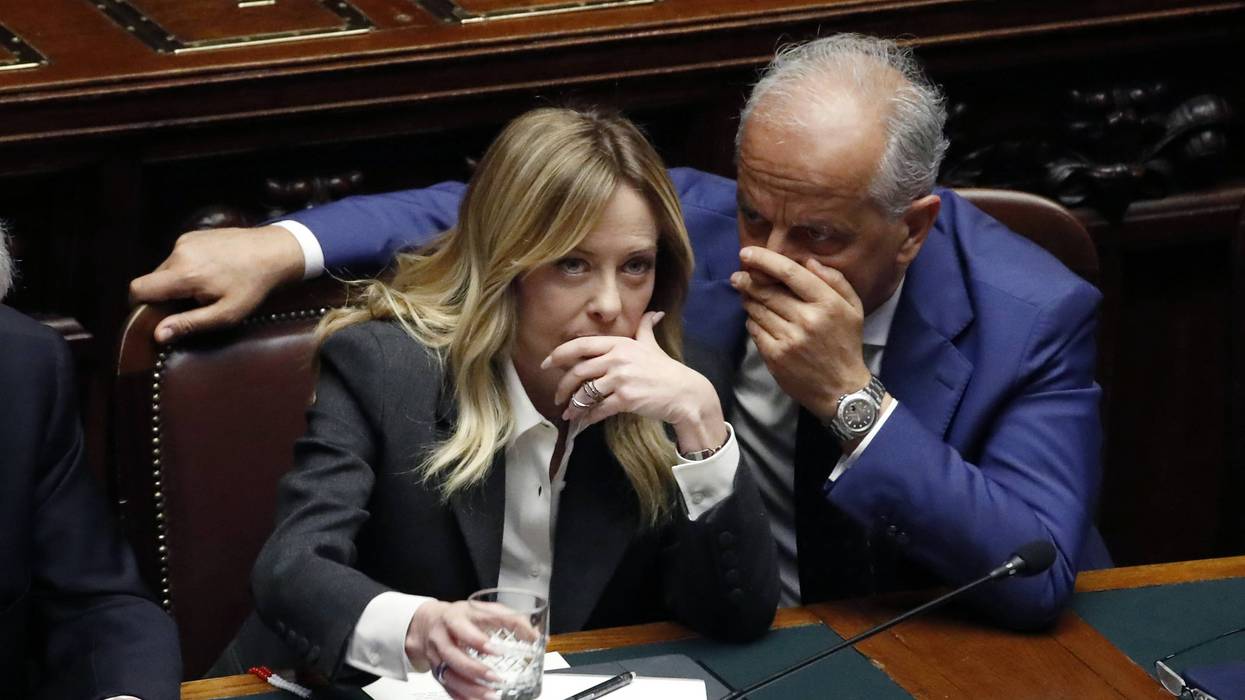
Italy's right-wing prime minister, Giorgia Meloni, announced on Tuesday that it was suspending an agreement with Israel that dates back to 2003 and involved cooperation between the two countries, which traded military equipment and shared technical data.
“In view of the current situation, the government has decided to suspend the automatic renewal of the defense agreement with Israel,” Meloni said on Tuesday.
It marks a dramatic shift in policy for Italy's government, which has until recently been one of Israel's closest allies in Europe. Amid the genocide in Gaza, Meloni has faced pressure both from opposition parties and from the public to cut ties with Israel for more than a year.
The relationship appears to have finally frayed with the events of the past several weeks, when Israel launched an invasion of Lebanon that has involved the displacement of more than 1 million people, the razing of entire villages, and the aggressive bombing of civilian areas.
Tension between the two countries hit a boiling point over the past week, when the Italian government accused Israeli forces of firing warning shots at Italian UN peacekeepers, which caused damage to a vehicle but resulted in no injuries.
Italy was also among several European countries that called for Lebanon's inclusion in last week's ceasefire agreement between the US and Iran. Meloni accused Israel of "disrespecting" the two-week truce when it launched the most devastating attack yet on Lebanon the day after the ceasefire was reached, which killed and wounded more than 1,400 people, including many civilians.
Though Meloni has been an ideological ally of US President Donald Trump, she has grown increasingly critical of the American president. On Monday, she condemned what she called "unacceptable" insults from Trump against Pope Leo XIV, who criticized the war in Iran.
Trump responded with his own shots at Meloni: “I thought she had courage. I was wrong," he said.
Meloni is also facing mounting pressure from her own people over Italy's relationship with Israel, which could loom large as she faces reelection in 2027.
Nearly 3 out of 4 Italians said in a September survey that they believe Israel's actions in Gaza constitute a genocide, and 59% said they wanted Italy to cut ties with Israel. During the fall, millions of Italians took to the streets to rally in solidarity with Palestinians and support the Global Sumud Flotilla as it carried humanitarian aid to besieged Gaza.
This anger has been seized on by the opposition. Last week, during a heated exchange, the Parliament erupted in applause after opposition lawmaker Angelo Bonelli took Meloni to task for "failing" to condemn or distance herself from Trump or Israeli Prime Minister Benjamin Netanyahu.
"You are stubbornly short-sighted and fail to grasp where the world is heading," Bonelli said. "A world where the logic of war is dictated by two criminals."
Responding to Israel's attacks on Lebanon on Wednesday, Bonelli asked the prime minister: "200 people were killed as if it were nothing. What is your response? What are you doing? Do you have the courage to take action?"
Riccardo Magi, a member of the center-left opposition party More Europe, wrote on social media that by suspending Italy's defense agreement with Israel, Meloni had "finally realized that something is happening in the Middle East."
"After years of massacres by Israel against Palestinian civilians, in which our government simply decided to look the other way, today Meloni has suddenly decided to suspend the memorandum between Italy and Israel, as the opposition has been demanding for a long time," he said.
However, he cautioned that the decision was "not about a renewed humanitarian spirit on the part of our government," but rather "pure electoral convenience."
"It is not enough for us, and we believe sanctions are necessary against Netanyahu and his ministers, including a ban on entry into the territory of the union," he said. "The illegal occupation of Gaza, together with the wars provoked in the area without any consideration for the lives of civilians, is now a point of no return. Israel must stop."
The latest storm continues a trend of "unprecedented battering" by Category 4s and 5s for US territories.
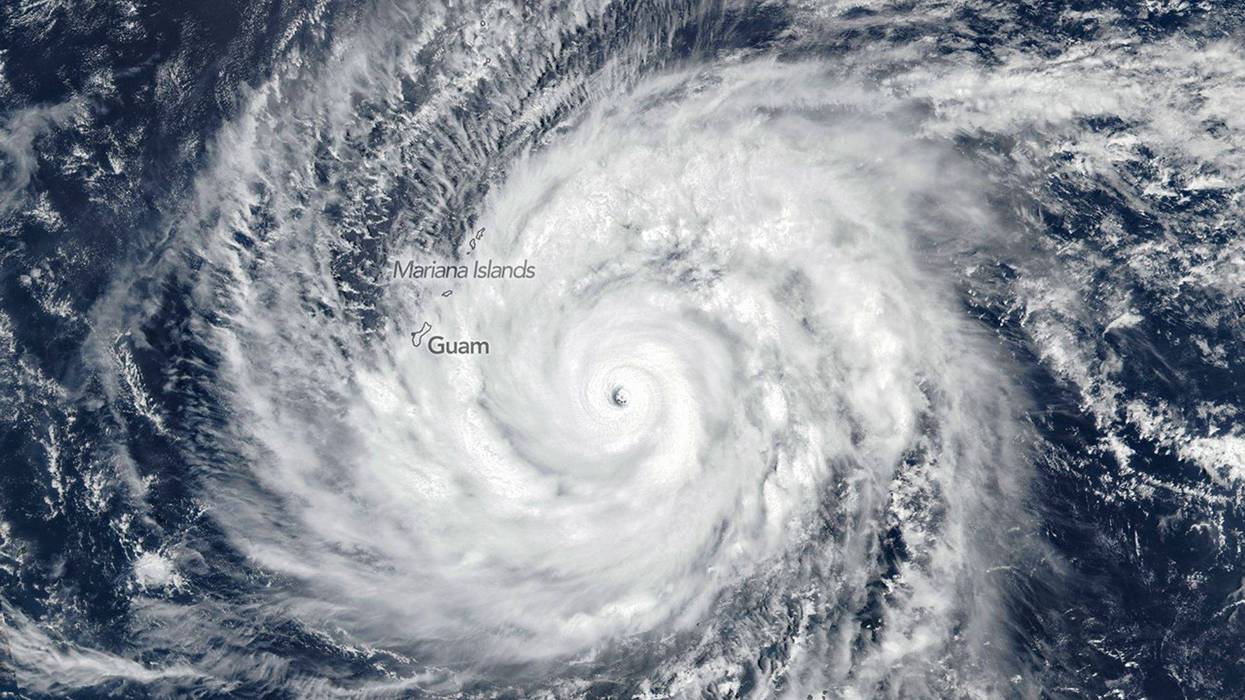
Super Typhoon Sinlaku slammed into the Northern Mariana Islands on Tuesday, causing severe damage to the US-controlled territories that are home to roughly 50,000 people.
According to a Tuesday report from The Associated Press, the typhoon that struck the islands of Tinian and Saipan was the strongest storm recorded so far this year, delivering sustained winds of up to 150 miles per hour.
Saipan Mayor Ramon "RB" Jose Blas Camacho told the AP he was concerned about how the storm's severity was hindering local rescue operations.
"It’s so difficult for us to respond with this heavy rain, heavy wind to rescue people," he said. "Objects are just flying left and right.”
Marko Korosec, a storm chaser and weather forecaster, analyzed satellite images of the storm and predicted the Northern Mariana Islands would be hit with "violent, destructive winds, catastrophic storm surges, giant waves, and flooding rain."
"The damage," he wrote, "will be extreme."
An analysis of the storm written by hurricane scientist Jeff Masters and published by Yale Climate Connections projected that "damage from Sinlaku will be severe on both islands."
Masters also said Sinlaku was just the latest in what he described as an "unprecedented" number of Category 4 and Category 5 typhoons over the last decade, which he attributed to "a combination of natural variability and climate change."
"Beginning in 2017, the US has gotten absolutely hammered by high-intensity Category 4 and 5 hurricanes," Masters explained. "Seven have hit the continental US, one has hit Puerto Rico, and now two have hit the Northern Mariana Islands. That's as many US Cat 4 and Cat 5 landfalls as had occurred in the prior 57 years."
Later in his analysis, Masters pointed out that 10 of the 13 strongest tropical typhoons to make landfall in the last 80 years have occurred since 2006.
A Washington Post analysis of the typhoon published Tuesday noted that it's "unusually early" for a superstorm of this caliber to form in the Pacific, warning it "may be a sign of what's to come" this season.
"The season is expected to be anomalously active because of a burgeoning El Niño, which induces a warming of water temperatures," explained the Post. "That helps air to rise, generating more, and stronger, storms."
The Post added that Sinlaku is "the last in rare set of triplet cyclones that formed this month," which it said is an "unusual pattern" that is "also contributing to a burst of winds that is expected to greatly boost the odds of a super El Niño later this year, pushing warm water west-to-east across the Pacific."
"From Greenland to Venezuela to Iran, President Trump has shown that he is willing to recklessly enter military conflicts without congressional support," noted an Issue One campaigner.
With the status of US-Iran talks unclear halfway through a two-week ceasefire, a dozen faith, science, veterans, and watchdog groups on Monday pressured key congressional committee leaders to swiftly reassert Congress' "constitutional authority over matters of war and peace," and put an end to President Donald Trump's new conflict in the Middle East.
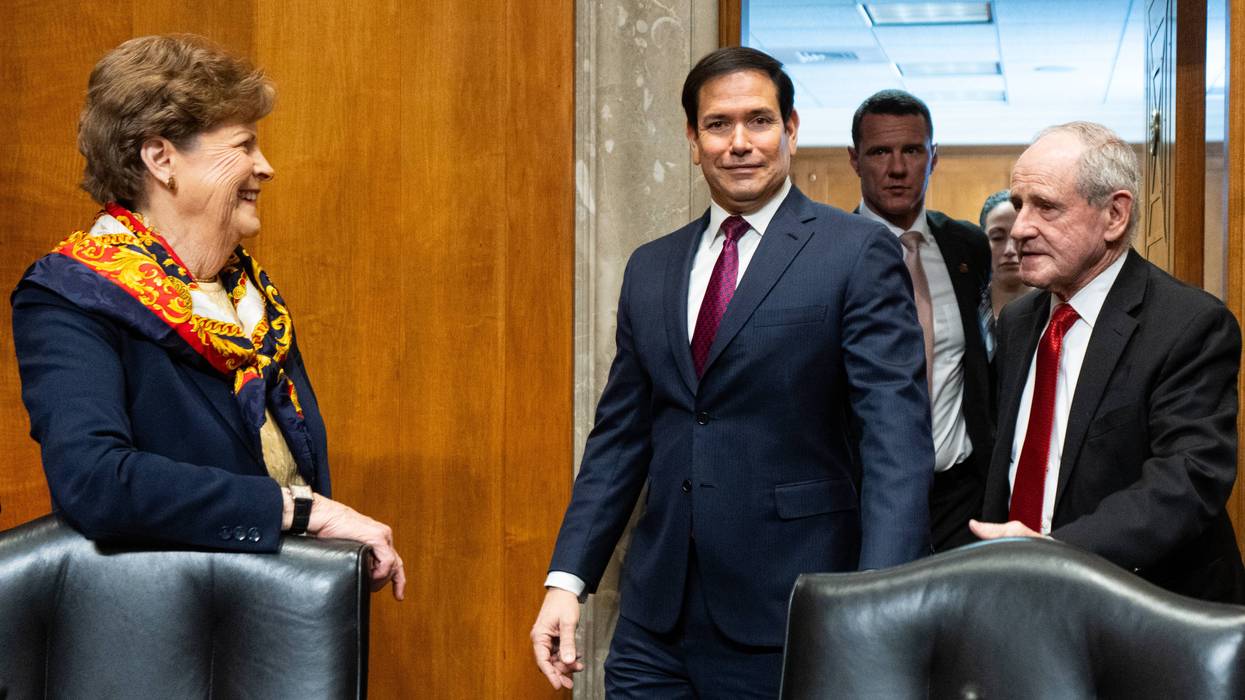
"The founders were clear: Article I of the Constitution vests in Congress—not the president—the sole authority to declare war, fund military action, and oversee its execution," stresses the letter, addressed to leaders of both congressional foreign relations panels: Reps. Brian Mast (R-Fla.) and Gregory Meeks (D-NY), and Sens. James Risch (R-Idaho) and Jeanne Shaheen (D-NH).
Abigail Bellows, senior policy director for anti-corruption and accountability at Common Cause, one of the groups behind the letter, said in a statement that "the Constitution places decisions of war and peace in the hands of Congress because the American people deserve a voice before their lives and tax dollars are put on the line."
The letter acknowledges that "over time, presidents of both parties have pushed the limits of their constitutional authority, gradually eroding Congress' role in decisions of war and peace. Reasserting Article I authority is not about one president or one party. It is about restoring the constitutional balance that protects our democracy, our national security, and our troops."
Víctor Guillén, director of national campaigns at Issue One, which spearheaded the letter, said that "while presidents of both parties have stretched the boundaries of constitutional authority, we are especially concerned about the actions of President Trump. From Greenland to Venezuela to Iran, President Trump has shown that he is willing to recklessly enter military conflicts without congressional support."
"His impulsiveness has led to suffering for millions of Americans, from American troops who were wounded and killed to people living paycheck to paycheck, wondering how they will afford groceries, gas, or childcare," Guillén said of Trump. "Now that Congress has seen what the president is capable of, it must stop the president from repeating it."
"If Congress does not check him now," the campaigner declared, "the president will most likely start more poorly planned and pointless conflicts in the future—on Truth Social, no less—to the detriment of the American people and citizens around the world."
Trump and Israel's war on Iran has already led to thousands of deaths across the Middle East, plus damaged civilian infrastructure throughout Iran. Israeli forces have also ramped up attacks on Lebanon, including during the ceasefire agreed to last week.
"Every moment lawmakers fail to act weakens accountability and puts both our democracy and more lives at risk," said Bellows. "Common Cause stands ready to work with Congress to restore the proper balance of power and ensure that decisions about war reflect the will of the people."
Specifically, the coalition is calling on lawmakers to:
"This is a bipartisan responsibility," the letter emphasizes. "The Constitution is clear and the stakes are high."
The letter's other signatories are Democracy Matters, Faith in Democracy, Mormon Women for Ethical Government, Principles First, Project on Government Oversight, Protect Democracy, RepresentUs, Stand Up America, The Chamberlain Network, and Union of Concerned Scientists.
So far, nearly all Republicans and a short list of Democrats in the GOP-controlled Congress have blocked multiple war powers resolutions on Iran and Trump's other unauthorized military action. Another round of votes on Iran are expected this week.
US Sen. Bernie Sanders (I-Vt.) also plans to force senators to consider cutting off the flow of Americans weapons to Israeli Prime Minister Benjamin Netanyahu's government over its genocide against Palestinians in the Gaza Strip since October 2023.
Specifically, on Wednesday, Sanders intends to force votes on a pair of resolutions that would prohibit a $151.8 million sale of 12,000 BLU-110A/B general purpose 1,000-pound "dumb" gravity bombs and related logistics and technical support services, as well as a $295 million sale of Caterpillar bulldozers along with related materials and support.
"US taxpayers have spent tens of billions of dollars in support of the racist, extremist Netanyahu government. Enough is enough," Sanders said Tuesday. "The United States must use the leverage we have—tens of billions in arms and military aid—to demand that Israel ends these atrocities."