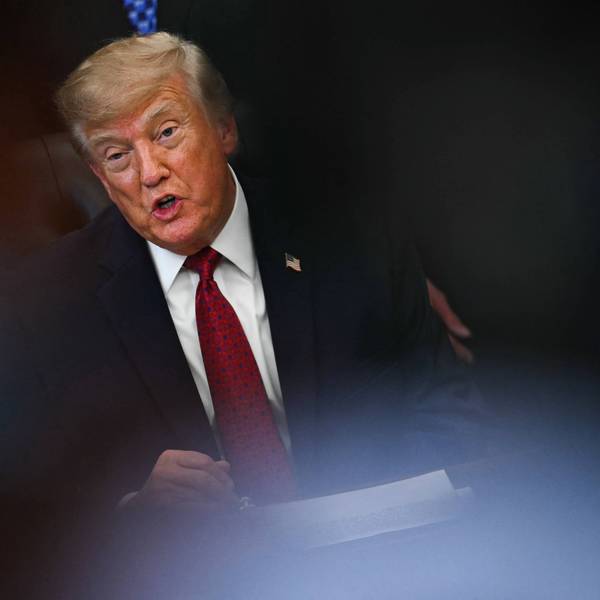

US Rep. Jim Himes (D-Conn.) speaks to members of the press after a briefing at the US Capitol on February 14, 2024 in Washington, DC.
Top Dem Says Video of Military 'Attacking Shipwrecked Sailors' Among 'Most Troubling Things' He Has Ever Seen
"Two individuals in clear distress, without any means of locomotion, with a destroyed vessel, were killed by the United States."
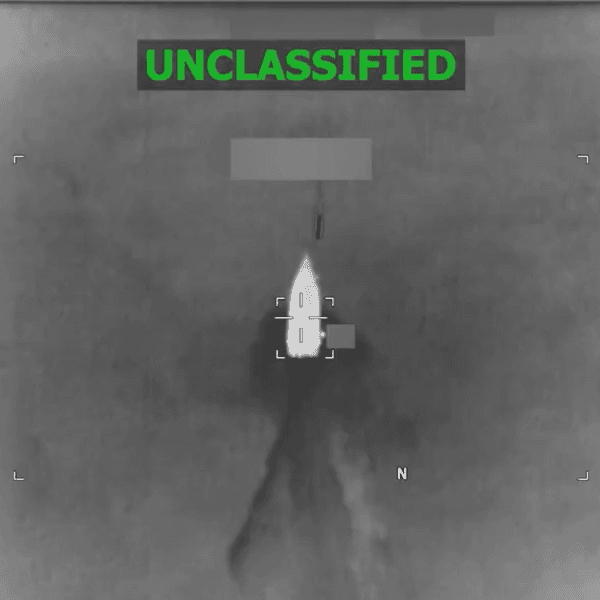
US Rep. Jim Himes, the ranking member of the House Permanent Select Committee on Intelligence, expressed horror on Thursday after watching a video of the September 2 double-tap strike on a suspected drug trafficking vessel off the coast of Trinidad and Tobago.
Speaking to reporters after a briefing on the strike delivered by Adm. Frank Bradley, Himes (D-Conn.) called the video he saw of the attack "one of the most troubling things I've seen in my time in public service."
Himes proceeded to describe the video, which showed the US military firing missiles at two men who had survived an initial attack on their vessel and who were floating in the water while clinging to debris.
"You have two individuals in clear distress, without any means of locomotion, with a destroyed vessel, [who] were killed by the United States," he said.
Himes then started to walk away before a reporter asked him to describe more of what he saw in the video. The Connecticut Democrat then said the video showed a clear "impermissible action," according to the laws of armed conflict.
"Any American who sees the video that I saw will see its military attacking shipwrecked sailors," he said. "Now, there's a whole set of contextual items that the admiral explained. Yes, they were carrying drugs. They were not in position to continue their mission in any way... People will someday see this video and they will see that that video shows, if you don't have the broader context, an attack on shipwrecked sailors."
Himes finished his talk with reporters by saying that Bradley told lawmakers there had not been a "kill them all" or “no quarter” order given to him by higher-ups. Asked by a reporter if he thought the full video should be released to the public, Himes said, "I do."
Himes' reaction to the video stood in stark contrast to the reaction of Sen. Tom Cotton (R-Ark.), the chairman of the Senate Intelligence Committee, who praised the military for its actions.
According to HuffPost reporter Jen Bendery, Cotton described the strikes on the two survivors as "righteous strikes" that were "entirely lawful."
Cotton also claimed that the video showed "two survivors trying to flip a boat, loaded with drugs, bound for the United States, back over, so they could stay in the fight."
Reports from the US government and the United Nations have not identified Venezuela as a significant source of drugs that enter the United States, and the country plays virtually no role in the trafficking of fentanyl, the primary cause of drug overdoses in the US.
Additionally, many legal scholars have said that a strike on the two men who survived the initial attack on the boat is very likely either an act of murder or a war crime, regardless of whether they were intending to traffic illegal drugs in the US.
We are at a crossroads
This country and this world are at a monumental crossroads. In a few short weeks, US voters will have an opportunity to beat back the forces of fascism and confront the billionaires who are rigging the economy, our media system, and our democracy, making it increasingly impossible for ordinary people to get by. We’re not just talking about the election. We’re talking about what must be done once these fascist elements are vanquished from power. We need a bolder set of solutions than what either major party has so far been willing to offer and a working-class movement ready to fight like hell for it. Trump didn't emerge from nowhere. The conditions that fueled MAGA authoritarianism were created by decades of radical neoliberal economic policies and a corrupt political system dominated by corporate interests. They slashed taxes on the super-rich, promising that the benefits would trickle down. They said giveaways to the corporate titans would make life more affordable for the rest of us. It was all bullshit. And when a bitter, betrayed populace searches for someone to blame, right-wing demagogues have little trouble finding scapegoats. People know when they're being lied to, but you won't hear any of this from the corporate media. Only independent journalism—powered and funded by people who believe in building a better world—can deliver truly trustworthy daily news. Our Fall Campaign is underway, and we need your help. To power our newsroom through the rest of the year, we need to raise $125,000 by midnight on October 31. So if you share our vision, please contribute whatever you can to sustain our work. |
US Rep. Jim Himes, the ranking member of the House Permanent Select Committee on Intelligence, expressed horror on Thursday after watching a video of the September 2 double-tap strike on a suspected drug trafficking vessel off the coast of Trinidad and Tobago.
Speaking to reporters after a briefing on the strike delivered by Adm. Frank Bradley, Himes (D-Conn.) called the video he saw of the attack "one of the most troubling things I've seen in my time in public service."
Himes proceeded to describe the video, which showed the US military firing missiles at two men who had survived an initial attack on their vessel and who were floating in the water while clinging to debris.
"You have two individuals in clear distress, without any means of locomotion, with a destroyed vessel, [who] were killed by the United States," he said.
Himes then started to walk away before a reporter asked him to describe more of what he saw in the video. The Connecticut Democrat then said the video showed a clear "impermissible action," according to the laws of armed conflict.
"Any American who sees the video that I saw will see its military attacking shipwrecked sailors," he said. "Now, there's a whole set of contextual items that the admiral explained. Yes, they were carrying drugs. They were not in position to continue their mission in any way... People will someday see this video and they will see that that video shows, if you don't have the broader context, an attack on shipwrecked sailors."
Himes finished his talk with reporters by saying that Bradley told lawmakers there had not been a "kill them all" or “no quarter” order given to him by higher-ups. Asked by a reporter if he thought the full video should be released to the public, Himes said, "I do."
Himes' reaction to the video stood in stark contrast to the reaction of Sen. Tom Cotton (R-Ark.), the chairman of the Senate Intelligence Committee, who praised the military for its actions.
According to HuffPost reporter Jen Bendery, Cotton described the strikes on the two survivors as "righteous strikes" that were "entirely lawful."
Cotton also claimed that the video showed "two survivors trying to flip a boat, loaded with drugs, bound for the United States, back over, so they could stay in the fight."
Reports from the US government and the United Nations have not identified Venezuela as a significant source of drugs that enter the United States, and the country plays virtually no role in the trafficking of fentanyl, the primary cause of drug overdoses in the US.
Additionally, many legal scholars have said that a strike on the two men who survived the initial attack on the boat is very likely either an act of murder or a war crime, regardless of whether they were intending to traffic illegal drugs in the US.
- Democrats Demand Trump Provide Legal Justification for Extrajudicial Murder of Alleged Drug Runners ›
- President Trump’s War on Iran Was Illegal and Unconstitutional—Congress Must Act Like It ›
- Venezuela Gets the Iraq Treatment: US Corporate Media Manufactures Consent for Another Imperialist War ›
- Demands to Release Full Video of Deadly US Boat Strike Grow After Congressional Briefing | Common Dreams ›
US Rep. Jim Himes, the ranking member of the House Permanent Select Committee on Intelligence, expressed horror on Thursday after watching a video of the September 2 double-tap strike on a suspected drug trafficking vessel off the coast of Trinidad and Tobago.
Speaking to reporters after a briefing on the strike delivered by Adm. Frank Bradley, Himes (D-Conn.) called the video he saw of the attack "one of the most troubling things I've seen in my time in public service."
Himes proceeded to describe the video, which showed the US military firing missiles at two men who had survived an initial attack on their vessel and who were floating in the water while clinging to debris.
"You have two individuals in clear distress, without any means of locomotion, with a destroyed vessel, [who] were killed by the United States," he said.
Himes then started to walk away before a reporter asked him to describe more of what he saw in the video. The Connecticut Democrat then said the video showed a clear "impermissible action," according to the laws of armed conflict.
"Any American who sees the video that I saw will see its military attacking shipwrecked sailors," he said. "Now, there's a whole set of contextual items that the admiral explained. Yes, they were carrying drugs. They were not in position to continue their mission in any way... People will someday see this video and they will see that that video shows, if you don't have the broader context, an attack on shipwrecked sailors."
Himes finished his talk with reporters by saying that Bradley told lawmakers there had not been a "kill them all" or “no quarter” order given to him by higher-ups. Asked by a reporter if he thought the full video should be released to the public, Himes said, "I do."
Himes' reaction to the video stood in stark contrast to the reaction of Sen. Tom Cotton (R-Ark.), the chairman of the Senate Intelligence Committee, who praised the military for its actions.
According to HuffPost reporter Jen Bendery, Cotton described the strikes on the two survivors as "righteous strikes" that were "entirely lawful."
Cotton also claimed that the video showed "two survivors trying to flip a boat, loaded with drugs, bound for the United States, back over, so they could stay in the fight."
Reports from the US government and the United Nations have not identified Venezuela as a significant source of drugs that enter the United States, and the country plays virtually no role in the trafficking of fentanyl, the primary cause of drug overdoses in the US.
Additionally, many legal scholars have said that a strike on the two men who survived the initial attack on the boat is very likely either an act of murder or a war crime, regardless of whether they were intending to traffic illegal drugs in the US.
- Democrats Demand Trump Provide Legal Justification for Extrajudicial Murder of Alleged Drug Runners ›
- President Trump’s War on Iran Was Illegal and Unconstitutional—Congress Must Act Like It ›
- Venezuela Gets the Iraq Treatment: US Corporate Media Manufactures Consent for Another Imperialist War ›
- Demands to Release Full Video of Deadly US Boat Strike Grow After Congressional Briefing | Common Dreams ›