

SUBSCRIBE TO OUR FREE NEWSLETTER
Daily news & progressive opinion—funded by the people, not the corporations—delivered straight to your inbox.
5
#000000
#FFFFFF
To donate by check, phone, or other method, see our More Ways to Give page.
Daily news & progressive opinion—funded by the people, not the corporations—delivered straight to your inbox.

Luke Eshleman (202) 265-7337
The U.S. Environmental Protection Agency is improperly
withholding a long-sought report on whether the agency's clean-up of
Libby, Montana is adequate to protect the residents of that beleaguered community,
according to a lawsuit filed today by Public Employees for Environmental Responsibility
(PEER). The lawsuit will test pledges by President Obama and Attorney General
Holder of a new openness and presumption of disclosure in administering the
Freedom of Information Act.
PEER is seeking the release of a 2006 report by EPA Office of Inspector General
(IG) investigator Cory Rumple concerning the safety and completeness of EPA's
removal of deadly vermiculite from the town of Libby. The report assesses the
public health implications of the manner in which EPA conducted the clean-up
in Libby, where an estimated 200 people have already died and hundreds more
sickened by exposure to this virulent form of asbestos, as well as the culpability
of responsible EPA officials.
During the past two years, PEER has repeatedly requested the document's
release. In 2007, EPA contended that the report could not be disclosed because
it was part of an active law enforcement investigation. In 2008, the agency
dropped that rationale but asserted that even the factual portions of the report,
as opposed to Agent's Rumple's conclusions, were so sensitive that
a redacted report could not be released. In a July 28, 2008 letter to PEER,
Associate Deputy IG Mark Bialek wrote that releasing only the "summary
of information and concerns of various EPA employees and private individuals
on technical/scientific issues regarding EPA's residential cleanup program
in Libby" reported by Rumple would still reveal the agency's "deliberative
process".
Following President Obama's January 21, 2009 Freedom of Information
Act (FOIA) directive that "The Government should not keep information
confidential merely because public officials might be embarrassed by disclosure,
because errors and failures might be revealed, or because of speculative or
abstract fears", PEER again requested the Rumple report. After EPA indicated
that it would take six months to make even an initial determination as to whether
to release it (far longer than the 20 working day FOIA deadline), PEER filed
a formal appeal. After that appeal drew no response, PEER today filed a FOIA
lawsuit in the U.S. District Court for the District of Columbia.
"The people in Libby deserve to know whether EPA kept its promises to
them and performed the removal in the most protective fashion," stated
PEER Staff Counsel Christine Erickson, who prepared the complaint, noting that
according its website later this year "EPA will transition from emergency
Removal Activity to the Remedial Process" in Libby. "There is no
record of EPA conducting a risk assessment on its own clean-up plan; the Rumple
report explores the consequences of that omission."
On March 19, 2009, Attorney General Holder issued a directive that the Justice
Department will defend FOIA lawsuits only when "disclosure would harm
an interest protected by one of the statutory exemptions". The PEER suit
will provide an early test on the scope of this new pro-disclosure policy.
"EPA's rationale for keeping this report from the public will
not withstand scrutiny," Erickson concluded.
See the EPA basis for withholding the Rumple report on Libby
Read the PEER complaint
Look at the status of the EPA Libby clean-up
View
President Obama's Executive Memorandum on FOIA
View the Holder memo
PEER protects public employees who protect our environment. We are a service organization for environmental and public health professionals, land managers, scientists, enforcement officers, and other civil servants dedicated to upholding environmental laws and values. We work with current and former federal, state, local, and tribal employees.

Lebanese Prime Minister Nawaf Salam issued a statement Saturday condemning Israel's latest deadly bombings in southern Lebanon, attacks that killed nearly a dozen people, including several children.
Salam rejected the Israeli government's insistence that it was targeting a Hezbollah "military compound," saying, "The seven martyrs of the Israeli airstrike on the town of Ansar are not 'military infrastructure,' nor are the children and women killed in it military targets."
"The responsibility for dealing with any military structures, if they exist on Lebanese territory, lies exclusively with the Lebanese state, through the Lebanese army and its legitimate institutions, and their existence does not grant Israel the right to violate Lebanese territory or endanger civilians," said Salam, who warned that the new strikes threaten to derail tenuous steps toward a diplomatic resolution.
"Israel must halt this escalation," Salam said. "For the security of our people and their right to life on their land are not subject to negotiation or bargaining."
Israeli Prime Minister Benjamin Netanyahu and Defense Minister Israel Katz have said their country's military won't end its illegal occupation of and attacks on southern Lebanon until Hezbollah disarms.
"We will cleanse this area and ensure the security of the northern residents [of Israel]," Katz said earlier this week, referring to southern Lebanon.
On Friday, Michel Issa, the US ambassador to Lebanon, echoed the Israeli government's message.
"Tell Hezbollah that as soon as it hands over its weapons, everything will stop," said Issa.
The Associated Press reported on Saturday that Israel struck "a home on the edge of the village of Ansar" and bombed the village of Deir al-Zahrani, killing 11 people total. Three children were killed by the Israeli airstrikes and two were wounded.
Hezbollah called the Israeli strikes "a fully fledged crime" and said that "the responsibility for this persistent aggression and violation of Lebanon's sovereignty lies with the enemy government and the United States, which provides it with support and cover."
"The Americans are partners with the Israeli enemy in its crimes and massacres against Lebanon," the group added.
In late June, the Republican-controlled US House of Representatives voted down a war powers resolution that would have halted American military participation in Israel's assault on Lebanon. More than 20 Democrats joined Republicans in voting against the measure.

"We have never seen financial conflicts or corruption of this magnitude."
The Office of the Comptroller of the Currency, a regulatory agency whose leader was chosen by President Donald Trump, granted preliminary approval on Friday to World Liberty Financial's application for a federal bank charter.
World Liberty Financial is a crypto venture launched in 2024 by the president's two eldest sons, Donald Trump Jr. and Eric Trump, and several partners. The firm's website states that WLF is 38% owned by "an entity affiliated with Donald J. Trump and certain of his family members."
WLF applied for a US bank charter in January, drawing alarm from lawmakers and watchdogs who said the review process would be rife with conflicts of interest. "We have never seen financial conflicts or corruption of this magnitude," Sen. Elizabeth Warren (D-Mass.), the top Democrat on the Senate Banking Committee, said at the time.
The OCC, headed by Jonathan Gould, announced the approval decision in a letter published Friday. WLF's application was assessed by career OCC staff, the agency said.
"The Office of the Comptroller of the Currency (OCC) has reviewed your application to establish a new national trust bank, which will engage in operations of a trust company and activities related thereto, including fiduciary activities, with the title of World Liberty Trust Company, National Association," the letter states. "The OCC hereby grants preliminary conditional approval of your charter application upon determining that your proposal meets certain regulatory and policy requirements."
In response to the news, Warren wrote on social media that "this is the most brazen act of self-dealing our financial system has ever seen."
Reuters reported that the charter, if finalized, would allow World Liberty's "to directly issue its USD1 stablecoin, as well as custody the US dollar assets backing it, both of which are now handled by a business partner, BitGo."
"Hoping to capitalize on the Trump administration’s crypto-friendly stance, the industry has been knocking on the OCC’s door for such charters," Reuters noted. "They allow crypto companies to hold assets on behalf of clients nationwide under a single federal charter, as well as to provide other settlement and asset servicing functions—making it easier to court major institutional clients. Other crypto firms, including Ripple and Circle, have received preliminary approval for such charters under Comptroller Jonathan Gould."
World Liberty Financial welcomed the OCC's preliminary approval as "a milestone in a multi-step chartering process." The firm said in a press release that the newly formed bank's board would be chaired by Zach Witkoff, the son of Trump's special envoy to the Middle East.
Last year, Trump reaped around $527 million in proceeds from token sales by WLF, according to financial disclosures released in late June.
"They are making sure they are rich beyond their wildest dreams long after Trump departs the White House (if he departs the White House)," journalist Mehdi Hasan wrote in response to the OCC decision. "It's so openly and nakedly and obviously corrupt, I'm not sure it can be overstated."
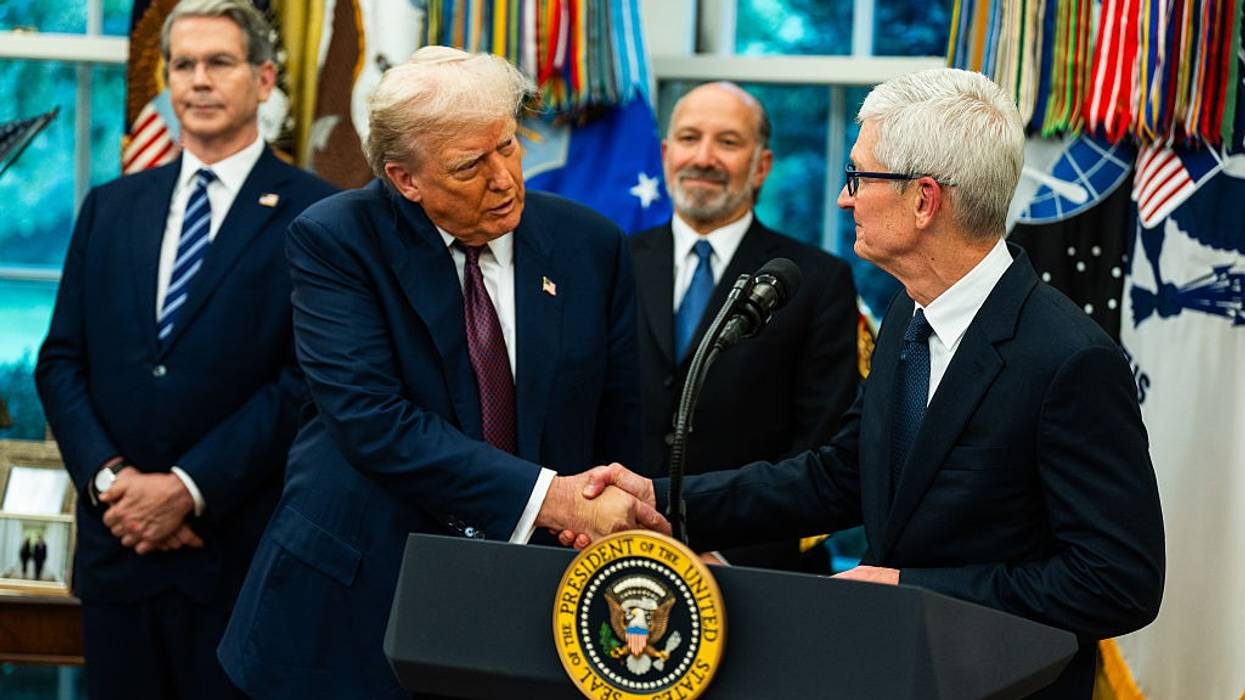
"Trump's right. His economy is a win for Wall Street. Meanwhile, while the rich get richer, millions of Americans cannot afford the basic necessities of life."
President Donald Trump on Friday said that the US economy is "doing unbelievably from the standpoint of Wall Street," bragging about record equity prices as job and wage growth remain stagnant and millions of Americans struggle to afford groceries.
In remarks to reporters, Trump hailed what he described as "the best market in history" as the S&P 500 index notched its third consecutive week of gains and hovered near its all-time high. The president, a prolific trader who has personally profited from the stock market's performance, said surging equities are "good for 401(k)s"—retirement accounts that a growing share of Americans are tapping to cover emergency expenses amid a worsening cost-of-living crisis.
"Trump's right. His economy is a win for Wall Street," Sen. Bernie Sanders (I-Vt.) said in response to the president. "Meanwhile, while the rich get richer, millions of Americans cannot afford the basic necessities of life—food, housing, healthcare, and a decent retirement."
The Alliance for Retired Americans, an advocacy group with more than 4 million members across the US, expressed astonishment at Trump's rosy and narrow assessment of the economy, which the White House posted on its official YouTube page.
"Can't make it up," the group wrote on social media. "We don't live on Wall Street. How is the economy working for you?"
Trump's comments came the same day that new data showed US consumer sentiment has fallen in August after two consecutive months of improvement, with Americans' outlook on the nation's economic conditions worsening across the political spectrum.
Last week, the Labor Department published figures showing that the US economy shed 23,000 jobs in July, wage growth decelerated, and the unemployment rate fell slightly as more people left the workforce.
Despite Trump's promise to bring them down, prices remain elevated across the economy, driven in part by the president's illegal war against Iran. Research published last month by the Urban Institute found that American families are increasingly relying on savings and credit—including buy now, pay later programs—to meet their grocery needs.
Americans are also facing what The Century Foundation and Protect Borrowers describe as "a worsening utility debt crisis."
"Energy bills have increased three times faster than the rate of inflation while Trump has been president," the groups wrote in an analysis published last month. "The national average monthly utility bill reached $280 in early 2026, a 12% increase since the end of 2024, just before the second Trump administration took office."
Meanwhile, corporate profits are booming under Trump, with the pharmaceutical industry, Big Oil, and other sectors posting banner earnings.
"Second quarter earnings for S&P 500 companies are on pace to rise 50% year over year, the highest growth rate since the second quarter of 2021," Yahoo Finance reported.
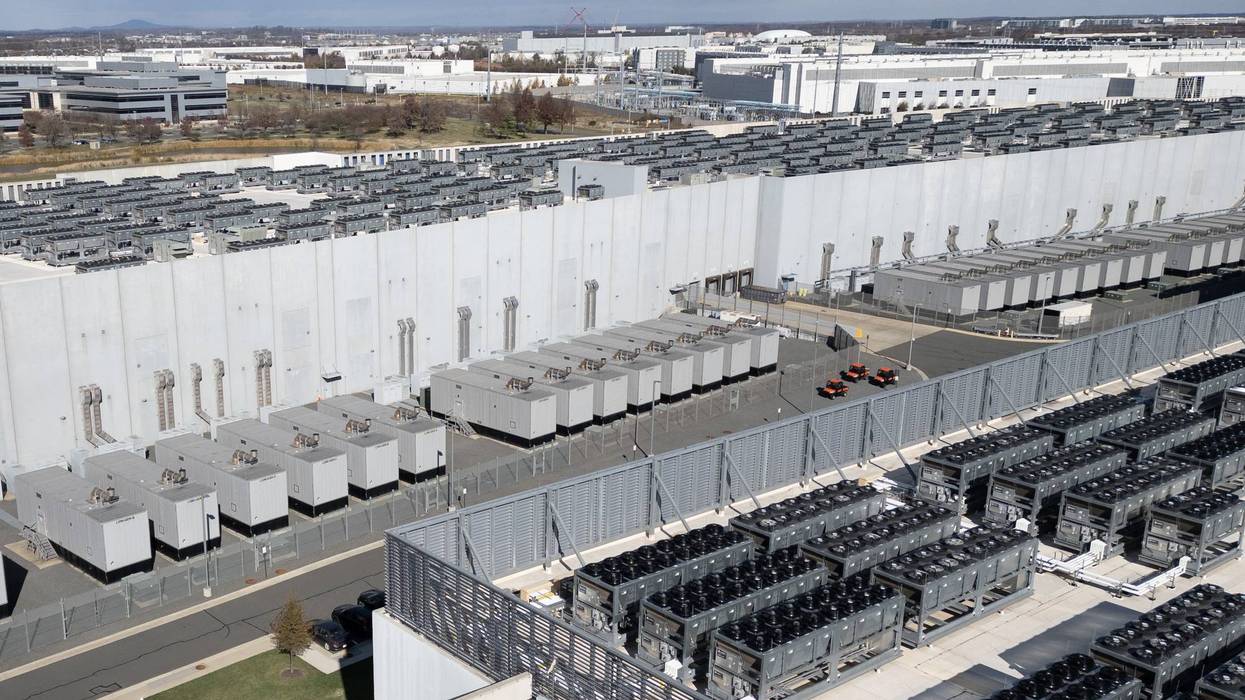
“The rush to build more and more data centers is causing harm far beyond the data centers themselves."
A trio of green groups on Friday sued the US Environmental Protection Agency over its approval of two new chemicals for semiconductor manufacturing, arguing that the EPA allowed potentially dangerous substances to be sold despite acknowledging significant gaps in its understanding of their health risks.
CHIPS Communities United and the Sierra Club, represented by Earthjustice, filed suit in the US Court of Appeals for the 9th Circuit in San Francisco challenging the approvals. The groups contend that the EPA violated the Toxic Substances Control Act (TSCA) by permitting the chemicals’ use without adequately assessing their risks to employees in semiconductor plants and the communities in which they are located.
According to Earthjustice, the EPA identified potential hazards including cancer, neurological damage, and even sudden death, but also acknowledged that it lacked sufficient information to determine the full extent of those risks. The names of the chemicals are redacted in the complaint—in which they are identified by their EPA premanufacture notice numbers, P-26-0029 and P-26-0045—because the agency has designated their identities as confidential business information.
“The Trump administration is rushing dangerous chemicals to market without the review or the protection that the law requires,” Earthjustice senior attorney Jonathan Kalmuss-Katz said in a statement announcing the lawsuit. “Here, EPA admits that it has not evaluated the full extent of these chemicals’ health risks, yet it is still sending them into communities across the country and leaving the public to discover their effects one doctor’s visit at a time.”
CHIPS Communities United coalition director Judith Barish said: “Neighbors and workers are exposed to toxic chemicals in semiconductor factories. Over decades, workers in chip [factories] have been harmed by workplace exposure and residents of nearby communities have been impacted by hazardous air or water that is contaminated by these chemicals."
"We call on the EPA to stop approving chemicals that can harm public health without understanding the risks," Barish added.
As Earthjustice noted:
Semiconductor manufacturing is a major ongoing source of [per- and polyfluoroalkyl substances], a large class of toxic “forever chemicals,” along with other industrial manufacturing sources. PFAS don’t easily break down and can persist in our bodies and the environment for decades or more. Semiconductors are also foundational hardware for artificial intelligence (AI) data centers, affecting many communities in addition to those surrounding the massive polluting chip factories.
The groups' lawsuit comes over a month after the EPA under President Donald Trump—who campaigned on what critics say was a largely empty promise to "make America healthy again"—and agency Administrator Lee Zeldin approved a fifth “forever chemical” pesticide pushed by industry lobbyists.
"EPA’s approval of these unstudied chemicals is just the latest example of the Trump EPA refusing to follow the legal risk assessment processes under TSCA and prioritizing industry profits over public health," Earthjustice said on Friday. "Last year, the agency proposed shifts to how it conducts risk evaluations for chemicals already in use and on the market that would let it ignore the real-world risks posed by toxic chemicals."
Harmful chemicals associated with data center cooling, fire suppression, and production of semiconductors and other electronic components include refrigerants such as Freon and Opteon, Teflon coatings for cable insulation, Krytox for pumps and robotics, and Viton for sealing.
Additionally, as the Natural Resources Defense Council explained, data center cooling systems "can consume vast quantities of water and pollute large quantities of water, depending on the type of cooling system used. For example, evaporative cooling consumes large quantities of water while some immersion cooling techniques rely on harmful chemicals such as PFAS."
While much critical attention on the lack of guardrails on unchecked AI development has focused on the risks of the technology itself and its economic implications—which experts say includes the shorter-term danger of mass unemployment and the long-term threat that superintelligent machines could one day subjugate or even wipe out humanity—the green groups are highlighting environmental and health hazards amid the worsening climate emergency.
"The rush to build more and more data centers is causing harm far beyond the data centers themselves," Jane Williams, chair of the Grassroots Network National Clean Air Team at Sierra Club, said Friday.
“From the plants where toxic chemicals are used to make semiconductors, to the roads these chemicals are transported on, and finally to the incinerators where they are disposed, EPA’s approval of these dangerously unstudied chemicals places the public at risk," Williams added. "These chemicals are suspected to be persistent bioaccumulative toxins, a category of chemicals that contaminate breast milk, cord blood, and the next generation. This action is an assault on the future.”
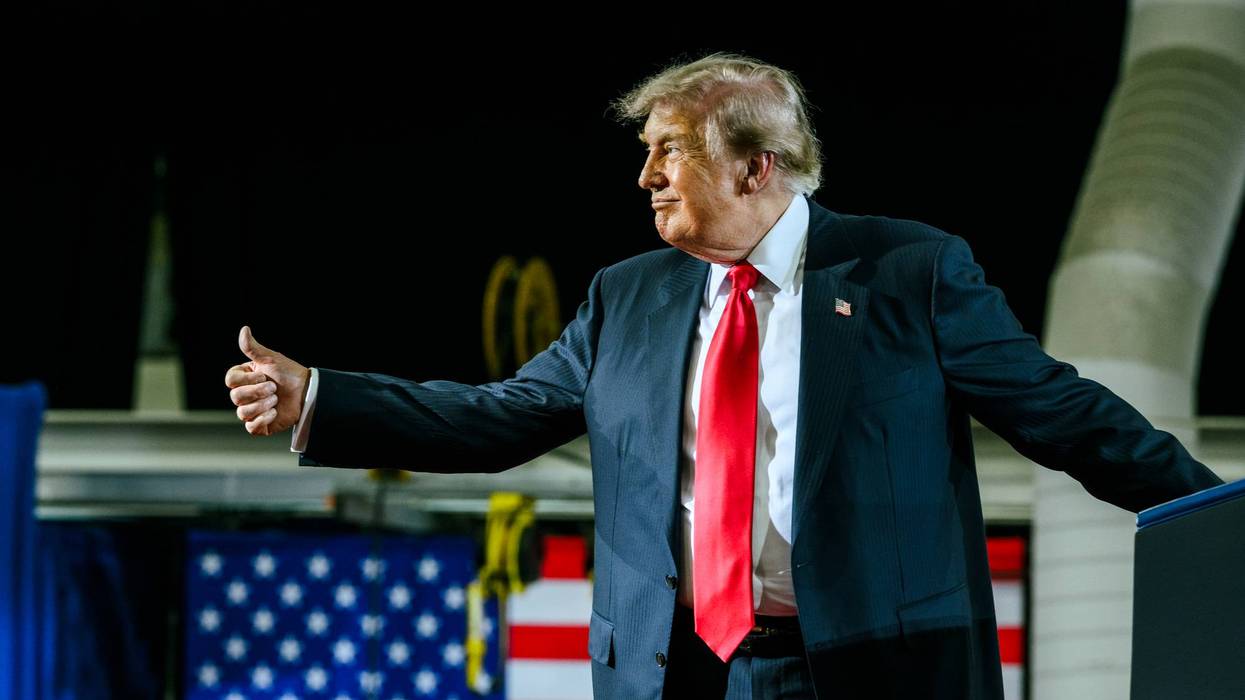
"He absolutely needs to be impeached, removed, and locked up," said one progressive critic, calling the president "a completely unhinged lunatic."
In yet another remark that triggered alarm around the world, President Donald Trump said Friday that he planned to declare the Strait of Hormuz—which Iran has blockaded for much of the past five months over his and Israel's illegal war—a US territory.
Just two days after the latest inflation figures demonstrated, in the words of one expert, "Trump's catastrophic mismanagement of our economy," the president ignored the economic fallout from his war, which led Iran to restrict ship traffic through the strait, driving up fuel prices worldwide.
"We're bringing the prices way down," he told a Long Island crowd. Trump also said that "after we finish defeating Iran, which is being very badly defeated, pretty soon, I'll be declaring the Hormuz Strait a territory of the United States."
Some critics responded to clips of the comments on X by mocking Trump—an infamous liar. Congressman Ted Lieu (D-Calif.) quipped, "Awesome! And the Easter Bunny is real."
Ryan Costello, policy director at the National Iranian American Council, said that "this jingoism rings a bit hollow when most of the US bases near the strait have been essentially abandoned due to danger from Iranian missiles and drones."
Progressive political commentator Kyle Kulinski declared that "he absolutely needs to be impeached, removed, and locked up. He's a completely unhinged lunatic, and he's a sadistic violent menace to the world."
After high initial claims about lower prices, Trump admitted that gasoline has soared due to his war, but said: "For you to pay a tiny little bit more for your gasoline, just remember, you're doing it so that a very evil country cannot have a—a country, really it's the No. 1 state sponsor of terror in the world—we don't want to have them have a nuclear weapon. So, remember that when you have to pay a little bit more, you're at $4, it's OK. I'll never apologize. I did the right thing."
Trump's threat over the strait between the Persian Gulf and the Gulf of Oman came just before a monthlong ceasefire between the US and Iran is set to expire on Monday. A senior White House official told Politico that the situation is "static."
"It doesn't matter how close or how far we are," said the official, who has heard no mention of a potential extension of the ceasefire. "What matters is if Iran wants to come to the table and agree to a deal. Right now, they haven't done that."
The Associated Press reported Friday that "the Trump administration appears to be reaching out to a broader swath of countries that might be able to help pressure Tehran," and Ali Vaez, Iran project director at the International Crisis Group, told the outlet that "everyone is just urging both sides to stop this reckless game of chicken."
In addition to launching an illegal war on Iran in February, and invading Venezuela in January to abduct its president, Trump has made threats against various other nations during his second term, including Canada, Cuba, Colombia, Greenland, and Mexico. He's also threatened to seize the Panama Canal and killed hundreds of people by blowing up boats allegedly smuggling drugs.
This article has been updated with additional comment from President Donald Trump and Public Citizen.

“Countdown until this is used in an attack ad.”
President Donald Trump said on Friday that he wasn't concerned about reports of wretched conditions and possible suicide attempts by sailors aboard the USS Lincoln. He said their record-breaking deployment as part of his Iran War is "not nearly long enough."
Earlier this week, military publications detailed deteriorating mental health aboard the ship, where about 5,000 sailors and Marines have been deployed for more than 260 days and have gone roughly 200 days without returning to port.
Following earlier reports of food shortages, faulty plumbing, and grueling 12-16 hour workdays, the Military Times reported that multiple sailors have attempted to jump overboard.
The Navy has declined to say whether the incidents were suicide attempts and has said it has “not observed an increase in suicidal ideations or attempts aboard the ship."
Last week, more than 200 spouses and other family members met with senior Navy leaders in San Diego to raise concerns about conditions aboard the carrier, including sailors' mental health and risks of suicide and self-harm, according to Stars and Stripes.
The Navy did not fully detail how it was responding to family members’ concerns, though it said the ship had counselors, chaplains, medical professionals, and other support services. Family members also said officials told them additional mental health personnel were being sent.
As Democrats pressed the Pentagon for answers and oversight into conditions on the Lincoln, Trump was asked about the complaints as he prepared to board Air Force One on Friday.
"The family members of US service members are concerned about the conditions on the USS Lincoln," a reporter said.
"No, they're not," Trump interjected.
He noted that the ship was in the process of leaving its current Middle East deployment to be replaced with "a very similar ship," referring to the USS George Washington.
"Has the deployment gone on too long?" the reporter asked.
"No, no, no," Trump responded. "Not nearly long enough."
Democrats on the House Oversight Committee immediately seized on the remark, portraying it as another instance of Trump displaying callous disregard for soldiers "abandoned in a pointless war."
Trump has previously faced criticism for downplaying the harms Americans face as a result of his war in Iran. For those at home, he's emphasized that he was not worried "even a little bit" about the war's economic costs and has said it's "not possible" to take care of funding for daycare, Medicare, and Medicaid because "we’re fighting wars."
He's also been accused of disrespecting those who suffered and died in combat by using a photo of himself attending a fallen soldier’s dignified transfer in a political fundraising email and by claiming that four slain soldiers had endorsed his rationale to attack Iran and that their loved ones had begged him to "finish the job."
The administration has also been accused of underreporting the casualty numbers from the war, leading to calls for investigation from Democrats.
With midterm elections now less than three months away, Iran continues to be the least popular major war in modern history, with polls consistently showing that only around a third of Americans support it.
Responding to Trump's remarks about soldiers suffering aboard the Lincoln, Brian Finucane, senior adviser for the International Crisis Group's US program, said, "Countdown until this is used in an attack ad."

"Vote for James Talarico. He won't steal your pen."
A pilfered $1,000 Montblanc pen, courthouse security camera footage, and a man with a long memory have become unlikely stars of a new ad released on Friday in Texas' hotly contested US Senate race.
Democratic nominee James Talarico's campaign released the ad, which spotlights a 2012 incident in which his Republican opponent, Texas Attorney General Ken Paxton purloined the posh pen accidentally left behind by attorney Joe Joplin in the Collin County Courthouse, which the ad notes is "the same courthouse where Paxton would later be indicted for investment fraud" for allegedly scamming his own friends by convincing them to invest in a failing tech company while he made a commission.
"Paxton walked up to the trays next to the metal detectors, rummaged through them, and came across someone else's expensive Montblanc pen. He decided to take it for himself," the ad states, showing courthouse security video of the incident.
The pen, the ad's narrator continued, "was a special gift" from Joplin's wife.
"When Joe realized it was missing, he contacted courthouse security," the ad says. "This is the footage they pulled. Ken Paxton, on camera, stealing this man's pen. After the police got involved, Joe got his pen back. He could have pressed charges, but he decided against it."
"Because Joe's a nice guy, and he'd never take someone else's pen," the clip continues. "But he also hasn't forgotten who took his."
The ad then cuts to a shot of Joplin saying, "Hi, I'm Joe Joplin, and I endorse James Talarico for the United States Senate."
Then, this tagline: "Vote for James Talarico. He won't steal your pen."
While viewers undoubtedly got a good laugh out of the ad—and some may have ponied up $6 for a pen labeled "Not Ken Paxton's" for sale on Talarico's campaign website—the candidate's team is using it to illustrate the character of a man the Democrat has repeatedly called "the most corrupt politician in America."
🚨MERCH DROP🚨Get your very own "Not Ken Paxton's Pen" today:store.jamestalarico.com
[image or embed]
— Team Talarico (@teamtalaricohq.bsky.social) August 14, 2026 at 10:22 AM
In addition to Paxton's 2015 securities fraud indictment—a case that ultimately ended in a 2025 deal in which he pleaded no contest, received deferred adjudication, completed community service, and paid restitution—the Republican attorney general was impeached by the GOP-controlled Texas House in 2023 over allegations including bribery, abuse of office, and misuse of public resources. The state Senate subsequently acquitted him.
Dan Cogdell, the Houston attorney who represented Paxton during his impeachment, has endorsed Talarico.
Talarico has also argued that Paxton used the power of his office to enrich himself and wealthy political supporters, portraying him as a politician who puts personal and donor interests ahead of ordinary Texans. Talarico's campaign claims Paxton's net worth has increased by 7,000% since he entered office, and that he now owns 11 homes.
“He has taken bribes from wealthy donors and then turned around and blocked overtime pay for Texas workers and gutted our healthcare,” Talarico said during a campaign rally in late May. “This is why he was impeached by his fellow Republicans. That’s why he was indicted for fraud and defrauding investors.”
“The movement that we’re building is a lot bigger than any one politician or any one political party,” Talarico added. “We are running against this corrupt system. Ken Paxton embodies that system."

“Hiding the consumer narratives and concealing the wrongdoing of corporations and powerful interests—that’s what you do if you’re afraid of the truth,” said one advocate.
Consumer complaints against financial companies have skyrocketed over the past three years, and the trend drove President Donald Trump's Consumer Financial Protection Bureau to take action Friday—but not against the firms that have been accused of charging unfair fees, failing to resolve disputed credit card charges, attempting to wrongly collect debts, and other offenses.
Instead, the CFPB announced that it would no longer be publishing complaint "narratives"—the written description by a complainant of their interaction with the financial company—or data visualizations in the database of complaints, hiding from public view consumers' remarks on the institutions' business practices.
“Hiding the consumer narratives and concealing the wrongdoing of corporations and powerful interests—that’s what you do if you’re afraid of the truth,” said Diane Thompson, deputy director and chief advocacy officer at the National Consumer Law Center, in response to the bureau's announcement. “Nothing could be a clearer sign of the Trump CFPB’s choice to stand against ordinary people and for corporate power and predation.”
The CFPB asserted that "the utility" of the public database of complaint narratives has proven "minimal" since the bureau began publishing the complaints in 2015, four years after it began allowing consumers to submit the complaints, as required by law.
"By their very nature, complaint narratives reflect negative consumer experiences and present only one side of an issue," said the CFPB.
Christine Hines, senior policy director at the National Association of Consumer Advocates, suggested that presenting "only one side" of an interaction that a consumer has with a financial institution is the point of the database.
"Nearly 6 million consumers who have filed with the CFPB have received some kind of relief, such as getting money back or getting a mistake on a credit report fixed. That’s a real, tangible benefit the public database makes possible."
“As it shuts down narratives in the complaint database, this CFPB is disregarding its obligation to make the marketplace fair and transparent for everyday consumers, and instead, is helping big banks, lenders, debt collectors, credit bureaus, and others to evade public scrutiny and accountability,” said Hines.
Companies have 15 days to respond to a complaint before the CFPB makes the consumers' comments public. The bureau has published more than 17 million complaints that have been made since 2011, and in each of the last three years, the complaints have doubled annually.
The bureau received 6.6. million complaints in 2025, up from 3.2 million in 2024 and 1.6 million in 2023.
Erie Meyer, who served as chief technologist at the CFPB and helped build the complaint database, accused the Trump administration of "inventing excuses to hide credit reporting and Wall Street abuses from the public."
"More than 17 million people have filed complaints with the CFPB about their credit report, mortgage provider, student loan servicer, payment app, or bank account—and the CFPB in turn has worked diligently to resolve these problems, even saving people’s homes from foreclosure and cars from repossession," said Meyer. "Taking down this data doesn’t protect consumers from confusion, but it does protect companies from public transparency and scrutiny."
Meyer also pushed back against the administration's claim that the database is rife with "confusing or misleading information" submitted by complainants.
"The CFPB complaint database and its narratives are the earliest warning system we have for what’s breaking in the economy," said Meyer. "Before a single story is published, the CFPB confirms the person is a real customer of that company. The company gets two weeks to respond, on the record, in public. That’s not an anonymous internet review—that’s closer to due process than most Americans get anywhere else in their financial lives. Burying this information is an intentional decision to make corporate misconduct harder to see.”
The new rule was announced two months after former CFPB acting Director Russell Vought purged the bureau's backlog of complaints and made other changes that, the administration said, were aimed at eliminating artificial intelligence-generated and duplicative complaints.
The database, said Public Interest Research Network consumer campaign director Mike Litt, ensures that "companies have an incentive to respond to and fix problems precisely because complaints are made public."
“Hiding the ‘narratives’ or any other part of the CFPB’s Consumer Complaint Database would truly hurt consumers. Americans deserve user-friendly, searchable access to details about these issues, so they can make educated purchasing decisions," said Litt. "Nearly 6 million consumers who have filed with the CFPB have received some kind of relief, such as getting money back or getting a mistake on a credit report fixed. That’s a real, tangible benefit the public database makes possible."
Adam Rust, director of financial services at the Consumer Federation of America, added that law enforcement agencies, Congress, and the press have all been informed by complaint narratives "on what problems are occurring in their communities."
“These narratives, all published with consumer consent, convey the emotional hurt caused when companies act without regard for the law," said Rust. "It’s wrong, especially at a time when so many people are struggling to make ends meet, to blunt their voices.”

"These criminal actions by the settlers, supported or acquiesced to by Israel, the occupying power, are making life unbearable for these Palestinian families, and are clearly aimed at forcing them to leave."
"The horrors unfolding in Qusra are far from an isolated incident," a leader at Amnesty International declared Friday as the Israel Defense Forces and police failed to remove Israeli settlers who have besieged Palestinian homes in the illegally occupied West Bank since Sunday.
Erika Guevara Rosas, Amnesty's senior director for research, advocacy, policy, and campaigns, said that the events in the village over the past week "reflect the relentless escalation and expansion of an accelerating and well-documented pattern of coordinated and strategic settler terror, enabled, backed, and funded by the state of Israel, with the aim of displacing Palestinians across the occupied West Bank."
"The three families under siege have been threatened, harassed, and attacked by Israeli settlers from nearby outposts for several months," she stressed. With settlers having cut off the water and electricity, residents are "running out of food, and lack access to basic necessities," she added, and local activists have been unable to deliver supplies.
The Amnesty statement followed similar condemnation from the Office of the United Nations High Commissioner for Human Rights (OHCHR), which said Thursday that "these criminal actions by the settlers, supported or acquiesced to by Israel, the occupying power, are making life unbearable for these Palestinian families, and are clearly aimed at forcing them to leave their homes and land. Time is running out for these three families before they are forcibly displaced."
The Palestinian Ministry of Foreign Affairs also said Thursday that it "condemns in the strongest terms the dangerous escalation in settler terrorism," highlighting that the attack has involved "sabotage of electricity and water networks, shooting at houses, and attempts to burn children, in systematic assaults that can only be described as terroristic, aimed at the displacement and extermination of the Palestinian people."
The Israeli newspaper Haaretz reported Friday that "IDF and Border Police forces have attempted several times this week to evacuate the settlers, but they have remained at the site. The group initially put up a shade canopy there, despite the presence of soldiers. Border Police forces arrived at the site and dismantled the canopy, yet the settlers remained at a nearby location, waiting for the forces to leave."
Ziv Stahl, executive director of the Israeli rights group Yesh Din, told The Associated Press that "it's like a kids' game, like cat and mouse... It's clearly not a matter of capability but a matter of will."
Qusra resident Abdul Kareem Hassan similarly told Al Jazeera that "this is all a charade," and if the IDF "were serious, the whole operation would not take them one hour. We're talking about 20 settlers. If they would treat them the same way they treat Palestinians, they could finish in less than an hour."
IDF troops have long been accused of and documented not interfering with or even aiding in Israeli settler violence against Palestinians in the West Bank.
One of the besieged homes is owned by Palestinian-American Loui Ridi, who is based in Ohio. His brother and nephew are among those trapped.
US Ambassador to Israel Mike Huckabee said on social media Thursday that his embassy "has been VERY involved and the IDF and Israel police have gone at our request to remove the Israeli terrorists doing this. The actions of those doing this to this family’s home is criminal... Actions by those who carried out this horrific act of terror meant to intimidate and harass this family are disgusting. No excuse for such thuggish behavior."
Huckabee later shared a video from the scene, then claimed on Friday that Israeli "'settlers' are not the problem," and the violent ones are a "very small minority who do great damage to Palestinian families and to Israel." The ambassador also pointed to The Jerusalem Post's reporting on one settlement leader, Ysrael Ganz, condemning the outpost in Qusra.
Reuters reported that Ridi welcomed Huckabee's initial remarks but also said they were not enough. He told the news agency that "we need protection. We need supplies. We need to live freely in our house."
As Common Dreams reported Wednesday, Ramiz Alakbarov, the United Nations special coordinator for the Middle East peace process, told the UN Security Council the previous day that demolitions of civilian infrastructure, mass displacement of Palestinians, and illegal settlement expansion have brought the West Bank to a "breaking point."
While settler attacks were once concentrated in the Israeli-controlled Area C, Alakbarov said, settlers are increasingly behaving violently toward Palestinians in Areas A and B. Guevara Rosas noted that "the homes targeted in these attacks are located in Area B of the West Bank, supposedly under Palestinian administrative control and Israeli military control, according to the classification of the Oslo Accords."
"Yet Palestinian Red Crescent ambulances trying to deliver food and water to the homes were also attacked by settlers. Despite these violent attacks, Israeli forces allowed the settlers to remain [in] close proximity to the Palestinian families' homes," she said. Sources told Amnesty that for several hours on Thursday, the IDF forced two besieged families and six neighboring households to evacuate their homes.
Al Jazeera's Nida Ibrahim similarly reported that "Israeli soldiers initially tried to move the trapped families out of their homes while settlers remained camped outside. The families refused, not trusting that the Israeli soldiers would allow them back into their homes, and were eventually grouped together in one home."
Guevara Rosas argued that "for far too long, the world has ignored the immense, unfathomable suffering of Palestinians being uprooted and erased from land they have inhabited for generations. The international community must stop treating such incidents as ‘isolated’ and instead hold Israel accountable."
"Israel, as the occupying power, has a legal obligation to protect the Palestinian population under its control and not to stand by or worse, stand with settlers—while they lay siege to Palestinian homes and cut off families’ access to healthcare, electricity, and water for days on end" she continued.
"States must end any form of direct and indirect support for Israel's unlawful occupation of the occupied Palestinian territory and its brutal system of apartheid, including its illegal settlement enterprise," said the Amnesty leader, whose group has also joined advocates and experts around the world in denouncing Israel's ongoing violence against Palestinians in the Gaza Strip as genocide.
"This includes banning trade and investment that contribute to the maintenance of Israeli settlements, as well as ending any cooperation and assistance to entities and individuals involved in the settlement enterprise," Guevara Rosas said. "States should also show no further hesitation in imposing targeted sanctions on senior Israeli officials allegedly responsible for international crimes, including the crimes against humanity of apartheid, and forcible transfer of Palestinians in the unlawfully occupied West Bank."
She added that "it is imperative that states demonstrate unequivocal resolve by increasing protective measures for Palestinian communities at risk of displacement and using all their diplomatic and political leverage to secure the return of forcibly displaced Palestinians to their homes. Failure to act would further embolden Israel and state-backed Israeli settlers to continue their unlawful and violent actions against Palestinians, who are left unprotected and without any recourse to justice."
Seattle's City Council used a budget surplus to enact Wilson's proposal to provide free breakfast and lunch to 49,000 public school students.
Seattle's public school students will be eating for free this year after the City Council approved $3.6 million in funding for school breakfast and lunch this week.
It was the realization of a proposal made in April by Seattle's democratic socialist mayor, Katie Wilson, to expand the city's targeted school lunch program to cover all students.
The council had rejected the proposal earlier this summer in favor of an approach that delayed the school lunch program by a year and narrowly focused on expanding access for only the lowest-income students, which opponents argued still left many hungry kids with nothing.
That plan was met with immediate backlash, and the council swiftly changed course. On Tuesday, it voted unanimously to reallocate surplus funds from an affordable housing redevelopment project to fund a universal school meal program.
In addition to providing free breakfast and lunch to Seattle's roughly 49,000 public school students beginning next month, the new program will also provide more support to low-income students during weekends and school vacations.
The program is expected to extend well into the future, with funding in 2027-28 coming from an education levy voters approved in November. After that, Washington's new "high-earners" tax is expected to kick in, and students across the entire state will enjoy free meals, though that tax still faces legal challenges.
Wilson called the plan "a tremendous victory for families across our city that will make Seattle more affordable."
The plan fulfills a key campaign promise for Wilson, who came into office in November on the same wave of progressive enthusiasm as New York City's democratic socialist mayor, Zohran Mamdani.
Also on Tuesday, the City Council approved Wilson's legislation banning rental junk fees—including administrative service fees, pet rent, and package fees.