SUBSCRIBE TO OUR FREE NEWSLETTER
Daily news & progressive opinion—funded by the people, not the corporations—delivered straight to your inbox.
5
#000000
#FFFFFF
To donate by check, phone, or other method, see our More Ways to Give page.
Daily news & progressive opinion—funded by the people, not the corporations—delivered straight to your inbox.
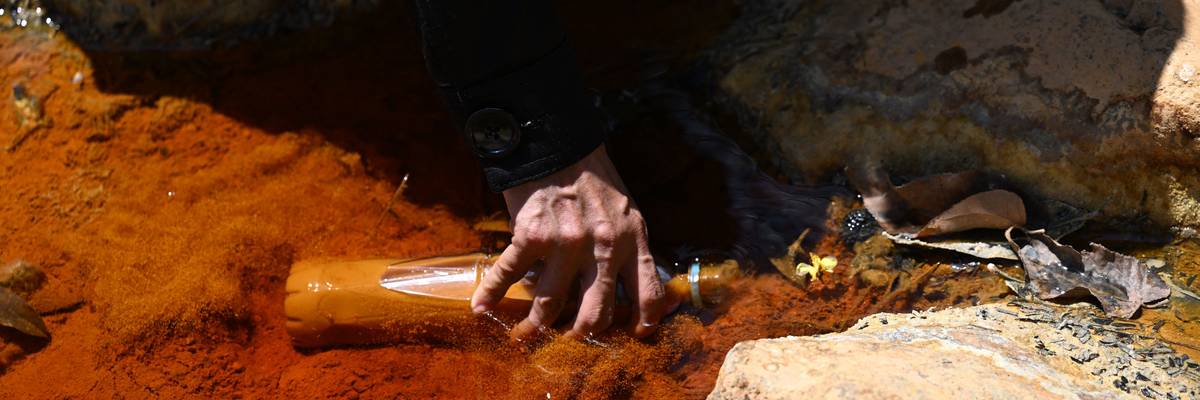
An environmentalist takes a sample of water from San Sebastian River polluted by mining activity in Santa Rosa de Lima, La Union department, El Salvador on February 28, 2025.
A joint letter expresses "steadfast support for the people of El Salvador and their religious institutions and leaders who are struggling to maintain their country’s historic ban on metal mining... so all Salvadorans can enjoy their God-given right to clean water."
More than 150 faith-based organizations from 25 countries launched an open letter on Monday supporting an El Salvadoran ban on metals mining that was overturned by right-wing President Nayib Bukele in 2024.
The original ban was passed by the country’s legislature in 2017 following years of study and the advocacy of El Salvador’s religious communities. The letter signatories, which include 153 global and regional groups from a wide range of traditions, stood with faith groups in El Salvador in calling both for no new mining and for an end to the political persecution of land and water defenders.
"We, the undersigned, from a diversity of church structures (representing local, regional, and national expressions of churches and related agencies), express our steadfast support for the people of El Salvador and their religious institutions and leaders who are struggling to maintain their country’s historic ban on metal mining—in place from 2017 to 2024—so all Salvadorans can enjoy their God-given right to clean water," the letter begins. "We stand in solidarity with civic and religious leaders who are being persecuted and imprisoned for working against injustices, including the devastation that metals mining would cause their communities."
The faith leaders also released a video reading sections of the letter aloud.
“This letter is a hope-filled expression of solidarity and humanism."
“Through this declaration, faith communities from around the world have affirmed their solidarity with faith leaders in El Salvador as they carry out their duty to protect water as a sacred inherited trust, a human right meant to be shared by all,” Rev. Dr. Japhet Ndhlovu, executive minister for the Church in the Mission Unit of The United Church of Canada, said in a statement.
El Salvadorans already struggle to gain access to clean and plentiful water. The water of 90% of Salvadorans is contaminated, half of all Salvadorans have "intermittent access to water,” and one-half of those with water access report it is poor quality, said Gordon Whitman, managing director for international organizing at letter-signatory Faith in Action, at a Monday press briefing anouncing the letter.
"Restarting mining would be catastrophic," Whitman said.
The mining ban was already hard won.
A 2012 study commissioned by the government affirmed that mining would endanger the nation’s rivers and watersheds with cyanide, arsenic, and other toxins and found widespread public opposition to mining. Before the ban was passed in March of 2017, the archbishop of San Salvador mobilized support for it by leading a march to deliver a draft of the ban to the National Assembly. After it passed unanimously, he called it a "miracle," according to John Cavanagh, a senior adviser at the Institute for Policy Studies.
The law made El Salvador "the first nation on Earth to ban mining to save its rivers," Cavanagh said at the press briefing.
“The Salvadoran precautionary approach banning metal mining is essential to protect drinking water and aquatic ecosystems, given the irreparable damage that has been done by irresponsible mining around the world,” Willamette University professor emeritus Susan Lea Smith of the Ecumenical Water Network of the World Council of Churches said in a statement. “El Salvador had made a difficult but wise choice in banning metal mining. Clean water is a gift from God, and so, for the sake of clean water and the rest of Creation, we work together for the common good."
"It is a sin to render water undrinkable.”
However, in December 2024, Bukele's government passed a new law that allows mining once again without environmental oversight or community consultation.
“It’s a law that has become one of the main threats for the Salvadorans' right to clean water," Pedro Cabezas of International Allies Against Mining in El Salvador said in the press conference.
Cabezas also said the new law was a "symptom of what El Salvador has been going through over the last five years” as Bukele concentrates all power within the executive and his own party.
While the Salvadoran public and civil society groups remain opposed to mining—a December 2024 poll found that 3 in 5 are against the practice in the country—the Bukele government has ramped up its criminalization of dissent.
In this context, the Catholic, protestant, and evangelical churches in El Salvador are among the remaining institutions "with space to speak out" against mining, Christie Neufeldt of the United Church of Canada explained at the briefing.
For example, in March, Mons. José Luis Escobar Alas, the archbishop of San Salvador, presented an anti-mining petition signed by 150,000 people.
International faith groups wanted to stand in solidarity with their Salvadoran counterparts.
“This letter is a hope-filled expression of solidarity and humanism in the face of forces that would degrade” the Earth, human rights, and democracy, Neufeldt said.
Salvadoran faith groups "remind us that access to water is a fundamental human right and that clean water is not a commodity, but a shared inheritance entrusted to all people by God. And they remind us that ending the mining ban is fueling egregious rights violations against those organizing to protect their water and land from destruction," the letter says.
Whitman spoke about the importance of water to several religious traditions.
“All of our faith traditions teach that water is a sacred gift of God,” Whitman said, adding, "It is a sin to render water undrinkable.”
In the press briefing, speakers acknowledged the link between rising authoritarianism and environmental deregulation, in El Salvador and beyond.
Cavanagh noted that, as the energy transition increases demand for rare earth minerals and global instability makes gold more attractive, "oligarchs linked to extractivism" have begun "pumping money into elections” to boost candidates who will allow them to exploit resources.
“It’s not at all surprising that the opposition to mining comes from the people, and so it’s absolutely natural that the oligarchs, that the transnational corporations are going to want to crack down on public dissent," Smith said, adding there was an "intimate connection between authoritarianism and any extractive industry, including mining."
In the end, however, the letter signatories expressed faith for a greener, freer future.
"We pray for the Salvadoran people and their government, that they protect the sacred gift of creation, uphold human rights, and ensure every family clean water—now and for generations to come," they concluded.
Dear Common Dreams reader, It’s been nearly 30 years since I co-founded Common Dreams with my late wife, Lina Newhouser. We had the radical notion that journalism should serve the public good, not corporate profits. It was clear to us from the outset what it would take to build such a project. No paid advertisements. No corporate sponsors. No millionaire publisher telling us what to think or do. Many people said we wouldn't last a year, but we proved those doubters wrong. Together with a tremendous team of journalists and dedicated staff, we built an independent media outlet free from the constraints of profits and corporate control. Our mission has always been simple: To inform. To inspire. To ignite change for the common good. Building Common Dreams was not easy. Our survival was never guaranteed. When you take on the most powerful forces—Wall Street greed, fossil fuel industry destruction, Big Tech lobbyists, and uber-rich oligarchs who have spent billions upon billions rigging the economy and democracy in their favor—the only bulwark you have is supporters who believe in your work. But here’s the urgent message from me today. It's never been this bad out there. And it's never been this hard to keep us going. At the very moment Common Dreams is most needed, the threats we face are intensifying. We need your support now more than ever. We don't accept corporate advertising and never will. We don't have a paywall because we don't think people should be blocked from critical news based on their ability to pay. Everything we do is funded by the donations of readers like you. When everyone does the little they can afford, we are strong. But if that support retreats or dries up, so do we. Will you donate now to make sure Common Dreams not only survives but thrives? —Craig Brown, Co-founder |
More than 150 faith-based organizations from 25 countries launched an open letter on Monday supporting an El Salvadoran ban on metals mining that was overturned by right-wing President Nayib Bukele in 2024.
The original ban was passed by the country’s legislature in 2017 following years of study and the advocacy of El Salvador’s religious communities. The letter signatories, which include 153 global and regional groups from a wide range of traditions, stood with faith groups in El Salvador in calling both for no new mining and for an end to the political persecution of land and water defenders.
"We, the undersigned, from a diversity of church structures (representing local, regional, and national expressions of churches and related agencies), express our steadfast support for the people of El Salvador and their religious institutions and leaders who are struggling to maintain their country’s historic ban on metal mining—in place from 2017 to 2024—so all Salvadorans can enjoy their God-given right to clean water," the letter begins. "We stand in solidarity with civic and religious leaders who are being persecuted and imprisoned for working against injustices, including the devastation that metals mining would cause their communities."
The faith leaders also released a video reading sections of the letter aloud.
“This letter is a hope-filled expression of solidarity and humanism."
“Through this declaration, faith communities from around the world have affirmed their solidarity with faith leaders in El Salvador as they carry out their duty to protect water as a sacred inherited trust, a human right meant to be shared by all,” Rev. Dr. Japhet Ndhlovu, executive minister for the Church in the Mission Unit of The United Church of Canada, said in a statement.
El Salvadorans already struggle to gain access to clean and plentiful water. The water of 90% of Salvadorans is contaminated, half of all Salvadorans have "intermittent access to water,” and one-half of those with water access report it is poor quality, said Gordon Whitman, managing director for international organizing at letter-signatory Faith in Action, at a Monday press briefing anouncing the letter.
"Restarting mining would be catastrophic," Whitman said.
The mining ban was already hard won.
A 2012 study commissioned by the government affirmed that mining would endanger the nation’s rivers and watersheds with cyanide, arsenic, and other toxins and found widespread public opposition to mining. Before the ban was passed in March of 2017, the archbishop of San Salvador mobilized support for it by leading a march to deliver a draft of the ban to the National Assembly. After it passed unanimously, he called it a "miracle," according to John Cavanagh, a senior adviser at the Institute for Policy Studies.
The law made El Salvador "the first nation on Earth to ban mining to save its rivers," Cavanagh said at the press briefing.
“The Salvadoran precautionary approach banning metal mining is essential to protect drinking water and aquatic ecosystems, given the irreparable damage that has been done by irresponsible mining around the world,” Willamette University professor emeritus Susan Lea Smith of the Ecumenical Water Network of the World Council of Churches said in a statement. “El Salvador had made a difficult but wise choice in banning metal mining. Clean water is a gift from God, and so, for the sake of clean water and the rest of Creation, we work together for the common good."
"It is a sin to render water undrinkable.”
However, in December 2024, Bukele's government passed a new law that allows mining once again without environmental oversight or community consultation.
“It’s a law that has become one of the main threats for the Salvadorans' right to clean water," Pedro Cabezas of International Allies Against Mining in El Salvador said in the press conference.
Cabezas also said the new law was a "symptom of what El Salvador has been going through over the last five years” as Bukele concentrates all power within the executive and his own party.
While the Salvadoran public and civil society groups remain opposed to mining—a December 2024 poll found that 3 in 5 are against the practice in the country—the Bukele government has ramped up its criminalization of dissent.
In this context, the Catholic, protestant, and evangelical churches in El Salvador are among the remaining institutions "with space to speak out" against mining, Christie Neufeldt of the United Church of Canada explained at the briefing.
For example, in March, Mons. José Luis Escobar Alas, the archbishop of San Salvador, presented an anti-mining petition signed by 150,000 people.
International faith groups wanted to stand in solidarity with their Salvadoran counterparts.
“This letter is a hope-filled expression of solidarity and humanism in the face of forces that would degrade” the Earth, human rights, and democracy, Neufeldt said.
Salvadoran faith groups "remind us that access to water is a fundamental human right and that clean water is not a commodity, but a shared inheritance entrusted to all people by God. And they remind us that ending the mining ban is fueling egregious rights violations against those organizing to protect their water and land from destruction," the letter says.
Whitman spoke about the importance of water to several religious traditions.
“All of our faith traditions teach that water is a sacred gift of God,” Whitman said, adding, "It is a sin to render water undrinkable.”
In the press briefing, speakers acknowledged the link between rising authoritarianism and environmental deregulation, in El Salvador and beyond.
Cavanagh noted that, as the energy transition increases demand for rare earth minerals and global instability makes gold more attractive, "oligarchs linked to extractivism" have begun "pumping money into elections” to boost candidates who will allow them to exploit resources.
“It’s not at all surprising that the opposition to mining comes from the people, and so it’s absolutely natural that the oligarchs, that the transnational corporations are going to want to crack down on public dissent," Smith said, adding there was an "intimate connection between authoritarianism and any extractive industry, including mining."
In the end, however, the letter signatories expressed faith for a greener, freer future.
"We pray for the Salvadoran people and their government, that they protect the sacred gift of creation, uphold human rights, and ensure every family clean water—now and for generations to come," they concluded.
More than 150 faith-based organizations from 25 countries launched an open letter on Monday supporting an El Salvadoran ban on metals mining that was overturned by right-wing President Nayib Bukele in 2024.
The original ban was passed by the country’s legislature in 2017 following years of study and the advocacy of El Salvador’s religious communities. The letter signatories, which include 153 global and regional groups from a wide range of traditions, stood with faith groups in El Salvador in calling both for no new mining and for an end to the political persecution of land and water defenders.
"We, the undersigned, from a diversity of church structures (representing local, regional, and national expressions of churches and related agencies), express our steadfast support for the people of El Salvador and their religious institutions and leaders who are struggling to maintain their country’s historic ban on metal mining—in place from 2017 to 2024—so all Salvadorans can enjoy their God-given right to clean water," the letter begins. "We stand in solidarity with civic and religious leaders who are being persecuted and imprisoned for working against injustices, including the devastation that metals mining would cause their communities."
The faith leaders also released a video reading sections of the letter aloud.
“This letter is a hope-filled expression of solidarity and humanism."
“Through this declaration, faith communities from around the world have affirmed their solidarity with faith leaders in El Salvador as they carry out their duty to protect water as a sacred inherited trust, a human right meant to be shared by all,” Rev. Dr. Japhet Ndhlovu, executive minister for the Church in the Mission Unit of The United Church of Canada, said in a statement.
El Salvadorans already struggle to gain access to clean and plentiful water. The water of 90% of Salvadorans is contaminated, half of all Salvadorans have "intermittent access to water,” and one-half of those with water access report it is poor quality, said Gordon Whitman, managing director for international organizing at letter-signatory Faith in Action, at a Monday press briefing anouncing the letter.
"Restarting mining would be catastrophic," Whitman said.
The mining ban was already hard won.
A 2012 study commissioned by the government affirmed that mining would endanger the nation’s rivers and watersheds with cyanide, arsenic, and other toxins and found widespread public opposition to mining. Before the ban was passed in March of 2017, the archbishop of San Salvador mobilized support for it by leading a march to deliver a draft of the ban to the National Assembly. After it passed unanimously, he called it a "miracle," according to John Cavanagh, a senior adviser at the Institute for Policy Studies.
The law made El Salvador "the first nation on Earth to ban mining to save its rivers," Cavanagh said at the press briefing.
“The Salvadoran precautionary approach banning metal mining is essential to protect drinking water and aquatic ecosystems, given the irreparable damage that has been done by irresponsible mining around the world,” Willamette University professor emeritus Susan Lea Smith of the Ecumenical Water Network of the World Council of Churches said in a statement. “El Salvador had made a difficult but wise choice in banning metal mining. Clean water is a gift from God, and so, for the sake of clean water and the rest of Creation, we work together for the common good."
"It is a sin to render water undrinkable.”
However, in December 2024, Bukele's government passed a new law that allows mining once again without environmental oversight or community consultation.
“It’s a law that has become one of the main threats for the Salvadorans' right to clean water," Pedro Cabezas of International Allies Against Mining in El Salvador said in the press conference.
Cabezas also said the new law was a "symptom of what El Salvador has been going through over the last five years” as Bukele concentrates all power within the executive and his own party.
While the Salvadoran public and civil society groups remain opposed to mining—a December 2024 poll found that 3 in 5 are against the practice in the country—the Bukele government has ramped up its criminalization of dissent.
In this context, the Catholic, protestant, and evangelical churches in El Salvador are among the remaining institutions "with space to speak out" against mining, Christie Neufeldt of the United Church of Canada explained at the briefing.
For example, in March, Mons. José Luis Escobar Alas, the archbishop of San Salvador, presented an anti-mining petition signed by 150,000 people.
International faith groups wanted to stand in solidarity with their Salvadoran counterparts.
“This letter is a hope-filled expression of solidarity and humanism in the face of forces that would degrade” the Earth, human rights, and democracy, Neufeldt said.
Salvadoran faith groups "remind us that access to water is a fundamental human right and that clean water is not a commodity, but a shared inheritance entrusted to all people by God. And they remind us that ending the mining ban is fueling egregious rights violations against those organizing to protect their water and land from destruction," the letter says.
Whitman spoke about the importance of water to several religious traditions.
“All of our faith traditions teach that water is a sacred gift of God,” Whitman said, adding, "It is a sin to render water undrinkable.”
In the press briefing, speakers acknowledged the link between rising authoritarianism and environmental deregulation, in El Salvador and beyond.
Cavanagh noted that, as the energy transition increases demand for rare earth minerals and global instability makes gold more attractive, "oligarchs linked to extractivism" have begun "pumping money into elections” to boost candidates who will allow them to exploit resources.
“It’s not at all surprising that the opposition to mining comes from the people, and so it’s absolutely natural that the oligarchs, that the transnational corporations are going to want to crack down on public dissent," Smith said, adding there was an "intimate connection between authoritarianism and any extractive industry, including mining."
In the end, however, the letter signatories expressed faith for a greener, freer future.
"We pray for the Salvadoran people and their government, that they protect the sacred gift of creation, uphold human rights, and ensure every family clean water—now and for generations to come," they concluded.