5
#000000
#FFFFFF
To donate by check, phone, or other method, see our More Ways to Give page.
Daily news & progressive opinion—funded by the people, not the corporations—delivered straight to your inbox.
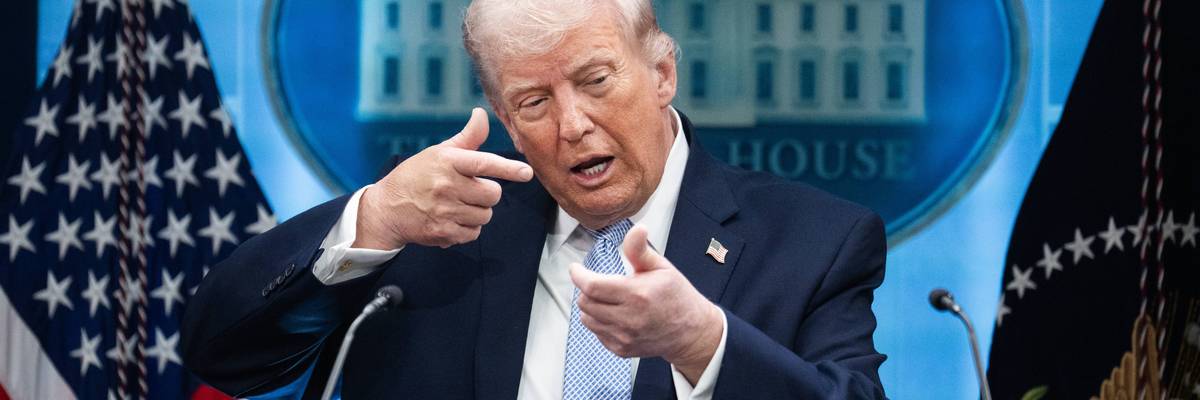
US President Donald Trump mimics firing a gun during a news conference on the Iran War in the White House on April 6, 2026.
“We only accept an end of the war with guarantees that we won’t be attacked again," said one senior Iranian official.
As President Donald Trump escalated his threats to commit war crimes in Iran if its government does not reopen the Strait of Hormuz, Iranian officials on Monday rejected what they called an inadequate ceasefire proposal and insisted on a guarantee that the US and Israel will not only stop their attacks, but also refrain from future aggression.
“We only accept an end of the war with guarantees that we won’t be attacked again," Mojtaba Ferdousi Pour, head of Iran’s diplomatic mission in Cairo, told The Associated Press, affirming his government's rejection of a 45-day truce proposed by regional mediators led by Pakistan and including Egypt and Turkey.
Trump said Monday that he said he might order attacks on all Iranian power plants and bridges if the country's government does not open the Strait of Hormuz—through which around 20 million daily barrels of oil and a large share of the world's liquefied natural gas passed before the war—by 8:00 pm Eastern time Tuesday.
“The entire country can be taken out in one night, and that night might be tomorrow night,” Trump said.
This, after the president on Sunday told Iran to “open the Fuckin’ Strait, you crazy bastards, or you’ll be living in Hell."
Trump—who recently threatened to bomb Iran "back to the Stone Ages"—said Sunday that he is unconcerned about committing war crimes in Iran, absurdly telling reporters that “the time the Iranian people are most unhappy... is when those bombs stop.”
Pour stressed that Iran can't trust Trump, who Iranian officials and others have accused of using nuclear negotiations as a cover to impose demands and buy time to prepare for more war.
Just hours before Trump announced his decision to bomb Iran in February, Omani Foreign Minister Badr bin Hamad Al Busaidi, the mediator of talks between the US and Iranian governments, said that a "peace deal is within our reach."
Iran's government was willing to make unprecedented concessions regarding its nuclear program up until the US and Israel began bombing the country on February 28. Every US administration since that of former President George W. Bush—including Trump's—has concluded that Iran is not seeking to develop nuclear weapons.
The US and Israel also launched attacks on Iran in the summer of 2025 amid ongoing negotiations with Tehran.
A senior Iranian official speaking to Drop Site News Monday on condition of anonymity said that “it is our assessment that the Trump administration, owing to legal constraints within the United States concerning the prosecution of the war as well as the need to maintain control over financial markets, requires a short-term pause in the conflict."
“Our assessment indicates that this proposal has been drafted solely on the basis of the mediators’ perception of the minimum demands of the parties for halting the war,” the official continued.
“Tehran does not consider a temporary ceasefire to be a logical course of action, inasmuch as the window for the United States’ exit from the conflict has already been delineated," they added. "Should the requisite political will exist, the parties are in a position to establish a permanent ceasefire and thereafter concentrate their efforts on diplomacy.”
The standoff comes as Iranian officials said US and Israeli strikes killed at least 34 people, including 6 children, since Monday morning. Recent US-Israeli targets have included Sharif University of Technology in Tehran, a major petrochemical plant in Asaluyeh, and the B1 bridge in Karaj.
Around 2,000 Iranians have been killed over 37 days of intense US-Israeli bombardment, according to Iranian officials and humanitarian groups. This figure includes over 200 children, more than 100 of whom were killed in the February 28 US cruise missile attack on the Shajareh Tayyebeh girls’ elementary school in Minab.
At least 13 US service members have been killed and hundreds more wounded by Iranian counterattacks, which have also killed at least 14 Israelis and more than two dozen people in Gulf Arab nations.
More than 1,400 people have also been killed by Israeli attacks on Lebanon, where over 1 million others have been displaced. Eleven Israeli soldiers have been killed in Lebanon.
All this is happening amid the backdrop of Israel's ongoing war on Gaza, which has left more than 250,000 Palestinians dead or wounded since the October 7, 2023 Hamas-led attack. Israel is facing a genocide case currently before the International Court of Justice, while the International Criminal Court is seeking the arrest of Israeli Prime Minister Benjamin Netanyahu and former Defense Minister Yoav Gallant for alleged crimes against humanity and war crimes in Gaza.
Eight Palestinians were reportedly killed and a number of others wounded on Monday in an Israeli airstrike east of the Maghazi refugee camp in central Gaza.
Dear Common Dreams reader, The U.S. is on a fast track to authoritarianism like nothing I've ever seen. Meanwhile, corporate news outlets are utterly capitulating to Trump, twisting their coverage to avoid drawing his ire while lining up to stuff cash in his pockets. That's why I believe that Common Dreams is doing the best and most consequential reporting that we've ever done. Our small but mighty team is a progressive reporting powerhouse, covering the news every day that the corporate media never will. Our mission has always been simple: To inform. To inspire. And to ignite change for the common good. Now here's the key piece that I want all our readers to understand: None of this would be possible without your financial support. That's not just some fundraising cliche. It's the absolute and literal truth. We don't accept corporate advertising and never will. We don't have a paywall because we don't think people should be blocked from critical news based on their ability to pay. Everything we do is funded by the donations of readers like you. Will you donate now to help power the nonprofit, independent reporting of Common Dreams? Thank you for being a vital member of our community. Together, we can keep independent journalism alive when it’s needed most. - Craig Brown, Co-founder |
As President Donald Trump escalated his threats to commit war crimes in Iran if its government does not reopen the Strait of Hormuz, Iranian officials on Monday rejected what they called an inadequate ceasefire proposal and insisted on a guarantee that the US and Israel will not only stop their attacks, but also refrain from future aggression.
“We only accept an end of the war with guarantees that we won’t be attacked again," Mojtaba Ferdousi Pour, head of Iran’s diplomatic mission in Cairo, told The Associated Press, affirming his government's rejection of a 45-day truce proposed by regional mediators led by Pakistan and including Egypt and Turkey.
Trump said Monday that he said he might order attacks on all Iranian power plants and bridges if the country's government does not open the Strait of Hormuz—through which around 20 million daily barrels of oil and a large share of the world's liquefied natural gas passed before the war—by 8:00 pm Eastern time Tuesday.
“The entire country can be taken out in one night, and that night might be tomorrow night,” Trump said.
This, after the president on Sunday told Iran to “open the Fuckin’ Strait, you crazy bastards, or you’ll be living in Hell."
Trump—who recently threatened to bomb Iran "back to the Stone Ages"—said Sunday that he is unconcerned about committing war crimes in Iran, absurdly telling reporters that “the time the Iranian people are most unhappy... is when those bombs stop.”
Pour stressed that Iran can't trust Trump, who Iranian officials and others have accused of using nuclear negotiations as a cover to impose demands and buy time to prepare for more war.
Just hours before Trump announced his decision to bomb Iran in February, Omani Foreign Minister Badr bin Hamad Al Busaidi, the mediator of talks between the US and Iranian governments, said that a "peace deal is within our reach."
Iran's government was willing to make unprecedented concessions regarding its nuclear program up until the US and Israel began bombing the country on February 28. Every US administration since that of former President George W. Bush—including Trump's—has concluded that Iran is not seeking to develop nuclear weapons.
The US and Israel also launched attacks on Iran in the summer of 2025 amid ongoing negotiations with Tehran.
A senior Iranian official speaking to Drop Site News Monday on condition of anonymity said that “it is our assessment that the Trump administration, owing to legal constraints within the United States concerning the prosecution of the war as well as the need to maintain control over financial markets, requires a short-term pause in the conflict."
“Our assessment indicates that this proposal has been drafted solely on the basis of the mediators’ perception of the minimum demands of the parties for halting the war,” the official continued.
“Tehran does not consider a temporary ceasefire to be a logical course of action, inasmuch as the window for the United States’ exit from the conflict has already been delineated," they added. "Should the requisite political will exist, the parties are in a position to establish a permanent ceasefire and thereafter concentrate their efforts on diplomacy.”
The standoff comes as Iranian officials said US and Israeli strikes killed at least 34 people, including 6 children, since Monday morning. Recent US-Israeli targets have included Sharif University of Technology in Tehran, a major petrochemical plant in Asaluyeh, and the B1 bridge in Karaj.
Around 2,000 Iranians have been killed over 37 days of intense US-Israeli bombardment, according to Iranian officials and humanitarian groups. This figure includes over 200 children, more than 100 of whom were killed in the February 28 US cruise missile attack on the Shajareh Tayyebeh girls’ elementary school in Minab.
At least 13 US service members have been killed and hundreds more wounded by Iranian counterattacks, which have also killed at least 14 Israelis and more than two dozen people in Gulf Arab nations.
More than 1,400 people have also been killed by Israeli attacks on Lebanon, where over 1 million others have been displaced. Eleven Israeli soldiers have been killed in Lebanon.
All this is happening amid the backdrop of Israel's ongoing war on Gaza, which has left more than 250,000 Palestinians dead or wounded since the October 7, 2023 Hamas-led attack. Israel is facing a genocide case currently before the International Court of Justice, while the International Criminal Court is seeking the arrest of Israeli Prime Minister Benjamin Netanyahu and former Defense Minister Yoav Gallant for alleged crimes against humanity and war crimes in Gaza.
Eight Palestinians were reportedly killed and a number of others wounded on Monday in an Israeli airstrike east of the Maghazi refugee camp in central Gaza.
As President Donald Trump escalated his threats to commit war crimes in Iran if its government does not reopen the Strait of Hormuz, Iranian officials on Monday rejected what they called an inadequate ceasefire proposal and insisted on a guarantee that the US and Israel will not only stop their attacks, but also refrain from future aggression.
“We only accept an end of the war with guarantees that we won’t be attacked again," Mojtaba Ferdousi Pour, head of Iran’s diplomatic mission in Cairo, told The Associated Press, affirming his government's rejection of a 45-day truce proposed by regional mediators led by Pakistan and including Egypt and Turkey.
Trump said Monday that he said he might order attacks on all Iranian power plants and bridges if the country's government does not open the Strait of Hormuz—through which around 20 million daily barrels of oil and a large share of the world's liquefied natural gas passed before the war—by 8:00 pm Eastern time Tuesday.
“The entire country can be taken out in one night, and that night might be tomorrow night,” Trump said.
This, after the president on Sunday told Iran to “open the Fuckin’ Strait, you crazy bastards, or you’ll be living in Hell."
Trump—who recently threatened to bomb Iran "back to the Stone Ages"—said Sunday that he is unconcerned about committing war crimes in Iran, absurdly telling reporters that “the time the Iranian people are most unhappy... is when those bombs stop.”
Pour stressed that Iran can't trust Trump, who Iranian officials and others have accused of using nuclear negotiations as a cover to impose demands and buy time to prepare for more war.
Just hours before Trump announced his decision to bomb Iran in February, Omani Foreign Minister Badr bin Hamad Al Busaidi, the mediator of talks between the US and Iranian governments, said that a "peace deal is within our reach."
Iran's government was willing to make unprecedented concessions regarding its nuclear program up until the US and Israel began bombing the country on February 28. Every US administration since that of former President George W. Bush—including Trump's—has concluded that Iran is not seeking to develop nuclear weapons.
The US and Israel also launched attacks on Iran in the summer of 2025 amid ongoing negotiations with Tehran.
A senior Iranian official speaking to Drop Site News Monday on condition of anonymity said that “it is our assessment that the Trump administration, owing to legal constraints within the United States concerning the prosecution of the war as well as the need to maintain control over financial markets, requires a short-term pause in the conflict."
“Our assessment indicates that this proposal has been drafted solely on the basis of the mediators’ perception of the minimum demands of the parties for halting the war,” the official continued.
“Tehran does not consider a temporary ceasefire to be a logical course of action, inasmuch as the window for the United States’ exit from the conflict has already been delineated," they added. "Should the requisite political will exist, the parties are in a position to establish a permanent ceasefire and thereafter concentrate their efforts on diplomacy.”
The standoff comes as Iranian officials said US and Israeli strikes killed at least 34 people, including 6 children, since Monday morning. Recent US-Israeli targets have included Sharif University of Technology in Tehran, a major petrochemical plant in Asaluyeh, and the B1 bridge in Karaj.
Around 2,000 Iranians have been killed over 37 days of intense US-Israeli bombardment, according to Iranian officials and humanitarian groups. This figure includes over 200 children, more than 100 of whom were killed in the February 28 US cruise missile attack on the Shajareh Tayyebeh girls’ elementary school in Minab.
At least 13 US service members have been killed and hundreds more wounded by Iranian counterattacks, which have also killed at least 14 Israelis and more than two dozen people in Gulf Arab nations.
More than 1,400 people have also been killed by Israeli attacks on Lebanon, where over 1 million others have been displaced. Eleven Israeli soldiers have been killed in Lebanon.
All this is happening amid the backdrop of Israel's ongoing war on Gaza, which has left more than 250,000 Palestinians dead or wounded since the October 7, 2023 Hamas-led attack. Israel is facing a genocide case currently before the International Court of Justice, while the International Criminal Court is seeking the arrest of Israeli Prime Minister Benjamin Netanyahu and former Defense Minister Yoav Gallant for alleged crimes against humanity and war crimes in Gaza.
Eight Palestinians were reportedly killed and a number of others wounded on Monday in an Israeli airstrike east of the Maghazi refugee camp in central Gaza.