SUBSCRIBE TO OUR FREE NEWSLETTER
Daily news & progressive opinion—funded by the people, not the corporations—delivered straight to your inbox.
5
#000000
#FFFFFF
To donate by check, phone, or other method, see our More Ways to Give page.
Daily news & progressive opinion—funded by the people, not the corporations—delivered straight to your inbox.
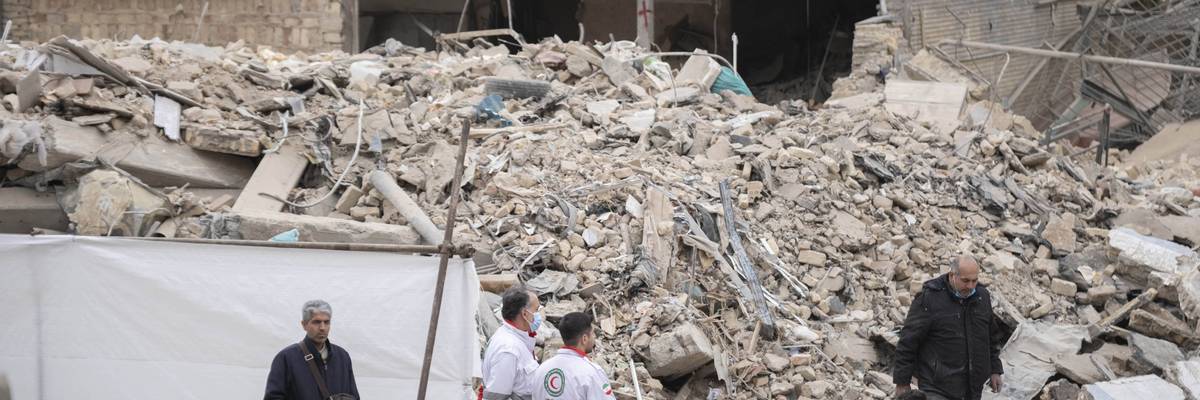
Two members of the Iranian Red Crescent Society stand among others on the ruins of buildings in a residential area in Tehran, Iran, on March 15, 2026.
"The end of the war will occur when Iran decides it should end, not when Trump envisions its conclusion," said an Iranian official.
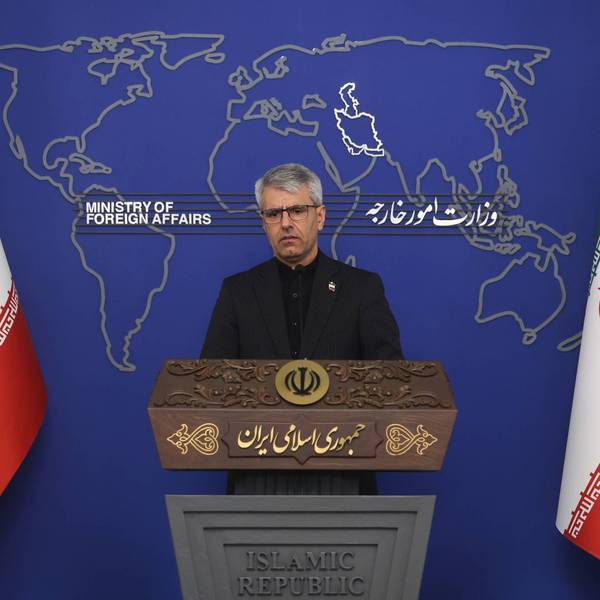
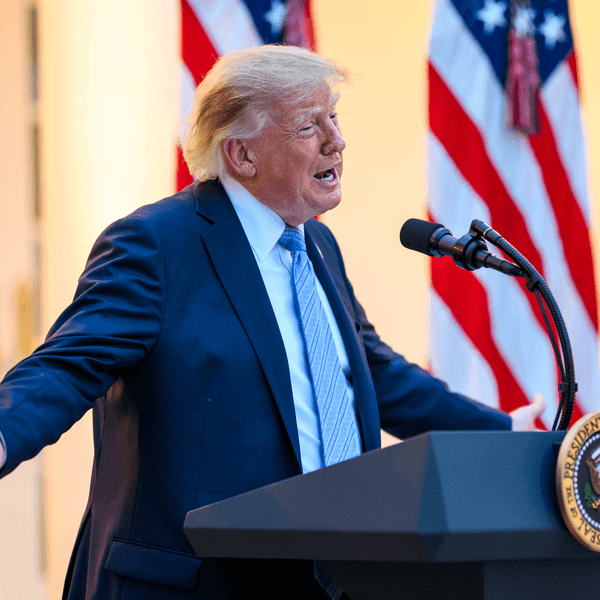
Iranian state media reported Wednesday that Iran has rejected the Trump administration's 15-point ceasefire plan, and a senior official outlined five conditions for ending the war, which the US and Israel launched late last month.
As President Donald Trump sent thousands more troops to the Middle East, the ceasefire plan "was submitted to Iran by intermediaries from Pakistan, who have offered to host renewed negotiations between Washington and Tehran," The Associated Press reported early Wednesday, citing an unnamed source briefed on the US proposal.
As experts warn that a global recession could occur if Iran continues to restrict the flow of fossil fuels through the Strait of Hormuz, Reuters highlighted that elevated "oil prices sank about 5% on Wednesday after reports the United States had sent Iran a 15-point proposal aimed at ending the war."
However, "Iran has responded negatively to an American proposal aimed at ending the ongoing imposed war," according to the Iranian state-run Press TV, which spoke with a senior political-security official.
Characterizing previous negotiations with the US—including nuclear talks in the lead-up to the current war—as deceptive, the official said that "Iran will end the war when it decides to do so and when its own conditions are met."
In addition to the Iranian government's demands from the recent negotiations in Geneva, the official said, the five conditions under which Iran would now agree to end the war are:
A ceasefire is contingent upon acceptance of those conditions, and "no negotiations will be held prior to that," the official told Press TV. "The end of the war will occur when Iran decides it should end, not when Trump envisions its conclusion."
The Iranian government this week put the death toll from the US-Israeli assault at over 1,500. According to Reuters, the news agency of the US-based Human Rights Activists in Iran said at least 3,291 people, including 1,455 civilians, are dead. US and Israeli bombings have also damaged tens of thousands of civilian locations, including homes, schools, medical facilities, energy installations, courthouses, and United Nations Educational, Scientific, and Cultural Organization World Heritage sites.
There have also been civilian and military casualties across the region, including more than 1,000 people slaughtered in Israel's bombing of Lebanon, 16 killed in Israel, and 13 confirmed deaths of US service members, according to the AP.
Speaking at UN headquarters in New York on Wednesday, Secretary-General António Guterres renewed his call for the US and Israel to end their war on Iran, which he said is "out of control" and "has broken past the limits even leaders thought unimaginable."
"The world is staring down the barrel of a wider war, a rising tide of human suffering, and a deeper global economic shock. This has gone too far," Guterres said. "It is time to stop climbing the escalation ladder—and start climbing the diplomatic ladder, and return to full respect of international law."
"I have remained in close contact with many from the region and around the world. A number of initiatives for dialogue and peace are underway. They must succeed," he continued. "My message to the United States and Israel is that it is high time to end the war—as human suffering deepens, civilian casualties mount, and the global economic impact is increasingly devastating. My message to Iran is to stop attacking their neighbors that are not parties to the conflict."
The UN chief then turned to Lebanon, which he recently visited: "There, too, the war must stop. Hezbollah must stop launching attacks into Israel. And Israel must stop its military operations and strikes in Lebanon, which are hitting civilians the hardest. The Gaza model must not be replicated in Lebanon."
Dear Common Dreams reader, It’s been nearly 30 years since I co-founded Common Dreams with my late wife, Lina Newhouser. We had the radical notion that journalism should serve the public good, not corporate profits. It was clear to us from the outset what it would take to build such a project. No paid advertisements. No corporate sponsors. No millionaire publisher telling us what to think or do. Many people said we wouldn't last a year, but we proved those doubters wrong. Together with a tremendous team of journalists and dedicated staff, we built an independent media outlet free from the constraints of profits and corporate control. Our mission has always been simple: To inform. To inspire. To ignite change for the common good. Building Common Dreams was not easy. Our survival was never guaranteed. When you take on the most powerful forces—Wall Street greed, fossil fuel industry destruction, Big Tech lobbyists, and uber-rich oligarchs who have spent billions upon billions rigging the economy and democracy in their favor—the only bulwark you have is supporters who believe in your work. But here’s the urgent message from me today. It's never been this bad out there. And it's never been this hard to keep us going. At the very moment Common Dreams is most needed, the threats we face are intensifying. We need your support now more than ever. We don't accept corporate advertising and never will. We don't have a paywall because we don't think people should be blocked from critical news based on their ability to pay. Everything we do is funded by the donations of readers like you. When everyone does the little they can afford, we are strong. But if that support retreats or dries up, so do we. Will you donate now to make sure Common Dreams not only survives but thrives? —Craig Brown, Co-founder |
Iranian state media reported Wednesday that Iran has rejected the Trump administration's 15-point ceasefire plan, and a senior official outlined five conditions for ending the war, which the US and Israel launched late last month.
As President Donald Trump sent thousands more troops to the Middle East, the ceasefire plan "was submitted to Iran by intermediaries from Pakistan, who have offered to host renewed negotiations between Washington and Tehran," The Associated Press reported early Wednesday, citing an unnamed source briefed on the US proposal.
As experts warn that a global recession could occur if Iran continues to restrict the flow of fossil fuels through the Strait of Hormuz, Reuters highlighted that elevated "oil prices sank about 5% on Wednesday after reports the United States had sent Iran a 15-point proposal aimed at ending the war."
However, "Iran has responded negatively to an American proposal aimed at ending the ongoing imposed war," according to the Iranian state-run Press TV, which spoke with a senior political-security official.
Characterizing previous negotiations with the US—including nuclear talks in the lead-up to the current war—as deceptive, the official said that "Iran will end the war when it decides to do so and when its own conditions are met."
In addition to the Iranian government's demands from the recent negotiations in Geneva, the official said, the five conditions under which Iran would now agree to end the war are:
A ceasefire is contingent upon acceptance of those conditions, and "no negotiations will be held prior to that," the official told Press TV. "The end of the war will occur when Iran decides it should end, not when Trump envisions its conclusion."
The Iranian government this week put the death toll from the US-Israeli assault at over 1,500. According to Reuters, the news agency of the US-based Human Rights Activists in Iran said at least 3,291 people, including 1,455 civilians, are dead. US and Israeli bombings have also damaged tens of thousands of civilian locations, including homes, schools, medical facilities, energy installations, courthouses, and United Nations Educational, Scientific, and Cultural Organization World Heritage sites.
There have also been civilian and military casualties across the region, including more than 1,000 people slaughtered in Israel's bombing of Lebanon, 16 killed in Israel, and 13 confirmed deaths of US service members, according to the AP.
Speaking at UN headquarters in New York on Wednesday, Secretary-General António Guterres renewed his call for the US and Israel to end their war on Iran, which he said is "out of control" and "has broken past the limits even leaders thought unimaginable."
"The world is staring down the barrel of a wider war, a rising tide of human suffering, and a deeper global economic shock. This has gone too far," Guterres said. "It is time to stop climbing the escalation ladder—and start climbing the diplomatic ladder, and return to full respect of international law."
"I have remained in close contact with many from the region and around the world. A number of initiatives for dialogue and peace are underway. They must succeed," he continued. "My message to the United States and Israel is that it is high time to end the war—as human suffering deepens, civilian casualties mount, and the global economic impact is increasingly devastating. My message to Iran is to stop attacking their neighbors that are not parties to the conflict."
The UN chief then turned to Lebanon, which he recently visited: "There, too, the war must stop. Hezbollah must stop launching attacks into Israel. And Israel must stop its military operations and strikes in Lebanon, which are hitting civilians the hardest. The Gaza model must not be replicated in Lebanon."
Iranian state media reported Wednesday that Iran has rejected the Trump administration's 15-point ceasefire plan, and a senior official outlined five conditions for ending the war, which the US and Israel launched late last month.
As President Donald Trump sent thousands more troops to the Middle East, the ceasefire plan "was submitted to Iran by intermediaries from Pakistan, who have offered to host renewed negotiations between Washington and Tehran," The Associated Press reported early Wednesday, citing an unnamed source briefed on the US proposal.
As experts warn that a global recession could occur if Iran continues to restrict the flow of fossil fuels through the Strait of Hormuz, Reuters highlighted that elevated "oil prices sank about 5% on Wednesday after reports the United States had sent Iran a 15-point proposal aimed at ending the war."
However, "Iran has responded negatively to an American proposal aimed at ending the ongoing imposed war," according to the Iranian state-run Press TV, which spoke with a senior political-security official.
Characterizing previous negotiations with the US—including nuclear talks in the lead-up to the current war—as deceptive, the official said that "Iran will end the war when it decides to do so and when its own conditions are met."
In addition to the Iranian government's demands from the recent negotiations in Geneva, the official said, the five conditions under which Iran would now agree to end the war are:
A ceasefire is contingent upon acceptance of those conditions, and "no negotiations will be held prior to that," the official told Press TV. "The end of the war will occur when Iran decides it should end, not when Trump envisions its conclusion."
The Iranian government this week put the death toll from the US-Israeli assault at over 1,500. According to Reuters, the news agency of the US-based Human Rights Activists in Iran said at least 3,291 people, including 1,455 civilians, are dead. US and Israeli bombings have also damaged tens of thousands of civilian locations, including homes, schools, medical facilities, energy installations, courthouses, and United Nations Educational, Scientific, and Cultural Organization World Heritage sites.
There have also been civilian and military casualties across the region, including more than 1,000 people slaughtered in Israel's bombing of Lebanon, 16 killed in Israel, and 13 confirmed deaths of US service members, according to the AP.
Speaking at UN headquarters in New York on Wednesday, Secretary-General António Guterres renewed his call for the US and Israel to end their war on Iran, which he said is "out of control" and "has broken past the limits even leaders thought unimaginable."
"The world is staring down the barrel of a wider war, a rising tide of human suffering, and a deeper global economic shock. This has gone too far," Guterres said. "It is time to stop climbing the escalation ladder—and start climbing the diplomatic ladder, and return to full respect of international law."
"I have remained in close contact with many from the region and around the world. A number of initiatives for dialogue and peace are underway. They must succeed," he continued. "My message to the United States and Israel is that it is high time to end the war—as human suffering deepens, civilian casualties mount, and the global economic impact is increasingly devastating. My message to Iran is to stop attacking their neighbors that are not parties to the conflict."
The UN chief then turned to Lebanon, which he recently visited: "There, too, the war must stop. Hezbollah must stop launching attacks into Israel. And Israel must stop its military operations and strikes in Lebanon, which are hitting civilians the hardest. The Gaza model must not be replicated in Lebanon."