SUBSCRIBE TO OUR FREE NEWSLETTER
Daily news & progressive opinion—funded by the people, not the corporations—delivered straight to your inbox.
5
#000000
#FFFFFF
To donate by check, phone, or other method, see our More Ways to Give page.
Daily news & progressive opinion—funded by the people, not the corporations—delivered straight to your inbox.
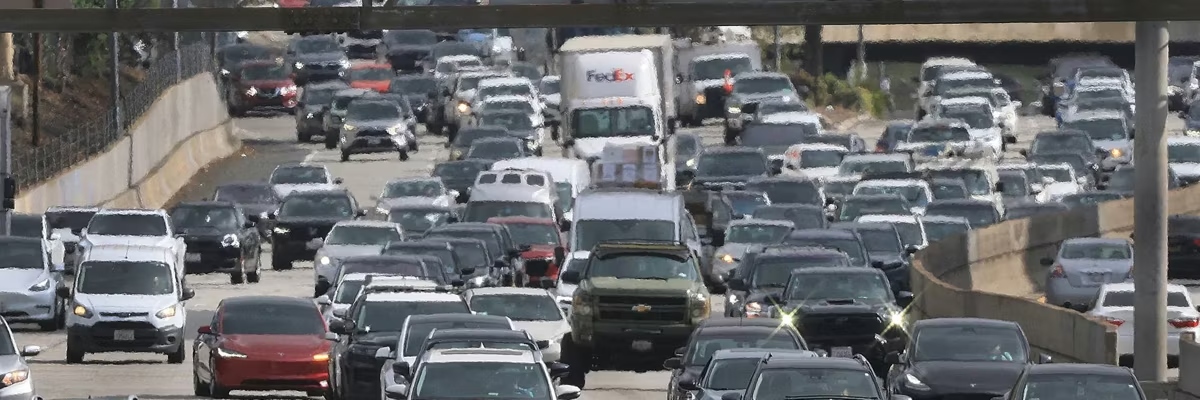
Morning commuters travel along the 110 Freeway in downtown Los Angeles on Thursday, Sept. 17, 2026.
"Oil companies will get a windfall from gutting the fuel economy standards, but the rest of us are going to be handing over more of our hard-earned paychecks to fill up the tank," said one environmental lawyer.
Scientists and environmental advocates are warning that the Trump administration's rollback of fuel economy standards for cars and trucks will not only lead to more pollution but also hurt cash-strapped consumers already reeling from gas price spikes.
The administration announced on Monday that it was weakening the Corporate Average Fuel Economy (CAFE) standards, which require automakers to increase the fuel efficiency of their vehicles each year.
Biden administration rules required a 2% annual increase in fuel-efficiency standards, with the goal of bringing most vehicles to an average of 50.4 miles per gallon by 2031. Under President Donald Trump, the annual target has been reduced to just a 1% improvement each year, meaning five years from now the average car would be required to get just under 34.9 mpg.
The Department of Transportation, which finalized the rule, has argued that efficiency standards put an unnecessary burden on carmakers and has projected that lowering them will “reduce the average cost of a new vehicle by $1,300 for American families" and "save the American people $138 billion over the next five years."
Transportation Secretary Sean Duffy described the Biden-era increase as one that "forced automakers to produce more expensive electric vehicles that American families didn’t want."
But Dave Cooke, senior vehicles analyst for the Union of Concerned Scientists’ (UCS) Clean Transportation Program, argues that rather than being a benefit to consumers, “the federal government’s decision to gut fuel economy standards is a handout to automakers and oil companies that will strap American consumers already struggling with an affordability crisis.”
His group has estimated that since CAFE standards were first introduced in 2010, they have saved auto owners about $321 billion at the gas pump. And over just the past seven months, during which Trump's war with Iran has caused gas prices to soar around the country, UCS estimates that consumers have saved $32 billion.
"Any small reduction in upfront vehicle costs will be outweighed by higher fuel expenses," Cooke said.
The National Highway Traffic Safety Administration (NHTSA) itself estimated in an impact analysis for the rule days ago that, as a result of the rule change, Americans will consume roughly 122 billion more gallons of gas than they would under the 2024 standards, resulting in average lifetime fuel costs of more than $1,600 more per vehicle—more than the administration estimates consumers will save by buying cheaper cars.
Transportation already accounted for about 17% of average US household spending in 2024, the latest year for which the Bureau of Labor Statistics has published data. Meanwhile, as the war with Iran has driven up costs, oil companies are reporting record profits. The top eight brought in nearly $93 billion in earnings in the second quarter of this year alone, according to an analysis by The Guardian.
"Oil companies will get a windfall from gutting the fuel economy standards, but the rest of us are going to be handing over more of our hard-earned paychecks to fill up the tank," said Atid Kimelman, an attorney at the NRDC.
Americans won't just spend more money; they'll also produce way more planet-heating greenhouse gases. The standards being rolled back were projected by NHTSA to prevent about 659 million metric tons of carbon dioxide, 825,000 metric tons of methane, and roughly 24,000 metric tons of nitrous oxide emissions through 2050.
The Center for Biological Diversity pointed out that the US is already the world's largest oil guzzler, accounting for 20% of global use, and that transportation is the No. 1 consumer of that oil.
"This move spells short- and long-term disaster for people’s health, the planet, and even US automakers who’ll sit on the sidelines while clean cars advance around the world," said Dan Becker, the director of the group's Safe Climate Transport Campaign. "This standard was the biggest single step any nation has taken to save gas, money at the pump, and auto pollution.”
Matthew Davis, vice president of federal policy for the League of Conservation Voters, emphasized that fuel efficiency standards are popular with the American public. A nationwide survey last month by the Global Strategy Group found that 73% of voters nationwide said they'd support "reestablishing fuel efficiency standards for cars and trucks."
"It is no secret that Trump promised handouts to Big Oil in exchange for campaign spending," Davis said, "and he is delivering for those billionaire CEOs and polluters while he hurts working families, American manufacturing competitiveness, public health, and the environment at every turn.”
Dear Common Dreams reader, It’s been nearly 30 years since I co-founded Common Dreams with my late wife, Lina Newhouser. We had the radical notion that journalism should serve the public good, not corporate profits. It was clear to us from the outset what it would take to build such a project. No paid advertisements. No corporate sponsors. No millionaire publisher telling us what to think or do. Many people said we wouldn't last a year, but we proved those doubters wrong. Together with a tremendous team of journalists and dedicated staff, we built an independent media outlet free from the constraints of profits and corporate control. Our mission has always been simple: To inform. To inspire. To ignite change for the common good. Building Common Dreams was not easy. Our survival was never guaranteed. When you take on the most powerful forces—Wall Street greed, fossil fuel industry destruction, Big Tech lobbyists, and uber-rich oligarchs who have spent billions upon billions rigging the economy and democracy in their favor—the only bulwark you have is supporters who believe in your work. But here’s the urgent message from me today. It's never been this bad out there. And it's never been this hard to keep us going. At the very moment Common Dreams is most needed, the threats we face are intensifying. We need your support now more than ever. We don't accept corporate advertising and never will. We don't have a paywall because we don't think people should be blocked from critical news based on their ability to pay. Everything we do is funded by the donations of readers like you. When everyone does the little they can afford, we are strong. But if that support retreats or dries up, so do we. Will you donate now to make sure Common Dreams not only survives but thrives? —Craig Brown, Co-founder |
Scientists and environmental advocates are warning that the Trump administration's rollback of fuel economy standards for cars and trucks will not only lead to more pollution but also hurt cash-strapped consumers already reeling from gas price spikes.
The administration announced on Monday that it was weakening the Corporate Average Fuel Economy (CAFE) standards, which require automakers to increase the fuel efficiency of their vehicles each year.
Biden administration rules required a 2% annual increase in fuel-efficiency standards, with the goal of bringing most vehicles to an average of 50.4 miles per gallon by 2031. Under President Donald Trump, the annual target has been reduced to just a 1% improvement each year, meaning five years from now the average car would be required to get just under 34.9 mpg.
The Department of Transportation, which finalized the rule, has argued that efficiency standards put an unnecessary burden on carmakers and has projected that lowering them will “reduce the average cost of a new vehicle by $1,300 for American families" and "save the American people $138 billion over the next five years."
Transportation Secretary Sean Duffy described the Biden-era increase as one that "forced automakers to produce more expensive electric vehicles that American families didn’t want."
But Dave Cooke, senior vehicles analyst for the Union of Concerned Scientists’ (UCS) Clean Transportation Program, argues that rather than being a benefit to consumers, “the federal government’s decision to gut fuel economy standards is a handout to automakers and oil companies that will strap American consumers already struggling with an affordability crisis.”
His group has estimated that since CAFE standards were first introduced in 2010, they have saved auto owners about $321 billion at the gas pump. And over just the past seven months, during which Trump's war with Iran has caused gas prices to soar around the country, UCS estimates that consumers have saved $32 billion.
"Any small reduction in upfront vehicle costs will be outweighed by higher fuel expenses," Cooke said.
The National Highway Traffic Safety Administration (NHTSA) itself estimated in an impact analysis for the rule days ago that, as a result of the rule change, Americans will consume roughly 122 billion more gallons of gas than they would under the 2024 standards, resulting in average lifetime fuel costs of more than $1,600 more per vehicle—more than the administration estimates consumers will save by buying cheaper cars.
Transportation already accounted for about 17% of average US household spending in 2024, the latest year for which the Bureau of Labor Statistics has published data. Meanwhile, as the war with Iran has driven up costs, oil companies are reporting record profits. The top eight brought in nearly $93 billion in earnings in the second quarter of this year alone, according to an analysis by The Guardian.
"Oil companies will get a windfall from gutting the fuel economy standards, but the rest of us are going to be handing over more of our hard-earned paychecks to fill up the tank," said Atid Kimelman, an attorney at the NRDC.
Americans won't just spend more money; they'll also produce way more planet-heating greenhouse gases. The standards being rolled back were projected by NHTSA to prevent about 659 million metric tons of carbon dioxide, 825,000 metric tons of methane, and roughly 24,000 metric tons of nitrous oxide emissions through 2050.
The Center for Biological Diversity pointed out that the US is already the world's largest oil guzzler, accounting for 20% of global use, and that transportation is the No. 1 consumer of that oil.
"This move spells short- and long-term disaster for people’s health, the planet, and even US automakers who’ll sit on the sidelines while clean cars advance around the world," said Dan Becker, the director of the group's Safe Climate Transport Campaign. "This standard was the biggest single step any nation has taken to save gas, money at the pump, and auto pollution.”
Matthew Davis, vice president of federal policy for the League of Conservation Voters, emphasized that fuel efficiency standards are popular with the American public. A nationwide survey last month by the Global Strategy Group found that 73% of voters nationwide said they'd support "reestablishing fuel efficiency standards for cars and trucks."
"It is no secret that Trump promised handouts to Big Oil in exchange for campaign spending," Davis said, "and he is delivering for those billionaire CEOs and polluters while he hurts working families, American manufacturing competitiveness, public health, and the environment at every turn.”
Scientists and environmental advocates are warning that the Trump administration's rollback of fuel economy standards for cars and trucks will not only lead to more pollution but also hurt cash-strapped consumers already reeling from gas price spikes.
The administration announced on Monday that it was weakening the Corporate Average Fuel Economy (CAFE) standards, which require automakers to increase the fuel efficiency of their vehicles each year.
Biden administration rules required a 2% annual increase in fuel-efficiency standards, with the goal of bringing most vehicles to an average of 50.4 miles per gallon by 2031. Under President Donald Trump, the annual target has been reduced to just a 1% improvement each year, meaning five years from now the average car would be required to get just under 34.9 mpg.
The Department of Transportation, which finalized the rule, has argued that efficiency standards put an unnecessary burden on carmakers and has projected that lowering them will “reduce the average cost of a new vehicle by $1,300 for American families" and "save the American people $138 billion over the next five years."
Transportation Secretary Sean Duffy described the Biden-era increase as one that "forced automakers to produce more expensive electric vehicles that American families didn’t want."
But Dave Cooke, senior vehicles analyst for the Union of Concerned Scientists’ (UCS) Clean Transportation Program, argues that rather than being a benefit to consumers, “the federal government’s decision to gut fuel economy standards is a handout to automakers and oil companies that will strap American consumers already struggling with an affordability crisis.”
His group has estimated that since CAFE standards were first introduced in 2010, they have saved auto owners about $321 billion at the gas pump. And over just the past seven months, during which Trump's war with Iran has caused gas prices to soar around the country, UCS estimates that consumers have saved $32 billion.
"Any small reduction in upfront vehicle costs will be outweighed by higher fuel expenses," Cooke said.
The National Highway Traffic Safety Administration (NHTSA) itself estimated in an impact analysis for the rule days ago that, as a result of the rule change, Americans will consume roughly 122 billion more gallons of gas than they would under the 2024 standards, resulting in average lifetime fuel costs of more than $1,600 more per vehicle—more than the administration estimates consumers will save by buying cheaper cars.
Transportation already accounted for about 17% of average US household spending in 2024, the latest year for which the Bureau of Labor Statistics has published data. Meanwhile, as the war with Iran has driven up costs, oil companies are reporting record profits. The top eight brought in nearly $93 billion in earnings in the second quarter of this year alone, according to an analysis by The Guardian.
"Oil companies will get a windfall from gutting the fuel economy standards, but the rest of us are going to be handing over more of our hard-earned paychecks to fill up the tank," said Atid Kimelman, an attorney at the NRDC.
Americans won't just spend more money; they'll also produce way more planet-heating greenhouse gases. The standards being rolled back were projected by NHTSA to prevent about 659 million metric tons of carbon dioxide, 825,000 metric tons of methane, and roughly 24,000 metric tons of nitrous oxide emissions through 2050.
The Center for Biological Diversity pointed out that the US is already the world's largest oil guzzler, accounting for 20% of global use, and that transportation is the No. 1 consumer of that oil.
"This move spells short- and long-term disaster for people’s health, the planet, and even US automakers who’ll sit on the sidelines while clean cars advance around the world," said Dan Becker, the director of the group's Safe Climate Transport Campaign. "This standard was the biggest single step any nation has taken to save gas, money at the pump, and auto pollution.”
Matthew Davis, vice president of federal policy for the League of Conservation Voters, emphasized that fuel efficiency standards are popular with the American public. A nationwide survey last month by the Global Strategy Group found that 73% of voters nationwide said they'd support "reestablishing fuel efficiency standards for cars and trucks."
"It is no secret that Trump promised handouts to Big Oil in exchange for campaign spending," Davis said, "and he is delivering for those billionaire CEOs and polluters while he hurts working families, American manufacturing competitiveness, public health, and the environment at every turn.”