SUBSCRIBE TO OUR FREE NEWSLETTER
Daily news & progressive opinion—funded by the people, not the corporations—delivered straight to your inbox.
5
#000000
#FFFFFF
To donate by check, phone, or other method, see our More Ways to Give page.
Daily news & progressive opinion—funded by the people, not the corporations—delivered straight to your inbox.
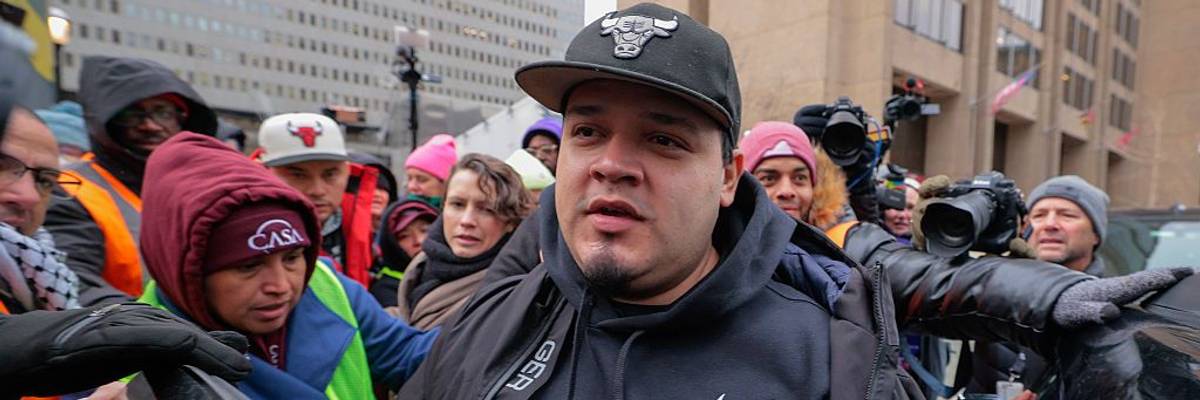
Kilmar Ábrego García departs the US Immigration and Customs Enforcement field office the day after a federal judge ordered his release, on December 12, 2025, in Baltimore, Maryland.
The Salvadoran's departure ends an ordeal that included an unlawful deportation to a notorious prison, a criminal prosecution a federal judge deemed vindictive, and threats to send him to African nations.
Kilmar Ábrego García, the Maryland man whose wrongful deportation to a notorious prison in his native El Salvador became an international symbol of President Donald Trump's deadly anti-immigrant crackdown, is leaving the United States for Spain, ending a nearly 20-month legal battle with the administration.
Ábrego García's attorney, Sean Hecker, confirmed Tuesday that the 31-year-old was leaving for Spain under a negotiated agreement with the Trump administration, according to The Washington Post. Ábrego García reportedly boarded a commercial flight from the Washington, DC area on Tuesday evening.
El País reported that Ábrego García ultimately hopes to make his way to Mexico.
"We will always admire his remarkable courage in staring down and defeating a vindictive prosecution instigated by the highest reaches of the Justice Department," Hecker said of Ábrego García in a statement, according to the Post. "He, in turn, is grateful to those who stood by him."
Ábrego García lived in Maryland with his US citizen wife, Jennifer Vasquez Sura, and their three children, and worked as a sheet metal apprentice. He came to the United States as a teenager after fleeing death threats from the Barrio 18 gang in El Salvador.
In 2019, an immigration judge barred his deportation to El Salvador, citing the danger he faced there. Nevertheless, in March 2025 the Trump administration deported him to the Central American country, where he was imprisoned at the notorious Terrorism Confinement Center (CECOT) supermaximum security prison.
Ábrego García's legal team said at the time that he suffered beatings and “psychological torture” while imprisoned at CECOT.
The Trump administration initially acknowledged that Ábrego García's removal was an administrative error, but officials subsequently resisted court orders to facilitate his return, even after the US Supreme Court directed them to do so.
Ábrego García was eventually returned to the United States in June 2025, but his ordeal was far from over.
Federal prosecutors pursued human smuggling charges against him in Tennessee, allegations he denied. In May 2026, a federal judge dismissed the indictment, finding that the prosecution was selective and "vindictive" and likening the US Department of Justice's (DOJ) approach to a prosecutor who picked "the person first and the crime second."
Meanwhile, immigration officials tried to deport Ábrego García to a series of African countries, including Uganda, Eswatini, Ghana, and Liberia, in what his attorneys said was retaliation for his successful legal challenges.
Ábrego García had repeatedly offered to leave voluntarily for Costa Rica, where he had indicated he could find protection. US immigration officials refused to accept that arrangement, instead continuing to pursue deportation to countries with which he had no ties.
The exact conditions of Tuesday's agreement have not been publicly disclosed.
Sen. Chris Van Hollen (D-Md.), who traveled to El Salvador to meet with Ábrego García inside CECOT, hailed what he called a "free man."
“I am relieved that he will be safe, in a country of his choosing, and free—including from this administration’s constant persecution,” the candidate for Senate majority leader added.
This country and this world are at a monumental crossroads. US voters have an opportunity to beat back the forces of fascism and confront the billionaires who are rigging the economy, our media system, and our democracy, making it increasingly impossible for ordinary people to get by. We’re not just talking about the election. We’re talking about what must be done once these fascist elements are vanquished from power. We need a bolder set of solutions than what either major party has so far been willing to offer and a working-class movement ready to fight like hell for it. Trump didn't emerge from nowhere. The conditions that fueled MAGA authoritarianism were created by decades of radical neoliberal economic policies and a corrupt political system dominated by corporate interests. They slashed taxes on the super-rich, promising that the benefits would trickle down. They said giveaways to the corporate titans would make life more affordable for the rest of us. It was all bullshit. And when a bitter, betrayed populace searches for someone to blame, right-wing demagogues have little trouble finding scapegoats. People know when they're being lied to, but you won't hear any of this from the corporate media. Only independent journalism—powered and funded by people who believe in building a better world—can deliver truly trustworthy daily news. If you share our vision, please contribute whatever you can to sustain our work. |
Kilmar Ábrego García, the Maryland man whose wrongful deportation to a notorious prison in his native El Salvador became an international symbol of President Donald Trump's deadly anti-immigrant crackdown, is leaving the United States for Spain, ending a nearly 20-month legal battle with the administration.
Ábrego García's attorney, Sean Hecker, confirmed Tuesday that the 31-year-old was leaving for Spain under a negotiated agreement with the Trump administration, according to The Washington Post. Ábrego García reportedly boarded a commercial flight from the Washington, DC area on Tuesday evening.
El País reported that Ábrego García ultimately hopes to make his way to Mexico.
"We will always admire his remarkable courage in staring down and defeating a vindictive prosecution instigated by the highest reaches of the Justice Department," Hecker said of Ábrego García in a statement, according to the Post. "He, in turn, is grateful to those who stood by him."
Ábrego García lived in Maryland with his US citizen wife, Jennifer Vasquez Sura, and their three children, and worked as a sheet metal apprentice. He came to the United States as a teenager after fleeing death threats from the Barrio 18 gang in El Salvador.
In 2019, an immigration judge barred his deportation to El Salvador, citing the danger he faced there. Nevertheless, in March 2025 the Trump administration deported him to the Central American country, where he was imprisoned at the notorious Terrorism Confinement Center (CECOT) supermaximum security prison.
Ábrego García's legal team said at the time that he suffered beatings and “psychological torture” while imprisoned at CECOT.
The Trump administration initially acknowledged that Ábrego García's removal was an administrative error, but officials subsequently resisted court orders to facilitate his return, even after the US Supreme Court directed them to do so.
Ábrego García was eventually returned to the United States in June 2025, but his ordeal was far from over.
Federal prosecutors pursued human smuggling charges against him in Tennessee, allegations he denied. In May 2026, a federal judge dismissed the indictment, finding that the prosecution was selective and "vindictive" and likening the US Department of Justice's (DOJ) approach to a prosecutor who picked "the person first and the crime second."
Meanwhile, immigration officials tried to deport Ábrego García to a series of African countries, including Uganda, Eswatini, Ghana, and Liberia, in what his attorneys said was retaliation for his successful legal challenges.
Ábrego García had repeatedly offered to leave voluntarily for Costa Rica, where he had indicated he could find protection. US immigration officials refused to accept that arrangement, instead continuing to pursue deportation to countries with which he had no ties.
The exact conditions of Tuesday's agreement have not been publicly disclosed.
Sen. Chris Van Hollen (D-Md.), who traveled to El Salvador to meet with Ábrego García inside CECOT, hailed what he called a "free man."
“I am relieved that he will be safe, in a country of his choosing, and free—including from this administration’s constant persecution,” the candidate for Senate majority leader added.