5
#000000
#FFFFFF
To donate by check, phone, or other method, see our More Ways to Give page.
Daily news & progressive opinion—funded by the people, not the corporations—delivered straight to your inbox.
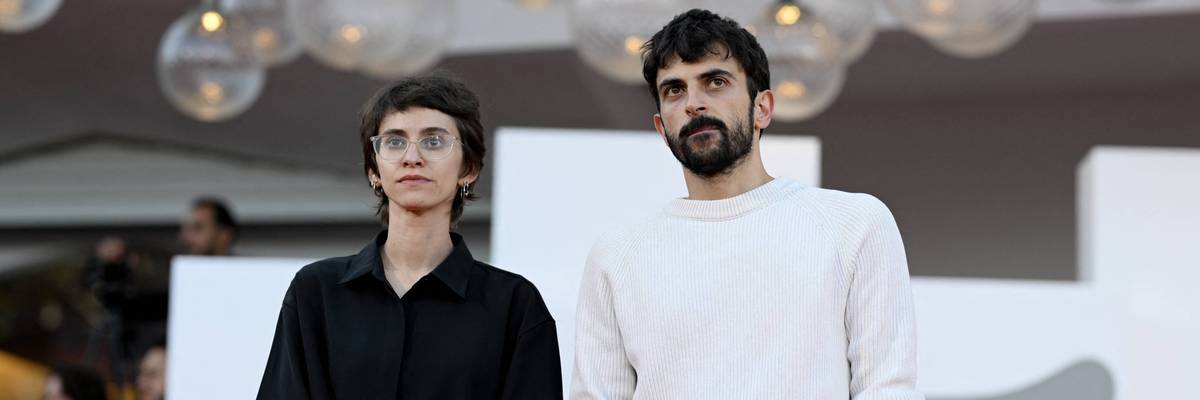
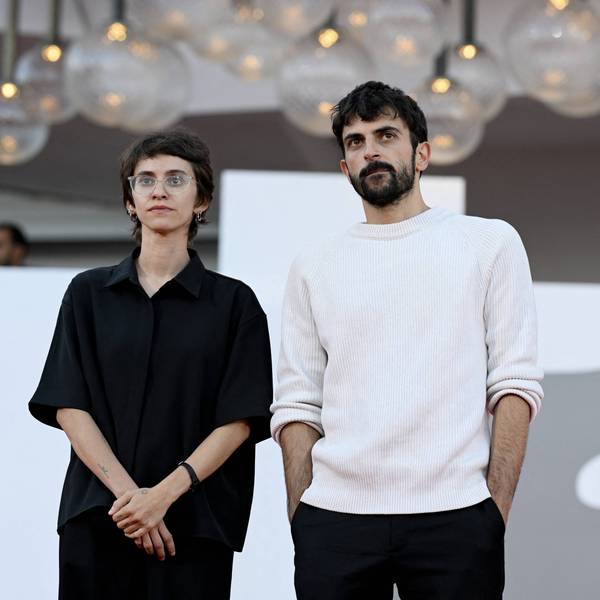
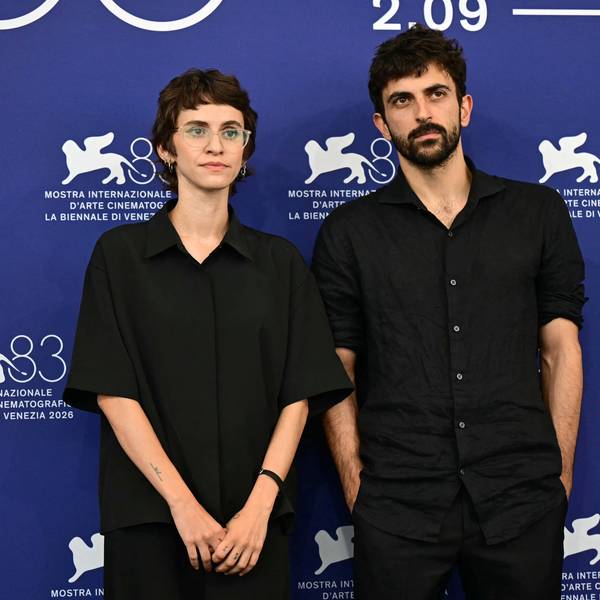
Israeli journalists and filmmakers Rachel Szor and Yuval Abraham attend the red carpet of the closing ceremony of the 83rd Venice Film Festival at Venice Lido on September 12, 2026
"It is the duty of every citizen whose government commits crimes to know, and of every soldier who witnessed them to tell."
Israeli journalists and filmmakers Yuval Abraham and Rachel Szor are determined to ensure that their documentary, NAZA, has the farthest reach possible even as Prime Minister Benjamin Netanyahu's government accuses them of "blood libel" for interviewing soldiers who described the Israeli military's mass killing of civilians, and threatens to revoke their citizenship for making the film.
Abraham said Thursday morning on social media that he, Szor, and The Guardian, which produced the film, had decided to make NAZA accessible "online for free, without any time limit, so that every person can watch it and the soldiers' testimonies," starting in November.
Until then, the filmmakers are approaching movie theaters in Israel and offering the film "at no cost, in the hope that it will be screened in the country" as it is distributed worldwide.
Commentators in Israel have criticized Abraham and Szor for not making the film free, said journalist Ryan Grim, and theaters are now "being dared to follow through on their bluff and screen it."
The film builds on reporting Abraham has done since the beginning of Israel's current assault on Gaza, which started in 2023 in retaliation for a Hamas-led attack. In NAZA, as well as in investigative reports for the Israeli news outlets +972 Magazine and Local Call, Abraham has extensively covered the Israel Defense Forces' rules of engagement in Gaza, including its use of artificial intelligence for targeting and the IDF policy of allowing the killing of more than 100 Palestinian civilians for every Hamas commander killed.
The film's title refers to the IDF's term for the number of civilians commanders expected to be killed in a particular strike.
" Journalism is not betrayal. Criticism is not betrayal."
NAZA received a record-breaking standing ovation and the Special Jury Prize at the Venice Film Festival this month, and the film will premiere in North America at the New York Film Festival this Saturday, with a theatrical release beginning four days later. A wider release in the US is scheduled for October 9, and 50 other countries and territories are also expected to release the film.
While the film has been widely acclaimed, Abraham noted that at home in Israel, "many incorrect things were said about us and about the film in the past week."
Officials have accused the filmmakers, who interviewed 24 military and intelligence officers for the film, of lying about the IDF's practices in Gaza.
Netanyahu, who is facing legislative elections next month, said after the film's release at the Venice Film Festival that he would introduce a bill to revoke the citizenship of Israelis who defame the IDF. Eyal Zamir, chief of staff at the IDF, said military lawyers were considering legal action against Abraham and Szor.
Protesters outside Szor's family home could be heard chanting, "Death sentence for traitors" one evening, and the Committee to Protect Journalists noted that the call for violence "followed days of increasingly hostile public rhetoric targeting the filmmakers, which underscores the risks created when government officials publicly target journalists."
The offices of +972 Magazine and Local Call were also reportedly broken into.
"We made the film to spark a public discussion about the government's actions in Gaza, the killing of more than 73,000 people, most of them civilians, the normalization of a war of extermination, of the notion that 'there are no uninvolved,'" said Abraham.
"Journalism is not betrayal. Criticism is not betrayal," he continued. "It is the duty of every citizen whose government commits crimes to know, and of every soldier who witnessed them to tell. There are thousands of such soldiers walking around here, who will watch the film and recognize what is described in it personally: the killing of unarmed people crossing an imaginary line, the [NAZA] approvals in the hundreds, the systematic attacks on family homes, the burning and physical destruction of Gaza, murder and shooting at hungry people in food distribution centers, and other crimes that have no justification."
Ali Abunimah, director of Electronic Intifada, said the filmmakers should have made the film free for viewers "from the start."
He also called for Abraham and Szor to "turn over any and all evidence they have that could lead to the arrest and punishment of perpetrators of war crimes, crimes against humanity, and genocide to the International Criminal Court," which has a warrant out for the arrest of Netanyahu and former Defense Minister Yoav Gallant.
Dear Common Dreams reader, It’s been nearly 30 years since I co-founded Common Dreams with my late wife, Lina Newhouser. We had the radical notion that journalism should serve the public good, not corporate profits. It was clear to us from the outset what it would take to build such a project. No paid advertisements. No corporate sponsors. No millionaire publisher telling us what to think or do. Many people said we wouldn't last a year, but we proved those doubters wrong. Together with a tremendous team of journalists and dedicated staff, we built an independent media outlet free from the constraints of profits and corporate control. Our mission has always been simple: To inform. To inspire. To ignite change for the common good. Building Common Dreams was not easy. Our survival was never guaranteed. When you take on the most powerful forces—Wall Street greed, fossil fuel industry destruction, Big Tech lobbyists, and uber-rich oligarchs who have spent billions upon billions rigging the economy and democracy in their favor—the only bulwark you have is supporters who believe in your work. But here’s the urgent message from me today. It's never been this bad out there. And it's never been this hard to keep us going. At the very moment Common Dreams is most needed, the threats we face are intensifying. We need your support now more than ever. We don't accept corporate advertising and never will. We don't have a paywall because we don't think people should be blocked from critical news based on their ability to pay. Everything we do is funded by the donations of readers like you. When everyone does the little they can afford, we are strong. But if that support retreats or dries up, so do we. Will you donate now to make sure Common Dreams not only survives but thrives? —Craig Brown, Co-founder |
Israeli journalists and filmmakers Yuval Abraham and Rachel Szor are determined to ensure that their documentary, NAZA, has the farthest reach possible even as Prime Minister Benjamin Netanyahu's government accuses them of "blood libel" for interviewing soldiers who described the Israeli military's mass killing of civilians, and threatens to revoke their citizenship for making the film.
Abraham said Thursday morning on social media that he, Szor, and The Guardian, which produced the film, had decided to make NAZA accessible "online for free, without any time limit, so that every person can watch it and the soldiers' testimonies," starting in November.
Until then, the filmmakers are approaching movie theaters in Israel and offering the film "at no cost, in the hope that it will be screened in the country" as it is distributed worldwide.
Commentators in Israel have criticized Abraham and Szor for not making the film free, said journalist Ryan Grim, and theaters are now "being dared to follow through on their bluff and screen it."
The film builds on reporting Abraham has done since the beginning of Israel's current assault on Gaza, which started in 2023 in retaliation for a Hamas-led attack. In NAZA, as well as in investigative reports for the Israeli news outlets +972 Magazine and Local Call, Abraham has extensively covered the Israel Defense Forces' rules of engagement in Gaza, including its use of artificial intelligence for targeting and the IDF policy of allowing the killing of more than 100 Palestinian civilians for every Hamas commander killed.
The film's title refers to the IDF's term for the number of civilians commanders expected to be killed in a particular strike.
" Journalism is not betrayal. Criticism is not betrayal."
NAZA received a record-breaking standing ovation and the Special Jury Prize at the Venice Film Festival this month, and the film will premiere in North America at the New York Film Festival this Saturday, with a theatrical release beginning four days later. A wider release in the US is scheduled for October 9, and 50 other countries and territories are also expected to release the film.
While the film has been widely acclaimed, Abraham noted that at home in Israel, "many incorrect things were said about us and about the film in the past week."
Officials have accused the filmmakers, who interviewed 24 military and intelligence officers for the film, of lying about the IDF's practices in Gaza.
Netanyahu, who is facing legislative elections next month, said after the film's release at the Venice Film Festival that he would introduce a bill to revoke the citizenship of Israelis who defame the IDF. Eyal Zamir, chief of staff at the IDF, said military lawyers were considering legal action against Abraham and Szor.
Protesters outside Szor's family home could be heard chanting, "Death sentence for traitors" one evening, and the Committee to Protect Journalists noted that the call for violence "followed days of increasingly hostile public rhetoric targeting the filmmakers, which underscores the risks created when government officials publicly target journalists."
The offices of +972 Magazine and Local Call were also reportedly broken into.
"We made the film to spark a public discussion about the government's actions in Gaza, the killing of more than 73,000 people, most of them civilians, the normalization of a war of extermination, of the notion that 'there are no uninvolved,'" said Abraham.
"Journalism is not betrayal. Criticism is not betrayal," he continued. "It is the duty of every citizen whose government commits crimes to know, and of every soldier who witnessed them to tell. There are thousands of such soldiers walking around here, who will watch the film and recognize what is described in it personally: the killing of unarmed people crossing an imaginary line, the [NAZA] approvals in the hundreds, the systematic attacks on family homes, the burning and physical destruction of Gaza, murder and shooting at hungry people in food distribution centers, and other crimes that have no justification."
Ali Abunimah, director of Electronic Intifada, said the filmmakers should have made the film free for viewers "from the start."
He also called for Abraham and Szor to "turn over any and all evidence they have that could lead to the arrest and punishment of perpetrators of war crimes, crimes against humanity, and genocide to the International Criminal Court," which has a warrant out for the arrest of Netanyahu and former Defense Minister Yoav Gallant.
Israeli journalists and filmmakers Yuval Abraham and Rachel Szor are determined to ensure that their documentary, NAZA, has the farthest reach possible even as Prime Minister Benjamin Netanyahu's government accuses them of "blood libel" for interviewing soldiers who described the Israeli military's mass killing of civilians, and threatens to revoke their citizenship for making the film.
Abraham said Thursday morning on social media that he, Szor, and The Guardian, which produced the film, had decided to make NAZA accessible "online for free, without any time limit, so that every person can watch it and the soldiers' testimonies," starting in November.
Until then, the filmmakers are approaching movie theaters in Israel and offering the film "at no cost, in the hope that it will be screened in the country" as it is distributed worldwide.
Commentators in Israel have criticized Abraham and Szor for not making the film free, said journalist Ryan Grim, and theaters are now "being dared to follow through on their bluff and screen it."
The film builds on reporting Abraham has done since the beginning of Israel's current assault on Gaza, which started in 2023 in retaliation for a Hamas-led attack. In NAZA, as well as in investigative reports for the Israeli news outlets +972 Magazine and Local Call, Abraham has extensively covered the Israel Defense Forces' rules of engagement in Gaza, including its use of artificial intelligence for targeting and the IDF policy of allowing the killing of more than 100 Palestinian civilians for every Hamas commander killed.
The film's title refers to the IDF's term for the number of civilians commanders expected to be killed in a particular strike.
" Journalism is not betrayal. Criticism is not betrayal."
NAZA received a record-breaking standing ovation and the Special Jury Prize at the Venice Film Festival this month, and the film will premiere in North America at the New York Film Festival this Saturday, with a theatrical release beginning four days later. A wider release in the US is scheduled for October 9, and 50 other countries and territories are also expected to release the film.
While the film has been widely acclaimed, Abraham noted that at home in Israel, "many incorrect things were said about us and about the film in the past week."
Officials have accused the filmmakers, who interviewed 24 military and intelligence officers for the film, of lying about the IDF's practices in Gaza.
Netanyahu, who is facing legislative elections next month, said after the film's release at the Venice Film Festival that he would introduce a bill to revoke the citizenship of Israelis who defame the IDF. Eyal Zamir, chief of staff at the IDF, said military lawyers were considering legal action against Abraham and Szor.
Protesters outside Szor's family home could be heard chanting, "Death sentence for traitors" one evening, and the Committee to Protect Journalists noted that the call for violence "followed days of increasingly hostile public rhetoric targeting the filmmakers, which underscores the risks created when government officials publicly target journalists."
The offices of +972 Magazine and Local Call were also reportedly broken into.
"We made the film to spark a public discussion about the government's actions in Gaza, the killing of more than 73,000 people, most of them civilians, the normalization of a war of extermination, of the notion that 'there are no uninvolved,'" said Abraham.
"Journalism is not betrayal. Criticism is not betrayal," he continued. "It is the duty of every citizen whose government commits crimes to know, and of every soldier who witnessed them to tell. There are thousands of such soldiers walking around here, who will watch the film and recognize what is described in it personally: the killing of unarmed people crossing an imaginary line, the [NAZA] approvals in the hundreds, the systematic attacks on family homes, the burning and physical destruction of Gaza, murder and shooting at hungry people in food distribution centers, and other crimes that have no justification."
Ali Abunimah, director of Electronic Intifada, said the filmmakers should have made the film free for viewers "from the start."
He also called for Abraham and Szor to "turn over any and all evidence they have that could lead to the arrest and punishment of perpetrators of war crimes, crimes against humanity, and genocide to the International Criminal Court," which has a warrant out for the arrest of Netanyahu and former Defense Minister Yoav Gallant.