

SUBSCRIBE TO OUR FREE NEWSLETTER
Daily news & progressive opinion—funded by the people, not the corporations—delivered straight to your inbox.
5
#000000
#FFFFFF
To donate by check, phone, or other method, see our More Ways to Give page.
Daily news & progressive opinion—funded by the people, not the corporations—delivered straight to your inbox.
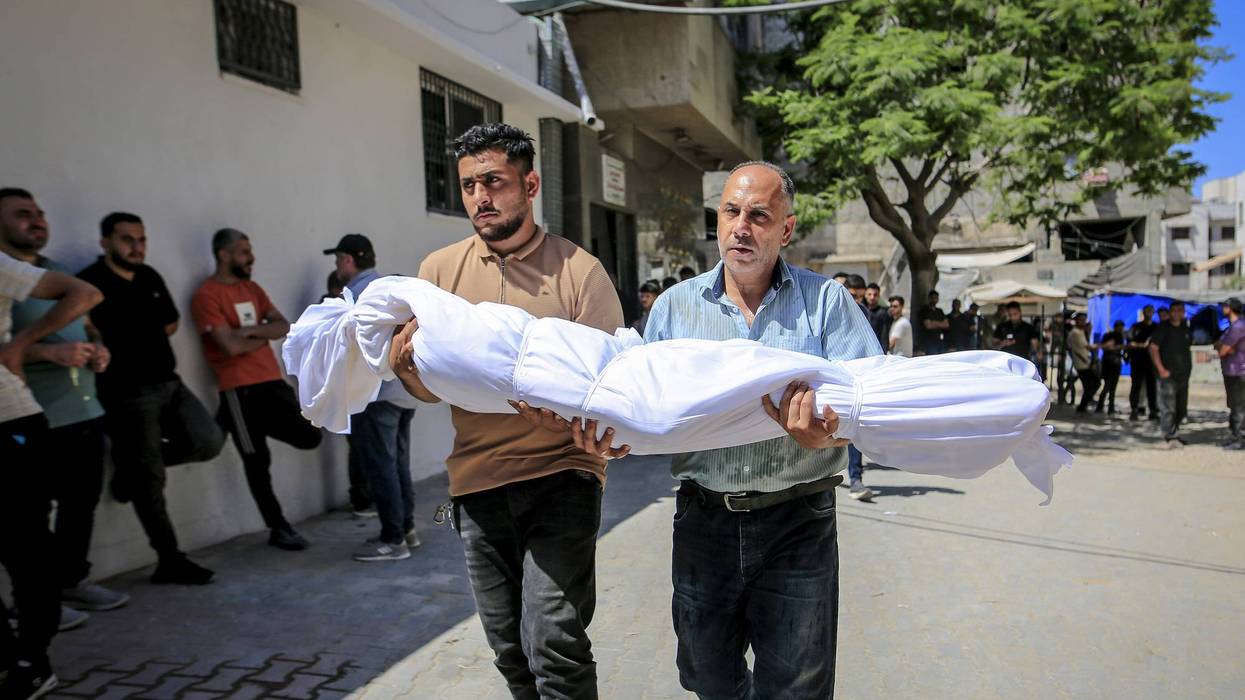
As Israel ratchets up its attacks and conquers more territory in Gaza despite a ceasefire, May was the deadliest month for Palestinians there in 2026.
Five members of the same Palestinian family were killed in a burning building after Israel bombed four residential apartment buildings in Gaza City on Thursday morning. Eight months after the October “ceasefire” began, the death toll from continued Israeli attacks is rapidly approaching 1,000.
A single nine-year-old girl, identified as Hala Hassan Rabah Labad by local reports, survived the strike on an apartment on Intelligence Street in northwestern Gaza and was taken to the hospital. Five members of her family—her father, mother, and three siblings—were all killed.
Nine people were killed in total and dozens more wounded in other strikes on residential buildings throughout the night, according to medical sources who told the Anadolu Agency that bodies arrived at Al-Shifa Hospital—some dismembered and others severely burned.
Other attacks were reported on Al-Salam Tower in Tel al-Hawa, the Mahna family home near Al-Qouqa Roundabout in Al-Shati refugee camp, and a residential apartment in the Abu al-Amin and Abu Iskandar area of Sheikh Radwan.
Local journalists reported that many of the targeted buildings were sheltering displaced families.
One resident recorded video of a burning building near her home and posted it to social media.
"Israel bombed the house next to me at 2 am," she said. "People are burning alive and screaming."
Rescue workers are still reportedly picking through the rubble and have been deployed across multiple locations, according to journalists on the ground, who described the series of attacks as a “major massacre.”
"We were woken up by the strike at 2:30 am. We found pieces of flesh, and people were sleeping. They say the war is over, but the war is not over," Khalil Batran, a neighbor of the deceased family, told Reuters. "There is no safety in Gaza... Every day, they fire at us from there and strike us with missiles. It's futile."
The Israeli military has not commented on the strikes as of Thursday morning.
According to the Gaza Health Ministry, Thursday’s strikes bring the number of Palestinians killed in Israeli attacks up to 947 since a so-called ceasefire between Israel and Hamas was reached in October. Nearly 3,000 other Palestinians have been wounded.
The Gaza Government Media Office has accused Israel of violating the ceasefire more than 3,000 times through the targeting of civilians, the destruction of entire residential blocks, repeated gunfire, and incursions into residential areas, as well as restrictions on humanitarian aid entering the strip.
Since Israel’s genocidal military campaign in Gaza began in October 2023, nearly 73,000 people have been killed, according to official figures from the Gaza Health Ministry, though independent analyses suggest the true death toll could be much higher.
As Israel fortifies and expands its military control of the strip, with leaders including Prime Minister Benjamin Netanyahu pledging to push forward and conquer more territory, May was the deadliest month for Gaza thus far in 2026, with 119 Palestinians killed.
In recent weeks, Israeli strikes on tent encampments have killed multiple other children, including a 6-year-old girl and an 8-year-old boy.
Thursday’s attacks come a day after Israel continued to bomb several sites in Lebanon despite the announcement of a US-brokered ceasefire, which has not yet gone into effect. During a previous truce, Israel launched numerous attacks, demolished villages, and ordered the forced evacuation of civilians in Lebanon, in clear violation of the agreement. Israeli attacks during that ceasefire period killed more than 600 people, according to the World Health Organization.
In Gaza, Israel has justified continued attacks and deeper encroachment into Gaza by saying that Hamas has failed to "fully disarm." But while that is part of a framework laid out by US President Donald Trump's Board of Peace, Drop Site News journalist Jeremy Scahill points out that it was not part of the deal agreed to in October.
“Netanyahu has a PhD in violating ceasefires,” said Scahill on SkyNews Wednesday. “The term ‘ceasefire’ has been used as a surrender cudgel against the Palestinians in Gaza.”
“The Palestinians signed a deal with Israel. Israel has violated it every day, killed 1,000 Palestinians, has moved deeper into Gaza. They say, ‘Hamas agreed to disarm.’ Hamas never signed a disarmament agreement,” he continued. “Now the so-called 'Board of Peace' is demanding that the Palestinians surrender their liberation cause as a condition for Netanyahu to abide by the terms that he signed.”
"They signed a ceasefire with Hamas," he said. "Not with the children in tents that they continue to burn alive."
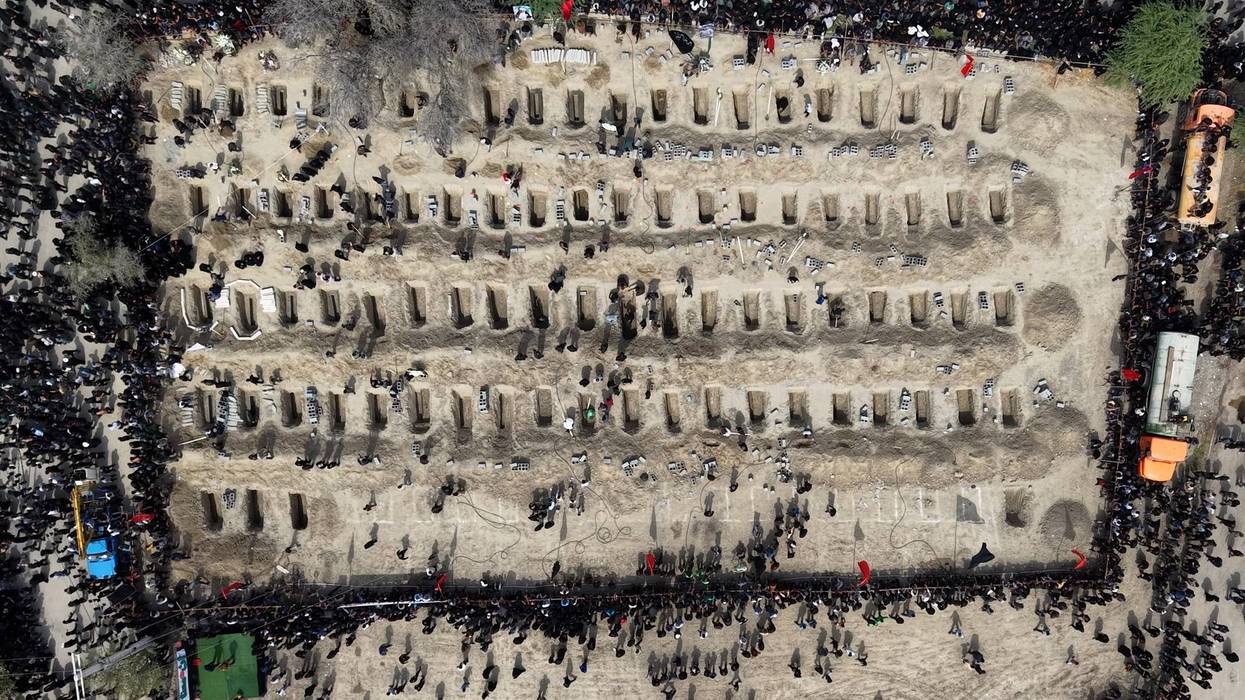
The massacre at a school in the city of Minab is not an isolated case, but rather an example of broader brutality and also a window into how the US systematically downplays civilian death and suffering.
After the breakdown of talks in Pakistan, the ceasefire between the US and Iran is more fragile than ever, and now seems likely to give way to a new phase of the war. The ceasefire and talks have failed to end Israel’s devastating attacks on Lebanon or to negotiate international access to the Strait of Hormuz, now under Iran’s control.
The world must use this pause in the war to push for a permanent ceasefire and peace agreement, but we must also start to assess the true human cost of the war–something the US is always reluctant to do in its wars, from Vietnam to Iraq to Afghanistan. While we always know the exact number of Americans killed in these wars, we never have an accurate tally of how many people we have killed–not only because it is often hard to get the data, but also because the US systematically downplays civilian casualties and treats their lives as less valuable.
We saw this from the very first day of this war. The US carried out a double-tap strike on a girls’ elementary school in Minab, killing 175, mostly young girls. Trump’s response was to blame Iran: “In my opinion, based on what I’ve seen, that was done by Iran,” he said, and later suggested that Iran might have gotten hold of a Tomahawk missile and used it to kill its own people.
Minab is not an isolated case—it is a window into a much broader failure by the US government and media, as well as the Iranian government and international media, to honestly reveal the human toll of this 40-day war.
The Iran Health Ministry’s casualty figures have not been updated in any detail since March 29, when it put Iranian casualties at 2,076 killed and 26,500 wounded, and there is an obvious mismatch between these two numbers. The ratio between them is much higher than in other wars, or even when compared with the Israeli assault on Lebanon in this war, where Lebanon’s Health Ministry reported 1,830 people killed and 4.927 wounded by April 10, a ratio of 2.7 to 1 between the wounded and the dead.
For further comparison, UN figures for civilian casualties in the war in Ukraine are 15,172 and 41,378 wounded, which is also a ratio of 2.7 to 1. These are certainly under-estimates, like civilian casualty counts in every war, but the ratio between deaths and injuries is realistic, unlike that in Tehran’s casualty figures.
If the Iran Health Ministry’s casualty figures were accurate, it would mean that only one person is being killed for every 13 people wounded. But if the figure of 26,500 people wounded was accurate, and the ratio between dead and wounded was similar to what is found in other wars, we would expect that around 10,000 people have probably been killed.
Looking at other sources, the UK-based Iran International website, on March 31, reported Iranian military, militia and police casualties of 4,770 killed and 20,880 wounded, but did not divulge its sources.
Two human rights groups, HRANA and Hengaw, have also published mortality estimates. HRANA, based in Fairfax, Virginia, in the US, is partly funded by the US government, the aggressor in this war. So its data on war casualties are as suspect as its data for casualties during protests in Iran in December and January that the US used as a pretext for the war.
The other human rights group, Hengaw, is based in Norway and Iranian Kurdistan. It reports a total of at least 7,650 people killed by the time of the ceasefire on April 8, of whom 6,620 were military personnel and 1,030 were civilians.
If the Iranian government’s figure of 26,500 people wounded is correct, Hengaw’s count of 7,650 war deaths would amount to a ratio of 3.5 people wounded for each person killed, which would be closer to what one would expect by comparison with other wars.
But the Health Ministry’s figure of 26,500 wounded is also suspect. The Pentagon claims that US and Israeli airstrikes have hit more than 13,000 “targets,” so 26,500 injuries would amount to only two people wounded for each target attacked. This suggests that the count of 26,500 people wounded is itself an undercount, and that the true numbers of casualties in Iran, killed and wounded, military and civilian, are therefore likely to be much higher than any of the numbers reported so far.
While it is easy to understand why the US government doesn’t want to talk about casualties, it seems that the Iranian government doesn’t want to either. If, as we suspect, the true casualty figures are much higher than the health ministry has reported, it may be hiding and downplaying them to prevent panic among the population and keep up the country’s morale, especially in light of the recent large protests in the country. That could also explain why it has not updated its casualty report since March 29.
The fact that our government and institutional media downplay the importance of accurate casualty figures and make no effort to discover them only makes it more urgent to find them, as we and others have tried to do during previous US wars.
We would encourage all sides, and independent groups, to cooperate in efforts to accurately count the dead and wounded. Why does this matter? In an illegal war, every death is a crime, while every person killed or maimed is somebody’s husband, wife, father, mother, son or daughter. They should all still be alive and whole. The US armed forces should not be killing or wounding any of them. So some might ask what difference it makes whether they’ve killed 2,000 people, 7,000 or even 70,000.
We would say that it is precisely because each life is precious, and because the pain and horror each person suffers in these violent deaths and injuries is so unacceptable, that each one deserves to be counted and considered. Americans, and our neighbors around the world, need to fully grasp the scale of the mass murder that the US government is committing, so that we can all respond appropriately.
The fact that our government and institutional media downplay the importance of accurate casualty figures and make no effort to discover them only makes it more urgent to find them, as we and others have tried to do during previous US wars.
In 2006, three years into the extraordinarily violent US military occupation of Iraq, public health experts from Johns Hopkins University in the US and Mustansiriya University in Baghdad conducted the second of two epidemiological studies of mortality in Iraq since the US invasion.
The study was published in the Lancet medical journal, and it estimated that, during just the first three years of war and occupation in Iraq, they had caused about 650,000 deaths, including 600,000 violent killings. That was more than ten times higher than previously published figures, which were based on compilations of western news reports and reports from the occupation government’s health ministry.
The study’s results were disputed by those responsible for the war and the mass casualties it caused, including US President George W. Bush and British Prime Minister Tony Blair.
But leaked emails revealed that the British government’s chief scientific adviser described the study’s methodology as “close to best practice,” and its design as “robust.” Emails from panicking British officials asked, “Are we really sure the report is likely to be right? That is certainly what the brief implies,” and “…the survey methodology used here cannot be rubbished. It is a tried and tested way of measuring mortality in conflict zones.”
In 2015, the Nobel Peace Prize-winning groups Physicians for Social Responsibility (PSR) and International Physicians for the Prevention of Nuclear War (IPPNW) published a report titled Body Count: Casualty Figures After 10 Years of the War on Terror. In discussing the widely varying mortality estimates for the war in Iraq, the report noted, “Despite the furious criticism it attracted, most experts see the second Lancet study of October 2006 as the most solid estimate of the number of casualties, up to the period of its publication.”
No such comprehensive studies were ever conducted in Afghanistan. The UN published annual civilian casualty figures, but these were only compilations of civilian casualties confirmed by the UN Human Rights Office as it followed up on reports of war crimes and human rights violations reported to its office in Kabul, which excluded any deaths not reported to its office, or that it did not have time to fully investigate.
As is happening with the Iran Health Ministry reports today, the UN’s fragmentary reports were uncritically repeated by the world’s media as if they were realistic estimates of total war deaths in Afghanistan.
Finally, in 2019, after 18 years of war and military occupation, Fiona Frazer, the head of the UN Human Rights office in Kabul, admitted to the BBC that the UN’s reports were not providing a full picture of civilian casualties in Afghanistan.
“United Nations data strongly indicates that more civilians are killed or injured in Afghanistan due to armed conflict than anywhere else on Earth,” Frazer said, but then added, “Although the number of recorded civilian casualties are disturbingly high, due to rigorous methods of verification, the published figures almost certainly do not reflect the true scale of harm."
Hundreds of thousands of Afghans were also killed fighting as combatants on both sides in that war. The world’s media were surprised when President Ghani revealed in January 2019 that 45,000 Afghan government troops had been killed since he took office in September 2014. But the US relied on Afghans to fight other Afghans throughout its failed 20-year war in their country.
Whatever the result of the current ceasefire and negotiations, and for however long the US and Israel keep waging war on Iran, the people of the United States and the world must demand a complete and truthful accounting for the human costs of this war, for which Americans and their government bear the prime moral and legal responsibility. At best, that should include the same kind of independent, scientifically-based epidemiological study conducted in Iraq in 2006.
But the demand for accountability starts with a skeptical public and media who can tell the difference between partial, fragmentary casualty reports and serious estimates of total deaths in a violent war zone, and who care enough to want to know how many people their armed forces are really killing and maiming in this illegal war.
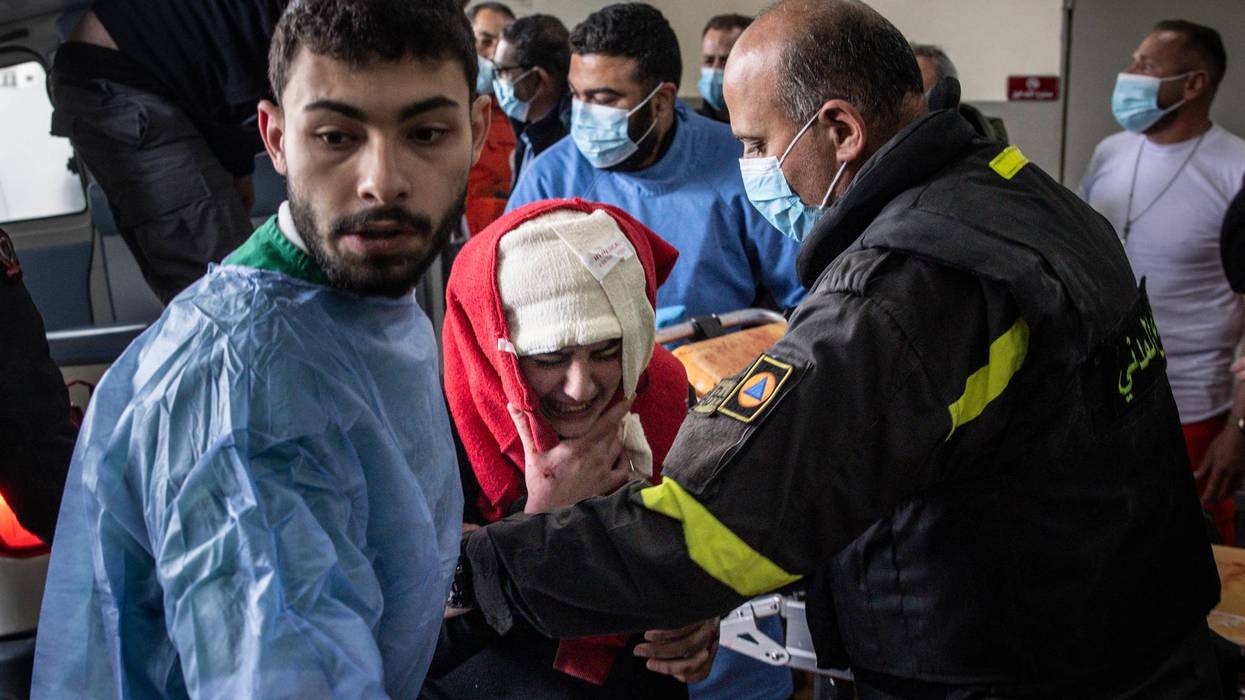
"Civilians in Lebanon are already paying an unbearable price with children, health workers, and journalists amongst those killed—the latest attacks will only escalate this devastating human toll," said one campaigner.
Humanitarian campaigners, civil rights defenders, and progressive members of Congress were among those calling on the Trump administration to pressure Israel to stop bombing Lebanon after Israeli airstrikes killed or wounded more than 1,400 people—many of them civilians—on Wednesday.
In what Amnesty International called an "unprecedented escalation," the Israel Defense Forces said it carried out the “largest coordinated wave of strikes” of its renewed war on Hezbollah in Lebanon. Around 100 sites in the country were bombed in one 10-minute period alone in what the IDF dubbedr "Operation Eternal Darkness."
Lebanese officials said that at least 303 people were killed and 1,165 others wounded by Israeli strikes on Wednesday, the deadliest day of attacks since Israel resumed bombardment of Lebanon and likely since it started bombing its northern neighbor after the Hamas-led Palestinian attack of October 7, 2023.
While Lebanese authorities do not break down casualties according to combatant status, officials and residents of the capital city of Beirut said that civilians were the main victims of Wednesday's bombings, which targeted apartment towers and other civilian structures in numerous densely populated urban areas.
One witness, a woman named Fatima, told Amnesty International what she saw in the immediate aftermath of an IDF strike on a building across the street from her home in Beirut's Salim Salam neighborhood.
“It was apocalyptic," she said. "Bodies on the ground. Blood everywhere. I saw countless wounded adults and children. I walked further but it was the same scene in the other neighborhoods too. I did not know where to go. I just walked aimlessly trying to get as far as possible. It was a nightmare.”
Dr. Firass Abiad, a surgeon and wformer Lebanese health minister, told The Guardian that American University of Beirut Medical College, where he works, received about 70 patients at the same time, a situation he said was intentionally caused by Israel "to flood the health system."
“There was a 90-year-old who I just left a bit ago. He passed away from his wounds," he said. "There was nothing we could do. These are civilians who, without any warning, their whole apartment building was flattened. So you can imagine the severity of injuries that we’re getting.”
Shaden Fakih, a 24-year-old calisthenics trainer, described trying to find his friend who was inside a building when it was bombed. He couldn't locate his friend, but he was seen carrying an elderly woman from the rubble.
"There’s no Hezbollah here, the Israelis are just getting happy when they bomb people, it’s not about Hezbollah," Fakih said in an interview with The Guardian. “Just stop bombing us. If you want to kill Hezbollah, go for it, but don’t kill civilians, because you’re creating anger in us against Israel and we will have to act like Hezbollah just to defend our country. But I don’t want to do that, I just want to live in peace."
“It’s been the worst day since the war started," he added. "And what I’m most sad about is that my pretty Lebanon, our beautiful Lebanon, soon it will all be brought down to the ground.”
As Common Dreams reported, Israeli strikes have wiped out entire families in Lebanon and Iran. In Gaza, more than 2,700 families have been erased from the civil registry.
Responding to Wednesday's attacks, Amnesty International Middle East and North Africa regional director Heba Morayef said that “just hours after the world cautiously welcomed news of a US-Israeli ceasefire with Iran, in Lebanon the nightmare for civilians has become more terrifying."
“Even before today’s attack... more than 1,500 people had been killed and over a million people displaced from their homes across the country," Morayef continued, referring to Israel's bombardment of Lebanon after Hezbollah began launching rockets and drones southward in solidarity with Palestinians in Gaza. Israel's genocidal assault on Gaza has left more than 250,000 Palestinians dead, injured, or missing.
"Civilians in Lebanon are already paying an unbearable price with children, health workers, and journalists amongst those killed—the latest attacks will only escalate this devastating human toll," Morayef added. "These attacks are a reminder that states must immediately halt the transfer of arms and weapons to Israel given the overriding risk that they will be used to commit serious violations of international humanitarian law."
The Washington, DC-based Council on American-Islamic Relations (CAIR) said in a statement late Wednesday, “Once again, Israel’s genocidal government is trying to derail a ceasefire and ensure peace does not succeed by slaughtering innocent civilians."
"The Trump administration must stop them from carrying out this brutal plan," the group added. "Israel has demonstrated time and again that it cannot be trusted to abide by peace agreements. It is time for our government to cut all support for Israel’s atrocities.“
These and other groups, as well as governments in the Mideast and beyond, and US progressives, are demanding that Lebanon be included in the ceasefire. Although Israel agreed to the truce, the government of Prime Minister Benjamin Netanyahu—who is wanted by the International Criminal Court for alleged crimes against humanity and war crimes in Gaza—asserts that the deal does not include Lebanon.
Iran categorically rejects Israel's claim and is using its leverage over the Strait of Hormuz to pressure Israel to reconsider its stance.
Some US progressives called for President Donald Trump to pressure Israel to stop attacking Lebanon, and for a suspension of American arms transfers to the IDF.
"It is unconscionable we continue to provide aid to Israel as they continue to murder civilians and violate international law in Lebanon, Gaza, and the West Bank," Rep. Ilhan Omar (D-Minn.) said Thursday on Bluesky. "No more money to Israel’s genocidal apartheid regime."
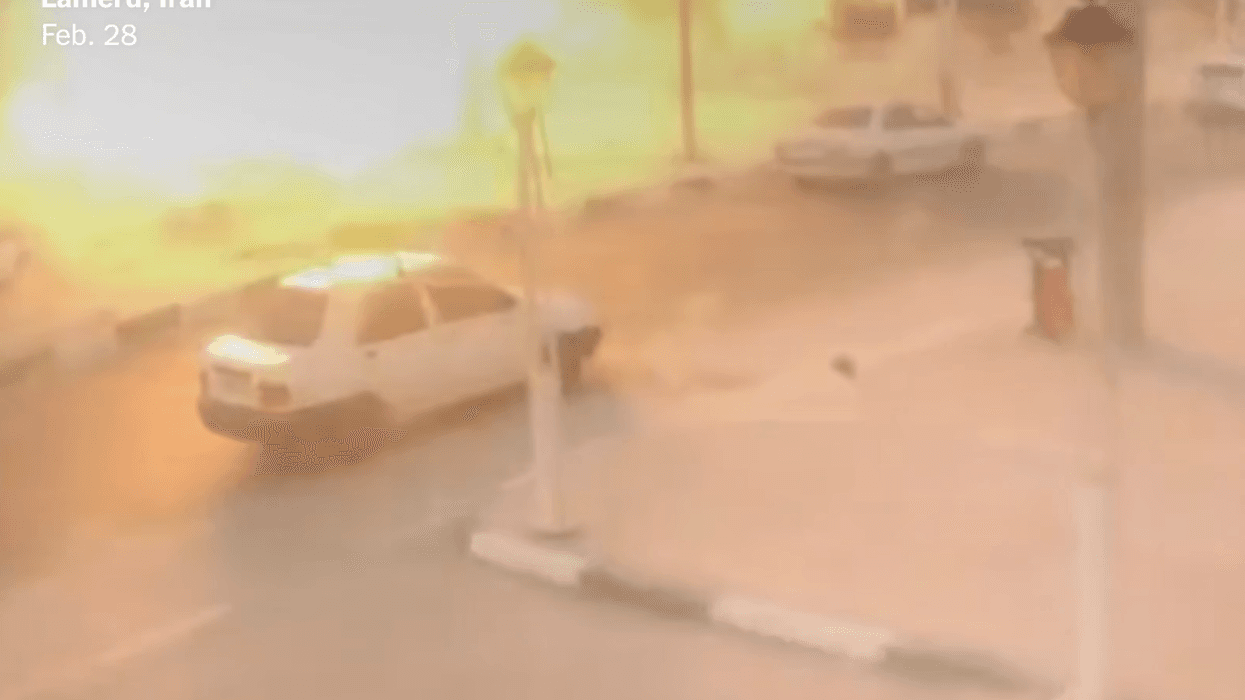
The Precision Strike Missile has never before been used in combat by the US military.
As experts and investigators analyze one of the first strikes carried out in the US-Israeli war on Iran, mounting reports point to a ballistic missile that had never been used before by the US military in combat—but which may have struck a residential area, a sports hall, and a school in the southern city of Lamerd.
Along with being accused of bombing a school in Minab, killing more than 160 children and teachers, the US reportedly attacked several facilities and civilian areas near an Islamic Revolutionary Guards Corps facility in Lamerd, killing an additional 21 people, including children.
While analysts have found a US Tomahawk cruise missile was used in the Minab attack, munitions experts interviewed by the BBC and The New York Times in recent days said footage of the attacks and images of the targets after they were struck suggest a short-range ballistic missile called a Precision Strike Missile (PrSM) was used to bomb a sports hall, school, and residential neighborhood in Lamerd.
The missiles are newly developed and are designed to detonate just above a target and propel small tungsten pellets into the surrounding area.
As the Times reported, the PrSM is manufactured by Lockheed Martin and has the capability to hit targets at a 400-mile range, "but additional details about the weapon, including its expected accuracy and the quantity of explosives it carries, remain unknown to the public."
The Times reported that munitions experts had analyzed footage of a weapon in flight over a residential area about 900 feet from the sports hall and school, showing the missile erupting "in a large fireball midair."
Another video showed an explosion in midair just above the sports hall and nearby school, and photos of the aftermath showed the sites with numerous holes, presumably from the tungsten pellets.
The Times also verified a video that showed a plume of smoke rising in an area close to the other strikes at the same time, and local media reports said a cultural center had been hit in that attack. The target couldn't be independently verified.
Late last week, the BBC also reported that the PrSM was likely used on residential buildings in Lamerd on the first day of the war.
Experts at the defense intelligence firm Janes and at McKenzie Intelligence told the BBC that the shape, length, and size of the explosions created in verified footage they analyzed indicated the weapons were likely PrSM missiles.
"US Central Command has admitted to using PrSM in strikes from the desert of an unnamed Gulf country against Iran in the early phases of the conflict," McKenzie Intelligence emphasized.
Joint Chiefs of Staff chairman Dan Caine also celebrated the use of the PrSM in a press conference on March 13, reported the BBC, saying the US military had "made history" and carried out attacks with "precision and determination that comes from relentless training and trust in each other and in their weapon systems."
But a spokesperson for US Central Command on Saturday told the Times that Pentagon officials are "aware of the reports and are looking into them," and claimed US forces "do not indiscriminately target civilians."
The US has also not officially taken responsibility for the attack in Minab that happened on the same day as the ones in Lamerd, but fragments of a Tomahawk missile that were found at the site are among the mounting evidence pointing to the Trump administration as the perpetrator.
The sports hall in Lamerd was reportedly being used by a children's volleyball team at the time of the strike; fourth grader Helma Ahmadizadeh and fifth grader Elham Zaeri were among those killed while at volleyball practice, according to an Iran-based journalist, Negin Bagheri.
Zaeri's father "described her as an avid volleyball player, who would always turn up to the sports hall 20 to 25 minutes early," the BBC reported.
The outlet also said the youngest victim of the suspected PrSM strike was two years old.
At Drop Site News, Mahmoud Aslan reported on the attack on the sports hall shortly after it took place, before analysts linked the bombing to the PrSM.
Hossein Gholami told Aslan his 16-year-old daughter, Zahra, had been training in the facility when he "noticed a strange gathering of people at the corner of the street leading to the sports hall."
“The screaming was rising from a distance," said Gholami. "A colleague ran toward me, waving his arm, and said in a shaken voice: ‘Zahra, the hall, there has been an explosion.'"
“The continuous screaming of the injured mixed with the sounds of secondary explosions," said Gholami, whose daughter was killed in the attack. "The ground was covered in debris and shattered glass. It was difficult to move with all the rubble. Ambulances arrived after about twenty minutes, but most of the injured were in critical condition. The smell of blood and burns covered everything."
“Every time I close my eyes," he said, "I see her face, her smile, and I hear the sound of the explosion."
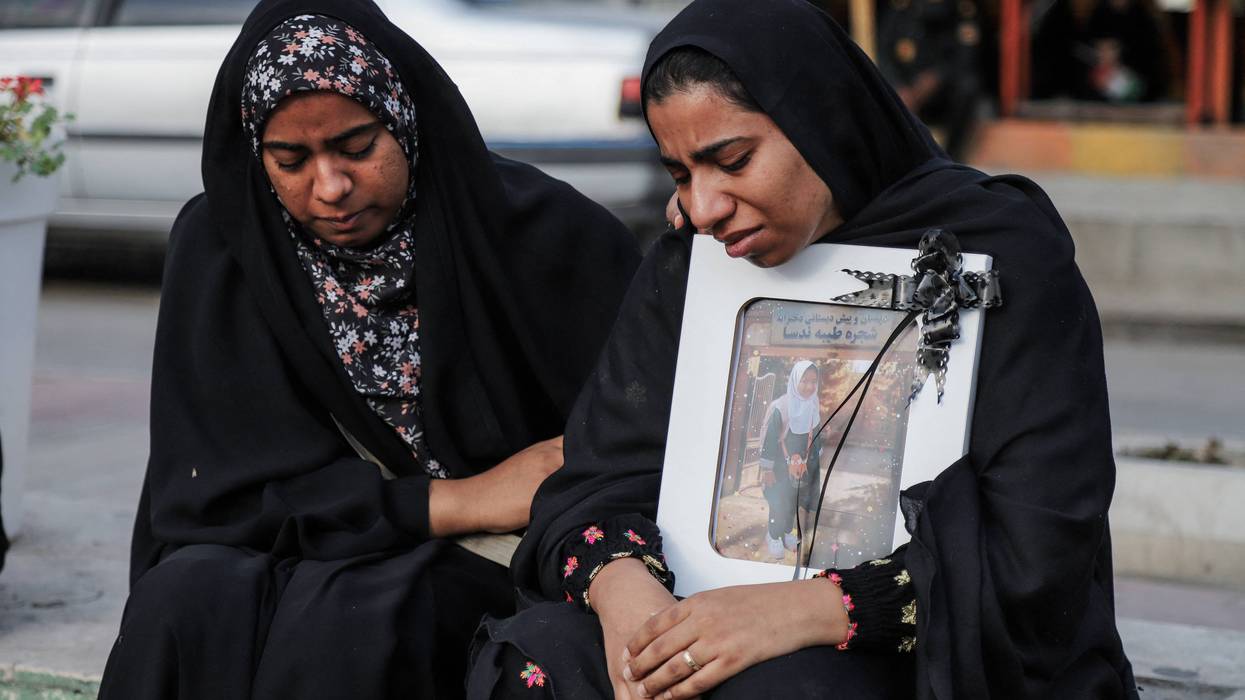
These were not combatants. They were not militants. They were children seated at their desks, pens in their hands, notebooks open before them, studying, whispering to classmates, and imagining futures that stretched decades ahead.
In an era when images can circle the globe in seconds and newsrooms claim to uphold universal humanitarian principles; one might expect the killing of 165 schoolgirls inside a primary school to dominate international headlines. One would expect emergency debates, moral outrage, and relentless coverage. Yet in the southeastern Iranian city of Minab—where Israeli-American strikes obliterated classrooms filled with children—the world’s most influential media institutions have responded with something far more revealing than condemnation: they have responded with silence.
These were not combatants. They were not militants. They were children seated at their desks, pens in their hands, notebooks open before them, studying, whispering to classmates, and imagining futures that stretched decades ahead. In seconds, that ordinary school day turned into a massacre. Desks became splintered wreckage, classrooms collapsed into dust, and rows of coffins replaced rows of pupils.
Yet the names of these girls—165 lives extinguished before they truly began—barely entered the global conversation.
This omission is not the product of oversight. It reflects something far more structural: the hierarchy of victims that governs much of the contemporary information order. In theory, modern Western media institutions present themselves as defenders of human rights and guardians of moral accountability. In practice, their editorial priorities often mirror geopolitical interests with striking precision.
When the deaths of children generate outrage in one context but indifference in another, the moral language surrounding human rights begins to lose its integrity.
When tragedies reinforce established narratives about adversarial states, they are amplified, dramatized, and transformed into global moral spectacles. But when tragedies expose the human cost of the military actions carried out by Western powers or their closest allies, they are quietly displaced from the front page—if they appear at all.
The massacre in Minab illustrates this logic with devastating clarity.
The deaths of 165 Iranian schoolgirls do not fit comfortably within the dominant geopolitical storyline that portrays Israel and its strategic partners as defenders of stability and order in a turbulent region. Acknowledging such an atrocity would inevitably raise difficult questions: about the legality of strikes on civilian infrastructure, about the ethics of military escalation, and about the widening humanitarian toll of ongoing Israeli-American attacks across the region.
It is therefore far easier to look away.
But Minab is not an isolated tragedy. Across Lebanon, relentless bombardments have repeatedly struck civilian neighborhoods, reducing homes and streets to rubble. Across Palestine, entire communities have endured cycles of destruction that claim the lives of children whose only battlefield was the ground beneath their feet. Hospitals, schools, and residential blocks have all entered the expanding geography of devastation.
These events do not occur in a vacuum. They form part of a broader pattern in which military power operates alongside narrative power. Missiles shape the physical battlefield, while selective reporting shapes the battlefield of perception.
What emerges is not merely a media bias but a form of narrative engineering. Certain victims are elevated as symbols of universal suffering, while others—often far more numerous—are rendered invisible. Compassion itself becomes curated, distributed unevenly according to political convenience.
For Western audiences accustomed to believing in the neutrality of their information systems, this selective visibility should provoke serious reflection. The credibility of humanitarian discourse depends on consistency. When the deaths of children generate outrage in one context but indifference in another, the moral language surrounding human rights begins to lose its integrity.
The girls of Minab deserved the same recognition afforded to any victims of violence anywhere in the world. They deserved to have their stories told, their lives acknowledged, and their deaths confronted with the seriousness such an atrocity demands.
Instead, they encountered a second form of erasure.
First came the missiles that ended their lives. Then came the silence that followed.
For Western audiences accustomed to believing in the neutrality of their information systems, this selective visibility should provoke serious reflection.
In the contemporary information age, propaganda rarely announces itself openly. It often operates through absence—through the stories that never reach the front page, the victims whose names remain unspoken, and the tragedies that disappear before the world has time to notice.
The massacre in Minab therefore stands as more than a local catastrophe. It exposes a deeper crisis in the global information order—one in which the value of human life appears disturbingly contingent on political context.
And if the deaths of 165 schoolgirls in their classrooms fail to trigger universal outrage, the question is no longer about geopolitics alone.
It becomes a question about the credibility of the moral system that claims to defend humanity itself.
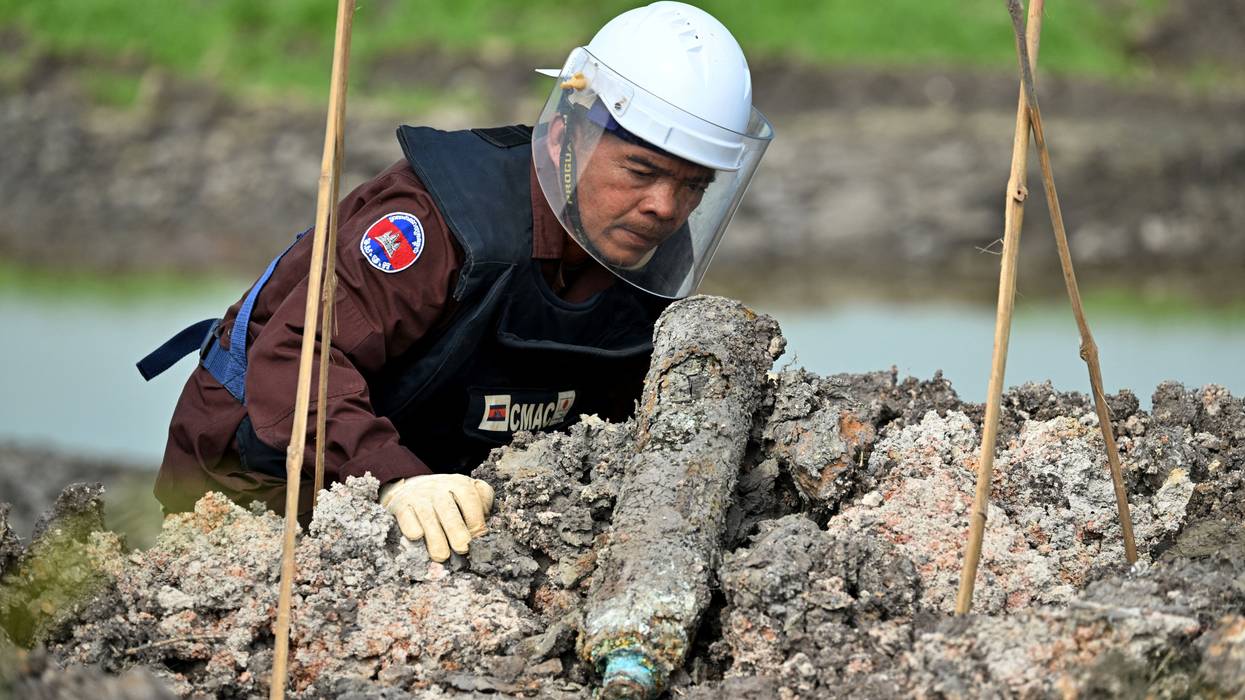
Ninety percent of the more than 6,000 killed by landmines last year were civilians, and half of them were children. There can be no justification for weapons such as these.
One step can be the difference between life and death in many communities around the world. Srey Neang, a young girl living in rural Cambodia, ran outside to play in her uncle’s backyard, and her life was upended in a moment when she stepped on a landmine. She was rushed to the hospital, where her leg was amputated at only four years of age. Her story—like so many others—shows that even decades after conflict ends, the threat of these weapons never does.
Every year, thousands of civilians, particularly children, are injured or killed by landmines and cluster munitions. The use of landmines and cluster munitions had been on the decline since the signing of the Mine Ban Treaty in 1997 and the Convention on Cluster Munitions in 2010.
But despite progress, we are seeing more countries return to the use of landmines and cluster munitions as security concerns rise globally. Some will argue that these weapons make countries safer, but that’s faulty thinking. Security can’t come at the expense of innocent lives. Nor do these weapons actually provide meaningful military advantage; they leave behind contamination that destabilizes communities, limits economic recovery, and threatens peacekeeping forces long after conflicts end. You can’t be safe from a weapon that can’t distinguish between a soldier and a child.
The 2025 Landmine Monitor, out today, reports that more than 6,000 people were killed or injured by landmines and explosive remnants of war in 2024—the highest annual figure since 2020, and a 9% increase from the previous year. Ninety percent of those victims were civilians, and half of them were children. The 2025 Cluster Munition Monitor, published on September 15, also revealed that all reported casualties from this weapon in 2024 were civilians. New uses by countries like Russia, Myanmar, and Syria challenge the treaty. Lithuania’s withdrawal from the Convention, effective March 2025, sends a dangerous message to other countries in the region.
As these findings are released, there is a growing need for clear analysis and public understanding. On December 3, I’ll be joining fellow experts for a virtual briefing hosted by the US Campaign to Ban Landmines—Cluster Munition Coalition to discuss the latest Monitor reports, the human cost of these weapons, and the role US leadership must play at this pivotal moment. Bringing these insights directly to policymakers and advocates is essential to strengthening global norms and advancing effective solutions.
Despite never joining either treaty, the United States has long been one of the world’s largest supporters of mine clearance and victim assistance, helping make former battlefields safe for farming, economic investment, and community life. These investments are among the most cost-effective and high-impact uses of US international assistance, directly saving lives and restoring livelihoods.
The case for action is both moral and pragmatic. Every mine removed or cluster bomb destroyed reopens land for cultivation, enables displaced families to return home, and prevents future casualties. These are tangible, measurable outcomes that support U.S. foreign policy priorities: stability, economic recovery, and the protection of civilians in conflict.
Humanity & Inclusion, which has worked in mine action for more than 40 years, witnesses the human toll daily, as seen in the case of Srey and her family in Cambodia. The organization where I work, Humanity & Inclusion, supported Srey, now 13, in receiving a new prosthetic leg, which allows her to ride her bike to school, help take care of her family, and play soccer, one of her favorite hobbies.
Srey’s story and those of many others are reminders that behind every statistic is a person whose future depends on the choices policymakers make today. US leadership has always mattered. When the United States aligns its policies, funding, and diplomacy toward a humanitarian goal, the world follows. The US has made progress in recent years. In 2022, the Biden administration restricted US landmine use to the Korean Peninsula and reaffirmed the goal of ultimately joining the Mine Ban Treaty. But the transfer of US cluster munitions to Ukraine in 2023 and landmines in 2024, undercut those commitments and send mixed signals to the world.
US leadership in aligning policy with the Mine Ban Treaty and the Convention on Cluster Munitions, and in sustaining robust funding for mine action, comes at a critical time. Washington can once again set the global standard for protecting civilians and strengthening international law.
In a time of never-ending partisan fights, this is a place where both sides can come together and agree on the right steps forward. This is not an abstract debate. It’s about whether children can walk to school safely. Whether farmers can plant crops without fear. Whether communities emerging from war can build futures on land that no longer hides deadly remnants of the past. Eliminating landmines and cluster munitions aligns with American values, advances security, and reflects our nation’s enduring commitment to human dignity.
The world doesn’t need new reasons to fear these weapons. Instead, we must take the kind of step that brings hope rather than harm. If we lead with courage now, our next steps can help ensure that every step, everywhere, is safe.
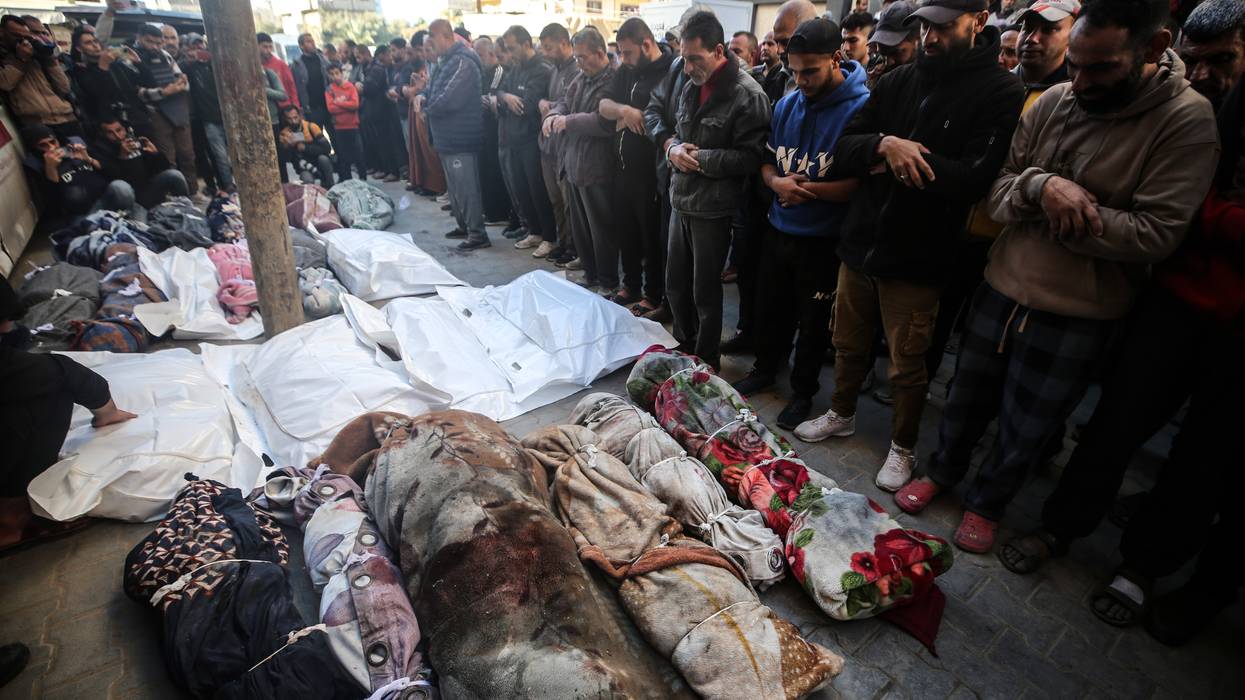
"Israel has adopted an understanding of the laws of war that cancels the category of civilian to serve its war of annihilation," said one observer.
Human rights advocates and journalists in the Middle East have warned since Israel began its assault on Gaza 14 months ago that the Israel Defense Forces, which heralds itself as "the most moral army in the world," has actually been operating far outside the bounds of international humanitarian law—targeting not just Hamas commanders and other armed militants in retaliation for a Hamas-led attack in October 2023, but accepting and encouraging the killing of thousands of civilians of all ages.
On Thursday, The New York Times published an extensive report on how the IDF operated in the earliest weeks of Israel's current escalation, during which more than 15,000 Palestinians—a third of the overall total so far—were killed in Israeli airstrikes and other attacks.
The report details an order that was given by IDF leaders on October 7, 2023, hours after the Hamas-led attack, that the Times said was not previously reported—and builds on extensive reporting by human rights groups like Amnesty International and news outlets such as +972 Magazine and Haaretz about the military's widespread killing of civilians, in many cases with U.S.-made weapons.
The order described in the Times report directed mid-ranking Israeli officers to strike thousands of junior Hamas fighters and minor military sites that had not been the focus of earlier campaigns, and gave them the authority to risk killing up to 20 civilians with each strike.
For some strikes that targeted senior Hamas leaders, the IDF was given the authority to kill more than 100 civilians, and in an order given on October 8, 2023, strikes on military targets in Gaza "were permitted to cumulatively endanger up to 500 civilians each day"—removing a previous limit.
Allowing the killing of more than 100 civilians for one commander crossed "an extraordinary threshold for a contemporary Western military," reported the Times, which has faced accusations of pro-Israel bias in its coverage over the past 14 months.
The newly reported orders reflect comments made by top Israeli government leaders in the early days of the IDF's bombardment, which were reported on at the time by Common Dreams and other outlets. Then-Israeli Defense Minister Yoav Gallant said on October 10 that he had "released all the restraints" on Israeli troops, and President Israel Herzog asserted days later that there were no civilians in Gaza who were "not involved" in the Hamas attack.
The investigation, said University of Edinburgh political scientist Nicola Perugini, "confirms what we all knew."
The Times reported that the family members of Shaldan al-Najjar, a senior commander in Palestinian Islamic Jihad, were some of the first casualties of Israel's new operating procedures in Gaza. A two-month-old baby was among 20 of al-Najjar's family members who were killed in an airstrike in October 2023, and the severed hand of one of his niece's was found in the rubble of the family home.
Mid-level Israeli officers were required to get approval for strikes from senior commanders if a target was close to a site like a school or healthcare facility, but those targets were "regularly approved."
The Times based its reporting on dozens of military records and interviews with more than 100 soldiers and officials, including 25 IDF members who helped approve or vet targets.
The report details how the Israeli air force "raced through" a database of hundreds of militants and military sites that had been compiled from extensive vetting, and put pressure on the military to quickly find thousands of new targets.
The IDF also largely stopped its use of warning shots to give civilians time to flee an area before a large-scale strike, and significantly increased risks to civilians by using 1,000- and 2,000-pound bombs.
The military told the Times in a statement that its soldiers have "consistently been employing means and methods that adhere to the rules of law."
The Times' reporting comes less than two weeks after the death toll in Gaza was reported to have passed 45,000. A United Nations analysis in November found that women and children made up 70% of the people killed in the enclave between October 2023 and April 2024.
On December 18, Haaretz reported that the IDF has adopted a point of view that "everyone's a terrorist" in Gaza—a report, policy expert Assal Rad said, that was unlikely to be covered by Western news outlets.
At +972 Magazine, journalist Yuval Abraham has written at least twice since October 2023 about the IDF's use of artificial intelligence systems to generate large numbers of targets in Gaza. As Common Dreams reported in December 2023, an AI-driven system called the Gospel was used to produce 100 targets in a single day, leading IDF sources to compare Gaza to a "factory" where the maximum number of casualties—whether of militants or civilians—was accepted and encouraged.
About 37,000 Palestinians and their homes—potentially with family members inside—were marked by another AI system called Lavender in the first weeks of the war, Abraham reported in another article in April.
In that article Abraham emphasized, similarly to the Times, that up to 100 civilian deaths were allowed for every killing of a senior Hamas commander.
"Glad the Times is covering the IDF's total lack of safeguards to prevent civilian casualties in Gaza," said podcast host and former Obama White House staffer Tommy Vietor, "but outlets like Haartez and +972... had these stories months ago."
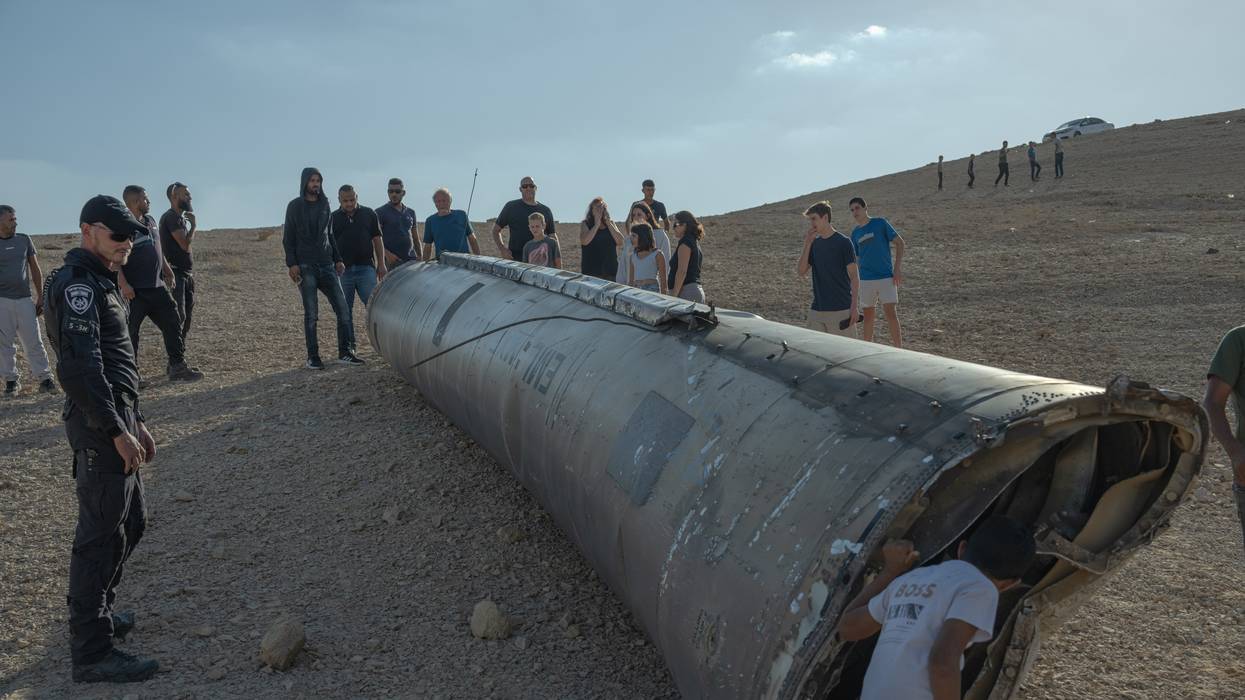
Some supporters of Israel, said one observer, "are so enamored by war crimes they seem to think the entire purpose of retaliatory action is to kill civilians rather than target military infrastructure."
Iran's armed forces on Tuesday night said it had hit its intended military targets with its ballistic missile strikes in Israel, and dismissed Israeli and U.S. claims that the operation was a failure—claims that critics said displayed the view of Israel and its biggest military funder that civilian casualties are an acceptable part of warfare.
Maj. Gen. Mohammad Bagheri, chief of staff of the Islamic Revolutionary Guard Corps, said that Israel's three main airbases, radar sites, armored Israel Defense Forces (IDF) vehicles around the Gaza Strip, and the headquarters of Mossad, the Israeli intelligence agency, were among the targets.
"Only military sites were targeted. If Israel is not contained by U.S. and Europe, and takes action against our sovereignty and territorial integrity, tonight's operation will be repeated in much greater size," said Bagheri.
Sameh al-Asali, a Palestinian laborer from Gaza who was in the West Bank city of Jericho, was hit by a missile fragment and killed.
The missile strikes were carried out in retaliation for Israel's killing of Hezbollah leader Hassan Nasrallah and as a warning to Israel not to escalate against Iran. They followed the IDF's invasion of Lebanon in a widening conflict that began last year after Israel retaliated for a Hamas-led attack on October 7, 2023 by launching a full-scale assault on Gaza as well as numerous attacks on the West Bank.
While downplaying the effectiveness of Iran's missile barrage, the U.S. and Israel also classified the attack as a "significant escalation," with Israeli Prime Minister Benjamin Netanyahu saying Iran had "made a big mistake... and it will pay for it."
Israel vowed to respond to the attack, with IDF spokesperson Lt. Col. Peter Lerner saying, "There will be consequences."
Iranian government spokesperson Fatemeh Mohajerani said Iran's military actions had been taken in self-defense and were carried out "within national interests and in line with international regulations."
Israel has been accused of blatantly violating international humanitarian law in Gaza by targeting civilian infrastructure and collectively punishing the population of 2.3 million people with what United Nations experts have called a "targeted starvation campaign." Netanyahu's government faces a genocide case brought by South Africa and other countries at the International Court of Justice, and has been ordered by the court to protect civilians in Gaza.
Philip Proudfoot, an anthropologist and researcher at the Institute of Development Studies at the University of Sussex in the United Kingdom, said supporters of Israel seemed to see the lack of Israeli civilian casualties from Iran's attack on Tuesday as worthy of mockery rather than evidence of a targeted and strategic military strike.
"These are people are so enamored by war crimes they seem to think the entire purpose of retaliatory action is to kill civilians rather than target military infrastructure," said Proudfoot. "Iran warned of the impending response, targeted military infrastructure, didn't kill a single Israeli civilian, and demonstrated that the Iron Dome is not impervious, restoring a sense of regional deterrence. I don't see why Tehran would see this as a failure."
In the 24 hours after Iran's missile strikes, Gaza's Health Ministry reported on Wednesday that 51 people in the enclave were killed in Israeli attacks, including at least nine at the Muscat School and the Al-Amal Orphanage in Gaza City. Israel said the school and orphanage were being used as Hamas command centers—a frequent claim the IDF has used to rationalize its attacks on civilian infrastructure and residential areas while blaming Hamas for civilian casualties that result.
CNN reporter Jim Sciutto noted Tuesday that Mossad's headquarters is in a "densely populated area" of Tel Aviv, and said the targeting of the building added "one more layer of escalation."
"This really brings rampant, shameless Western media racism to the fore," said U.K. journalist Owen Jones. "If that was a Hamas or Hezbollah target, 'human shields' is exactly what we'd hear."
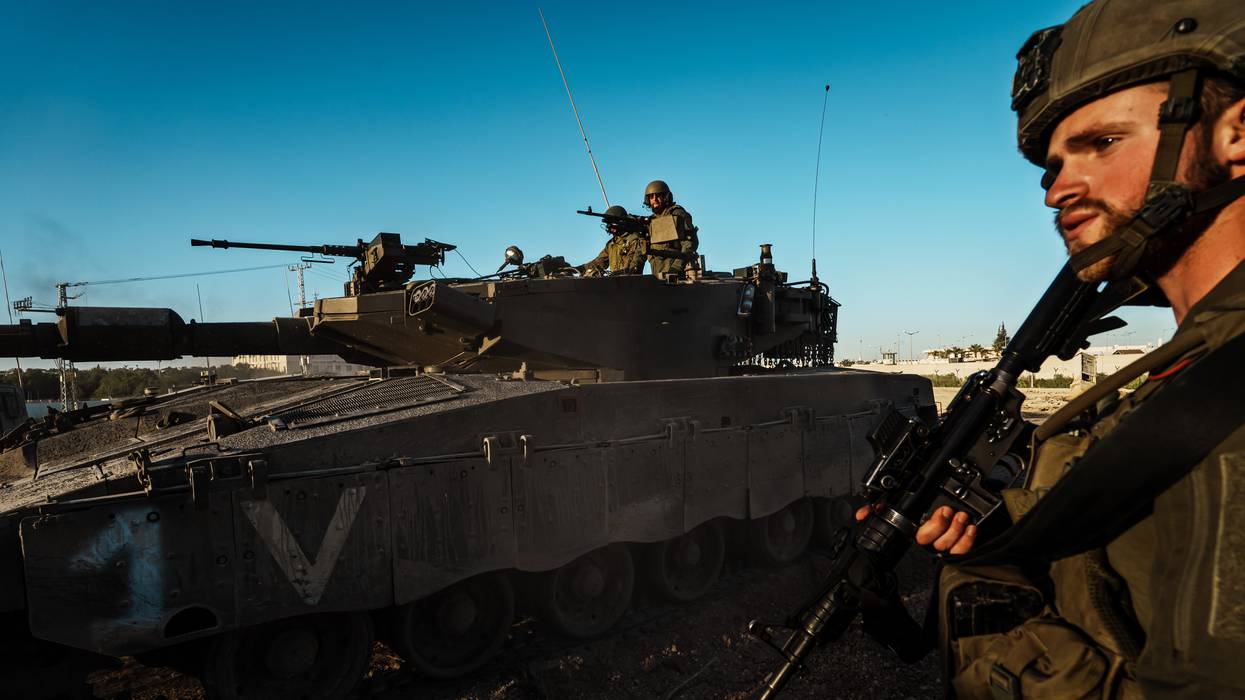
Detailed accounts by former Israeli soldiers describe how they fired their weapons out of "boredom," designated any Palestinians in sight as a threat, and routinely burned homes down.
Disputing the repeated claims of Israeli officials and their vehement supporters in the Biden administration, who have scoffed at concerns that the Israel Defense Forces are targeting civilians in Gaza, in-depth reporting on Monday based on the testimony of six former IDF soldiers described how they were encouraged to fire their weapons to relieve "boredom" and felt "authorized to open fire on Palestinians virtually at will, including civilians."
In their latest investigative report on the IDF's rules of engagement in Gaza, Israeli publications +972 Magazine and Local Call interviewed six soldiers who had been released from active duty.
Medical providers and eyewitnesses have described the shooting of Palestinian women and children by Israeli snipers, and footage has shown unarmed Palestinians being executed while walking along a road, but the soldiers confirmed that the IDF has been operating with "total freedom of action," as one said, since October.
"If there is [even] a feeling of threat, there is no need to explain—you just shoot," said a soldier identified as B.
If troops see a person approaching and don't know whether they are armed or pose a threat, "it is permissible to shoot at their center of mass [their body], not into the air... It's permissible to shoot everyone, a young girl, an old woman," said B.
"Every day, at least one or two [civilians] are killed [because] they walked in a no-go area. I don't know who is a terrorist and who is not, but most of them did not carry weapons," said one soldier.
The soldiers said they sometimes fired their weapons as "a way to blow off steam or relieve the dullness of their daily routine," with one reservist saying that they wanted "to experience the event [fully]."
The reservist described shooting "for no reason" at times, "into the sea or at the sidewalk or an abandoned building," while a soldier identified as S. told +972 and Local Call that the IDF would engage in a tactic called "demonstrating presence," in which they would repeatedly fire their weapons to show any Palestinians in the area that they were there.
They would "shoot a lot, even for no reason—anyone who wants to shoot, no matter what the reason, shoots," said S.
The report follows the publication of an analysis by medical experts in The Lancet, who said the death toll in Gaza—officially over 38,000—could be off by roughly 150,000 people due to the deaths of Palestinians who have starved, died of medical conditions that couldn't be treated due to the destruction of the healthcare system, and succumbed to other "indirect" impacts of the war.
Al Jazeera journalist Laila Al-Arian said that the confessions of the Israeli soldiers to +972 only confirm what "has been clear since the beginning."
"Israeli soldiers in Gaza are operating under the premise that they can kill anything that moves and that every Palestinian is fair game for slaughter," she said.
The soldiers also described "routinely" executing Palestinian civilians because they had entered an area designated a "no-go zone" by the IDF, and allowing their surroundings to become "littered with civilian corpses, which are left to rot or be eaten by stray animals."
The soldiers were instructed to hide the bodies when international aid groups arrived, to ensure that "images of people in advanced stages of decay don't come out."
S. said they "saw a lot of civilians—families, women, children," and confirmed that "there are more fatalities than are reported."
"Every day, at least one or two [civilians] are killed [because] they walked in a no-go area. I don't know who is a terrorist and who is not, but most of them did not carry weapons," they said.
B. told +972 and Local Call that the army suspects any male between the ages of 16 and 50 of being a terrorist, and treats anyone walking around outside or looking at the IDF from a building as suspicious—and a legitimate target.
"You shoot," said B. "The [army's] perception is that any contact [with the population] endangers the forces, and a situation must be created in which it is forbidden to approach [the soldiers] under any circumstances."
The report follows previous revelations from the Israeli news outlets on the IDF's use of artificial intelligence to target Palestinians, with little regard for civilians who might be killed when suspected Hamas members were attacked in their homes.
A soldier identified as A. said that working alongside commanders in an operations room and determining which buildings should be struck "felt like a computer game."
"I, too, a rather left-wing soldier, forget very quickly that these are real homes," said A. "Only after two weeks did I realize that these are [actual] buildings that are falling: if there are inhabitants [inside], then [the buildings are collapsing] on their heads."
Yuval Green, who served in the 55th Paratroopers Brigade late last year and signed a letter with 40 other reservists last month refusing to take part in the invasion of Rafah, testified that soldiers were ordered to burn down homes that they had occupied.
"If you move, you have to burn down the house," he said, adding that the policy did not make sense to him in an operation that was supposedly aimed at targeting Hamas.
"We are in these houses not because they belong to Hamas operatives, but because they serve us operationally," Green said. "It is a house of two or three families—to destroy it means they will be homeless."
Policy analyst Tariq Kenney-Shawa addressed those who might be surprised that "Israeli soldiers would so readily admit their war crimes."
"It's simple," Kenney-Shawa said. "They've never faced any consequences. They are only rewarded for their massacres."
Yael Berda of the Middle East Initiative said the latest dispatch from +972 regarding the orders IDF soldiers are given is likely just a fraction of the truth that will eventually come out about the war in Gaza.
"I am pretty sure we don't know half of what went on during these nine months in Gaza," she said.
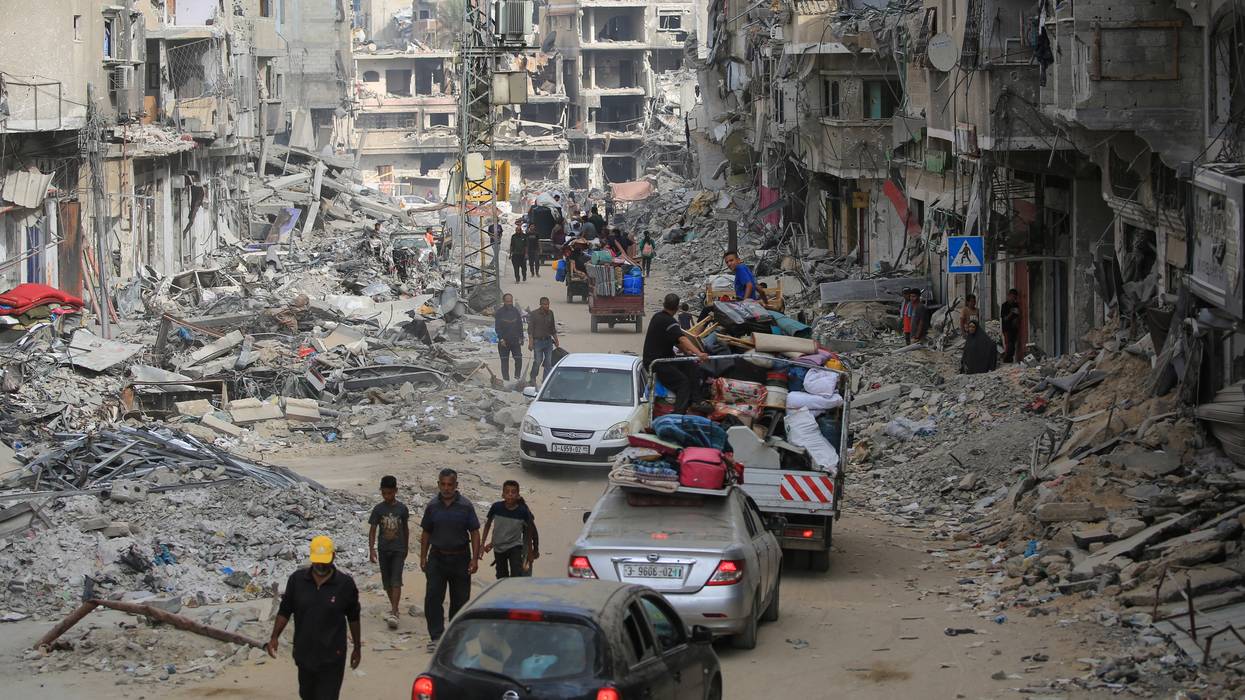
"It means yet another day, week, chapter of misery for these hundreds of thousands of people," said one United Nations worker.
Hearing once again from the Israel Defense Forces that they must evacuate to a so-called "humanitarian zone," hundreds of thousands of Palestinian people in the southern Gaza city of Khan Younis on Tuesday were forced to search for safety ahead of a likely ground offensive in the city.
The United Nations Relief and Works Agency for Palestine Refugees in the Near East (UNRWA) said that roughly 250,000 people are living and seeking shelter in the evacuation zone—more than 10% of Gaza's population of 2.3 million.
The evacuation order, which was posted on social media on Monday, also includes nearby localities including al-Qarara and Bani Suhaila.
The IDF said after the order was announced that patients and healthcare providers at European Hospital, the largest operating medical facility in Gaza, were not required to evacuate, but the hospital director told the Associated Press that most had already been relocated.
"The hospital staff and the patients decided to already evacuate themselves," said Rik Peeperkorn, World Health Organization representative for the occupied Palestinian territories, in a press briefing. "We plea the European Gaza hospital will be spared, will be non-damaged."
Peeperkorn said three patients remained at the hospital.
Since Israel began its assault on Gaza and its near-total blockade on humanitarian aid in retaliation for a Hamas-led attack in October, the IDF has attacked hospitals across the enclave, even as they have served as shelters for forcibly displaced people.
The IDF has ordered evacuations from places including northern Gaza and the southern city of Rafah—only to bomb so-called "safe" zones after displacing people.
In late May, at least 46 people were killed when Israel bombed a tent encampment in a "humanitarian area" in Rafah after beginning a full-scale ground invasion of the city, where more than a million people had been displaced. At least 25 people were killed in another attack on an encampment in the area last month.
Sam Rose, a planning director for UNRWA, told Al Jazeera that the latest evacuation order put a quarter of a million people in a "harrowing, horrific, and incredibly difficult" situation.
"It means yet another day, week, chapter of misery for these hundreds of thousands of people," said Rose. "Most of them have been displaced several times. Some had just returned from Rafah where they were displaced a few weeks ago... They go without knowing precisely where they will end up because this evacuation order told people to go urgently—they know that if they don't go out within 24 hours the worst is to come."
Soon after the evacuation order, at least nine people were killed in an Israeli strike on a home near European Hospital in Khan Younis.
Rose noted that the coastal area of al-Mawasi, where many people will likely go, is "already so overcrowded. There is no room to pitch a tent, there is no water, no infrastructure, no sanitary services. Many spend the night in vehicles or they sleep on their donkey carts."
Louise Wateridge, a spokesperson for UNRWA, told The Washington Post that the forced displacement is taking place amid temperatures over 86°F "every day."
"Even the healthiest people will struggle to make a move in this heat with lack of food, with lack of water," she said. "And then where do they go? That's the next question."
Ahmed al-Najjar, a 26-year-old resident of the Bani Suhaila neighborhood, told Agence France Presse that with nowhere to flee, his family has been forced to stay in the area after first attempting to leave.
"We did not know where we would go and we do not have enough money to buy a new tent," he said. "We had to spend the night on the street and that has increased our stress. This morning we decided to go home again. There is nowhere else... Whatever happens, happens. We have nothing to lose now."
The IDF's apparent plan to expand its assault on Khan Younis came as The New York Times reported that security leaders in Israel are pushing for a cease-fire in Gaza, objecting to Prime Minister Benjamin Netanyahu's plan to continue the assault until Hamas is eliminated—an objective even some top Israeli military officials believe is impossible—and all Israeli hostages are released.
The Times reported that senior military officials believe a cease-fire is the "swiftest way" to free captives remaining in Gaza.