SUBSCRIBE TO OUR FREE NEWSLETTER
Daily news & progressive opinion—funded by the people, not the corporations—delivered straight to your inbox.
5
#000000
#FFFFFF
To donate by check, phone, or other method, see our More Ways to Give page.
Daily news & progressive opinion—funded by the people, not the corporations—delivered straight to your inbox.

Climate justice campaigners march from the Shell Center to Trafalgar Square on November 12, 2022 in London, England.
Allies of fossil fuel companies are celebrating the development as a step toward "stopping the endless wave" of lawsuits against the climate-wrecking industry.
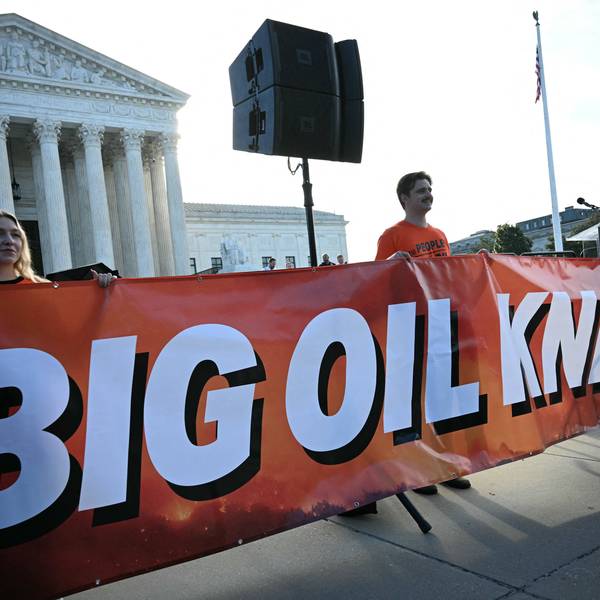
US fossil fuel giants have long sought to shift litigation over industry harms from state to friendly federal courts, and the country's top court unanimously handed polluters a big win on Friday, allowing such a move in a case centered on environmental damage in coastal Louisiana.
Cases can be removed from state court when they are against federal officers or persons "acting under" them, "for or relating to any act under color of such office." Although the US Supreme Court has previously rejected multiple removals requested by Big Oil, the justices sided with the industry in Chevron USA v. Plaquemines Parish.
The company argued that its challenged production was sufficiently related to its contractual duties to refine crude oil into aviation gasoline, or avgas, for the US military during World War II. A federal district judge and the US Court of Appeals for the 5th Circuit rejected Chevron's argument, but the high court bought it.
"Chevron has plausibly alleged a close relationship between its challenged conduct and the performance of its federal duties—not a tenuous, remote, or peripheral one," Justice Clarence Thomas wrote for the majority. Justice Ketanji Brown Jackson penned a concurring opinion.
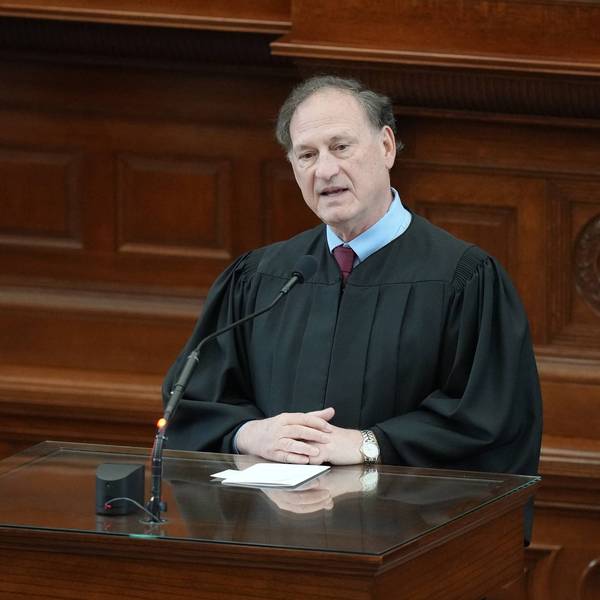
Justice Samuel Alito recused himself shortly before arguments. As with some other cases involving Big Oil, he bowed out due to his stock in ConocoPhillips, whose subsidiary Burlington Resources Oil and Gas Company is involved in the case at the district court level.
This fight before the high court stemmed from dozens of cases filed over a decade ago. As NOLA.com detailed Friday:
In 2013, a group of local parishes and the state filed 42 lawsuits against energy companies whose predecessors sought and produced crude during World War II. They argued that the oil and gas companies damaged wetlands and failed to get or comply with the proper permits.
After a three-week trial, a Plaquemines Parish jury sided with the state in one of those cases and awarded a $745 million verdict against Chevron and two other companies.
But the companies challenged the verdict, saying the lawsuit should have been heard in federal court, not state court.
Thanks to the Supreme Court, the Plaquemines Parish case may now be retried in a US district court. Company spokesperson Bill Turenne said in a statement that "Chevron looks forward to litigating these cases in federal court, where they belong."
There are also potential implications for other legal battles involving the industry that is fueling the global climate emergency—as American Energy Institute CEO Jason Isaac, a former Republican state representative in Texas, celebrated in a Friday statement. He described the decision as "a critical step toward restoring sanity to our legal system and stopping the endless wave of politically motivated lawsuits designed to punish the very industry that powers our economy and national security."
The Supreme Court's decision notably came as the justices prepare to hear ExxonMobil and Suncor's request to move a 2018 lawsuit filed by the city of Boulder, Colorado—seeking financial damages for the companies' role in creating the climate crisis—from state to federal court. Alito has not yet recused himself from that case.
Fossil fuel companies largely have support from the Republican Party, which controls the White House and both chambers of Congress. President Donald Trump returned to power last year with help from the industry's campaign cash, and his administration has supported the companies being challenged in Louisiana.
As The New York Times noted Friday, the local communities' lawsuits "have gained support from Louisiana Republican leaders, including those who have otherwise endorsed President Trump's 'energy dominance' agenda. Gov. Jeff Landry and Attorney General Liz Murrill, both Republicans, have supported the legal challenges."
However, ahead of the November midterm elections, Republicans in Congress are working on shielding oil and gas companies from what they call "abusive state climate lawsuits." As Common Dreams reported Friday, US Sen. Ted Cruz (R-Texas) and Congresswoman Harriet Hageman (R-Wyo.) introduced the Stop Climate Shakedowns Act this week.
"Big Oil companies have raked in massive profits at the pump while lying to the American people about the catastrophic harm of their products, and now they want to deny Americans their rightful day in court and stick taxpayers with the bill for the mess they made," said Center for Climate Integrity president Richard Wiles. "If fossil fuel companies have done nothing wrong, why do they need immunity?"
There are related legislative efforts at the state level. As the Times detailed earlier this month, Utah recently "became the first state to enact a law that shields companies from climate-related claims." Tennessee swiftly followed suit, and Republican lawmakers in states including Iowa, Louisiana, and Oklahoma are working on similar legislation.
Cassidy DiPaola, communications director for the Make Polluters Pay campaign, warned earlier this year that "a federal liability shield for fossil fuel companies would not lower energy prices or ease the cost of living. It would simply shift more of the financial burden onto working families and local governments while insulating one of the most profitable industries in history from accountability."
"Congress should not close the courthouse doors to communities seeking redress," said DiPaola. "Big Oil is not entitled to special immunity from the consequences of its conduct."
This article has been updated to include developments with state legislation and Common Dreams' reporting on a bill that would shield the fossil fuel industry from liability.
Dear Common Dreams reader, It’s been nearly 30 years since I co-founded Common Dreams with my late wife, Lina Newhouser. We had the radical notion that journalism should serve the public good, not corporate profits. It was clear to us from the outset what it would take to build such a project. No paid advertisements. No corporate sponsors. No millionaire publisher telling us what to think or do. Many people said we wouldn't last a year, but we proved those doubters wrong. Together with a tremendous team of journalists and dedicated staff, we built an independent media outlet free from the constraints of profits and corporate control. Our mission has always been simple: To inform. To inspire. To ignite change for the common good. Building Common Dreams was not easy. Our survival was never guaranteed. When you take on the most powerful forces—Wall Street greed, fossil fuel industry destruction, Big Tech lobbyists, and uber-rich oligarchs who have spent billions upon billions rigging the economy and democracy in their favor—the only bulwark you have is supporters who believe in your work. But here’s the urgent message from me today. It's never been this bad out there. And it's never been this hard to keep us going. At the very moment Common Dreams is most needed, the threats we face are intensifying. We need your support now more than ever. We don't accept corporate advertising and never will. We don't have a paywall because we don't think people should be blocked from critical news based on their ability to pay. Everything we do is funded by the donations of readers like you. When everyone does the little they can afford, we are strong. But if that support retreats or dries up, so do we. Will you donate now to make sure Common Dreams not only survives but thrives? —Craig Brown, Co-founder |
US fossil fuel giants have long sought to shift litigation over industry harms from state to friendly federal courts, and the country's top court unanimously handed polluters a big win on Friday, allowing such a move in a case centered on environmental damage in coastal Louisiana.
Cases can be removed from state court when they are against federal officers or persons "acting under" them, "for or relating to any act under color of such office." Although the US Supreme Court has previously rejected multiple removals requested by Big Oil, the justices sided with the industry in Chevron USA v. Plaquemines Parish.
The company argued that its challenged production was sufficiently related to its contractual duties to refine crude oil into aviation gasoline, or avgas, for the US military during World War II. A federal district judge and the US Court of Appeals for the 5th Circuit rejected Chevron's argument, but the high court bought it.
"Chevron has plausibly alleged a close relationship between its challenged conduct and the performance of its federal duties—not a tenuous, remote, or peripheral one," Justice Clarence Thomas wrote for the majority. Justice Ketanji Brown Jackson penned a concurring opinion.
Justice Samuel Alito recused himself shortly before arguments. As with some other cases involving Big Oil, he bowed out due to his stock in ConocoPhillips, whose subsidiary Burlington Resources Oil and Gas Company is involved in the case at the district court level.
This fight before the high court stemmed from dozens of cases filed over a decade ago. As NOLA.com detailed Friday:
In 2013, a group of local parishes and the state filed 42 lawsuits against energy companies whose predecessors sought and produced crude during World War II. They argued that the oil and gas companies damaged wetlands and failed to get or comply with the proper permits.
After a three-week trial, a Plaquemines Parish jury sided with the state in one of those cases and awarded a $745 million verdict against Chevron and two other companies.
But the companies challenged the verdict, saying the lawsuit should have been heard in federal court, not state court.
Thanks to the Supreme Court, the Plaquemines Parish case may now be retried in a US district court. Company spokesperson Bill Turenne said in a statement that "Chevron looks forward to litigating these cases in federal court, where they belong."
There are also potential implications for other legal battles involving the industry that is fueling the global climate emergency—as American Energy Institute CEO Jason Isaac, a former Republican state representative in Texas, celebrated in a Friday statement. He described the decision as "a critical step toward restoring sanity to our legal system and stopping the endless wave of politically motivated lawsuits designed to punish the very industry that powers our economy and national security."
The Supreme Court's decision notably came as the justices prepare to hear ExxonMobil and Suncor's request to move a 2018 lawsuit filed by the city of Boulder, Colorado—seeking financial damages for the companies' role in creating the climate crisis—from state to federal court. Alito has not yet recused himself from that case.
Fossil fuel companies largely have support from the Republican Party, which controls the White House and both chambers of Congress. President Donald Trump returned to power last year with help from the industry's campaign cash, and his administration has supported the companies being challenged in Louisiana.
As The New York Times noted Friday, the local communities' lawsuits "have gained support from Louisiana Republican leaders, including those who have otherwise endorsed President Trump's 'energy dominance' agenda. Gov. Jeff Landry and Attorney General Liz Murrill, both Republicans, have supported the legal challenges."
However, ahead of the November midterm elections, Republicans in Congress are working on shielding oil and gas companies from what they call "abusive state climate lawsuits." As Common Dreams reported Friday, US Sen. Ted Cruz (R-Texas) and Congresswoman Harriet Hageman (R-Wyo.) introduced the Stop Climate Shakedowns Act this week.
"Big Oil companies have raked in massive profits at the pump while lying to the American people about the catastrophic harm of their products, and now they want to deny Americans their rightful day in court and stick taxpayers with the bill for the mess they made," said Center for Climate Integrity president Richard Wiles. "If fossil fuel companies have done nothing wrong, why do they need immunity?"
There are related legislative efforts at the state level. As the Times detailed earlier this month, Utah recently "became the first state to enact a law that shields companies from climate-related claims." Tennessee swiftly followed suit, and Republican lawmakers in states including Iowa, Louisiana, and Oklahoma are working on similar legislation.
Cassidy DiPaola, communications director for the Make Polluters Pay campaign, warned earlier this year that "a federal liability shield for fossil fuel companies would not lower energy prices or ease the cost of living. It would simply shift more of the financial burden onto working families and local governments while insulating one of the most profitable industries in history from accountability."
"Congress should not close the courthouse doors to communities seeking redress," said DiPaola. "Big Oil is not entitled to special immunity from the consequences of its conduct."
This article has been updated to include developments with state legislation and Common Dreams' reporting on a bill that would shield the fossil fuel industry from liability.
US fossil fuel giants have long sought to shift litigation over industry harms from state to friendly federal courts, and the country's top court unanimously handed polluters a big win on Friday, allowing such a move in a case centered on environmental damage in coastal Louisiana.
Cases can be removed from state court when they are against federal officers or persons "acting under" them, "for or relating to any act under color of such office." Although the US Supreme Court has previously rejected multiple removals requested by Big Oil, the justices sided with the industry in Chevron USA v. Plaquemines Parish.
The company argued that its challenged production was sufficiently related to its contractual duties to refine crude oil into aviation gasoline, or avgas, for the US military during World War II. A federal district judge and the US Court of Appeals for the 5th Circuit rejected Chevron's argument, but the high court bought it.
"Chevron has plausibly alleged a close relationship between its challenged conduct and the performance of its federal duties—not a tenuous, remote, or peripheral one," Justice Clarence Thomas wrote for the majority. Justice Ketanji Brown Jackson penned a concurring opinion.
Justice Samuel Alito recused himself shortly before arguments. As with some other cases involving Big Oil, he bowed out due to his stock in ConocoPhillips, whose subsidiary Burlington Resources Oil and Gas Company is involved in the case at the district court level.
This fight before the high court stemmed from dozens of cases filed over a decade ago. As NOLA.com detailed Friday:
In 2013, a group of local parishes and the state filed 42 lawsuits against energy companies whose predecessors sought and produced crude during World War II. They argued that the oil and gas companies damaged wetlands and failed to get or comply with the proper permits.
After a three-week trial, a Plaquemines Parish jury sided with the state in one of those cases and awarded a $745 million verdict against Chevron and two other companies.
But the companies challenged the verdict, saying the lawsuit should have been heard in federal court, not state court.
Thanks to the Supreme Court, the Plaquemines Parish case may now be retried in a US district court. Company spokesperson Bill Turenne said in a statement that "Chevron looks forward to litigating these cases in federal court, where they belong."
There are also potential implications for other legal battles involving the industry that is fueling the global climate emergency—as American Energy Institute CEO Jason Isaac, a former Republican state representative in Texas, celebrated in a Friday statement. He described the decision as "a critical step toward restoring sanity to our legal system and stopping the endless wave of politically motivated lawsuits designed to punish the very industry that powers our economy and national security."
The Supreme Court's decision notably came as the justices prepare to hear ExxonMobil and Suncor's request to move a 2018 lawsuit filed by the city of Boulder, Colorado—seeking financial damages for the companies' role in creating the climate crisis—from state to federal court. Alito has not yet recused himself from that case.
Fossil fuel companies largely have support from the Republican Party, which controls the White House and both chambers of Congress. President Donald Trump returned to power last year with help from the industry's campaign cash, and his administration has supported the companies being challenged in Louisiana.
As The New York Times noted Friday, the local communities' lawsuits "have gained support from Louisiana Republican leaders, including those who have otherwise endorsed President Trump's 'energy dominance' agenda. Gov. Jeff Landry and Attorney General Liz Murrill, both Republicans, have supported the legal challenges."
However, ahead of the November midterm elections, Republicans in Congress are working on shielding oil and gas companies from what they call "abusive state climate lawsuits." As Common Dreams reported Friday, US Sen. Ted Cruz (R-Texas) and Congresswoman Harriet Hageman (R-Wyo.) introduced the Stop Climate Shakedowns Act this week.
"Big Oil companies have raked in massive profits at the pump while lying to the American people about the catastrophic harm of their products, and now they want to deny Americans their rightful day in court and stick taxpayers with the bill for the mess they made," said Center for Climate Integrity president Richard Wiles. "If fossil fuel companies have done nothing wrong, why do they need immunity?"
There are related legislative efforts at the state level. As the Times detailed earlier this month, Utah recently "became the first state to enact a law that shields companies from climate-related claims." Tennessee swiftly followed suit, and Republican lawmakers in states including Iowa, Louisiana, and Oklahoma are working on similar legislation.
Cassidy DiPaola, communications director for the Make Polluters Pay campaign, warned earlier this year that "a federal liability shield for fossil fuel companies would not lower energy prices or ease the cost of living. It would simply shift more of the financial burden onto working families and local governments while insulating one of the most profitable industries in history from accountability."
"Congress should not close the courthouse doors to communities seeking redress," said DiPaola. "Big Oil is not entitled to special immunity from the consequences of its conduct."
This article has been updated to include developments with state legislation and Common Dreams' reporting on a bill that would shield the fossil fuel industry from liability.