SUBSCRIBE TO OUR FREE NEWSLETTER
Daily news & progressive opinion—funded by the people, not the corporations—delivered straight to your inbox.
5
#000000
#FFFFFF
To donate by check, phone, or other method, see our More Ways to Give page.
Daily news & progressive opinion—funded by the people, not the corporations—delivered straight to your inbox.
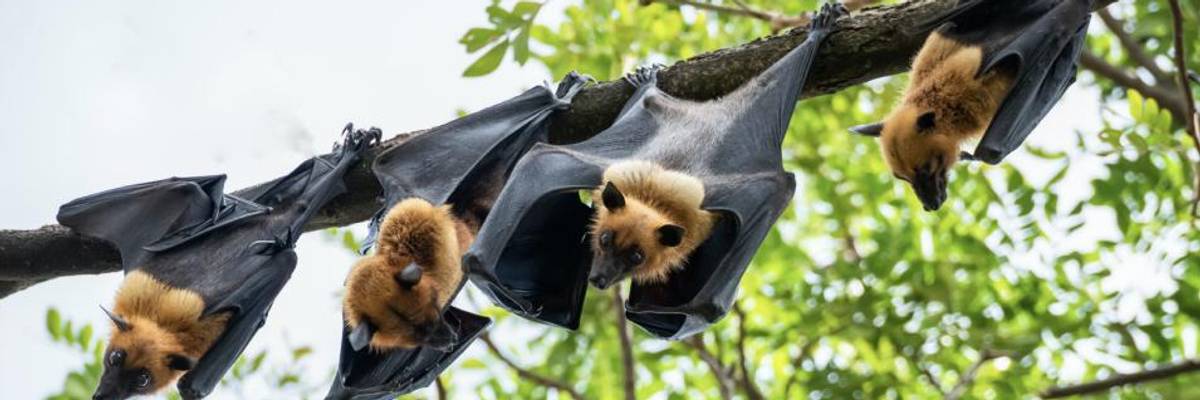
"Climate change is a force of growing importance that influences the future geographic distribution and abundance of species such as bats, monkeys, and rodents, including those in which zoonotic pathogens often originate," says a new UNEP report. (Photo: nutsiam / Shutterstock.com via Preventing the Next Pandemic)
As the number of confirmed coronavirus cases worldwide neared 11.5 million on Monday and the death toll topped 535,000, a new United Nations report detailed trends in human activity that are driving the emergence of zoonotic diseases and offered steps countries can take to prevent future pandemics.
"To prevent future outbreaks, we must become much more deliberate about protecting our natural environment."
--Inger Andersen, UNEP
The report, entitled Preventing the Next Pandemic: Zoonotic Diseases and How to Break the Chain of Transmission (pdf), was released on World Zoonoses Day. Zoonotic diseases, or zoonoses, are infectious diseases that are passed from animals to humans.
"The science is clear that if we keep exploiting wildlife and destroying our ecosystems, then we can expect to see a steady stream of these diseases jumping from animals to humans in the years ahead," U.N. Environment Program (UNEP) executive director Inger Andersen said in a statement announcing the report.
"Pandemics are devastating to our lives and our economies, and as we have seen over the past months, it is the poorest and the most vulnerable who suffer the most," Andersen added. "To prevent future outbreaks, we must become much more deliberate about protecting our natural environment."
Scientists of the UNEP, the International Livestock Research Institute (ILRI), and the South African Medical Research Council produced the report in partnership with other multilateral agencies and research institutions.
Researchers identified seven human-caused drivers of zoonotic disease emergence: increasing demand for animal protein; unsustainable agricultural intensification; increased use and exploitation of wildlife; unsustainable utilization of natural resources accelerated by urbanization, land use change, and extractive industries; travel and transportation; changes in food supply chains; and climate change.
"This report makes many recommendations, all based on the One Health approach, which unites experts from multiple disciplines--public health, animal health, plant health, and the environment--to deliver outcomes that improve the health of people, wildlife, and the planet," Andersen explained in a foreword.
The UNEP summarized 10 key policy recommendations from the report:
In addition to acknowledging the devastation of Covid-19, the report highlights other recent examples of "headline-hitting and dramatically destructive novel diseases," including zoonotic influenza (Bird Flu), pandemic human influenza (H1N1), Middle East respiratory syndrome (MERS), and severe acute respiratory syndrome (SARS).
The report also underscores the importance of addressing "neglected zoonoses" that "are continuously present in affected (mainly impoverished) populations, yet receive much less international attention and funding than emerging zoonotic diseases," such as anthrax, bovine tuberculosis, brucellosis, rabies, cysticercosis (pig tapeworm), echinococcosis (hydatid disease), Japanese encephalitis, leptospirosis, Q fever, rabies, Lassa fever virus, and trypanosomiasis (sleeping sickness).
Jimmy Smith, director general of the Kenya-based ILRI, noted in a statement Monday both the elevated risks faced by many African nations and the potential leadership opportunities in terms of future zoonotic pandemics, given population growth and experiences combating diseases in countries across the continent.
"The situation on the continent today is ripe for intensifying existing zoonotic diseases and facilitating the emergence and spread of new ones," Smith said. "But with their experiences with Ebola and other emerging diseases, African countries are demonstrating proactive ways to manage disease outbreaks. They are applying, for example, novel risk-based rather than rule-based approaches to disease control, which are best suited to resource-poor settings, and they are joining up human, animal, and environment expertise in proactive One Health initiatives."
The report was welcomed by U.N. Secretary-General Antonio Guterres, according to U.N. News.
Echoing both the report and previous remarks he has made during the Covid-19 pandemic, Guterres said that "to prevent future outbreaks, countries need to conserve wild habitats, promote sustainable agriculture, strengthen food safety standards, monitor and regulate food markets, invest in technology to identify risks, and curb the illegal trade in wildlife."
Dear Common Dreams reader, It’s been nearly 30 years since I co-founded Common Dreams with my late wife, Lina Newhouser. We had the radical notion that journalism should serve the public good, not corporate profits. It was clear to us from the outset what it would take to build such a project. No paid advertisements. No corporate sponsors. No millionaire publisher telling us what to think or do. Many people said we wouldn't last a year, but we proved those doubters wrong. Together with a tremendous team of journalists and dedicated staff, we built an independent media outlet free from the constraints of profits and corporate control. Our mission has always been simple: To inform. To inspire. To ignite change for the common good. Building Common Dreams was not easy. Our survival was never guaranteed. When you take on the most powerful forces—Wall Street greed, fossil fuel industry destruction, Big Tech lobbyists, and uber-rich oligarchs who have spent billions upon billions rigging the economy and democracy in their favor—the only bulwark you have is supporters who believe in your work. But here’s the urgent message from me today. It's never been this bad out there. And it's never been this hard to keep us going. At the very moment Common Dreams is most needed, the threats we face are intensifying. We need your support now more than ever. We don't accept corporate advertising and never will. We don't have a paywall because we don't think people should be blocked from critical news based on their ability to pay. Everything we do is funded by the donations of readers like you. When everyone does the little they can afford, we are strong. But if that support retreats or dries up, so do we. Will you donate now to make sure Common Dreams not only survives but thrives? —Craig Brown, Co-founder |
As the number of confirmed coronavirus cases worldwide neared 11.5 million on Monday and the death toll topped 535,000, a new United Nations report detailed trends in human activity that are driving the emergence of zoonotic diseases and offered steps countries can take to prevent future pandemics.
"To prevent future outbreaks, we must become much more deliberate about protecting our natural environment."
--Inger Andersen, UNEP
The report, entitled Preventing the Next Pandemic: Zoonotic Diseases and How to Break the Chain of Transmission (pdf), was released on World Zoonoses Day. Zoonotic diseases, or zoonoses, are infectious diseases that are passed from animals to humans.
"The science is clear that if we keep exploiting wildlife and destroying our ecosystems, then we can expect to see a steady stream of these diseases jumping from animals to humans in the years ahead," U.N. Environment Program (UNEP) executive director Inger Andersen said in a statement announcing the report.
"Pandemics are devastating to our lives and our economies, and as we have seen over the past months, it is the poorest and the most vulnerable who suffer the most," Andersen added. "To prevent future outbreaks, we must become much more deliberate about protecting our natural environment."
Scientists of the UNEP, the International Livestock Research Institute (ILRI), and the South African Medical Research Council produced the report in partnership with other multilateral agencies and research institutions.
Researchers identified seven human-caused drivers of zoonotic disease emergence: increasing demand for animal protein; unsustainable agricultural intensification; increased use and exploitation of wildlife; unsustainable utilization of natural resources accelerated by urbanization, land use change, and extractive industries; travel and transportation; changes in food supply chains; and climate change.
"This report makes many recommendations, all based on the One Health approach, which unites experts from multiple disciplines--public health, animal health, plant health, and the environment--to deliver outcomes that improve the health of people, wildlife, and the planet," Andersen explained in a foreword.
The UNEP summarized 10 key policy recommendations from the report:
In addition to acknowledging the devastation of Covid-19, the report highlights other recent examples of "headline-hitting and dramatically destructive novel diseases," including zoonotic influenza (Bird Flu), pandemic human influenza (H1N1), Middle East respiratory syndrome (MERS), and severe acute respiratory syndrome (SARS).
The report also underscores the importance of addressing "neglected zoonoses" that "are continuously present in affected (mainly impoverished) populations, yet receive much less international attention and funding than emerging zoonotic diseases," such as anthrax, bovine tuberculosis, brucellosis, rabies, cysticercosis (pig tapeworm), echinococcosis (hydatid disease), Japanese encephalitis, leptospirosis, Q fever, rabies, Lassa fever virus, and trypanosomiasis (sleeping sickness).
Jimmy Smith, director general of the Kenya-based ILRI, noted in a statement Monday both the elevated risks faced by many African nations and the potential leadership opportunities in terms of future zoonotic pandemics, given population growth and experiences combating diseases in countries across the continent.
"The situation on the continent today is ripe for intensifying existing zoonotic diseases and facilitating the emergence and spread of new ones," Smith said. "But with their experiences with Ebola and other emerging diseases, African countries are demonstrating proactive ways to manage disease outbreaks. They are applying, for example, novel risk-based rather than rule-based approaches to disease control, which are best suited to resource-poor settings, and they are joining up human, animal, and environment expertise in proactive One Health initiatives."
The report was welcomed by U.N. Secretary-General Antonio Guterres, according to U.N. News.
Echoing both the report and previous remarks he has made during the Covid-19 pandemic, Guterres said that "to prevent future outbreaks, countries need to conserve wild habitats, promote sustainable agriculture, strengthen food safety standards, monitor and regulate food markets, invest in technology to identify risks, and curb the illegal trade in wildlife."
As the number of confirmed coronavirus cases worldwide neared 11.5 million on Monday and the death toll topped 535,000, a new United Nations report detailed trends in human activity that are driving the emergence of zoonotic diseases and offered steps countries can take to prevent future pandemics.
"To prevent future outbreaks, we must become much more deliberate about protecting our natural environment."
--Inger Andersen, UNEP
The report, entitled Preventing the Next Pandemic: Zoonotic Diseases and How to Break the Chain of Transmission (pdf), was released on World Zoonoses Day. Zoonotic diseases, or zoonoses, are infectious diseases that are passed from animals to humans.
"The science is clear that if we keep exploiting wildlife and destroying our ecosystems, then we can expect to see a steady stream of these diseases jumping from animals to humans in the years ahead," U.N. Environment Program (UNEP) executive director Inger Andersen said in a statement announcing the report.
"Pandemics are devastating to our lives and our economies, and as we have seen over the past months, it is the poorest and the most vulnerable who suffer the most," Andersen added. "To prevent future outbreaks, we must become much more deliberate about protecting our natural environment."
Scientists of the UNEP, the International Livestock Research Institute (ILRI), and the South African Medical Research Council produced the report in partnership with other multilateral agencies and research institutions.
Researchers identified seven human-caused drivers of zoonotic disease emergence: increasing demand for animal protein; unsustainable agricultural intensification; increased use and exploitation of wildlife; unsustainable utilization of natural resources accelerated by urbanization, land use change, and extractive industries; travel and transportation; changes in food supply chains; and climate change.
"This report makes many recommendations, all based on the One Health approach, which unites experts from multiple disciplines--public health, animal health, plant health, and the environment--to deliver outcomes that improve the health of people, wildlife, and the planet," Andersen explained in a foreword.
The UNEP summarized 10 key policy recommendations from the report:
In addition to acknowledging the devastation of Covid-19, the report highlights other recent examples of "headline-hitting and dramatically destructive novel diseases," including zoonotic influenza (Bird Flu), pandemic human influenza (H1N1), Middle East respiratory syndrome (MERS), and severe acute respiratory syndrome (SARS).
The report also underscores the importance of addressing "neglected zoonoses" that "are continuously present in affected (mainly impoverished) populations, yet receive much less international attention and funding than emerging zoonotic diseases," such as anthrax, bovine tuberculosis, brucellosis, rabies, cysticercosis (pig tapeworm), echinococcosis (hydatid disease), Japanese encephalitis, leptospirosis, Q fever, rabies, Lassa fever virus, and trypanosomiasis (sleeping sickness).
Jimmy Smith, director general of the Kenya-based ILRI, noted in a statement Monday both the elevated risks faced by many African nations and the potential leadership opportunities in terms of future zoonotic pandemics, given population growth and experiences combating diseases in countries across the continent.
"The situation on the continent today is ripe for intensifying existing zoonotic diseases and facilitating the emergence and spread of new ones," Smith said. "But with their experiences with Ebola and other emerging diseases, African countries are demonstrating proactive ways to manage disease outbreaks. They are applying, for example, novel risk-based rather than rule-based approaches to disease control, which are best suited to resource-poor settings, and they are joining up human, animal, and environment expertise in proactive One Health initiatives."
The report was welcomed by U.N. Secretary-General Antonio Guterres, according to U.N. News.
Echoing both the report and previous remarks he has made during the Covid-19 pandemic, Guterres said that "to prevent future outbreaks, countries need to conserve wild habitats, promote sustainable agriculture, strengthen food safety standards, monitor and regulate food markets, invest in technology to identify risks, and curb the illegal trade in wildlife."