SUBSCRIBE TO OUR FREE NEWSLETTER
Daily news & progressive opinion—funded by the people, not the corporations—delivered straight to your inbox.
5
#000000
#FFFFFF
To donate by check, phone, or other method, see our More Ways to Give page.
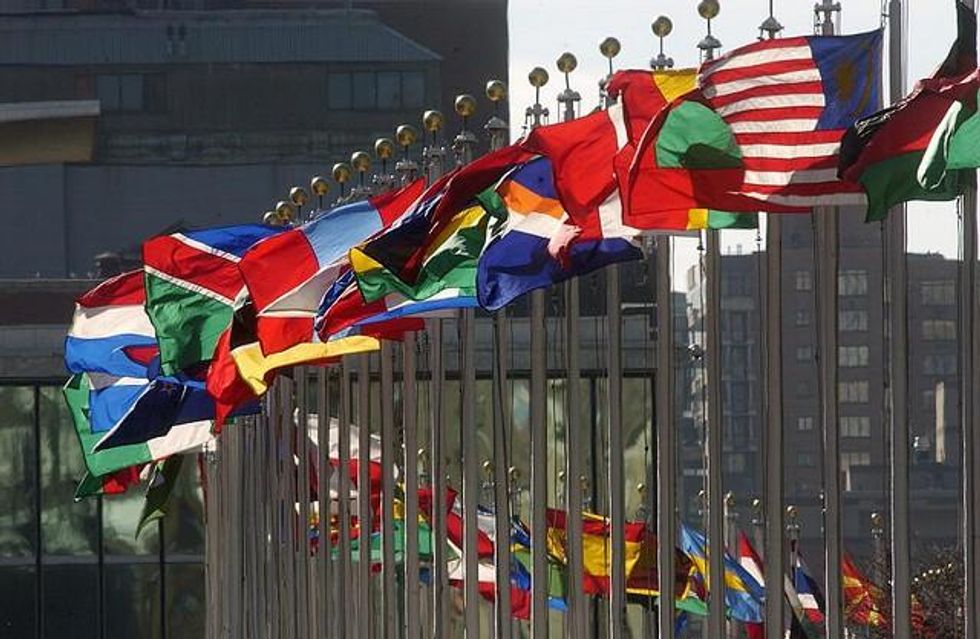
And as she talked to Annan on the 38th floor of the U.N. Secretariat building, Short told the British Broadcasting Corporation (BBC), she was thinking, "Oh dear, there will be a transcript of this, and people will see what he and I are saying."
Nearly 10 years later, the accusing finger is now pointed towards the United States, not Britain.
James A. Paul, who monitored the politics of the United Nations for over 19 years as executive director of the New York-based Global Policy Forum, told IPS U.S. electronic spying at the U.N. is a logical part of the worldwide espionage programme by the U.S. National Security Agency (NSA).
The programme has come to light following documents released by Edward Snowden, a U.S. whistleblower who was a NSA contractor, worked for the Central Intelligence Agency (CIA), and is currently living in political exile in Russia.
"It shows us the latest electronic approaches to surveillance 'listening', including the reports that the US has cracked into the UN's encrypted video system and that there is very aggressive monitoring of UN officials and high-ranking diplomats," he said.
Paul said none of this can be a surprise (though it is no less outrageous) in view of the tapping of the phones of 35 heads of state, including German Chancellor Angela Merkel, and the collection of information from some 70 million calls during one month in France.
"The U.N. has argued that surveillance targeting the organisation is contrary to international law and to the U.S.'s responsibility as the host country, but such claims have been systematically and flagrantly disregarded," he noted.
Addressing the General Assembly in September, Brazilian President Dilma Rouseff publicly castigated the United States for illegally infiltrating Brazil's communications network, surreptitiously intercepting phone calls, and electronically breaking into the Brazilian Mission to the United Nations
And according to leaked documents from the U.S. National Security Agency (NSA), technicians there have managed to decrypt the U.N.'s internal video teleconferencing (VTC) system as part of its surveillance of the world body.
As Western Europe expressed its collective outrage Thursday over U.S. spying on governments and political leaders in France, Germany, Italy, Brazil and Mexico, the United Nations was politically cautious in its comments about the large-scale spying.
Asked whether the world body will take a stand on the ongoing charges of U.S. spying, U.N. spokesperson Martin Nesirky told reporters Friday, "These are clearly bilateral matters involving individual member states."
He said the allegations of spying were a matter for the General Assembly and its 193 member states - not the Secretariat.
And there is growing speculation that some member states may introduce a resolution condemning widespread NSA spying as a violation of national sovereignty,
But one diplomatic source told IPS, the United States, not surprisingly, is lobbying against it.
Asked about the charges of spying inside the United Nations, U.N. Associate Spokesperson Farhan Haq told IPS the United Nations has consistently maintained the inviolability of diplomatic missions, including the United Nations and other international organisations.
According to a statement released by the United Nations, the functions of these organisations are protected by the relevant international conventions like the Vienna Convention and well-established international law.
"Therefore, Member States are expected to act accordingly to protect the inviolability of diplomatic missions," the U.N. said, in response to an article titled "How America Spies on Europe and the U.N." in the Germany magazine Der Spiegel last August.
The German magazine also referred to a 29-page U.S. State Department report, titled "Reporting and Collection Needs: The United Nations", which called on U.S. diplomats to collect information on key players at the United Nations.
According to this document, the diplomats were asked to gather numbers for phones, mobiles, pagers and fax machines. They were called on to amass phone and email directories, credit card and frequent-flier customer numbers, duty rosters, passwords and even biometric data.
Paul told IPS evidence of intrusive surveillance at the U.N. has emerged in the past, most notably in 2002-2003 around the Iraq debates.
At that time there were reports, including testimony from British cabinet minister Clare Short, who even claimed that she had read transcripts of Annan's meetings and conversations.
Paul said there were a number of revelations during the same period of U.S. bugging of delegations, including private meeting rooms where high-level discussions were taking place to plan common action in the Security Council to block a resolution authorizing the use of force against Iraq.
"These revelations were connected to very aggressive U.S. efforts to oust diplomats who were opposing the war, several of whom were in fact abusively recalled," Paul said.
Washington's electronic spymasters seem to have no sense of restraint, no realisation that they might be destroying the possibility of a civil order on which a democratic future depends, he noted.
Instead, they are rushing to create a world in which they control the ultimate "panopticon" with everyone and everything under their surveillance and control.
"Their counterparts in the UK, France, Russia, China, Israel and other states are rushing in the same direction. It is a frightening future that is before our eyes".
But can it be stopped? Certainly not by those who cynically say: it has always been thus, Paul said.
_____________________
And as she talked to Annan on the 38th floor of the U.N. Secretariat building, Short told the British Broadcasting Corporation (BBC), she was thinking, "Oh dear, there will be a transcript of this, and people will see what he and I are saying."
Nearly 10 years later, the accusing finger is now pointed towards the United States, not Britain.
James A. Paul, who monitored the politics of the United Nations for over 19 years as executive director of the New York-based Global Policy Forum, told IPS U.S. electronic spying at the U.N. is a logical part of the worldwide espionage programme by the U.S. National Security Agency (NSA).
The programme has come to light following documents released by Edward Snowden, a U.S. whistleblower who was a NSA contractor, worked for the Central Intelligence Agency (CIA), and is currently living in political exile in Russia.
"It shows us the latest electronic approaches to surveillance 'listening', including the reports that the US has cracked into the UN's encrypted video system and that there is very aggressive monitoring of UN officials and high-ranking diplomats," he said.
Paul said none of this can be a surprise (though it is no less outrageous) in view of the tapping of the phones of 35 heads of state, including German Chancellor Angela Merkel, and the collection of information from some 70 million calls during one month in France.
"The U.N. has argued that surveillance targeting the organisation is contrary to international law and to the U.S.'s responsibility as the host country, but such claims have been systematically and flagrantly disregarded," he noted.
Addressing the General Assembly in September, Brazilian President Dilma Rouseff publicly castigated the United States for illegally infiltrating Brazil's communications network, surreptitiously intercepting phone calls, and electronically breaking into the Brazilian Mission to the United Nations
And according to leaked documents from the U.S. National Security Agency (NSA), technicians there have managed to decrypt the U.N.'s internal video teleconferencing (VTC) system as part of its surveillance of the world body.
As Western Europe expressed its collective outrage Thursday over U.S. spying on governments and political leaders in France, Germany, Italy, Brazil and Mexico, the United Nations was politically cautious in its comments about the large-scale spying.
Asked whether the world body will take a stand on the ongoing charges of U.S. spying, U.N. spokesperson Martin Nesirky told reporters Friday, "These are clearly bilateral matters involving individual member states."
He said the allegations of spying were a matter for the General Assembly and its 193 member states - not the Secretariat.
And there is growing speculation that some member states may introduce a resolution condemning widespread NSA spying as a violation of national sovereignty,
But one diplomatic source told IPS, the United States, not surprisingly, is lobbying against it.
Asked about the charges of spying inside the United Nations, U.N. Associate Spokesperson Farhan Haq told IPS the United Nations has consistently maintained the inviolability of diplomatic missions, including the United Nations and other international organisations.
According to a statement released by the United Nations, the functions of these organisations are protected by the relevant international conventions like the Vienna Convention and well-established international law.
"Therefore, Member States are expected to act accordingly to protect the inviolability of diplomatic missions," the U.N. said, in response to an article titled "How America Spies on Europe and the U.N." in the Germany magazine Der Spiegel last August.
The German magazine also referred to a 29-page U.S. State Department report, titled "Reporting and Collection Needs: The United Nations", which called on U.S. diplomats to collect information on key players at the United Nations.
According to this document, the diplomats were asked to gather numbers for phones, mobiles, pagers and fax machines. They were called on to amass phone and email directories, credit card and frequent-flier customer numbers, duty rosters, passwords and even biometric data.
Paul told IPS evidence of intrusive surveillance at the U.N. has emerged in the past, most notably in 2002-2003 around the Iraq debates.
At that time there were reports, including testimony from British cabinet minister Clare Short, who even claimed that she had read transcripts of Annan's meetings and conversations.
Paul said there were a number of revelations during the same period of U.S. bugging of delegations, including private meeting rooms where high-level discussions were taking place to plan common action in the Security Council to block a resolution authorizing the use of force against Iraq.
"These revelations were connected to very aggressive U.S. efforts to oust diplomats who were opposing the war, several of whom were in fact abusively recalled," Paul said.
Washington's electronic spymasters seem to have no sense of restraint, no realisation that they might be destroying the possibility of a civil order on which a democratic future depends, he noted.
Instead, they are rushing to create a world in which they control the ultimate "panopticon" with everyone and everything under their surveillance and control.
"Their counterparts in the UK, France, Russia, China, Israel and other states are rushing in the same direction. It is a frightening future that is before our eyes".
But can it be stopped? Certainly not by those who cynically say: it has always been thus, Paul said.
_____________________
And as she talked to Annan on the 38th floor of the U.N. Secretariat building, Short told the British Broadcasting Corporation (BBC), she was thinking, "Oh dear, there will be a transcript of this, and people will see what he and I are saying."
Nearly 10 years later, the accusing finger is now pointed towards the United States, not Britain.
James A. Paul, who monitored the politics of the United Nations for over 19 years as executive director of the New York-based Global Policy Forum, told IPS U.S. electronic spying at the U.N. is a logical part of the worldwide espionage programme by the U.S. National Security Agency (NSA).
The programme has come to light following documents released by Edward Snowden, a U.S. whistleblower who was a NSA contractor, worked for the Central Intelligence Agency (CIA), and is currently living in political exile in Russia.
"It shows us the latest electronic approaches to surveillance 'listening', including the reports that the US has cracked into the UN's encrypted video system and that there is very aggressive monitoring of UN officials and high-ranking diplomats," he said.
Paul said none of this can be a surprise (though it is no less outrageous) in view of the tapping of the phones of 35 heads of state, including German Chancellor Angela Merkel, and the collection of information from some 70 million calls during one month in France.
"The U.N. has argued that surveillance targeting the organisation is contrary to international law and to the U.S.'s responsibility as the host country, but such claims have been systematically and flagrantly disregarded," he noted.
Addressing the General Assembly in September, Brazilian President Dilma Rouseff publicly castigated the United States for illegally infiltrating Brazil's communications network, surreptitiously intercepting phone calls, and electronically breaking into the Brazilian Mission to the United Nations
And according to leaked documents from the U.S. National Security Agency (NSA), technicians there have managed to decrypt the U.N.'s internal video teleconferencing (VTC) system as part of its surveillance of the world body.
As Western Europe expressed its collective outrage Thursday over U.S. spying on governments and political leaders in France, Germany, Italy, Brazil and Mexico, the United Nations was politically cautious in its comments about the large-scale spying.
Asked whether the world body will take a stand on the ongoing charges of U.S. spying, U.N. spokesperson Martin Nesirky told reporters Friday, "These are clearly bilateral matters involving individual member states."
He said the allegations of spying were a matter for the General Assembly and its 193 member states - not the Secretariat.
And there is growing speculation that some member states may introduce a resolution condemning widespread NSA spying as a violation of national sovereignty,
But one diplomatic source told IPS, the United States, not surprisingly, is lobbying against it.
Asked about the charges of spying inside the United Nations, U.N. Associate Spokesperson Farhan Haq told IPS the United Nations has consistently maintained the inviolability of diplomatic missions, including the United Nations and other international organisations.
According to a statement released by the United Nations, the functions of these organisations are protected by the relevant international conventions like the Vienna Convention and well-established international law.
"Therefore, Member States are expected to act accordingly to protect the inviolability of diplomatic missions," the U.N. said, in response to an article titled "How America Spies on Europe and the U.N." in the Germany magazine Der Spiegel last August.
The German magazine also referred to a 29-page U.S. State Department report, titled "Reporting and Collection Needs: The United Nations", which called on U.S. diplomats to collect information on key players at the United Nations.
According to this document, the diplomats were asked to gather numbers for phones, mobiles, pagers and fax machines. They were called on to amass phone and email directories, credit card and frequent-flier customer numbers, duty rosters, passwords and even biometric data.
Paul told IPS evidence of intrusive surveillance at the U.N. has emerged in the past, most notably in 2002-2003 around the Iraq debates.
At that time there were reports, including testimony from British cabinet minister Clare Short, who even claimed that she had read transcripts of Annan's meetings and conversations.
Paul said there were a number of revelations during the same period of U.S. bugging of delegations, including private meeting rooms where high-level discussions were taking place to plan common action in the Security Council to block a resolution authorizing the use of force against Iraq.
"These revelations were connected to very aggressive U.S. efforts to oust diplomats who were opposing the war, several of whom were in fact abusively recalled," Paul said.
Washington's electronic spymasters seem to have no sense of restraint, no realisation that they might be destroying the possibility of a civil order on which a democratic future depends, he noted.
Instead, they are rushing to create a world in which they control the ultimate "panopticon" with everyone and everything under their surveillance and control.
"Their counterparts in the UK, France, Russia, China, Israel and other states are rushing in the same direction. It is a frightening future that is before our eyes".
But can it be stopped? Certainly not by those who cynically say: it has always been thus, Paul said.
_____________________