

SUBSCRIBE TO OUR FREE NEWSLETTER
Daily news & progressive opinion—funded by the people, not the corporations—delivered straight to your inbox.
5
#000000
#FFFFFF
To donate by check, phone, or other method, see our More Ways to Give page.
Daily news & progressive opinion—funded by the people, not the corporations—delivered straight to your inbox.
Sharon Singh, ssingh@aiusa.org, 202-675-8579
Half a million Afghans who fled fighting have been abandoned to starvation and death as they subsist in makeshift shelters and they have been let down by their government and international donors, Amnesty International said in a new report released today.
At least 28 children have died in the harsh winter conditions in the camps around Kabul. The Afghan government estimates more than 40 people have frozen to death in camps across the country.
'Fleeing war, finding misery: The plight of the internally displaced in Afghanistan', highlights how an escalation in fighting has left half a million Afghans internally displaced with around 400 more joining their ranks every single day. Kabul alone houses up to 35,000 displaced persons in 30 slum areas around the city.
"Thousands of people are finding themselves living in freezing, cramped conditions and on the brink of starvation, while the Afghan government is not only looking the other way but even preventing help from reaching them," said Horia Mosadiq, Amnesty International's Afghanistan researcher.
"Women and girls disproportionately bear the consequences of displacement," said Cristina Finch, Amnesty International USA's women's policy director. "They face an increased risk of sexual violence which is often compounded by the insecure conditions of slums and armed conflict. We call upon the U.S. government to work with the Afghan government to help ensure that needed assistance is delivered."
Throughout Afghanistan, United Nations agencies and humanitarian organizations cannot deliver effective aid to slums, as they are prohibited from assisting in ways that implies the permanence of settlements. So, instead of digging permanent water wells, they are forced to deliver water to displaced communities in tankers.
"Local officials restrict aid efforts because they want to pretend that these people are going to go away," said Mosadiq. "This is a largely hidden but horrific humanitarian and human rights crisis."
Most slum residents told Amnesty International that they had fled their homes to escape conflict. Fighting has spread to parts of the country previously considered peaceful. Civilian deaths have increased every year since 2007 and in 2011, more than 3,000 Afghan civilians died as a result of the conflict, according to the U.N. Assistance Mission in Afghanistan (UNAMA).
The vast majority of civilian casualties are caused by the Taleban and other insurgent groups, but many displaced Afghans told Amnesty International that they had fled in fear of aerial bombardment by the International Security Assistance Force (ISAF) and to avoid being used as human shields by the Taleban.
Amnesty International has called on the International Criminal Court (ICC) to investigate war crimes by the Taleban and all other parties to the conflict in Afghanistan.
"The Americans and the government told us to leave the area before they wanted to attack Marjah, so people started leaving the area before the offensive started... the Taleban.. did not allow civilians to leave the area. The Taleban also told people that the foreign forces will come and rape our women and girls," said Zarin, a 70 year old woman who came to Kabul in February 2010 from Marjah, in Helmand province.
Entire communities are now fleeing their homes in search of greater security.
"Afghans have real grounds to feel less secure now than at any point in the last ten years," said Mosadiq. "International and Afghan forces should address the impact of conflict on civilians, including displacement. The Taleban must also look to protect civilians, by ensuring humanitarian access to the areas they control."
Those Afghans who have fled to the relative safety of cities face problems of a different kind. Housing in Afghanistan's cities is scarce and rents comparatively high. Families construct makeshift dwellings from mud, poles, plywood, plastic sheeting and cardboard, which offer little protection from the elements.
Food is scarce in the settlements. Many displaced families told Amnesty International that they could only provide their children with one meal each day at most.
"Since we came there is no assistance or anything; the family has not eaten anything for the past two days....We are displaced and have lost all our livelihoods," said Zarin.
"Many Afghans have adapted to rural lifestyles that provide them with at least basic food and shelter," said Mosdiq. "When they reach the cities, they are poorly prepared for dealing with a cash-based economy, higher prices, and the complexities of urban life. They can't go back home, but they can't establish a new proper home either."
Cramped conditions, poor sanitation and few health clinics combine to promote the spread of disease. Most women give birth in difficult and unsanitary slum conditions without skilled birth attendants, increasing the risk of maternal and infant death in a country already ranked among the world's worst.
Children in slum communities have little access to education. They may be refused school attendance if they cannot produce a national identification card, a document which the authorities say can only be obtained in their home province. Some are turned away from school simply for wearing dirty clothes.
"I don't know which problem I should talk about - school, unemployment, not having proper housing, food, health - when my children are getting sick and I have to pay for the doctor.... It's everything," said Fatima, a woman in her 20s living in Kabul's Chaman-e-Babrak slum area.
"The increasing population of displaced people in urban slums threatens to undo the fragile advances in health care and education that we've seen in Afghanistan in the last decade," said Mosadiq.
Displaced families in makeshift camps are under constant threat of forced eviction. In some cases, families have had to scramble to move belongings before bulldozers level their shelters.
"These people are especially vulnerable - they must seek shelter, provide for themselves and their families while coping with the trauma caused by the conflict they have fled," said Mosadiq.
Under international law, Afghanistan is required to provide for displaced persons' immediate needs and help them to find long term solutions. To fulfil this role, Afghanistan relies on international assistance and the efforts of humanitarian organizations.
"Even with its limited resources, the Afghan government can aid its displaced citizens," said Mosadiq. "Authorities must use the international aid available and remove conditions placed on humanitarian assistance, and provide for displaced families' immediate needs. Afghanistan should also protect the displaced against forced eviction, guarantee displaced children access to primary education and allow identity cards to be issued throughout the country so that they can exercise their legal rights."
Amnesty International is a global movement of millions of people demanding human rights for all people - no matter who they are or where they are. We are the world's largest grassroots human rights organization.
(212) 807-8400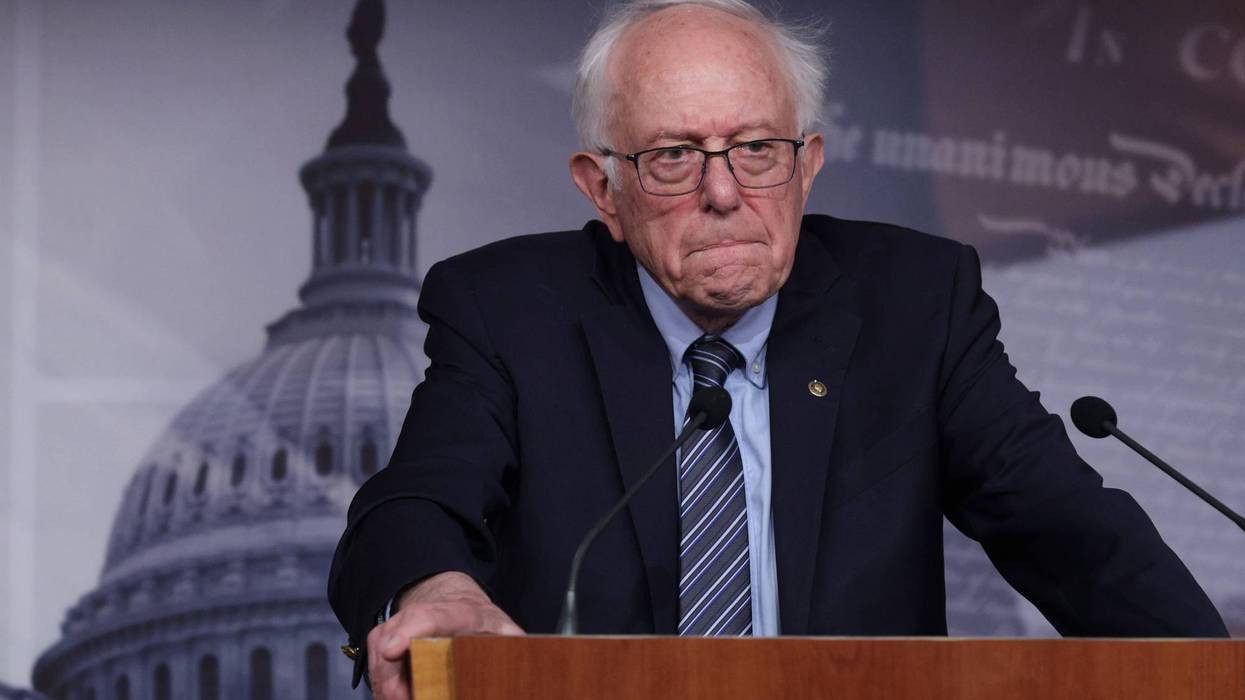
"Restarting his reckless war with Iran won't make America stronger," said Sen. Bernie Sanders. "It will cost more lives and waste more taxpayer dollars."
Key progressives in Congress took aim at President Donald Trump on Wednesday amid his second straight night of attacks on Iran.
US Central Command (CENTCOM) first said Tuesday that its forces had "begun launching a series of powerful strikes against Iran," in response to attacks on commercial ships in the Strait of Hormuz. Then, Trump said Wednesday that the ceasefire established under the memorandum of understanding (MOU) signed last month was "over" and "I don't want to deal with" the Iranians.
As oil prices soared, CENTCOM announced later Wednesday that "at the direction of the commander in chief, US Central Command forces have started conducting additional strikes against Iran to further degrade their ability to threaten freedom of navigation in the Strait of Hormuz. The United States is holding Iran accountable for recent unjustified aggression against commercial shipping and civilian crews freely navigating a vital international waterway."
Minutes later, progressive Sen. Bernie Sanders (I-Vt.) declared: "After getting the United States into a war based on lies, Trump has now declared the ceasefire with Iran 'over' after less than a month. Restarting his reckless war with Iran won't make America stronger. It will cost more lives and waste more taxpayer dollars. END THIS WAR."
Meanwhile, Trump shared a series of videos of the bombings across Iran on his Truth Social platform Wednesday evening.
The National Iranian American Council (NIAC) said in a statement that "the Trump administration is steering the United States back toward an illegal and disastrous war with Iran. Rather than implementing the agreement it negotiated, it has chosen escalation over diplomacy."
"A return to war is illegal," NIAC emphasized. "Congress passed a war powers resolution directing the president to terminate hostilities, and a majority of Americans oppose another war with Iran. If President Trump wants to return to war, he must seek congressional authorization. If he refuses, Congress must enforce the law."
The US House of Representatives voted 215-208 in favor of a war powers resolution aimed at ending Trump's illegal war of choice on Iran early last month. After a few weeks, the Senate also passed it, with a 50-48 vote—but just a day later, under pressure from the president, Republican Sens. Bill Cassidy (La.) and Rand Paul (Ky.) helped the GOP block a subsequent measure.
Sen. Tim Kaine (D-Va.), sponsor of the blocked resolution, said at the time that "after both Republican-majority Houses took the historic step of voting that additional war against Iran is illegal without congressional authorization, President Trump came to the Capitol and tried to browbeat Republican senators for upholding their oaths of office."
"To appease his temper tantrum, Republicans agreed to defeat a superfluous motion to proceed to a separate War Powers Resolution currently pending before the Senate," he continued. "The vote is of no consequence and does not undo the expressed position of Congress that further war against Iran is illegal unless Congress votes for it."
Kaine also spoke out Wednesday morning, saying: "Congress voted against more war with Iran. The U.S. should not be launching new strikes without congressional authorization and restarting a war that has raised gas prices, killed Americans, and hurt the economy. The U.S. and Iran must return to a ceasefire."
Sen. Elizabeth Warren (D-Mass.) weighed in Wednesday afternoon: "Donald Trump's war with Iran has cost American lives, and jacked up prices on gas and groceries for millions across the globe. Congress voted against this war. Congress shouldn't allow Donald Trump to continue it."
Key House members have also spoken out since the strikes resumed Tuesday. Congressional Progressive Caucus (CPC) Chair Greg Casar (D-Texas) said that "Trump is extending his disastrous, illegal war with Iran. Congress and the American people have demanded the war end. Instead, Trump is choosing higher gas prices, more lives lost, and more instability. Outrageous."
Noting the new attacks and Trump's ceasefire comment, CPC Chair Emerita Pramila Jayapal (D-Wash.) similarly stressed that "this is another escalation in a war that the American people do not want. The House and Senate passed bipartisan war powers resolutions for this exact reason. This war must end NOW."
Oil price jumps should "start being passed along tomorrow and in the days ahead" in the form of higher gasoline prices, said one industry analyst.
President Donald Trump's illegal war with Iran is sending oil prices surging—again.
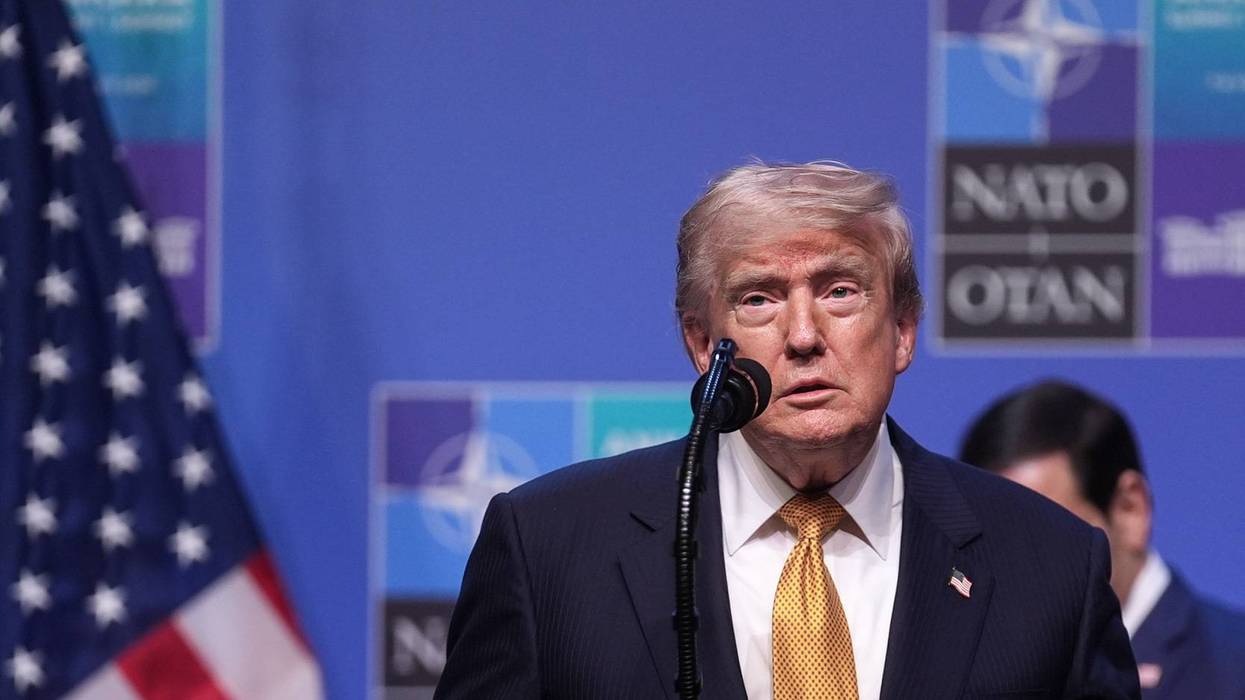
While attending the 36th NATO Summit of Heads of State and Government in Türikye on Wednesday, Trump said that the ceasefire agreement he struck last month with Iran is "over," while adding, "I don’t want to deal with them," in reference to the Iranians.
Shortly after the president's remarks, Brent and West Texas Intermediate (WTI) crude oil prices each jumped by more than 4% during Wednesday trading, marking the end of a steady decline in prices that occurred in the weeks since the ceasefire deal was first announced.
Later in the day, Trump went on a lengthy rant about Democrats criticizing his failed campaign promise to bring down the price of groceries starting on his very first day in office, and he falsely claimed that the price of oil "is coming down very big."
At this point, a reporter interjected and said that oil prices on Wednesday were surging upward.
"If we hit Iran, oil goes up a little bit," Trump replied. "That's all right."
Trump on Inflation: And now inflation is way down. Everything is great. The prices are coming down. They made up a phony word: affordability. Oil is coming down very big.
Reporter: Brent crude is up today.
Trump: Every time we hit Iran, oil goes up a little bit. That's all… pic.twitter.com/ZvG0a5RYZh
— Acyn (@Acyn) July 8, 2026
Although the price of gasoline has been following the price of oil downward, any increase in petroleum prices will almost certainly send it back upward.
In a social media post, petroleum industry analyst Patrick De Haan said the renewed fighting between the US and Iran, combined with Russia banning exports of diesel fuel, would likely cause more pain at the gas pump in the near future.
"With news of Russia suspending diesel exports, markets have accelerated their climb," De Haan explained. "In addition, the current national average for diesel of $4.75 per gallon could head back to $5 per gallon in the next week or two, while the national average gas price heads to $4 per gallon."
De Haan added that spot gasoline prices on Wednesday were up by between $0.14 and $0.20, projecting that "today's jumps could start being passed along tomorrow and in the days ahead."
"Is this the future you want to see? Where AI executives pretend like they have the answers, that they are doing good, and you're giving them a stage?"
A protester was violently removed from the United Nations AI for Good Global Summit in Geneva on Wednesday after Palestine defenders disrupted a presentation by a senior Amazon executive to denounce Big Tech's complicity in Israel's genocidal war on Gaza.
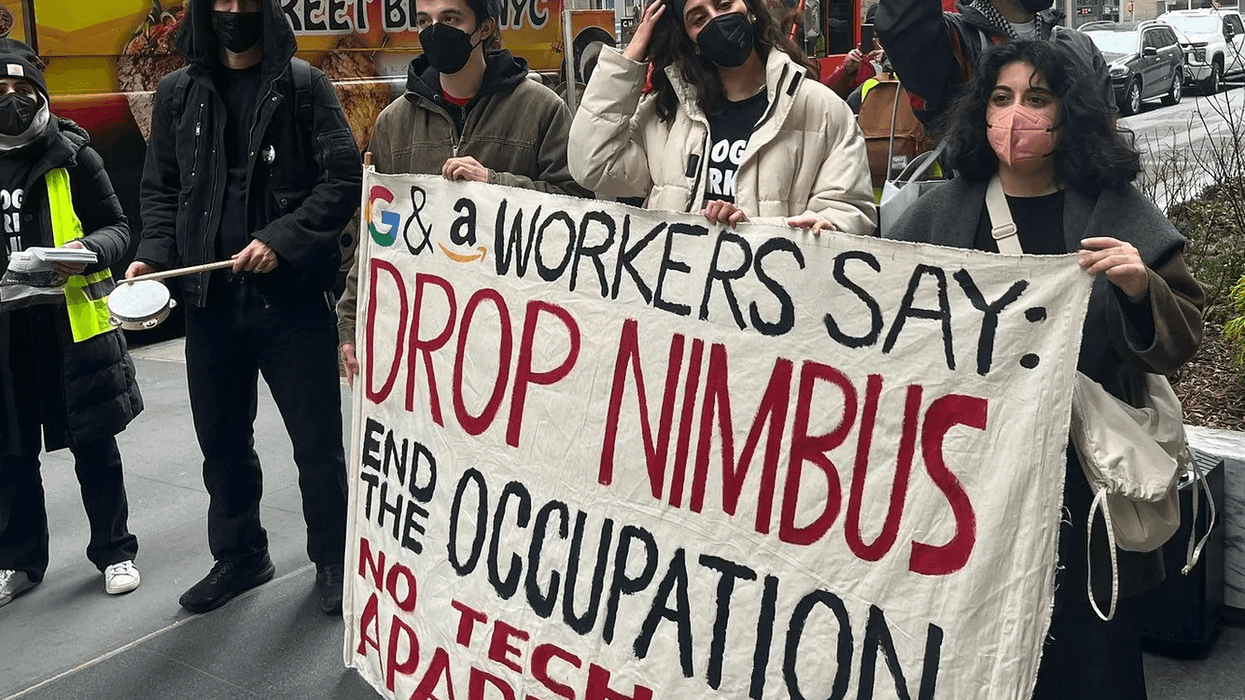
Pro-Palestine activists linked to the global Boycott, Divestment, and Sanctions (BDS) movement are protesting the UN International Telecommunications Union (ITU) conference over its partnerships with tech titans, especially Amazon and Google. In 2021, the pair signed a $1.2 billion contract for Project Nimbus, which provides cloud services to the Israeli government and military.
Under the deal, Amazon Web Services and Google Cloud provide the Israel Defense Forces and Israeli government agencies with cloud infrastructure, artificial intelligence tools, and data storage. The contract prohibits Google or Amazon from refusing service to Israeli government, military, or intelligence agencies.
Project Nimbus sparked the #NoTechForApartheid campaign, in which disaffected tech workers and dozens of advocacy groups rose up against Big Tech’s complicity in Israeli human rights crimes in Palestine, including the Gaza genocide; apartheid; and illegal occupation, settler colonization, and ethnic cleansing in the West Bank.
On Wednesday, activists interrupted a summit speech by Amazon vice president and chief technology officer (CTO) Werner Vogels, with protesters taking the stage—two of them holding a large sign reading "No Tech for Apartheid"—as others in the audience chanted "Drop Project Nimbus!"
"You are making Project Nimbus, a project of billions of dollars that Amazon is investing so that Israel has free access to your servers," the man who upstaged Vogels said as the Amazon CTO stood by with his hands on his hips. "You are investing billions in that. Your technology, Project Nimbus, develops Lavender, develops the software Where's Daddy, that actively tracks, using AI, people in Palestine, and when they come back, they kill them together with their families."
"And you know this... and you're making millions out of this," the protester continued. "You're sitting here as if you're trying to do good, as if you're trying to be for the good of AI. What do you have to say for yourself? How do you sleep at night?"
"Maybe that's why you're looking so panicked. Maybe that's why you cannot even stand on this stage anymore and look at these people, because you know exactly what your technology is being used for," the activist said after Vogels stepped off the stage.
"They know exactly where their profits are coming from, and they continue anyway," the protester added, drawing loud cheers.
As the activists holding the sign were removed from the stage, the man speaking gestured to Vogels and others and said: "You should be stopping them! You should be stopping those criminals right here! Why are you facilitating genocide? Why are you continuing to be complicit in the deaths of innocent people three years on?"
Security personnel then removed the man from the stage as he said: "No violence. No violence."
"Why are you putting me in a chokehold?" he asked as he was violently ejected. "Is this the future you want to see?... Where AI executives pretend like they have the answers, like they are doing good, and you're giving them a stage? Shame on you, Amazon! Drop Project Nimbus!"
Activists with the BDS movement and other groups also protested at last year's AI for Good summit, which came on the heels of a report by UN independent Palestine expert Francesca Albanese detailing corporate complicity and direct participation in Israeli crimes against Palestinians and specifically naming dozens of companies, including Amazon and Google parent company Alphabet.
More than 250,000 Palestinians have been killed or wounded, including thousands of people who are missing and presumed dead and buried beneath the rubble of the flattened Gaza Strip, since Israel launched its US-backed war on October 7, 2023, when Hamas led the deadliest attack on Israel in the country's 78-year history. Around 2 million Palestinians have been forcibly displaced, while Israel's "complete siege" of Gaza fueled famine and disease.
Israel is facing a genocide case filed by South Africa at the International Court of Justice in The Hague. The International Criminal Court, also located in the Dutch city, has issued arrest warrants for Israeli Prime Minister Benjamin Netanyahu and former Defense Minister Yoav Gallant for alleged crimes against humanity and war crimes in Gaza.
The Geneva summit follows the creation earlier this month of the ITU's AI for Good Global Commission, which is co-chaired by Salesforce CEO Marc Benioff and Rwandan President Paul Kagame, whose repressive 32-year rule has been criticized for persistent human rights abuses. Both Amazon and Google are represented on the commission.
The summit also comes amid growing worldwide opposition to the unchecked development of AI technology, which experts warn will lead to job losses on an unprecedented scale, widening economic inequality, environmental and climate harms, social isolation, increased government surveillance, "killer robots," and, in the long term, possibly even human extinction.