

SUBSCRIBE TO OUR FREE NEWSLETTER
Daily news & progressive opinion—funded by the people, not the corporations—delivered straight to your inbox.
5
#000000
#FFFFFF
To donate by check, phone, or other method, see our More Ways to Give page.
Daily news & progressive opinion—funded by the people, not the corporations—delivered straight to your inbox.

International agency Oxfam warns today a Herculean
effort is still needed if public health in Haiti is not to deteriorate.
Time is pressing as there are only six weeks before the start of the
raining season.
The agency said there have been enormous and successful efforts in
getting clean water and food to people since the quake hit exactly a
month ago. To date, Oxfam has provided assistance to about 100,000
people and continues to scale up operations, planning to reach at least
500,000 people by the end of July.
International agency Oxfam warns today a Herculean
effort is still needed if public health in Haiti is not to deteriorate.
Time is pressing as there are only six weeks before the start of the
raining season.
The agency said there have been enormous and successful efforts in
getting clean water and food to people since the quake hit exactly a
month ago. To date, Oxfam has provided assistance to about 100,000
people and continues to scale up operations, planning to reach at least
500,000 people by the end of July.
But the same progress must now be made in tackling poor sanitation and the aid agency says a surge in effort is needed from the international community, the UN and aid agencies in advance of the rainy season, due in April.
The organization fears that cases of diarrhea and other water-borne
diseases could spread given the combination of poor drainage, a limited
number of latrines and crowded living conditions.
Oxfam has so far installed latrines at 11 key sites and many more
are planned. Public health teams are also working with communities to
reduce the risk of disease by rubbish-clearing and awareness-raising.
But there is still a long way to go.
"Thanks to the generous public and political response the aid effort
has rapidly expanded to meet people's needs but there is still a
mountain to climb.
"We now need a surge in effort to improve sanitation facilities for
people in Haiti. Let us not kid ourselves that this is going to be
easy, it requires a Herculean humanitarian effort from all quarters.
"Around 230,000 people lost their lives on January 12. It is our
priority to make sure that we don't let that number grow," said Marcel
Stoessel, Head of Oxfam in Haiti.
The temporary camps where people have congregated are fast-becoming
over-crowded slums and need upgrading to allow easy access to basic
services. More ditches need to be dug to improve the drainage in the
crowded camps before the rains begin. Oxfam also fears for the safety
of people who have moved to areas that are at risk from land and
mudslides because of the upcoming rains.
The Government has plans to resettle people but it still needs to
clarify whether there is government land available or if it needs to
confiscate private land instead.
It also needs to ensure that people are not forced to move away from their communities,
that new camps are safe and that there is a plan in place to ensure
that camps do not becoming dumping grounds outside the city. These
decisions need to be taken quickly.
The huge logistical challenges facing the aid effort -
communications, transport, loss of key staff, destroyed physical and
political infrastructure - are slowly being overcome but bottlenecks
still remain.
While the coordination of the aid effort is going well, Oxfam said
it still needs to be improved. Hundreds of agencies now in Haiti -
estimates vary from 500 to 900 - are playing their part in the response
and the UN has made great strides in coordinating the aid effort but
along with the Government it needs to provide stronger leadership.
As more than 75 per cent of Haiti's capital needs to be rebuilt,
reconstruction will take many years and needs the full support of the
international community, Oxfam said. The Government needs to elaborate
on its reconstruction vision as the many rumours about its plans are
causing a sense of anxiety amongst those who have lost their homes.
"Whatever the vision of the Haitian government is, it should ensure
that a newly built Haiti does not recreate the injustices and
inequalities of the past.
"The country's reconstruction ought to be led by Haitians for Haitians,"
Stoessel said. "With more than 80 per cent below the poverty line
before the earthquake, the needs of Haiti's poor must be central."
Though the focus of the aid effort centers around the capital, where
the majority of needs are, there is a growing concern about conditions
in the countryside where nearly 500,000 people have fled. Vigilance is
needed to ensure that their needs do not fall off the radar and support
must be provided to those hosting them.
Read more
Haiti earthquake: What Oxfam is doing
Map of Oxfam's relief work in Haiti
Oxfam's cash-for-work program in Haiti: photo gallery
Helen Hawkings latest blog: Honoring the lost, rebuilding from the rubble
For more information or to arrange interviews contact:
In Haiti:
Ian Bray on UK mobile +44 (0)7721 461 339
In the UK:
Zahra Akkerhuys on +44 (0)1865 472359 or +44 (0)7525 901932
In New York:
Louis Belanger on +1 (917) 224 0834
Oxfam International is a global movement of people who are fighting inequality to end poverty and injustice. We are working across regions in about 70 countries, with thousands of partners, and allies, supporting communities to build better lives for themselves, grow resilience and protect lives and livelihoods also in times of crisis.
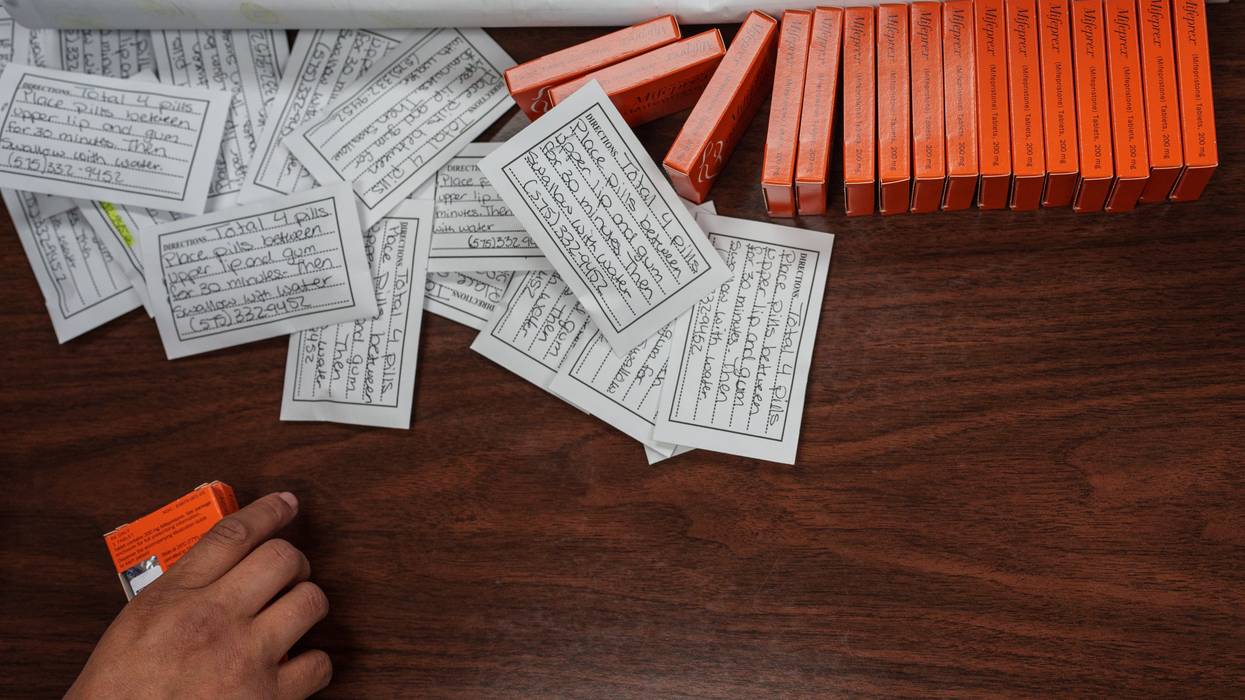
"Mifepristone is safe and effective, and women should be able to get abortion medication through the mail or telehealth if they need," said Sen. Patty Murray.
Defenders of reproductive rights, including key Democrats in Congress, reiterated the safety of mifepristone on Monday after the US Supreme Court temporarily extended access to the medication—commonly used in abortion and miscarriage care—by mail while the justices review a ruling from a notoriously right-wing appellate court.
The US Court of Appeals for the 5th Circuit blocked a federal rule allowing mifepristone to be dispensed by mail at the beginning of the month. Drugmakers quickly appealed to the high court, where Justice Samuel Alito, who is part of the right-wing supermajority, issued a one-week stay to give himself and colleagues time to review the case.
As Alito's initial Monday evening deadline approached, he extended the stay until 5:00 pm ET on Thursday. The move means that "for now, mifepristone is still available via telehealth, mail order, and pharmacy while the case proceeds," noted the Democratic Women's Caucus in the US House of Representatives.
However, pro-choice advocates and policymakers are still sounding the alarm and arguing that, as the caucus put it in a social media post, "reproductive freedom should not depend on emergency rulings or political attacks."
Senate Minority Leader Chuck Schumer (D-NY) said in a statement that "mifepristone has been safe, effective, and trusted for decades. Today's order keeps access in place for now, but it's not cause for celebration—it's a reminder that basic reproductive care is still under attack every day. Anti-abortion extremists are trying to use the courts to roll back access to medication abortion nationwide, and Senate Dems will keep fighting to protect women's freedom to make their own healthcare decisions."
Sen. Patty Murray (D-Wash.) similarly wrote on social media: "Another extension, but this shouldn't be complicated. Mifepristone is safe and effective, and women should be able to get abortion medication through the mail or telehealth if they need. Extremist judges shouldn't get to decide how women get healthcare."
This case traces back to early 2023, when the Biden administration's Food and Drug Administration permanently lifted mifepristone's in-person dispensing requirement, just months after the Supreme Court's right-wing supermajority overturned Roe v. Wade. Louisiana, which has among the most restrictive abortion policies in the country, sued over the FDA's policy change.
Medication abortions account for the majority of abortions provided in the United States, and those patients generally take both mifepristone and another drug, misoprostol. Demand for abortion pills by mail increased after Roe's reversal, as advocates of forced pregnancy policies in Republican-controlled states ramped up attacks on reproductive freedom.
"With the Supreme Court punting a decision on access to mifepristone—a safe, effective medication used in abortion care—until later this week, patients and providers are left facing continued uncertainty," said Rachel Fey, interim co-CEO of Power to Decide. "Wondering day by day whether you'll have access to an essential medication is not practical, and the confusion only deepens the barriers people already face when seeking abortion care."
"Access to mifepristone should be based on scientific evidence, not ideology," Fey declared. "We urge the Supreme Court to follow that science and maintain current telehealth access to mifepristone—not just for a few days at a time, but permanently."
Alito's extensions in recent days are not necessarily signals of where the conservative will ultimately come down. The Associated Press pointed out Monday that "the current dispute is similar to one that reached the court three years ago," when the justices blocked another 5th Circuit ruling "over the dissenting votes of Alito and Justice Clarence Thomas," and then unanimously dismissed that case due to lack of standing, or a legal right to sue.
The battle comes as the Trump administration's FDA is conducting a review of mifepristone that Julia Kaye, senior staff attorney for the ACLU’s Reproductive Freedom Project, has said seems "designed to manufacture an excuse for further restricting medication abortion across the country."
The New York Times noted Monday that US Department of Justice "lawyers have not said in court proceedings or publicly whether they back regulations that allow people to be prescribed the pills through telehealth appointments. Instead, they have asked the lower courts to pause the litigation to give the FDA time to complete a review of the safety of mifepristone, which was first approved in 2000."
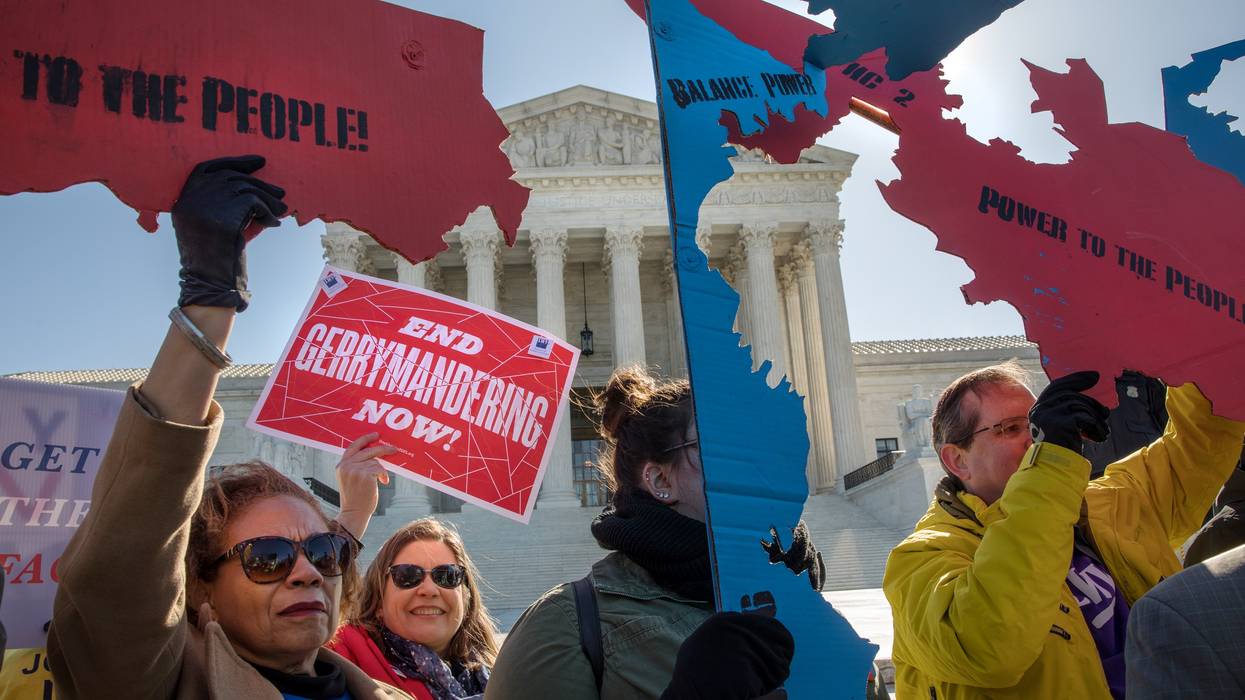
"Boy, it's a complete mystery why the public thinks the court is making partisan political decisions," quipped one law professor following the ruling on Alabama's redistricting.
The US Supreme Court's right-wing majority Monday opened the door for Alabama to eliminate a majority-Black congressional district before this year's midterm elections in a decision that came as Tennessee voters sued to stop their state's racially rigged redistricting.
The nation's high court issued a 6-3 order with no explanation allowing Alabama officials to revert to a congressional map which, despite the state population being roughly 26% African American, has just one majority-Black district out of seven. The order came just a week before Alabama's primary election and less than three years after the same court ordered the state to create a second majority-Black district.
In that case, Allen v. Milligan, two right-wing members—Chief Justice John Roberts and Justice Brett Kavanaugh—joined their liberal colleagues who sided with Black voters in defense of the Voting Rights Act.
SCOTUS, which ordered Alabama to create a second Black opportunity district just 3 years ago, has lifted that order a week before the primary. The Purcell principle says courts shouldn't permit chaos too close to an election—it's now an open question whether there will even be a primary on schedule.
[image or embed]
— Joyce White Vance (@joycewhitevance.bsky.social) May 11, 2026 at 3:32 PM
Monday's ruling follows last month's Louisiana v. Callais decision, in which the justices ruled 6-3, also along ideological lines, that Louisiana's congressional map is “an unconstitutional racial gerrymander."
The decision ironically voided the last remaining provision of Section 2 of the Voting Rights Act, which allows voters of color to challenge racially discriminatory electoral maps in court.
Dissenting in Monday's decision, liberal Justice Sonia Sotomayor noted that the high court previously found that "Alabama violated the 14th Amendment by intentionally diluting the votes of Black voters."
"That constitutional finding of intentional discrimination is independent of, and unaffected by, any of the legal issues discussed in Callais," she added.
Earlier on Monday, the ACLU and ACLU of Tennessee filed a federal lawsuit on behalf of three Black voters, the Black Clergy Collaborative of Memphis, the Memphis A. Philip Randolph Institute, and the Equity Alliance seeking to block the state's racially rigged congressional map approved last week by the state Legislature and signed into law by Republican Gov. Bill Lee despite tremendous opposition from African American Tennesseans and their allies.
The lawsuit argues that the new map violates the Constitution by intentionally discriminating against Black voters in Memphis and retaliates against them for exercising their First Amendment right to political expression and association.
As the ACLU of Tennessee explained:
Tennessee has had a Memphis-based congressional district for the better part of a century. The challenged map dismantles that district, which is the state’s only majority-Black congressional district. It divides Black voters in Memphis and Shelby County across three majority-white districts that stretch from Memphis hundreds of miles into central Tennessee, diluting Black Memphians’ votes and stripping those communities of any meaningful voice in Congress...
A white-controlled supermajority of the Tennessee General Assembly enacted the new map targeting Black Memphians over mere days in a special legislative session that had been called after the candidate-qualifying deadline had already run.
"Black voters in Memphis did exactly what the Constitution empowers every American to do, which is to choose their representative,” ACLU of Tennessee executive director Miriar Nemeth said in a statement. “The Legislature’s response was an effort to ensure that those votes never carry the same weight again. The law has a name for this, and it’s not redistricting, it is textbook First Amendment retaliation. And it is, at its heart, racism.”
The Tennessee branch of the NAACP, state Democratic Party, Democratic candidates, and voters have also sued to challenge the redistricting.
The current partisan redistricting war began when President Donald Trump and congressional Republicans, who fear losing control of Congress after November's midterms, pushed Texas to enact a mid-decade redistricting. California retaliated with its own voter-approved redraw, and numerous red and blue states have followed suit or announced plans to at least consider doing so.
On Monday, Virginia's Democratic attorney general and party legislative leaders asked the US Supreme Court to block a state high court ruling against a voter-approved redistricting that favors Democrats.
Last week, Roberts dismissed the increasingly prevalent public perception that Supreme Court justices are "political actors."
Chief Justice Roberts bemoans the public's view of the Justices as political actors ...and then offers no explanation at all as the Court sprints to vacate a finding of INTENTIONAL discrimination, interfering with an impending election to let Alabama Rs sneak in a touch more partisan gerrymander.
[image or embed]
— Justin Levitt (@justinlevitt.bsky.social) May 11, 2026 at 3:21 PM
Following Monday's ruling, Loyola Law School professor Justin Levitt said sardonically on Bluesky, "Boy, it's a complete mystery why the public thinks the court is making partisan political decisions."
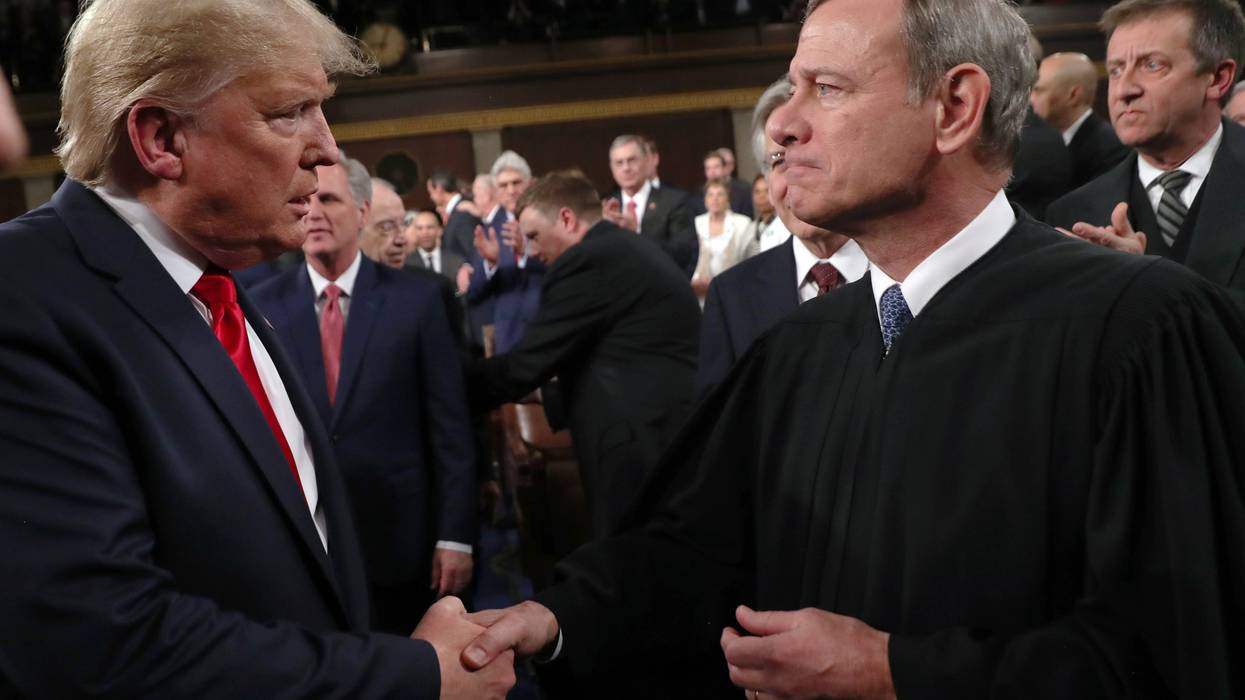
"The irreparable harm resulting from the Supreme Court of Virginia's decision is profound and immediate," top state Democrats said of the decision that struck down the new districts.
Virginia Attorney General Jay Jones and Democratic leaders in the state General Assembly on Monday asked the US Supreme Court to block a ruling against a ballot measure establishing new voter-approved congressional districts that favored Democrats.
The Virginia Supreme Court on Friday delivered a blow to the Democratic battle against President Donald Trump's gerrymandering campaign when it struck down a political map that Virginians had narrowly backed last month. The new districts could help Democrats secure up to four seats in the US House of Representatives in the November midterm elections.
Jones, Speaker of the Virginia House of Delegates Don Scott (D-88), state Senate Majority Leader Scott Surovell (D-34), and Senate President Pro Tempore L. Louise Lucas (D-18) are seeking a stay, arguing that based on a "novel and manifestly atextual interpretation" of the Virginia Constitution, the state Supreme Court "overrode the will of the people who ratified the amendment by ordering the commonwealth to conduct its election with the congressional districts that the people rejected."
"A stay is warranted because the decision by the Supreme Court of Virginia is deeply mistaken on two critical issues of federal law with profound practical importance to the nation. The decision below violates federal law in two separate ways," the emergency application says. "First, it predicated its interpretation of the Virginia Constitution on a grave misreading of federal law, which expressly fixes a single day for the 'election' of representatives and delegates to Congress."
"Second, by rejecting the plain text of the Virginia Constitution's definition of the term 'election' to adopt its own contrary meaning, the Supreme Court of Virginia 'transgressed the ordinary bounds of judicial review such that it arrogated to itself the power vested in the state legislature to regulate federal elections,'" the application continues.
The filing also stresses that "the irreparable harm resulting from the Supreme Court of Virginia's decision is profound and immediate. By forcing the commonwealth to conduct its congressional elections using districts different from those adopted by the General Assembly pursuant to a constitutional amendment the people just ratified, the Supreme Court of Virginia has deprived voters, candidates, and the commonwealth of their right to the lawfully enacted congressional districts."
The Associated Press noted that "Democrats are taking a legal long shot in asking the justices to reverse the Virginia ruling. The Supreme Court tries to avoid second-guessing state courts’ interpretations of their own constitutions. In 2023, it turned down a request by North Carolina Republicans to overrule a state Supreme Court decision that blocked the GOP's congressional map."
The high court also has a right-wing supermajority that includes three Trump appointees—and which gutted the remnants of the Voting Rights Act in a ruling related to Louisiana's congressional districts late last month.
Under current conditions, Republicans are expected to pick up seats in Florida, Missouri, North Carolina, Tennessee, and Texas due to redistricting demanded by Trump, while Democrats are expected to win more districts in California, where voters also approved new political lines benefiting them.
The Washington Post reported Monday that "some top Democrats express little hope that the appeal will affect this November's congressional midterms and are pivoting to waging campaigns in the state's existing districts."
According to the newspaper:
Surovell (D-Fairfax) said "the practical realities of our election calendar" will prevent candidates from running in new maps even if conservative justices on the US Supreme Court were open to helping Virginia Democrats.
Tuesday is the deadline set by state elections officials for putting the ballot mechanisms in place. Surovell noted that Virginia’s elections software is antiquated and overdue for replacement.
Instead, Democrats are making the case that it’s time to work with the cards they have in hand.
"Since we can't control anything other than mobilizing and organizing, then let's mobilize and organize and turn our anger into fuel for that," Rep. Jennifer McClellan (D-Va.) said.
In a Monday letter to fellow congressional Democrats, US House Minority Leader Hakeem Jeffries (NY) called out the "vicious Republican assault on the right to vote, free and fair elections, and Black political representation in the South," and pledged that "our effort to forcefully push back against the Republican redistricting scheme will not slow down."
Jeffries also announced a caucus-wide briefing planned for Thursday "to discuss the steps Democrats are taking to advance the largest voter protection effort in modern American history," and declared that "Democrats will take control of the House of Representatives in November."