SUBSCRIBE TO OUR FREE NEWSLETTER
Daily news & progressive opinion—funded by the people, not the corporations—delivered straight to your inbox.
5
#000000
#FFFFFF
To donate by check, phone, or other method, see our More Ways to Give page.
Daily news & progressive opinion—funded by the people, not the corporations—delivered straight to your inbox.
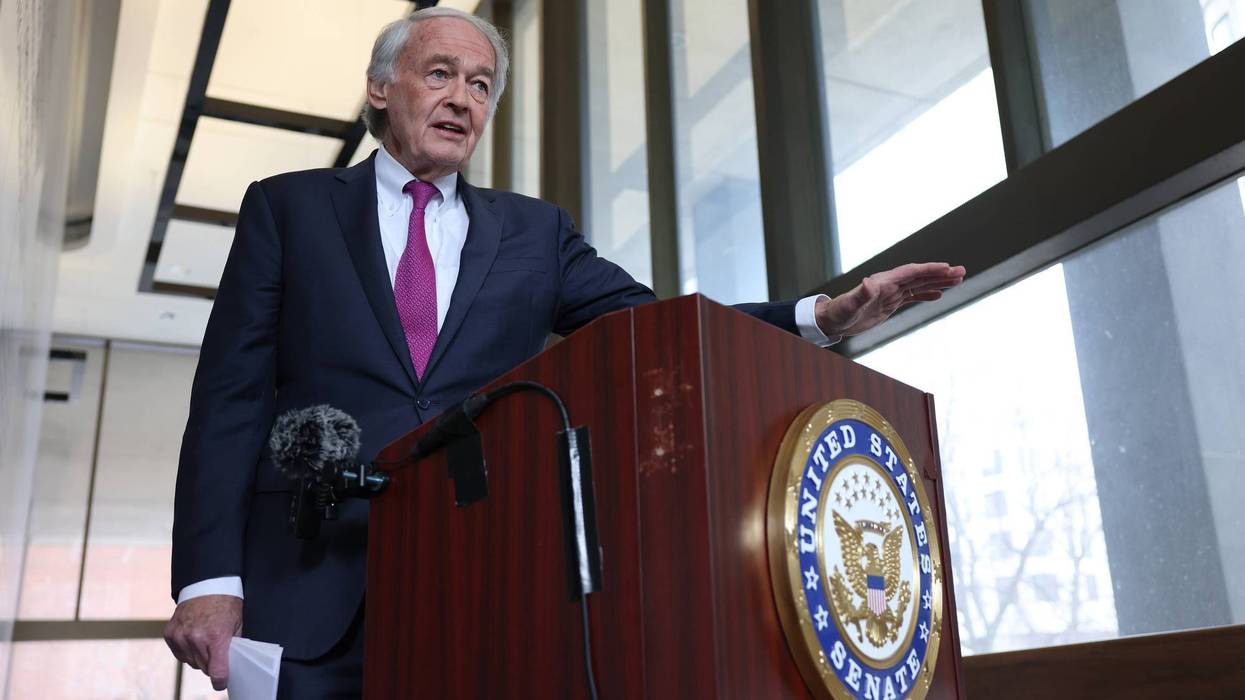
"The maniac in the White House does not have the authority to bomb and invade anywhere he wants across the globe," said Rep. Rashida Tlaib. "Congress must put an end to this."
The latest in a series of congressional efforts to rein in President Donald Trump's military aggression against Venezuela failed Thursday as Republican lawmakers again defeated a war powers resolution by the tightest possible margin.
House lawmakers voted 215-215 on H.Con.Res.68—introduced last month by Rep. James McGovern (D-Mass.)—which "directs the president to remove US armed forces from Venezuela unless a declaration of war or authorization to use military force for such purpose has been enacted."
Unlike in the Senate, where the vice president casts tie-breaking votes, a deadlock in the House means the legislation does not pass.
Every House Democrat and two Republicans—Reps. Don Bacon of Nebraska and Thomas Massie of Kentucky—voted in favor of the measure. Every other Republican voted against it. Rep. Tom McClintock (R-Calif.) did not vote.
The House vote came a week after Vice President JD Vance’s tie-breaking vote was needed to overcome a 50-50 deadlock on a similar resolution introduced last month by Sens. Tim Kaine (D-Va.), Rand Paul (R-Ky.), Adam Schiff (D-Calif.), and Senate Minority Leader Chuck Schumer (D-NY).
The War Powers Resolution of 1973—also known as the War Powers Act—was enacted during the Nixon administration toward the end of the US war on Vietnam, Cambodia, and Laos. The law empowers Congress to check the president’s war-making authority by requiring the president to report any military action to Congress within 48 hours. It also mandates that lawmakers approve any troop deployments lasting longer than 60 days.
Thursday's vote followed this month's US bombing and invasion of Venezuela and kidnapping of its president, Nicolás Maduro, and his wife on dubious "narco-terrorism" and drug trafficking allegations. Trump has also imposed an oil blockade on the South American nation, seizing seven tankers. Since September, the US has also been bombing boats accused of transporting drugs in the Caribbean Sea and Pacific Ocean.
"If the president is contemplating further military action, then he has a moral and constitutional obligation to come here and get our approval," McGovern said following the vote.
House Foreign Affairs Committee Ranking Member Gregory Meeks (D-NY) lamented the resolution's failure, saying, "The American people want us to lower their cost of living, not enable war."
Rep. Mark Pocan (D-Wis.) said on Bluesky: "Only Congress has the authority to declare war. Today, I voted for a war powers resolution to ensure Trump cannot send OUR armed forces to Venezuela without explicit authorization from Congress."
Cavan Kharrazian, senior policy adviser at the advocacy group Demand Progress, also decried the resolution's failure.
“We are deeply disappointed that the House did not pass this war powers resolution, though it's notable that it failed only due to a tie," he said.
"As with the recent Senate vote, the administration expended extraordinary energy pressuring Republicans to block this resolution," Kharrazian added. "That effort speaks for itself: With the American people tired of endless war, the administration knows that a Congress willing to enforce the law can meaningfully curtail illegal and escalatory military action. We urge members of Congress to continue fully exercising their constitutional authority over matters of war.”
Abdul Raouf Shaat is among the more than 200 media workers killed by Israeli forces in Gaza since October 2023.
A cameraman and CBS News contributor was among three journalists killed Wednesday by Israeli forces while working in Gaza, prompting some observers to ask when—or if—Bari Weiss, the network's pro-Israel editor-in-chief, would condemn the attack.
Anas Ghneim, Mohammed Salah Qashta, and Abdul Raouf Shaat were using a drone to record aid distribution by the Egyptian Relief Committee in al-Zahra in central Gaza when, according to eyewitness accounts, an airstrike targeted one of the group's vehicles accompanying the journalists.
"The Israeli army criminally targeted this vehicle," Egyptian Relief Committee spokesperson Mohammed Mansour told AFP.
The Israel Defense Forces (IDF) claimed its troops "identified several suspects who operated a drone affiliated with Hamas in the central Gaza Strip, in a manner that posed a threat to their safety," and then "struck the suspects who activated the drone."
Israeli officials often claim—almost always without conclusive evidence—that journalists, aid workers, and other civilians it kills are Hamas "terrorists."
CBS News said that Shaat, a 30-year-old newlywed, "worked for years as a cameraman for CBS News and other outlets."
Among those outlets were Agence France-Presse, which issued a statement condemning the attack and remembering Shaat as a "kind-hearted colleague, with a gentle sense of humor, and as a deeply committed journalist."
"AFP demands a full and transparent investigation into his death," the agency said. "Far too many local journalists have been killed in Gaza over the past two years while foreign journalists remain unable to enter the territory freely."
Shaat's CBS News colleagues in London remembered him as a "brave journalist" who was "deeply loved by everyone who knew or worked with him."
However, one prominent CBS figure has so far been conspicuously silent on Shaat's killing. As of Thursday afternoon, CBS News editor-in-chief Bari Weiss has said nothing publicly about the incident. Weiss is a self-described Zionist whose outlet Free Press—now a division of CBS following its acquisition by Paramount Skydance—is staunchly pro-Israel and has shown indifference toward Palestinian suffering.
For example, FP called the officially declared Gaza famine, which claimed at least hundreds of lives, a "myth" and published other reporting on Gaza that critics said fueled genocide denial.
Paramount Skydance chairman and CEO David Ellison and his father, Oracle co-founder Larry Ellison, are also both reportedly close to Israeli Prime Minister Benjamin Netanyahu, who is wanted by the International Criminal Court in The Hague for alleged war crimes and crimes against humanity in Gaza.
Standing in stark contrast with Weiss and CBS News, media advocacy groups were quick to denounce the journalists' killings. The Palestinian Journalists Syndicate blasted what it called a "deliberate assassination" and "a war crime and a crime against humanity under international humanitarian law."
Condemnation also came from groups including Reporters Without Borders (RSF) and the Committee to Protect Journalists (CPJ).
“CPJ condemns Israel’s strike on a clearly marked civilian vehicle in central Gaza that killed freelance photojournalists... amid an ongoing ceasefire,” CPJ regional director Sara Qudah said in a statement. “Israel, which possesses advanced technology capable of identifying its targets, has an obligation under international law to protect journalists.”
CPJ calls for a transparent investigation after an Israeli drone strike on a vehicle killed three journalists in central Gaza during the ongoing ceasefire:⚪️Abed Shaat⚪️Mohammad Qeshta⚪️Anas GhnaimRead more ⤵️cpj.org/2026/01/isra...
[image or embed]
— Committee to Protect Journalists (@pressfreedom.bsky.social) January 21, 2026 at 10:45 AM
While it is difficult to know precisely how many journalists have been killed in Gaza—where Israel bans foreign reporters from entering—CPJ says at least 208 Palestinian media workers have been killed there. RSF says the number is at least 220. The United Nations puts the figure at over 260.
The deadliest Israeli massacre of media professionals in Gaza occurred last August 10, when six journalists were killed in a tent bombing outside al-Shifa Hospital in Gaza City. Later that month, an Israeli "double-tap" strike on Nasser Hospital in Khan Younis killed at least 21 people, including five journalists.
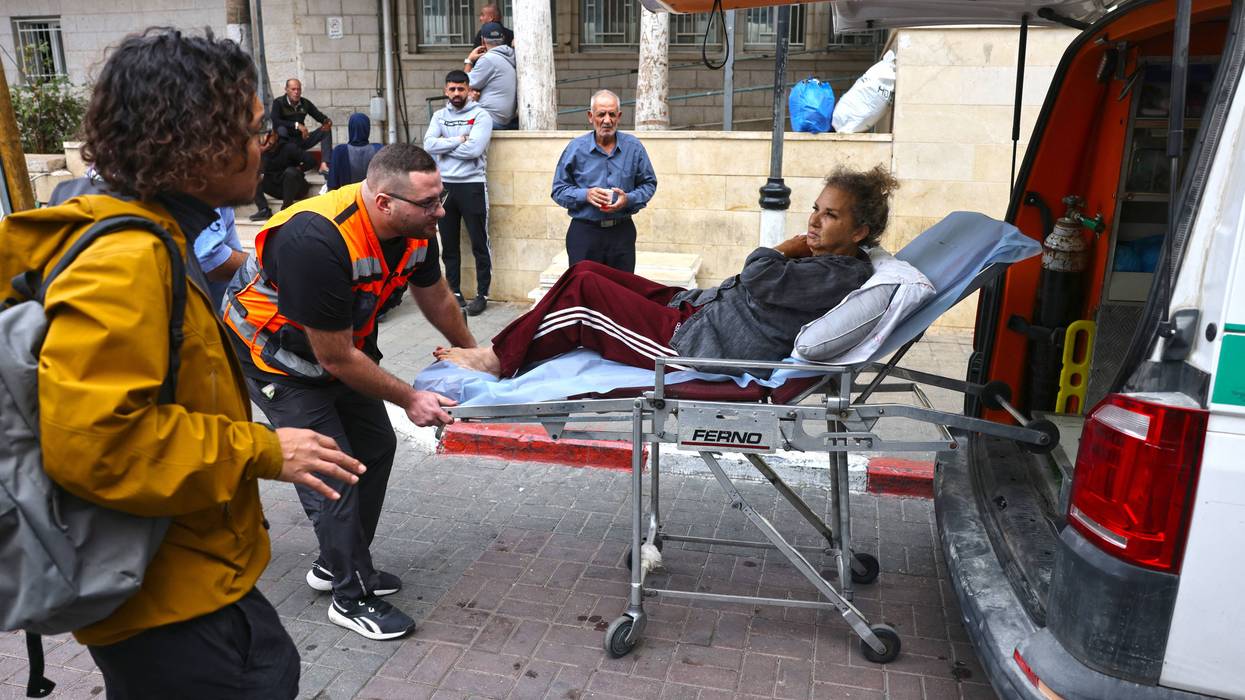
According to Gaza officials, Israeli forces have committed more than 1,200 violations of the ceasefire with Hamas since it took effect last October, killing over 460 Palestinians including upward of 100 children. Officials said at least 11 Palestinians were killed by Israeli attacks on Gaza late Wednesday and into Thursday, including the three journalists, three children, and a woman.
Since the October 7, 2023 Hamas-led attack on Israel, Israel's US-backed genocidal war on Gaza has left more than 250,000 Palestinians dead, maimed, or missing, and around 2 million others forcibly displaced, starved, or sickened.
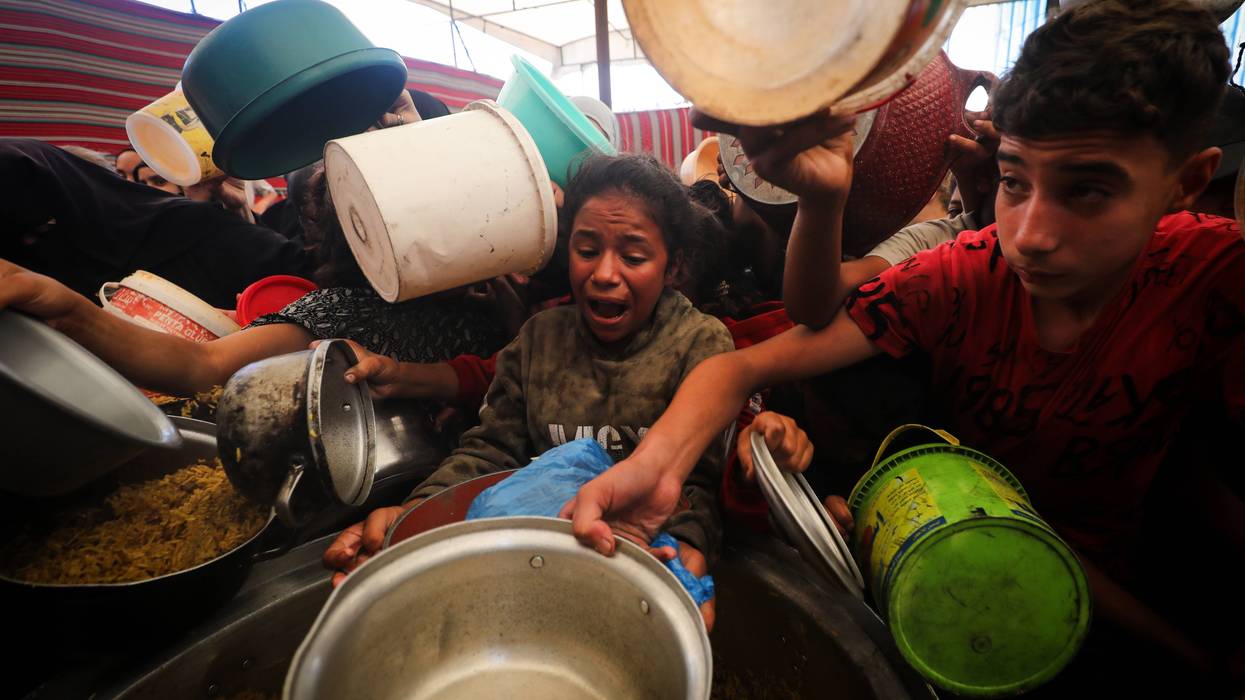
Israel also continues to restrict the flow of humanitarian aid into Gaza, causing preventable deaths. For example, at least 10 children and infants have died of cold-related causes this winter, according to local officials.
"Not anchored in law, nor in facts. Just glossy real estate pitch decks dreamt up by Jared Kushner."
The presentation on the future of Gaza given by President Donald Trump's son-in-law and adviser, Jared Kushner, inyelloe Davos on Thursday, offered what one journalist called "a sanitized, cosmetic image" of an exclave that, due largely to US policy, is actually "a place that needs immediate help and support for people who are on the verge of collapse."
Kushner presented a four-phase "master plan" illustrated by CGI-generated images of luxury apartments, data centers, and futuristic-looking skyscrapers.
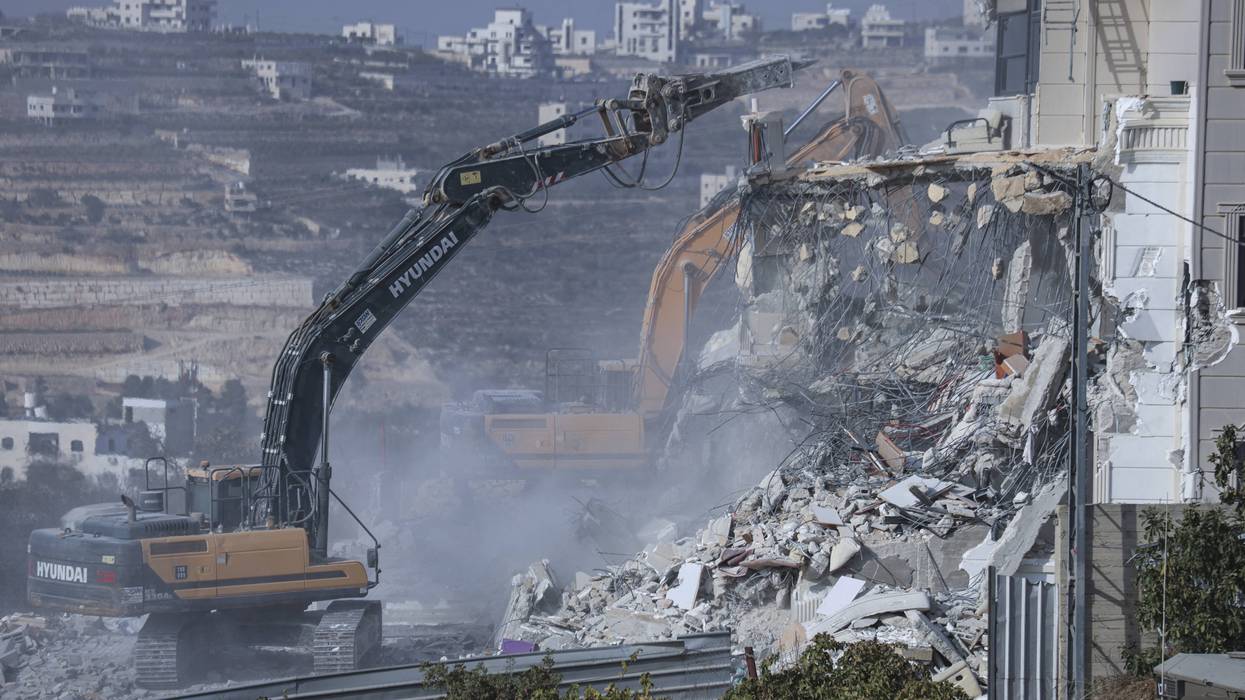
In the "New Rafah," built over the southern town that the Israel Defense Forces razed last year and forced hundreds of thousands of displaced Palestinians to leave, Trump's so-called "Board of Peace" plans to build more than 200 education centers and over 180 cultural, religious, and vocational buildings.
The "New Gaza" plan seeks to build 100,000 permanent housing units in all as well as 75 medical facilities. A map presented by Kushner shows yellow "residential areas," bright pink zones set aside for what Kushner called "coastal tourism," sections of land dedicated to industrial data centers and "advanced manufacturing," and green sections for “parks, agriculture, and sports facilities."
The presentation showed that "the ethnic extermination plan is two-pronged: Kill as many as possible, then gentrify the rest out," said entrepreneur David Haddad.
Before Israel began its US-backed destruction of Gaza in 2023, which has killed more than 71,000 people, and destroyed more than 90% of housing units, the exclave's healthcare system included 36 hospitals, fewer than 14 of which were still partially functional as of October, when a "ceasefire" was agreed to and Trump began moving forward with his 20-point "peace plan."
The presentation Kushner gave Thursday was part of that plan, with four phases of transformation beginning with the opening of the Rafah crossing and moving northward through Khan Younis and Gaza City, with a seaport and airport also being built.
The master plan, said Kushner, is projected to cost $25 billion, and would ultimately result in "peace and prosperity" in Gaza.
“People ask us what our plan B is, we do not have a plan B. We have a plan, we signed an agreement, we are committed to making that agreement work,” Kushner said. “There’s a master plan. We’ll be doing it in phasing. In the Middle East, they build cities like this, in, uh, you know, 2, 3 million people. They build this in three years. And so stuff like this is very doable if we make it happen.”
International lawyer Itay Epshtain said that as with the "'peace to prosperity' fantasy," the so-called master plan "won't come to pass."
The proposal, he said, is "not anchored in law, nor in facts. Just glossy real estate pitch decks dreamt up by Jared Kushner. Meanwhile, real humanitarian relief, recovery, and peace for Palestinians are sidelined—sacrificed to delusions of grandeur and war profiteering."
At the "signing ceremony" for the Board of Peace—which includes no Palestinians and has no support from the United States' major longtime European allies—Trump said he approached the development of Gaza as "a real estate person at heart."
"It’s all about location, and I said, look at this location on the sea, look at this beautiful piece of property, what it could be for so many people,” Trump said. “It’ll be so, so great. People that are living so poorly are going to be living so well."
That outlook, said Hani Mahmoud of Al Jazeera, is one that views Gaza as a "future investment project."
"That’s the problem," said Mahmoud. "It is not being dealt with as a place where people are being killed and starved, and being pretty much cornered in every way possible by the acts that the Israeli military is conducting on the ground. The danger stems from the fact that Gaza is being discussed as an investment and a planning site, rather than as a place where people are being killed on a daily basis—largely ignoring the displacement, the genocidal acts, the starvation, and the misery."
Dilly Hussain of the UK-based news outlet 5 Pillars, said Kushner had proudly presented a plan for a "mega city built on the mass graves of Palestinians after a two-year genocide sponsored by the US."
"No accountability, just business as usual," said Hussain, "with the chief genocider [Israeli Prime Minister Benjamin] Netanyahu sitting on the 'Board of Peace.'"
One UN expert said it shows "why the ICC and the Rome Statute are so important, even if Israel and the US work to undermine it."
Israeli Prime Minister Benjamin Netanyahu is on President Donald Trump's so-called "Board of Peace" for Gaza. But he couldn't attend the ceremony in Davos, Switzerland, on Wednesday because he'd likely be arrested for war crimes if he set foot in the country.
In 2024, the International Criminal Court (ICC) issued arrest warrants for Netanyahu and then-Israeli Defense Minister Yoav Gallant, accusing them of war crimes and crimes against humanity committed during Israel’s genocidal military assault in Gaza.
At least 71,000 Palestinians—the majority of whom were women and children—have been killed by Israeli forces, and at least 169,000 more have been injured during the military campaign, according to official numbers.
Other estimates suggest the real death toll is much higher when taking into account the results of Israel’s crushing blockade of humanitarian aid and its destruction of infrastructure that has made the Gaza Strip virtually unlivable, and which has continued despite a "ceasefire" reached in October.
These deaths are the result of what the ICC said has been a systematic campaign by Netanyahu to use starvation as a method of warfare and enact collective punishment against the strip's civilian population.
Switzerland is one of 125 nations that have ratified the Rome Statute, which established the ICC in 1998 as an international body to prosecute leaders who commit genocide, crimes against humanity, war crimes, and crimes of aggression.
Prior to Davos, the Swiss government stated a firm commitment to arresting Netanyahu if he ever sets foot in its territory.
"As a party to the Rome Statute, Switzerland is obliged to cooperate with the International Criminal Court," the nation's Federal Office of Justice told Haaretz. "Switzerland would in principle be required to arrest accused persons if they were to enter Switzerland at this time, provided that a corresponding arrest warrant or an arrest request based on it had been issued by the ICC, and to initiate the surrender proceedings to the International Criminal Court."
Several other countries, including the Netherlands—where the ICC is based—as well as Spain, Ireland, and Australia, have also said they'd comply with the warrants if Netanyahu were to visit.
While the US and Israel itself have not ratified the statute, many of Israel's other allies—including the United Kingdom, France, and Canada—are also party to the agreement and obligated to arrest Netanyahu, though he has thus far not tested their willingness to do so, and many have not stated clearly whether they'd follow through on the obligation.
The only ICC nation Netanyahu has entered since the warrants were issued is Hungary, whose far-right leader Viktor Orban defied the mandate to arrest him and later withdrew from the ICC.
Meanwhile, the US has placed sanctions on the ICC and its chief justice, Karim Khan, and several judges who participated in issuing the warrants, while threatening to do so against any other entity that cooperates with the court.
Israeli President Isaac Herzog, who appeared at Davos in Netanyahu’s stead on Wednesday, called the ICC’s warrants “illegitimate” and said it was “unacceptable and shameful” for Netanyahu to be excluded from “a conference that aims to shape the future of the world and the Middle East.”
While the ICC's inability to act on its warrants unilaterally has led some to dismiss them as impotent, Beatrice Fihn, a Swedish senior fellow at the United Nations Institute for Disarmament Research, said blocking Netanyahu from events like Davos shows "why the ICC and the Rome Statute are so important, even if Israel and the US work to undermine it."
"The arrest warrant," she said, "is making Netanyahu's work harder."