SUBSCRIBE TO OUR FREE NEWSLETTER
Daily news & progressive opinion—funded by the people, not the corporations—delivered straight to your inbox.
5
#000000
#FFFFFF
To donate by check, phone, or other method, see our More Ways to Give page.
Daily news & progressive opinion—funded by the people, not the corporations—delivered straight to your inbox.
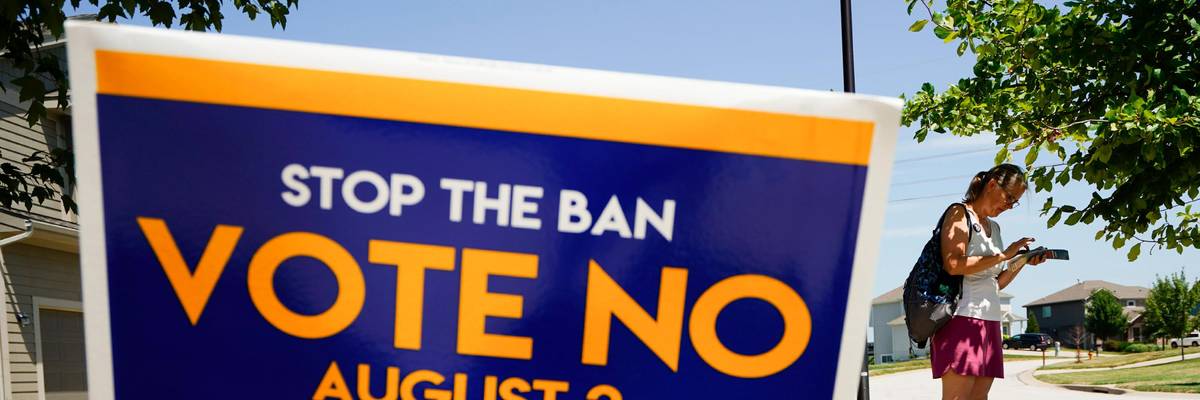
Erin Woods of Vote No on the Constitutional Amendment on Abortion canvasses a neighborhood in Lenexa, Kansas on August 1, 2022. (Photo: Kyle Rivas/Getty Images)
There's no place like home.
No statement rang more true as the country recently turned its attention to my home state of Kansas. We're known for three things: The Wizard of Oz, our amazing barbecue, and our conservative voter base.
I was losing faith in our system, but it was clear that inaction wasn't an option.
But our ballot initiative on abortion shook that last notion up.
In a referendum, Kansas voters decided between protecting abortion rights or passing a constitutional amendment to restrict them. The amendment was supposed to be an easy victory for anti-abortion forces.
Instead, by a vote of 59% to 41%, the people of Kansas voted no and sent shockwaves across the country.
Clearly, the political analysts and pollsters failed to capture the complexity of our state.
As a first-generation Latina Kansan, issues like abortion, student debt, Covid, housing, and climate change are pressing concerns for me. With the pandemic ongoing and the cost of living rising, I--like many young voters--found myself questioning the point of voting at all.
The Supreme Court's decision to overturn Roe v. Wade changed my mind. I was losing faith in our system, but it was clear that inaction wasn't an option.
Millions of other voters in Kansas, including my sisters, friends, and cousins, felt the same way. Vote.org, which helps people register to vote, posted a 1,038% increase in voter registrations here on the day of the ruling--more than 10 times the number who registered the prior week.
The result? The biggest voter turnout for a Kansas primary in history.
The end of Roe has shifted the electoral priorities of young voters. Gen-Z--those of us born in the late 90s to early 2000s--are in college, looking to buy our first homes, or building our families, and we're trying to ensure there's a healthy planet left for our children.
But now, abortion rights have joined those priorities.
According to research by Advocates for Youth, one in four women will have an abortion in their lifetime. And young women and girls account for over 40% of all abortions, which are more common and necessary than we're often led to believe. Young women in college are three times more likely to experience sexual violence, and they often lack the resources needed to travel for abortion care.
In short, the availability of abortion changes the direction of our lives. We cannot underestimate how much individuals value their constitutional rights.
That includes people from more conservative communities where God, guns, and country rule the day. Many Kansas counties that voted for Donald Trump in 2020 nonetheless voted decisively to protect abortion rights in 2022.
I come from a majority Hispanic town where religion is a community pillar and "vote yes" signs were lined up outside every church. Influenced by their Roman Catholic faith, many older Hispanic individuals hold conservative views on abortion.
In the Kansas primary, I saw the power of organizing and the power of youth.
But unlike their parents, U.S.-born Hispanic individuals are more open to the pro-choice movement. A 2007 Pew survey found that 65% of first-generation U.S. Hispanics opposed abortion rights--a figure that dropped to just 43% in the second generation.
So what are the lessons here?
For one thing, progressive young voters have identified abortion as an issue that will get them to the polls. For another, conservative communities value their constitutional rights, too.
In the Kansas primary, I saw the power of organizing and the power of youth as hundreds of volunteers turned out weekend after weekend to register folks to vote, canvas, and educate. If they want any chance of winning in the fall, it's time for Democrats to listen.
This historic win not only reaffirmed the importance of voting but the possibility of winning in deeply conservative states. You read it here first: If Kansas can do it, so can people everywhere.
Dear Common Dreams reader, It’s been nearly 30 years since I co-founded Common Dreams with my late wife, Lina Newhouser. We had the radical notion that journalism should serve the public good, not corporate profits. It was clear to us from the outset what it would take to build such a project. No paid advertisements. No corporate sponsors. No millionaire publisher telling us what to think or do. Many people said we wouldn't last a year, but we proved those doubters wrong. Together with a tremendous team of journalists and dedicated staff, we built an independent media outlet free from the constraints of profits and corporate control. Our mission has always been simple: To inform. To inspire. To ignite change for the common good. Building Common Dreams was not easy. Our survival was never guaranteed. When you take on the most powerful forces—Wall Street greed, fossil fuel industry destruction, Big Tech lobbyists, and uber-rich oligarchs who have spent billions upon billions rigging the economy and democracy in their favor—the only bulwark you have is supporters who believe in your work. But here’s the urgent message from me today. It's never been this bad out there. And it's never been this hard to keep us going. At the very moment Common Dreams is most needed, the threats we face are intensifying. We need your support now more than ever. We don't accept corporate advertising and never will. We don't have a paywall because we don't think people should be blocked from critical news based on their ability to pay. Everything we do is funded by the donations of readers like you. When everyone does the little they can afford, we are strong. But if that support retreats or dries up, so do we. Will you donate now to make sure Common Dreams not only survives but thrives? —Craig Brown, Co-founder |
There's no place like home.
No statement rang more true as the country recently turned its attention to my home state of Kansas. We're known for three things: The Wizard of Oz, our amazing barbecue, and our conservative voter base.
I was losing faith in our system, but it was clear that inaction wasn't an option.
But our ballot initiative on abortion shook that last notion up.
In a referendum, Kansas voters decided between protecting abortion rights or passing a constitutional amendment to restrict them. The amendment was supposed to be an easy victory for anti-abortion forces.
Instead, by a vote of 59% to 41%, the people of Kansas voted no and sent shockwaves across the country.
Clearly, the political analysts and pollsters failed to capture the complexity of our state.
As a first-generation Latina Kansan, issues like abortion, student debt, Covid, housing, and climate change are pressing concerns for me. With the pandemic ongoing and the cost of living rising, I--like many young voters--found myself questioning the point of voting at all.
The Supreme Court's decision to overturn Roe v. Wade changed my mind. I was losing faith in our system, but it was clear that inaction wasn't an option.
Millions of other voters in Kansas, including my sisters, friends, and cousins, felt the same way. Vote.org, which helps people register to vote, posted a 1,038% increase in voter registrations here on the day of the ruling--more than 10 times the number who registered the prior week.
The result? The biggest voter turnout for a Kansas primary in history.
The end of Roe has shifted the electoral priorities of young voters. Gen-Z--those of us born in the late 90s to early 2000s--are in college, looking to buy our first homes, or building our families, and we're trying to ensure there's a healthy planet left for our children.
But now, abortion rights have joined those priorities.
According to research by Advocates for Youth, one in four women will have an abortion in their lifetime. And young women and girls account for over 40% of all abortions, which are more common and necessary than we're often led to believe. Young women in college are three times more likely to experience sexual violence, and they often lack the resources needed to travel for abortion care.
In short, the availability of abortion changes the direction of our lives. We cannot underestimate how much individuals value their constitutional rights.
That includes people from more conservative communities where God, guns, and country rule the day. Many Kansas counties that voted for Donald Trump in 2020 nonetheless voted decisively to protect abortion rights in 2022.
I come from a majority Hispanic town where religion is a community pillar and "vote yes" signs were lined up outside every church. Influenced by their Roman Catholic faith, many older Hispanic individuals hold conservative views on abortion.
In the Kansas primary, I saw the power of organizing and the power of youth.
But unlike their parents, U.S.-born Hispanic individuals are more open to the pro-choice movement. A 2007 Pew survey found that 65% of first-generation U.S. Hispanics opposed abortion rights--a figure that dropped to just 43% in the second generation.
So what are the lessons here?
For one thing, progressive young voters have identified abortion as an issue that will get them to the polls. For another, conservative communities value their constitutional rights, too.
In the Kansas primary, I saw the power of organizing and the power of youth as hundreds of volunteers turned out weekend after weekend to register folks to vote, canvas, and educate. If they want any chance of winning in the fall, it's time for Democrats to listen.
This historic win not only reaffirmed the importance of voting but the possibility of winning in deeply conservative states. You read it here first: If Kansas can do it, so can people everywhere.
There's no place like home.
No statement rang more true as the country recently turned its attention to my home state of Kansas. We're known for three things: The Wizard of Oz, our amazing barbecue, and our conservative voter base.
I was losing faith in our system, but it was clear that inaction wasn't an option.
But our ballot initiative on abortion shook that last notion up.
In a referendum, Kansas voters decided between protecting abortion rights or passing a constitutional amendment to restrict them. The amendment was supposed to be an easy victory for anti-abortion forces.
Instead, by a vote of 59% to 41%, the people of Kansas voted no and sent shockwaves across the country.
Clearly, the political analysts and pollsters failed to capture the complexity of our state.
As a first-generation Latina Kansan, issues like abortion, student debt, Covid, housing, and climate change are pressing concerns for me. With the pandemic ongoing and the cost of living rising, I--like many young voters--found myself questioning the point of voting at all.
The Supreme Court's decision to overturn Roe v. Wade changed my mind. I was losing faith in our system, but it was clear that inaction wasn't an option.
Millions of other voters in Kansas, including my sisters, friends, and cousins, felt the same way. Vote.org, which helps people register to vote, posted a 1,038% increase in voter registrations here on the day of the ruling--more than 10 times the number who registered the prior week.
The result? The biggest voter turnout for a Kansas primary in history.
The end of Roe has shifted the electoral priorities of young voters. Gen-Z--those of us born in the late 90s to early 2000s--are in college, looking to buy our first homes, or building our families, and we're trying to ensure there's a healthy planet left for our children.
But now, abortion rights have joined those priorities.
According to research by Advocates for Youth, one in four women will have an abortion in their lifetime. And young women and girls account for over 40% of all abortions, which are more common and necessary than we're often led to believe. Young women in college are three times more likely to experience sexual violence, and they often lack the resources needed to travel for abortion care.
In short, the availability of abortion changes the direction of our lives. We cannot underestimate how much individuals value their constitutional rights.
That includes people from more conservative communities where God, guns, and country rule the day. Many Kansas counties that voted for Donald Trump in 2020 nonetheless voted decisively to protect abortion rights in 2022.
I come from a majority Hispanic town where religion is a community pillar and "vote yes" signs were lined up outside every church. Influenced by their Roman Catholic faith, many older Hispanic individuals hold conservative views on abortion.
In the Kansas primary, I saw the power of organizing and the power of youth.
But unlike their parents, U.S.-born Hispanic individuals are more open to the pro-choice movement. A 2007 Pew survey found that 65% of first-generation U.S. Hispanics opposed abortion rights--a figure that dropped to just 43% in the second generation.
So what are the lessons here?
For one thing, progressive young voters have identified abortion as an issue that will get them to the polls. For another, conservative communities value their constitutional rights, too.
In the Kansas primary, I saw the power of organizing and the power of youth as hundreds of volunteers turned out weekend after weekend to register folks to vote, canvas, and educate. If they want any chance of winning in the fall, it's time for Democrats to listen.
This historic win not only reaffirmed the importance of voting but the possibility of winning in deeply conservative states. You read it here first: If Kansas can do it, so can people everywhere.