
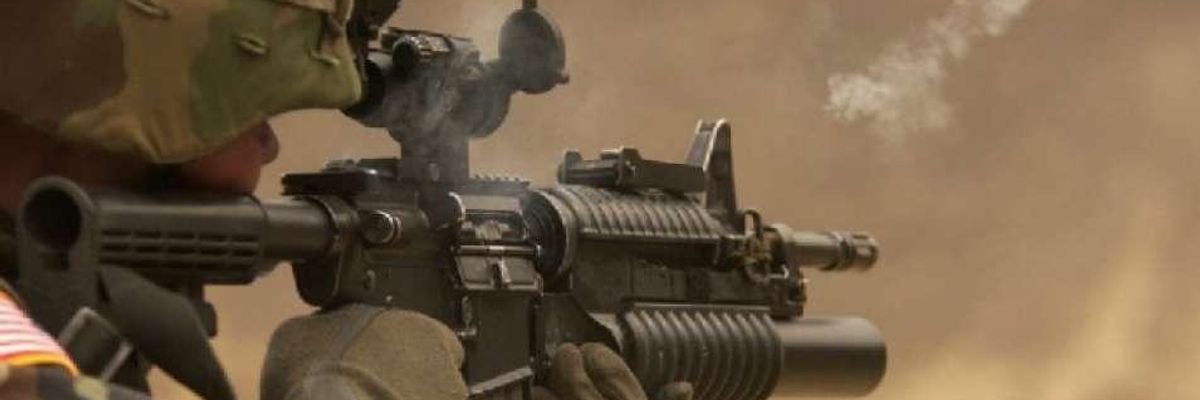
"The recent increases in U.S. military spending can be primarily attributed to heavy investment in research and development, and several long-term projects such as modernizing the U.S. nuclear arsenal and large-scale arms procurement." (Photo: WikiImages/Pixabay/cc)
Even During an Ongoing Pandemic the World Cant Quit Weapons
A new report found that military spending around the world got a boost last year despite floundering economies due to COVID-19.
Despite the fact that the global gross domestic product fell by nearly 5 percent because of the COVID-19 pandemic, military spending worldwide increased by almost 3 percent, according to the Stockholm International Peace Research Institute.
SIPRI's annual assessment released on Monday once again found the United States to be the world's biggest spender, accounting for nearly 40 percent of overall expenditures. U.S. military spending in 2020 increased by 4.4 percent from 2019.
"The recent increases in U.S. military spending can be primarily attributed to heavy investment in research and development, and several long-term projects such as modernizing the U.S. nuclear arsenal and large-scale arms procurement," said SIPRI's Alexandra Marksteiner, a researcher with its Arms and Military Expenditure Program. "This reflects growing concerns over perceived threats from strategic competitors such as China and Russia, as well as the Trump administration's drive to bolster what it saw as a depleted U.S. military."
Marksteiner's statement is illustrative of the flimsy arguments used in Washington to justify increasing the U.S. defense budget.
For one thing, the modernization of the U.S. nuclear arsenal does not have to come anywhere close to the proposed $1.3 trillion over the next 30 years. Part of that plan involves spending nearly $300 billion on nuclear armed missiles, or ICBMs, that we don't even need (and may even make nuclear war more likely).
And these "perceived threats" that Marksteiner refers to are just that: perceived--perceived by those who have an interest in creating threats and then selling weapons to counter them with.
We are at a crossroads
This country and this world are at a monumental crossroads. In a few short weeks, US voters will have an opportunity to beat back the forces of fascism and confront the billionaires who are rigging the economy, our media system, and our democracy, making it increasingly impossible for ordinary people to get by. We’re not just talking about the election. We’re talking about what must be done once these fascist elements are vanquished from power. We need a bolder set of solutions than what either major party has so far been willing to offer and a working-class movement ready to fight like hell for it. Trump didn't emerge from nowhere. The conditions that fueled MAGA authoritarianism were created by decades of radical neoliberal economic policies and a corrupt political system dominated by corporate interests. They slashed taxes on the super-rich, promising that the benefits would trickle down. They said giveaways to the corporate titans would make life more affordable for the rest of us. It was all bullshit. And when a bitter, betrayed populace searches for someone to blame, right-wing demagogues have little trouble finding scapegoats. People know when they're being lied to, but you won't hear any of this from the corporate media. Only independent journalism—powered and funded by people who believe in building a better world—can deliver truly trustworthy daily news. Our Fall Campaign is underway, and we need your help. To power our newsroom through the rest of the year, we need to raise $125,000 by midnight on October 31. So if you share our vision, please contribute whatever you can to sustain our work. |
Despite the fact that the global gross domestic product fell by nearly 5 percent because of the COVID-19 pandemic, military spending worldwide increased by almost 3 percent, according to the Stockholm International Peace Research Institute.
SIPRI's annual assessment released on Monday once again found the United States to be the world's biggest spender, accounting for nearly 40 percent of overall expenditures. U.S. military spending in 2020 increased by 4.4 percent from 2019.
"The recent increases in U.S. military spending can be primarily attributed to heavy investment in research and development, and several long-term projects such as modernizing the U.S. nuclear arsenal and large-scale arms procurement," said SIPRI's Alexandra Marksteiner, a researcher with its Arms and Military Expenditure Program. "This reflects growing concerns over perceived threats from strategic competitors such as China and Russia, as well as the Trump administration's drive to bolster what it saw as a depleted U.S. military."
Marksteiner's statement is illustrative of the flimsy arguments used in Washington to justify increasing the U.S. defense budget.
For one thing, the modernization of the U.S. nuclear arsenal does not have to come anywhere close to the proposed $1.3 trillion over the next 30 years. Part of that plan involves spending nearly $300 billion on nuclear armed missiles, or ICBMs, that we don't even need (and may even make nuclear war more likely).
And these "perceived threats" that Marksteiner refers to are just that: perceived--perceived by those who have an interest in creating threats and then selling weapons to counter them with.
Despite the fact that the global gross domestic product fell by nearly 5 percent because of the COVID-19 pandemic, military spending worldwide increased by almost 3 percent, according to the Stockholm International Peace Research Institute.
SIPRI's annual assessment released on Monday once again found the United States to be the world's biggest spender, accounting for nearly 40 percent of overall expenditures. U.S. military spending in 2020 increased by 4.4 percent from 2019.
"The recent increases in U.S. military spending can be primarily attributed to heavy investment in research and development, and several long-term projects such as modernizing the U.S. nuclear arsenal and large-scale arms procurement," said SIPRI's Alexandra Marksteiner, a researcher with its Arms and Military Expenditure Program. "This reflects growing concerns over perceived threats from strategic competitors such as China and Russia, as well as the Trump administration's drive to bolster what it saw as a depleted U.S. military."
Marksteiner's statement is illustrative of the flimsy arguments used in Washington to justify increasing the U.S. defense budget.
For one thing, the modernization of the U.S. nuclear arsenal does not have to come anywhere close to the proposed $1.3 trillion over the next 30 years. Part of that plan involves spending nearly $300 billion on nuclear armed missiles, or ICBMs, that we don't even need (and may even make nuclear war more likely).
And these "perceived threats" that Marksteiner refers to are just that: perceived--perceived by those who have an interest in creating threats and then selling weapons to counter them with.