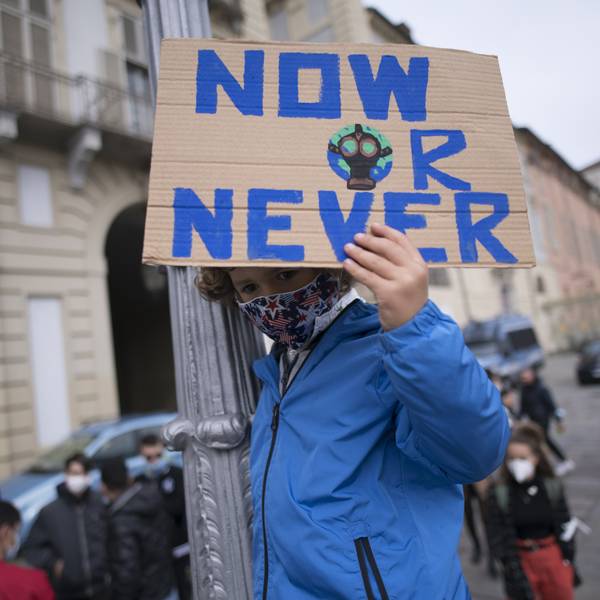


Imagine there is a fire in your house.
What do you do?
What do you think about?
You do whatever you can to try to put out the fire or exit the house. You make a plan of action.
"Those of us who have entered emergency mode--who understand the mobilization imperative--need to get talkative and loud."
Your senses are heightened, you are focused like a laser, and you put your entire self into your actions. You enter emergency mode.
The climate crisis is an unprecedented emergency. How we react to the climate crisis will shape centuries and millennia to come. Given the stakes, and the extremely short timetable, it is imperative that we strive to maximize the efficacy of our actions -- from ourselves as individuals, from our nation, from the global community of nations, and from the organizations that are trying to avert this catastrophe.
In a longer version of this condensed essay--titled "Leading the Public into Emergency Mode: Introducing the Climate Movement"-- I expand on the psychological concept of "emergency mode" and argue that the goal of the climate movement must be to lead the public out of "normal" mode.
Emergency Mode: Optimal Functioning in an Existential (or Moral) Crisis
Emergency mode is the mode of human psychological functioning that occurs when individuals or groups respond optimally to existential or moral emergencies. It is a state of enhanced performance-- markedly different from "normal" functioning--characterized by an extreme focus of attention and resources on working productively to solve the emergency.
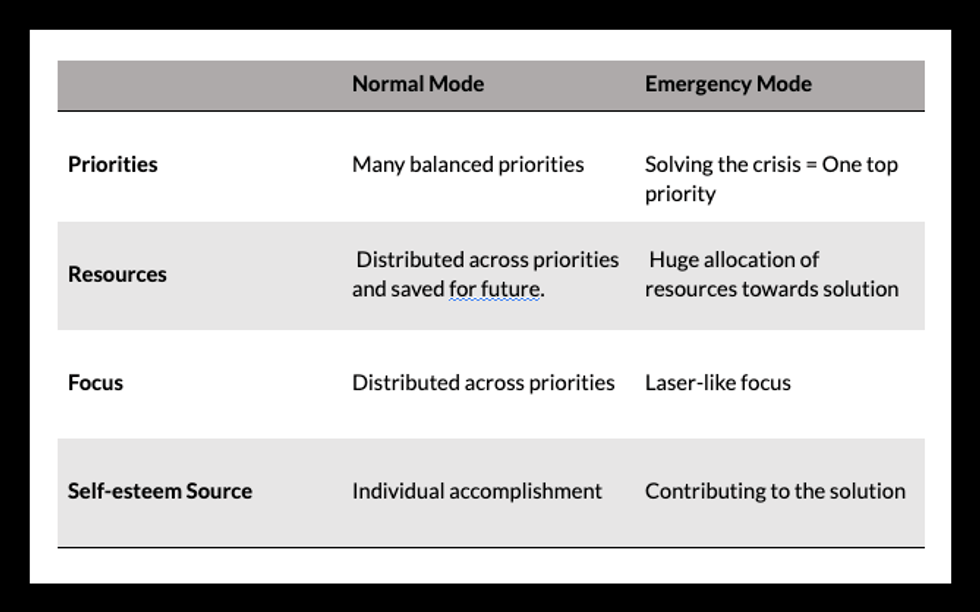
Emergency mode occurs when an individual or group faces an existential threat, accepts that there is a life-threatening emergency and reorients by:
1. Adjusting their hierarchy of priorities so that solving the emergency is the clear top priority
2. Deploying a huge amount of resources toward solving the crisis
3. Giving little priority to personal gratification and self-esteem enhancement for their own sake, and instead seeking them through engagement with the emergency. People seek to "do their part" to solve the crisis and build their skills to contribute more effectively.
Emergency mode is not limited to individuals facing short term threats such as a fire. In fact, large groups or even entire societies can enter emergency mode and remain there for years. The U.S. during World War II provides a historical model for a society operating in long-term emergency mode. The surprise attack on Pearl Harbor ended American isolationism and initiated a full-scale mobilization in which the entire industrial economy and labor force were harnessed to support the war effort. By entering emergency mode and mobilizing for total victory, the United States accomplished truly staggering feats, producing unprecedented numbers of ships, planes, tanks, and other necessities of the war effort.
Moving Towards Emergency Mobilization
Emergency mobilization on this scale is precisely what we need if we are to prevent a global cataclysm and restore a safe and stable climate. We need to transition away from fossil fuels and carbon-intensive agriculture as soon as possible, draw down all the excess CO2 and cool the planet below present levels. This will happen only with public planning coordinated by the federal government, global cooperation, massive public investment, forceful regulations and economic controls, and full societal participation.
We therefore cannot count on people entering emergency mode reflexively, historically we have only mobilized on that scale in order to go to war against a hated and feared human enemy. This time, the dangerous enemy is invisible gases in the atmosphere. The climate movement must lead the public into emergency mode through education, organizing, and by setting an example. First we must go into emergency mode ourselves, and then communicate about the climate emergency and need for mobilization with clarity, dedication, and escalating assertiveness.
"The forces arrayed against us are mighty. But on our side is the extremely potent truth--what science tells us and is becoming more apparent all the time--as well as the human desire to survive and protect other people and species."
Those of us who have entered emergency mode--who understand the mobilization imperative--need to get talkative and loud. We need to spread our message as far and wide as possible. We must not stay "closeted" and appear that we believe everything is fine. Rather we need to "come out" as being in emergency mode and in favor of a WWII-scale climate mobilization that rapidly sweeps away business-as-usual--to our friends, family, neighbors, fellow climate activists, and the public. We need to spread our message as clearly, loudly and in the most attention-grabbing ways we can.
Rise of the Climate Emergency Movement
Fortunately, a new front is rapidly emerging on the global stage that is geared toward doing just that: The Climate Emergency Movement.
The Climate Mobilization was a pioneer in this movement, spending years promoting maximal intensity mobilization in relative obscurity. Today, the Climate Emergency Movement has captured the public imagination and is rapidly gaining power. There is a militant movement of young people marching in the streets and occupying the offices of elected officials, embarrassing representatives who refuse to act with urgency. In the U.S., the Green New Deal is shaping the Democratic Party platform around a 10-year national mobilization to achieve a carbon-neutral economy. More than 620 cities around the world have declared a Climate Emergency.
Join the Movement to Protect Humanity and All Life
This young movement has tremendous momentum and is growing all the time. However, relative to the epic nature of the challenge, the Climate Emergency Movement is still small, and broke. We need all the support we can get. We need you. The forces arrayed against us are mighty. But on our side is the extremely potent truth--what science tells us and is becoming more apparent all the time--as well as the human desire to survive and protect other people and species.
"It's time to leave gradualism, business as usual, and "normal mode" behind until we have solved the climate crisis."
So what are some next steps?
Demand Congress Declare a Climate Emergency!
Volunteer with a Climate Emergency Organization. Here are some: Extinction Rebellion, Sunrise, the Justice Democrats, the School Strikers, or The Climate Mobilization. Or work to bring your current organization into "Emergency Mode."
Have frank conversations with people you care about and respect about the climate emergency.
Support The Climate Mobilization's work with a donation. This movement needs you, and it also needs resources.
We are now in a time of tremendous consequence. Incredibly, the choices we make now and in the near future matter a great deal to the future of humanity and all life on earth. It's time to leave gradualism, business as usual, and "normal mode" behind until we have solved the climate crisis. The time has come to enter emergency mode, both as a society and as individuals. The stakes could not be higher.
*Author's note: Thank you to Jim Streit for his help in creating this condensed version.
Imagine there is a fire in your house.
What do you do?
What do you think about?
You do whatever you can to try to put out the fire or exit the house. You make a plan of action.
"Those of us who have entered emergency mode--who understand the mobilization imperative--need to get talkative and loud."
Your senses are heightened, you are focused like a laser, and you put your entire self into your actions. You enter emergency mode.
The climate crisis is an unprecedented emergency. How we react to the climate crisis will shape centuries and millennia to come. Given the stakes, and the extremely short timetable, it is imperative that we strive to maximize the efficacy of our actions -- from ourselves as individuals, from our nation, from the global community of nations, and from the organizations that are trying to avert this catastrophe.
In a longer version of this condensed essay--titled "Leading the Public into Emergency Mode: Introducing the Climate Movement"-- I expand on the psychological concept of "emergency mode" and argue that the goal of the climate movement must be to lead the public out of "normal" mode.
Emergency Mode: Optimal Functioning in an Existential (or Moral) Crisis
Emergency mode is the mode of human psychological functioning that occurs when individuals or groups respond optimally to existential or moral emergencies. It is a state of enhanced performance-- markedly different from "normal" functioning--characterized by an extreme focus of attention and resources on working productively to solve the emergency.
Emergency mode occurs when an individual or group faces an existential threat, accepts that there is a life-threatening emergency and reorients by:
1. Adjusting their hierarchy of priorities so that solving the emergency is the clear top priority
2. Deploying a huge amount of resources toward solving the crisis
3. Giving little priority to personal gratification and self-esteem enhancement for their own sake, and instead seeking them through engagement with the emergency. People seek to "do their part" to solve the crisis and build their skills to contribute more effectively.
Emergency mode is not limited to individuals facing short term threats such as a fire. In fact, large groups or even entire societies can enter emergency mode and remain there for years. The U.S. during World War II provides a historical model for a society operating in long-term emergency mode. The surprise attack on Pearl Harbor ended American isolationism and initiated a full-scale mobilization in which the entire industrial economy and labor force were harnessed to support the war effort. By entering emergency mode and mobilizing for total victory, the United States accomplished truly staggering feats, producing unprecedented numbers of ships, planes, tanks, and other necessities of the war effort.
Moving Towards Emergency Mobilization
Emergency mobilization on this scale is precisely what we need if we are to prevent a global cataclysm and restore a safe and stable climate. We need to transition away from fossil fuels and carbon-intensive agriculture as soon as possible, draw down all the excess CO2 and cool the planet below present levels. This will happen only with public planning coordinated by the federal government, global cooperation, massive public investment, forceful regulations and economic controls, and full societal participation.
We therefore cannot count on people entering emergency mode reflexively, historically we have only mobilized on that scale in order to go to war against a hated and feared human enemy. This time, the dangerous enemy is invisible gases in the atmosphere. The climate movement must lead the public into emergency mode through education, organizing, and by setting an example. First we must go into emergency mode ourselves, and then communicate about the climate emergency and need for mobilization with clarity, dedication, and escalating assertiveness.
"The forces arrayed against us are mighty. But on our side is the extremely potent truth--what science tells us and is becoming more apparent all the time--as well as the human desire to survive and protect other people and species."
Those of us who have entered emergency mode--who understand the mobilization imperative--need to get talkative and loud. We need to spread our message as far and wide as possible. We must not stay "closeted" and appear that we believe everything is fine. Rather we need to "come out" as being in emergency mode and in favor of a WWII-scale climate mobilization that rapidly sweeps away business-as-usual--to our friends, family, neighbors, fellow climate activists, and the public. We need to spread our message as clearly, loudly and in the most attention-grabbing ways we can.
Rise of the Climate Emergency Movement
Fortunately, a new front is rapidly emerging on the global stage that is geared toward doing just that: The Climate Emergency Movement.
The Climate Mobilization was a pioneer in this movement, spending years promoting maximal intensity mobilization in relative obscurity. Today, the Climate Emergency Movement has captured the public imagination and is rapidly gaining power. There is a militant movement of young people marching in the streets and occupying the offices of elected officials, embarrassing representatives who refuse to act with urgency. In the U.S., the Green New Deal is shaping the Democratic Party platform around a 10-year national mobilization to achieve a carbon-neutral economy. More than 620 cities around the world have declared a Climate Emergency.
Join the Movement to Protect Humanity and All Life
This young movement has tremendous momentum and is growing all the time. However, relative to the epic nature of the challenge, the Climate Emergency Movement is still small, and broke. We need all the support we can get. We need you. The forces arrayed against us are mighty. But on our side is the extremely potent truth--what science tells us and is becoming more apparent all the time--as well as the human desire to survive and protect other people and species.
"It's time to leave gradualism, business as usual, and "normal mode" behind until we have solved the climate crisis."
So what are some next steps?
Demand Congress Declare a Climate Emergency!
Volunteer with a Climate Emergency Organization. Here are some: Extinction Rebellion, Sunrise, the Justice Democrats, the School Strikers, or The Climate Mobilization. Or work to bring your current organization into "Emergency Mode."
Have frank conversations with people you care about and respect about the climate emergency.
Support The Climate Mobilization's work with a donation. This movement needs you, and it also needs resources.
We are now in a time of tremendous consequence. Incredibly, the choices we make now and in the near future matter a great deal to the future of humanity and all life on earth. It's time to leave gradualism, business as usual, and "normal mode" behind until we have solved the climate crisis. The time has come to enter emergency mode, both as a society and as individuals. The stakes could not be higher.
*Author's note: Thank you to Jim Streit for his help in creating this condensed version.