SCOTUS Nominee Brett Kavanaugh's Troubling Record on the Rule of Law and the Constitution
An expansive view of presidential power that could hamstring investigations into Trump
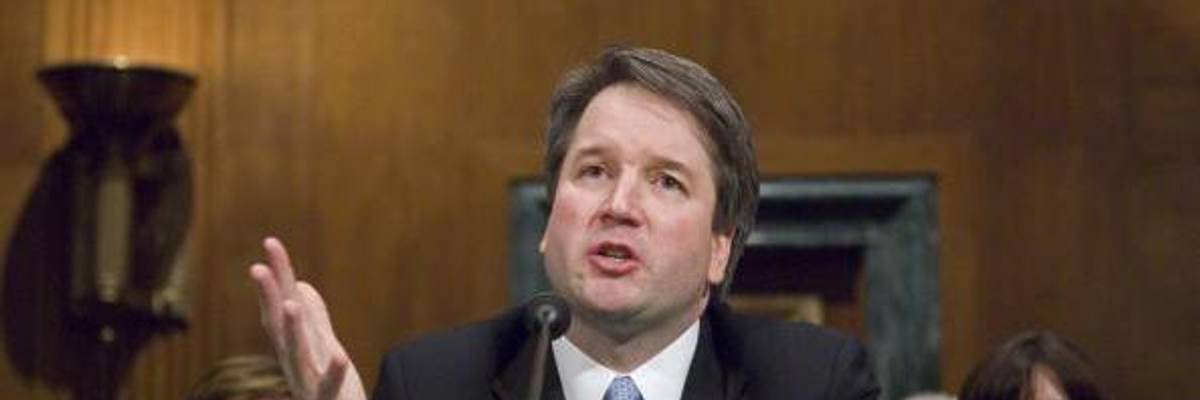
President Trump announced Monday night that he's nominating Judge Brett Kavanaugh to serve on the U.S. Supreme Court.
Judge Kavanaugh, 53, has significant Washington credentials. A former law clerk for retiring Justice Anthony Kennedy -- the man he will now replace if confirmed -- Judge Kavanaugh worked with Ken Starr at the Office of Independent Counsel, where he helped write the 1998 Starr Report, which outlined grounds for the impeachment of President Bill Clinton over issues stemming from his affair with Monica Lewinsky. Judge Kavanaugh later worked as a lawyer in the George W. Bush White House. Since 2006, he has served on the U.S. Court of Appeals for the D.C. Circuit.
Judge Kavanaugh has argued for an expansive view of presidential power -- an approach that could hamstring the sprawling federal investigation into Russian election meddling and potential collusion by the Trump campaign, helping to undermine the rule of law at a crucial time. In 1998, Judge Kavanaugh wrote that "Congress should give back to the President the full power to act when he believes that a particular independent counsel is 'out to get him.'" And Judge Kavanaugh has argued that all investigations and prosecutions of the president should be deferred until out of office, so that the president can focus on the job without distractions.
Despite this, Judge Kavanaugh appears to take a restrictive view of the federal government's regulatory authority, arguing in a dissent this year that the Consumer Financial Protection Bureau is unconstitutional, and opposing the FCC's net neutrality rule aimed at ensuring a free and open internet. He also has consistently ruled against workers and in favor of employers on issues of discrimination and workplace safety, among others.
Judge Kavanaugh would have ruled to strike down Obamacare as unconstitutional. And last year he tried unsuccessfully to block an undocumented minor from getting an abortion, writing that allowing the procedure created a "new right ... to obtain immediate abortion on demand."
We are at a crossroads
This country and this world are at a monumental crossroads. In a few short weeks, US voters will have an opportunity to beat back the forces of fascism and confront the billionaires who are rigging the economy, our media system, and our democracy, making it increasingly impossible for ordinary people to get by. We’re not just talking about the election. We’re talking about what must be done once these fascist elements are vanquished from power. We need a bolder set of solutions than what either major party has so far been willing to offer and a working-class movement ready to fight like hell for it. Trump didn't emerge from nowhere. The conditions that fueled MAGA authoritarianism were created by decades of radical neoliberal economic policies and a corrupt political system dominated by corporate interests. They slashed taxes on the super-rich, promising that the benefits would trickle down. They said giveaways to the corporate titans would make life more affordable for the rest of us. It was all bullshit. And when a bitter, betrayed populace searches for someone to blame, right-wing demagogues have little trouble finding scapegoats. People know when they're being lied to, but you won't hear any of this from the corporate media. Only independent journalism—powered and funded by people who believe in building a better world—can deliver truly trustworthy daily news. Our Fall Campaign is underway, and we need your help. To power our newsroom through the rest of the year, we need to raise $125,000 by midnight on October 31. So if you share our vision, please contribute whatever you can to sustain our work. |
President Trump announced Monday night that he's nominating Judge Brett Kavanaugh to serve on the U.S. Supreme Court.
Judge Kavanaugh, 53, has significant Washington credentials. A former law clerk for retiring Justice Anthony Kennedy -- the man he will now replace if confirmed -- Judge Kavanaugh worked with Ken Starr at the Office of Independent Counsel, where he helped write the 1998 Starr Report, which outlined grounds for the impeachment of President Bill Clinton over issues stemming from his affair with Monica Lewinsky. Judge Kavanaugh later worked as a lawyer in the George W. Bush White House. Since 2006, he has served on the U.S. Court of Appeals for the D.C. Circuit.
Judge Kavanaugh has argued for an expansive view of presidential power -- an approach that could hamstring the sprawling federal investigation into Russian election meddling and potential collusion by the Trump campaign, helping to undermine the rule of law at a crucial time. In 1998, Judge Kavanaugh wrote that "Congress should give back to the President the full power to act when he believes that a particular independent counsel is 'out to get him.'" And Judge Kavanaugh has argued that all investigations and prosecutions of the president should be deferred until out of office, so that the president can focus on the job without distractions.
Despite this, Judge Kavanaugh appears to take a restrictive view of the federal government's regulatory authority, arguing in a dissent this year that the Consumer Financial Protection Bureau is unconstitutional, and opposing the FCC's net neutrality rule aimed at ensuring a free and open internet. He also has consistently ruled against workers and in favor of employers on issues of discrimination and workplace safety, among others.
Judge Kavanaugh would have ruled to strike down Obamacare as unconstitutional. And last year he tried unsuccessfully to block an undocumented minor from getting an abortion, writing that allowing the procedure created a "new right ... to obtain immediate abortion on demand."