SUBSCRIBE TO OUR FREE NEWSLETTER
Daily news & progressive opinion—funded by the people, not the corporations—delivered straight to your inbox.
5
#000000
#FFFFFF
To donate by check, phone, or other method, see our More Ways to Give page.
Why aren't film director Kathryn Bigelow's claimed government sources, including employees of the CIA, in jail like Pfc. Bradley Manning? Or, at the very least, being investigated for their role in one of the most damaging leaks of national security information in U.S. history?
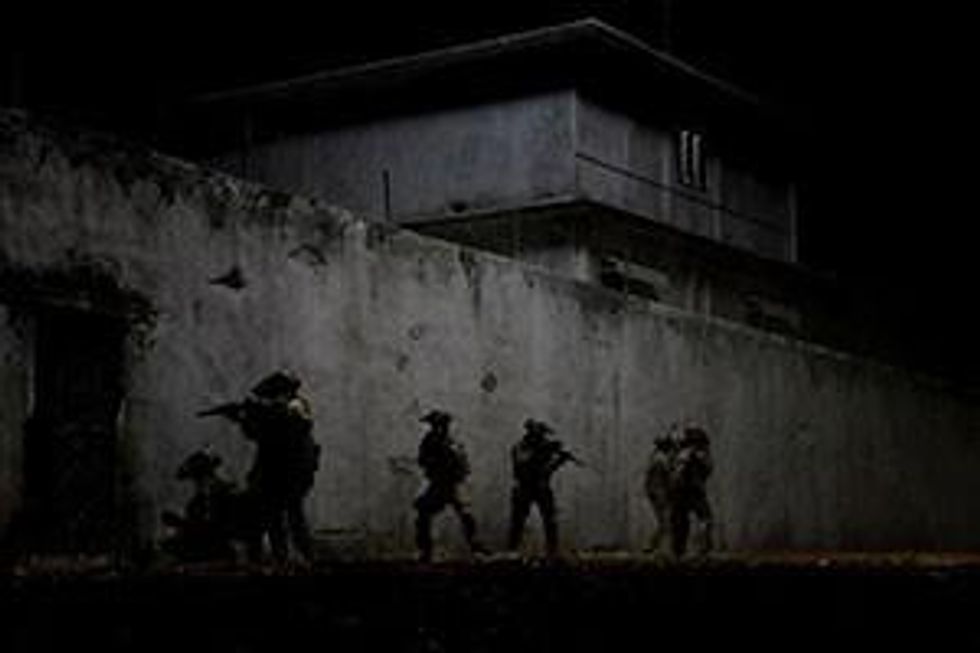
How did the Japanese-owned Sony Corporation that released Bigelow's "Zero Dark Thirty" gain access to information on the 10-year hunt for Osama bin Laden, so highly classified that it was denied to the official 9/11 Commission that investigated the terrorist attacks? The opening frame of the movie states the crime, clearly claiming that "Zero" is "based on firsthand accounts of actual events."
Those "actual events," constituting the tenacious search for the country's most- wanted terrorist, are matters of such carefully guarded secrecy that even the 10 members of the 9/11 Commission, all possessing the highest level of access, were forbidden to interview anyone with "firsthand" knowledge. The commission, which was created by President George W. Bush and Congress in 2002 and in 2004 released the only official public U.S. government examination of 9/11, was explicitly banned from any contact with the "key witnesses."
That 585-page report concedes in a boxed disclaimer on page 146 that the commissioners were denied the access that Bigelow claims to have had to the torturers and the tortured in developing the narrative outlined in two key chapters of the report:
Chapters 5 and 7 rely heavily on information obtained from captured al Qaeda members. A number of these 'detainees' have firsthand knowledge of the 9/11 plot.
Assessing the truth of statements by these witnesses--sworn enemies of the United States--is challenging. Our access to them has been limited to the review of intelligence reports based on communications received from the locations where the actual interrogations take place. We submitted questions for use in the interrogations, but had no control over whether, when, or how questions of particular interest would be asked. Nor were we allowed to talk to the interrogators so that we could better judge the credibility of the detainees and clarify ambiguities in the reporting. We were told that our requests might disrupt the sensitive interrogation process.
That "sensitive interrogation process" is now on full display for all the world to see in this movie's opening celebration of the American style of sadism. The purpose is a dehumanizing one, in which the tortured have no claim to a presumption of innocence. Nor is there any interest, as there was in the exemplary "Taxi to the Dark Side"--the 2007 Academy Award documentary winner--in the complex socio-political factors that have led the tortured to be in this position.
Even the 9/11 Commission report, which failed in its forced reliance on firsthand facts of secondhand accounts, acknowledges that some of these villains fought on the same side as the United States against the Soviets, benefited from Western education, and are responding to a myriad of religious and nationalist causes that are worthy of examination. Of course, a public trial for the accused would be the best way to educate ourselves as to why a terrorist band drawn almost entirely from, and financed by, a long-trusted U.S. ally, Saudi Arabia, would engage in such nefarious anti-American deeds.
But that is not about to happen, and instead, we are at the mercy of selective government leaks. In the case of "Zero Dark Thirty," leading members of the Senate, experts on intelligence matters, and officials in the executive branch have condemned the film for getting it wrong, not sadly for the use of torture but rather its efficacy in the hunt for bin Laden. So it is the word of Bigelow's sources against theirs, and the rest of us sourceless folks are at the mercy of the volume of their respective megaphones.
In short, all of us, the great U.S. citizenry, have been denied open access to the facts essential to understanding the great national trauma justifying a war on terror that has done more damage to U.S. standards of freedom than any foreign enemy.
The few brave whistle-blowers in our government who have attempted to warn us of this dangerous course, like Manning, who is accused of exposing the killing of innocent Iraqi civilians, have endured harsh punishment and been threatened with even greater penalties. Not so the eyewitnesses on whom Bigelow relied for her film's knee-jerk acceptance of a U.S. torture policy.
For this sorry state of affairs, I do not primarily blame Bigelow, who has no expertise in investigative journalism and clearly will go with whatever account seems most riveting cinematically. "What we are attempting," she has said in defense of her work, "is almost a journalistic approach to film."
"Almost journalism" is a polite way of justifying propaganda.
Why aren't film director Kathryn Bigelow's claimed government sources, including employees of the CIA, in jail like Pfc. Bradley Manning? Or, at the very least, being investigated for their role in one of the most damaging leaks of national security information in U.S. history?
How did the Japanese-owned Sony Corporation that released Bigelow's "Zero Dark Thirty" gain access to information on the 10-year hunt for Osama bin Laden, so highly classified that it was denied to the official 9/11 Commission that investigated the terrorist attacks? The opening frame of the movie states the crime, clearly claiming that "Zero" is "based on firsthand accounts of actual events."
Those "actual events," constituting the tenacious search for the country's most- wanted terrorist, are matters of such carefully guarded secrecy that even the 10 members of the 9/11 Commission, all possessing the highest level of access, were forbidden to interview anyone with "firsthand" knowledge. The commission, which was created by President George W. Bush and Congress in 2002 and in 2004 released the only official public U.S. government examination of 9/11, was explicitly banned from any contact with the "key witnesses."
That 585-page report concedes in a boxed disclaimer on page 146 that the commissioners were denied the access that Bigelow claims to have had to the torturers and the tortured in developing the narrative outlined in two key chapters of the report:
Chapters 5 and 7 rely heavily on information obtained from captured al Qaeda members. A number of these 'detainees' have firsthand knowledge of the 9/11 plot.
Assessing the truth of statements by these witnesses--sworn enemies of the United States--is challenging. Our access to them has been limited to the review of intelligence reports based on communications received from the locations where the actual interrogations take place. We submitted questions for use in the interrogations, but had no control over whether, when, or how questions of particular interest would be asked. Nor were we allowed to talk to the interrogators so that we could better judge the credibility of the detainees and clarify ambiguities in the reporting. We were told that our requests might disrupt the sensitive interrogation process.
That "sensitive interrogation process" is now on full display for all the world to see in this movie's opening celebration of the American style of sadism. The purpose is a dehumanizing one, in which the tortured have no claim to a presumption of innocence. Nor is there any interest, as there was in the exemplary "Taxi to the Dark Side"--the 2007 Academy Award documentary winner--in the complex socio-political factors that have led the tortured to be in this position.
Even the 9/11 Commission report, which failed in its forced reliance on firsthand facts of secondhand accounts, acknowledges that some of these villains fought on the same side as the United States against the Soviets, benefited from Western education, and are responding to a myriad of religious and nationalist causes that are worthy of examination. Of course, a public trial for the accused would be the best way to educate ourselves as to why a terrorist band drawn almost entirely from, and financed by, a long-trusted U.S. ally, Saudi Arabia, would engage in such nefarious anti-American deeds.
But that is not about to happen, and instead, we are at the mercy of selective government leaks. In the case of "Zero Dark Thirty," leading members of the Senate, experts on intelligence matters, and officials in the executive branch have condemned the film for getting it wrong, not sadly for the use of torture but rather its efficacy in the hunt for bin Laden. So it is the word of Bigelow's sources against theirs, and the rest of us sourceless folks are at the mercy of the volume of their respective megaphones.
In short, all of us, the great U.S. citizenry, have been denied open access to the facts essential to understanding the great national trauma justifying a war on terror that has done more damage to U.S. standards of freedom than any foreign enemy.
The few brave whistle-blowers in our government who have attempted to warn us of this dangerous course, like Manning, who is accused of exposing the killing of innocent Iraqi civilians, have endured harsh punishment and been threatened with even greater penalties. Not so the eyewitnesses on whom Bigelow relied for her film's knee-jerk acceptance of a U.S. torture policy.
For this sorry state of affairs, I do not primarily blame Bigelow, who has no expertise in investigative journalism and clearly will go with whatever account seems most riveting cinematically. "What we are attempting," she has said in defense of her work, "is almost a journalistic approach to film."
"Almost journalism" is a polite way of justifying propaganda.
Why aren't film director Kathryn Bigelow's claimed government sources, including employees of the CIA, in jail like Pfc. Bradley Manning? Or, at the very least, being investigated for their role in one of the most damaging leaks of national security information in U.S. history?
How did the Japanese-owned Sony Corporation that released Bigelow's "Zero Dark Thirty" gain access to information on the 10-year hunt for Osama bin Laden, so highly classified that it was denied to the official 9/11 Commission that investigated the terrorist attacks? The opening frame of the movie states the crime, clearly claiming that "Zero" is "based on firsthand accounts of actual events."
Those "actual events," constituting the tenacious search for the country's most- wanted terrorist, are matters of such carefully guarded secrecy that even the 10 members of the 9/11 Commission, all possessing the highest level of access, were forbidden to interview anyone with "firsthand" knowledge. The commission, which was created by President George W. Bush and Congress in 2002 and in 2004 released the only official public U.S. government examination of 9/11, was explicitly banned from any contact with the "key witnesses."
That 585-page report concedes in a boxed disclaimer on page 146 that the commissioners were denied the access that Bigelow claims to have had to the torturers and the tortured in developing the narrative outlined in two key chapters of the report:
Chapters 5 and 7 rely heavily on information obtained from captured al Qaeda members. A number of these 'detainees' have firsthand knowledge of the 9/11 plot.
Assessing the truth of statements by these witnesses--sworn enemies of the United States--is challenging. Our access to them has been limited to the review of intelligence reports based on communications received from the locations where the actual interrogations take place. We submitted questions for use in the interrogations, but had no control over whether, when, or how questions of particular interest would be asked. Nor were we allowed to talk to the interrogators so that we could better judge the credibility of the detainees and clarify ambiguities in the reporting. We were told that our requests might disrupt the sensitive interrogation process.
That "sensitive interrogation process" is now on full display for all the world to see in this movie's opening celebration of the American style of sadism. The purpose is a dehumanizing one, in which the tortured have no claim to a presumption of innocence. Nor is there any interest, as there was in the exemplary "Taxi to the Dark Side"--the 2007 Academy Award documentary winner--in the complex socio-political factors that have led the tortured to be in this position.
Even the 9/11 Commission report, which failed in its forced reliance on firsthand facts of secondhand accounts, acknowledges that some of these villains fought on the same side as the United States against the Soviets, benefited from Western education, and are responding to a myriad of religious and nationalist causes that are worthy of examination. Of course, a public trial for the accused would be the best way to educate ourselves as to why a terrorist band drawn almost entirely from, and financed by, a long-trusted U.S. ally, Saudi Arabia, would engage in such nefarious anti-American deeds.
But that is not about to happen, and instead, we are at the mercy of selective government leaks. In the case of "Zero Dark Thirty," leading members of the Senate, experts on intelligence matters, and officials in the executive branch have condemned the film for getting it wrong, not sadly for the use of torture but rather its efficacy in the hunt for bin Laden. So it is the word of Bigelow's sources against theirs, and the rest of us sourceless folks are at the mercy of the volume of their respective megaphones.
In short, all of us, the great U.S. citizenry, have been denied open access to the facts essential to understanding the great national trauma justifying a war on terror that has done more damage to U.S. standards of freedom than any foreign enemy.
The few brave whistle-blowers in our government who have attempted to warn us of this dangerous course, like Manning, who is accused of exposing the killing of innocent Iraqi civilians, have endured harsh punishment and been threatened with even greater penalties. Not so the eyewitnesses on whom Bigelow relied for her film's knee-jerk acceptance of a U.S. torture policy.
For this sorry state of affairs, I do not primarily blame Bigelow, who has no expertise in investigative journalism and clearly will go with whatever account seems most riveting cinematically. "What we are attempting," she has said in defense of her work, "is almost a journalistic approach to film."
"Almost journalism" is a polite way of justifying propaganda.