
RAFAH, Egypt - Egyptian president Mohamed Morsi is walking a political tightrope amidst Israel's assault on Gaza, balancing the need to appease domestic anger whilst keeping foreign relations with Washington and Tel Aviv on an even keel. Just this morning, Morsi expressed optimism that a cease-fire was in the works, as Cairo hosted US Secretary of State Hillary Clinton.
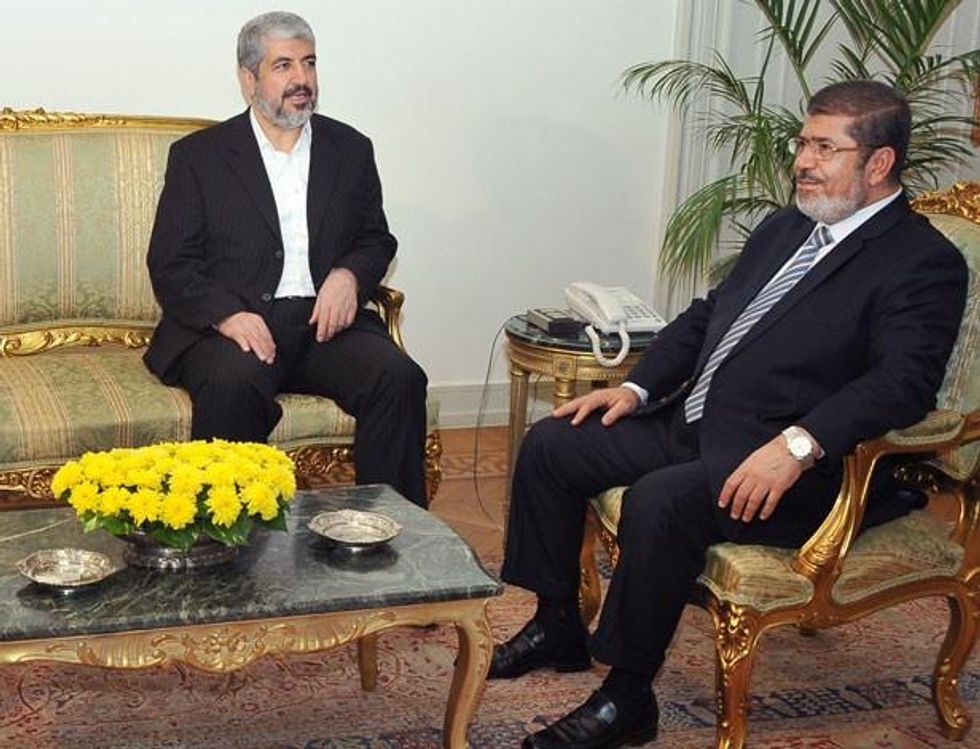
In recent weeks, Egypt had been trying to negotiate a truce between Hamas and Israel amid an upsurge in violence between the two sides sparked by Israel's killing of a 12-year-old boy in Gaza earlier this month. After Palestinian militant groups agreed to an informal cease-fire last Monday, Israel shattered two days of quiet by assassinating Ahmed Jabari--the head of Hama's military wing--and launched its most intensive bombing campaign on the territory in four years. Hamas responded by launching hundreds of rockets into southern Israel.
The withdrawal of Egypt's ambassador is not unprecedented; former President Hosni Mubarak did the same in 2000 in protest of Israel's vicious response to the second Palestinian intifada.
What did mark a departure from Mubarak-era policies was Morsi's decision to send in his prime minister, Hisham Qandil, for a three-hour visit to Gaza on Friday. Standing beside Hamas Prime Minister Ismail Haniyeh in a press conference at Shifa hospital in Gaza City, Qandil proclaimed, "This tragedy cannot pass in silence and the world should take responsibility in stopping this aggression."
The move was widely hailed in Egypt as a bold gesture of solidarity with the Palestinians and went a long way towards appeasing domestic outrage at the Israeli assault. It also marked a turnaround in sentiment for the Egyptian president from a month earlier when it emerged that the new Egyptian ambassador to Israel had carried an endorsement letter signed in Morsi's name that referred to Israeli President Shimon Peres as a "great friend." Morsi faced a chorus of angry critics and demands for an explanation for the discrepancy between the Brotherhood's public stance against Israel and the diplomatic note.
The day after Israel's assault, Egypt also announced the Rafah border crossing--Gaza's only border to the outside world not controlled by Israel--would be open to evacuate wounded Palestinians seeking medical attention.
In 2007, following Hamas's democratic victory parliamentary elections and their subsequent takeover of Gaza, Israel placed the territory under a crippling siege that was duly enforced by the Mubarak government. The policy was a source of anger for many Egyptians who viewed their government and military acting as a subcontractor for the ongoing Israeli occupation, most notably during Israel's brutal assault on Gaza in 2008/2009 that left over 1,300 Palestinians dead when Egypt maintained the closure, refusing to allow Palestinians out or humanitarian aid in.
While Egypt has since eased restrictions on the border, Morsi has not lifted the blockade since taking office in July and has done little to bring about a significant change in policy with Israel. Most trade with Gaza is still conducted through tunnels under the border where an illicit economy has flourished. Meanwhile, Egypt maintains its Qualifying Industrial Zones agreement with Israel, a pact that allows Egyptian companies preferential access to US markets for products that include 10.5 percent of components produced in Israel.
While protests in Tahrir and elsewhere in Egypt were surprisingly tepid, several revolutionary groups, political movements and independent activists organized a convoy on Sunday that carried more than 550 Egyptians to the Rafah border to challenge the closure and show solidarity with the Palestinian people. "Our main reason is to force the Palestinian issue on to the national agenda in Egypt," says Mohamed Waked, one of the organizers of the convoy and a member of the United Front for Justice and Democracy. "There are differences between Morsi and Mubarak, but we're not talking about a qualitative shift. It's more rhetoric."
The sheer size and fervor of the group forced border officials to acquiesce and allow the convoy through to Gaza where they visited Shifa hospital and spent the night, before returning the next day in what amounted to an inspiring display of revolutionary initiative.
Meanwhile, the death toll continues to mount with more than 100 Palestinians killed, over half of them civilians, and 840 wounded, including 225 children. On the Israeli side, three civilians have been killed and dozens wounded.
Egypt has been leading efforts to broker a cease-fire with both senior Hamas and Israeli officials in Cairo for talks. Top Hamas leader in exile Khaled Mashaal said the group's demands include open borders for Gaza and international guarantees that Israel will halt all attacks on the Gaza, including assassinations of the group's leaders. The Egyptian president may be a more effective broker for talks between the two sides given that the Hamas movement is an offshoot of the Muslim Brotherhood and the long-standing ties between the two groups.
Yet Egypt's security establishment--long the main coordinator of policy with Israel-- is wary of opening up the Rafah border, and being held responsible for Gaza by the United States, its main benefactor.
For its part, the Obama administration has maintained its staunch support of Israel. On the first day of the crisis, Obama called both Morsi and Israeli Prime Minister Benjamin Netanyahu where he stressed to both leaders that Israel "had the right to self-defense," echoing Israeli government rhetoric. Washington is keen on maintaining the peace treaty between Egypt and Israel that was formed one part of the 1979 Camp David Accords. The second part of the Accords was the rights of the Palestinians, which former US President Jimmy Carter, who brokered the talks, says "have not been honored."
Morsi continues to juggle domestic and foreign pressures over the crisis in Gaza. His government has made several symbolic gestures that have not been insignificant and have helped change the political tone in the region to one more supportive of the Palestinians. Yet, thus far, there has been no real shift in Egypt's policy towards Israel and Palestine.
RAFAH, Egypt - Egyptian president Mohamed Morsi is walking a political tightrope amidst Israel's assault on Gaza, balancing the need to appease domestic anger whilst keeping foreign relations with Washington and Tel Aviv on an even keel. Just this morning, Morsi expressed optimism that a cease-fire was in the works, as Cairo hosted US Secretary of State Hillary Clinton.
In recent weeks, Egypt had been trying to negotiate a truce between Hamas and Israel amid an upsurge in violence between the two sides sparked by Israel's killing of a 12-year-old boy in Gaza earlier this month. After Palestinian militant groups agreed to an informal cease-fire last Monday, Israel shattered two days of quiet by assassinating Ahmed Jabari--the head of Hama's military wing--and launched its most intensive bombing campaign on the territory in four years. Hamas responded by launching hundreds of rockets into southern Israel.
The withdrawal of Egypt's ambassador is not unprecedented; former President Hosni Mubarak did the same in 2000 in protest of Israel's vicious response to the second Palestinian intifada.
What did mark a departure from Mubarak-era policies was Morsi's decision to send in his prime minister, Hisham Qandil, for a three-hour visit to Gaza on Friday. Standing beside Hamas Prime Minister Ismail Haniyeh in a press conference at Shifa hospital in Gaza City, Qandil proclaimed, "This tragedy cannot pass in silence and the world should take responsibility in stopping this aggression."
The move was widely hailed in Egypt as a bold gesture of solidarity with the Palestinians and went a long way towards appeasing domestic outrage at the Israeli assault. It also marked a turnaround in sentiment for the Egyptian president from a month earlier when it emerged that the new Egyptian ambassador to Israel had carried an endorsement letter signed in Morsi's name that referred to Israeli President Shimon Peres as a "great friend." Morsi faced a chorus of angry critics and demands for an explanation for the discrepancy between the Brotherhood's public stance against Israel and the diplomatic note.
The day after Israel's assault, Egypt also announced the Rafah border crossing--Gaza's only border to the outside world not controlled by Israel--would be open to evacuate wounded Palestinians seeking medical attention.
In 2007, following Hamas's democratic victory parliamentary elections and their subsequent takeover of Gaza, Israel placed the territory under a crippling siege that was duly enforced by the Mubarak government. The policy was a source of anger for many Egyptians who viewed their government and military acting as a subcontractor for the ongoing Israeli occupation, most notably during Israel's brutal assault on Gaza in 2008/2009 that left over 1,300 Palestinians dead when Egypt maintained the closure, refusing to allow Palestinians out or humanitarian aid in.
While Egypt has since eased restrictions on the border, Morsi has not lifted the blockade since taking office in July and has done little to bring about a significant change in policy with Israel. Most trade with Gaza is still conducted through tunnels under the border where an illicit economy has flourished. Meanwhile, Egypt maintains its Qualifying Industrial Zones agreement with Israel, a pact that allows Egyptian companies preferential access to US markets for products that include 10.5 percent of components produced in Israel.
While protests in Tahrir and elsewhere in Egypt were surprisingly tepid, several revolutionary groups, political movements and independent activists organized a convoy on Sunday that carried more than 550 Egyptians to the Rafah border to challenge the closure and show solidarity with the Palestinian people. "Our main reason is to force the Palestinian issue on to the national agenda in Egypt," says Mohamed Waked, one of the organizers of the convoy and a member of the United Front for Justice and Democracy. "There are differences between Morsi and Mubarak, but we're not talking about a qualitative shift. It's more rhetoric."
The sheer size and fervor of the group forced border officials to acquiesce and allow the convoy through to Gaza where they visited Shifa hospital and spent the night, before returning the next day in what amounted to an inspiring display of revolutionary initiative.
Meanwhile, the death toll continues to mount with more than 100 Palestinians killed, over half of them civilians, and 840 wounded, including 225 children. On the Israeli side, three civilians have been killed and dozens wounded.
Egypt has been leading efforts to broker a cease-fire with both senior Hamas and Israeli officials in Cairo for talks. Top Hamas leader in exile Khaled Mashaal said the group's demands include open borders for Gaza and international guarantees that Israel will halt all attacks on the Gaza, including assassinations of the group's leaders. The Egyptian president may be a more effective broker for talks between the two sides given that the Hamas movement is an offshoot of the Muslim Brotherhood and the long-standing ties between the two groups.
Yet Egypt's security establishment--long the main coordinator of policy with Israel-- is wary of opening up the Rafah border, and being held responsible for Gaza by the United States, its main benefactor.
For its part, the Obama administration has maintained its staunch support of Israel. On the first day of the crisis, Obama called both Morsi and Israeli Prime Minister Benjamin Netanyahu where he stressed to both leaders that Israel "had the right to self-defense," echoing Israeli government rhetoric. Washington is keen on maintaining the peace treaty between Egypt and Israel that was formed one part of the 1979 Camp David Accords. The second part of the Accords was the rights of the Palestinians, which former US President Jimmy Carter, who brokered the talks, says "have not been honored."
Morsi continues to juggle domestic and foreign pressures over the crisis in Gaza. His government has made several symbolic gestures that have not been insignificant and have helped change the political tone in the region to one more supportive of the Palestinians. Yet, thus far, there has been no real shift in Egypt's policy towards Israel and Palestine.
RAFAH, Egypt - Egyptian president Mohamed Morsi is walking a political tightrope amidst Israel's assault on Gaza, balancing the need to appease domestic anger whilst keeping foreign relations with Washington and Tel Aviv on an even keel. Just this morning, Morsi expressed optimism that a cease-fire was in the works, as Cairo hosted US Secretary of State Hillary Clinton.
In recent weeks, Egypt had been trying to negotiate a truce between Hamas and Israel amid an upsurge in violence between the two sides sparked by Israel's killing of a 12-year-old boy in Gaza earlier this month. After Palestinian militant groups agreed to an informal cease-fire last Monday, Israel shattered two days of quiet by assassinating Ahmed Jabari--the head of Hama's military wing--and launched its most intensive bombing campaign on the territory in four years. Hamas responded by launching hundreds of rockets into southern Israel.
The withdrawal of Egypt's ambassador is not unprecedented; former President Hosni Mubarak did the same in 2000 in protest of Israel's vicious response to the second Palestinian intifada.
What did mark a departure from Mubarak-era policies was Morsi's decision to send in his prime minister, Hisham Qandil, for a three-hour visit to Gaza on Friday. Standing beside Hamas Prime Minister Ismail Haniyeh in a press conference at Shifa hospital in Gaza City, Qandil proclaimed, "This tragedy cannot pass in silence and the world should take responsibility in stopping this aggression."
The move was widely hailed in Egypt as a bold gesture of solidarity with the Palestinians and went a long way towards appeasing domestic outrage at the Israeli assault. It also marked a turnaround in sentiment for the Egyptian president from a month earlier when it emerged that the new Egyptian ambassador to Israel had carried an endorsement letter signed in Morsi's name that referred to Israeli President Shimon Peres as a "great friend." Morsi faced a chorus of angry critics and demands for an explanation for the discrepancy between the Brotherhood's public stance against Israel and the diplomatic note.
The day after Israel's assault, Egypt also announced the Rafah border crossing--Gaza's only border to the outside world not controlled by Israel--would be open to evacuate wounded Palestinians seeking medical attention.
In 2007, following Hamas's democratic victory parliamentary elections and their subsequent takeover of Gaza, Israel placed the territory under a crippling siege that was duly enforced by the Mubarak government. The policy was a source of anger for many Egyptians who viewed their government and military acting as a subcontractor for the ongoing Israeli occupation, most notably during Israel's brutal assault on Gaza in 2008/2009 that left over 1,300 Palestinians dead when Egypt maintained the closure, refusing to allow Palestinians out or humanitarian aid in.
While Egypt has since eased restrictions on the border, Morsi has not lifted the blockade since taking office in July and has done little to bring about a significant change in policy with Israel. Most trade with Gaza is still conducted through tunnels under the border where an illicit economy has flourished. Meanwhile, Egypt maintains its Qualifying Industrial Zones agreement with Israel, a pact that allows Egyptian companies preferential access to US markets for products that include 10.5 percent of components produced in Israel.
While protests in Tahrir and elsewhere in Egypt were surprisingly tepid, several revolutionary groups, political movements and independent activists organized a convoy on Sunday that carried more than 550 Egyptians to the Rafah border to challenge the closure and show solidarity with the Palestinian people. "Our main reason is to force the Palestinian issue on to the national agenda in Egypt," says Mohamed Waked, one of the organizers of the convoy and a member of the United Front for Justice and Democracy. "There are differences between Morsi and Mubarak, but we're not talking about a qualitative shift. It's more rhetoric."
The sheer size and fervor of the group forced border officials to acquiesce and allow the convoy through to Gaza where they visited Shifa hospital and spent the night, before returning the next day in what amounted to an inspiring display of revolutionary initiative.
Meanwhile, the death toll continues to mount with more than 100 Palestinians killed, over half of them civilians, and 840 wounded, including 225 children. On the Israeli side, three civilians have been killed and dozens wounded.
Egypt has been leading efforts to broker a cease-fire with both senior Hamas and Israeli officials in Cairo for talks. Top Hamas leader in exile Khaled Mashaal said the group's demands include open borders for Gaza and international guarantees that Israel will halt all attacks on the Gaza, including assassinations of the group's leaders. The Egyptian president may be a more effective broker for talks between the two sides given that the Hamas movement is an offshoot of the Muslim Brotherhood and the long-standing ties between the two groups.
Yet Egypt's security establishment--long the main coordinator of policy with Israel-- is wary of opening up the Rafah border, and being held responsible for Gaza by the United States, its main benefactor.
For its part, the Obama administration has maintained its staunch support of Israel. On the first day of the crisis, Obama called both Morsi and Israeli Prime Minister Benjamin Netanyahu where he stressed to both leaders that Israel "had the right to self-defense," echoing Israeli government rhetoric. Washington is keen on maintaining the peace treaty between Egypt and Israel that was formed one part of the 1979 Camp David Accords. The second part of the Accords was the rights of the Palestinians, which former US President Jimmy Carter, who brokered the talks, says "have not been honored."
Morsi continues to juggle domestic and foreign pressures over the crisis in Gaza. His government has made several symbolic gestures that have not been insignificant and have helped change the political tone in the region to one more supportive of the Palestinians. Yet, thus far, there has been no real shift in Egypt's policy towards Israel and Palestine.