SUBSCRIBE TO OUR FREE NEWSLETTER
Daily news & progressive opinion—funded by the people, not the corporations—delivered straight to your inbox.
5
#000000
#FFFFFF
To donate by check, phone, or other method, see our More Ways to Give page.
One of the most important foreign policy statements of the year came from Ehud Barak, Israel's Defense Minister, on May 16. Responding to non-violent protests at Israeli borders and military posts, he said, "The Palestinians' transition from terrorism and suicide bombings to deliberately unarmed mass demonstrations is a transition that will present us with difficult challenges."
Indeed it does, and not just to the Israeli government, but to every government that seeks to impose its will by force and violence on subject populations. The Arab Spring has inspired people who hunger for freedom and justice throughout the world, and non-violent protests have toppled the dictatorships of Egypt and Tunisia - historic events that would have been thought impossible less than a year ago.
The comparative advantage of the rich and powerful against non-violent resistance has significantly diminished in recent years. Although they still hold the upper hand with the vast majority of the world's communications resources, their monopoly over messaging has been shattered by the Internet, social media and other new forms of competition. Just as the Arab dictatorships have seen their power eroded to varying degrees by new media competition, so too have the more powerful governments and their corporate allies. It has become much more difficult to hide and cover-up massacres, or to keep people from empathizing with the victims of state violence.
Now comes the Freedom Flotilla, a group of 10 boats bound for the Gaza Strip, which is suffering under a blockade by the Israeli government. Its residents made the mistake of voting "the wrong way" in 2006 for a government that Israel and the United States didn't want. So they are being subjected to collective punishment, which is a violation of the Fourth Geneva Convention - that is the expressed opinion of a broad range of civil society, including the International Red Cross, Oxfam and Amnesty International, who are not known for taking political positions on international disputes.
A recent UN report found that in the fifth year of the Israeli blockade, unemployment in Gaza is at 45.2 percent, one of the highest rates in the world. "It is hard to understand ... policy which deliberately impoverishes so many and condemns hundreds of thousands of potentially productive people to a life of destitution," said a UN official.
The most significant loosening of the blockade came after last year's Freedom Flotilla made its journey. This shows the promise of non-violent resistance but also its dangers: the Israeli military killed nine people on that trip.
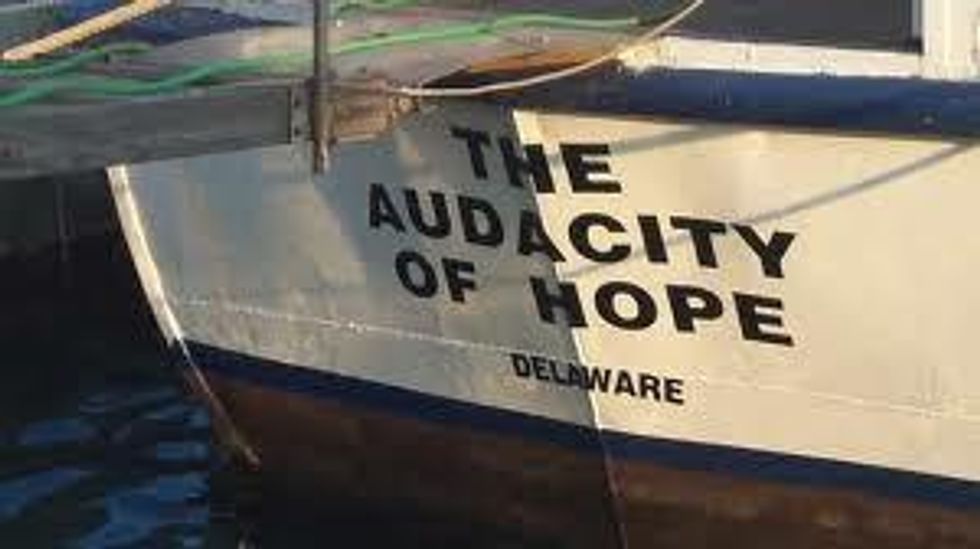
Unfortunately, the U.S. State Department has increased the risk to the men and women aboard the American ship in this year's flotilla - aptly named "The Audacity of Hope" - by issuing a travel warning to them rather than announcing any concern for their safety. This is a very disturbing abdication of the U.S. government's responsibility to protect its citizens abroad. Of course, it is not without precedent: Ronald Reagan's first Secretary of State Alexander Haig responded to the December 1980 rape and murder of four American churchwomen by U.S.-backed Salvadoran soldiers by speculating that "the nuns may have run through a roadblock or may have accidentally been perceived to have been doing so, and there may have been an exchange of fire." Ohio Representative Dennis Kucinich and five other Members of Congress have written to Secretary of State Clinton urging her to work to protect the Americans' safety, but so far there has been no response.
Now the Greek government is holding up The Audacity of Hope, docked in Athens, since Thursday - under allegations that it is "not seaworthy" and must be inspected. Is this a result of U.S. pressure? Washington has enormous leverage over the Greek government right now, since it has the predominant say in the International Monetary Fund (IMF). Together with the European Union, the IMF will be deciding for quite some time whether Greece will get the loans necessary to maintain its debt payments, or will lapse into default.
Greece should let the flotilla go and deliver its letters of support to the people of Gaza, which is perfectly legal and threatens no citizen anywhere. And the U.S. government should declare its concern for the safety of these brave peacemakers, who like Martin Luther King Jr. and his fellow civil rights activists are putting their bodies on the line for justice and humanity.
One of the most important foreign policy statements of the year came from Ehud Barak, Israel's Defense Minister, on May 16. Responding to non-violent protests at Israeli borders and military posts, he said, "The Palestinians' transition from terrorism and suicide bombings to deliberately unarmed mass demonstrations is a transition that will present us with difficult challenges."
Indeed it does, and not just to the Israeli government, but to every government that seeks to impose its will by force and violence on subject populations. The Arab Spring has inspired people who hunger for freedom and justice throughout the world, and non-violent protests have toppled the dictatorships of Egypt and Tunisia - historic events that would have been thought impossible less than a year ago.
The comparative advantage of the rich and powerful against non-violent resistance has significantly diminished in recent years. Although they still hold the upper hand with the vast majority of the world's communications resources, their monopoly over messaging has been shattered by the Internet, social media and other new forms of competition. Just as the Arab dictatorships have seen their power eroded to varying degrees by new media competition, so too have the more powerful governments and their corporate allies. It has become much more difficult to hide and cover-up massacres, or to keep people from empathizing with the victims of state violence.
Now comes the Freedom Flotilla, a group of 10 boats bound for the Gaza Strip, which is suffering under a blockade by the Israeli government. Its residents made the mistake of voting "the wrong way" in 2006 for a government that Israel and the United States didn't want. So they are being subjected to collective punishment, which is a violation of the Fourth Geneva Convention - that is the expressed opinion of a broad range of civil society, including the International Red Cross, Oxfam and Amnesty International, who are not known for taking political positions on international disputes.
A recent UN report found that in the fifth year of the Israeli blockade, unemployment in Gaza is at 45.2 percent, one of the highest rates in the world. "It is hard to understand ... policy which deliberately impoverishes so many and condemns hundreds of thousands of potentially productive people to a life of destitution," said a UN official.
The most significant loosening of the blockade came after last year's Freedom Flotilla made its journey. This shows the promise of non-violent resistance but also its dangers: the Israeli military killed nine people on that trip.
Unfortunately, the U.S. State Department has increased the risk to the men and women aboard the American ship in this year's flotilla - aptly named "The Audacity of Hope" - by issuing a travel warning to them rather than announcing any concern for their safety. This is a very disturbing abdication of the U.S. government's responsibility to protect its citizens abroad. Of course, it is not without precedent: Ronald Reagan's first Secretary of State Alexander Haig responded to the December 1980 rape and murder of four American churchwomen by U.S.-backed Salvadoran soldiers by speculating that "the nuns may have run through a roadblock or may have accidentally been perceived to have been doing so, and there may have been an exchange of fire." Ohio Representative Dennis Kucinich and five other Members of Congress have written to Secretary of State Clinton urging her to work to protect the Americans' safety, but so far there has been no response.
Now the Greek government is holding up The Audacity of Hope, docked in Athens, since Thursday - under allegations that it is "not seaworthy" and must be inspected. Is this a result of U.S. pressure? Washington has enormous leverage over the Greek government right now, since it has the predominant say in the International Monetary Fund (IMF). Together with the European Union, the IMF will be deciding for quite some time whether Greece will get the loans necessary to maintain its debt payments, or will lapse into default.
Greece should let the flotilla go and deliver its letters of support to the people of Gaza, which is perfectly legal and threatens no citizen anywhere. And the U.S. government should declare its concern for the safety of these brave peacemakers, who like Martin Luther King Jr. and his fellow civil rights activists are putting their bodies on the line for justice and humanity.
One of the most important foreign policy statements of the year came from Ehud Barak, Israel's Defense Minister, on May 16. Responding to non-violent protests at Israeli borders and military posts, he said, "The Palestinians' transition from terrorism and suicide bombings to deliberately unarmed mass demonstrations is a transition that will present us with difficult challenges."
Indeed it does, and not just to the Israeli government, but to every government that seeks to impose its will by force and violence on subject populations. The Arab Spring has inspired people who hunger for freedom and justice throughout the world, and non-violent protests have toppled the dictatorships of Egypt and Tunisia - historic events that would have been thought impossible less than a year ago.
The comparative advantage of the rich and powerful against non-violent resistance has significantly diminished in recent years. Although they still hold the upper hand with the vast majority of the world's communications resources, their monopoly over messaging has been shattered by the Internet, social media and other new forms of competition. Just as the Arab dictatorships have seen their power eroded to varying degrees by new media competition, so too have the more powerful governments and their corporate allies. It has become much more difficult to hide and cover-up massacres, or to keep people from empathizing with the victims of state violence.
Now comes the Freedom Flotilla, a group of 10 boats bound for the Gaza Strip, which is suffering under a blockade by the Israeli government. Its residents made the mistake of voting "the wrong way" in 2006 for a government that Israel and the United States didn't want. So they are being subjected to collective punishment, which is a violation of the Fourth Geneva Convention - that is the expressed opinion of a broad range of civil society, including the International Red Cross, Oxfam and Amnesty International, who are not known for taking political positions on international disputes.
A recent UN report found that in the fifth year of the Israeli blockade, unemployment in Gaza is at 45.2 percent, one of the highest rates in the world. "It is hard to understand ... policy which deliberately impoverishes so many and condemns hundreds of thousands of potentially productive people to a life of destitution," said a UN official.
The most significant loosening of the blockade came after last year's Freedom Flotilla made its journey. This shows the promise of non-violent resistance but also its dangers: the Israeli military killed nine people on that trip.
Unfortunately, the U.S. State Department has increased the risk to the men and women aboard the American ship in this year's flotilla - aptly named "The Audacity of Hope" - by issuing a travel warning to them rather than announcing any concern for their safety. This is a very disturbing abdication of the U.S. government's responsibility to protect its citizens abroad. Of course, it is not without precedent: Ronald Reagan's first Secretary of State Alexander Haig responded to the December 1980 rape and murder of four American churchwomen by U.S.-backed Salvadoran soldiers by speculating that "the nuns may have run through a roadblock or may have accidentally been perceived to have been doing so, and there may have been an exchange of fire." Ohio Representative Dennis Kucinich and five other Members of Congress have written to Secretary of State Clinton urging her to work to protect the Americans' safety, but so far there has been no response.
Now the Greek government is holding up The Audacity of Hope, docked in Athens, since Thursday - under allegations that it is "not seaworthy" and must be inspected. Is this a result of U.S. pressure? Washington has enormous leverage over the Greek government right now, since it has the predominant say in the International Monetary Fund (IMF). Together with the European Union, the IMF will be deciding for quite some time whether Greece will get the loans necessary to maintain its debt payments, or will lapse into default.
Greece should let the flotilla go and deliver its letters of support to the people of Gaza, which is perfectly legal and threatens no citizen anywhere. And the U.S. government should declare its concern for the safety of these brave peacemakers, who like Martin Luther King Jr. and his fellow civil rights activists are putting their bodies on the line for justice and humanity.