

SUBSCRIBE TO OUR FREE NEWSLETTER
Daily news & progressive opinion—funded by the people, not the corporations—delivered straight to your inbox.
5
#000000
#FFFFFF
To donate by check, phone, or other method, see our More Ways to Give page.
Daily news & progressive opinion—funded by the people, not the corporations—delivered straight to your inbox.
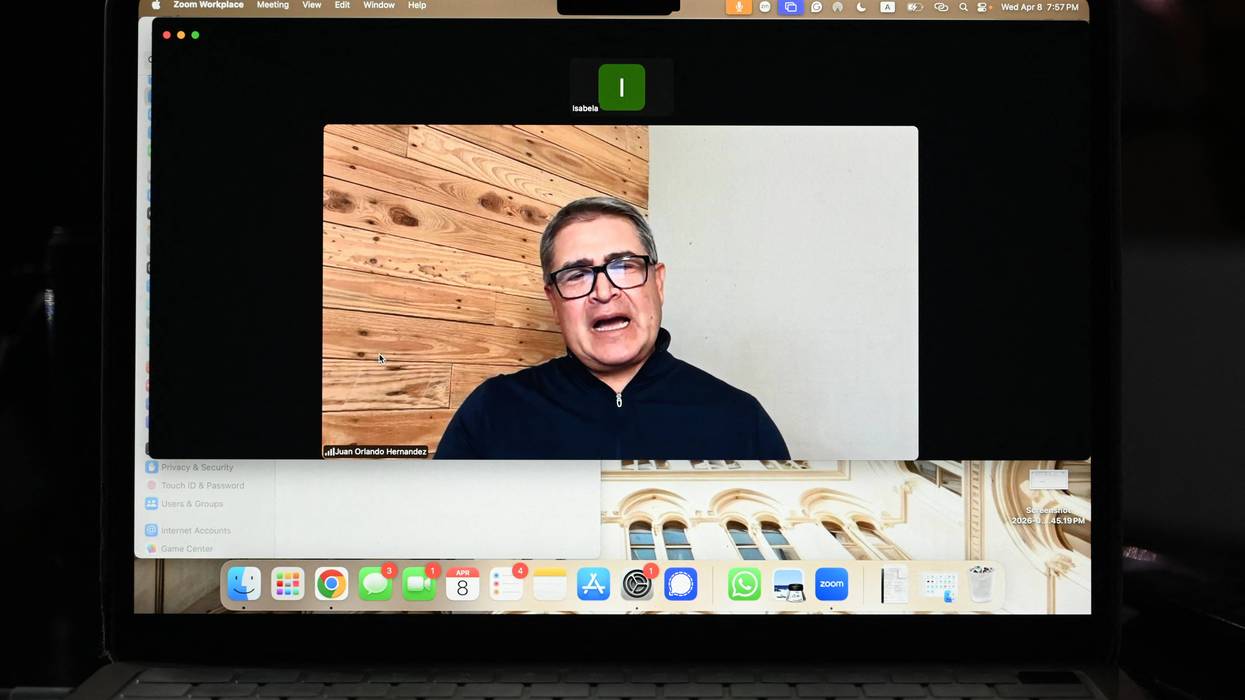
If no-holds-barred measures were deployed in the Honduran elections, they might be anticipated on a much bigger scale, again with little restraint, when the prizes could be Latin America’s biggest economies.
Governance in Honduras shifted sharply to the extreme right within months of National Party’s Nasry Asfura taking office on January 27, succeeding the Libre party’s progressive Xiomara Castro. In November 30 elections, the National Party was trailing a poor third before US President Donald Trump threatened to end all aid to Honduras unless Asfura won. Even then, Asfura had only a wafer-thin plurality, which might well have disappeared had the electoral council not broken its mandate by halting the count before all the votes had been tallied.
Compounding this blatant interference, Trump announced just two days before the election that he was pardoning former Honduran President and National Party stalwart, Juan Orlando Hernández, who had been extradited to the US and was serving a 45-year sentence for narco-trafficking. Corporate media treated Trump’s pardon as just a typically blatant political maneuver. Yet they have since largely ignored what appears to be a much bigger element of the same plot.
The wider conspiracy has been revealed in a trove of leaked audio recordings, now dubbed “Hondurasgate.” The 37 recordings appear to show that Hernández—still in the US—is preparing a return to Honduran politics and, in league with Republican Party officials, is actively producing propaganda directed against progressive governments across Latin America.
Claims by Hondurasgate investigators that the recordings have been independently verified now appear to be at least partially substantiated by a separate investigation commissioned by Drop Site News. BBC Mundo recently interviewed Hernández and asked for his response to the controversy, but received no response.
The blatant US intervention exemplified by Hondurasgate may be an ominous foreshadowing of likely interference in the upcoming elections in Colombia (this month), Brazil (October), and Mexico (2030), all currently governed by progressives.
Shocking as the revelations are, Hondurasgate is symptomatic of a much more ambitious project to exploit Honduras and impose the “Donroe Doctrine” across the region. Whether or not the recordings are all genuine, the wider project is very much alive.
Since taking office, Asfura wasted no time consolidating control over Honduran institutions. The elections left the Libre party with fewer than one-third of the seats in the National Congress, reverting to the historic pattern in Honduras in which the National and the Liberal parties—both neoliberal and subservient to Washington—swap power. This has enabled Asfura to move quickly against his enemies.
Marlon Ochoa, Libre’s representative on the electoral council and the first official to call out the electoral fraud, was impeached by Congress on fabricated charges, received death threats, and fled the country.
The sitting attorney general, also from Libre, was dismissed. The Supreme Court president was forced to resign, while other leading congressional members were impeached. Many of those kicked out of their jobs also had their US visas revoked.
“It is a political lawfare operation in which Honduran institutions are acting against the country’s own legal framework to eliminate political opponents,” wrote Diario RED. Carmen Haydeé López, Libre’s press officer, describes the moves as “state capture” by the ruling National Party.
Worse may follow: “If we have to kill people so we can have peace of mind, we’ll do it,” Hernández says in the Hondurasgate audios. Further, “If we have to resort to repression to control the country, we’ll do it.”
Far-right operative Roger Stone—a Trump associate said to have orchestrated Hernández’s pardon—even called for the US to kidnap Xiomara Castro and her husband, former president “Mel” Zelaya, “like they did with Maduro.”
These developments signal Honduras’ return to the corrupt and criminal neoliberal order that prevailed after the 2009 military coup and lasted until Xiomara Castro’s presidency in January 2022.
For most of this earlier period, Juan Orlando Hernández dominated politics, transforming Honduras into a “narco-state.” Over the years, he facilitated the trafficking to the US of at least 400 tons of cocaine, accepted huge bribes (including $1 million from Sinaloa cartel leader Joaquín “El Chapo” Guzmán), and ran a regime marked by extreme violence.
The leaked recordings show Hernández expects a reconfigured judiciary to clear him of outstanding charges in Honduras. This would pave the way for his return and even to make a run for president again in 2029.
In the meantime, Asfura has moved rapidly to dismantle the Libre government’s modest achievements. Castro had begun to invest heavily in a public health service that fell apart during the Covid-19 pandemic. Asfura halted construction of three hospitals her administration had partially completed. He also withdrew a popular subsidy for electricity bills benefiting 600,000 low-income families.
In the last few weeks, Honduras has witnessed widespread protests against the weakening of workers’ rights, a march organized by 30 campesino movements against legislation that strengthens the hands of big landowners, and student demonstrations over cuts in university budgets.
Another worrying hint of a return to the narc-ostate has been a sharp increase in homicides, extortions, kidnappings, and femicides. Violence peaked on May 21, with 24 violent deaths in two incidents: 19 peasant farmers murdered in a land conflict and five people killed in a gang assault on a police vehicle.
Cuts in public spending and attacks on the rights of the 60% of Hondurans living in poverty constitute Asfura’s austerity program. But Asfura’s and Hernández’s aims are for a much wider transformation of the country.
One of Castro’s reforms was to declare illegal the private model cities or “ZEDEs,” which Hernández and his predecessor initiated in the face of community protests. Asfura has reversed her decisions, thus neutralizing huge pending lawsuits filed against Honduras by the libertarian investors in two ZEDEs, Próspera and Morazán. US investor and billionaire Trump adviser Peter Thiel is a key figure behind Próspera. The congress is now exploring how to promote more of these libertarian “states within a state” that ride roughshod over the rights of local communities.
Another payoff for Trump in return for Hernández’s pardon is the promise of a second US military base in Honduras. Because of its strategic position in Central America, the US already has the huge Soto Cano base, which Castro threatened to close. Soon, according to Marlon Ochoa, the US will install another base on the island of Roatán, further strengthening Washington’s naval domination of the Caribbean.
If built, it will be part of a wave of US militarization in the region, with a strengthened base in El Salvador and US troops newly deployed in Panama.
Another dramatic change is the restoration of close ties with Israel. During Castro’s presidency, Honduras (along with Colombia and Nicaragua) was one of Latin America’s fiercest critics of the Gaza genocide. Hernández, when president, had close links with Israel’s Prime Minister Benjamin Netanyahu, who (according to the Hondurasgate recordings) had "everything to do" with Hernández’s pardon.
This month, Israeli President Issac Herzog embarked on a diplomatic tour of Central America, stopping in Panama and attending the inauguration of Costa Rica’s new President, Laura Fernández. While in San Jose, Herzog met Chile’s new right-wing President José Antonio Kast and Honduras’s Nasry Asfura who, despite his Palestinian ancestry, identifies as a Christian Zionist. Asfura’s administration is part of a broader regional trend in which Trump-aligned governments (such as Bolivia’s) restore ties with Israel that were severed by their predecessors.
Asfura is reportedly planning legislation to encourage investment by US and Israeli AI firms. Honduras’s abundant water resources and renewable energy infrastructure would be central to such projects. Yet several of these developments have proven highly controversial with rural communities, including the notorious hydro project which led to the murder of Berta Cáceres.
Gerardo Torres Zelaya says that “Honduras is not an isolated case: It is a testing ground for a new offensive against our democracies.” Torres Zelaya, a former vice minister in Castro’s administration, believes that what is at stake is not just the outcome of an election, but progressive Latin American governments being subjected to offensives that “no longer operate according to traditional rules.”
He adds that the region now faces hybrid warfare, strategically combining disinformation, economic coercion, criminal networks and, if required, military force. Trump’s intervention in Honduras raised the stakes further when compared with previous electoral interference. Yet even that was soon surpassed by the kidnapping of Venezuelan President Nicolás Maduro.
In March, Trump assembled his regional allies in pursuing his “Donroe Doctrine” to create the “Shield of the Americas.” Nasry Asfura was there, of course, along with his opposite numbers in El Salvador, Costa Rica, and Panama.
The blatant US intervention exemplified by Hondurasgate may be an ominous foreshadowing of likely interference in the upcoming elections in Colombia (this month), Brazil (October), and Mexico (2030), all currently governed by progressives. If no-holds-barred measures were deployed in the Honduran elections, they might be anticipated on a much bigger scale, again with little restraint, when the prizes could be Latin America’s biggest economies. Hondurasgate signals that Trump will not act alone; his accomplices will be the 12 members of his “Shield of the Americas.”

The president backed a right-wing candidate as he announced a pardon for former President Juan Orlando Hernández—despite his involvement with drug trafficking, which Trump claims he's fighting in Latin America.
The US Congressional Progressive Caucus on Friday accused President Donald Trump of "flagrantly interfering" in Honduras' upcoming presidential election after Trump announced his endorsement of right-wing candidate Nasry “Tito” Asfura and repeated threats he's made previously ahead of other electoral contests in which he sought to secure a conservative win.
On the social media platform X, Trump warned that only a victory for former Tegucigalpa Mayor Asfura and the National Party in Sunday's election will allow Honduras and the US to "fight the Narcocommunists, and bring needed aid to the people" of the Central American country.
He accused Asfura's opponents—former finance and defense minister Rixi Moncada of the left-wing Liberty and Refoundation (Libre) Party, which is now in power, and sportscaster Salvador Nasralla of the centrist Liberal Party—of being communists and said Nasralla is running as a spoiler in order to split the vote and weaken Asfura. He added that a loss for the right-wing candidate would allow Venezuelan President Nicolás Maduro "and his Narcoterrorists [to] take over another country like they have taken over Cuba, Nicaragua, and Venezuela."
The president also wrote on his social media platform, Truth Social, that "if [Asfura] doesn't win, the US will not be throwing good money after bad," repeating a comment he made during New York City's mayoral election in which he urged voters to reject progressive candidate Zohran Mamdani or risk losing federal aid for the city. Trump also offered Argentina a $40 billion bailout if voters elected his ally, Javier Milei, earlier this year.
Under President Xiomara Castro, the Libre Party's government has invested in hospitals and education, and has made strides in halting the privatization of the country's electricity system, Drop Site News reported. The poverty rate has also been reduced by about 13% since Castro took office in 2021, although, as the outlet reported, some rights advocates have criticized Castro's government for keeping "many of her predecessor’s militarized policies in place, despite her commitment to implement a more community-minded strategy."
Trump added in his social media post that he was issuing a pardon to former Honduran President Juan Orlando Hernández, who represented the National Party and is currently serving a 45-year prison sentence in the US after being convicted of working with drug traffickers who paid bribes to ensure more than 400 tons of cocaine were sent to the US. The pardon was announced as Trump continues his threats against Venezuela, which he has accused of trafficking drugs to the US.
CPC Deputy Chair Ilhan Omar (D-Minn.) and Whip Jesús “Chuy” García (D-Ill.) called Trump's "smearing" of Asfura's opponents "completely unacceptable," and noted that the president has been joined by other congressional Republicans in making "wild, unsubstantiated allegations" regarding Honduras' election—including Rep. María Elvira Salazar (R-Fla.), who voiced "support for a military coup."
Salazar said recently that "16 years ago, the military saved its country from communism and today, they need to do the same thing," referring to the US-backed overthrow of democratically-elected President Manuel Zelaya.
“These Cold War-era threats and blatant interventions create hostile conditions for free and fair elections and must stop immediately," said Omar and García. "We also cannot tolerate premature declarations by prominent US politicians regarding the election results before ballots are fully counted. Attempts to delegitimize the vote based on who wins could be disastrous in light of the harmful history of US interference in modern Honduran politics."
The two progressive leaders were echoing concerns brought up by Honduran Vice Foreign Minister Gerardo Torres, who spoke at a gathering of left-wing leaders on Thursday in Tegucigalpa.
Torres warned that the Electoral Council could claim Nasry is winning "with an irreversible trend" before the actual winner of the wide-open race is clear on Sunday.
"Even Trump could congratulate him—and that’s when real trouble will erupt in this country,” said Torres.
The chaos that could result could lead election officials to "nullify the elections and hold new ones in six months, leaving Libre weakened and allowing the right to win," reported El País. Torres posited that this is the National Party's "strategy."
“The right wing cannot win on Sunday; that needs to be clear and repeated ad nauseam,” Torres said, urging advocates to promote Moncada's candidacy on social media and help mobilize voters to get to the polls early.
Omar and García noted that after Honduras' 2017 election, the Trump administration endorsed Hernández's reelection "despite evidence of fraud and the killing by his security forces of Hondurans who protested the results."
More than 20 people were killed in the aftermath of the disputed 2017 election
The two progressive leaders said that "Sunday’s elections are taking place at a critical moment, as the country aims to elect and transfer political power to a new leader for the first time outside of the context of the repressive post-coup regimes that persisted from 2009 to 2021."
"At a time of global democratic fragility, we must move beyond US bullying and political interference in Honduras’s sovereign affairs. We need a relationship based on mutual respect, including respect for the will of Honduran voters," said Omar and García.
Torres expressed hope that Trump's backing of Asfura will have the opposite effect that the US president intended, saying Trump's comments on social media were "a blow to the right; it hurts one of their candidates."
“If there was anyone who didn’t know there were elections in Honduras this Sunday, now everyone knows,” said Torres. “There are even people who went to look at a map to see where Honduras is and find out who Rixi Moncada is... It puts us in an important position, which creates a wonderful scenario, because Rixi’s victory will be more famous and important. We have no doubt about her victory."
Torres added that many conservative voters in Honduras are likely to reject the party formerly led by Hernández.
"These are right-wing people who opposed the narcostate, who stood with us in 2015 against [Hernández's] embezzlement of social security, and who know what those criminals are,” he said, referring to previous governments. “Trump can tweet all day and those people aren’t going to vote for the return of the conservatives."
José Mario López of the Jesuit Reflection, Research, and Communication Team in Honduras also told Drop Site News that the "red scare" tactics that the National and Liberal parties have joined Trump in using in the final weeks of the election are likely to have some sway with older people, but are "not expected to impact younger voters."
“It’s a discourse that doesn’t really land, in my view,” López told the outlet. “I think what can move votes is the economic issue, because historically one of the main problems identified in public opinion polls is unemployment and lack of economic opportunities.”
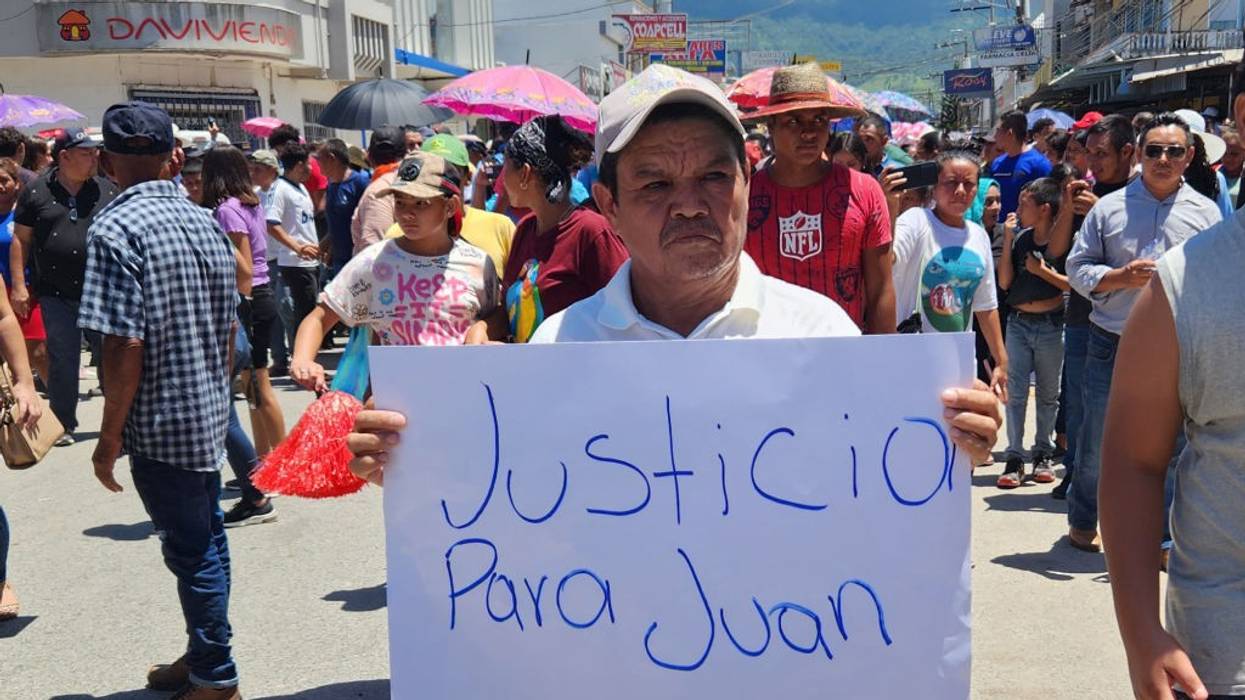
"If you start defending common interests in this country, you clash with major interests," López said before his death.
Environment and anti-corruption activist Juan López was killed in Tocoa, Honduras on Saturday in the latest attack on environmental defenders in the country.
López, who had long received death threats but continued to speak out, was gunned down by motorcyclists while leaving church.
Honduran leaders have denounced his killing as murder and vowed to prosecute the perpetrators. No one has yet been arrested. López had in recent days called for the resignation of Adán Fúnez, Tocoa's longtime mayor, for alleged involvement in organized crime and drug trafficking, according to Contrecorriente, an investigative media outlet.
López, a local councilor and member of the Committee for the Defense of Common and Public Goods of Tocoa (CMDBCP, in Spanish), had long defended forests and rivers from threats posed by mining and hydroelectric companies. He is the fourth CMDBCP member to be killed since last year.
"We condemn the vile murder of Juan López, a renowned defender of common and public goods, councilor of the municipality of Tocoa, a great human being, a great historical fighter, a dear friend," Angélica Álvarez, Honduas' acting human rights minister, wrote on social media. "We demand justice, investigation, and prison for his cowardly murderers."
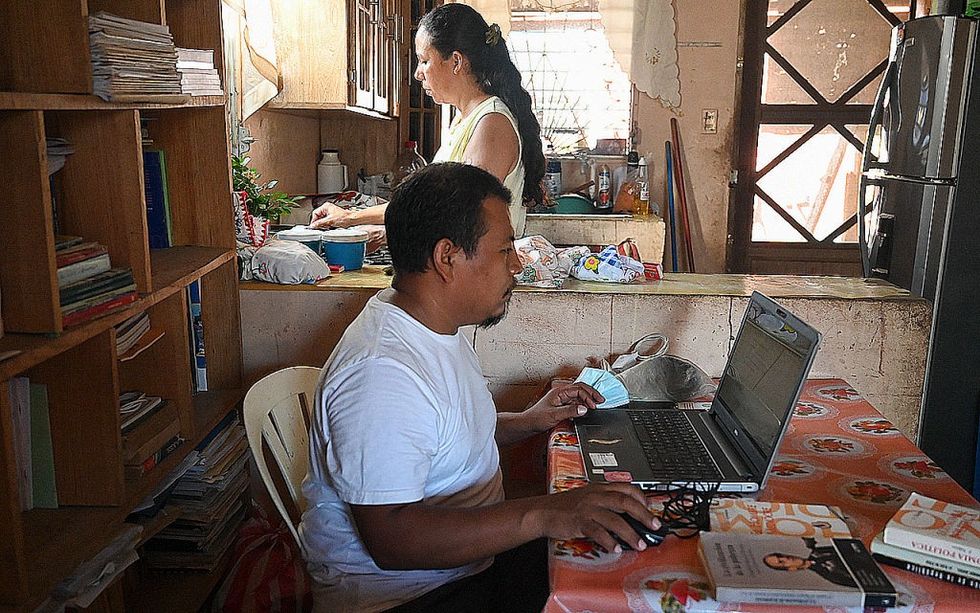 Honduran environmentalist Juan López works at his home in Tocoa, Honduras, in September 2021. López was killed on September 14, 2024. (Photo: Orlando Sierra/AFP via Getty Images)
López was a member of the ruling Libre party, which has held national power since President Xiomara Castro, a leftist, took office in January 2022. However, he wasn't afraid to call out corruption in his own party.
The last three weeks brought scandal to the party after a video from 2013 emerged in which Carlos Zelaya, a Libre lawmaker and Castro's brother-in-law, and Fúnez, the Tocoa mayor, who's also a party member, are seen negotiating with alleged drug traffickers. Zelaya and Fúnez were trying to boost Castro's 2013 presidential campaign, which was unsuccessful.
Carlos Zelaya resigned office amid the scandal. He is the brother of Castro's husband, Manuel "Mel" Zelaya, who led the country from 2006 until 2009 and serves as her principal adviser. There have also been calls for Castro herself to resign.
Amid the national fallout, the video leak also led to debate in Tocoa, a city of more than 100,000 in the country's north, just inland from the Atlantic Ocean. López denounced Fúnez and called for him to resign as Carlos Zelaya had.
It's not clear which of López's political enemies may have ordered his death, but his safety was known to be at risk. He understood that it came with the work he did. He had long fought for the preservation of the Guapinol and San Pedro rivers and the Carlos Escaleras nature reserve.
"If you start defending common interests in this country, you clash with major interests," López told Agence France-Presse in 2021.
"If you leave home, you always have in mind that you do not know what might happen, if you are going to return," he added.
Last year, the Inter-American Commission on Human Rights moved to establish protections for 30 CMDBCP members including López, who reported threats by a gang member, a local businessperson, and a mining company representative. Two men on motorcycles appeared near his home in recent months, the commission reported, according to Reuters.
Ismael Moreno, a well-known Jesuit priest and social reformer, called for an international commission to work alongside Honduran prosecutors to investigate López's killing, given the lack of public confidence in the country's institutions, Contrecorriente reported.
The vast majority of global attacks on environmental defenders take place in Latin America, according to a report released last week by Global Witness, a watchdog group. In 2023, Honduras, despite its relatively small population, tied for third in the world in the number of defenders killed, at 18, behind only Colombia and Brazil.
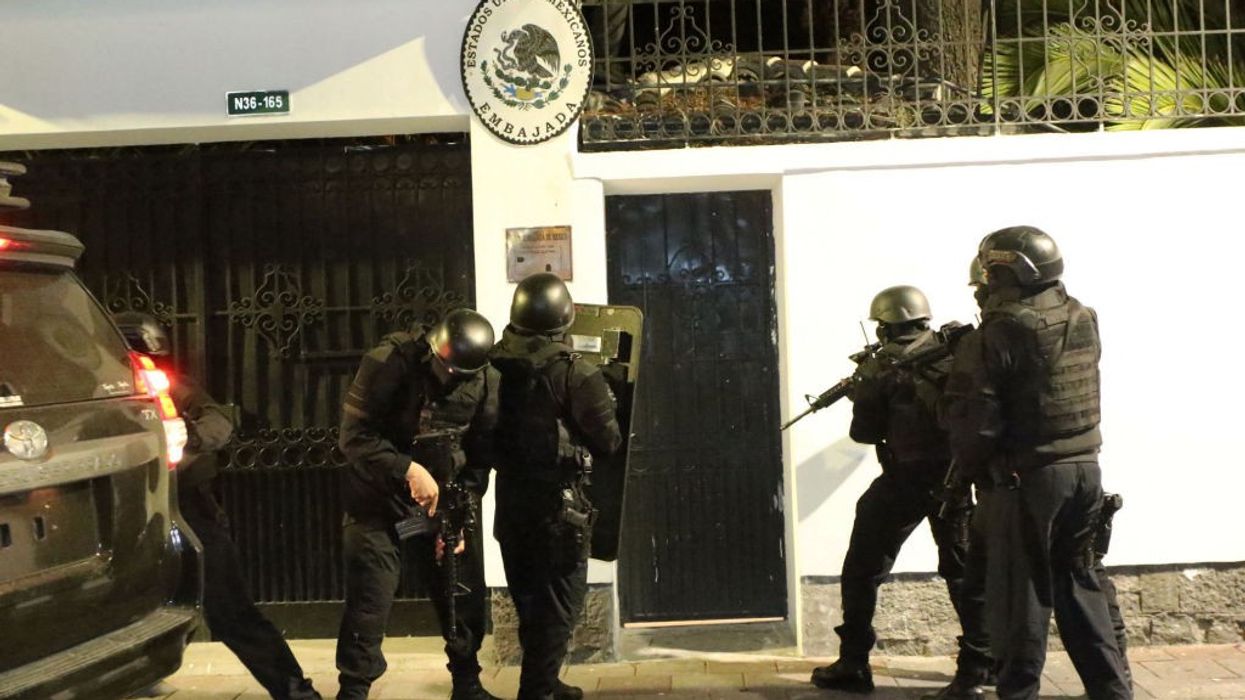
"This is a flagrant violation of international law and the sovereignty of Mexico," said Mexican President Andrés Manuel López Obrador.
Mexico on Friday night announced the suspension of diplomatic relations with Ecuador after police stormed the Mexican Embassy in Quito and kidnapped former Ecuadorian Vice President Jorge Glas, who was granted asylum after being convicted of what he claims are politically motivated corruption charges.
"Alicia Bárcena, our secretary of foreign affairs, has just informed me that police from Ecuador forcibly entered our embassy and detained the former vice president of that country who was a refugee and processing asylum due to the persecution and harassment he faces," Mexican President Andrés Manuel López Obrador said on social media following the raid.
"This is a flagrant violation of international law and the sovereignty of Mexico, which is why I have instructed our chancellor to issue a statement regarding this authoritarian act, proceed legally, and immediately declare the suspension of diplomatic relations with the government of Ecuador," he added.
Bárcena said that "given the flagrant violation of the Vienna Convention on Diplomatic Relations and the injuries suffered by Mexican diplomatic personnel in Ecuador, Mexico announces the immediate breaking of diplomatic relations with Ecuador."
Mexican officials said multiple embassy staff members were injured during the raid. They also said that all Mexican diplomatic staff will immediately leave Ecuador, and that Mexico would appeal to the International Court of Justice to hold Ecuador accountable.
Roberto Canseco, head of chancellery and policy affairs at the embassy, told reporters that "what you have just seen is an outrage against international law and the inviolability of the Mexican Embassy in Ecuador."
"It is barbarism," he added. "It is impossible for them to violate the diplomatic premises as they have done."
Ecuador's government said that Glas—who served as vice president under former leftist President Rafael Correa from 2013-17—was a fugitive who has been "sentenced to imprisonment by the Ecuadorian justice system" and had been granted asylum "contrary to the conventional legal framework."
However, Ecuadorian attorney and political commentator Adrián Pérez Salazar told Al Jazeera that "the fact that there was this grievance does not—at least under international law—justify the forceful breach of an embassy."
"International law is very clear that embassies are not to be touched, and regardless of whatever justifications the Ecuadorian government might have, it is a case where the end does not justify the means," Salazar added.
Numerous Latin American nations including Argentina, Brazil, Chile, Colombia, Cuba, Honduras, Panama, Uruguay, and Venezuela condemned the Ecuadorian raid.
"The action constitutes a clear violation of the American Convention on Diplomatic Asylum and the Vienna Convention on Diplomatic Relations, which, in Article 22, provides that the locations of a diplomatic mission are inviolable and can be accessed by agents of the receiving state only with the consent of the head of mission," the Brazilian Foreign Ministry said in a statement. "The measure carried out by the Ecuadorian government constitutes a serious precedent, and must be subject to strong repudiation, whatever the justification for its implementation."
Honduran President Xiomara Castro de Zelaya—who called the raid "an intolerable act for the international community"—said Saturday that she would convene a special emergency session of the Community of Latin American and Caribbean States on Monday. Castro currently serves as CELAC's president pro tempore.
The Organization of American States General Secretariat issued a statement Saturday rejecting "any action that violates or puts at risk the inviolability of the premises of diplomatic missions and reiterates the obligation that all states have not to invoke norms of domestic law to justify non-compliance with their international obligations."
"In this context, it expresses solidarity with those who were victims of the inappropriate actions that affected the Mexican Embassy in Ecuador," the body added.
It's been a bad week for the inviolability of sovereign diplomatic spaces. Iran and Syria on Monday accused Israel of bombing the Iranian Consulate in Damascus, an attack that killed 16 people including senior Islamic Revolutionary Guard Corps commanders as well as Iranian and Syrian diplomats and other civilians.

"The broken ISDS system has time and time again worked in favor of big business interests while infringing on the rights and sovereignty of our trading partners and their people."
U.S. Sen. Elizabeth Warren and Rep. Lloyd Doggett on Wednesday led nearly three dozen progressive members of Congress in demanding an end to the Investor-State Dispute Settlement system, a key feature of corporate-managed trade agreements signed, and often initiated, by the United States.
"Large corporations have weaponized, and continue to weaponize, this faulty and undemocratic dispute settlement regime to benefit their own interests at the expense of workers, consumers, and small businesses globally," says Warren (D-Mass.) and Doggett's (D-Texas) letter to U.S. Trade Representative Katherine Tai and Secretary of State Antony Blinken.
After praising President Joe Biden's 2020 campaign pledge to exclude ISDS from future trade deals—such as the Americas Partnership for Economic Prosperity and the Indo-Pacific Economic Framework the White House has been negotiating—along with Tai's indication that she "will pursue a trade agenda in line with that commitment," the letter asks Tai's office and Blinken's department to "investigate any and all options at your disposal to eliminate ISDS liability from existing trade and investment agreements."
ISDS mechanisms enable multinational corporations to sue the governments of foreign trading partners for profits they claim have been forfeited as a result of domestic policies designed to protect workers, consumers, and ecosystems. Such lawsuits challenge meaningful labor, product safety, and environmental standards, and the mere threat of them can even preempt the enactment of robust regulations, placing ISDS at the heart of what critics have called neoliberal globalization's "race to the bottom."
The ISDS measures that corporations "successfully lobbied" to include in past trade deals grant them "special rights and privileges that ordinary citizens do not receive," the letter points out. "Under ISDS, disputes are handled not through the judicial system but by industry-friendly arbitration tribunals that can require taxpayers to shell out massive sums to big corporations, with no opportunity to appeal."
"Unlike the courts, 'tribunals have no set procedures or precedents. Standards of evidence are nonexistent, and mistruths or exaggerations go unpunished,'" the letter continues, citing journalist Sarah Lazare. "These provisions tilt the playing field even further in favor of large corporations, incentivizing offshoring and undermining the sovereignty of the United States and other governments."
A pending ISDS case launched recently by a Delaware-based company upset because Honduras' democratically elected government overturned a law that allowed corporations to establish self-regulated private cities inside the impoverished Central American nation exemplifies why the Biden administration needs "to take action to remove this problematic corporate handout from existing agreements," the letter says.
"Late last year," the members of Congress explained, "U.S. company Honduras Próspera launched an ISDS claim under the Dominican Republic-Central America Free Trade Agreement (CAFTA-DR) against the newly elected government of Honduras, seeking nearly $11 billion, equal to roughly two-thirds of the country's entire national budget this year."
They continued:
The jaw-dropping sum sought by Próspera is not the only reason that this case raises serious concerns. Honduran President Xiomara Castro secured a major victory for democracy last year when the National Congress of Honduras repealed the country's Zonas de Empleo y Desarrollo Económico law (ZEDE, or "Economic Development and Employment Zones"). The legal name misleadingly implies that ZEDEs constitute standard special economic zones, areas within a country's borders that, while politically and fiscally part of the host nation, are governed by separate economic regulations as "a mechanism for attracting foreign direct investment, accelerating industrialization, and creating jobs." However, the legislation enabled the creation of far more radical private governance zones, which have "functional and administrative autonomy" from the national government.
The zones allowed investors to create their own governance systems and regulations and establish separate courts. And investors have used the law to create jurisdictions where companies can propose their own regulations and where most Hondurans cannot enter without authorization. In the case of Próspera, a ZEDE located largely on the Honduran island of Roatán, investors have created a governing council where 44% of members are appointed by the private company and 22% are elected by landowners in a system where their number of votes is proportional to the size of their property.
This anti-democratic policy, approved under the leadership of previous officials, including former president Juan Orlando Hernández, who have since been indicted on drug trafficking and firearms charges, was highly controversial. Honduran labor unions, small farmers, Indigenous organizations, and even the nation's largest business groups expressed vehement opposition. According to the U.S. State Department, the zones "were broadly unpopular, and viewed as a vector for corruption." The Honduran Congress unanimously approved President Castro's proposal abolishing this policy.
Próspera has repeatedly threatened to initiate ISDS arbitration under CAFTA-DR to bully the Honduran government into allowing them to continue operating under the abolished ZEDE framework. In December 2022, the company announced that it filed a CAFTA-DR claim with the International Center for Settlement of Investment Disputes (ICSID), which will force the government of Honduras to potentially spend millions of dollars defending itself for responding to the will of its people and asserting its sovereignty over these special governance jurisdictions operating in its territory.
The lawmakers asked Tai and Blinken to "intervene—through a statement of support, amicus brief, and any other means at your disposal—in support of Honduras' defense in the Próspera ISDS case and to ensure that such egregious cases can no longer disrupt democratic policymaking by working to eliminate ISDS liability in preexisting agreements in our hemisphere."
Notably, the suit against Honduras "is just the most recent example of the worrying trend of increased ISDS use in the Americas, both in the number of cases and the sky-high value of the claims," the letter observes. "Governments throughout Latin America have paid billions of dollars in compensation to foreign companies at their taxpayers' expense, simply for putting in place sound public policy to protect the environment and the health and economic well-being of their communities. Governments—and therefore taxpayers—throughout the region have been ordered by ISDS tribunals to pay close to $28 billion to corporations, with far more in pending ISDS claims."
Decrying how "the broken ISDS system has time and time again worked in favor of big business interests while infringing on the rights and sovereignty of our trading partners and their people," the lawmakers urged the Biden administration to "refrain from negotiating new trade agreements with ISDS, and also to address the existing ISDS mechanisms that corporations continue to exploit."
Melinda St. Louis, director of Public Citizen's Global Trade Watch, said in a statement that her group has been keeping a close eye on the "truly shocking" case against Honduras, "as well as the explosion of ISDS cases in the region."
Public Citizen "is coordinating with civil society groups across the hemisphere working to remove these increasingly unpopular ISDS provisions from trade agreements and investment treaties," said St. Louis. "President Biden's commitment to exclude ISDS in new agreements must be matched by immediate action to dismantle ISDS in existing agreements—or else shameful cases like the $11 billion one against Honduras will continue."
Warren and Doggett's letter was signed by Independent Sen. Bernie Sanders (Vermont) and 30 Democratic lawmakers, including Sens. Sherrod Brown (Ohio) and Sheldon Whitehouse (R.I.), as well as Reps. Jamaal Bowman (N.Y.), Cori Bush (Mo.), Greg Casar (Texas), Jesús G. "Chuy" García (Ill.), Pramila Jayapal (Wash.), Ro Khanna (Calif.), Barbara Lee (Calif.), Summer Lee (Pa.), Donald Norcross (N.J.), Ilhan Omar (Minn.), Mark Pocan (Wis.), and Rashida Tlaib (Mich.).

Demands for an investigation into the murder of two environmental defenders in Guapinol, Honduras continued to mount Wednesday amid growing doubts that they were killed during what local police and prosecutors claimed was an attempted mugging.
Since Aly Domínguez, 38, and Jairo Bonilla, 28, were shot dead Saturday, their family members, rights groups, and people around the world have called for a probe into whether their deaths are tied to the pair leading grassroots resistance to nearby iron ore mining.
"These horrific murders must end. We fully support the demands... for an independent investigation."
"We reject the official hypothesis," Rey Domínguez, a community leader and Aly's brother, told The Guardian. "These two young men were founders of the struggle to protect our natural resources from an illegal mine that is destroying rivers in the national park. For five years we've been threatened, criminalized, and falsely imprisoned, the only thing left was murder."
As the newspaper detailed:
[A] huge open-pit mine in nearby Tocoa... was authorized inside a protected national park in a process mired by legal irregularities, according to international experts. Community members, including Domínguez and Bonilla, set up a peaceful protest camp after the mine polluted rivers relied upon by thousands of people.
Security forces violently evicted the encampment and dozens of arrest warrants were issued against the protesters. Rey and Aly Domínguez spent time in jail on bogus charges in 2019. International legal and human rights experts widely condemned the criminalization of the activists and the subsequent militarization of the community, which forced several people to flee and seek asylum in the U.S.
The Institute for Policy Studies (IPS) on Wednesday reiterated its support for an independent probe.
The institute said Monday that it was "proud" to present its 2019 Letelier-Moffitt Human Rights Award to Honduran environmental rights defenders at the Municipal Committee in Defense of Common and Public Goods of Tocoa.
"We are heartbroken to learn of the murder of two environment defenders, Aly Domínguez and Jairo Bonilla," IPS added. "As we mourn, we fully support the demands of [the group] for an independent investigation to clarify the facts and for the immediate cancellation and cleanup of the mining licenses that have been granted to Honduras company Los Pinares for iron ore mining."
The committee made similar demands in a statement released Saturday that began, "It is with great sadness and a cry for justice that we denounce today's murders of Guapinol community human rights defenders and fathers Aly Domínguez and Jairo Bonilla."
The committee's statement highlighted how dangerous Honduras is for environmental defenders:
Aly, brother of our comrade Reynaldo Domínguez, is also one of 32 people criminalized by the mining company Inversiones Los Pinares and the state of Honduras for defending the Carlos Escaleras National Park against their illegal mining project.
Land defenders in the region face constant threats and harassment. Despite the multiple denunciations and warnings we have made about the increased risk we face, state authorities refuse to guarantee the physical integrity of communities at risk for defending their water and territory from the illegal mining project, nor do they put an end to the environmental contamination caused by mining in a national protected area.
In light of the murder of the defenders, we express our deepest condolences and demand an independent investigation to clarify the facts.
In a message directed at the government of Honduran President Xiomara Castro, the committee added that "we demand the immediate cancellation of the mining licenses in the national park Montaña de Botaderos Carlos Escaleras that cause death and to take urgent measures to guarantee the physical security of the defenders in Tocoa."
While Castro last year banned new open-pit mining, the policy does not apply to existing projects.
"Xiomara Castro came into government promising to protect human rights defenders," said Phoenix, the U.N. researcher. "The imposition of extractive projects on communities without their consent is one of the root causes of attacks against defenders in Central America, but where there is political will, governments can address it. The Honduran government must do more."
In a pair of tweets Sunday, the Office of the High Commissioner for Human Rights in Honduras condemned the murders, expressed "solidarity with the families of the victims and the community of Guapinol," and urged the country "to carry out a prompt and independent investigation and to guarantee the integrity of the defenders in the Aguán area."
The same day, Honduras' Human Rights Secretariat issued a lengthy statement that "strongly condemned" the killings, called for the state prosecutor to investigate, and acknowledged environmental defenders in the region have been "unjustly criminalized."
Along with offering the victims' families her "deepest condolences," U.S. Ambassador to Honduras Laura F. Dogu said Sunday that she joins the calls of the U.N. office and Honduran secretariat "for a proper and thorough investigation to be carried out."
Trócaire, the Irish Catholic Church's aid agency, also condemned the murders and joined the growing calls for a probe.
"We urge the Honduran authorities to carry out a swift and independent investigation to bring the perpetrators to justice and to fully implement protection measures for all human rights defenders in the Aguán," said George Redman, Trócaire’s country director in Honduras, in a statement Wednesday.
"To work towards a definitive solution to this conflict," he added, "Trócaire supports the demands of Guapinol and neighboring communities for the Honduran government to conduct an urgent audit of alleged irregularities in the approval of the mining concession, for the results to be made public, and for the appropriate action to be taken if due process has not been followed."