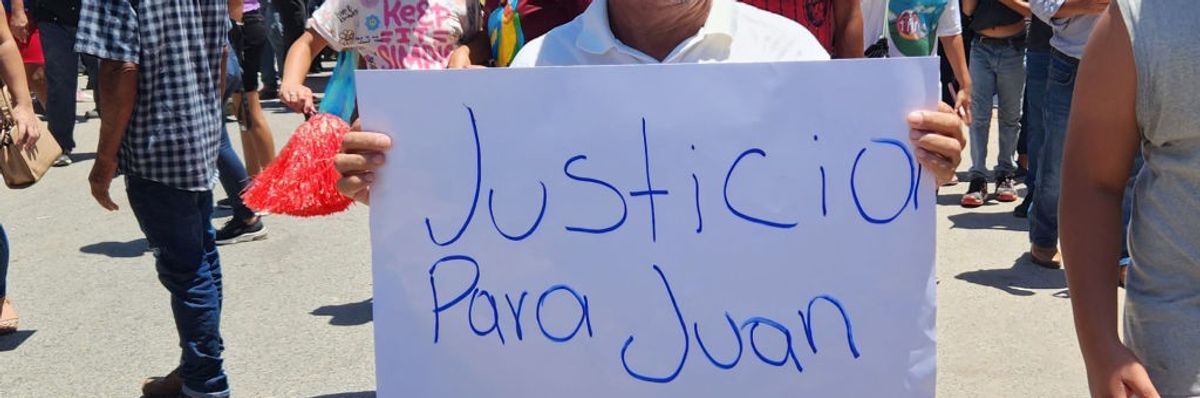
Environment and anti-corruption activist Juan López was killed in Tocoa, Honduras on Saturday in the latest attack on environmental defenders in the country.
López, who had long received death threats but continued to speak out, was gunned down by motorcyclists while leaving church.
Honduran leaders have denounced his killing as murder and vowed to prosecute the perpetrators. No one has yet been arrested. López had in recent days called for the resignation of Adán Fúnez, Tocoa's longtime mayor, for alleged involvement in organized crime and drug trafficking, according to Contrecorriente, an investigative media outlet.
López, a local councilor and member of the Committee for the Defense of Common and Public Goods of Tocoa (CMDBCP, in Spanish), had long defended forests and rivers from threats posed by mining and hydroelectric companies. He is the fourth CMDBCP member to be killed since last year.
"We condemn the vile murder of Juan López, a renowned defender of common and public goods, councilor of the municipality of Tocoa, a great human being, a great historical fighter, a dear friend," Angélica Álvarez, Honduas' acting human rights minister, wrote on social media. "We demand justice, investigation, and prison for his cowardly murderers."
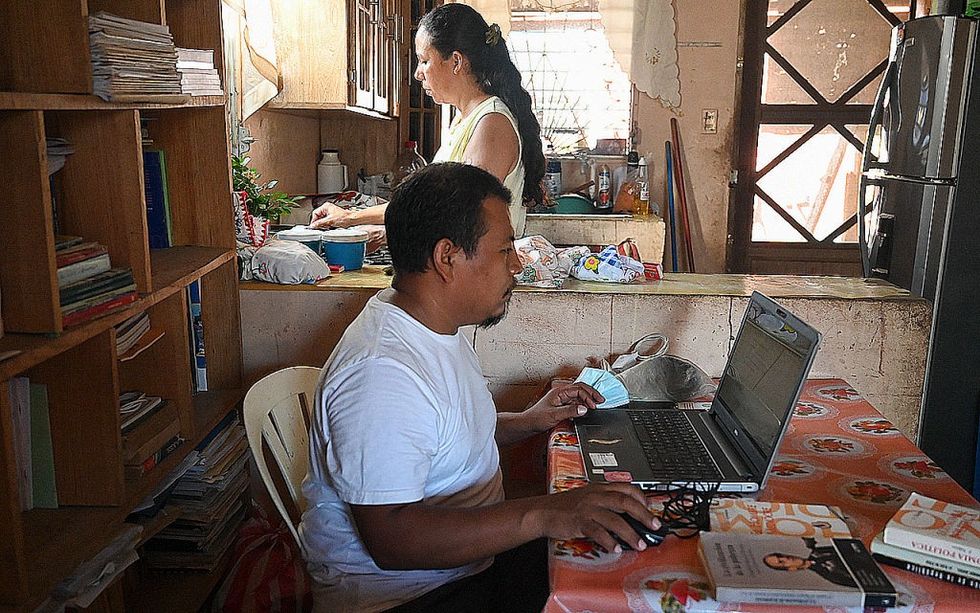 Honduran environmentalist Juan López works at his home in Tocoa, Honduras, in September 2021. López was killed on September 14, 2024. (Photo: Orlando Sierra/AFP via Getty Images)
López was a member of the ruling Libre party, which has held national power since President Xiomara Castro, a leftist, took office in January 2022. However, he wasn't afraid to call out corruption in his own party.
The last three weeks brought scandal to the party after a video from 2013 emerged in which Carlos Zelaya, a Libre lawmaker and Castro's brother-in-law, and Fúnez, the Tocoa mayor, who's also a party member, are seen negotiating with alleged drug traffickers. Zelaya and Fúnez were trying to boost Castro's 2013 presidential campaign, which was unsuccessful.
Carlos Zelaya resigned office amid the scandal. He is the brother of Castro's husband, Manuel "Mel" Zelaya, who led the country from 2006 until 2009 and serves as her principal adviser. There have also been calls for Castro herself to resign.
Amid the national fallout, the video leak also led to debate in Tocoa, a city of more than 100,000 in the country's north, just inland from the Atlantic Ocean. López denounced Fúnez and called for him to resign as Carlos Zelaya had.
It's not clear which of López's political enemies may have ordered his death, but his safety was known to be at risk. He understood that it came with the work he did. He had long fought for the preservation of the Guapinol and San Pedro rivers and the Carlos Escaleras nature reserve.
"If you start defending common interests in this country, you clash with major interests," López told Agence France-Presse in 2021.
"If you leave home, you always have in mind that you do not know what might happen, if you are going to return," he added.
Last year, the Inter-American Commission on Human Rights moved to establish protections for 30 CMDBCP members including López, who reported threats by a gang member, a local businessperson, and a mining company representative. Two men on motorcycles appeared near his home in recent months, the commission reported, according to Reuters.
Ismael Moreno, a well-known Jesuit priest and social reformer, called for an international commission to work alongside Honduran prosecutors to investigate López's killing, given the lack of public confidence in the country's institutions, Contrecorriente reported.
The vast majority of global attacks on environmental defenders take place in Latin America, according to a report released last week by Global Witness, a watchdog group. In 2023, Honduras, despite its relatively small population, tied for third in the world in the number of defenders killed, at 18, behind only Colombia and Brazil.
Environment and anti-corruption activist Juan López was killed in Tocoa, Honduras on Saturday in the latest attack on environmental defenders in the country.
López, who had long received death threats but continued to speak out, was gunned down by motorcyclists while leaving church.
Honduran leaders have denounced his killing as murder and vowed to prosecute the perpetrators. No one has yet been arrested. López had in recent days called for the resignation of Adán Fúnez, Tocoa's longtime mayor, for alleged involvement in organized crime and drug trafficking, according to Contrecorriente, an investigative media outlet.
López, a local councilor and member of the Committee for the Defense of Common and Public Goods of Tocoa (CMDBCP, in Spanish), had long defended forests and rivers from threats posed by mining and hydroelectric companies. He is the fourth CMDBCP member to be killed since last year.
"We condemn the vile murder of Juan López, a renowned defender of common and public goods, councilor of the municipality of Tocoa, a great human being, a great historical fighter, a dear friend," Angélica Álvarez, Honduas' acting human rights minister, wrote on social media. "We demand justice, investigation, and prison for his cowardly murderers."
Honduran environmentalist Juan López works at his home in Tocoa, Honduras, in September 2021. López was killed on September 14, 2024. (Photo: Orlando Sierra/AFP via Getty Images)
López was a member of the ruling Libre party, which has held national power since President Xiomara Castro, a leftist, took office in January 2022. However, he wasn't afraid to call out corruption in his own party.
The last three weeks brought scandal to the party after a video from 2013 emerged in which Carlos Zelaya, a Libre lawmaker and Castro's brother-in-law, and Fúnez, the Tocoa mayor, who's also a party member, are seen negotiating with alleged drug traffickers. Zelaya and Fúnez were trying to boost Castro's 2013 presidential campaign, which was unsuccessful.
Carlos Zelaya resigned office amid the scandal. He is the brother of Castro's husband, Manuel "Mel" Zelaya, who led the country from 2006 until 2009 and serves as her principal adviser. There have also been calls for Castro herself to resign.
Amid the national fallout, the video leak also led to debate in Tocoa, a city of more than 100,000 in the country's north, just inland from the Atlantic Ocean. López denounced Fúnez and called for him to resign as Carlos Zelaya had.
It's not clear which of López's political enemies may have ordered his death, but his safety was known to be at risk. He understood that it came with the work he did. He had long fought for the preservation of the Guapinol and San Pedro rivers and the Carlos Escaleras nature reserve.
"If you start defending common interests in this country, you clash with major interests," López told Agence France-Presse in 2021.
"If you leave home, you always have in mind that you do not know what might happen, if you are going to return," he added.
Last year, the Inter-American Commission on Human Rights moved to establish protections for 30 CMDBCP members including López, who reported threats by a gang member, a local businessperson, and a mining company representative. Two men on motorcycles appeared near his home in recent months, the commission reported, according to Reuters.
Ismael Moreno, a well-known Jesuit priest and social reformer, called for an international commission to work alongside Honduran prosecutors to investigate López's killing, given the lack of public confidence in the country's institutions, Contrecorriente reported.
The vast majority of global attacks on environmental defenders take place in Latin America, according to a report released last week by Global Witness, a watchdog group. In 2023, Honduras, despite its relatively small population, tied for third in the world in the number of defenders killed, at 18, behind only Colombia and Brazil.
Environment and anti-corruption activist Juan López was killed in Tocoa, Honduras on Saturday in the latest attack on environmental defenders in the country.
López, who had long received death threats but continued to speak out, was gunned down by motorcyclists while leaving church.
Honduran leaders have denounced his killing as murder and vowed to prosecute the perpetrators. No one has yet been arrested. López had in recent days called for the resignation of Adán Fúnez, Tocoa's longtime mayor, for alleged involvement in organized crime and drug trafficking, according to Contrecorriente, an investigative media outlet.
López, a local councilor and member of the Committee for the Defense of Common and Public Goods of Tocoa (CMDBCP, in Spanish), had long defended forests and rivers from threats posed by mining and hydroelectric companies. He is the fourth CMDBCP member to be killed since last year.
"We condemn the vile murder of Juan López, a renowned defender of common and public goods, councilor of the municipality of Tocoa, a great human being, a great historical fighter, a dear friend," Angélica Álvarez, Honduas' acting human rights minister, wrote on social media. "We demand justice, investigation, and prison for his cowardly murderers."
Honduran environmentalist Juan López works at his home in Tocoa, Honduras, in September 2021. López was killed on September 14, 2024. (Photo: Orlando Sierra/AFP via Getty Images)
López was a member of the ruling Libre party, which has held national power since President Xiomara Castro, a leftist, took office in January 2022. However, he wasn't afraid to call out corruption in his own party.
The last three weeks brought scandal to the party after a video from 2013 emerged in which Carlos Zelaya, a Libre lawmaker and Castro's brother-in-law, and Fúnez, the Tocoa mayor, who's also a party member, are seen negotiating with alleged drug traffickers. Zelaya and Fúnez were trying to boost Castro's 2013 presidential campaign, which was unsuccessful.
Carlos Zelaya resigned office amid the scandal. He is the brother of Castro's husband, Manuel "Mel" Zelaya, who led the country from 2006 until 2009 and serves as her principal adviser. There have also been calls for Castro herself to resign.
Amid the national fallout, the video leak also led to debate in Tocoa, a city of more than 100,000 in the country's north, just inland from the Atlantic Ocean. López denounced Fúnez and called for him to resign as Carlos Zelaya had.
It's not clear which of López's political enemies may have ordered his death, but his safety was known to be at risk. He understood that it came with the work he did. He had long fought for the preservation of the Guapinol and San Pedro rivers and the Carlos Escaleras nature reserve.
"If you start defending common interests in this country, you clash with major interests," López told Agence France-Presse in 2021.
"If you leave home, you always have in mind that you do not know what might happen, if you are going to return," he added.
Last year, the Inter-American Commission on Human Rights moved to establish protections for 30 CMDBCP members including López, who reported threats by a gang member, a local businessperson, and a mining company representative. Two men on motorcycles appeared near his home in recent months, the commission reported, according to Reuters.
Ismael Moreno, a well-known Jesuit priest and social reformer, called for an international commission to work alongside Honduran prosecutors to investigate López's killing, given the lack of public confidence in the country's institutions, Contrecorriente reported.
The vast majority of global attacks on environmental defenders take place in Latin America, according to a report released last week by Global Witness, a watchdog group. In 2023, Honduras, despite its relatively small population, tied for third in the world in the number of defenders killed, at 18, behind only Colombia and Brazil.