

SUBSCRIBE TO OUR FREE NEWSLETTER
Daily news & progressive opinion—funded by the people, not the corporations—delivered straight to your inbox.
5
#000000
#FFFFFF
To donate by check, phone, or other method, see our More Ways to Give page.
Daily news & progressive opinion—funded by the people, not the corporations—delivered straight to your inbox.

More than 4,000 veteran members of Common Defense and their families agree: This can never happen again, and the war against Iran needs to end.
The USS Abraham Lincoln is on its way home. This is welcome news after hearing of its abhorrent conditions. Yet, the situation lived by sailors and Marines aboard the carrier over the last nine months, the continued threats that troops still deployed in this unpopular war face, and the unpatriotic negligence both the president and members of his own party have demonstrated paint a grim, but unsurprising picture of how servicemembers are treated under this administration.
Donald Trump is the most hostile president to troops and veterans in modern American history. Look no further than his comments about the service members who have been at sea for more than 250 days—that they have not been deployed “nearly long enough”—or House Republicans parroting that line back to reporters. That’s how this administration treats its military members, and it should be a wake-up call for every American.
Yes, the USS Abraham Lincoln is on its way home, but with the USS George Washington replacing it, how many more troops must suffer until we end this forever war? That is why veterans of Common Defense, like myself, are demanding a full-scale congressional investigation into this case. More than 4,000 of our members and their families agree: This can never happen again, and the war against Iran needs to end.
The war these carriers are supporting has already killed at least 18 US service members and wounded roughly 500 more, alongside thousands of Iranian civilians killed. As an Iraq veteran, I’ve come to understand the costs of war begin long before the first shot is fired. Diplomacy is what keeps the world safe, and certainly not bombs that pad shareholder value at the expense of service members, and military families, who have everything to lose.
If a foreign adversary starved its own troops, kept them at sea for nearly a year, and left them in cramped showers and broken toilets, how would Washington react?
The USS Lincoln is carrying 5,000 sailors and Marines, 5,000 souls who have touched communities far and wide throughout our nation. They’ve played in our little leagues, attended school dances, walked college campuses, and have full lives waiting for them at home. Whatever reason each of them had for raising their right hand, that oath reflects a rare kind of commitment—to a mission, and to a country they intend to keep giving back to. War is the price many military families pay, and veterans carry its scars, visible and invisible, long after they take off the uniform. It is time for this administration to uphold its end of that bargain.
Instead, this White House has gutted the Department of Veterans Affairs (VA); sent troops to a highly unpopular, illegal, unjust war; and used the military as a political prop. None of that improves troops’ or veterans’ lives. What would actually improve their lives? Ending the war, investigating what happened on the USS Lincoln, expanding the VA instead of hollowing it out, and making sure military and working families can actually thrive.
As the USS Lincoln returns home, it’s worth remembering what most Americans already sense: War doesn’t accomplish what makes a life worth living. It doesn’t keep your family safe, cover your healthcare, give you a good-paying job, or protect the freedoms our Constitution promises. That’s why most Americans oppose the war with Iran. Yet, we’re all paying for it—in a cost of living already at historic highs, in gas prices, and in the roughly $1,000 per household experts say Trump’s decision to go to war has cost every one of us. The more hawkish members of his party will argue that this is part of the mission: to spread freedom and to contain Iran’s power. So ask them if a foreign adversary starved its own troops, kept them at sea for nearly a year, and left them in cramped showers and broken toilets, how would Washington react? We already know the answer. These very politicians would be first in line, demanding that America intervene. What our service members experienced on the USS Lincoln is abysmal and should infuriate every single American whose tax dollars are funding Donald Trump’s war.
Let’s not forget this was a choice made by Donald Trump’s hostile administration and enabled by its congressional allies. Lawmakers must demand a full-scale investigation into what happened aboard the USS Abraham Lincoln so it never happens again. Veterans and military families see clearly how failed leaders and politicians who carry every whim of the president’s disastrous war put our troops in danger. We must demand an investigation now—and we won’t stop until this country ends its forever wars.
This isn’t just a rollback. It’s a deliberate erasure of rights that we fought for in the wake of deeply personal and collective loss.
In 2022, my wife and I lost our first child. We named them June. They were deeply wanted and fiercely loved. In one fateful appointment, our entire worlds changed. We learned that June had a severe fetal bladder abnormality and was unable to produce amniotic fluid. Without it, their lungs would never develop. They would not survive.
We made the impossible decision to end the pregnancy—an act of compassion, love, and medical necessity.
At the time, the Department of Veterans Affairs (VA) had a total ban on abortion care and counseling.
No exceptions for rape. No exceptions for incest. Not even to save a veteran’s life.
Veterans and our families deserve futures built on compassion, justice, and love—not fear.
After our loss, the only way I felt I could keep breathing was to turn that grief into meaning. I shared our story with lawmakers to help reverse this dangerous policy so that veterans and their families could turn to the VA—no matter the circumstance or where they lived. That fall, the VA finally took steps to reverse the ban, signaling a long-overdue shift toward care, autonomy, and dignity.
But that progress was short-lived.
The VA just finalized a new abortion ban policy that, once again, excludes exceptions for rape or incest and offers only vague assurances that it will intervene if our lives are at risk. They initially implemented this enormous change in secret without telling veterans or their families.
In effect, it returns the VA to what was once the most extreme abortion ban in the country—an outright prohibition on care and counseling that applies to every VA facility nationwide, regardless of state law.
This isn’t just a rollback. It’s a deliberate erasure of rights that we fought for in the wake of deeply personal and collective loss.
And it is not happening in isolation. The same administration driving this ban is also working diligently to eliminate gender-affirming care, defund programs for minority and underrepresented veterans, and strip inclusive language and data collection from federal policy. The message is unmistakable: Some veterans count. Others don’t.
Veterans are not a monolith. We are a diverse community—LGBTQIA+, people of color, disabled, parents, caregivers, survivors, and yes, women too. Our community exists at every intersection of identity and experience, and our families serve alongside us. Our care cannot be conditional. Our humanity is not negotiable.
Policy is never just about one issue. It is intersectional—because our lives are intersectional.
Reproductive care cannot be separated from gender-affirming care, from disability access and mental health, from racial justice, or maternal health. Our needs don’t exist in silos, and neither do we. When one right is taken away, the loss reverberates across all the others.
I’ve seen what’s possible when we refuse to stay silent—how lived experience can reshape policy and expand care that has never existed before. And I know exactly what is at stake when care is denied. Pregnancy can change on a dime.
June’s life, though brief, transformed mine. Through their memory, I found purpose. I found a voice. And in their honor, I will continue working to ensure that no veteran or family ever has to face what we faced alone.
We should be building systems rooted in care, equity, and truth. We should be honoring the fullness of who veterans are, how we serve, and how we build our families. Instead, our fundamental rights are being stripped away—one policy memo at a time—and once again, we are being asked to fight for the right to make personal decisions about our health, our futures, and our families.
I will not allow June’s legacy to become another casualty of politics. Their life will be a call to care.
This moment demands more than endurance. It demands action.
The policies we pass—within the VA and beyond—shape the futures of veterans and the people who love us. Had my wife not been able to access critical care in her time of need—had we not been given the chance to make the most compassionate choice amid impossible circumstances—we might never have known the joy of raising our child today, a joy born from grief and shaped by love.
Veterans and our families deserve futures built on compassion, justice, and love—not fear.
Because in the end, we are all only human.
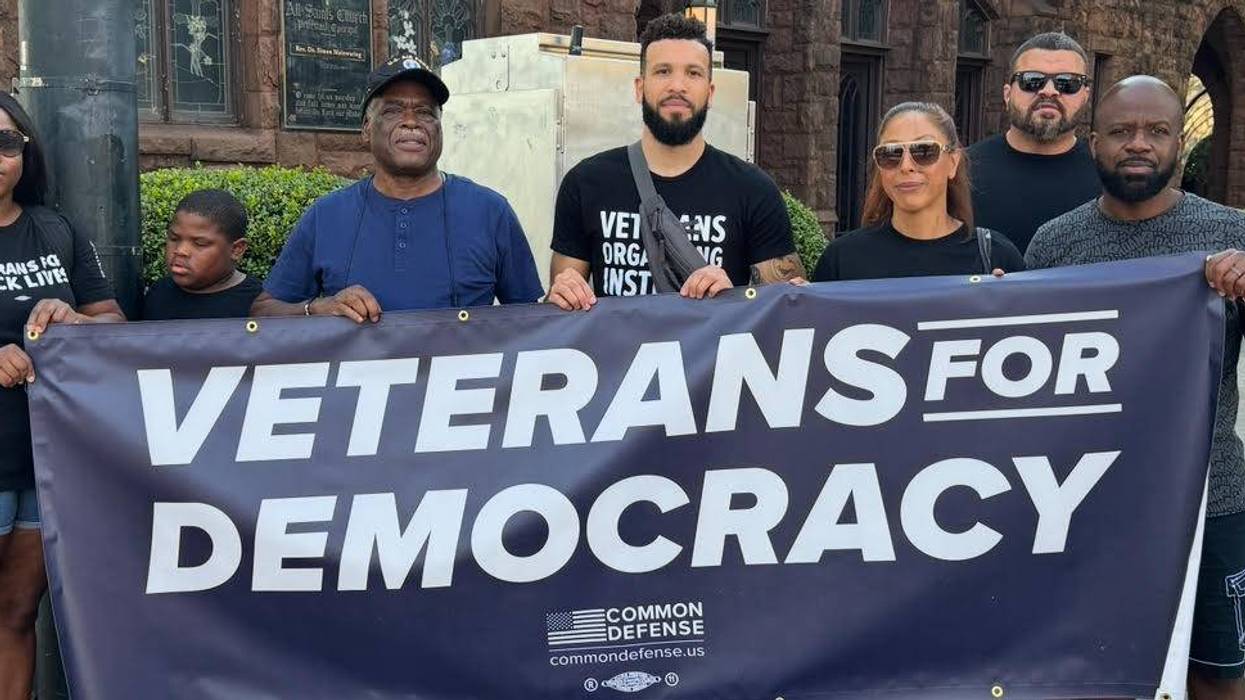
Veterans in the labor movement have played a frontline role resisting Trump administration attempts to cut government jobs and services and strip federal workers of their collective bargaining rights.
The US is home to 17 million military veterans. About 1.3 million of them currently work in union jobs, with women and people of color making up the fastest-growing cohorts. Veterans are more likely to join a union than non-veterans, according to the AFL-CIO. In half a dozen states, 25% or more of all actively employed veterans belong to unions.
In the heyday of industrial unionism in the decades following World War II, hundreds of thousands of former soldiers could be found on the front lines of labor struggles in auto, steel, meatpacking, electrical equipment manufacturing, mining, trucking, and the telephone industry. Many World War II vets became militant stewards, local union officers, and, in some cases, well-known union reformers in the United Mine Workers and Oil, Chemical and Atomic Workers.
The late labor organizer and author Jane McAlevey argued that the post-war union movement better understood the “strategic value” of veterans than organized labor does today. In her own advice to unions about contract campaign planning, she recommended enlisting former service members whose past “experience with discipline, military formation, and overcoming fear and adversity” could be employed on picket lines and strike committees.
In addition, the high social standing of military veterans in many blue-collar communities can be a valuable PR asset when “bargaining for the public good” or trying to general greater public support for any legislative or political campaign.
The wisdom of that advice has been confirmed repeatedly by the front-line role that veterans in the labor movement have played in resisting Trump administration attempts to cut government jobs and services and strip federal workers of their collective bargaining rights. At agencies like the Department of Veterans Affairs (VA), more than 100,000 former service members have been adversely affected by these right-wing Republican attacks.
In response, the AFL-CIO’s Union Veterans Council brought thousands of protestors to a June 6 rally on the Mall in Washington, DC, where they heard speakers including now retired United Mine Workers President Cecil Roberts, a Vietnam veteran.
"We served our country, and now they’re breaking their promise to take care of us. We can’t accept that.”
With local turnout help from the American Federation of Government Employees (AFGE), National Nurses United, and the Federal Unionist Network (FUN), other anti-Trump activists participated in 225 simultaneous actions around the country, including in red states like Alaska, Alabama, Florida, Georgia, North Carolina, Idaho, Kansas, and Kentucky. Some “watch parties,” organized for real-time viewing of the DC event, were held in local union halls to highlight the labor-vet overlap.
James Jones, a FUN member and Gulf War veteran from Boone, North Carolina, traveled all the way to DC on the 81st anniversary of D-Day because he wanted Congress to understand the importance of VA services to veterans like himself.
Jones now works for the National Park Service and belongs to AFGE. He’s urging all his friends who are vets, fellow VA patients, and federal workers to start “going to rallies, and join these groups that are really fighting back. The government needs to keep the promise it made to veterans. We served our country, and now they’re breaking their promise to take care of us. We can’t accept that.”
Private-sector union activists have also been rallying their fellow veterans, inside and outside the labor movement.
Communications Workers Local 6215 Executive vice-president David Marshall, a former Marine, has joined rank-and-file lobbying in Washington, DC against Trump’s cuts in VA staffing and services, calling them “a betrayal of a promise to care for us.”
Marshall is a member of Common Defense, the progressive veterans’ group. Common Defense’s “VA Not for Sale” campaign is fighting the privatization of veterans’ healthcare, which many fear will destroy what Marshall calls the “sense of community and solidarity” that VA patients experience when they get in-house treatment, as opposed to the costly and less effective out-sourced care favored by President Trump. “Regular hospitals don’t understand PTSD or anything else about conditions specifically related to military service,” he says.
An AT&T technician in Dallas, Marshall was also a fiery and effective speaker at that city’s big “No Kings Day” rally last June, when he explained why he and other veterans in labor are opposing MAGA extremism, political and state violence, and related threats to democracy.
“We’ve seen peaceful protestors met with riot gear, and we’ve heard the threats to deploy active-duty Marines against American citizens,” he told a crowd of 10,000. “Let me be clear: Using the military to silence dissent is not strength; it’s tyranny. And no one knows that better than those who have worn the uniform.”
Marshall is a third-generation union member born and raised in southern West Virginia. His father and grandfather were coal miners; his grandmother Molly Marshall was active in the Black Lung Association that helped propel disabled World War II veteran Arnold Miller into the presidency of the UMW in 1972. During his own 25-year career as a CWA member, Marshall has served on his union’s safety committee, as a delegate to the national convention, and now as an officer of his local.
Marshall belongs to CWA’s Minority Caucus, the Coalition of Black Trade Unionists, and the NAACP. Along with Britni Cuington, a Local 6215 steward and Air Force vet, he attended a founding meeting of Common Defense’s Black Veterans Caucus at the Highlander Center in Tennessee.
“We have to stay in lock-step with them and show everyone following the Constitution that we have their back.”
Both Marshall and Cuington have since lobbied against the redistricting scheme concocted by Texas Republicans to secure more House seats in the 2026 midterm elections. Testifying at a public hearing on behalf of the Texas AFL-CIO, Cuington pointed out that “minority veterans already face barriers to access to the services, benefits, and economic opportunities we have earned.” She condemned the state’s new districts as racial gerrymandering in disguise that will disenfranchise “veteran heavy, working class neighborhoods.”
In his role as a CWA organizer, Marshall has signed up 30 Common Defense field organizers around the country—almost all fellow vets—as new members of his local. He’s now helping them negotiate their first staff union contract. In addition, Marshall encourages former service members in other bargaining units to participate in the union’s Veterans for Social Change program, which has done joint Veterans Organizing Institute training with CWA.
One fellow leader of that network is Keturah Johnson, a speaker at the 2024 Labor Notes conference. After her military service, she got a job at Piedmont Airlines in 2013 as a ramp agent, and then became a flight attendant. A decade later, she became the first queer woman of color and combat veteran to serve as international vice president of the 50,000-member Association of Flight Attendants-CWA.
One CWA member, 24-year-old Andrew Wolfe, a Frontier lineman in Martinsburg, West Virginia, was seriously wounded in late November after being sent as part of the National Guard deployment to Washington, DC. A fellow Guard member was killed. (Their assailant was a mentally ill, CIA-trained former death squad member from Afghanistan, relocated to the US after the collapse of the US-backed government there in 2021.)
According to Marshall, “it’s shameful that they were ever put in that position”—by a Republican governor going along with Trump’s federalization of guard units for domestic policing purposes. “It’s all political theater,” he says. “They were just props, just standing around, with no real mission.”
Along with Common Defense, Marshall praises the six fellow veterans in Congress whose recent video statement reminding active duty service members of their “duty not to follow illegal orders” led President Trump to call them “traitors” guilty of “seditious behavior, punishable by death.”
“We have to stay in lock-step with them and show everyone following the Constitution that we have their back,” Marshall says.
This piece was first published by Labor Notes.
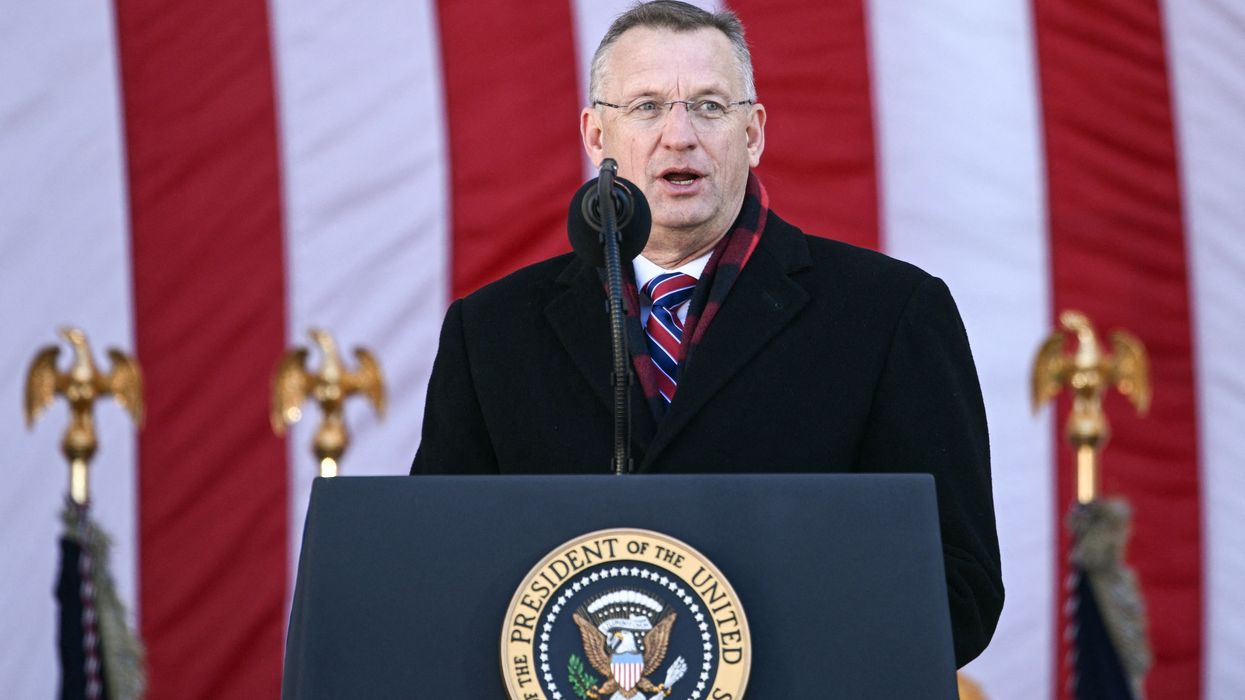
"It is abundantly clear that Republicans and the Trump administration want to strangle the VA until it all gets privatized," said the advocacy group VoteVets.
Before the end of the year, the Trump administration is planning to eliminate up to 35,000 healthcare jobs at the Department of Veterans Affairs, a chronically understaffed agency that has already lost tens of thousands of employees to the White House's sweeping assault on the federal workforce.
The Washington Post reported over the weekend that the targeted positions—many of which are unfilled—include doctors, nurses, and support staff. A spokesperson for the VA, led by former Rep. Doug Collins (R-Ga.), described the jobs as "mostly Covid-era roles that are no longer necessary."
VA workers, veterans advocates, and a union representing hundreds of thousands of department employees disputed that characterization as the agency faces staff shortages across the country.
"We are all doing the work of others to compensate,” one VA employee told the Post. “The idea that relief isn’t coming is really, really disappointing.”
Thomas Dargon Jr., deputy general counsel of the American Federation of Government Employees, said remaining VA employees "are obviously going to be facing the brunt of any further job cuts or reorganization that results in employees having to do more work with less."
The advocacy organization VoteVets cast the job cuts as another step toward the longstanding GOP goal of privatizing the VA.
"This is outrageous," the group wrote on social media. "It is abundantly clear that Republicans and the Trump administration want to strangle the VA until it all gets privatized."
"We must expand the VA, not hollow it out."
News of the impending job cuts came months after the Trump administration moved to gut collective bargaining protections for many VA employees and as recent staffing cuts continued to hamper veterans' services nationwide.
"Wait times for new mental health appointments have increased sharply since January in my home state, Connecticut," Sen. Richard Blumenthal (D-Conn.) said during a Senate hearing earlier this month. "For example, the most recent data shows the current wait time for a new patient mental health appointment at the Orange VA Clinic in Connecticut—an outpatient facility specializing in mental health—is 208 days."
Sen. Bernie Sanders (I-Vt.), ranking member of the Senate Health, Education, Labor, and Pensions Committee, said in a statement Sunday that "it is unacceptable that the US Department of Veterans Affairs plans to eliminate as many as 35,000 healthcare positions this month."
"This is especially outrageous given the reality that VA facilities in Vermont and across the country already face severe staffing challenges," said Sanders. "When someone puts their life on the line to defend this country in uniform, we in turn must provide them with the best quality healthcare available. These layoffs are unacceptable and must be reversed. We must expand the VA, not hollow it out. And I will do everything I can to make that happen."
How the administration is dismantling and privatizing the Department of Veterans Affairs.
US President Donald Trump is famous for calling our military veterans “suckers” and “losers,” so you won’t be surprised that the president is now breaking the nation’s promise to veterans and active service members by dismantling and privatizing the Department of Veterans Affairs, or the VA.
In 1865, during the Civil War, President Abraham Lincoln called for the nation “to care for him who shall have borne the battle, and for his widow and his orphan." Today the motto of the VA reads, “To fulfill President Lincoln’s promise to care for those who have served in our nation’s military and for their families, caregivers, and survivors.”
The VA provides over 18 million veterans and their dependents and caregivers with a multitude of services—healthcare, a Veterans Crisis Line for urgent assistance, disability payments and rehab, education assistance, career counseling, support for veteran-owned businesses, home loans, life insurance and financial services, help for caregivers to the disabled, burial in national cemeteries, and more.
And, of course, the nation has promised those same VA benefits to the 2 million men and women currently serving in the armed forces (1.3 million on active duty and another 761,000 in the reserves) after they retire from service.
Dismantling the VA through privatization, staff cuts, and contract cancellations means future veterans will face a fragmented, profit-driven system that doesn’t understand military service and doesn’t know what veterans have been through.
The plan to privatize the VA was hatched during the first Trump administration. By 2024 a real plan was ready. Project 2025—the MAGA [“Make America Great Again”] blueprint for the authoritarian takeover of the United States—strongly favored private healthcare for veterans.
The VA’s own healthcare system includes 170 hospitals and nearly 1,200 clinics spread across the country. It is the nation’s largest integrated healthcare system. Since 2014, the VA has also had a private side, now known as “community care.” If a veteran lives too far from a VA healthcare facility or needs a service the VA can’t provide, they may be eligible for “community care” from a private local doctor or clinic, paid for by the VA.
The Trump administration is expanding privatized “community care.” The “VA Mission Act of 2018,” enacted during the first Trump administration, nearly doubled the VA’s budget for private “community care” from $15 billion in 2018 to $28.3 billion in 2023.
Trump’s 2025 VA budget proposal increases total VA spending, but 75% of the increase (or $14.4 billion) doesn’t go to the VA at all—it goes to private medical providers. This represents a 67% increase for privatized care.
Many see the growing private healthcare budget as a stealth way to eventually privatize the VA’s entire system. Every dollar devoted to private care is a dollar denied to the VA’s own doctors and nurses, ultimately undermining the entire VA system. Doctors and nurses see the handwriting on the wall and leave. Their likely replacements see an agency under siege and stay away.
So far in 2025, the VA lost 600 doctors and 1,900 nurses. During the first three months of the year, about 40% of doctors who were offered jobs declined—four times the rejection rate a year earlier.
In March 2025, a leaked memo revealed Trump’s plan to eliminate 83,000 jobs from the VA, as much as 15% of the agency’s workforce. In response, Sen. Richard Blumenthal (D-Conn.) called the plan “a gut punch… breathtaking… in its malevolence and cruelty.” After major pushback from veterans, the agency announced it would only need to cut 30,000 jobs because so many staff had agreed to leave voluntarily.
To make it easier to cut VA staff, on August 6 VA Secretary Doug Collins ended collective bargaining agreements for most of the VA’s 377,000 unionized employees, including nurses, doctors, benefits processors, food service workers, technicians, and janitorial staff. The VA is the first major federal agency to fully strip collective bargaining rights from its unionized workforce.
Since 1865, veterans have been given preference for government jobs, though they must prove they are qualified to do the work. More than one-quarter of the VA’s 482,000 employees are veterans. (Project 2025’s plan to eliminate half of all government employees by 2026 and 75% by 2029 would cut jobs for about 300,000 veterans.)
In August 2025, the VA’s inspector general reported 4,434 health staffing shortages—a 50% increase from the previous year. In all, 94% of 139 VA health facilities reported severe shortages of medical officers and 79% reported shortages of nurses. As private-care funding is increasing, the VA itself is fraying.
In recent years, a mental health crisis among veterans has been growing worse and the Trump administration has responded by slashing the services designed to save lives. On average, 17 veterans commit suicide every day. Since 2007, the Veterans Crisis Line has handled more than 1.6 million calls and dispatched 351,000 emergency responders (about 100 per day) to help veterans in crisis, yet Trump and VA Secretary Collins have targeted suicide prevention programs for cuts. Furthermore, a study published in the Journal of the American Medical Association in 2025 revealed that veterans receiving private “community care” are not satisfied with the quality of care they receive outside the VA and they have a 21% higher suicide rate.
Now the ”One Big Beautiful Bill Act” that Congress enacted July 4 is expected to eliminate Medicaid health insurance for some veterans. Medicaid currently provides care for 1.6 million veterans, including those with the most complex medical needs.
In addition, when veterans transition out of the military it often takes six months or longer to find steady work. During that time, they may rely on the Supplemental Nutrition Assistance Program (SNAP, formerly “food stamps”) to feed their families. The One Big Beautiful Bill denies SNAP benefits to able-bodied people who don’t have jobs, specifically including veterans. Trump says he “loves our veterans” and will take care of them—but the Big Beautiful Bill is how he thanks them for their service.
It gets worse. In 2022, Congress enacted the PACT Act to deliver healthcare to millions of veterans who were exposed to toxic chemicals during their years of service. Now Trump is undermining that law.
During the Vietnam War (1962-1971), about 3 million veterans were exposed to Agent Orange, a potent cancer-causing herbicide sprayed over vast areas to kill jungle vegetation. An estimated 300,000 Vietnam veterans have already died from exposure to Agent Orange (about five times as many as the 58,000 killed in combat).
Another major source of toxic exposures to veterans has been smoke and fumes from “burn pits.” Burn pits are big holes in the ground where, for decades, roughly 300 military installations (large and small, worldwide) have burned plastics, electronics, chemicals, munitions, medical waste, and human waste. Somewhere between 3.5 and 5 million veterans have been exposed to toxic fumes from burn pits. (Use of burn pits finally ended in 2021.)
In 2022, Congress enacted the PACT Act [“The Sergeant First Class (SFC) Heath Robinson Honoring our Promise to Address Comprehensive Toxics Act”] to assess and care for veterans exposed to toxicants. The PACT Act created one of the largest expansions of VA benefits ever enacted. Until the Trump administration hit the brakes.
Many of the features of the PACT Act required specialized services provided under contract with private-sector suppliers, but the Trump administration in early 2025 canceled at least 650 of those contracts. Trump cancelled contracts that provided the necessary personnel and resources to conduct outreach to eligible veterans, screen applicants, and process claims—cutting the heart out of the PACT Act. Evidently not everyone in the Trump administration is proud of their efforts to undermine the PACT Act. US Senate investigators have accused VA Secretary Collins, of trying “to hide the truth from Congress” about staff cuts and contract cancellations related to PACT.
Dismantling the VA through privatization, staff cuts, and contract cancellations means future veterans will face a fragmented, profit-driven system that doesn’t understand military service and doesn’t know what veterans have been through. In truth, every cut, every step toward privatization, every canceled contract is a betrayal of the promise we have made to all those who serve: When you return, we will take care of you.
This piece has been updated with the information that the Trump VA ended collective bargaining for most of its unionized staff.
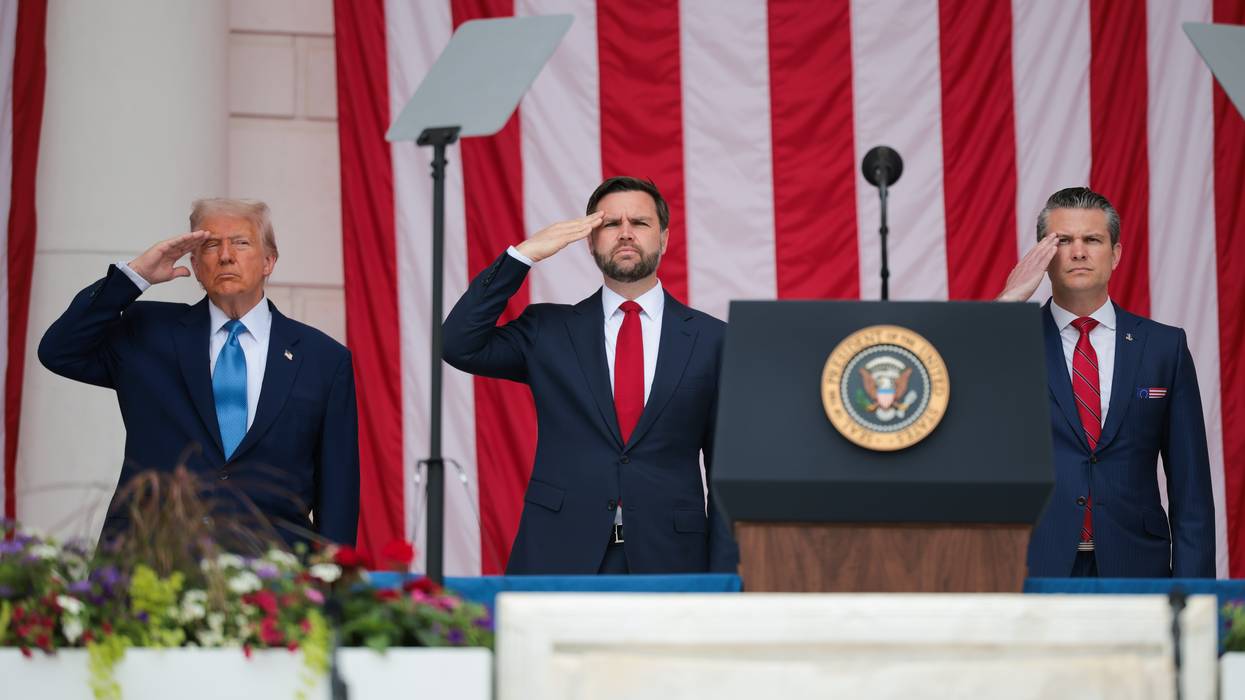
We’ve built a system that honors veterans with ceremony but abandons them in practice. The Trump administration’s spending priorities only make this worse.
The draft notice came on May 28, 1968—just a few days after high school graduation. He’d been working nights at the mill since February, saving up for a car. It was the first big thing he’d ever bought: a 1969 Pontiac Firebird, deep blue, four-barrel V8. He didn’t even have plates on it yet. His plan was to spend the summer driving—county roads, lakeside highways, maybe as far as Colorado if the money stretched. That was the future, as far as he could see it: a car, a road, freedom.
He figured he’d be back in a year or two. He felt certain of it—sure that the country asking for his service would still be there to welcome him home.
His uncle helped him bring the Firebird out to the farm and back it into the barn. They threw a tarp over the hood like they were sealing something up for safekeeping. When he returned, he thought, he’d pull it off, turn the key, and drive like no time had passed.
At the same moment funding was being clawed back from veterans sleeping in cars, Congress was being asked to greenlight unprecedented new spending on weapons, drones, and missile systems.
What he didn’t know—what no one tells you in the recruiter’s office or in the grainy footage of presidents giving speeches—is how long it takes to feel like you’ve really come home. Or what it feels like to live in a country that thanks you for your service but resents having to keep its promise.
That Firebird was sold 20 years ago to cover a surgery Veterans Affairs (VA) wouldn’t pay for. The barn’s long gone too. And now, in his 70s, the man who once covered that car with a tarp sits at a kitchen table with a blinking laptop and a stack of printouts, trying to navigate a benefits portal that feels like it was built to confuse him. He clicks through broken links, resubmits forms, dials numbers that go to voicemail. He’s not afraid of war anymore. He’s afraid of being forgotten. Of being told there’s no record of his claim. Of finding out too late that the service he relied on has been quietly defunded.
This year, Memorial Day arrived with its usual rituals—flag-raising, wreath-laying, the half-mast slow choreography of remembrance. But beneath the ceremony, something else is happening. Just days after taking office, the Trump administration launched a freeze on federal financial assistance across dozens of programs, including those housed within the Department of Veterans Affairs. Memo M-25-13 ordered agencies to halt disbursements for any grant or aid program considered inconsistent with the administration’s values. No list was released. No criteria published. By 5:00 pm the following day, payments were to stop.
The impact on veterans was immediate and severe. More than 44 VA-supported programs were effectively frozen overnight. The Supportive Services for Veteran Families (SSVF)—a backbone initiative that helps tens of thousands of veterans each year stay housed through rental assistance, case management, and emergency aid—was halted. The Grant and Per Diem (GPD) program, which funds transitional housing, peer mentorship, and reintegration for unhoused veterans, was put on hold. Legal aid clinics that help veterans resolve fines, access overdue benefits, and prevent evictions had their funding suspended or marked for review. Suicide prevention programs lost staffing and stability. Hotline response times lengthened. Providers pulled back outreach. Veterans called in, asking the same questions over and over: Is my housing still covered? Is the program still running? Will anyone still pick up the phone?
In many cases, the people on the other end didn’t have answers. Some had already been laid off.
After a wave of lawsuits and public outcry, a federal court issued an injunction. The memo was withdrawn, but the strategy was not. The administration made clear that programs centered on housing, reintegration, climate resilience, or “nontraditional” care models would remain under scrutiny. Meanwhile, federal officials quietly sunsetted the VA Servicing Purchase Program—a pandemic-era mortgage relief tool that allowed the VA to purchase delinquent loans and offer more affordable terms to struggling veterans. Over 5,000 veterans avoided foreclosure because of that program. There was no press release. No transition. Just silence.
Then Trump proposed the largest defense budget in American history: over $1 trillion for 2026. It was a stunning figure, even in a country accustomed to massive Pentagon spending. But what made it feel grotesque was the timing. At the same moment funding was being clawed back from veterans sleeping in cars, Congress was being asked to greenlight unprecedented new spending on weapons, drones, and missile systems. A trillion for war. But nothing for the woman calling a crisis line after her motel voucher runs out. Nothing for the outreach team trying to find a veteran living under an overpass. Nothing for the caseworker explaining to yet another caller that the check might be delayed.
This isn’t about belt-tightening. It’s about priorities. And those priorities have consequences.
Across the country, nonprofits that deliver VA-funded services are shrinking. Some are shutting down. Others are operating with skeleton crews, working double shifts to prevent people from falling through the cracks. Suicide rates among veterans remain stubbornly high—nearly double the civilian average. Women veterans, now one of the fastest-growing homeless populations in the U.S., are bearing the brunt of service gaps and shelter closures. In cities like Phoenix, Cleveland, and San Diego, outreach teams report rising waitlists, rising anxiety, and rising numbers of veterans returning for help they were once stable enough to no longer need.
The policy is abstract. The harm is not.
This isn’t about a man and his Firebird. It’s about the distance between what we say and what we do. It’s about the uncomfortable truth that we’ve built a system that honors veterans with ceremony but abandons them in practice. A system where aid is conditional, where services are quietly withdrawn, and where the paperwork is designed to wear people down.
We do not honor the dead by abandoning the living. We do not preserve freedom by gutting the systems that make it real. And we do not fulfill our patriotic duties by breaking the promises made to the very people who upheld them.
Memorial Day has passed. But the test it asks of us—who we are, what we stand for, and who we stand with—remains.
So the question is this: Will we salute once a year and forget by Tuesday? Or will we become a nation that matches its pageantry with policy, its slogans with service, its rhetoric with resources?
Veterans do not need ceremony. They need care. They need consistency. They need housing. They need healthcare. They need legal aid. They need a country that doesn’t ask them to prove again and again that they are worth helping.
And they need it now.
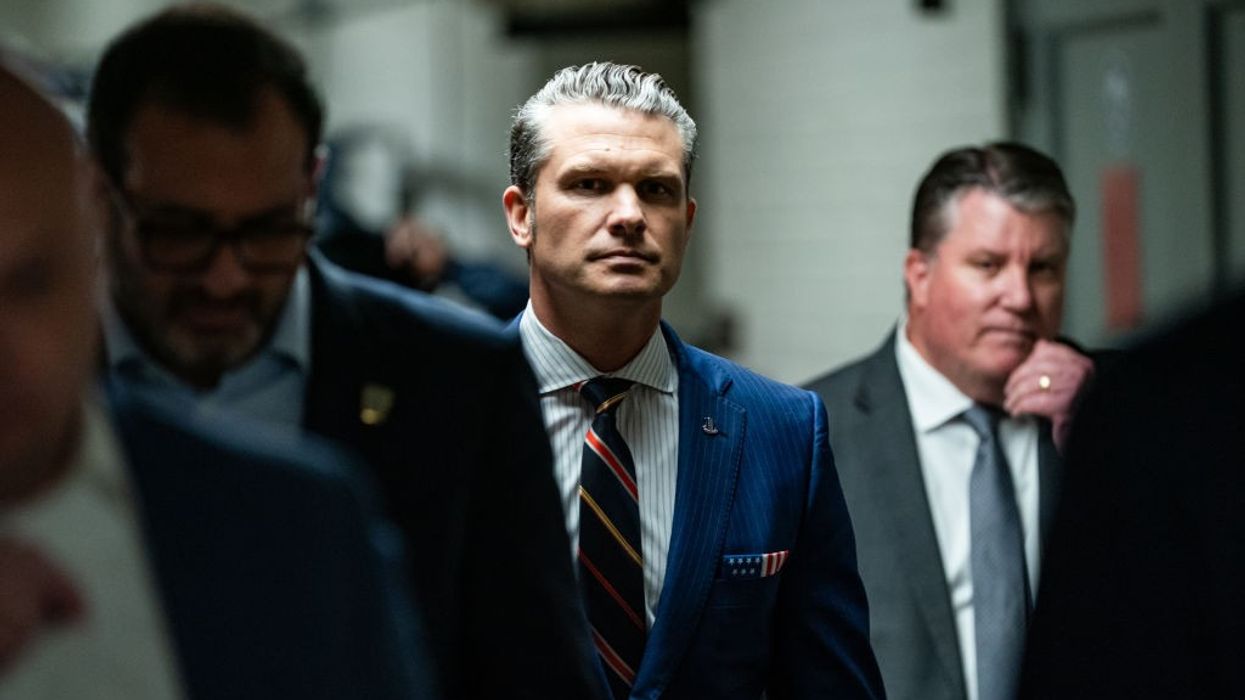
Most media reports ignore that Hegseth was a leading advocate for turning veterans care over to private doctors and hospitals.
Much media coverage of Pete Hegseth’s nomination as Secretary of Defense has focused, understandably, on controversial things he has said or done, along with his complete lack of administrative experience relevant to running a federal government department with a $920 billion budget and a workforce of three million.
But anyone in charge of the Pentagon also gets to oversee the Military Health System (MHS), which provides either private health insurance coverage or direct care for over 9.5 million service members, military retirees, and their families. As Defense Secretary Lloyd Austin noted in a recent DOD National Defense Strategy report, the MHS mission is to ensure that active duty personnel and their dependents are well-served by a skilled cadre of “medical personnel in uniform,” who number nearly 170,000.
Hegseth served as an ROTC-trained Army officer deployed to Iraq, Afghanistan, and Guantanamo Bay and is a longtime critic of “government healthcare,” claiming that it “doesn’t work.” So if Hegseth succeeds Austin, Pentagon officials trying to end a failed experiment with MHA privatization may find themselves ordered to march backward.
Rather than being upgraded and improved, the DOD’s network of military hospitals and clinics would remain under-resourced. And more of the MHA’s $61 billion annual budget would be spent on private insurance coverage that has failed to meet the needs of many service members and their dependents, particularly in rural areas.
A White House Advisor
During the first Trump Administration, Hegseth was a White House advisor who pushed the Department of Veterans Affairs (VA) to expand care outsourcing for nine million former service members. Trump’s first VA Secretary, a hold-over from Barack Obama’s administration, dragged his feet on implementing this ill-advised policy.
As a result, Dr. David Shulkin, an experienced hospital system administrator in the private and public sectors, was fired by Trump in 2018 after keeping him around for over a year. In his memoir, It Shouldn’t Be This Hard to Serve Your Country, Shulkin blames his downfall on Hegseth, who “never worked at the VA, knew nothing about managing a healthcare system, and had little understanding of the clinical and financial impact of the policies he was advocating.”
Hegseth does have a background as “a capable midgrade officer” who earned two Ivy League degrees and Bronze Stars, plus media experience ranging from writing for the Princeton Tory, a conservative undergraduate publication, to opining about military and veterans’ affairs on Fox & Friends Weekend where he’s a host. In any other Republican administration, this resume would qualify him as a Pentagon press secretary.
That Hegseth has instead risen to a cabinet pick is a testament to the continuing impact of the Koch Brothers-backed Concerned Veterans for America (CVA). After a failed bid to become the GOP nominee in a 2002 Republican primary race for a U.S. Senate seat in his native Minnesota, Hegseth became CVA’s first CEO and a leading advocate for turning veterans care over to private doctors and hospitals.
CVA was an astroturf upstart in veterans’ affairs and an outlier in pushing VA privatization. Traditional Veterans Services Organizations (VSOs)—like Veterans of Foreign Wars, American Legion, Disabled American Veterans, or Vietnam Veterans of America—represent millions of veterans. Their members pay dues and elect their leaders. They have local chapters and national conventions. They have roots in the community and provide valuable services to individual veterans who need help filing disability claims for service-related conditions, which qualifies them for VA care.
VSO lobbying victories include the passage of the PACT Act of 2022. This legislation made VA benefits and related medical coverage easier to obtain for nearly a million veterans, including many whose health was damaged due to burn pit exposure during post-9/11 wars in the Middle East. (Hegseth initially applauded and then criticized the wars in Iraq and Afghanistan, a flip-flop characteristic of his career. As Iraq war veteran and VoteVets co-founder Jon Soltz says about him, “I have been debating Pete Hegseth for years, and I can’t tell you what he stands for other than himself and his own ambition.”
An Astro-Turf Group
With few actual dues-payers, no VSO-style membership service programs, and a political agenda bankrolled by libertarian billionaires, CVA helped pass few bills that benefited the nation’s 19 million veterans. Instead, during the Obama era, the media-savvy group became a battering ram against tax-payer-funded healthcare in any form, a longtime bête noir of the Kochs.
Hegseth became their most visible and effective mouthpiece in a wide-ranging campaign to discredit VA care and the Affordable Care Act (ACA). In 2013, CVA ran video ads warning, in Hegseth’s words, that all Americans would soon “face long wait times, endless bureaucracy, and poor service” if Congress expanded health care access by subsidizing private insurance coverage. The result, he claimed, would be billions of dollars wasted on “a nationalized health care plan that will bring the same bureaucratic dysfunction to the larger U.S. healthcare market”–as if the VA were a model for “Obamacare,” which it certainly wasn’t.
A year later, this propaganda offensive, closely coordinated with right-wing Republicans on Capitol Hill, claimed the scalp of retired four-star General Eric Shinseki, the Vietnam veteran who was Barack Obama’s first VA Secretary. Shinseki became the fall guy for a localized scandal involving misconduct by a few VA hospital managers in Phoenix. Their doctoring of data on medical appointment wait times—to earn bonus payments—led to CVA-amplified false claims that 40 Phoenix area vets had died due to delayed care. The result was that mainstream media packed journalism at its worst, and there was growing pressure for more out-sourcing of VA care despite its higher quality, lower cost, and greater accessibility than private alternatives.
On Capitol Hill, bi-partisan majorities passed the VA Choice Act of 2014 and, four years later, the VA MISSION Act. Both opened the floodgates for increasingly costly and disastrous privatization of the nation’s most extensive public healthcare system. CVA helped engineer the passage of each measure. After stepping down as CEO of Concerned Veterans of America ten years ago and becoming a Fox News commentator, Hegseth continued to advise President Trump on veterans’ affairs; other CVA alums served in official positions at the White House or VA headquarters in Washington.
Hegseth’s return to the conservative media eco-system of his college years has paid handsome rewards; he has become a multi-millionaire (despite two divorces) as a Fox & Friends talking head, paid speaker, and bestselling author of The War on Warriors, a critique of what he calls a "woke military." Like other high-paid former military officers, his benefit package in the private sector leaves Hegseth unlikely ever to need the VA, federally subsidized insurance coverage obtained through the ACA, or, when he retires, Medicare coverage. If confirmed, his pay as DOD Secretary will be a mere $246,000 per year, but with lucrative “revolving door” opportunities in the future, when and if he transitions back to the private sector from the Pentagon.
Pentagon Cost Savings?
Meanwhile, enlisted personnel and veterans from poor and working-class backgrounds bear the brunt of failed CVA-backed experiments with the privatization of the Military Health System and the VA. Under Trump and Biden, the DOD was flush with money for military aid, expensive new weapons systems, and base maintenance worldwide. Nevertheless, the Pentagon cut healthcare delivery costs for its workforce, retirees, and dependents.
Military hospitals were closed, staff positions cut, and several hundred thousand more patients were shifted to TRICARE, a federally funded form of private insurance. Newcomers to the private sector soon reported having greater difficulty getting timely medical appointments or accessing care in areas of the country with a shortage of primary care providers and specialists.
The Pentagon found that contracting out left its hospitals and clinics “chronically understaffed” and less able to “deliver timely care to beneficiaries or ensure sufficient workload to maintain and sustain critical skills. After reassessing the situation, the DOD launched an effort to “re-attract” patients back to the MHS. As studies have shown, in-house care produces better outcomes at lower cost, with fewer racial disparities—an essential advantage for a patient population of nearly 40 percent non-white.
If Hegseth becomes DOD Secretary by recess appointment or Senate confirmation, he will undoubtedly stop bringing TRICARE beneficiaries back into the MHS. He will also halt efforts to rebuild the DOD’s in-house healthcare delivery capacity.
And Hegseth will not be the only ideological foe of “government healthcare” in a high-level Trump Administration position. His fellow cabinet nominee, former Congressman Doug Collins, an Iraq War veteran from Georgia, will be eager to pick up where Robert Wilkie, Trump’s second VA secretary, left off with his privatization efforts in 2021. And, with the biggest impact, Dr. Mehmet Oz, the TV celebrity picked by Trump to run the Centers for Medicare and Medicaid, will further undermine traditional Medicare by replacing it with for-profit Medicare Advantage plans, on a more universal basis.
On all three fronts, these Trump appointees will weaken the public provision of healthcare that currently benefits more than 80 million people, making expanding such programs even more difficult.
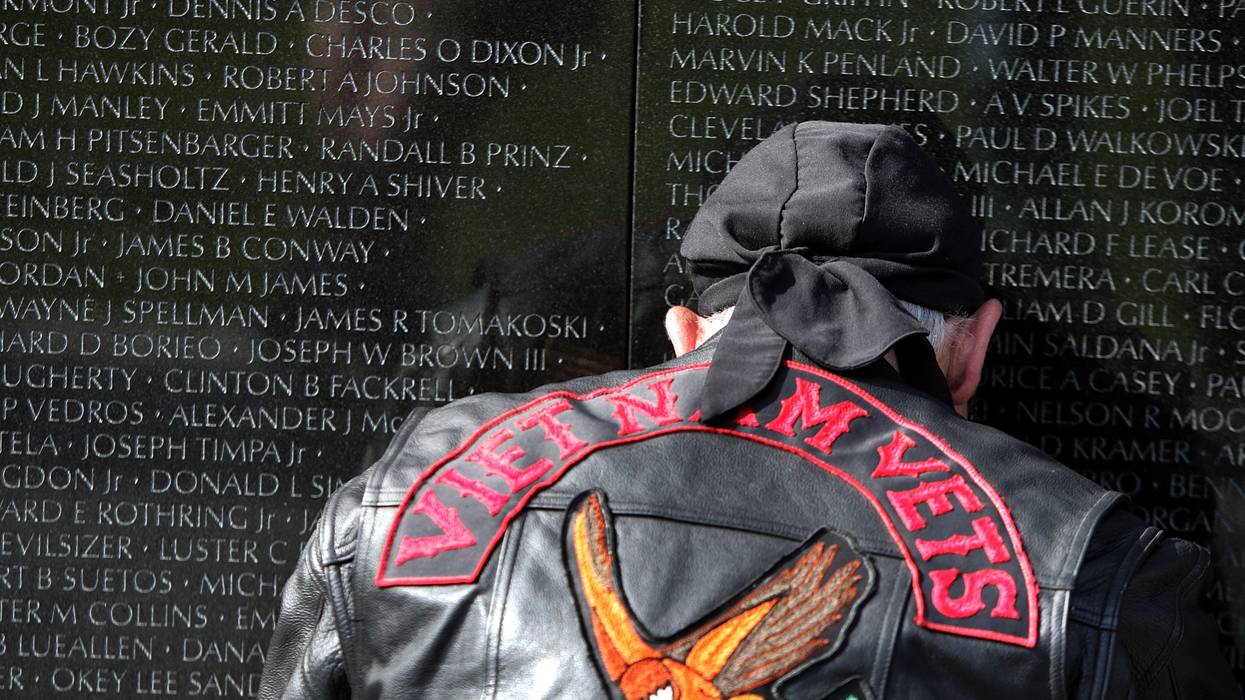
Donald Trump and JD Vance want to privatize the system and make sure that future generations of veterans who have sacrificed so much for their country don’t get the kind of care that has literally saved my life.
In 1968, when I was twenty years old, I volunteered to serve with the Marines in Vietnam. I was trained to be a Navy Corpsman (medic) and attached to the Marines. I was only in Vietnam five weeks before being seriously wounded. I was with a company of 83 Marines when we were given orders to go to the top of a mountain, where we became completely surrounded by 1500 North Vietnamese Regulars. It is impossible for me to describe what it was like to be the target of 1500 machine guns firing all at once. Eighty percent of us were either killed or wounded in the first ten minutes of the battle. When the firing quieted down, I belly-crawled over to a Marine whose left arm was blown off and that’s when I was shot in the hip. My hip was blown off.
For most of the past fifty-plus years, I have been cared for by the VA Healthcare system. I’ve watched with admiration as the system has consistently improved - sometimes, remarkably - over those five decades. But now I watch with alarm as former President and current candidate for another term Donald Trump and his running mate J.D. Vance and their allies at the Heritage Foundation threaten the existence of the kind of care veterans like me depend on.
Trump and Vance and the Heritage Foundation’s Project 2025 accuse the VA of making veterans dependent on care they don’t really need. They attack the dedicated nurses, doctors and countless others who have cared for me as being bad apples and callous sadists, and they claim that our PTSD is nothing more than having a bad hair day. They want to privatize the system and make sure that future generations of veterans who have sacrificed so much for their country don’t get the kind of care that has literally saved my life.
Let me tell you more about my journey and about the care I have received. After being shot in the hip, I lay with an open wound in dense jungle for five days before help could reach me. After being rescued by helicopter, it took seven days at a field hospital for surgeons to stabilize me enough to be flown to a much larger and better equipped hospital in Japan. My whole right hip joint was destroyed, plus my hip was horribly infected with osteomyelitis, a recurrent life-threatening bacterial infection. The kind of care I received back in the early 70’s at the VA was too often hit and miss, so I stopped going. But I returned in the mid-1990’s to find that the quality of care had radically changed for the better.
The change was so obvious when I walked in the door. The attitude towards us by the staff was wonderful. The whole VA staff had learned a lot about how to manage the complex symptoms of PTSD. When I went back to the VA hospital for care I knew I needed help dealing with psychological and emotional issues, not just my physical illness and injury. I was angry at my country and thought I had every right to be angry, even the responsibility to be angry. VA healthcare has helped me find the options I needed to deal with my anger.
Pain management has been another major challenge for me and many other Vietnam veterans over the past five decades. If I hadn’t had constant care from the VA, I strongly believe I wouldn’t be here today.
Over the past five decades I have seen first-hand how VA doctors and nurses have evolved in their understanding of the complex issues that veterans are dealing with. I experienced horrible healthcare treatment back in the 1970s and 80s, but now I’m receiving what I consider the best care there is. I wouldn’t go anywhere else.
This is why I urge all veterans and non-veterans to pay close attention to the anti-VA messages that are being broadcast by folks whose main goal is to send veterans to private sector doctors and hospitals.
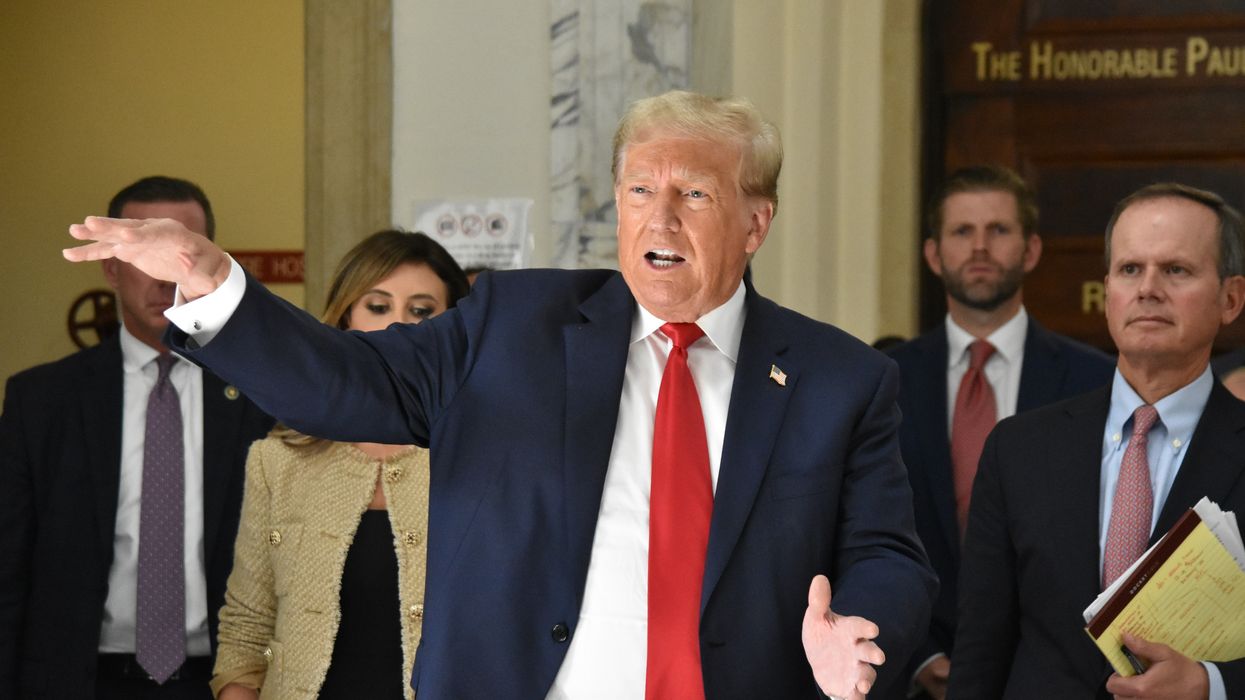
It’s rare that a union grievance settlement becomes a U.S. presidential campaign issue. But, thanks to the American Federation of Government Employee’s successful defense of workers unfairly dismissed by the Department of Veterans Affairs (VA), Donald Trump is now running for the White House on a platform that includes firing “every corrupt VA bureaucrat who Joe Biden has outrageously refused to remove from the job or put back in the job.”
Trump made that pledge, during an August speech in New Hampshire, delivered shortly after AFGE and the VA settled their long-running dispute about the impact of Trump-era legislation on the due process rights of 300,000 VA staffers. In Trump’s view, the union’s defense of “bad VA employees” represents a “shocking act of betrayal of America’s veterans, as well as the tens of thousands of dedicated professionals” also employed by the agency.
As reported by the Federal News Network on July 31, thousands of fired workers will be eligible for either reinstatement or back pay, at a total cost estimated “to be in the hundreds of millions of dollars.” Hundreds of former employees “who the VA and AFGE mutually agreed were terminated for grievous misconduct will not be eligible for return to work,” the VA announced.
“This agreement will allow VA and AFGE to move forward and focus on what matters most: delivering world-class care and benefits to veterans, their families, caregivers and survivors,” said VA Secretary Denis McDonough. “Union employees are the backbone of VA’s workforce, and we are proud to support them.” AFGE National President Everett Kelley called the settlement “historic” and a demonstration of “what’s possible when labor and management come to the table in good faith to solve problems together.”
Their joint announcement ended a long legal battle over the VA Accountability and Whistleblower Act, Trump-backed legislation enacted in 2017, with bipartisan support. That struggle began when—as the Federal Labor Relations Authority (FLRA) later found—Trump’s VA Secretary Robert Wilkie refused to bargain with AFGE over the impact and implementation of the new law. In an August interview with News Max, the right-wing media outlet, Wilkie blamed Biden, not an arbitrator, the FLRA and a federal appeals court, for “negating the authority that President Trump gave me” to “circumvent the usual bureaucratic protections that bad employees use to stay on for life.”
On the presidential campaign trail, Wilkie’s former boss is promising to put the Accountability Act “back in full force” when and if he returns to the White House. Trump’s Republican allies in the House are also trying to pass the “Restore VA Accountability Act,” to fast-track VA firings in the future, whether Trump wins or not. Their bill would allow the third largest federal agency to demote, suspend, and fire workers based on a lesser standard of proof already successfully challenged in a federal appeals court decision. According to AFGE, it would also undermine the new collective bargaining agreement the national union reached with the VA earlier this year and ratified in June.
How did federal employee due process rights become a 2024 campaign topic? The back story is worth recalling because Trump launched an all-out assault on workers’ rights during his four years in office; a second term could be even worse. As noted above, bipartisan majorities in the House and Senate voted six years ago to weaken due process protections for VA employees and limit their right to appeal job-related discipline. Among Democrats, the legislation was backed by now Sen. Kyrsten Sinema (I-Ariz.), a Democrat at the time and a big proponent of out-sourcing veterans’ care to the private healthcare industry.
A leading Republican champion was Sen. Marco Rubio (R-Fla.), whose 2016 reelection campaign for the Senate received financial help from the Concerned Veterans for America (CVA), an astro-turf group backed by the Koch Brothers to further their agenda of VA privatization and union busting. During Trump’s first year in office, CVA made a six-figure investment in getting the Accountability Act passed, via media buys and creation of a digital tool that facilitated direct lobbying of members of Congress. This campaign gained credibility when old-line Veterans Service Organizations (VSOs), which has an actual membership base, bought into the idea that the VA needed new tools to weed out bad managers and bargaining unit members.
Ian Hoffmann, a former AFGE legislative and political organizer, helped VA caregivers lobby against the measure because, in his view, “it was part of a larger plan to dismantle and privatize the VA by weakening the collective voice of its workforce.” In the leadup to the vote, he recalls, “it quickly became clear what we were up against. Lobbying in Nevada and California, we heard expressions of sympathy from our ‘friends’ in Congress, but many were swayed by VSO support for the Accountability Act. One staffer told us that her member of Congress was getting mail, which favored passage of the legislation by a 10-1 margin. When pressed, she acknowledged that the letters were almost entirely from templates provided by the CVA.”
In his later work with frontline VA caregivers, Hoffmann saw firsthand “how the actions of top managers appointed by Trump, who were hostile to the mission of the agency, used the Accountability Act to make personnel policies, working conditions, and staffing levels immeasurably worse.” This had a far greater adverse impact on nine million patients than any individual failings of union-represented workers or lower-level managers in the nation’s largest public healthcare system.
In 2018, Trump used a series of executive orders to further modify disciplinary procedures, weaken seniority rights, and limit the long-established practice of allowing union stewards to spend compensated time representing their coworkers during working hours. VA management began to remove AFGE offices from agency property, making it harder for workers with job-related questions and concerns to access union reps. A union lawsuit temporarily blocked these changes, but they were finally implemented in February of 2020. In contract bargaining with AFGE and other VA unions, Trump appointees sought major concessions from AFGE, including weakening job safety and health protections.
Whether VA employees belonged to a union or held a career manager job, the Trump administration succeeded in creating a toxic work environment for many of them. In the view of Steve Robertson, former legislative director for the American Legion and a past Senate Veterans Affairs Committee staffer, the VA’s new personnel policies did far-reaching and intentional damage. “It no longer made sense for people to prioritize the VA when seeking government work,” he points out. “Why would someone come to work at the VA when they could work at the DOD or NUH or other agencies where there were more protections?”
As AFGE attorney Cathy McQuiston noted, when the union launched its legal fightback in 2018, the Trump Administration was implementing the Accountability Act “in the most harmful way and the broadest way it can. And it will only pull back from doing that if ordered to do so by some third party.”
As we report in our book, Our Veterans: Winners, Losers, Friends and Enemies on the New Terrain of Veterans Affairs, during the first six months that the VA Accountability Act was in effect, only a handful of higher-level officials were removed for their poor performance or misconduct. Meanwhile, there were 1,264 other discharge cases—all involving low-level employees who worked in VA claims processing, food service, and custodial jobs. Veterans comprise about a third of the agency’s workforce and some VA patients, with a history of homelessness or mental illness, can qualify for compensated work-therapy programs at VA facilities. Even these disabled workers were at risk of unfair discipline under the Accountability Act.
The 2017 law also established an Office of Accountability and Whistleblower Protection, with dozens of investigators. Its first director, Peter O’Rourke, was—like then-VA Secretary Wilkie—a former Republican Party operative not very interested in rooting out “corrupt bureaucrats” among his fellow Trump appointees. At the VA, O’Rourke ended up “collecting pay, but doing little work,” as the Washington Post reported. He was forced to resign in 2018. During O’Rourke’s brief tenure, he was also accused of protecting political allies, within the agency, who were under investigation and not providing timely reports to Congress. As of late 2019, several thousand whistleblower complaints had been received, but only one resulted in any recommended discipline of a senior official, according to the Project on Government Oversight.
In the meantime, a dedicated professional staffer of the VA in northern California—who became eligible for back pay and reinstatement under the AFGE grievance settlement—paid a heavy price for being a whistle-blower in 2017. Then a member of AFGE Local 2152, Patty Stamos was a licensed clinical social worker at a community-based clinic in Auburn, CA, which serves about 4,000 veterans. According to Stamos, “over fifty mental health patients, some high risk for suicide, failed to receive vital mental health care” during two periods of her approved absence.
After making this supposedly “protected disclosure” to management, Stamos became the subject of supervisory complaints about delays in her written documentation of work on a heavy case-load of patients. During her nearly five years at the VA, she had never been put on a Performance Improvement Plan (PIP) or received any actual prior discipline. But, in early 2018, she was fired.
Stamos believes that the Accountability Act, contrary to its stated purpose, “did not hold VA mental health management accountable for abuses of power and neglect of veterans. It did not protect me, or any other VA employee from Whistleblower retaliation. And it did not protect vulnerable veterans whose mental health treatment was sidelined for months.” Last month, Stamos left her job at a private and returned to work at the VA clinic in Auburn, where she was fired more than five years ago. She has been assigned to a new position, rather than her preferred old one, and “still has not seen a dime of back pay.” She estimates that her back pay, minus interim earnings, will amount to hundreds of thousands of dollars.
As Stamos and other Accountability Act victims await full compensation for their financial losses, VA unions and their allies are warning Congressional Democrats not to join Republicans—and Donald Trump—in further costly and counter-productive grand-standing about VA worker “accountability.” On Capitol Hill, the “Restore VA Accountability Act” has backers like House Veterans Affairs Committee Chair Mike Bost (R-Ill.), who claims to be once again just targeting that “small percentage of employees who are hurting veterans” through their poor performance or personal misconduct.
In its letter of opposition, the Partnership for Public Service, a non-partisan, non-profit group, argues that the legislation backed by Bost would “erode and eliminate the role of third, party independent executive review” of discharge cases by the Merit Systems Protection Board (MSPB). “This approach unnecessarily compromises due process for line employees while reducing accountability for senior executives and political leaders during removal proceedings,” the Partnership points out.
The National Federation of Federal Employees (NFFE), which represents about 9,000 nurses, medical officers, pharmacists, and social workers at the VA, reminded Congress that the last time it lowered the burden of proof for misconduct from a “preponderance of the evidence” to “substantial evidence,” the result was disciplinary action based on scant evidence of wrongdoing.
AFGE’s objections include the fact the “Restore VA Accountability Act” would result in more employees being disciplined before being put on a Performance Improvement Plan. Echoing former Legion official Steve Robertson’s observation about the impact of the original Accountability Act, the union warned that “diminishing the due process and collective bargaining rights of VA employees compared to federal employees in other agencies” will “dissuade potential employees from working at the VA” if similar jobs are available with better protections elsewhere in the federal government.
Other critics fear that any negative impact on new hiring will make it harder for the VA to meet the expanded demand for its services created by passage of the PACT Act last year. That legislation allocated $280 billion, over the next ten years, for healthcare and benefits for hundreds of thousands of former soldiers suffering from burn pit exposure in Iraq and Afghanistan. According to Don Kettl, a former dean of the University of Maryland School of Public Policy, the Bost bill “is a serious mistake that would harm the Department of Veterans Affairs and injure the nation’s effort to care for those who have given so much to it.”
In the Republican-dominated U.S. House, the current volume of seriously mistaken legislation is so large that a bill claiming to “restore accountability” at the VA doesn’t draw much attention and might even sound like a good idea. But legislation passed six years ago, under that same misleading label, proved to be detrimental to veterans, their care-givers, and taxpayers who fund the VA healthcare system. So Trump’s recent campaign pledge to restore “historic VA reforms” like this in 2025, if he’s elected next November, is a political threat that needs to be taken very seriously.