SUBSCRIBE TO OUR FREE NEWSLETTER
Daily news & progressive opinion—funded by the people, not the corporations—delivered straight to your inbox.
5
#000000
#FFFFFF
To donate by check, phone, or other method, see our More Ways to Give page.
Daily news & progressive opinion—funded by the people, not the corporations—delivered straight to your inbox.
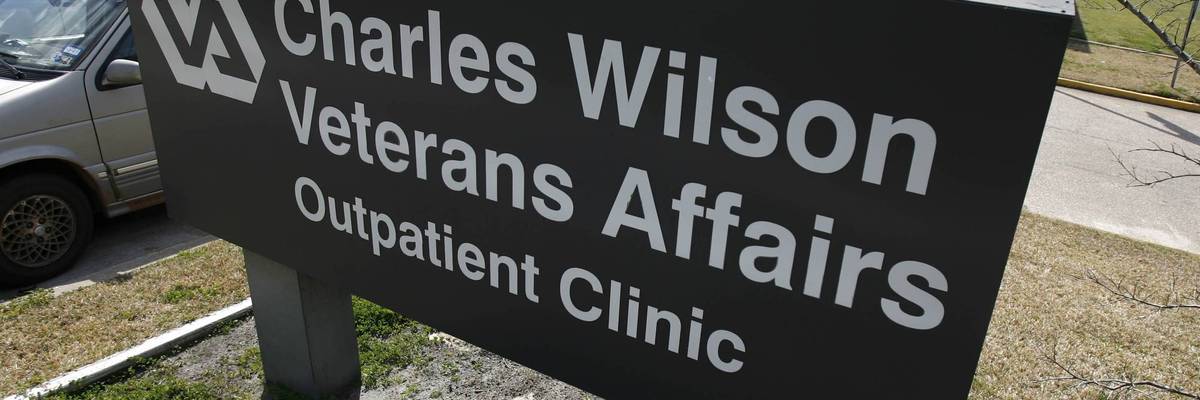
The Charles Wilson Veterans Affairs clinic in Lufkin, named after Former US Congressman Charlie Wilson, is seen on March 8, 2007.
This isn’t just a rollback. It’s a deliberate erasure of rights that we fought for in the wake of deeply personal and collective loss.
In 2022, my wife and I lost our first child. We named them June. They were deeply wanted and fiercely loved. In one fateful appointment, our entire worlds changed. We learned that June had a severe fetal bladder abnormality and was unable to produce amniotic fluid. Without it, their lungs would never develop. They would not survive.
We made the impossible decision to end the pregnancy—an act of compassion, love, and medical necessity.
At the time, the Department of Veterans Affairs (VA) had a total ban on abortion care and counseling.
No exceptions for rape. No exceptions for incest. Not even to save a veteran’s life.
Veterans and our families deserve futures built on compassion, justice, and love—not fear.
After our loss, the only way I felt I could keep breathing was to turn that grief into meaning. I shared our story with lawmakers to help reverse this dangerous policy so that veterans and their families could turn to the VA—no matter the circumstance or where they lived. That fall, the VA finally took steps to reverse the ban, signaling a long-overdue shift toward care, autonomy, and dignity.
But that progress was short-lived.
The VA just finalized a new abortion ban policy that, once again, excludes exceptions for rape or incest and offers only vague assurances that it will intervene if our lives are at risk. They initially implemented this enormous change in secret without telling veterans or their families.
In effect, it returns the VA to what was once the most extreme abortion ban in the country—an outright prohibition on care and counseling that applies to every VA facility nationwide, regardless of state law.
This isn’t just a rollback. It’s a deliberate erasure of rights that we fought for in the wake of deeply personal and collective loss.
And it is not happening in isolation. The same administration driving this ban is also working diligently to eliminate gender-affirming care, defund programs for minority and underrepresented veterans, and strip inclusive language and data collection from federal policy. The message is unmistakable: Some veterans count. Others don’t.
Veterans are not a monolith. We are a diverse community—LGBTQIA+, people of color, disabled, parents, caregivers, survivors, and yes, women too. Our community exists at every intersection of identity and experience, and our families serve alongside us. Our care cannot be conditional. Our humanity is not negotiable.
Policy is never just about one issue. It is intersectional—because our lives are intersectional.
Reproductive care cannot be separated from gender-affirming care, from disability access and mental health, from racial justice, or maternal health. Our needs don’t exist in silos, and neither do we. When one right is taken away, the loss reverberates across all the others.
I’ve seen what’s possible when we refuse to stay silent—how lived experience can reshape policy and expand care that has never existed before. And I know exactly what is at stake when care is denied. Pregnancy can change on a dime.
June’s life, though brief, transformed mine. Through their memory, I found purpose. I found a voice. And in their honor, I will continue working to ensure that no veteran or family ever has to face what we faced alone.
We should be building systems rooted in care, equity, and truth. We should be honoring the fullness of who veterans are, how we serve, and how we build our families. Instead, our fundamental rights are being stripped away—one policy memo at a time—and once again, we are being asked to fight for the right to make personal decisions about our health, our futures, and our families.
I will not allow June’s legacy to become another casualty of politics. Their life will be a call to care.
This moment demands more than endurance. It demands action.
The policies we pass—within the VA and beyond—shape the futures of veterans and the people who love us. Had my wife not been able to access critical care in her time of need—had we not been given the chance to make the most compassionate choice amid impossible circumstances—we might never have known the joy of raising our child today, a joy born from grief and shaped by love.
Veterans and our families deserve futures built on compassion, justice, and love—not fear.
Because in the end, we are all only human.
Dear Common Dreams reader, It’s been nearly 30 years since I co-founded Common Dreams with my late wife, Lina Newhouser. We had the radical notion that journalism should serve the public good, not corporate profits. It was clear to us from the outset what it would take to build such a project. No paid advertisements. No corporate sponsors. No millionaire publisher telling us what to think or do. Many people said we wouldn't last a year, but we proved those doubters wrong. Together with a tremendous team of journalists and dedicated staff, we built an independent media outlet free from the constraints of profits and corporate control. Our mission has always been simple: To inform. To inspire. To ignite change for the common good. Building Common Dreams was not easy. Our survival was never guaranteed. When you take on the most powerful forces—Wall Street greed, fossil fuel industry destruction, Big Tech lobbyists, and uber-rich oligarchs who have spent billions upon billions rigging the economy and democracy in their favor—the only bulwark you have is supporters who believe in your work. But here’s the urgent message from me today. It's never been this bad out there. And it's never been this hard to keep us going. At the very moment Common Dreams is most needed, the threats we face are intensifying. We need your support now more than ever. We don't accept corporate advertising and never will. We don't have a paywall because we don't think people should be blocked from critical news based on their ability to pay. Everything we do is funded by the donations of readers like you. When everyone does the little they can afford, we are strong. But if that support retreats or dries up, so do we. Will you donate now to make sure Common Dreams not only survives but thrives? —Craig Brown, Co-founder |
In 2022, my wife and I lost our first child. We named them June. They were deeply wanted and fiercely loved. In one fateful appointment, our entire worlds changed. We learned that June had a severe fetal bladder abnormality and was unable to produce amniotic fluid. Without it, their lungs would never develop. They would not survive.
We made the impossible decision to end the pregnancy—an act of compassion, love, and medical necessity.
At the time, the Department of Veterans Affairs (VA) had a total ban on abortion care and counseling.
No exceptions for rape. No exceptions for incest. Not even to save a veteran’s life.
Veterans and our families deserve futures built on compassion, justice, and love—not fear.
After our loss, the only way I felt I could keep breathing was to turn that grief into meaning. I shared our story with lawmakers to help reverse this dangerous policy so that veterans and their families could turn to the VA—no matter the circumstance or where they lived. That fall, the VA finally took steps to reverse the ban, signaling a long-overdue shift toward care, autonomy, and dignity.
But that progress was short-lived.
The VA just finalized a new abortion ban policy that, once again, excludes exceptions for rape or incest and offers only vague assurances that it will intervene if our lives are at risk. They initially implemented this enormous change in secret without telling veterans or their families.
In effect, it returns the VA to what was once the most extreme abortion ban in the country—an outright prohibition on care and counseling that applies to every VA facility nationwide, regardless of state law.
This isn’t just a rollback. It’s a deliberate erasure of rights that we fought for in the wake of deeply personal and collective loss.
And it is not happening in isolation. The same administration driving this ban is also working diligently to eliminate gender-affirming care, defund programs for minority and underrepresented veterans, and strip inclusive language and data collection from federal policy. The message is unmistakable: Some veterans count. Others don’t.
Veterans are not a monolith. We are a diverse community—LGBTQIA+, people of color, disabled, parents, caregivers, survivors, and yes, women too. Our community exists at every intersection of identity and experience, and our families serve alongside us. Our care cannot be conditional. Our humanity is not negotiable.
Policy is never just about one issue. It is intersectional—because our lives are intersectional.
Reproductive care cannot be separated from gender-affirming care, from disability access and mental health, from racial justice, or maternal health. Our needs don’t exist in silos, and neither do we. When one right is taken away, the loss reverberates across all the others.
I’ve seen what’s possible when we refuse to stay silent—how lived experience can reshape policy and expand care that has never existed before. And I know exactly what is at stake when care is denied. Pregnancy can change on a dime.
June’s life, though brief, transformed mine. Through their memory, I found purpose. I found a voice. And in their honor, I will continue working to ensure that no veteran or family ever has to face what we faced alone.
We should be building systems rooted in care, equity, and truth. We should be honoring the fullness of who veterans are, how we serve, and how we build our families. Instead, our fundamental rights are being stripped away—one policy memo at a time—and once again, we are being asked to fight for the right to make personal decisions about our health, our futures, and our families.
I will not allow June’s legacy to become another casualty of politics. Their life will be a call to care.
This moment demands more than endurance. It demands action.
The policies we pass—within the VA and beyond—shape the futures of veterans and the people who love us. Had my wife not been able to access critical care in her time of need—had we not been given the chance to make the most compassionate choice amid impossible circumstances—we might never have known the joy of raising our child today, a joy born from grief and shaped by love.
Veterans and our families deserve futures built on compassion, justice, and love—not fear.
Because in the end, we are all only human.
In 2022, my wife and I lost our first child. We named them June. They were deeply wanted and fiercely loved. In one fateful appointment, our entire worlds changed. We learned that June had a severe fetal bladder abnormality and was unable to produce amniotic fluid. Without it, their lungs would never develop. They would not survive.
We made the impossible decision to end the pregnancy—an act of compassion, love, and medical necessity.
At the time, the Department of Veterans Affairs (VA) had a total ban on abortion care and counseling.
No exceptions for rape. No exceptions for incest. Not even to save a veteran’s life.
Veterans and our families deserve futures built on compassion, justice, and love—not fear.
After our loss, the only way I felt I could keep breathing was to turn that grief into meaning. I shared our story with lawmakers to help reverse this dangerous policy so that veterans and their families could turn to the VA—no matter the circumstance or where they lived. That fall, the VA finally took steps to reverse the ban, signaling a long-overdue shift toward care, autonomy, and dignity.
But that progress was short-lived.
The VA just finalized a new abortion ban policy that, once again, excludes exceptions for rape or incest and offers only vague assurances that it will intervene if our lives are at risk. They initially implemented this enormous change in secret without telling veterans or their families.
In effect, it returns the VA to what was once the most extreme abortion ban in the country—an outright prohibition on care and counseling that applies to every VA facility nationwide, regardless of state law.
This isn’t just a rollback. It’s a deliberate erasure of rights that we fought for in the wake of deeply personal and collective loss.
And it is not happening in isolation. The same administration driving this ban is also working diligently to eliminate gender-affirming care, defund programs for minority and underrepresented veterans, and strip inclusive language and data collection from federal policy. The message is unmistakable: Some veterans count. Others don’t.
Veterans are not a monolith. We are a diverse community—LGBTQIA+, people of color, disabled, parents, caregivers, survivors, and yes, women too. Our community exists at every intersection of identity and experience, and our families serve alongside us. Our care cannot be conditional. Our humanity is not negotiable.
Policy is never just about one issue. It is intersectional—because our lives are intersectional.
Reproductive care cannot be separated from gender-affirming care, from disability access and mental health, from racial justice, or maternal health. Our needs don’t exist in silos, and neither do we. When one right is taken away, the loss reverberates across all the others.
I’ve seen what’s possible when we refuse to stay silent—how lived experience can reshape policy and expand care that has never existed before. And I know exactly what is at stake when care is denied. Pregnancy can change on a dime.
June’s life, though brief, transformed mine. Through their memory, I found purpose. I found a voice. And in their honor, I will continue working to ensure that no veteran or family ever has to face what we faced alone.
We should be building systems rooted in care, equity, and truth. We should be honoring the fullness of who veterans are, how we serve, and how we build our families. Instead, our fundamental rights are being stripped away—one policy memo at a time—and once again, we are being asked to fight for the right to make personal decisions about our health, our futures, and our families.
I will not allow June’s legacy to become another casualty of politics. Their life will be a call to care.
This moment demands more than endurance. It demands action.
The policies we pass—within the VA and beyond—shape the futures of veterans and the people who love us. Had my wife not been able to access critical care in her time of need—had we not been given the chance to make the most compassionate choice amid impossible circumstances—we might never have known the joy of raising our child today, a joy born from grief and shaped by love.
Veterans and our families deserve futures built on compassion, justice, and love—not fear.
Because in the end, we are all only human.