SUBSCRIBE TO OUR FREE NEWSLETTER
Daily news & progressive opinion—funded by the people, not the corporations—delivered straight to your inbox.
5
#000000
#FFFFFF
To donate by check, phone, or other method, see our More Ways to Give page.
Daily news & progressive opinion—funded by the people, not the corporations—delivered straight to your inbox.
It is currently unclear which charges Mangione would plead guilty to as part of a plea agreement, according to NBC News.
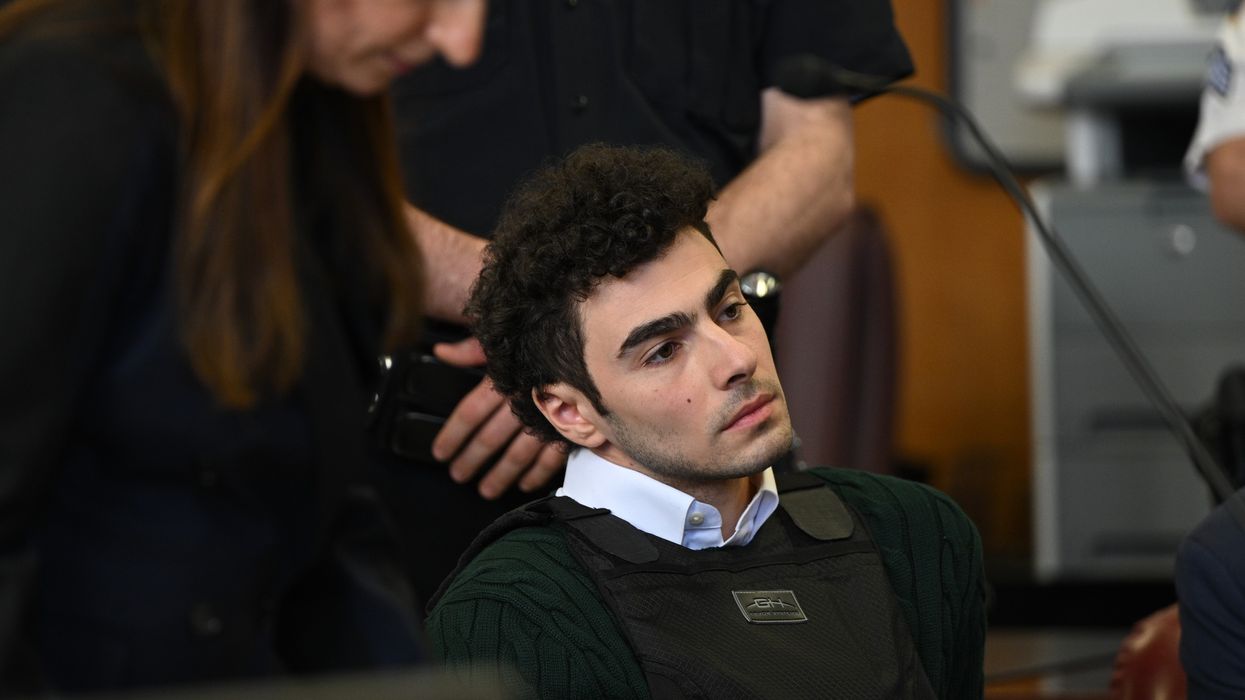
Luigi Mangione is reportedly set to plead guilty to federal charges related to the 2024 murder of UnitedHealthcare CEO Brian Thompson.
According to a Thursday report from NBC News, prosecutors are negotiating a plea agreement where the 28-year-old Mangione will plead guilty to at least one of the federal charges that were brought against him.
The NBC report noted that it is unclear which charges Mangione would plead guilty to, and that the defendant could reverse his plea "at any time, even during the hearing."
In a December 2024 indictment, federal prosecutors charged Mangione with two counts of stalking, one count of murder, and a firearms offense for his alleged role in Thompson's killing.
Prosecutors had initially sought the death penalty for Mangione, but a federal judge in January dismissed the murder and firearms offense, thus taking capital punishment off the table.
Mangione also faces New York state charges, the most serious of which is murder in the second degree.
Manhattan District Attorney Alvin Bragg had initially charged Mangione with first degree murder in furtherance of terrorism, but a New York City judge last year determined that the defendant's alleged actions did not rise to the level of terrorism and dismissed the charge.
Researchers found prior authorization—which allows insurers to overrule physicians and deny coverage—acts as a “corporate care veto” that drains tens of billions of dollars each year that could go toward patients.
A new report is making the case for ending a widely-hated and sometimes deadly tactic used by for-profit health insurers to deny needed care.
It's called "prior authorization," and it allows health insurance companies to override physicians and decide whether certain care is medically necessary before it is covered.
The policy brief, published Monday by the American Economic Liberties Project (AELP), an anti-monopoly think tank, argues that the system is a massive drag on the US healthcare system, draining doctors of their time, fueling hiring shortages, and—most importantly—worsening treatable health problems for millions of Americans.
"This practice has massive financial and human costs, as I know personally from my family’s own tragic experience,” said the report's author, Hannah Garden-Monheit—a senior fellow at the AELP, whose late father was denied rehab by UnitedHealthcare after cancer forced his leg to be amputated.
"Prior authorization may have started as a narrow cost-control tool," she explained. "But it’s mushroomed into private insurers’ strategy for diverting resources from care toward their own profits. It’s time to ban prior authorization as we know it.”
The report examines how prior authorization went from a tool used sparingly to prevent payment for unnecessary treatments to what Garden-Monheit and co-author, AELP senior healthcare fellow Emma Freer, described as a "corporate care veto."
Around 1 in 5 adults with private insurance report that they or a family member had experienced a coverage denial in the past year, with 28% reporting that it worsened their health problem, according to a June survey from the Commonwealth Fund.
While insurers claim that their decisions to deny care are "evidence-based," the authors say that "in reality, the practice empowers distant corporate entities with a financial conflict of interest to override the professional judgment of physicians with firsthand knowledge of patients’ medical needs."
"There is generally little to no transparency or accountability for these decisions," the authors wrote.
While insurers claim that denials are reviewed by qualified clinicians, one survey from the American Medical Association (AMA) found that only 16% of physicians participating in peer-to-peer reviews reported that the “peer” was often or always qualified.
Garden-Monheit said United denied her father's claim multiple times, first citing his cancer diagnosis—the reason his leg was amputated in the first place—then by claiming that he had made significant enough "progress" that paying for rehab was unnecessary. The "progress" was that he "had figured out how to hop on one leg from his hospital bed to a chair."
Garden-Monheit describes how she, her father, and their care team were forced to navigate a "bureaucratic maze" by United, which ultimately led them to give up.
"At least twice, I learned of a denial only after calling United to check on the status of their request. They hadn’t even bothered with a letter," she said. "While the lines of communication felt frustratingly unpredictable, the answers always led to the same place: 'no.'"
As she explained in a recent op-ed for MS NOW: "My family’s experience wasn’t a one-off glitch. For United, the system was working as designed."
Former United chief medical officer Dr.Archelle Georgiou estimated that across just two Medicare Advantage plans from United and Humana, the companies save an estimated $100 million per year by denying claims that never get appealed. She said that's a "conservative estimate." Across the two plans, 1.75 million people were denied care, even after appeal.
While insurers pad their profits, patients suffer, the researchers found. Among people reporting a prior authorization denial, 41% said it delayed their care and 28% said their health problem worsened, according to the Commonwealth survey.
"My family’s experience wasn’t a one-off glitch. For United, the system was working as designed."
Meanwhile, the AMA survey found that 95% of physicians said that prior authorization delays care, 79% said it causes patients to abandon recommended treatments, and more than 1 in 4 doctors said it has caused a serious adverse event, including hospitalization, permanent impairment, or death.
Denied timely treatments, many patients end up paying for costly and ineffective alternatives that only make their situations worse and cause the costs to increase down the line.
"It was extremely difficult to obtain authorizations for substance abuse treatment when I covered the emergency department as a practicing psychologist," one healthcare professional, identified in the report as Nancy, said. "Other times, in my private practice, I would get authorizations and later experience ‘clawbacks’ where Blue Cross, for example, would decide the treatment was not medically necessary and take back the money already paid."
"It is impossible at times to provide sound ethical treatment and extremely hard to make a living," she said, "when reimbursement rates kept going down, and the insurance companies could take back the money they had already paid for no obvious reason.”
Prior authorization doesn't just deny care to patients. It also creates piles of paperwork for their doctors, taking away precious time that could be dedicated to their care.
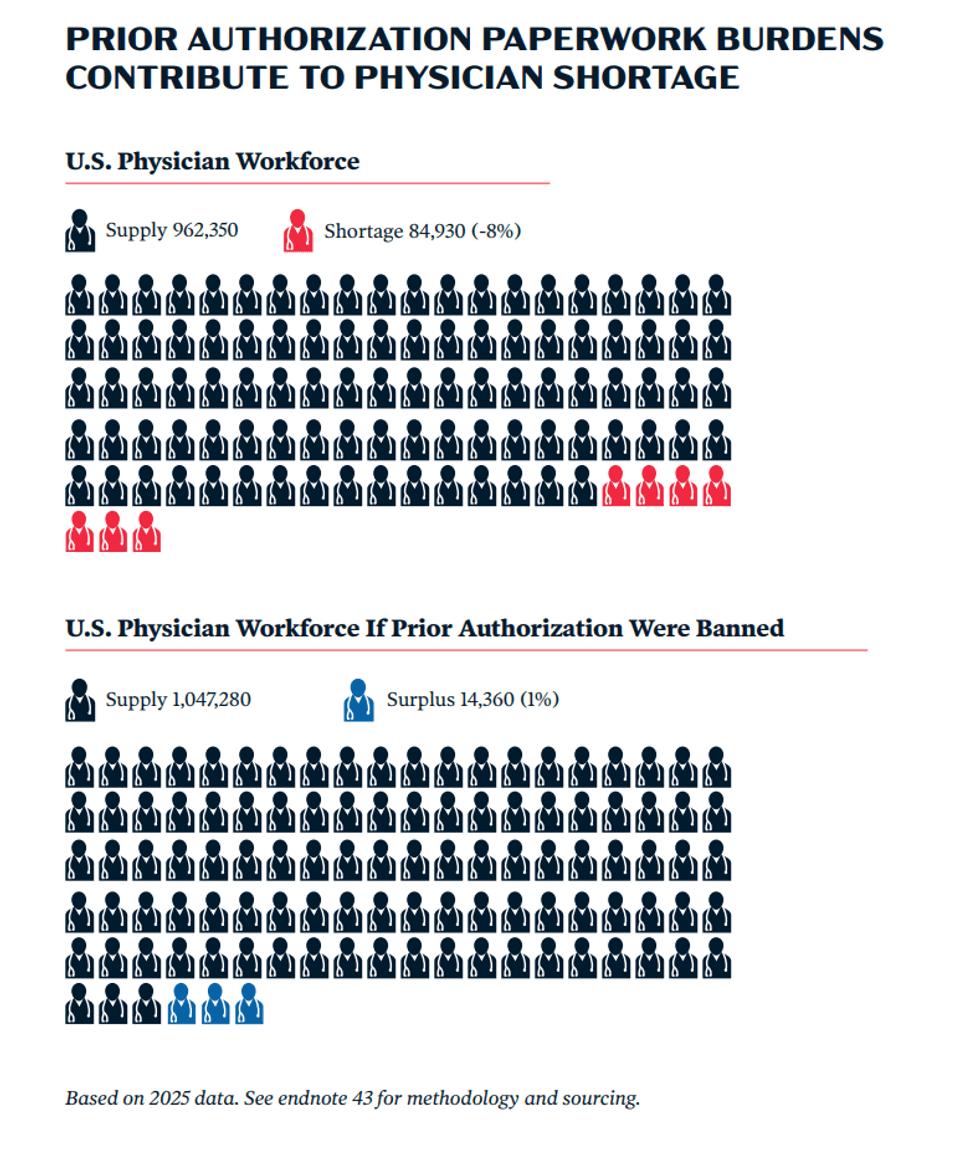
The report found that physicians and their teams now spend so much on prior authorization paperwork that it consumes the equivalent of nearly 100,000 full-time physician and advanced practice clinician workloads, plus more than 213,000 clinic staff, costing as much as $32.7 billion each year. If prior authorization were eliminated, they found, it would free up enough capacity to turn a national physician shortage into a surplus.
A YouGov poll for AELP found that more than two-thirds of voters in both parties want legislation banning prior authorization outright. But the researchers said both the Trump and Biden administrations have enacted only minor reforms that "fail to address the structural conflict of interest that underpins the corporate care veto strategy."
Meanwhile, the industry is making the denial process even more ruthlessly efficient, increasingly deploying artificial intelligence to deny requests en masse.
According to a 2023 class action lawsuit, United's NaviHealth system used a predictive AI model to determine whether Medicare Advantage patients should receive rehabilitation care despite knowing that the model had a 90% error rate.
President Donald Trump, meanwhile, has expanded prior authorization for traditional Medicare through a pilot program that allows AI models to adjudicate claims in some states. In July, Senate Republicans blocked Democrats' attempt to end the pilot program.
As part of a national pro-AI strategy, Trump has also sought to preempt state laws banning the use of AI to deny care.
The AELP researchers called for a series of reforms to end prior authorization as it currently exists. Among other changes, they said decisions to authorize treatments should be made by independent third parties without the incentive to deny care, that denials must be evidence-based, that the use of AI tools to deny claims should be banned, and that physicians should review patients in person before denying their claims.
“For too long, prior authorization has allowed insurance companies to put profits ahead of patients by overruling doctors and delaying and denying essential care,” Freer said. “This status quo is failing patients, ratcheting up costs, and undermining the basis of effective, expert-informed care. It’s time to end this ‘corporate care veto’ and put medical decisions back where they belong: with patients and their doctors.”
To eliminate impending Medicaid cuts and other threats to coverage, enact a national, single-payer healthcare system free from all profit, including in the provisioning of care.
In January, 2025, following the shooting of United Healthcare CEO Brian Thompson, National Single Payer and single-payer activists across the country responded to the righteous anger of the people rising against the health insurance industry by writing a “Manifesto,” which included these four demands:
We called for people across the country to join us in the street on May 31 to raise the demand and put single payer on the nation’s agenda, a reference to the Congressional Progressive Caucus’ 2025 Proposition Agenda released last year which conspicuously omitted a national single-payer program from its agenda (or support for a cease-fire in Gaza).
Over 140 local, state, and national organizations, from central labor councils to social justice organizations, from political parties to physicians’ groups, endorsed the four demands, and more than 30 cities in 17 states held actions demanding that single payer be put on the nation’s agenda.
Endorsing organizations representing 28 states plus the District of Columbia were predominately social justice organizations, whose primary mission is not healthcare. Down Home North Carolina, an organization that mobilizes rural communities in North Carolina to improve the lives of working families, endorsed. So did EX-Incarcerated People Organizing in Wisconsin, which works to end mass incarceration. As did the Kentucky Alliance Against Racist and Political Repression, founded to mobilize people of color and whites to take action against racism in their community. Large organizations such as the California Alliance of Retired Americans, representing 1 million members in California, and small ones such as Pride on the Patio, a community that creates safe and welcoming spaces for LGBTQ+ individuals in Frederick, Maryland, endorsed. The call to put single payer on the nation’s agenda is popular beyond single-payer activists.
Together, let’s build a movement as massive as “No Kings Day,” so formidable that it cannot be denied or ignored.
More than 30 actions were held across the country, including in “Trump country” states such North Carolina, Florida, Texas, Kentucky, West Virginia, Michigan, Pennsylvania, Arizona, and Missouri. Whether from red or blue states, people organized to demand that a single-payer healthcare program free from profit be put on the nation’s agenda.
Notably missing from the list of endorsers were faith groups (only two), “big” labor (aside from the Kentucky State AFL-CIO), and “big” national single-payer organizations.
They still need to be convinced that making a demand of the Democratic Party is acceptable and has broad support.
If the demonstrations on “No Kings Day” are any indication, people are furious with the current administration, but they are no less tired of the Democratic playbook. “No Kings Day” rallies, while enthusiastic and well attended, lacked a central bold demand.
In contrast, activists on May 31 made bold demands, refusing to believe the wealthiest country should have a separate healthcare system for the poor, or that we should wait until we are 65 to access a public healthcare system into which we pay all our working lives. On May 31, activists demanded an end to a system where health insurance CEOs, who worry more about “disappointing investors” than patients, control our health. On May 31, we demanded the end of a system where insurance companies get to make trillions of dollars in earnings and spend millions on federal lobbying to influence government officials who write the laws to benefit the owners and not the people who suffer under it.
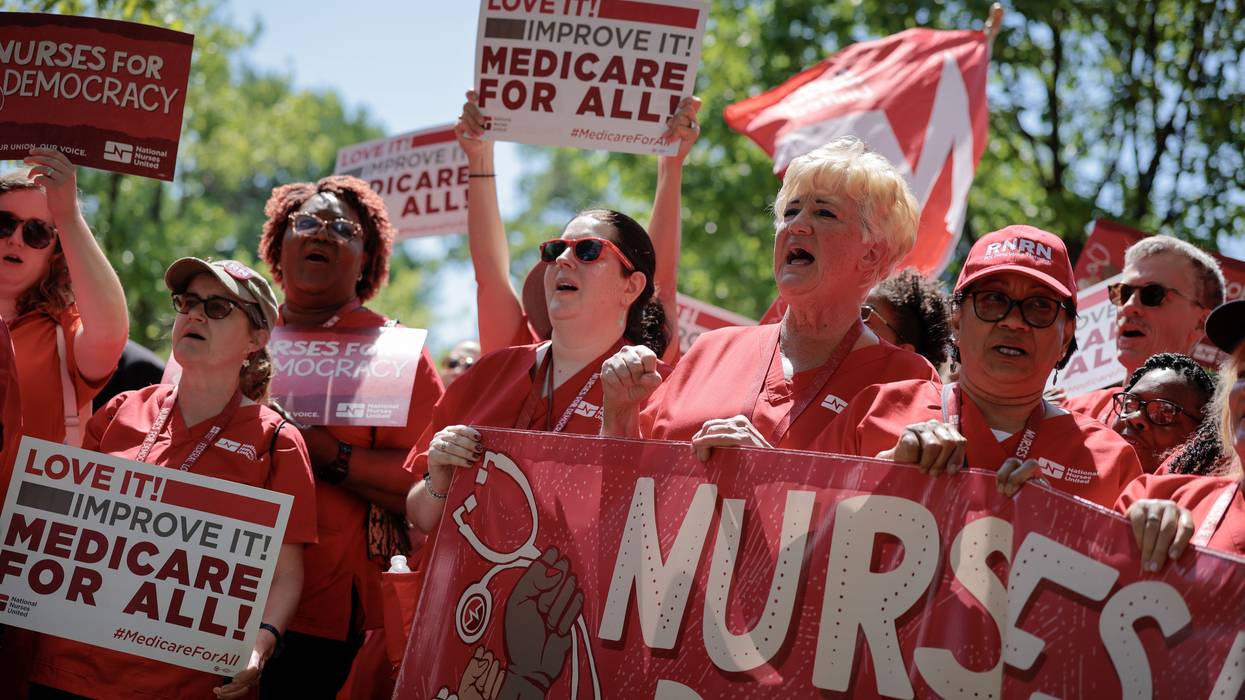
In times like these, the best defense is a good offense. To eliminate impending Medicaid cuts; to stop imposing work requirements; to end overpayments to Medicare Advantage and the privatization of Medicare; to prohibit narrow networks, prior authorizations, and delays and denials of care; to end deductibles, medical debt, and bankruptcy, and to negotiate at the bargaining table for higher wages: enact a national, single-payer healthcare system free from all profit, including in the provisioning of care.
National Single Payer and other organizations are going on the offensive, working with labor unions to fight for single payer and mobilizing members of Congress, especially those who have endorsed Medicare for All legislation, to make national single payer a publicly visible fight by asking them to commit to:
On May 31 activists from local organizations gathered to demand the healthcare system this nation deserves.
Moving forward, let’s demand our elected officials speak out, support, discuss, write, talk, and improve current Medicare for All legislation. Together, let’s build a movement as massive as “No Kings Day,” so formidable that it cannot be denied or ignored, a movement of millions in the street and in the workplace to put single payer on the nation’s agenda and heal this country once and for all.
Calling the death penalty "an intolerably cruel and unusual punishment," one socialist writer said that the European Union should offer the alleged assassin asylum.
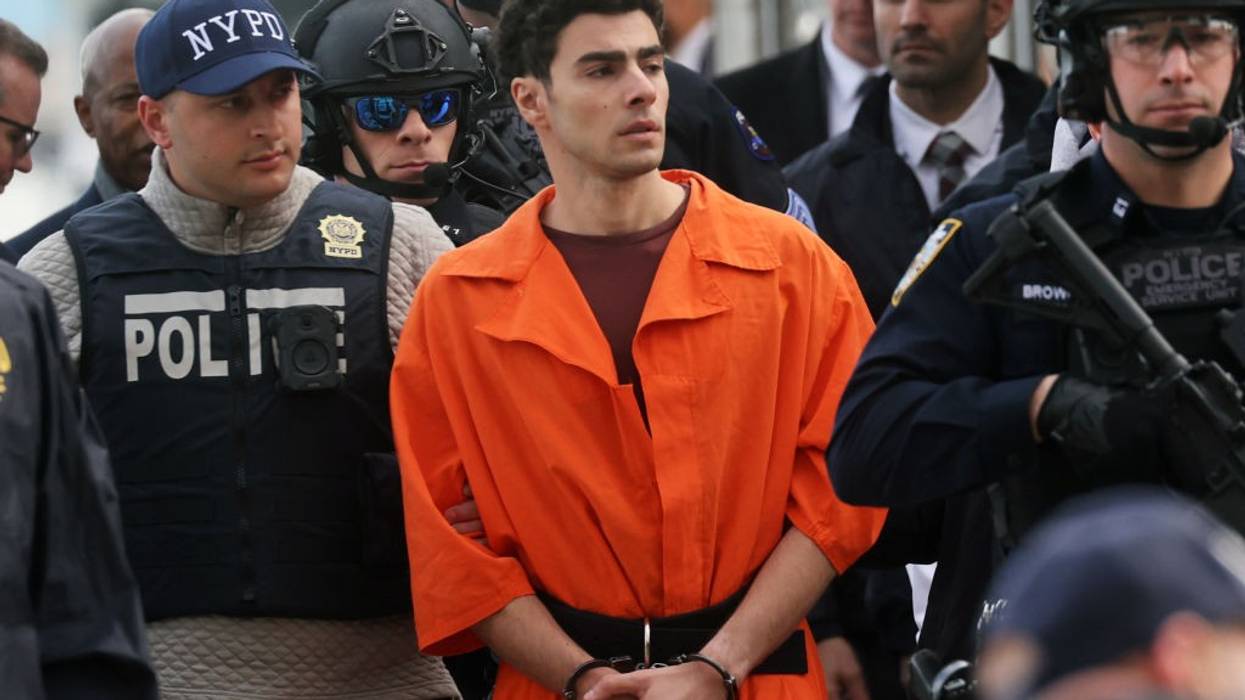
U.S. Attorney General Pam Bondi announced Tuesday that she is directing federal prosecutors to seek the death penalty in the case of Luigi Mangione, the 26-year-old man accused of killing UnitedHealthcare CEO Brian Thompson in December.
Federal prosecutors in New York City filed murder charges against Mangione in mid-December after Mangione was arrested in a McDonald's in Altoona, Pennsylvania, five days after Thompson was gunned down in front of a hotel in midtown Manhattan on December 4.
UnitedHealthcare is the largest health insurer in the country, though the company has said Mangione was never insured by them.
A grand jury in New York state indicted Mangione with first-degree murder "in furtherance of an act of terrorism" and second-degree murder, in addition to other, lesser charges also in mid-December. Mangione pleaded not guilty to those state charges, but has not entered a plea for his federal charges, according to PBS News.
"Luigi Mangione's murder of Brian Thompson—an innocent man and father of two young children—was a premeditated, cold-blooded assassination that shocked America," Bondi said in a statement. "After careful consideration, I have directed federal prosecutors to seek the death penalty in this case as we carry out President [Donald] Trump's agenda to stop violent crime and Make America Safe Again."
U.S. President Donald Trump, who oversaw a spate of executions carried out at an unprecedented rate during the final months of his initial administration, signed an executive order on his first day back in the White House that directs the Justice Department to seek out the death penalty in federal cases when possible.
Mangione, whose case triggered a wave of dark humor and vitriol directed at the for-profit healthcare industry, was compared to "Robin Hood" in a December intelligence report compiled by a regional intelligence center, according to The American Prospect.
In a Substack post published Tuesday, the socialist writer Carl Beijer wrote that the European Union (E.U.) must offer asylum to Mangione.
"Regardless of the merits of the case for or against Mangione, the death penalty remains an intolerably cruel and unusual punishment," wrote Beijer. "Given its commitment to using 'all available instruments' towards the abolition of capital punishment, the E.U. should publicly condemn the prosecution of Luigi Mangioni; should immediately offer him political asylum in defense of his basic right to life; and should negotiate with the U.S. Department of Justice to secure his release."
"If Oz is confirmed as the CMS administrator, attacks on traditional Medicare are likely to move into overdrive," said one advocate, calling to strengthen the program, "not weaken it through further privatization."
The watchdog group Public Citizen on Tuesday released a research brief about the hundreds of millions of dollars Medicare Advantage companies have spent on lobbying ahead of a U.S. Senate confirmation hearing for Dr. Mehmet Oz.
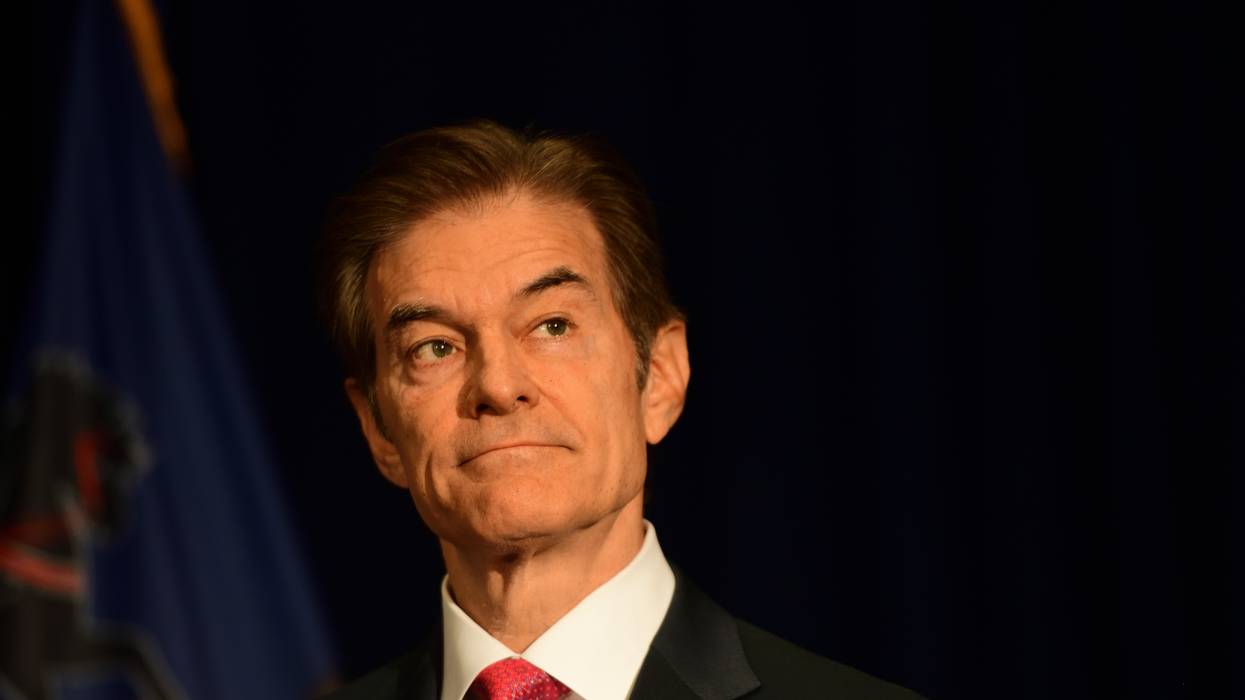
Oz, a heart surgeon and former television host, is President Donald Trump's nominee to run the Centers for Medicare and Medicaid (CMS)—an agency in the U.S. Department of Health and Human Services, which is led by conspiracy theorist Robert F. Kennedy Jr.
Health experts and others have sounded the alarm about Oz since Trump announceded his nomination in November, with many opponents highlighting the doctor's investments in companies with direct CMS interests and his push to expand Medicare Advantage when he unsuccessfully ran as a Republican to represent Pennsylvania in the U.S. Senate in 2022.
Medicare Advantage is a type of CMS-approved health insurance plan from a private company that seniors can choose for medical coverage instead of government-administered Medicare. Critics often call it a "profit-seeking healthcare scam."
Public Citizen's brief points out that last year, "more than half of all seniors eligible for Medicare were enrolled" in these private plans that "cost taxpayers hundreds of billions of dollars and deliver inferior care compared to traditional Medicare."
"Since their inception in 2003, Medicare Advantage plans are estimated to have cost taxpayers more than $600 billion in overpayments," the document notes. "These overpayments are expected to grow to $1 trillion over the next decade."
"Just seven companies account for 84% of all Medicare Advantage enrollment," the brief continues. "While lobbying disclosures do not reveal how much is spent on a single issue, disclosures reveal that these seven companies spent more than $330 million combined lobbying on all issues over the last five years, according to data from OpenSecrets."
Those companies are UnitedHealthcare, Humana, Blue Cross Blue Shield, CVS Health, Kaiser, Centene, and Cigna.
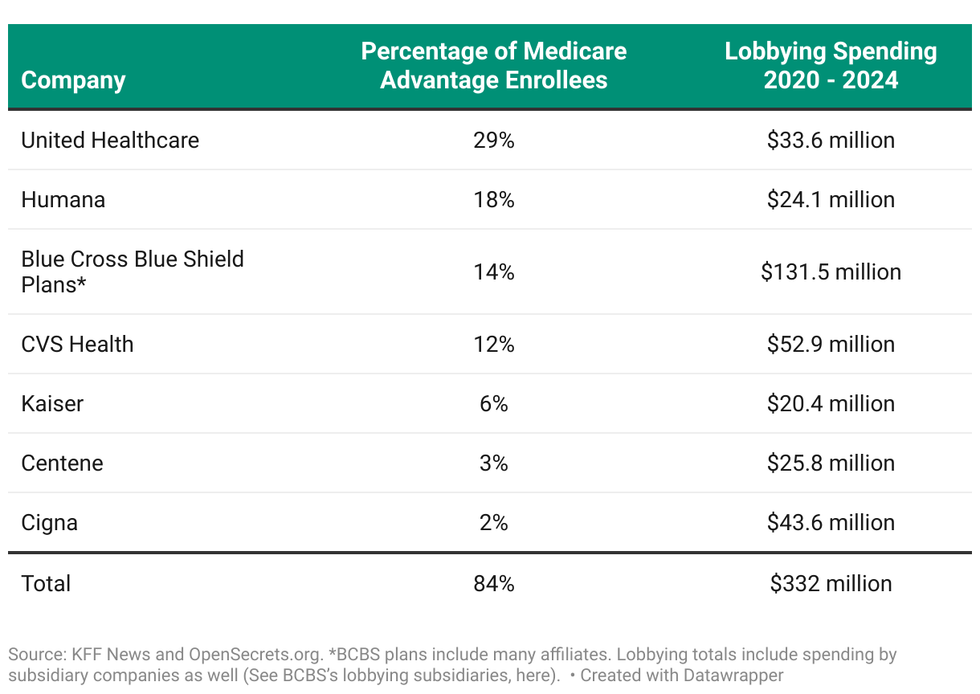
Public Citizen found that in 2024, they collectively had 328 lobbyists targeting the federal government, with nearly 70% of them specifically working on Medicare Advantage. Blue Cross had the most lobbyists focused on such plans (99), followed by Humana (33) and UnitedHealth Group (27).
"If Oz is confirmed as the CMS administrator, attacks on traditional Medicare are likely to move into overdrive," Eagan Kemp, a healthcare policy advocate at Public Citizen, warned in a Tuesday statement. "We should strengthen Medicare by improving it and expanding access to it, not weaken it through further privatization."
The Senate Committee on Finance is set to consider Oz on Friday morning. Since Trump returned to the White House in January, the GOP-controlled chamber hasn't blocked any of his nominees.

Police said that "there were no injuries and only minor damage to the home," unlike a December shooting that killed UnitedHealthcare's chief executive.
Hours before Luigi Mangione appeared in court last Friday for allegedly killing UnitedHealthcare chief executive Brian Thompson in New York City, an unidentified shooter—who remains at large—fired at the Oregon home of Chip Terhune, president and CEO of SAIF, the state's largest provider of workers' compensation insurance.
The Lake Oswego Police Department in Oregon said Monday that "during the investigation, officers discovered damage to a front door of a home that was caused by gunfire. Fortunately, there were no injuries and only minor damage to the home."
The department said Wednesday that "the image below is believed to be the suspect, seen wearing all dark clothes with a possible hoodie or ski mask, and carrying a light-colored object in his hand. Police believe the suspect had a vehicle parked nearby."

"Lake Oswego Police believe this was a targeted incident and do not believe there is an ongoing threat to the community," the department added. "Police are asking anyone with information about this incident to contact the Lake Oswego Police Detectives tip line at 503-635-0232. Tips can also be submitted anonymously through our website here."
Last week, the Oregon Journalism Project (OJP) obtained a message that Terhune reportedly shared with his neighbors about the incident. After thanking those "who spoke to the police when they knocked on your door so early," he explained that "at approximately 4 am, I awoke to what I initially thought were the sound of rocks being thrown at my windows."
"It became immediately apparent that no rocks were thrown but rather 3 bullets had been fired through my front door windows into my home," Terhune said. "[Name redacted] apparently reported to the police that she saw an individual dressed in black with a ski mask running away from my house and down the street."
OJP then reported Monday that it had obtained a weekend memo from Terhune to SAIF's more than 1,000 employees.
"We have received an email threat purporting to be from the person(s) responsible," Terhune wrote to staff on Saturday. "Although it does not target any specific employee, the email references knowledge of employee and relatives' names and addresses."
"Law enforcement is working diligently to investigate this matter and asked that we not share any additional specific information about the actual email," the CEO added.
According to KGW8, which got the memo from a SAIF employee, Terhune also said that the email contained many inaccuracies and the company would reach out to workers named in it to provide information about what was included about them.
Friday afternoon, on the other side of the country, in New York City, 26-year-old Mangione attended a procedural hearing.
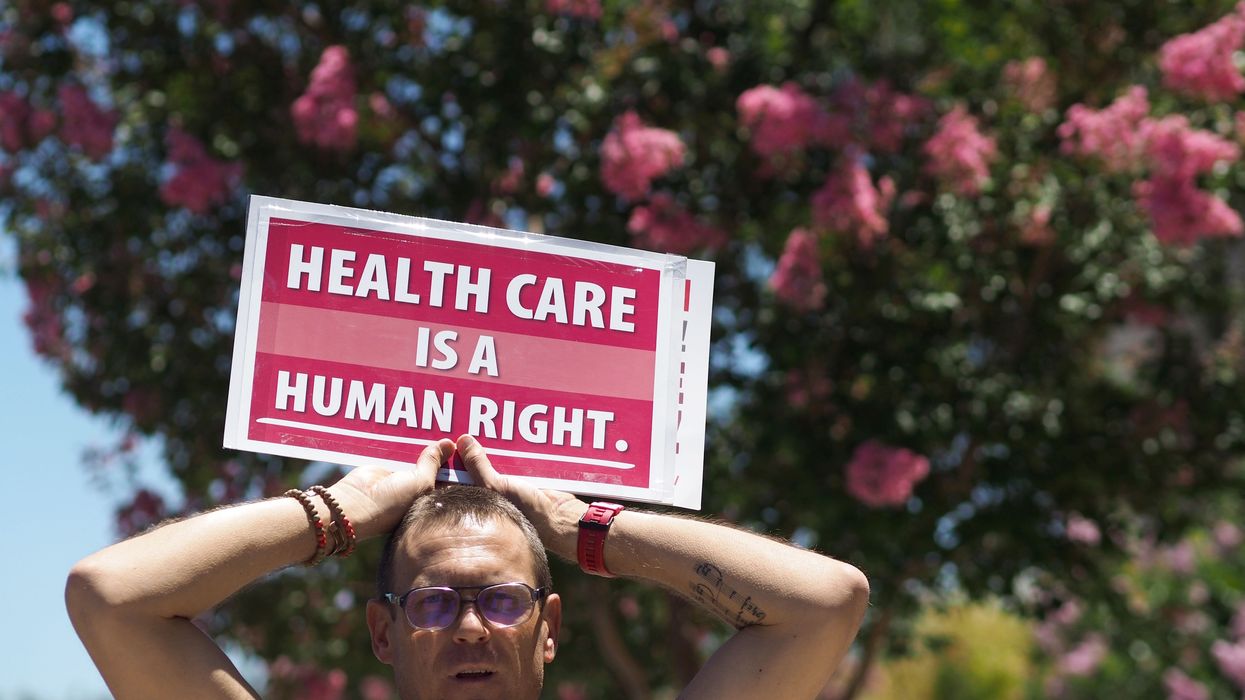
"A group comprised mostly of women clad in green hats, shirts, and scarves has assembled outside the Manhattan Criminal Courthouse," The Cut reported. "They unfurl signs that say 'Health Care Is a Human Right' and 'Murder for Profit Is Terror'; a woman wearing a 'Cougars for Luigi' T-shirt holds up a banner that reads 'Luigi Before Fascists.'"
Despite an alleged manifesto that says in part, "These parasites simply had it coming," Mangione has pleaded not guilty to the murder as an act of terrorism and weapons charges in New York. He faces related cases in Pennsylvania and at the federal level.
Thompson's December 4 killing sparked a flood of commentary and debates about the nation's for-profit healthcare system.
In an interview shortly after the CEO was killed, U.S. Sen. Bernie Sanders (I-Vt.), a leading advocate of replacing the for-profit system with Medicare for All, said: "I condemn it wholeheartedly. It was a terrible act. But what it did show online is that many, many people are furious at the health insurance companies who make huge profits denying them and their families the healthcare that they desperately need."
Bolstering Sanders' point, December
polling shows that 69% of respondents put a "great deal or moderate amount" of blame for Thompson's death on health insurance companies' coverage denials, while 67% said insurers' exorbitant profits were to blame.
The provider has—for good reason—become the most powerful lightning rod for patient and medical staff critiques of how private insurers operate.
Healthcare is big business in the United States. So big it can be hard to wrap your head around.
America’s largest healthcare company, the UnitedHealth Group, pulled in over $100 billion in revenue in just the fourth quarter of 2024 alone. For the full year, the giant’s insurance division, UnitedHealthcare, just reported record revenue of $298.2 billion.
These staggering revenue totals actually fell below investor expectations. Right after the announcement, UnitedHealth Group shares slipped 6% on the New York Stock Exchange.
The outpouring of anger after the December killing of UnitedHealthcare CEO Brian Thompson—anger not at the shooting but at the company Thompson represented—shows just how many Americans are currently suffering under our privatized healthcare system.
That tells you a lot about what’s important in the healthcare industry: profit, not care. Health insurance companies in particular can only profit by paying out less in claims than they collect in premiums. And that means denying patients coverage for the care they need.
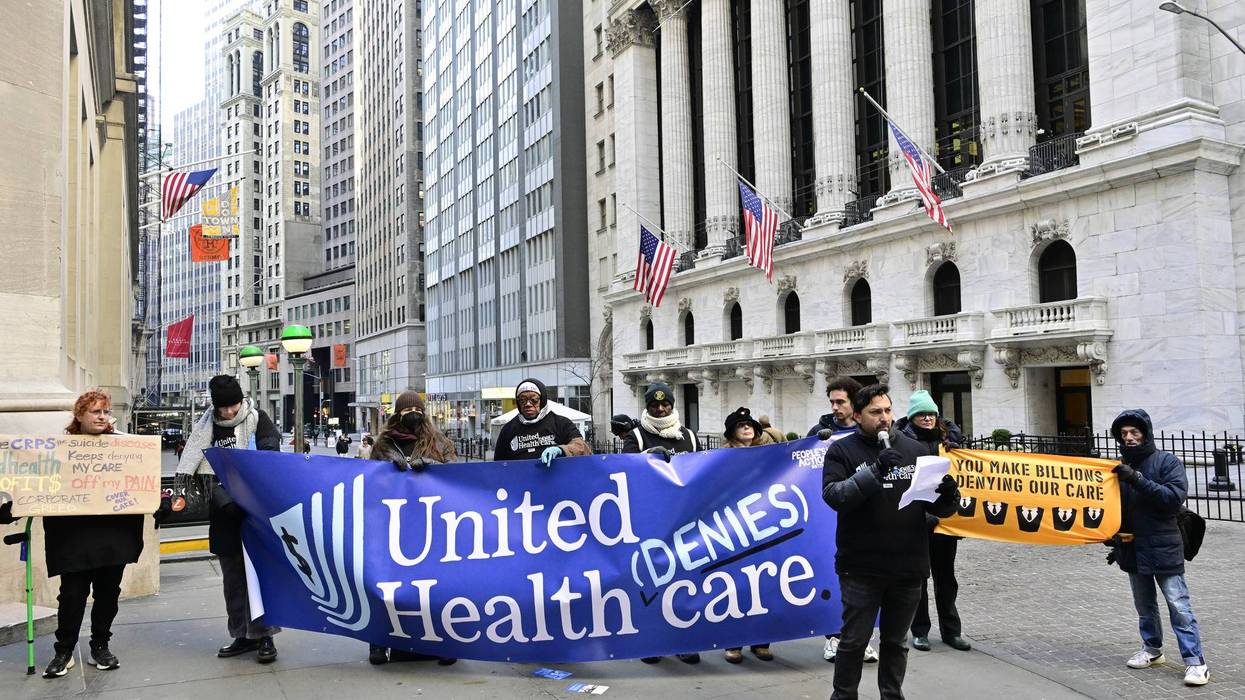
Just outside the New York Stock Exchange, victims of our for-profit healthcare system—doctors and patients alike—recently braved freezing temperatures to call out the suffering that engineered UnitedHealth’s exorbitant earnings.
One of those demonstrators, Jenn Coffey, has been battling complex regional pain syndrome (CRPS), a condition so incredibly painful that it’s often called the “suicide disease.”
UnitedHealth denied her the prior authorization needed to have her critically important treatment adequately covered. “UnitedHealthcare would rather leave me in torture than grant me the peace my infusions bring,” says Coffey. “I’m asking for a life worth dignity. I’m left begging for a life worth living.”
Several other speakers shared their deeply personal experiences with a healthcare system that far too often treats patients as disposable.
Dr. Toutou Moussa Diallo, a New York-based researcher and healthcare activist, detailed how insurance denials led to subpar treatment for his broken ankle that only made the initial injury more debilitating. Nephrologist Cheryl Kunis shared the story of a patient who died after UnitedHealthcare refused to cover a PET scan of a malignant neck tumor.
These experiences amount to much more than isolated one-off incidents. The outpouring of anger after the December killing of UnitedHealthcare CEO Brian Thompson—anger not at the shooting but at the company Thompson represented—shows just how many Americans are currently suffering under our privatized healthcare system.
The ongoing campaign protesting how UnitedHealth does business began well before Thompson’s headline-grabbing killing. The Care Over Cost mobilization, led by People’s Action, has been organizing rallies protesting America’s biggest private insurers for years.
UnitedHealth has—for good reason—become the most powerful lightning rod for patient and medical staff critiques of how private insurers operate. The company’s gargantuan profits rest on decisions that regularly exploit patients at every opportunity.
Just a few snippets from recent news accounts offer a vivid picture about how UnitedHealth goes about making its billions.
UnitedHealth Group’s pharmacy benefit manager, Optum RX, marked up some cancer treatments by over 1,000%. UnitedHealthcare systematically limited access to critical treatments for children with autism to cut costs. And along with two other insurers, the company intentionally denied nursing care to patients covered by Medicare Advantage—all to maximize profit.
And how has the UnitedHealth Group been spending all its ill-gotten gains? One telling stat: UnitedHealth Group CEO Andrew Witty pocketed an astonishing $23.5 million in 2023 compensation.
As the rally in front of the New York Stock Exchange ended, protesters called on UnitedHealthcare to publicly release its claim denial rates, oppose federal tax cuts that would result in Medicaid service reductions, and end the company’s care-denying prior authorization requirements.
Those eminently reasonable demands for the company. Meanwhile, the rest of us should consider whether we want healthcare to be a tool for the public good—or just private profit.
Dr. Elisabeth Potter shared "another horror story from a doctor dealing with United Healthcare's terrible authorization process."
A month after the killing of UnitedHealthcare CEO Brian Thompson prompted many Americans to share personal horror stories of the company's coverage denials and other practices, a doctor in Austin, Texas on Wednesday shared her own experience that she said exemplified how the for-profit health system "just keeps getting worse."
In a video posted to TikTok, Dr. Elisabeth Potter said she recently received an unprecedented phone call from UnitedHealthcare about a patient—one who was already under anesthesia and having surgery.
Potter, a plastic surgeon who specializes in reconstructive surgery for breast cancer patients who have had mastectomies, said she was performing a bilateral deep inferior epigastric perforator [DIEP} surgery when UnitedHealthcare called her in the operating room.
The call was urgent, she was told, and needed to be returned right away.
"So I scrubbed out of my case and I called UnitedHealthcare, and the gentleman said he needed some information about her," said Potter. "Wanted to know her diagnosis and whether her inpatient stay should be justified."
Potter found that the person calling wasn't aware that the patient whose care he was questioning had breast cancer and was in the operating room—that information was known by "a different department" at UnitedHealthcare.
Potter's account, said Nidhi Hegde, managing director at the American Economic Liberties Project, was "another horror story from a doctor dealing with United Healthcare's terrible authorization process."
"Ridiculous that doctors/nurses are spending time explaining their work to an insurance company instead of being able to focus on care," said Hegde.
As Common Dreams reported last month, cancer patients have become disproportionately affected by "prior authorizations" demanded by for-profit health insurers, which require doctors to get approval for treatments. Prior authorization can delay lifesaving care and one survey of oncologists in 2022 found that patients experienced "disease progression" 80% of the time an insurance company's bureaucratic requirements delayed their treatment.
Potter had to inform the UnitedHealthcare staffer that the company had already given her approval for the surgery.
She said she told him, "I need to go back and be with my patient now" and was able to continue the procedure.
"But it's out of control," she said. "Insurance is out of control. I have no other words."
Even before Thompson's killing, UnitedHealthcare has garnered outrage for the numerous methods it uses to deny healthcare coverage to patients.
A Senate investigation found the company intentionally denied claims submitted by nursing home patients who suffered strokes and falls, in order to increase profits. The company also faces a class-action lawsuit for using an AI algorithm with a 90% error rate to deny coverage to senior citizens with Medicare Advantage plans,
In December, ProPublica published an investigation that found the company is one of several insurers who repeatedly relied on the advice of company doctors who have wrongly recommended denying care.
In a follow-up video, Potter said on Wednesday that insurance companies have created "a fear-based system where, if an insurance company calls me and says I've got to call them right back, I'm afraid they're not going to pay for my patient's surgery, that patient is going to get stuck with a bill."
Potter told Newsweek that the experience confirmed for her that "there is no room in healthcare where the pressure of insurance isn't felt by both patients and doctors. Not even the operating room."
UnitedHealthcare suggested in a comment to Newsweek that it did not call Potter during surgery, saying, "There are no insurance related circumstances that would require a physician to step out of surgery and it would create potential safety risks if they were to do so. We did not ask nor would ever expect a physician to interrupt patient care to answer a call and we will be following up with the provider and hospital to understand why these unorthodox actions were taken."
Potter joined many Americans in speaking out against the for-profit health insurance system in the days after Thompson's killing, offering a doctor's perspective.
"I want you to know that insurance companies are affecting the kind of care that you're getting, because they're applying pressures to physicians through their policymaking," said Potter in one video posted on TikTok. "This is a dark, dark time for healthcare, and we have to fix this or we're gonna go down a path that we can't get back from."
"All these stories paint a picture of a healthcare industry in desperate need of transformation," said the head of the think tank behind the awards.
The "winners" of the annual Shkreli Awards—named after notorious "pharma bro" Martin Shkreli and given to the 10 "worst examples of profiteering and dysfunction in healthcare"—include a Texas medical school that sold body parts of deceased people without relatives' consent, an alleged multibillion-dollar catheter scam, an oncologist who subjected patients to unnecessary cancer treatments, and a "monster monopoly" insurer.
The Shkreli Awards, now in their eighth year, are given annually by the Lown Institute, a Massachusetts-based think tank "advocating bold ideas for a just and caring system for health." A panel of 20 expert judges—who include physicians, professors, activists, and others—determine the winners.
This year's awardees are:
10: The University of North Texas Health Science Center "dissected and distributed unclaimed bodies without properly seeking consent from the deceased or their families" and supplied the parts "to medical students as well as major for-profit ventures like Medtronic and Johnson & Johnson," reporting revealed.
9:
Baby tongue-tie cutting procedures are "being touted as a cure for everything from breastfeeding difficulties to sleep apnea, scoliosis, and even constipation"—despite any conclusive evidence that the procedure is effective.
8: Zynex Medical is a company facing scrutiny for its billing practices related to nerve stimulation devices used for pain management.
7: Insurance giant Cigna is under fire for billing a family nearly $100,000 for an infant's medevac flight.
6: Seven suppliers allegedly ran a multibillion-dollar urinary catheter billing scam that affected hundreds of thousands of Medicare patients.
5: Memorial Medical Center in Las Cruces, New Mexico allegedly refused cancer treatment "to patients or demanding upfront payments, even from those with insurance."
4: Dr. Thomas C. Weiner is a Montana oncologist who allegedly "subjected a patient to unnecessary cancer treatments for over a decade," provided "disturbingly high doses of barbiturates to facilitate death in seriously ill patients, when those patients may not have actually been close to death," and "prescribed high doses of opioids to patients that did not need them." Weiner denies any wrongdoing.
3: Pharma giant Amgen was accused of pushing 960-milligram doses of its highly toxic cancer drug Lumakras, when "a lower 240mg dose offers similar efficacy with reduced toxicity"—but costs $180,000 less per patient annually at the lower dose.
2: UnitedHealth allegedly exploited "its vast physician network to maximize profits, often at the expense of patients and clinicians," including by pressuring doctors "to reduce time with patients and to practice aggressive medical coding tactics that make patients seem as sick as possible" in order to earn higher reimbursements from the federal government."
🥁🥁🥁
1: Steward Health Care CEO Dr. Ralph de la Torre was accused of orchestrating "a dramatic healthcare debacle by prioritizing private equity profits over patient care" amid "debt and sale-leaseback schemes" and a bankruptcy that "left hospitals gutted, employees laid off, and communities underserved" as he reportedly walked away "with more than $250 million over the last four years as hospitals tanked."
"All these stories paint a picture of a healthcare industry in desperate need of transformation," Lown Institute president Dr. Vikas Saini said during the award ceremony, according toThe Guardian.
"Doing these awards every year shows us that this is nothing new," he added. "We're hoping that these stories illuminate what changes are needed."
The latest Shkreli Awards came just weeks after the brazen assassination of Brian Thompson, CEO of UnitedHealth subsidiary UnitedHealthcare. Although alleged gunman Luigi Mangione has pleaded not guilty, his reported manifesto—which rails against insurance industry greed—resonated with people across the country and sparked discussions about the for-profit healthcare system.
As a physician, I have seen patients suffer and die in order to pad the bottom lines of corporate health insurers—and in recent years I have seen this problem getting much worse.
How should we react when a man is shot to death on the street on his way to work? Our humanity tells us that we should be shocked and horrified—and feel that something is deeply wrong with such a brazen act of murder. Ideally, we would do what we could to help sooth the survivors, condemn the violence, and bring the perpetrator to justice.
So why did hundreds of thousands of people have the exact opposite reaction when UnitedHealthcare CEO Brian Thompson was executed in New York City last month? Because Americans are furious with health insurance corporations—and they have every right to be.
In the immediate aftermath of the shooting, many Americans took to social media not to mourn, but to celebrate. Caustic posts about prior authorization and denied medical claims were common. Sympathetic statements were met with rancor—and in the case of UnitedHealth Group’s own statement, over 70,000 “laugh reactions” before the company made that tally private. Even verbose political figures like Elon Musk and President-elect Donald Trump declined to comment for days. This shooting touched a raw nerve.
The health insurance industry doesn’t have a communications problem, it has a profiteering problem—and no amount of marketing will convince people who have already been burned.
As a physician who’s treated countless victims of gun violence, and who’s life’s work is to care for all of my patients, I found this response to be deeply unnerving. But I also can’t waive it away with simple explanations like online radicalization or trolling. Something much deeper is at play.
For decades, health insurance corporations like United have been growing more powerful and more profitable. How do they generate these profits? By taking in as much money as possible in premiums and paying out as little as possible in medical claims. Over time, they have tried everything from requiring “prior authorization” of care, to excluding high-quality providers from their networks, to imposing a Byzantine series of charges including ever-growing copays, coinsurance, and deductibles. When all else fails, many insurers simply deny claims.
Behind each of these practices are millions of Americans who are made to suffer. I hear these stories routinely in my practice, and they never become easier to stomach. I have seen patients with aggressive cancer who avoided seeing a doctor for months because they feared bankruptcy; patients with chronic conditions like diabetes who are denied treatments that would improve their quality of life; and gunshot victims whose fight to recover and gain a semblance of normalcy is complicated by their health plans saying no, no, and no again.
I have seen patients suffer and die in order to pad the bottom lines of corporate health insurers—and in recent years I have seen this problem getting much worse.
These are the stories that Americans are sharing in this fraught moment. We have to ask ourselves: Are we listening? And what are we going to do about it?
Insurers like UnitedHealthcare will have their own responses. Their PR teams will no doubt work overtime to marginalize aggrieved voices and to highlight what they consider to be the “value” of their health plans. Expect to see glossy commercials and towering billboards touting the “peace of mind” that Americans should enjoy knowing that their medical needs are “covered.” But the health insurance industry doesn’t have a communications problem, it has a profiteering problem—and no amount of marketing will convince people who have already been burned.
Behind the scenes, corporate insurers will no doubt lobby for the preferential treatment they have come to expect. Our newly elected Congress may acquiesce, or they may decide that the industry needs to be regulated—a strategy that has failed to live up to its promise.
Republicans and Democrats have made separate attempts to combine federal requirements with federal largesse in order to make corporate health insurers play nice. But both the Affordable Care Act and the Medicare Advantage program have only succeeded in ballooning the profits of firms like United—without improving Americans’ health or sparing their wallets.
It’s also clear that violence is not the answer, both on a purely human level and because corporate insurers will simply not be moved. UnitedHealthcare will have a new CEO in short order, and it will be that person’s responsibility to boost profits and make shareholders wealthier. Responding to patients’ cries will not serve these ends, so it is not in the cards.
What would help is a proven reform proposal that is long overdue: a single-payer national health program. Such a system would provide universal coverage and comprehensive benefits—with zero out-of-pocket costs. It could be easily implemented given the gargantuan sums we spend on healthcare in this country, and it would be a boon for those who are suffering, and for those who are fearful.
Americans are crying out in pain—and are recognizing that they are not alone in their pain. We should listen to these cries and we should finally, after decades of delay, do something about it.