

SUBSCRIBE TO OUR FREE NEWSLETTER
Daily news & progressive opinion—funded by the people, not the corporations—delivered straight to your inbox.
5
#000000
#FFFFFF
To donate by check, phone, or other method, see our More Ways to Give page.
Daily news & progressive opinion—funded by the people, not the corporations—delivered straight to your inbox.
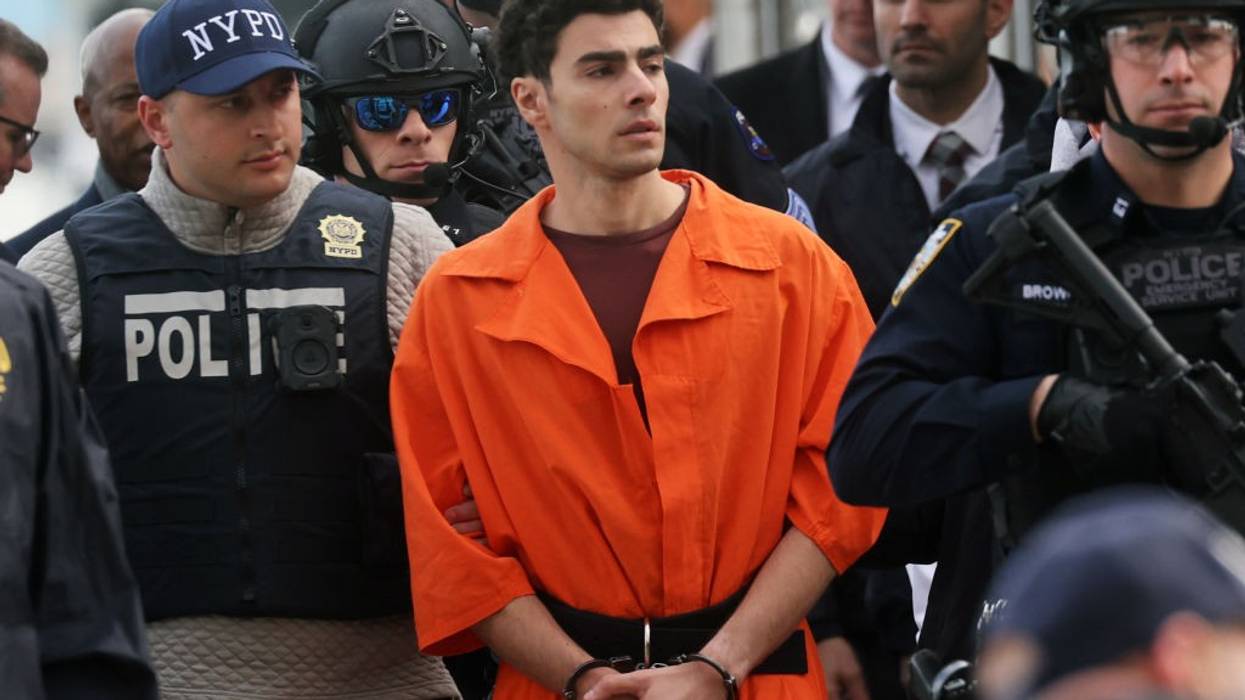
It is currently unclear which charges Mangione would plead guilty to as part of a plea agreement, according to NBC News.
Luigi Mangione is reportedly set to plead guilty to federal charges related to the 2024 murder of UnitedHealthcare CEO Brian Thompson.
According to a Thursday report from NBC News, prosecutors are negotiating a plea agreement where the 28-year-old Mangione will plead guilty to at least one of the federal charges that were brought against him.
The NBC report noted that it is unclear which charges Mangione would plead guilty to, and that the defendant could reverse his plea "at any time, even during the hearing."
In a December 2024 indictment, federal prosecutors charged Mangione with two counts of stalking, one count of murder, and a firearms offense for his alleged role in Thompson's killing.
Prosecutors had initially sought the death penalty for Mangione, but a federal judge in January dismissed the murder and firearms offense, thus taking capital punishment off the table.
Mangione also faces New York state charges, the most serious of which is murder in the second degree.
Manhattan District Attorney Alvin Bragg had initially charged Mangione with first degree murder in furtherance of terrorism, but a New York City judge last year determined that the defendant's alleged actions did not rise to the level of terrorism and dismissed the charge.
The legal strategy—which is not an insanity defense—would be an admission that Mangione killed UnitedHealth's Brian Thompson, but did so under mitigating circumstances.
Luigi Mangione, who stands accused of murdering UnitedHealth CEO Brian Thompson in 2024, will assert a psychiatric defense in his state murder trial, the New York judge presiding over the case revealed Wednesday.
The Associated Press reported that Judge Gregory Carro of the New York State Supreme Court in Manhattan said Mangione’s legal team informed him that they will argue that the 28-year-old defendant suffered from “extreme emotional disturbance" when he allegedly gunned down Thompson outside the New York Hilton Midtown Hotel just after dawn on December 4, 2024.
The defense strategy would be an admission that Mangione killed Thompson, but did so due to mitigating circumstances. The precise nature of the claimed psychiatric issue remains under seal, but it has been reported that Mangione suffered chronic back pain for years and harbored deep animosity toward the for-profit health insurance industry that dominate the US system.
Court documents indicate that Mangione's lawyers previously sought additional time to decide whether to pursue a mental health defense.
Extreme emotional disturbance is not the same as pleading guilty by reason of insanity, which would result in a convicted defendant being sent to a psychiatric facility instead of prison.
On Wednesday, Carro revealed that he had held a secret hearing on the matter earlier this month, and that the session's proceedings were sealed "to give the defense an opportunity to determine whether they were going forth" with the extreme emotional disturbance defense.
The June 3 hearing focused on the psychiatric basis for such a defense, its procedural consequences, disclosure obligations, and potential examinations.
Mangione's attorney, Karen Friedman Agnifilo, decried Carro's decision to unseal details of the secret hearing.
“The reason why we asked for the sealing is that this defense is not available federally and Mr. Mangione is being prosecuted federally and this is prejudicial to his defense to the exact same facts,” she said.
Last year, then-US Attorney General Pam Bondi said she would seek the death penalty for Mangione at his federal trial. New York state effectively abolished capital punishment in 2004.
Mangione allegedly shot Thompson, 50, as he walked to the New York Midtown Hilton for UnitedHealth Group’s annual investor conference. Police said the words “delay,” “deny,” and “depose”—a description of how insurance companies avoid paying claims—were engraved in shell casings of bullets used in the attack, which was carried out with a 3D-printed pistol. New York police also said they recovered a three-page handwritten note that expressed "some ill will toward corporate America."
Five days after the shooting, Mangione was arrested after a customer in an Altoona, Pennsylvania McDonald's recognized him and alerted authorities.
Thompson's murder exposed the depth of public rage over corporate greed and a for-profit healthcare system in which thousands of people die each year because they have no insurance, while millions more face financial hardship or bankruptcy.
Mangione is facing state charges of second-degree murder, multiple weapons violations, and possession of a fake ID. More serious charges, including first-degree murder and terrorism, have been dismissed. Mangione's New York trial is set to begin on September 8.

"Expect to see more of this as people struggle to survive under our decaying capitalist system," warned one observer.
The 29-year-old employee accused of burning down a paper products warehouse in southern California was allegedly furious over pay and working conditions at the facility and compared himself Luigi Mangione, the anti-capitalist folk hero to many Americans who allegedly assassinated a health insurance CEO.
Chamel Abdulkarim is facing federal and state felony charges in connection with a blaze that tore through the 1.2 million square-foot Kimberly-Clark warehouse in Ontario, San Bernardino County, shortly after 12:30 am on Tuesday. The Los Angeles Times reported that 20 other people were working in the facility, which is roughly the size of 11 city blocks, at the time. There are no reports of any injuries.
According to the US Department of Justice (DOJ), Abdulkarim uploaded videos to Facebook showing him setting fires in the warehouse and saying, “If you’re not going to pay us enough to fucking live or afford to live, at least pay us enough not to do this shit."
Abdulkarim allegedly said in texts and phone calls that he cost Kimberly-Clark "billions," adding, "All you had to do was pay us enough to live."
"All you had to do was pay us enough to live".On April 7, 2026, a 29-year-old worker named Chamel Abdulkarim was arrested on arson-related charges after a massive, six-alarm fire destroyed a 1.2-million-square-foot Kimberly-Clark warehouse in Ontario, California.
[image or embed]
— Raider (@iwillnotbesilenced.bsky.social) April 8, 2026 at 6:33 PM
The DOJ said the blaze caused "approximately $500 million in damage."
Prosecutors said that after starting the fires, Abdulkarim called a friend and said that “a lot of people are going to understand” what he did, just like when “Luigi popped that mutherfucker,” a reference to Mangione's alleged murder of UnitedHealthcare CEO Brian Thompson in New York in 2024.
Shareholders of Kimberly-Clark—which makes products including Kleenex tissues, Scott and Cottonelle toilet paper, Huggies diapers, and Kotex feminine care products—enjoyed profits topping $2.0 billion last year. Company chairman and CEO Michael Hsu made about $15.3 in compensation. That's more than 300 times as much as the average Kimberly-Clark employee earned, according to the AFL-CIO.
Critics of capitalism have long argued that the yawning chasm between rich and poor in the United States is a recipe for disaster that could far exceed individual acts of resistance, if the crisis is not soon addressed. However, under President Donald Trump and the Republican-controlled Congress, wealth inequality continues to increase at what many experts argue is an unsustainable rate.
Many leftists took to social media to praise the blaze, with some, like the Rev. Oliver Dean Snow of Mothman Ministries, comparing the arson attack to historical acts of radical resistance like the 1884 New Straitsville Mine Fire, in which striking union miners in Ohio pushed burning coal cars deep into a mine, causing an underground inferno that not only permanently shut down operations, but is believed to still be burning to this day, 141 years later.
Idk why Chamel Abdulkarim isn’t being hailed the same way Luigi Mangione was. Especially by Appalachians. Bro did something based and literally hurt NO ONE. Only thing that got hurt was same toilet paper. Some of yalls ancestors would be ashamed of you.ohiomemory.ohiohistory.org/archives/216
[image or embed]
— Preacher from the Black Lagoon (@revpoppop.bsky.social) April 10, 2026 at 12:46 PM
"Expect to see more of this as people struggle to survive under our decaying capitalist system," said one popular socialist account on X.
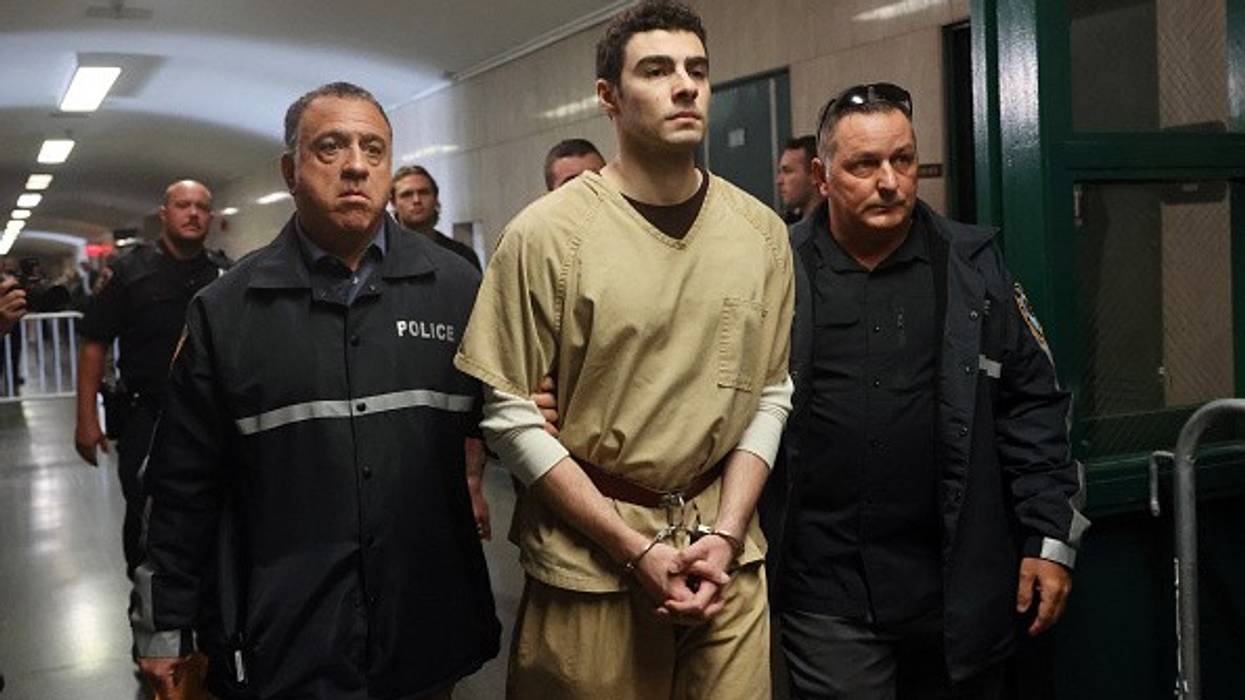
"While the defendant was clearly expressing an animus toward UHC, and the health care industry generally," said the judge, "it does not follow that his goal was to ‘intimidate and coerce a civilian population.'"
A judge in New York City on Tuesday threw out a pair of charges against Luigi Mangione, the man accused of killing UnitedHealthcare CEO Brian Thompson in December of last year while he walked down a street in Manhattan.
Judge Gregory Carro did not throw out the entirety of the murder charges against Mangione, but said two of the most serious charges—murder in the first degree as a crime of terrorism and a second-degree charge related to terrorism—were not proven by the prosecution's case presented to a grand jury.
The judge indicated that just because Mangione may have been motivated by ideological opposition to the for-profit industry, that does not de facto make it terrorism under New York statute.
"While the defendant was clearly expressing an animus toward UHC, and the health care industry generally, it does not follow that his goal was to ‘intimidate and coerce a civilian population,’ and indeed, there was no evidence presented of such a goal,” Carro wrote in his decision.
In addition to state charges in New York, Mangione is also facing a federal murder case over the killing of Thompson, with the federal prosecutors seeking the death penalty. The accused has pleaded not guilty to all charges.

"This show is not a celebration of violence of any kind, nor is it an attempt to pass judgment on an ongoing legal matter," say the producers. "Instead, Luigi: the Musical uses satire to ask deeper cultural questions."
A stage musical based on the life and actions of accused murderer Luigi Mangione, charged with killing UnitedHealth chief executive Brian Thompson earlier this year, will debut in San Francisco next month—and the run of the show featuring the high-profile case is already sold out.
Mangione—who has taken on cult status in some quarters over the brazen and cold-blooded killing that served to highlight the nation's cruel, profit-driven healthcare system—is facing a possible death sentence if found guilty on federal charges related to Thompson's murder.
"Why did a figure like Luigi become a kind of folk hero in certain corners of the internet? What does that say about how we see institutions in America today?"
The producers "Luigi: The Musical," who describe the play as a "wildly irreverant, razor-sharp comedy" about the "alleged corporate assassin turned accidental folk hero," also acknowledge how inherently controversial and provocative the show will be. According to the play's website:
This show is not a celebration of violence of any kind, nor is it an attempt to pass judgment on an ongoing legal matter. Our hearts go out to the family of Brian Thompson, and we acknowledge the pain and complexity surrounding this case.
Instead, Luigi: the Musical uses satire to ask deeper cultural questions. Why did this case strike such a chord with so many people? Why did a figure like Luigi become a kind of folk hero in certain corners of the internet? What does that say about how we see institutions in America today?
The show will run at the Taylor Street Theater in the city, premiering on June 13th for an initial two-week run. As of this writing, all shows are sold out, but new dates for an extended run are set to be announced.
Produced by Caleb Zeringue and directed by Nova Bradford, the script was written by the pair alongside Arielle Johnson and Andre Margatini. The original music and lyrics for the show were composed by Johnson and Bradford.
In the show's imagination, Mangione finds himself in a jail cell with convicted crypto-banker Sam Bankman-Fried and indicted hip-hop producer Sean "Diddy" Combs. While absurd in some ways, the origin story of the play is based on the fact that all three men were, for a period, all held at the same detention facility.
In an interview last week with the San Francisco Chronicle, Zeringue said all three men "represent these big pillars of institutions in society that are failing in their trust: healthcare, Hollywood, and then big tech."
Bradford, also speaking to the Chronicle, said that the play seeks to explore society's tendency "to project meaning onto these types of figures," but that the show is "not valorizing" any of them, nor "trivializing any of their action or alleged actions."
"Our hope is that Luigi: the Musical," say the producers in their show notes, "makes people laugh—and think. We're not here to make moral proclamations. We're here to explore, with humor and heart, how it feels to live through a time when the systems we're supposed to trust have stopped feeling trustworthy."
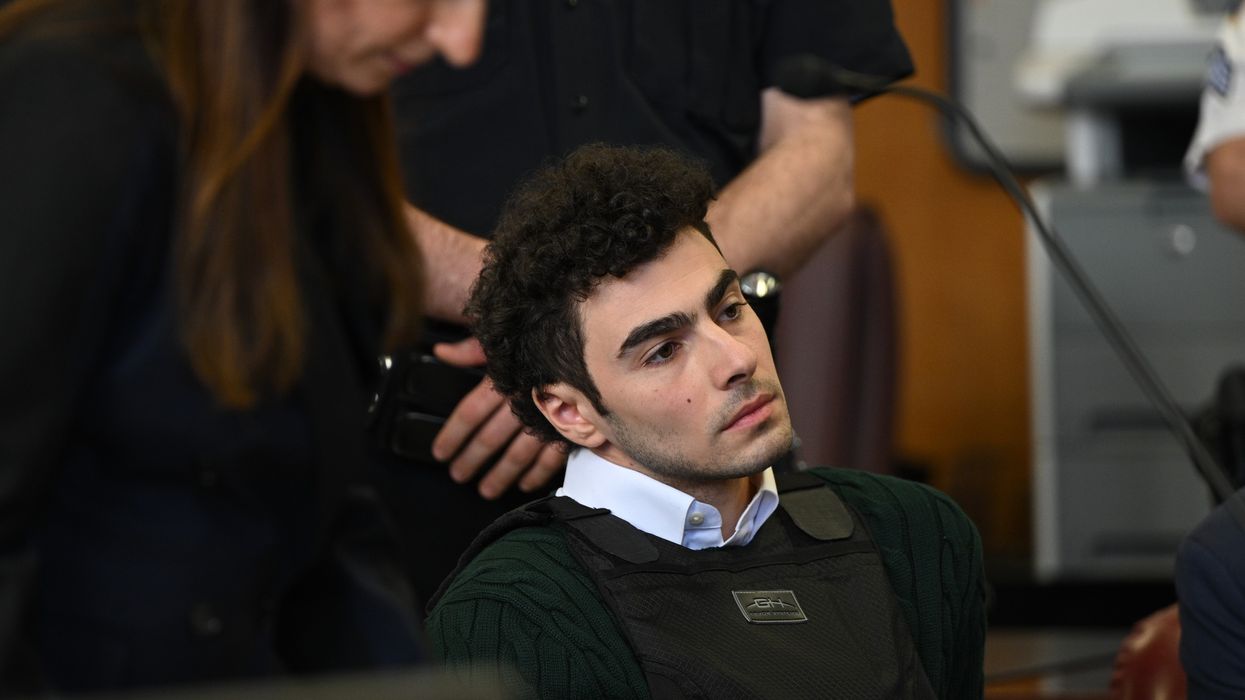
Calling the death penalty "an intolerably cruel and unusual punishment," one socialist writer said that the European Union should offer the alleged assassin asylum.
U.S. Attorney General Pam Bondi announced Tuesday that she is directing federal prosecutors to seek the death penalty in the case of Luigi Mangione, the 26-year-old man accused of killing UnitedHealthcare CEO Brian Thompson in December.
Federal prosecutors in New York City filed murder charges against Mangione in mid-December after Mangione was arrested in a McDonald's in Altoona, Pennsylvania, five days after Thompson was gunned down in front of a hotel in midtown Manhattan on December 4.
UnitedHealthcare is the largest health insurer in the country, though the company has said Mangione was never insured by them.
A grand jury in New York state indicted Mangione with first-degree murder "in furtherance of an act of terrorism" and second-degree murder, in addition to other, lesser charges also in mid-December. Mangione pleaded not guilty to those state charges, but has not entered a plea for his federal charges, according to PBS News.
"Luigi Mangione's murder of Brian Thompson—an innocent man and father of two young children—was a premeditated, cold-blooded assassination that shocked America," Bondi said in a statement. "After careful consideration, I have directed federal prosecutors to seek the death penalty in this case as we carry out President [Donald] Trump's agenda to stop violent crime and Make America Safe Again."
U.S. President Donald Trump, who oversaw a spate of executions carried out at an unprecedented rate during the final months of his initial administration, signed an executive order on his first day back in the White House that directs the Justice Department to seek out the death penalty in federal cases when possible.
Mangione, whose case triggered a wave of dark humor and vitriol directed at the for-profit healthcare industry, was compared to "Robin Hood" in a December intelligence report compiled by a regional intelligence center, according to The American Prospect.
In a Substack post published Tuesday, the socialist writer Carl Beijer wrote that the European Union (E.U.) must offer asylum to Mangione.
"Regardless of the merits of the case for or against Mangione, the death penalty remains an intolerably cruel and unusual punishment," wrote Beijer. "Given its commitment to using 'all available instruments' towards the abolition of capital punishment, the E.U. should publicly condemn the prosecution of Luigi Mangioni; should immediately offer him political asylum in defense of his basic right to life; and should negotiate with the U.S. Department of Justice to secure his release."
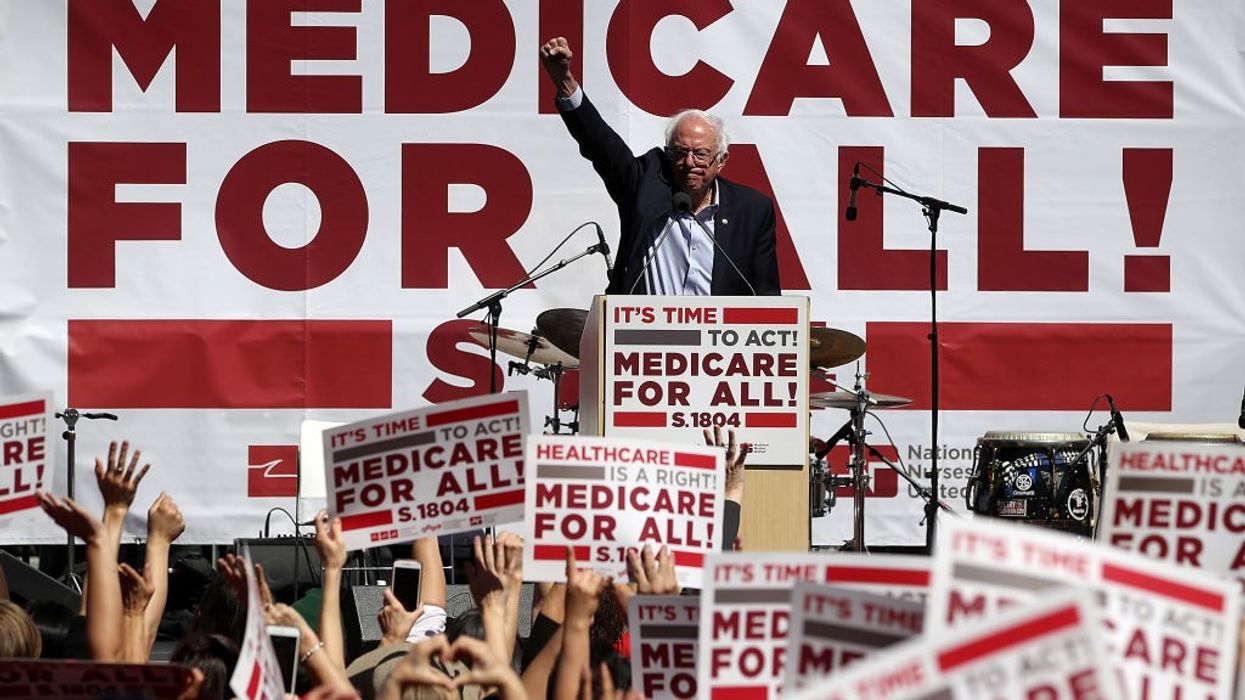
A system that collects money from patients and employers then profits by withholding the promised care is not a business but a fraudulent, diabolical scam.
It’s the beginning of the end for corporate control of health care. The tsunami of outrage against the health insurance industry in the wake of the shooting of United Healthcare CEO Brian Thompson, can propel an urgent, unyielding demand for the removal of profit from healthcare and the enactment of a universal, national single payer system. That is, if the single payer, Medicare for All, national health service movement can summon the vision and audacity to rise to the occasion.
The myth, promoted by health care think tanks and policy experts, that people in the United States are satisfied with their health insurance was exploded in the social media rage unleashed in the aftermath of the killing of the United Healthcare CEO.
Fifteen years after the passage of the Affordable Care Act (ACA), our failing health care system is exposed with all its cruel denials, debt, disease, despair and death at the hands of the investor-owned companies for whom patients are merely pawns for the extraction of profit.
Health care in the United States comes in dead last when rated against comparable countries. The U. S. is at the bottom in overall performance, health outcomes, equity, access to care, and efficiency. As the Commonwealth Fund states: “In fulfilling this fundamental obligation [the ability to keep people healthy], the U. S. continues to fail.”
Health care in the United States comes in dead last when rated against comparable countries.
People in the United States aren’t living to their full potential. Already, the U.S. is 55th in life expectancy, behind Panama, Albania, and Czechia, and will fall in its global rankings by 2050 if the country continues the same trajectory. Years of life are lost to a health care system that serves profit over the value of life.
Our maternal mortality rate would be the shame of many of the poorest nations. In 2020, U.S. maternal mortality rate was higher than in Gaza. In 2022, there were 22 maternal deaths per 100,000 live births in the U.S. This is easily double, and often triple, the mortality rate in peer nations, which can be as low as 5 per 100,000 live births. Black mortality rate is criminally worse: 49.5 per 100,000 live births.
Over one million in the U.S. died in the pandemic, a rate much higher than other nations. Over 330,000 of the pandemic deaths in the U.S. were avoidable. Those lives could have been saved had we had a healthcare system that left no one with inadequate coverage.
Cancer patients must not only fight for their lives but also for the economic survival of their families. The newest treatments with so much hope are beyond the means of those who have insurance policies but no great wealth. About 30% of cancer survivors report lasting financial hardship.
Cancer patients are nearly 5 times more likely to experience bankruptcy, and the medical burden forces many to forego care.
Those who have employer-based insurance were assumed to have the gold standard in health care. Now even the highest paid workers are subjected to premiums, deductibles, and co-pays that impede their care despite the family plans that average $32,000 per year. More have insurance that covers less than a hospital gown. Gold has turned to scrap metal.
As people struggle to pay for the premiums, deductibles, and co-pays, revenues of the seven largest health insurance companies in 2022 reached $1.25 trillion and profits soared to $69.3 billion. That’s a 287% increase in profits in just one decade, when profits were $24 billion.
The toxicity of the health care profit makers that spread unnecessary suffering and death generates the hatred that is poisoning the land.
Medicare, our best health care program, publicly funded and open to all, is now strangled in the grip of the privatized Medicare Advantage plans and the Accountable Care Organizations facilitated by the Center for Medicare and Medicaid Innovation (CMMI). Medicare Advantage now controls a majority of recipients, not because it is better, but because the law that established it and the regulators that control it have allowed it to charge less in monthly premiums—plans that are also allowed to delay and deny care yet are overpaid by billions every year. CMMI issues waivers to the private plans exempting them from fraud and abuse laws and allowing kickbacks, self-referral, and illegal benefit inducement.
Millions on fixed incomes cannot afford the alternative of traditional Medicare plus a prescription drug plan and a supplementary Medigap plan. Those who have managed to escape the clutches of Medicare Advantage can still find themselves assigned, without their knowledge, to “value-based” payment schemes such as ACO REACH and other Accountable Care Organizations (ACOs) which privatize traditional Medicare. “Value-based” payment models are touted, without evidence, as reducing costs for Medicare, yet encompass a multitude of for-profit entities and subject patients to physicians incentivized to deny care. There is ample evidence that “value-based” payment schemes do not lower costs for Medicare. Nevertheless, the privatization of Medicare, through Medicare Advantage or ACOs, is now official policy.
The hoax of “value-based” payments, promoted by CMMI, is exposed by the fact that, despite all the assertions of promoting equity, the inequities of health care are expanding.
Medicaid, the program for children and adults with low income, is almost completely privatized, subjecting the recipients to delays, denials and restrictions imposed by the private managed care organizations that control it.
The Center for Medicare and Medicaid Services (CMS) is hurtling down the wrong track. They invite venture capital and health care investors into the Health Care Payment Learning and Action Network (LAN) that they created. CMS holds conferences, seeking advice and collaboration from the very profiteers that are the cause of high cost, low-quality care. The “value-based” payment scheme promoted by CMS has advanced the power of the profit makers, raising costs, cutting care, and pretending to promote equity for minorities and low-income patients.
It’s time to end the chaos. No more foxes in the hen house, no more poison in the system, no more profit in health care.
The toxicity of the health care profit makers that spread unnecessary suffering and death generates the hatred that is poisoning the land.
It’s time to end the chaos. No more foxes in the hen house, no more poison in the system, no more profit in health care. The nation has rejected the insurance company health care model that delays and denies care, demands skin in the game, asserts that there is massive unnecessary care, throws up barriers against care, and walks away with billions. A system that collects money from patients and employers then profits by withholding the promised care is not a business but a fraudulent, diabolical scam.
This system built on profit cannot be tweaked or regulated into better performance. Runaway trains are not deterred by guardrails.
There is one way to heal the nation. Put single payer on the nation’s table and focus the steaming rage to move the engine of change. Raise the demand for removal of profit and enactment of an Improved Medicare for All free from profit to a level commensurate with the damage that our current failing system is causing the patients’ and the country’s goodwill.
Some look at the current Congress, make the assessment that it’s not possible to pass single payer, then change their demand to a lesser proposal. But incremental changes are at the root of the privatization and profit schemes we are locked into now. Fifteen years after the ACA we have a failing health care system. We have witnessed that more incrementalism does more harm than good. Power concedes nothing without a demand, and the demand must be equal to the solution needed.
There is one way to heal the nation. Put single payer on the nation’s table and focus the steaming rage to move the engine of change.
As Marcia Angell, former editor of the New England Journal of Medicine, taught us, in our current private profit-based system, proposals that lower costs also decrease care, and proposals that increase care, raise costs. To improve care and control costs, we must turn to national single payer, free from profit or a national health service.
The status quo is deadly, and people are demanding a stronger more effective fight. We must organize and educate, locally and nationally with a new determination. In every town hall, classroom, union, organization, and neighborhood, people must hear the message and join the fight. Redirect the rage into a positive force for change.
The new anger in the nation makes possible what we could not do before. Many are now discussing the possibility of setting a National Day of Action in 2025 to demand freeing health care from corporate profit and covering everyone under a national single payer plan. That’s a great idea. Actions across the country lifting up that demand could inspire the movement we need.
National Single Payer—an Improved Medicare for All free from profit with everybody in and nobody out. Nothing less can heal the nation.

"All these stories paint a picture of a healthcare industry in desperate need of transformation," said the head of the think tank behind the awards.
The "winners" of the annual Shkreli Awards—named after notorious "pharma bro" Martin Shkreli and given to the 10 "worst examples of profiteering and dysfunction in healthcare"—include a Texas medical school that sold body parts of deceased people without relatives' consent, an alleged multibillion-dollar catheter scam, an oncologist who subjected patients to unnecessary cancer treatments, and a "monster monopoly" insurer.
The Shkreli Awards, now in their eighth year, are given annually by the Lown Institute, a Massachusetts-based think tank "advocating bold ideas for a just and caring system for health." A panel of 20 expert judges—who include physicians, professors, activists, and others—determine the winners.
This year's awardees are:
10: The University of North Texas Health Science Center "dissected and distributed unclaimed bodies without properly seeking consent from the deceased or their families" and supplied the parts "to medical students as well as major for-profit ventures like Medtronic and Johnson & Johnson," reporting revealed.
9:
Baby tongue-tie cutting procedures are "being touted as a cure for everything from breastfeeding difficulties to sleep apnea, scoliosis, and even constipation"—despite any conclusive evidence that the procedure is effective.
8: Zynex Medical is a company facing scrutiny for its billing practices related to nerve stimulation devices used for pain management.
7: Insurance giant Cigna is under fire for billing a family nearly $100,000 for an infant's medevac flight.
6: Seven suppliers allegedly ran a multibillion-dollar urinary catheter billing scam that affected hundreds of thousands of Medicare patients.
5: Memorial Medical Center in Las Cruces, New Mexico allegedly refused cancer treatment "to patients or demanding upfront payments, even from those with insurance."
4: Dr. Thomas C. Weiner is a Montana oncologist who allegedly "subjected a patient to unnecessary cancer treatments for over a decade," provided "disturbingly high doses of barbiturates to facilitate death in seriously ill patients, when those patients may not have actually been close to death," and "prescribed high doses of opioids to patients that did not need them." Weiner denies any wrongdoing.
3: Pharma giant Amgen was accused of pushing 960-milligram doses of its highly toxic cancer drug Lumakras, when "a lower 240mg dose offers similar efficacy with reduced toxicity"—but costs $180,000 less per patient annually at the lower dose.
2: UnitedHealth allegedly exploited "its vast physician network to maximize profits, often at the expense of patients and clinicians," including by pressuring doctors "to reduce time with patients and to practice aggressive medical coding tactics that make patients seem as sick as possible" in order to earn higher reimbursements from the federal government."
🥁🥁🥁
1: Steward Health Care CEO Dr. Ralph de la Torre was accused of orchestrating "a dramatic healthcare debacle by prioritizing private equity profits over patient care" amid "debt and sale-leaseback schemes" and a bankruptcy that "left hospitals gutted, employees laid off, and communities underserved" as he reportedly walked away "with more than $250 million over the last four years as hospitals tanked."
"All these stories paint a picture of a healthcare industry in desperate need of transformation," Lown Institute president Dr. Vikas Saini said during the award ceremony, according toThe Guardian.
"Doing these awards every year shows us that this is nothing new," he added. "We're hoping that these stories illuminate what changes are needed."
The latest Shkreli Awards came just weeks after the brazen assassination of Brian Thompson, CEO of UnitedHealth subsidiary UnitedHealthcare. Although alleged gunman Luigi Mangione has pleaded not guilty, his reported manifesto—which rails against insurance industry greed—resonated with people across the country and sparked discussions about the for-profit healthcare system.

The killing of Brian Thompson, as horrendous as it was, forced us to confront the injustices we’ve been taught to tolerate.
Call him a misguided hero or villain, but the man who killed the United Healthcare CEO struck a nerve, exposing a deep rage shared by many Americans across the political spectrum—anger at an industry that earns obscene profits from the suffering of others. His chilling act shifted the national conversation from immigration to corporate greed. Finally.
For too long, Americans have hesitated to criticize the super-rich. Chalk it up to our tribalist nature that has so many convinced that our financial struggles are caused not by wealth hoarding but by those we view as outside our clan.
History offers many examples. In Nazi Germany, Jews were blamed for a financial depression triggered by the American stock market crash. My parents and grandmother barely escaped; many in my family did not.
Decades later, Ronald Reagan handed the wealthy the largest tax cuts in U.S. history while vilifying the “Welfare Queen” who leached from the feeding trough of “Big Government.”
This racist caricature was meant to distract from policies that began a 40-year transfer of wealth from the 90 percent to the one percent, producing the largest wealth gap in a century. It’s a story about the undeserving poor vs. the deserving rich.
Today, we face a similar narrative. Immigrants are blamed both for stealing jobs and freeloading despite their essential role in propping up our economy given our shrinking workforce. After being fed a steady anti-immigration media diet, it’s not surprising that nearly four out of five Republicans support placing undocumented immigrants in internment camps.
The greater the wealth imbalance, the more the wealthy need to distort the truth. They peddle the long-discredited Trickle-Down theory, claiming that what benefits them benefits us all. But rising tides don’t lift all boats when some people have no boat at all, or when their boats are sinking because the superyachts are capsizing small craft in their massive wake.
We have to stop believing that billionaires have working people’s interests at heart. In fact, they’re mutually exclusive. A gangbuster stock market depends on keeping wages low and unions banished. Outsized campaign contributions ensure that corporate taxes are slashed and regulations meant to keep us healthy, safe, and not impoverished are gutted.
It makes complete sense that the wealth lobby exploits fears of “socialism” to keep people voting against their own interests. It’s no coincidence the U.S. remains the only developed nation without universal healthcare. This is where our anger should be directed.
But redirecting anger is not easy. Six of the richest US corporations control 90 percent of our media and their profits depend on algorithms and news coverage designed to keep us divided, misinformed, and distracted from this billionaire plunder. “You know the media has failed,” says essayist Rebecca Solnit, “when people are more concerned that a trans girl might play on a softball team than that the climate crisis will destroy our planet.”
During the next four years it will be critical to get people to see through this deception. When we start feeling the fallout from a second Trump term, the scapegoating will intensify. Tariffs, more tax cuts for the rich, and the loss of immigrant labor will send prices soaring and balloon the deficit. Many may lose healthcare, Social Security, and worker protections. The wealth lobby will no doubt point fingers elsewhere.
Change is possible though. As a grant writer for 30 years, I’ve seen campaigns shift public opinion on issues like marriage equality, net neutrality, and climate change. Recently, several states won historic economic reforms after decades of trying. In Massachusetts, RiseUpMass won the nation’s sixth millionaire’s tax by debunking claims it would harm retirees.
In Washington state, the Balance Our Tax Code, a coalition of over 80 diverse groups, from home health aide workers to members of the Yakima Nation, was able pass a capital gains tax, calling out Amazon and Microsoft for avoiding their share of taxes. “The biggest lesson we learned,” said campaign communications manager Reiny Cohen “was that when we come together and tell the same story, lawmakers have no choice but to listen.”
In other words, changing minds requires a coordinated echo chamber. The #MeToo movement showed how the right framing, amplified through the media, can shift perspectives and galvanize action. Imagine if we could help more people connect the dots between stagnant wages, failing schools, a burning planet, unaffordable housing, and the greed of the one percent.
But the message must go beyond bashing billionaires. It must present a compelling vision of what is possible if we stand up against the ultra rich. The We Make Minnesota coalition was able to pass a tax increase on the wealthiest one percent by countering anti-Somali rhetoric with a “We’re Better Off Together” message. Instead of using a “Stop the Cuts” framework, the campaign emphasized the subsidized health care, free preschool, and tuition-free college programs the state is now able to offer.
This isn’t about destroying capitalism. A healthy balance between a free market and protective government is essential. But when the richest among us prioritize profit over the well-being of the majority, it’s no longer about politics—it’s about survival.
The murder of the United Healthcare CEO, as horrendous as it was, forced us to confront the injustices we’ve been taught to tolerate. This moment must unite us against the true enemies of the American dream: unchecked greed and exploitation of the many for the benefit of the few. We can either remain manipulated by scapegoating and fear or see the truth and demand change. Only then can we build a society where no one feels driven to such desperate measures again.

"Believing the health insurance industry is at least partly responsible for the murder of the UnitedHealthcare CEO is not some fringe position," wrote one journalist.
In the wake of the killing of UnitedHealthcare CEO Brian Thompson in early December, some political observers were taken aback by the public response to the event, which included morbid humor and expressions of "Schadenfreude," in the words of one woman who had battled an insurance company to secure treatment for her mother's cancer.
But according to a new poll released by NORC at the University of Chicago Friday night, the belief that the for-profit health insurance industry's business practices were largely to blame for the apparent targeted killing of Thompson is far from a fringe viewpoint.
Sixty-nine percent of respondents placed a "great deal or moderate amount" of blame on healthcare coverage denials by insurance companies like UnitedHealthcare, for Thompson's killing.
Sixty-seven percent said exorbitant profits made by health insurers were to blame.
UnitedHealthcare, which reported $16 billion in profits last year, has garnered outrage for its claims denial practices. A Senate investigation earlier this year found the company was one of three that were intentionally denying claims made by nursing home patients who had Medicare Advantage plans and had suffered falls and strokes, in order to increase profits.
The company is also facing a class-action lawsuit over its use of algorithms to deny care.
Last year, a Commonwealth Fund survey found the 17% of Americans had been told by an insurance company that a medical claim was denied, and the poll suggested many patients and doctors feel powerless to stop companies like United from denying them care; more than half said they and their physicians did not challenge the insurers' decision.
That poll matched the results of the NORC survey released on Friday, in which 15% of respondents said they had had a claim denied.
The poll was released the same day that NBC News published an investigation showing that cancer patients are disproportionately affected by claim denials and insurers' requirements that they obtain "prior authorization" in order to receive life-saving care, an arduous process that can delay treatment and allow their condition to worsen.
A study published in the Journal of the American Medical Association last year found that 22% of cancer patients did not receive treatment their doctors had prescribed because of denials or prior authorization requirements.
A survey of oncologists in 2022 found that 42% of prior authorizations were delayed by more than one business day, and 14% of the delays had a serious adverse impact on the patient.
The patients experienced "disease progression" 80% of the time and "loss of life" 36% of the time.
Insurers are increasingly relying on prior authorizations to delay or deny care for cancer patients, a 2023 study found. The number of nonspecialty oncology drugs that required prior authorization rose from 16% in 2010 to 78% in 2020.
NBC News told the story of one patient, Tracy Pike, who died after Blue Cross and Blue Shield of Illinois declined to cover a $40,000 treatment for Stage 4 stomach cancer—surgery and intensive chemotherapy—that had been recommended by his doctor.
Citing the findings of a company doctor—who was an obstetrician-gynecologist, not an oncologist—Blue Cross ruled the treatment was "experimental, investigational, and unproven," even though it is routinely prescribed for cancer patients.
Journalist Ken Klippenstein noted that the NORC poll included a nuance that was "sorely lacking in major media coverage" after Thompson's death, which at times suggested that people who acknowledged the insurance industry's deadly practices were "supporting" the fatal shooting.
The poll found that 78% of people believed the person who shot Thompson outside a hotel in Manhattan bore "a great deal" or a "moderate amount" of blame for the killing.
"Now compare that with the tsunami of corporate media op-eds and pundits expressing the sparkling insight that murder is wrong," wrote Klippenstein. "Yeah, we know. Episodes like these really show you how much contempt these elite media organs have for the public, which they apparently see as helpless children in need of a preschool level moral lesson."
"As the NORC poll shows, the vast majority of people know that, yes, of course murder is wrong—they just also happen to think there's more to the story than that," he continued. "And they're right: How can you have an honest discussion about any of this without addressing the Moloch-like industry that profits from denying people healthcare?"
But as Klippenstein wrote on Thursday, those who took part in that "honest discussion" in the days after Thompson's killing were branded as "extremists" not just by the media, but by law enforcement.
Days after the killing, Klippenstein wrote, the New York Police Department circulated an intelligence report on the suspected gunman, 26-year-old Luigi Mangione—but the report also included warnings about "ordinary people" who expressed sympathy for Mangione online.
"Warning of 'a wide range of extremists' that 'may view Mangione as a martyr,' the report's title singles out 'disdain for corporate greed," wrote Klippenstein, noting that the document was circulated to law enforcement and counterterrorism agencies nationally.
But as the latest polling shows, he wrote, "believing the health insurance industry is at least partly responsible for the murder of the UnitedHealthcare CEO is not some fringe position."